Chem always forget B + CAns Extra II
 Call Kai
 Learn
Learn Practice Test
 Spaced Repetition
 Match
Match Flashcards
 Knowt Play
1/23

There's no tags or description
Looks like no tags are added yet.
Name | Mastery | Learn | Test | Matching | Spaced | Call with Kai | Chat |
|---|
No analytics yet
Send a link to your students to track their progress
24 Terms
Define substituent
A substituent (usually alkyl or aryl) refers to an atom or group of atoms that takes the place of a hydrogen atom on the hydrocarbon chain
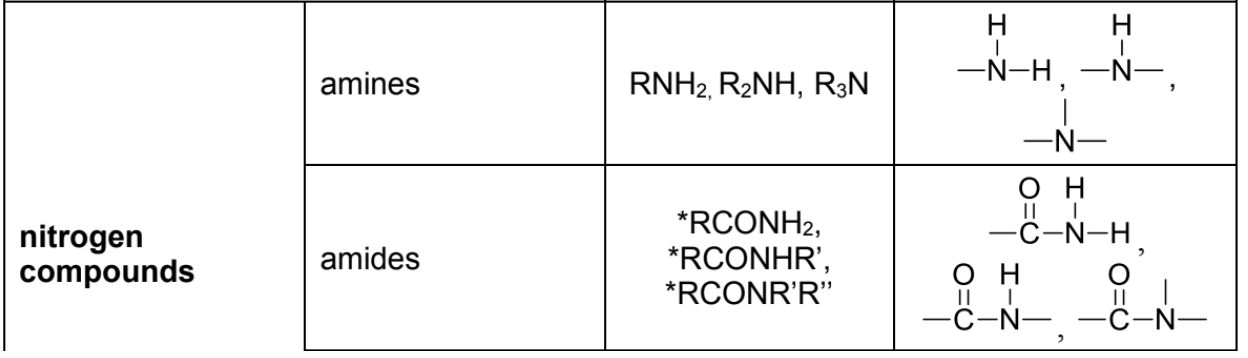
Amine and amide functional groups
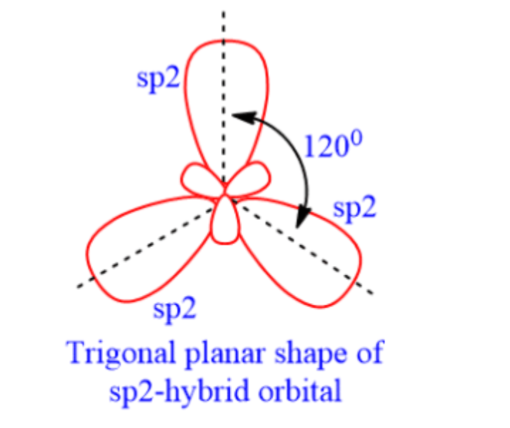
Draw sp2 hybrid orbital
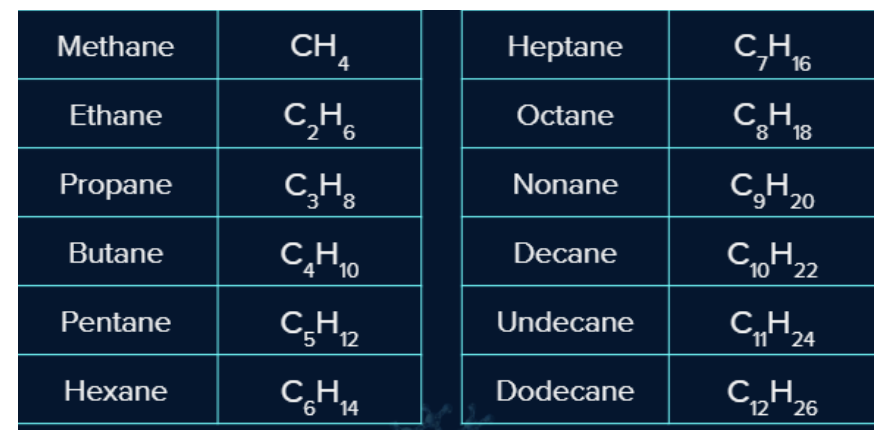
The 10 organic compound names
Define isomer
Isomers (Def.) : Occurrence of two or more compounds with the same molecular formula but having different structures or spatial orientation
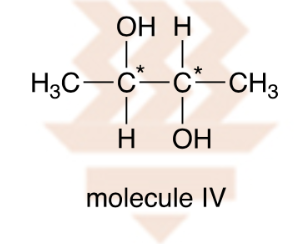
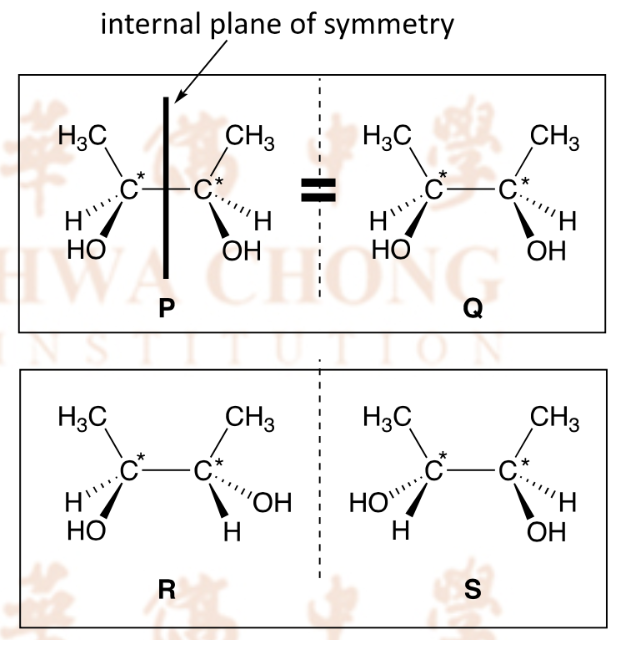
Draw cis-trans isomer of this
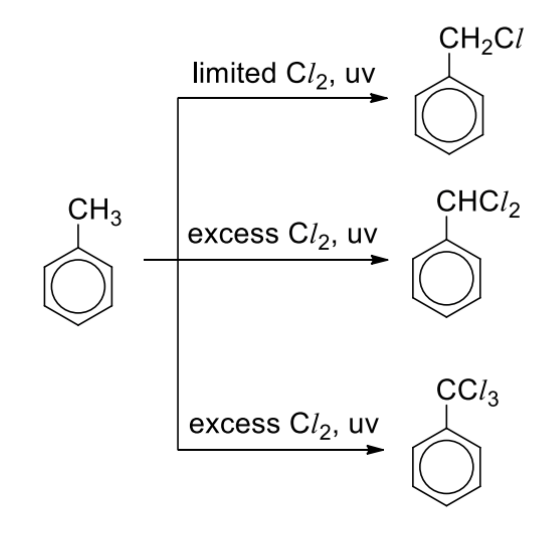
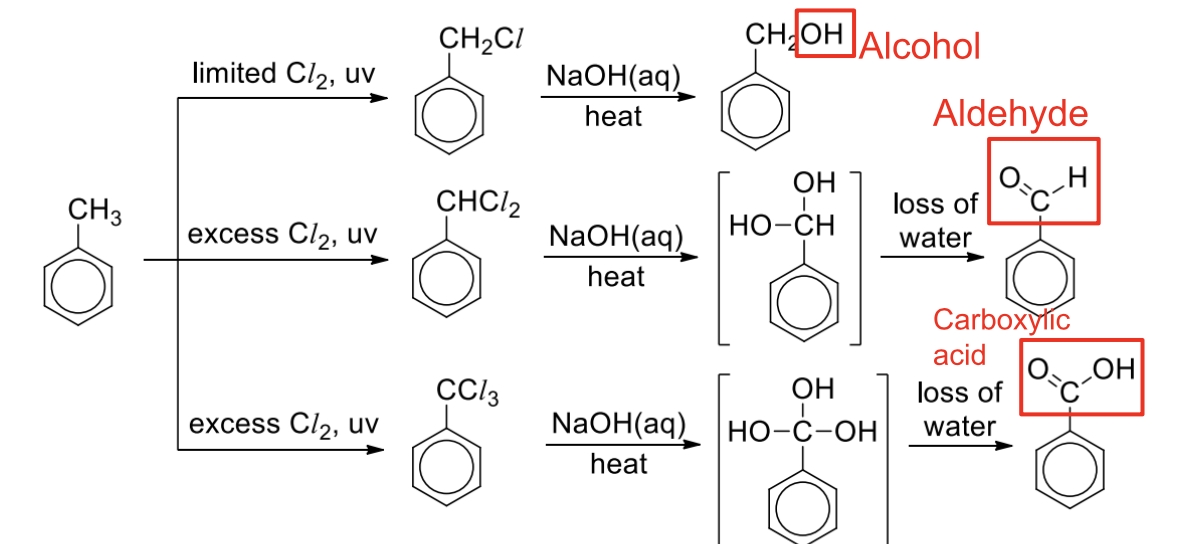
Nucleophile attacks C bonded to electronegative atom
Electrophile attacks C that forms pi bonds
Resonance: In molecules with alternate double and single bonds, it is possible for three or more adjacent p orbitals to overlap with one another

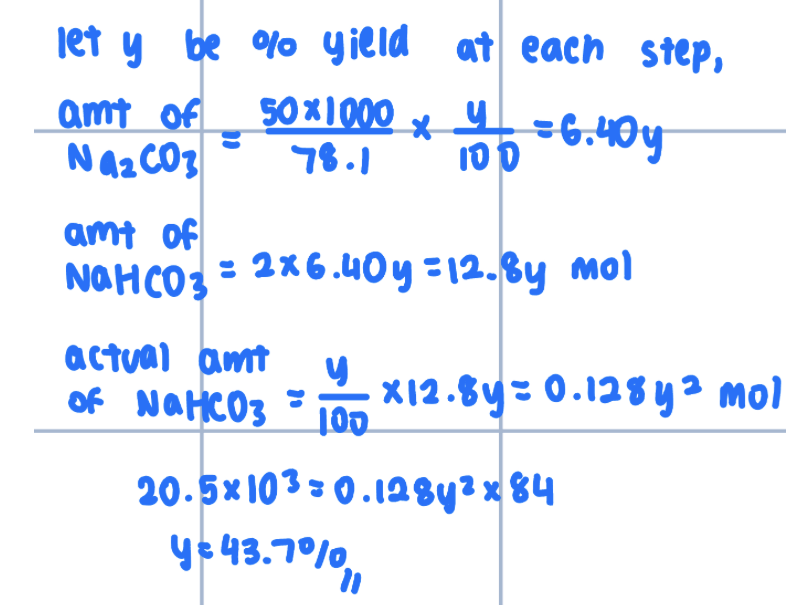
Sodium hydrogen carbonate, NaHCO3, can be prepared from sodium sulfide, Na2S by the following reactions:
Assuming that the percentage yield in each step is identical, 20.5 kg of sodium hydrogen carbonate (Mr = 84.0) was formed from 50 kg of sodium sulfide (Mr = 78.1). What is the percentage yield of each step?
Explain, in terms of structure and bonding, the differences in boiling points
CO, NO and BrF are covalent compounds with simple molecular structures consisting of discrete molecules held together by intermolecular forces of attraction
Explain why N does not form NOCI3 with similar structure as POCI3
Nitrogen is in Period 2
Nitrogen does not have energetically accessible vacant d orbitals to expand its octet structure
Suggest how the reaction can be quenched
Sudden cooling of the reaction mixture in each aliquot using a cold water bath
Sudden dilution through the addition of large volume of water to the reaction mixture in each aliquot
Explain why rate constant increase
Increasing the temperature will increase KE of molecules and so there is a shift of Maxwell–Boltzmann energy distribution curve to the right -> more molecules with at least activation energy
This leads to an increased frequency of effective collisions and reaction rate -> increases the rate constant
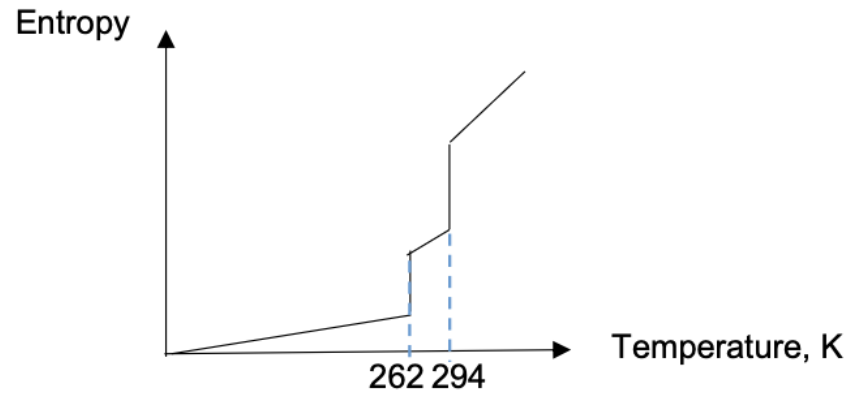
Sketch a graph to show how the entropy of NO2 changes between 0 K and 350 K. The melting point of NO2 is 262 K and the boiling point of NO2 is 294 K.
As temperature increases, NO2 changes from solid to liquid and then to gas.
As the arrangement of particles is most ordered in solid, followed by liquid and then gas, entropy increases as temperature increases.
Define activation energy
The activation energy is the energy barrier the reactants must overcome in order to become the products
Explain why reaction rate is no longer directly proportional to partial pressure at high pressures
NOTE: Question has heterozygous catalyst as it is production of ammonia
At low pressures, partial pressures of reactants are low, there are many active sites available on the catalyst
As the partial pressures of reactants increase, more reactants can be adsorbed onto active sites -> reaction first order
At higher pressures, the active sites on the catalyst are saturated
Products must desorb from the active sites before new reactants can be adsorbed -> reaction zero order with respect to partial pressure
State significance of Kc value
Kc > 1 (large Kc) position of equilibrium lies far to the right
Why is NH3 acting as a lewis base
NH3 acts as a base as it accepts a H+ from H2O to form NH4+
At 50C, pH of water is 6.8, pKw = 6.8 x 2 = 13.6
When 0.5mol of P is added to the equilibrium mixture with 2mol of P = NOT all 0.5mol of P reacted (so 2 < P < 2.5)
Explain why NH3 acts as a nucleophile
NH3 acts as a nucleophile as the lone pair of electrons on N atom attacks the electron deficient carbonyl carbon atom to form the product in the nucleophilic substitution reaction
Explain why CH2F2 has no ozone depletion unlike CFCs
C-F and C-H bond in HFCs is stronger than C-Cl bond in CFCs and will not be broken by UV light to form F and H radicals, hence no ozone depletion potential

Explain briefly whether the above mechanism is consistent with the rate equation you have written in (d)(iv)

Suggest why HNO3 is a strong acid while HNO2 is a weak acid
HNO3 has an additional electronegative oxygen atom compared to HNO2 which decreases the electron density in the O-H bond, weakening it and hence releases H+ more readily
Hexa-1,4-diene = 2 C=C bond in structure!