Psychology 2010 Exam #1 Clemson
 Call Kai
 Learn
Learn Practice Test
 Spaced Repetition
 Match
Match Flashcards
 Knowt Play
1/107

There's no tags or description
Looks like no tags are added yet.
Name | Mastery | Learn | Test | Matching | Spaced | Call with Kai | Chat |
|---|
No analytics yet
Send a link to your students to track their progress
108 Terms
psychology
scientific study of behavior and mental processes
behavior
something we can "see" (body language)
mental process
something we can't see (thinking, feeling, remembering)
Four generic goals of psychology
describe, understand, predict, control
describe
illustrating what behavior or mental process is occurring
understand
looking at why the behavior or mental process occurs (theories)
predict
investigating whether the theory is the cause of the behavior by conducting experiments or surveys
control
using the theory to control these behaviors
Plato and Descartes
believed knowledge was innate (nature)
Aristotle and Locke
believed knowledge was acquired through experience (nurture)
Wilhelm Wundt
Father of modern psychology
Developed structuralism
structuralism
studies elements of consciousness
focuses on the structure and organization of the mind
Titchener
Structuralism and introspection
asked people how they thought/felt
introspection
examination of one's own thoughts and feelings
flaw: individual might not have access to everything he/she is feeling
William James
studied functionalism
functionalism
studied the purpose of mental processes in adaptive behavior
studied functions of conciousness
Freud
studied psychoanalysis
lots of his studies were controversial, but he was highly influential
psychoanalysis
studied importance of the unconscious mind and its effects on human behavior
Watson
studied behaviorism
behaviorism
only focuses on behaviors (what one can see) and not on mental processes
cognitive revolution
1960s to present
uses the concept that the brain is similar to a computer
hindsight bias
after learning an outcome of an event, many people believe that they could have predicted that very outcome
"I knew it all along"
examples: 9/11, Iraq War
overconfience
individual thinks he/she knows more than they actually know
example: anagram experiment
theory
possible explanation that can predict behavior or events
hypothesis
testable prediction, often prompted by a theory, to enable us to accept, reject, or revise theory
research
requires us to administer tests (manipulate variables)
variables
specific factors that are manipulated and measured in research
operational definitions
hypothesis must be stated in terms of operations and methods which will be used to measure it
examples: people "college students"
low self-esteem "less than average"
depressed "higher than average"
naturalistic observation (including advantages/disadvantages)
process of watching without interfering as behavior occurs in the natural environment
example: observing gorillas
advantages: lots of rich data, difficult to replicate in lab
disadvantages: people act differently if know they are being watched, distorted if observers expect certain beahviors
case study (including advantages/disadvantages)
intensive study of a behavior or mental process in a particular individual, group, or situation
advantage: study new, complex, or rare phenomenon
disadvantage: not necessarily representative (since such few cases)
survey (including advantages/disadvantages)
asks about behavior, attitudes, beliefs, opinions, and/or intentions through interviews or questionnaires
advantages: low cost, lots of data, quick
disadvantages: question phrasing (bleeding question), representative of population difficult, reluctant to admit undesirable things, return rate low
Which way to gather evidence is the only one to confirm causality?
experiment
experiment
change one variable, then measure effect change has on another variable
descriptive statistics
summary of data, describes data
inferential statistics
procedures allow you to make inferences, measure show likely results were due to chance
statistically significant
likelihood of getting a certain result by random chance has low probability (p< .05 meaning 5% chance likelihood due to chance)
correlation
how strongly one variable is related to one another (CANNOT DETERMINE CAUSALITY)
denoted by "r"
value represents strength while sign represents if positive or negative
biological psychology
branch of psychology concerned with the links between biology and behavior
three functions of the nervous system
input, processing, output
central nervous system (CNS)
spinal cord and brain
peripheral nervous system (PNS)
all the nerves that don't compose the brain or spinal cord
divided into two parts: somatic and autonomic
somatic
sends sensory information TO CNS for processing
sends messages FROM CNS to muscles to direct motion (VOLUNTARY motor movement)
autonomic
controls activities that are generally independent of one's control
example: heartbeat, digestion, eye blinking, breathing
composed of two parts: sympathetic and parasympathetic
sympathetic
hypes up
mobilizes body for action in face of stress
increases blood pressure/ breathing and decreases digestion
parasympathetic
calms down
regulates body's functions to conserve energy
decreases blood pressure/breathing
medulla
base of brain stem- controls heart rate and breathing
reticular formation
nerve network in brainstem that plays an important role in controlling arousal and "awakeness"
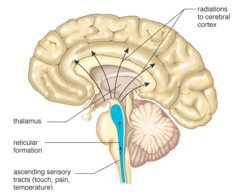
thalamus
sensory switchboard: directs messages to sensory areas in cortex and transmits replies to cerebellum and medulla

cerebellum
little brain attached to brainstem
helps coordinate voluntary movements and balance

hypothalamus
maintenance activities
eating, drinking, body temp, control of emotions, controls endocrine system via the pituitary glands (hormones)
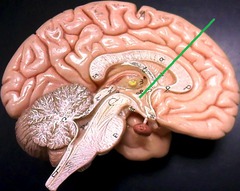
hippocampus
new memory formation

brain lesion
experimentally destroys brain tissue to study animal behavior after destruction
example: Phineas Gabe had frontal lobe obliteration and made bad choices (gambled, prostitution)
Electroencephalogram (EEG)
amplified recording of the electrical waves sweeping across brain's surface, measured by electrodes placed on scalp
high temporal resolution (quick reaction)
low spatial resolution (where they came from)
PET (CT/CAT)
position emission tomography scan
detects radioactive form of glucose while the brain performs a given task
MRI
magnetic resonance imaging
uses magnetic fields and radio waves to produce computer images that distinguish among different types of brain tissue
neuron
cell; basic unit of nervous system
sensory, interneuron, and motor
sensory neuron
send info from sense organs to CNS (optical, auditory, etc.)
inter-neruron
only exist in brain and spinal cord
talk to other neurons
motor neuron
sends info from brain and spinal cord out
axon
sends messages AWAY

myelin sheath
covers axon, helps neural impulses travel
neural impulse
action potential, electrical signaling traveling along axon
dendrites
receives messages from other cells
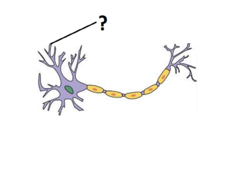
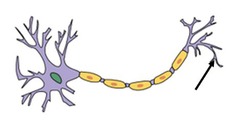
terminal branches of axon
form junction with other cells
Neuron at rest
Polarized; -70 mV so more negative on the inside of the neuron than on the outside
action potential process
depolarized:
Na+ channel opens
Rushes into cell making that section positive
Pumps start removing Na+ to restore negative charge
Moves down axon
ALL OR NONE
synapse
space between neurons
neurotransmitters
flood synaptic gap to send message to next neuron
getting rid of neurotransmitters
reabsorbing NT
breaking down of NT
acetlycholine
NT; muscle actions, learning, memory
dopamine
NT;MOVEMENT, learning, attention, emotion
serotonin
NT;mood regulation, sleep
glutamate
NT;memory (excitatory)
GABA
inhibitory NT (calms activity in brain)
norepinephrine
NT;alertness, arousal
agonists
mimics (fits lock, but it's not the actual key)
example: opiates like morphine and heroine
antagonists
blocks NT from attaching to receptor-don't actually activate it
neural networks
interconnected neurons form network
complex
modify with grown and experience
cortex
organized by structure and function
divided into four lobes
motor cortex
area at rear of the frontal lobe that control voluntary movement
sensory cortex (parietal cortex)
receives info from skin surface and sense organs
occipital lobe
vision processing
temporal lobe
auditory processing
parietal lobe
processing of sensory information (touch, space, etc)
frontal lobe
abstract thinking, planning, social skills, executive control (focusing)
Broca's area
in frontal lobe
speech, grammar (hand or mouth)
SPEAKING
Wernicke's area
in temporal lobe
speech comprehension (also written text)
HEARING
association areas
"uncommitted" or association areas of the cortex
affects ability to learn and adapt
more with more intelligent animals
angular gyrus
transforms visual representations int auditory code (reading to yourself)
corpus callosum
divides the right and left hemispheres, allows them to communicate with one another
lateralization
functions for one side of the brain
central fissure
separates motor cortex from sensory cortex
consciousness
awareness of the outside world and of one's mental processes, thoughts feelings, and perceptions
party effect
example of consciousness; loud room, your name is called, and you turn in that direction; your brain was processing what was important/ not important and your name being called brought some of the outside noise into your consciousness
dual-processing
process perceptual information on two levels: conscious and unconscious
selective attention
focusing your consciousness/attention on a single thing
inattention blindess
"blind" to information you're not actively paying attention to
sleep
altered state of consciousness
circadian rhythms
occur on a 24-hour cycle and include sleep and wakefulness
melatonin
hormone released from pineal gland to trigger sleep