Lecture 2: Signaling by Steroid Hormone Receptors
 Call Kai
 Learn
Learn Practice Test
 Spaced Repetition
 Match
Match Flashcards
 Knowt Play
1/45

There's no tags or description
Looks like no tags are added yet.
Name | Mastery | Learn | Test | Matching | Spaced | Call with Kai | Chat |
|---|
No analytics yet
Send a link to your students to track their progress
46 Terms
How do small lipid-soluble hormones enter their target cells?
by diffusing through plasma and nuclear membranes
List some lipid-soluble hormones.
steroid hormones (estrogen, progesterone, testosterone, glucocorticoid, mineralocorticoid)
retinoids
thyroid hormones
vitamin D
fatty acid metabolites
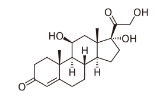
What is this hormone?
cortisol

What is this hormone?
retinoic acid
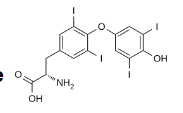
What is this hormone?
thyroxine
Steroids act via which type of receptors?
intracellular receptors
What did Jensen and Gorski discover?
estrogen acts by binding to estrogen receptors in the cytoplasm; the complex then moves to the nucleus
What did O’Malley demonstrate?
estrogen and progesterone receptors act in the nucleus to induce specific messenger RNAs
What is the signal transduction pathway of nuclear hormone receptors?
hormone enters the cell
hormone binds to intracellular receptor
initiation of a series of events
altered gene expression and cellular function
True or False: A ligand will enter the cytoplasm again if there is low receptor concentration.
true
True or False: There is conservation in the multiple functional domains in the following receptors: estrogen receptor, progesterone receptor, glucocorticoid receptor, thyroid hormone receptor, and retinoic acid receptor. The receptor structure consists of amino acid sequences and modular functional domains: DNA-binding domain (DBD), ligand-binding domain (LBD), and two transactivation domains 1 and 2.
true
In the absence of hormones, steroid receptors exist where and with what?
exist in the cytosol in association with chaperone proteins (Hsp90)
True or False: In the absence of hormones, receptors cannot interact with target gene, which leads to transcriptional inactivation.
true
True or False: The binding of hormones to receptors releases chaperone proteins → receptors can interact with target genes → transcriptional activation.
true
Certain nuclear receptors, such as TR, RAR, and VDR, can bind to target genes in the absence of the cognate hormone. These receptors typically function as what in the unoccupied form?
transcriptional repressors
Hormonal binding induces what in the receptor?
a conformational change in the ligand binding domain (LBD) of the receptor
Describe the LBD domain in the presence and absence of a ligand.
in the absence of a ligand, the LBD has a fairly open conformation
upon ligand binding, the LBD assumes a compact conformation
The DNA-binding domain mediates recognition of what?
specific target genes
What is the area called where the receptor recognizes specific DNA sequences in the promoter region of target genes?
hormone response elements (HRE)
The DNA-binding domain (DBD) of the receptor makes contact with atoms in the major groove of target via which bonds?
via hydrogen bonds
Describe the response elements for the glucocorticoid and estrogen receptors.
responses elements are 6 base pair inverted repeats separated by any 3 base pairs
Describe the response elements of vitamin D, thyroid hormone, and retinoic acid receptors.
response elements are direct repeats of the same sequence recognized by the estrogen receptor, separated by 3-5 base pairs
Steroid hormone receptors bind to their inverted repeat response elements as which type of dimers?
homodimers
TR, RAR, and VDR bind to their direct repeat response elements as which type of dimers?
heterodimers with a common nuclear receptor partner called RXR
Describe the DNA-binding domain of each nuclear receptor.
2 signature C4 zinc fingers
each zinc finger motif comprises of a group of 4 conserved cysteines, which bind a zinc ion
Describe the binding of the glucocorticoid receptor homodimer to its response element.
2 alpha-helices (one in each monomer interacts with the DNA)
zinc ions
binds as a homodimer—allowing 2-fold rotational symmetry
True or False: Nuclear hormone receptors display both positive and negative modes of transcriptional regulation.
true
Cellular coregulatory complexes regulate transcription by which type of receptors?
nuclear hormone receptors
Coactivator and corepressor complexes contain which type of activities?
chromatin-modifying activities
True or False: Negatively charged DNA binds tightly to positively charged lysine residues near the N termini of histone protein subunits—leading to transcriptional silencing.
true
True or False: Acetylation neutralizes the positive charge on histones and loosens the interaction between histones and DNA. This allows transcription factors access to DNA—leading to transcriptional activation.
true
Corepressors recruited by nuclear receptors promote what?
deacetylation at the target promoter
Why do many corepressors influence chromatin structure?
corepressors have an association with histone deacetylase activity
True or False: When recruited to the promoter, a corepressor induces deacetylation of histone N-terminal tails in the nearby nucleosomes → local compaction of chromatin → inhibition of the assembly of a transcription initiation complex.
true
Coactivators recruited by nuclear receptors induce what?
histone acetylation at the target promoter
True or False: Many coactivators possess histone acetylation activity.
true
True or False: When these molecules are recruited to the target promoter, the resulting local hyperacetylation of histone N-terminal tails relaxes the chromatin → facilitates access of general transcription factors required for initiation.
true
Multiple chromatin remodeling/modifying activities act in concert with what?
nuclear receptors
Which activities lead to transcriptional activation and repression?
activation
HATs
HMTs
histone kinases
repression
HDACs
HMTs
What is Mifepristone?
anti-progesterone
What is Tamoxifen?
anti-estradiol
True or False: Steroid receptor agonists and antagonists induce distinct conformational changes in the receptor.
true
True or False: Estrogen receptor assumes different conformations in the presence of agonists estradiol and DES or antagonist tamoxifen. The conformation dictates transcriptional activity of the receptor.
true
Designer steroids modulate function of steroid receptors in such areas as what?
mammary gland
reproductive tract
immune response
bone metabolism
cardiovascular health
brain function and behavior
What does the antiprogestin RU486 do?
inhibits function of the progesterone receptor in the uterus and thus blocks embryo implantation
What does the antiestrogen tamoxifen do?
used in breast cancer therapy to inhibit the action of estrogen receptors to block tumor cell proliferation