Evolutionary bio exam 2
 Call Kai
 Learn
Learn Practice Test
 Spaced Repetition
 Match
Match Flashcards
 Knowt Play
1/72

There's no tags or description
Looks like no tags are added yet.
Name | Mastery | Learn | Test | Matching | Spaced | Call with Kai | Chat |
|---|
No analytics yet
Send a link to your students to track their progress
73 Terms
Know darwin's four postulates in population genetics terms:
Allelic variation among individuals
Alleles are passed from parents to offspring
More offspring than can survive
Some allelic combos are more fit allow some offspring to survive more
Evolution
Change in frequency of alleles in a population over generations
-Hardy-Weinberg Equilibrium:
A null model of how populations act when evolution is not occurring.
-Know what organisms it applies to:
Diploid sexual organisms
Population
A group of interbreeding individuals and their offspring
How to calculate allele frequencies
p+q=1
How to calculate Genotype frequencies
p²+2pq+q² =1
How to calculate Total allele counts:
# of individuals x 2
-Know the two fundamental conclusions of HWE:
Allele frequencies in a population will not change
If you know the allele frequencies you can also find the genotype frequencies
Know why HWE is useful:
Can be use to determine genotype frequencies. And it shows when evolution does not happen.
What happens if the HWE assumptions are violated:
Evolution
-Know the five assumptions of HWE:
No selection
No mutation
No migration
Infinitely large population
Panmixa (mates chosen randomly)
-Know how to test if a population is in HWE with Chi-squared test:
∑ (observed – expected)² /expected
-Breaking HWE through Selection:
Selection breaks HWE because allele frequencies can change over time
Know Adh case study in Drosophila:
ADH gene in fruit flies affect the enzyme that breaks down alcohol. Two different groups were tested, one that was given alcohol and the other wasn’t. Population evolved to have the better ability to break down alcohol
-Know how selection impacts two conclusions of HWE:
Allele frequencies change and sometimes conclusion 2 is violated bc genotype frequencies can’t be calculated
.
-Know malaria case study
Malaria selects for certain VEGFR1 genotypes, causing observed genotype frequencies to differ significantly from Hardy-Weinberg expectations (χ² = 7.68 > 3.84), demonstrating that natural selection breaks HWE.
-Know how to find relative fitness (w) and strength of selection (S):
w=fitness of an allele s=strength of an allele
s=w-1
0 would be no disadvantage
Overdominance
The heterozygote has the highest fitness compared to either homozygote fitness relationship. Aa= Highest. Maintains genetic diversity.
Underdominance
Heterozygote has lowest fitness. Aa=Lowest. Lowers genetic diversity.
Understand how frequency-dependent selection works:
The fitness of an allele depends on how common or rare it is. The rarer type has the advantage. For ex scale eating fish
Breaking HWE through Mutation
Mutation violates the Hardy-Weinberg assumption of no mutation by introducing new alleles into the population. Is the ultimate source of genetic variation.
-Understand the direct and indirect roles mutation plays in evolution:
Direct- mutation creates new alleles by changing DNA
Indirect- Mutation supplies the genetic variation that other evolutionary forces upon.
-Understand how to calculate allele frequency in the future based on a
mutation rate:
pn=p0e−mn
Lenski’s E.Coli Study:
Studied a strain of bacteria incapable of conjugation so mutation became the only form of genetic variation. Fitness and cell size increases in response to natural response but the fitness occurred in jumps. Beneficial mutations swept through population to fixation, making mutation the ultimate source of genetic variation.
-Know what amd how to calculate mutation-selection balance:
Mutation selection balance: Mutation keeps creating a harmful allele, while natural selection keeps removing it
For harmful recessive allele q̂ = √(m/s)
Cystic Fibrosis case study
Recessive loss of function allele on chromosome 7, caused by mutations in the CFTR gene. So affected individuals are usually homozygous recessive. Researchers discovered that high frequency is maintained by heterozygote advantage and were partially resistant to typhoid fever infection.
Breaking HWE through migration:
Migration is the movement of alleles among populations breaks HWE bc it introduces new alleles to a population and frefquencies change
-Know the concept of gene flow and how it breaks HWE conclusions:
Transfer of alleles from one gene pool to another gene pool of different populations. Breaks HWE because it homogenizes a populations making the allele frequencies similar by changing them
Know the One-island model of migration:
Two populations mainland and island. The mainland is very large and the island population small. Migration doesn’t change the mainland frequencies but it can greatly change the islands
Know how to calculate Δp with respect to migration:
Δp=m(p−pi)
when Δp= 0 that means no migration is happening or the allele frequencies are the same
Water snake case study
Banded is dominant over unbanded. The mainland snakes banded while the island was unbanded. This is bc on the islands there are rocks but on the mainland there is vegetation. Natural selection favors unbanded snakes on rocky islands but the banded allele keeps getting reintroduced through banded snakes migrated.
-Red bladder Campion Case study:
: Wind- and water-dispersed seeds caused gene flow between island populations. This changed allele frequencies, reduced genetic differences among populations (lower FST), and showed that migration homogenizes populations, making them more genetically similar.
-Breaking HWE through Population size:
When infinite population size is violated meaning it is small, random chance can change allele frequencies.
Know what genetic drift is and how it works:
Genetic drift is when evolution happen because of random chance events. Not adaptive but it does lead to changes in allele frequencies
-Understand how genetic drift leads to fixation
Over time random events can cause one allele to become more common and the others to become less common. Eventually, one allele will reach 1.0 and the other will reach 0
Know the founder effect:
When a small group leaves a larger population and starts a new one, those starting alleles kinda predetermine what allele will be present in the population
Know Genetic bottlenecks:
Happens when a population suddenly becomes very small due to natural events. Few individuals survive and those survivors determine the future gene pool.
Understand how drift reduces heterozygosity
: During drift alleles are randomly lost, as alleles disappear fewer heterozygotes exist and more homozygotes exist.
Understand the probability of an allele becoming fixed:
The probability of the allele eventually becomes fixed and equals its current allele frequency.
P(fixation)=p
Crotaphytus lizard case study
Studied isolated lizard populations, those small populations lost genetic diversity, alleles, and had lower heterozygosity than large. Showed genetic drift is strongest in small populations
-Plant Case study:
Researches compared plant populations of different sizes. Small populations lost alleles faster while larger populations had more genetic variation and heterozygosity,
-Know Fis and how to calculate it:
FIS: IS the proportion of the variance in the subpopulation contained in an individual= inbreeding coefficient, AKA (how much inbreeding exists within one population)
Fis= Hs-HI/Hs
+FIS= inbreeding
-FIS=Outbreeding
-Know Fst and how to calculate it:
FST: is the level of differentiation among a set of populations AKA: How genetically different populations are from each other
:Fst=Ht-Hs/Ht
-Know effective population size and how to calculate for
The size of an idealized population that would lose genetic diversity at the same rate as the actual population. AKA Not everyone in a population reproduces equally
Ne<N
Small Ne: Strong drift
Large Ne: Weak drift
-Unequal-Sex Ratio
Ne=Nm+Nf4/NmNf
Different # of males and females mean a smaller effective population
High Variance in Family sizes
Some individuals produce many offspring while others produce few or none, reducing the effective population size and increasing genetic drift.
Fluctuation in population size:
:Population size changes over generations. The smallest population sizes have the greatest effect on the effective population size.
-Know how to calculate ΔFst under genetic drift
FST=1/2Ne1
-Know the differences between Neutral and Selectionist theory:
Neutral theory: Most genetic variation is caused by genetic drift acting on neutral mutations, not natural selection.
Selectionist Theory: Most genetic variation is caused by natural selection, with advantageous alleles increasing in frequency.
-Breaking HWE through Non-random mating
Individuals do not choose mates randomly
-Know why non-random mating breaks HWE but does not cause evolution on its:
Since individuals are choosing mates based on certain traits this changes the genotype frequencies because of the “pickyness” behind it. Mainly affects conclusion 2
Know both positive and negative assortative mating:
Positive: Individuals mate with others that are similar to themselves. Causes an increase in homozygosity and a decrease in heterozygosity
Negative: Individuals mate with others who are different from themselves. Causes an increase in heterozygosity and a decrease in homozygosity
Understand inbreeding, how it works, and its consequences:
Mating between closely related individuals, relatives are more likely to share the same alleles inherited from a common ancestor. Increase homozygosity at all loci, decreases heterozygosity, increases harmful recessive allele.
Why is it bad? Bc hidden harmful recessive allele becomes homozygous
-Know how to calculate coefficient of Inbreeding:
F=HS−HI/Hs
It is probability that two alleles in an individual are identical by descent
-Know how organisms avoid inbreeding:
-Dispersal from birthplace
-Recognizing relatives
-mating with unrelated individuals
Florida panther case study
:Florida panthers experienced severe inbreeding due to a small population size, resulting in reduced genetic diversity and health problems. Introducing Texas panthers increased gene flow, reduced inbreeding, increased heterozygosity, and improved population fitness.
-Understand how evolution at multiple loci works:
Genes do not exist in isolation, and multiple genes often have effects on a single phenotypic character. One locus can influence the evolution of another due to genetic linkage and distance btwn.
Linkage equilibrium
Loci are in linkage equilibrium if the frequency of one allele does not affect the frequency of the other. D=0
-Linkage disequilibrium:
Allele frequency at one locus predicts allele frequencies at another locus.c
D≠0
Clegg case study
-Adaptive significance of sex:
What are the downsides to sexual reproduction?
Understand the different hypotheses for the adaptive value of sex:
-Muller’s Ratchet and how it works
-Selection in changing environments:
Red Queen Hypothesis:
-Snail and Parasite case study:
What is a haplotype
Combination of alleles found together one chromsome. Ex: for two loci A/a and B/b there are AB,Ab,aB,aB
How do you calculate linkage disequilbrium
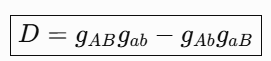
What creates linkage disequilibrium
selection, genetic drift, or population admixture.