0.6 Fossil Dating
 Call Kai
 Learn
Learn Practice Test
 Spaced Repetition
 Match
Match Flashcards
 Knowt Play
1/27

There's no tags or description
Looks like no tags are added yet.
Name | Mastery | Learn | Test | Matching | Spaced | Call with Kai | Chat |
|---|
No analytics yet
Send a link to your students to track their progress
28 Terms
Syllabus points
Sequencing a fossil record requires a combination of relative and absolute dating techniques to locate fossils onto the geological time line.
Both relative dating techniques, including stratigraphy and index fossils, and absolute dating techniques, including radiocarbon dating and potassium-argon dating, have limitations of application.
Why date fossils
The age of the fossil is determined so it can be compared to other fossil species from the same time period.
Understanding the ages of related fossil species helps scientists' piece together the evolutionary history of a group of organisms.
By comparing fossils of different species, scientists can examine how features changed and how organisms evolved through time.
Dating fossils
After fossils or artifacts have been found and excavated, their age must be determined.
This is known as dating
Dating methods
relative dating
Absolute dating
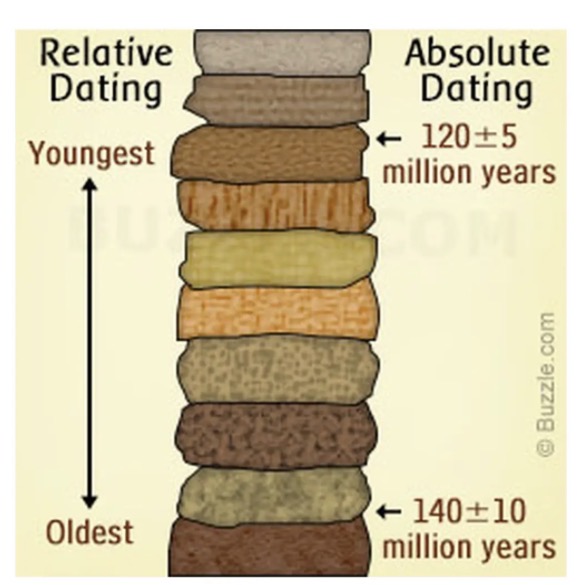
Relative dating
Relative dating compares the age of one thing with that of something else i.e. item A is older than item B.
When you use relative dating, you are not trying to determine the exact age of an object.
Paleontologists use relative dating to determine the sequence of fossils in the order that each species existed.
Involves using the principles/techniques of:
Stratigraphy
Index fossil
Fluoride dating
Stratigraphy
• Is the study of layers or strata.
2 ways Stratigraphy is used in the dating of fossils
Principle/Law of superposition:
Correlation of rock strata (comparative stratigraphy)
Principle/Law of superposition:
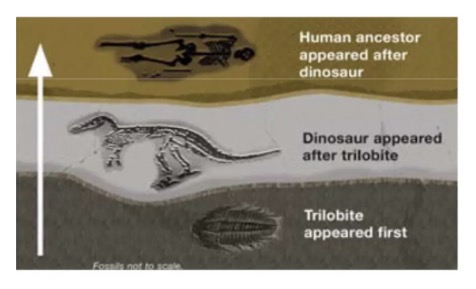
States that the older rocks are in the bottom layers and the younger layers are in the top layers, unless the layers have been disturbed through dynamic earth movements such as folding and faulting.
A section of rock strata containing fossils of different ages.
The principle of superposition assumes that the younger strata are towards the top of
the sequence. Therefore, fossils found in the bottom layers are the oldest and fossils found in the top
layers are the youngest.
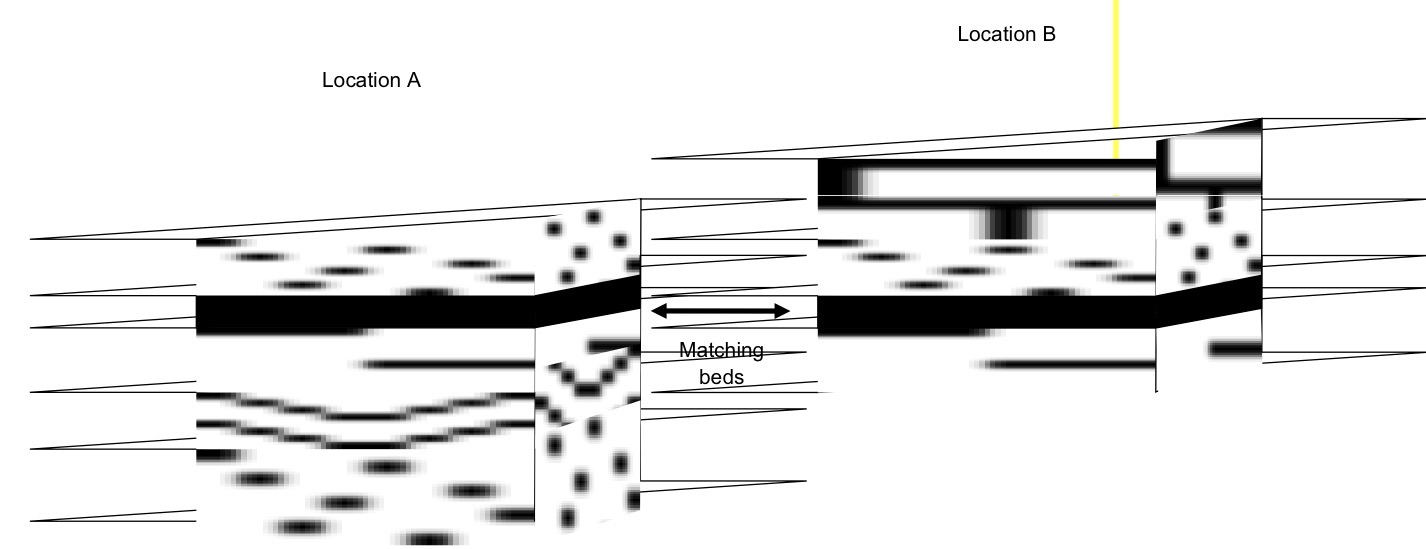
2. Correlation of rock strata (comparative stratigraphy):
Involves matching layers of rock from different areas.
Involves correlating rocks by looking for similarities in composition and rock layer sequences at different locations
index fossils
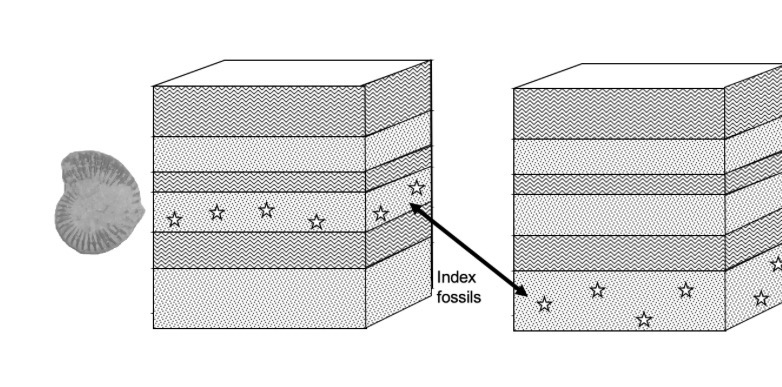
Index fossils are the remains or traces of organisms that have:
a distinctive appearance.
were widespread across many areas.
lived for a relatively short time.
Index fossils are used to date and correlate different
rock layers from different regions.
Example of an index fossil - trilobite
A trilobite is any member of a group of extinct fossil arthropods easily recognised by their segmented form of the shell with the head at the top.
Trilobites make excellent index fossils as they lived between 500 and 300 million years ago before becoming extinct.
Rock strata correlation and index fossils
The blue trilobite fossil is dated at 350 million years ago.
The layers of rock have been turn upside down due to the earth’s forces.
Both layers where the fossil is, should be dated at 350 million, unless the fossil has been dug up and reburied by animals.
Limitations with index fossils
Animals like burrowing organisms or scavengers may excavate fossils from their original positions and redistribute them in a different sedimentary layer or even a different location altogether.
This mixing can lead to the misinterpretation of the fossils, making it challenging to establish an accurate relative age for the surrounding rocks or sediment.
Does not provide age in years: only places fossils in a relative chronological order
Limitations with stratigraphy
Lack of absolute dates: Relative dating methods do not provide precise or absolute dates for artifacts or events. They only establish the order in which they occurred relative to each other. Without absolute dates, it is challenging to establish the exact timeframe or duration of events.
Incomplete information: assumes that the lower layers in an archaeological or geological site are older than the upper layers. However, this assumption may not always hold true due to disturbances such as erosion, folding, or faulting, which can disrupt the original sequence of layers.
Fluorine dating
As groundwater contains fluorine when a bone is in the ground, fluoride ions from the soil replace some of the ions in the bone.
The longer the bones have been in the ground the more fluoride ions should be present in the bone.
if bones found at the same location contain the same concentration of fluorine, it can be assumed that they are of the same age.
Problems with fluoride dating
Amount of fluoride in groundwater will fluctuate at different locations.
Not all bones absorb fluoride at the same rate.
Bones of similar density need to be compared .i.e.. Cannot compare a femur with a tarsal bone.
Absolute dating
Also known as radiometric dating.
Based on radioactive decay of isotopes.
Provides an actual age of the fossil in years.
Two techniques used are:
Radiocarbon dating
Potassium argon dating
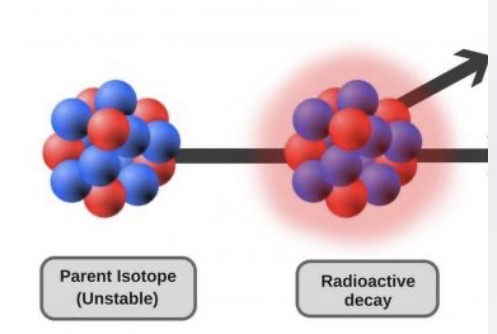
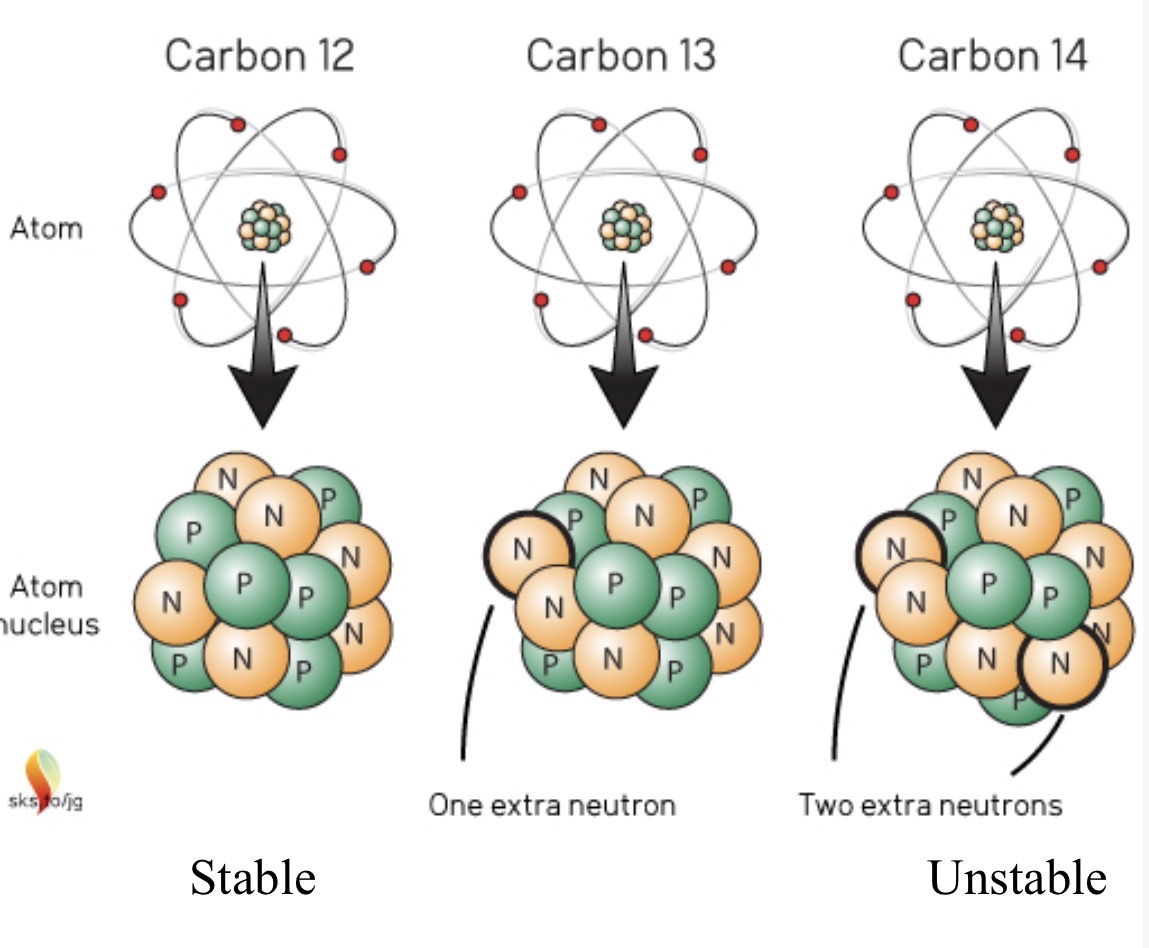
What is an isotope
Isotopes are different forms of the same element.
The element will have the same number of protons but a different number of neutrons in their nucleus.
They have a different mass number (number of protons and neutrons in the nucleus).
Unstable isotopes decay into more stable isotopes.
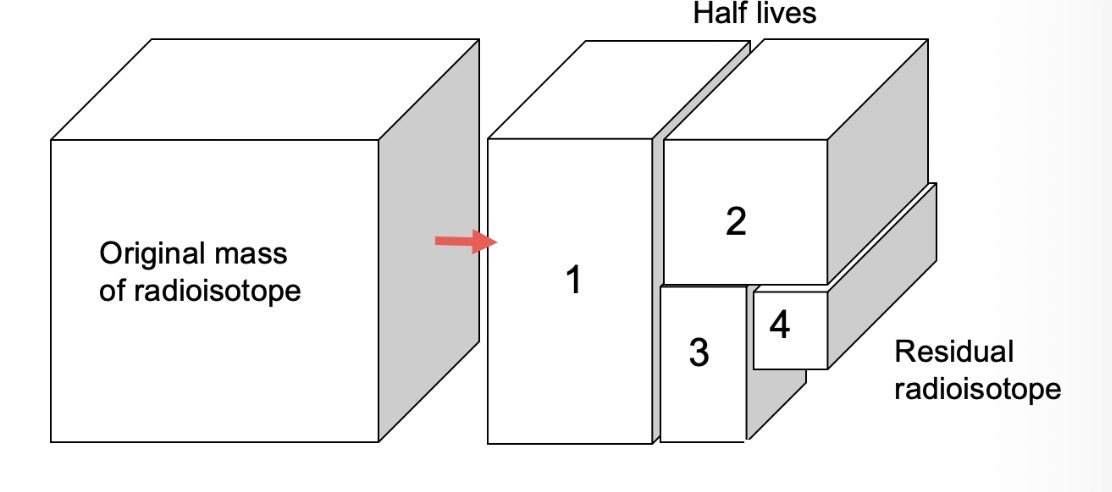
Each isotope has a unique rate of decay described as its half life.
(i.e. The time taken for half of any given amount of the isotope to decay).
e.g. Carbon-14 5 730 yr (half life) Nitrogen-14
Radiocarbon dating
Carbon-14 dating is a way of determining the age of certain fossils of a biological origin.
It can be used to date fossils up to about 60,000 years old.
It is used in dating things such as bone, cloth, wood and plant fibers that were created in the relatively recent past by human activities.
Method is based on the decay of the radioactive isotope carbon-14 to nitrogen.
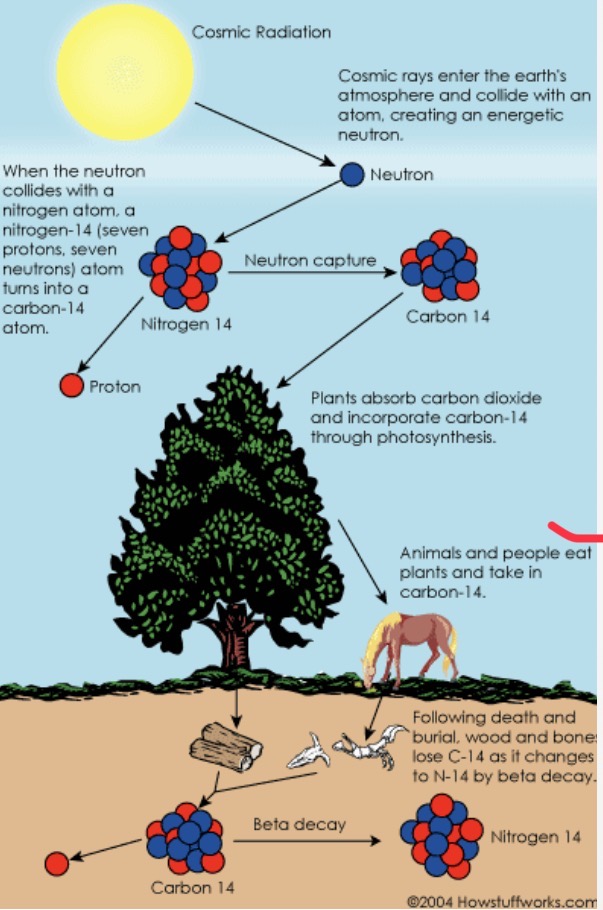
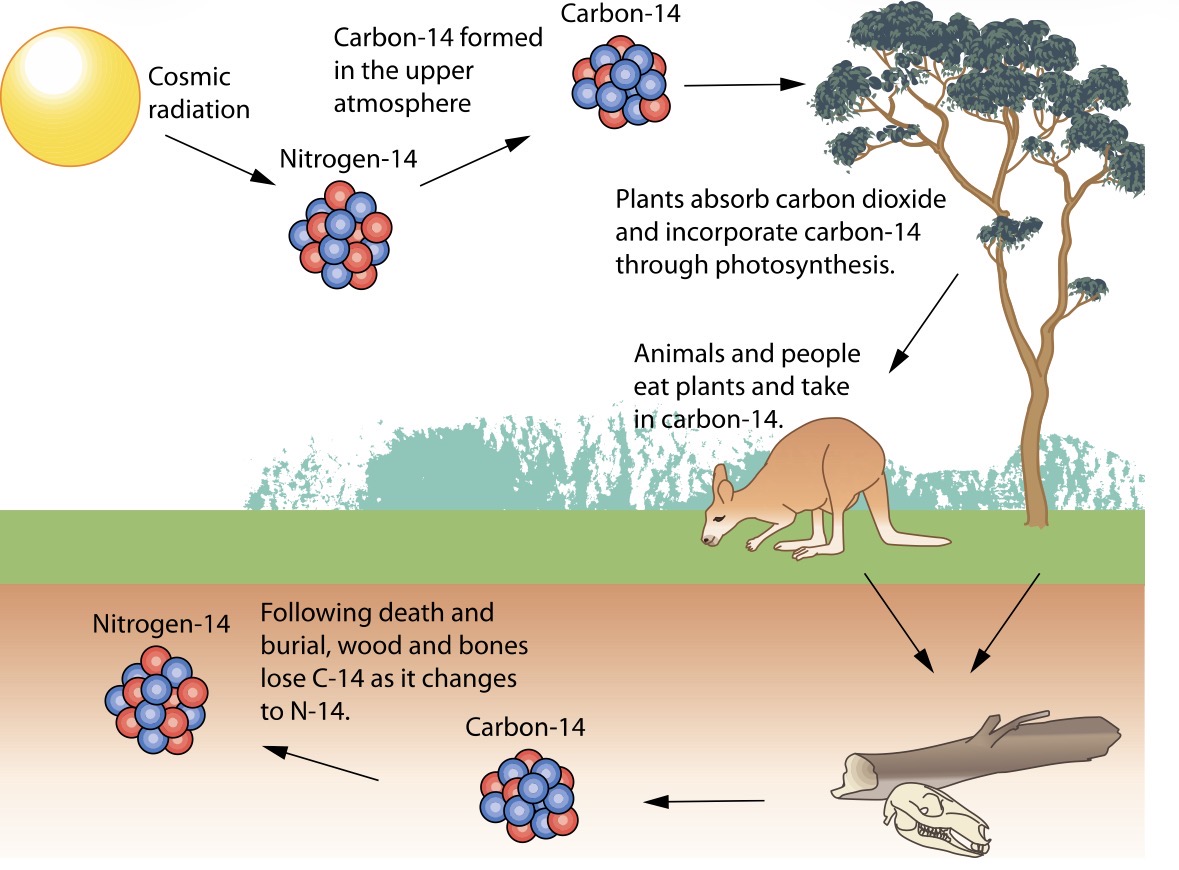
How does carbon-14 form in our atmosphere
How does carbon-14 dating work
Carbon-14 comes about because of the action of cosmic radiation on Nitrogen.
In the atmosphere there is a ratio of 1 Carbon-14 atom to every million million Carbon-12 atoms.
Plants use atmospheric CO2 in photosynthesis, so carbon-14 becomes incorporated into the plant tissue.
Humans and animals that eat the plant tissue also absorb carbon -14.
When humans die the carbon -14 already in their tissue begins to decay at a fixed rate to Nitrogen.
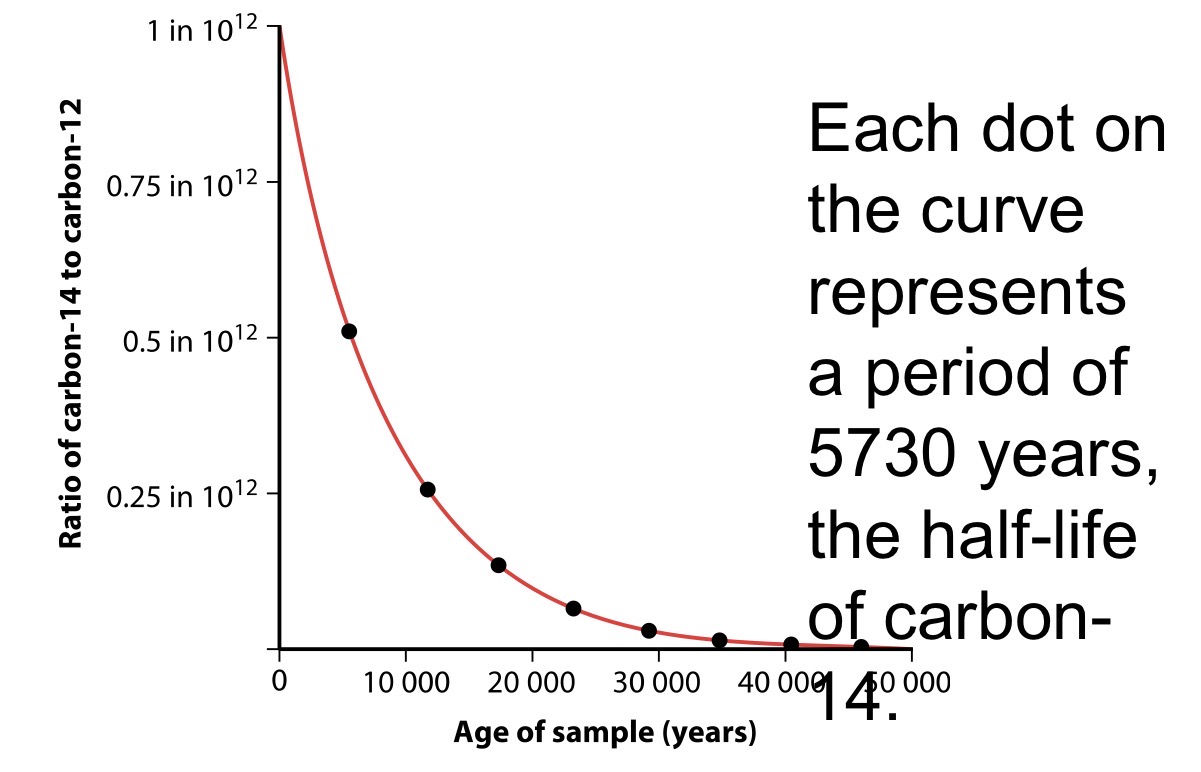
Half the carbon 14 will decay in 5730 years.
Another half of that half in 5730 years. This is referred to as the half-life of carbon-14
By measuring the ratio of carbon-14 to carbon-12 the age of the sample is estimated
Half life decay curve for carbon-14 to nitrogen
Accelerator mass spectrometry
Used in radiocarbon dating.
Useful as it can date a sample as small as 100 micrograms.
Involves breaking up the sample into its atoms so the number of atoms of each isotope can be counted.
Can even date scrapings from caving paintings.
Limitations of carbon dating
Only fossils containing organic material can be used.
Because of the short-half life of C14, this is only useful to date fossils younger than 60,000 years.
There is some variation in the C14 content in the atmosphere which upsets the C14 to C12 ratio (corrections for these fluctuations in the last 9000 years can be done by cross referencing tree ring dates).
If used to date materials used by humans such as linen or paper then dates do not necessarily reflect age of when the item was used but when the organic material used in the item died.
Samples in the ground can interact with ground water which may contain dissolved carbon
Potassium-argon dating
Based on the decay of radioactive potassium to calcium & argon.
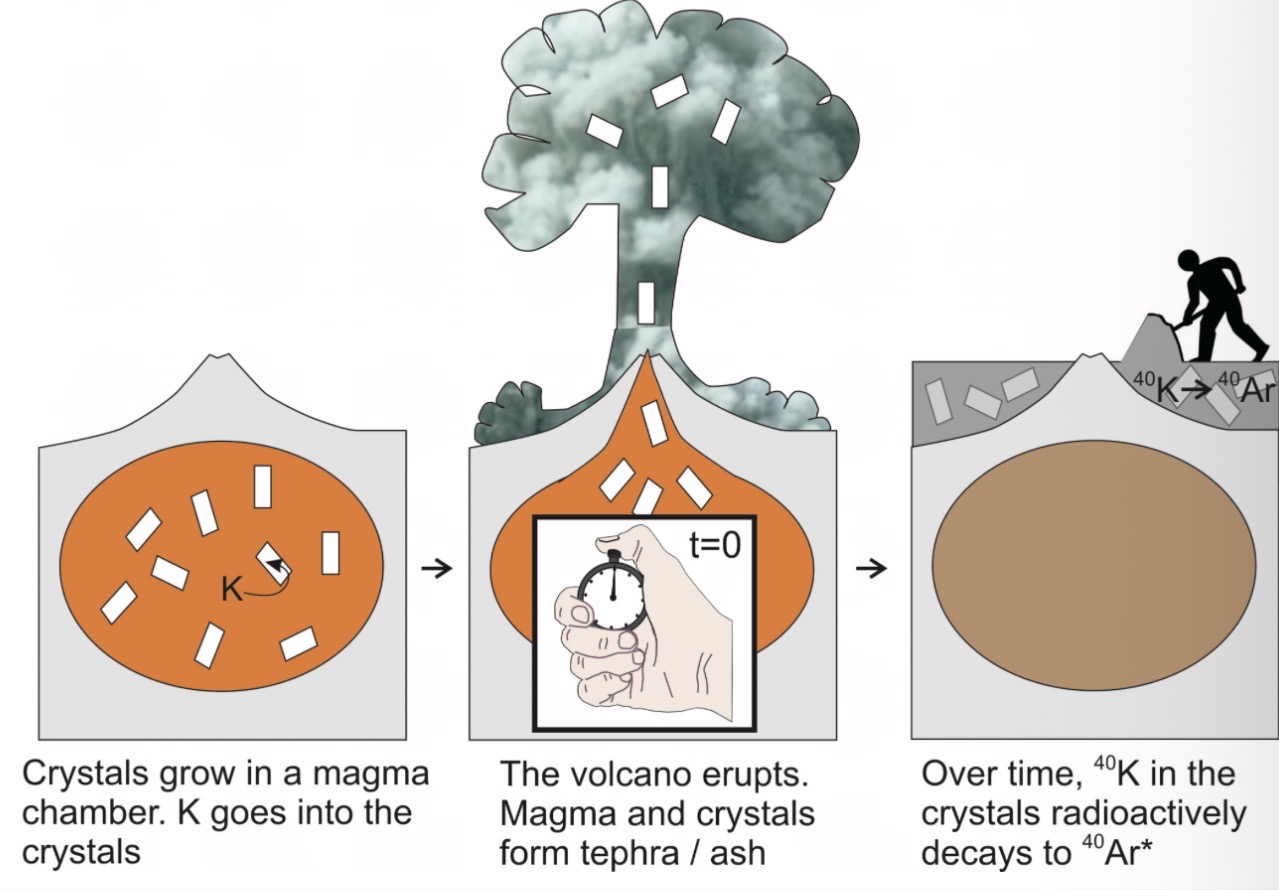
Radioisotopes of potassium are produced in volcanic eruptions and will be trapped in igneous rocks as they cool.
Potassium-40 is radioactive and will decay to form calcium-40 & argon-40.
Potassium-40 decays very slowly into the rare stable gas argon-40.
Potassium-40 has a half-life of 1.25 to 1.3 billion years.
By determining the amounts of potassium-40 to argon-40 in a rock sample, the age of the rock can be calculated.
Limitations of potassium-argon dating
Not all rocks are suitable for this method of dating.
Can only date rocks older than 100,000 to 200,000 years.
To determine the age of a fossil using this method there must be available volcanic rock of the same age as the fossil & then relative dating of strata must be used.
Geological time scale
it is a reference and communication system for comparing rocks and fossils from throughout the world.
When fossils have been dated it is important to think where they fit into the time span of the earth.
Because this is such a large amount of time (4.54 billion years)earth’s geological history is divided up into a geological time scale.
Most of the boundaries on the geological time scale correspond to the origination or extinction of particular kinds of fossils.
The geological time scale was constructed by comparing similar fossils found in different locations.
The divisions from largest to smallest are
Eons
Era
Periods
Epoch