Unit 2 Cell Structure and Function
 Studied by 0 people
 Call Kai
 Learn
Learn Practice Test
 Spaced Repetition
 Match
Match Flashcards
 Knowt Play
1/57

There's no tags or description
Looks like no tags are added yet.
Name | Mastery | Learn | Test | Matching | Spaced | Call with Kai |
|---|
No study sessions yet.
58 Terms
How do ribosomes reflect the common ancestry of all known life?
Its fundamental structure, composition (rRNA + protein), and function (protein synthesis) are conserved across all Bacteria, Archaea, and Eukarya, meaning it evolved early and was passed down, with slight modifications, to all life from a Last Universal Common Ancestor (LUCA), essentially acting as a universal molecular machine.
Subcellular components ___ to all___
universal; cells
All living cells contain a genome and ribosomes, reflecting the common ancestry of all known life
Role of the ribosome
Synthesis protein according to mRNA sequence and the instructions that are encoded in that mRNA sequence originate from the genome of the cell
not membrane-enclosed structure
consist of two subunits THAT ARE NOT MEMBRANE-ENCLOSED
made of divisional RNA(rRNA) and proteins
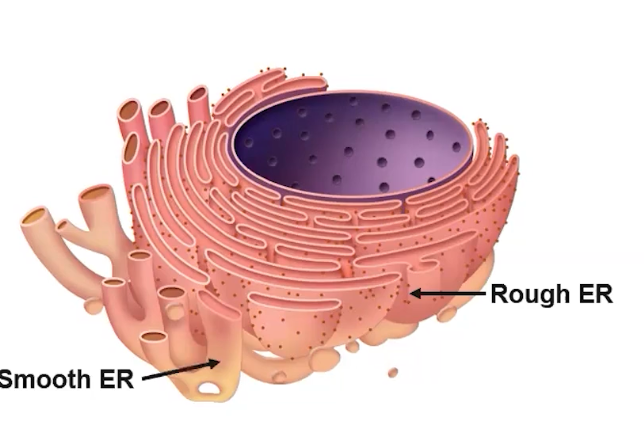
Endoplasmic reticulum
Network of membrane tubes within the cytoplasm of eukaryotic cells
Two forms of ER
Rough ER
Has ribosomes attached to its membrane
compartmentalizes the cell (rough ER is associated with packaging the newly synthesized proteins made by attached ribosomes for possible export from the cell)
provides mechanical support
plays a role in intracellular transport
Rough ER carries out protein synthesis on ribosomes that are bound to its membrane
Smooth ER
Does NOT have ribosomes attached
Functions include detoxification and lipid synthesis
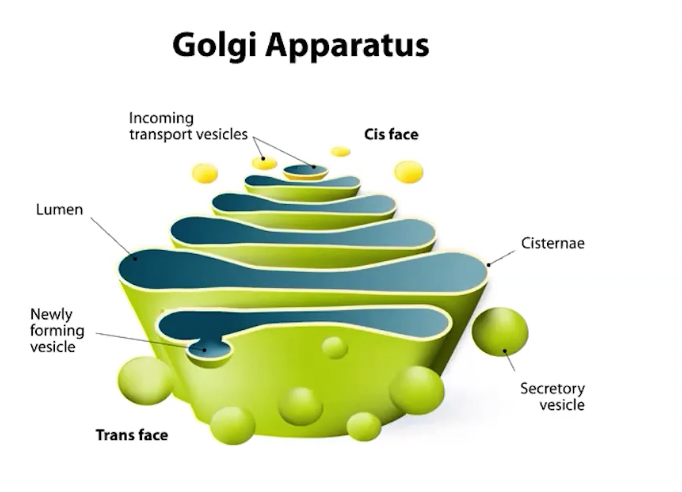
Golgi complex
series of flattened membrane-bound sacs found in eukaryotic cells
Involved in the correct folding and chemical modification of newly synthesized proteins and packaging for protein trafficking
Mitochondria
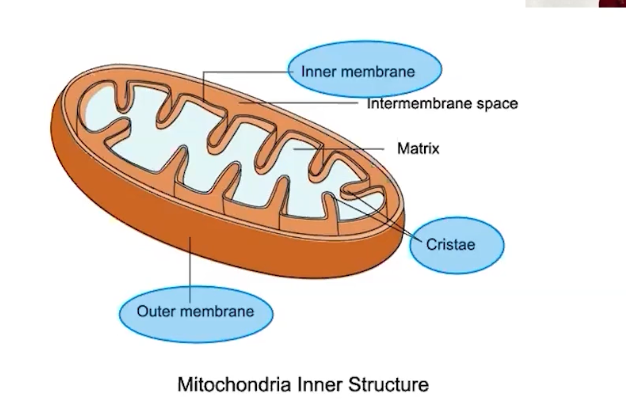
Has a double membrane
The outer membrane is smooth, and the inner membrane is highly convoluted, forming folds called cristae, allowing more ATP to be made
Functions in the production of ATP energy that eukaryotic cells can use for cell work
The Krebs cycle (citric acid cycle) reactions occur in the MATRIX of the mitochondria
ELECTRONS transport and ATP SYNTHESIS occur in the INNER mitochondrial membrane
lysosome
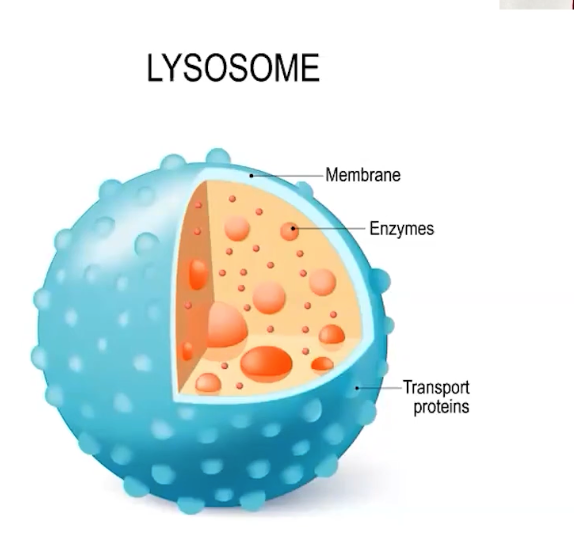
Membrane-enclosed sacs found in some eukaryotic cells that contain hydrolytic enzymes
Hydrolytic enzymes can be used to digest a variety of materials, such as damaged cell parts or macromolecules
intracellular digestion
recycling of organic materials
programmed cell death (apoptosis)
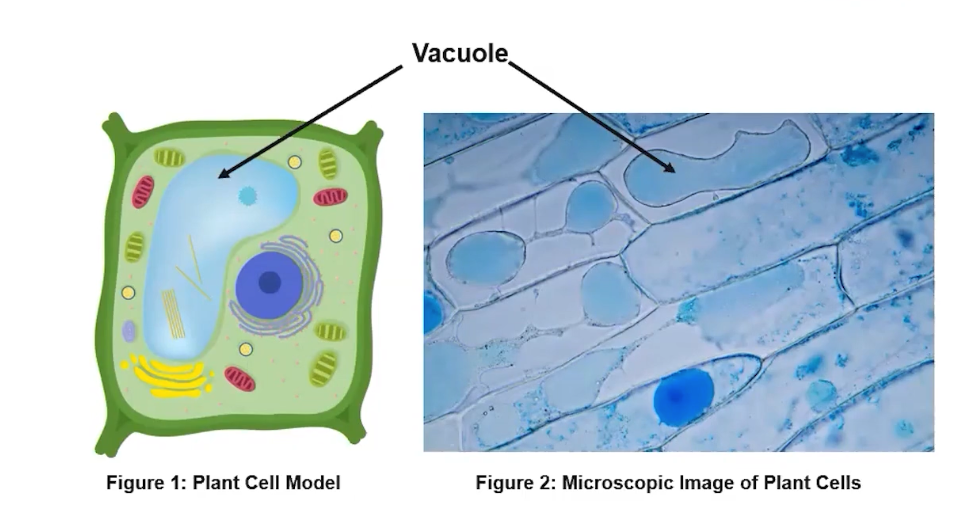
Vacuole
Membrane-bound sacs found in eukaryotic cells
Play a variety of roles, ranging from storage of water and other macromolecules to the release of waste from a cell, macromolecules, and cellular waste products
In plants, vacuoles aid in retention of water for turgor pressure
Chloroplast
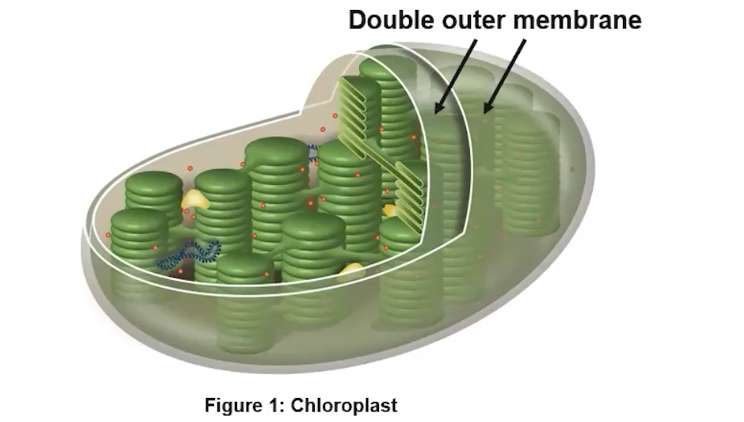
Found in eukaryotic cells such as photosynthetic algae and plants
Double outer membrane
Specialized for capturing energy from the sun and producing sugar for the organism
Chloroplast compartments (Thylakoid)
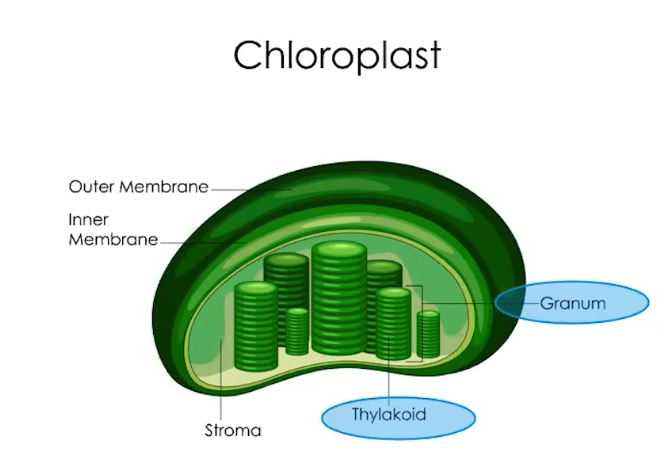
Highly folded membrane compartments that are organized in stacks called grana
Membranes contain chlorophyll pigments that comprise the photosystems, and electron transport proteins can be found between the photosystems, embedded in the thylakoid membrane
Light-dependent reactions occur here
Folding of these internal membranes increases the efficiency of these reactions
Chloroplast compartments (Stroma)
Fluid between the inner chloroplast membrane and outside thylakoids
The carbon fixation (Calvin Cycle) reactions occur here
Turgor pressure!
Internal cellular force, usually caused by water pushing up against the plasma membrane and cell wall
Why are cells typically small?
Smaller cells have a HIGHER SA:V RATIO and more EFFICIENT exchange of materials with the environment.
Cells with higher volume will decrease SA, making it difficult to meet the demand for internal resources and remove enough waste, RESTRICTING cell size and shape.
How is the surface area to volume ration calculated?
SURFACE AREA EQUATION: 6s2
VOLUME EQUATION: s3
SA TO VOLUME RATIO: SA/V
As the cells got LARGER, the SA to V ratio DECREASES.
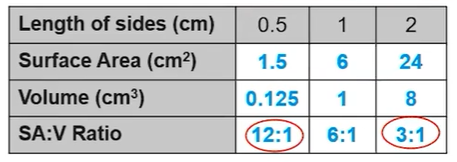
Cells are typically small, but what happens when the cell gets larger?
Moving materials (nutrients and waste) in and out of cells gets more difficult the larger a cell is.
Since there was a higher concentration of bleach outside the cubes, bleach was able to move across the surface of each cube
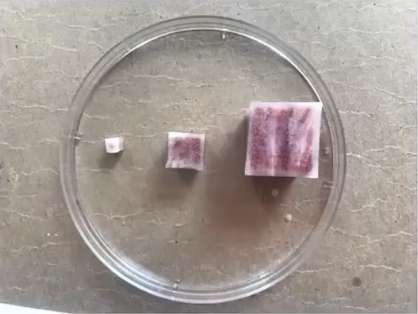
96%, 66%, 39%
What are some examples of structural modifications of cells that increase surface area?
Microvilli, which are the tiny folds in the intestinal cells
Villi, which are finger-like projections on the tissue
How does the surface area to volume ration effect the rate of heat exchange with the environment?
A higher surface area to volume ratio leads to a faster rate of heat exchange, meaning quicker heat loss or gain, while a lower ratio results in slower heat exchange
Allowing for better heat retention, which explains why small organisms lose heat rapidly but large ones retain it more effectively, influencing adaptations to different climates
How are specialized structures and strategies used by cells and organisms for the efficient exchange of molecules with the environment?
Using specialized structures like villi, microvilli, and stomata, it increases surface area and reduces diffusion distance, alongside strategies such as active transport and compartmentalization
Effects of surface area to volume ratios on the exchange of materials
The surface area of the plasma membrane must be large enough to adequately exchange materials.
Smaller cells typically have a higher surface area-to-volume ratio and more efficient exchange of materials with the environment
As cells increase in volume, the relative surface area decreases, and the demand for internal resources increases
O2, nutrients, heat, wastes, CO2 (increases)
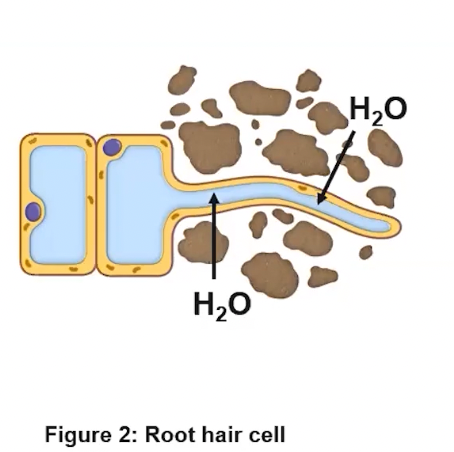
Membrane folding increases surface area (in root hairs)!
Root hairs on the surface of plant roots increase the surface area of the root, allowing for increased absorption of water and nutrients
Membrane folding increases surface area (intestines)!
After chemical digestion occurs in the digestive tract and macromolecules are broken down into monomers, the monomers need to be transported across the surface of the small intestine and into the bloodstream so they can be transported to cells
The outer lining of the small intestine is highly folded, containing finger-like projections called villi
The surface of each villi has additional microscopical projections called microvilli, which further increase the surface area available for absorption of nutrients.
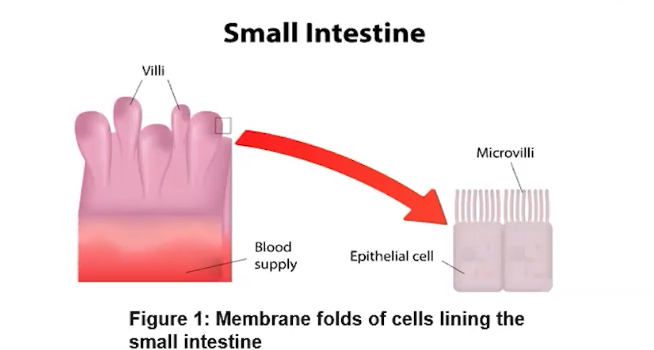
If a condition arises that leads to the loss of this folding, these cells would not be as efficient in absorbing nutrients for the organism
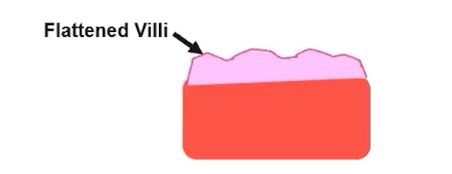
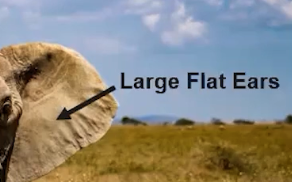
Membrane folding increases surface area (heat exchange)!
As organisms increase in size, their surface area to volume ratio decreases, affecting properties like the rate of heat exchange with the environment
The flattened shape of the ear allows the elephant to dissipate more thermal energy as blood flows closer to the surface
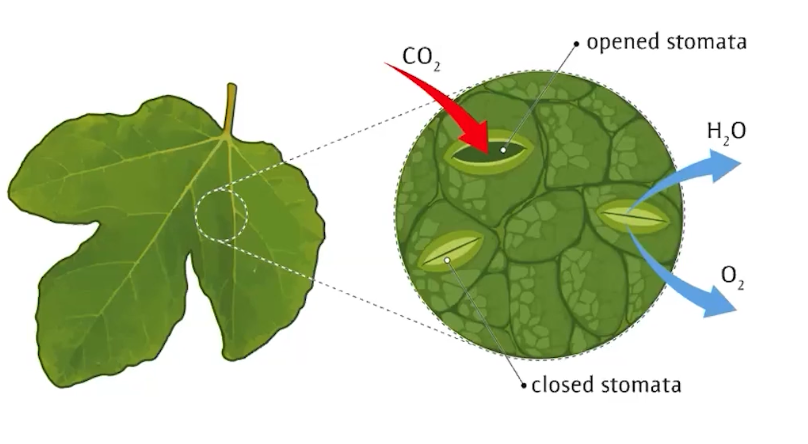
Membrane folding increases surface area (leaf)!
Organisms have evolved highly efficient strategies to obtain nutrients and eliminate wastes
Cells and organisms use specialized exchange surfaces, such as stomatal openings of leaves, to obtain molecules from and release molecules into the surrounding environment
When stomata are open, CO2 can enter the leaf and O2 and H2) can be released into the atmosphere
Cells have membranes that allow them to establish an internal environment
Cell membranes provide a boundary between the interior of the cell and the outside environment
Allows the cell membranes to control the transport of materials in and out of the cell
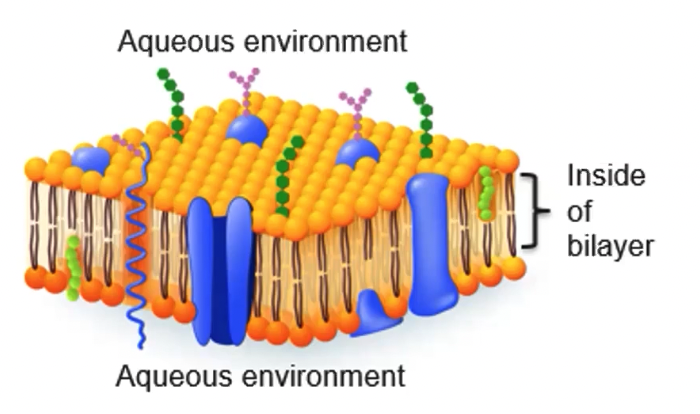
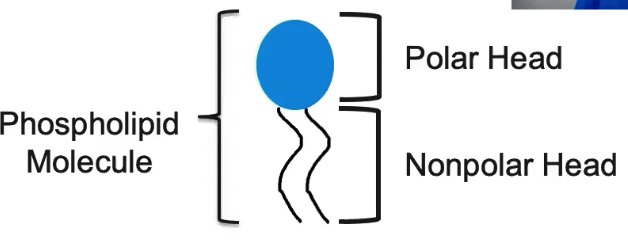
Phospholipids have both hydrophilic and hydrophobic regions
Phospholipids are amphipathic
Hydrophilic phosphate head is polar
Hydrophobic fatty acid tail is nonpolar
Phospholipids spontaneously form a bilayer in an aqueous environment
Tails are located inside the bilayer
Heads are exposed to the aqueous outside and aqueous inside environments
Embedded proteins can be hydrophilic or hydrophobic
Peripheral proteins (2)
Loosely bound to the surface of the membrane
Hydrophilic with charged and polar side groups
Integral proteins (3)
span the membrane
Hydrophilic with charged and polar side groups
Hydrophobic with non-polar side groups penetrate the hydrophobic interior of the bilayer
Example: Transmembrane proteins
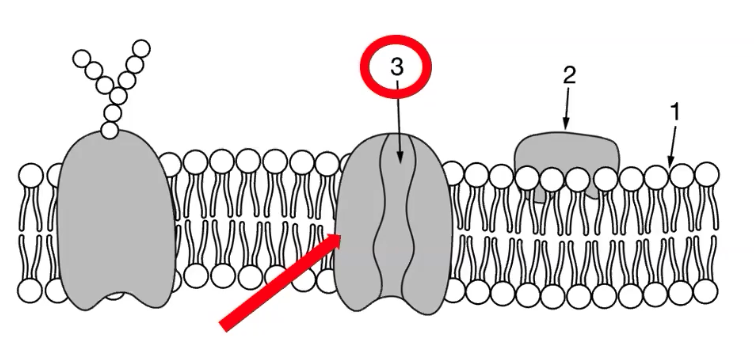
Embedded proteins play various roles in maintaining the internal environment of the cells
membrane protein functions
1. Transport
2. Cell-cell recognition
3. Enzymatic activity
4. Signal Transduction
5. Intercellular joining
6. Attachment for extracellular matrix or cytoskeleton
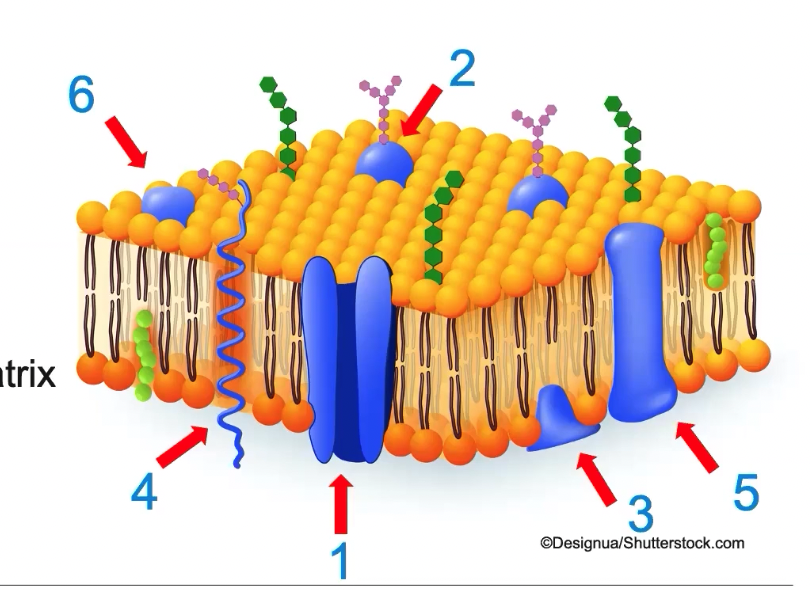
Fluid Mosaic Model
Structured as a mosaic of protein molecules in a fluid bilayer of phospholipid
The structure is not static and is held together primarily by hydrophobic interactions, which are weaker than covalent bonds
Most lipids and some proteins can shift and flow along the surface of the membrane or across the bilayer
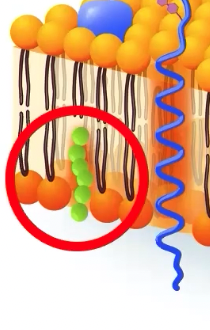
Fluid Mosaic Model (steroids)
Cholesterol, a type of steroid, is randomly distributed and wedged between phospholipids in the cell membrane of eukaryotic cells
Cholesterol regulates bilayer fluidity under different environmental conditions
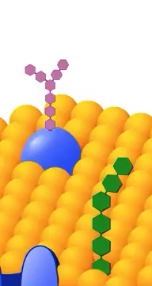
Fluid Mosaic Model (carbohydrates)
Diversity and location of the (molecules) carbohydrates and lipids enable them to function as markers
Glycoproteins- one or more carbohydrates attached to a membrane protein
Glycolipids- lipids with one or more carbohydrates attached
Can hydrophilic substances move freely across the membrane
Hydrophilic substances, such as large polar molecules and ions, can NOT freely move across the membrane
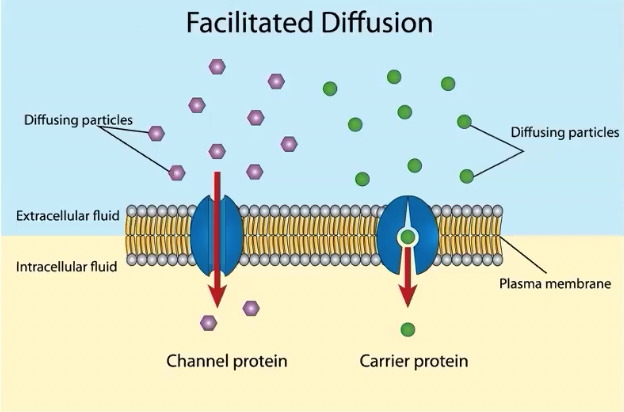
Hydrophilic substances move through transport proteins
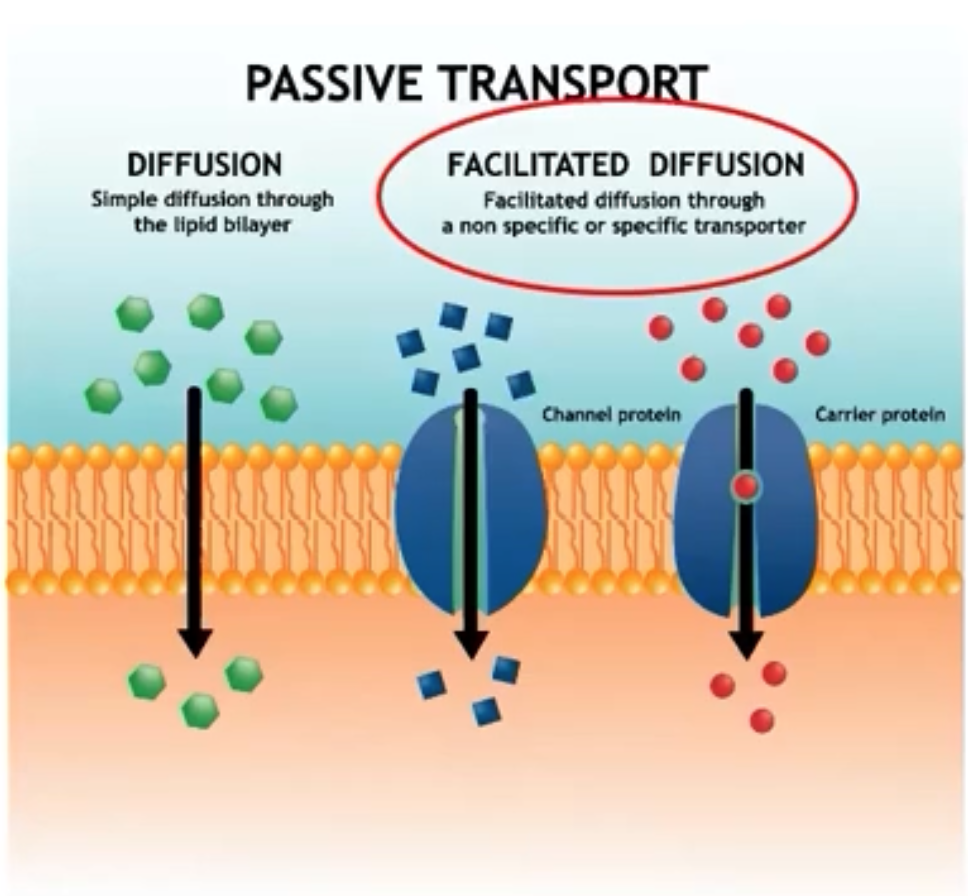
Channel Proteins- A hydrophilic tunnel spanning the membrane that allows specific target molecules to pass through
Carrier Proteins- Span the membrane and change shape to move a target molecule from one side of the membrane to the other
Small polar molecules, like H2O, can pass directly through the membrane in minimal amounts
The cell wall is a structural boundary and permeable barrier
As a structural boundary:
Protects and maintains the shape of the cell
Prevents against cellular rupture when internal water pressure is high
Helps plants stand up against the force of gravity
As a permeable barrier
Plasmodesmata- small holes between plant cells that allow the transfer of nutrients, waste, and ions
Animal cells DO NOT have cell walls
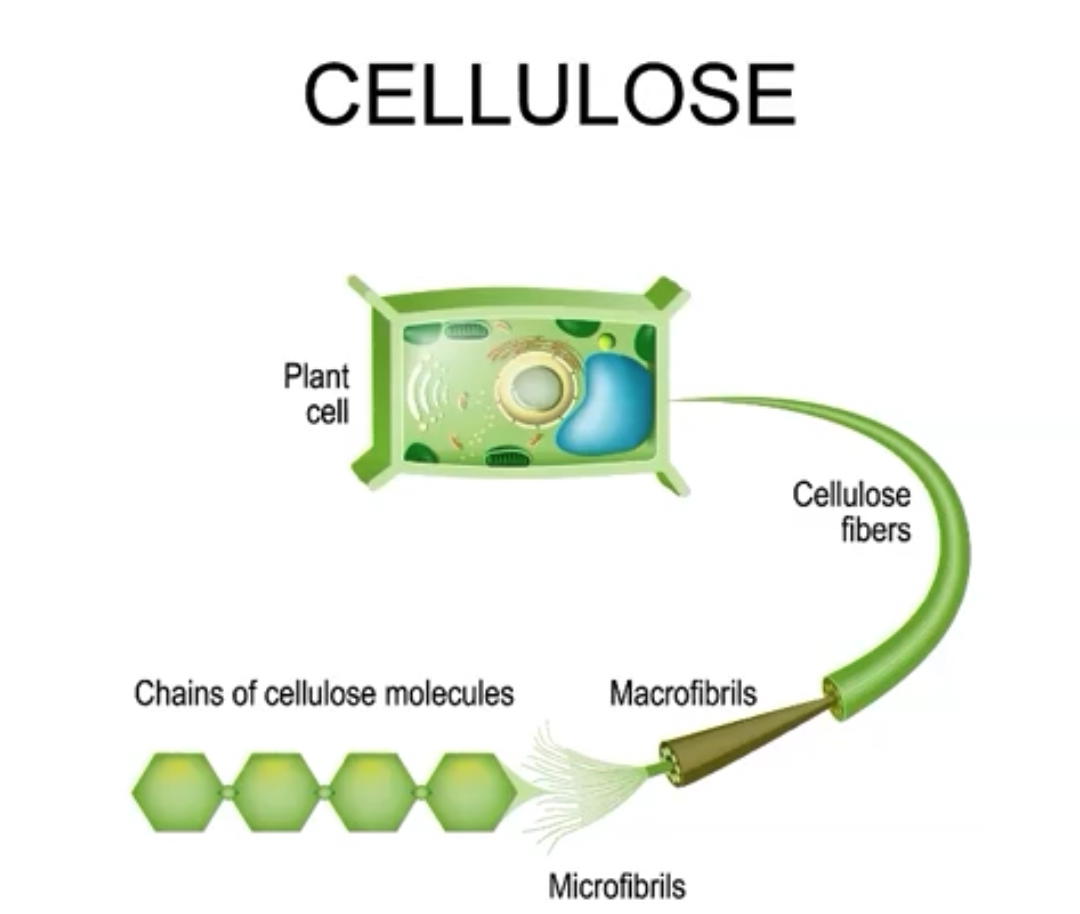
Cell walls are composed of complex carbohydrates
Cell Wall- comprised of complex carbohydrates
Plants- Cellulose
Polysaccharide
Fungi- Chitin
Polysaccharide
Prokaryotes- peptidoglycan
Polymer consisting of sugar and amino acids
Selectively permeable membranes allow for the formation of concentration gradients
Concentration gradient
A concentration gradient is when a solute is more concentrated in one area than another
A membrane separates two
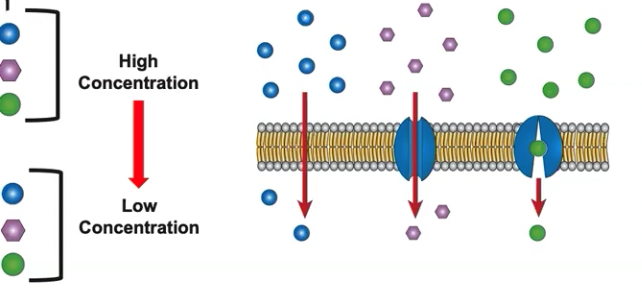
different concentrations of molecules
Passive transport is the net movement of molecules from high to low concentration
Net movement of molecules from high concentration to low without metabolic energy, such as ATP, is needed
Plays a primary role in the import of materials and the export of wastes
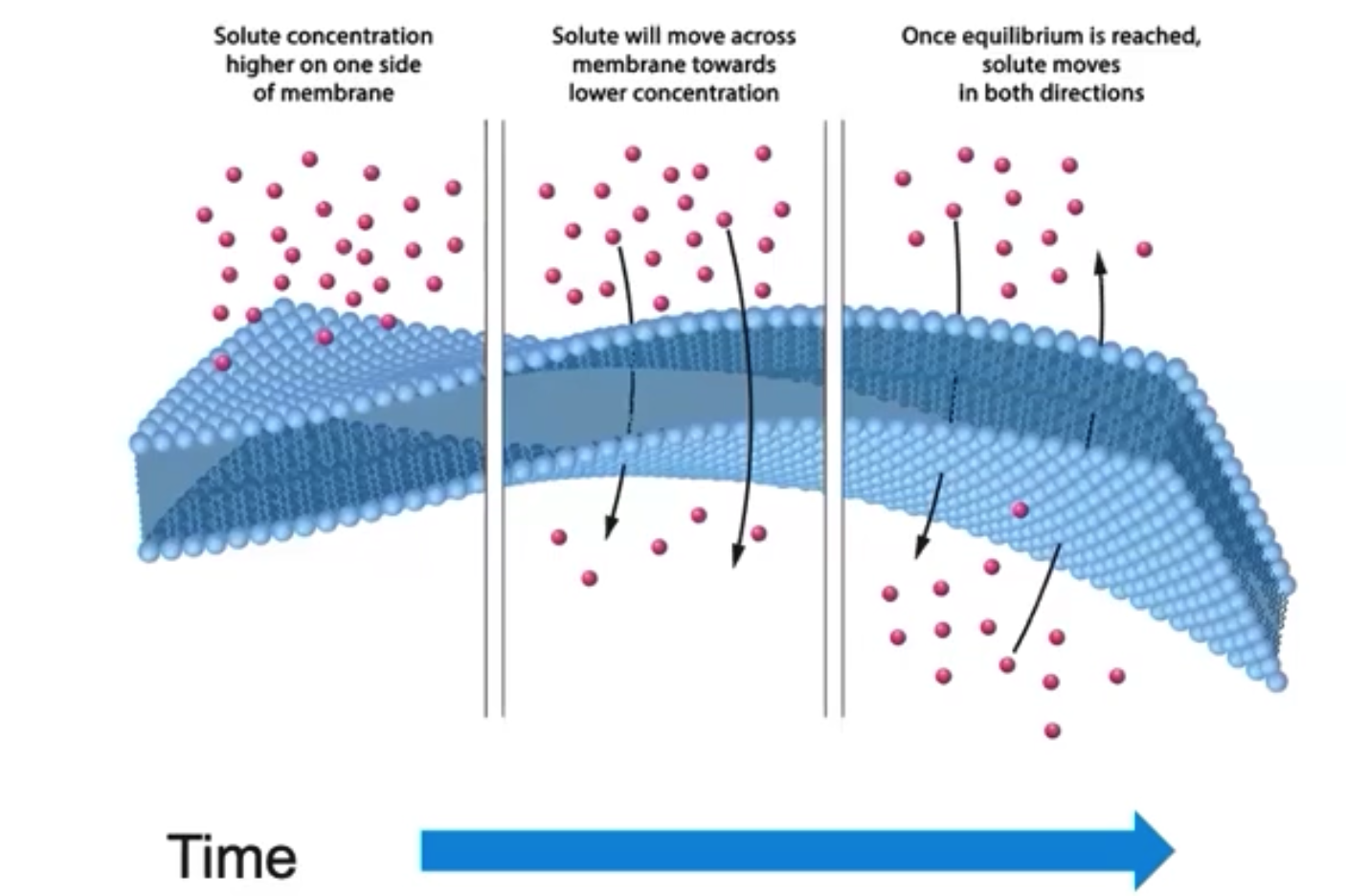
Diffusion- movement of molecules from high concentration to low concentration
Small non-polar molecules pass freely (N2, O2, CO2)
Facilitated Diffusion- movement of molecules from high concentration to low concentration through transport proteins
Allows for hydrophilic molecules and ions to pass through membranes
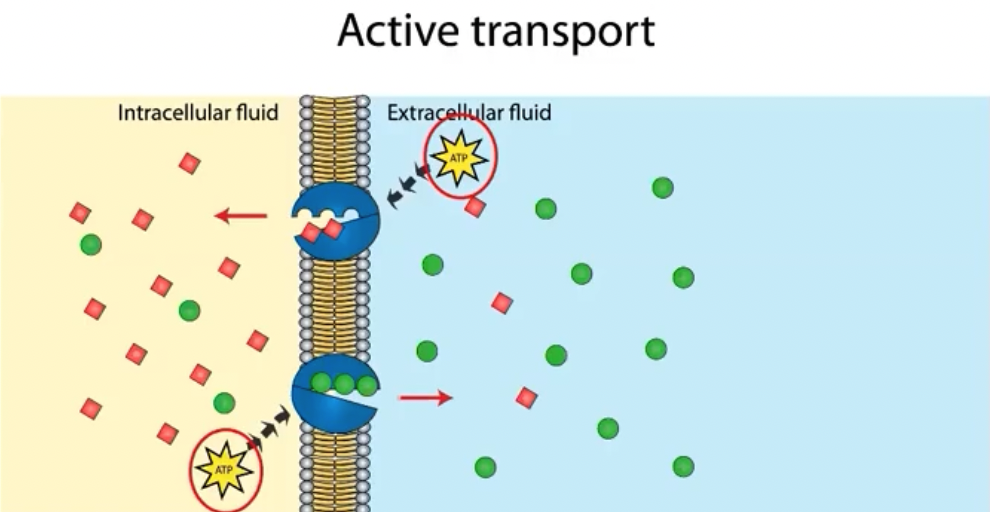
Active transport requires energy
Active transport requires the direct input of energy (such as ATP) to molecules from regions of low concentration to regions of high concentration
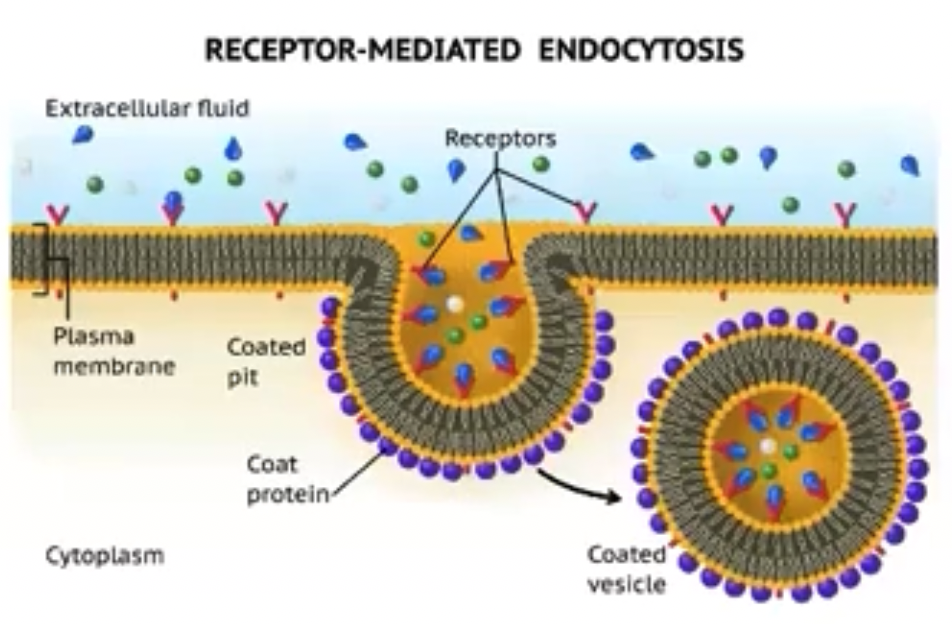
Endocytosis requires energy to move large molecules into the cell
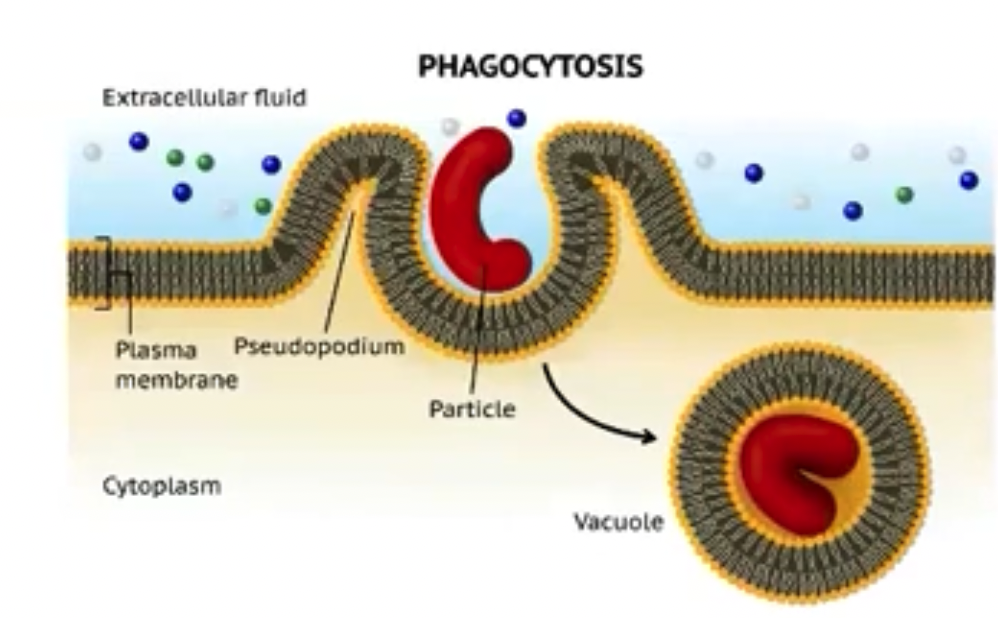
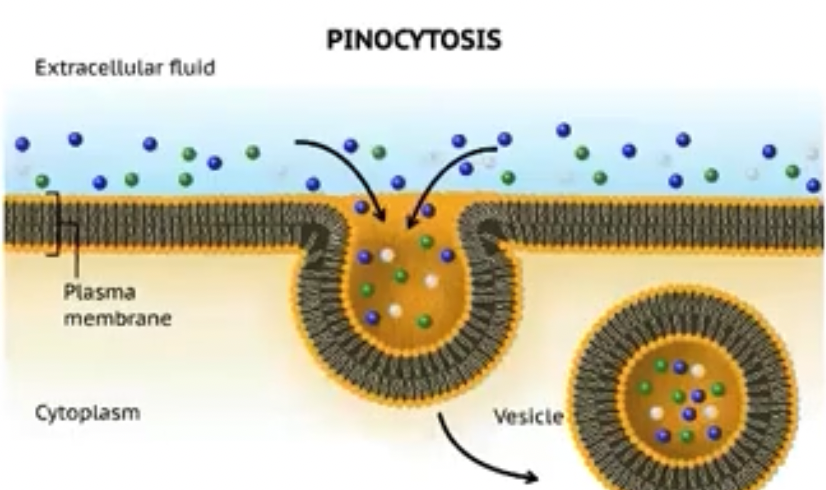
In endocytosis, the cell uses energy to take in macromolecules and particulate matter by forming new vesicles derived from the plasma membrane
Phagocytosis- a cell takes in large particles
Pinocytosis- a cell takes in extracellular fluid containing dissolved substances
Receptor-mediated endocytosis: receptor proteins on the cell membranes are used to capture specific target molecules
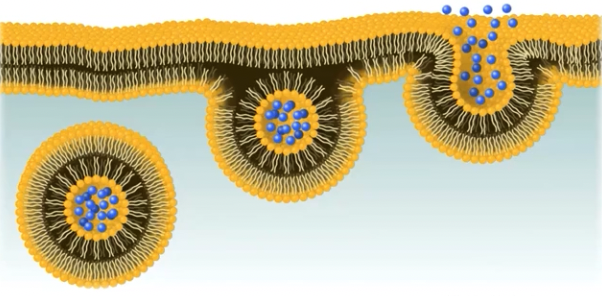
Exocytosis requires energy to move large molecules out of the cell
In exocytosis, internal vesicles use energy to fuse with the plasma membrane and secrete large macromolecules out of the cell
Proteins such as signaling proteins
Hormones
Waste
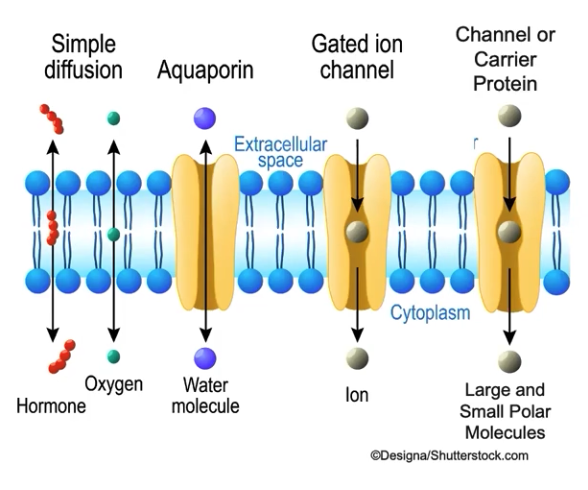
Membrane proteins are necessary for facilitated diffusion
Facilitate Diffusion- movement of molecules from high concentration to low concentration through transport proteins
Large and small polar molecules
Large quantities of water can pass through aquaporins
Charged ions, including Na+ and K+ require channel proteins
What does the cell membrane allow?
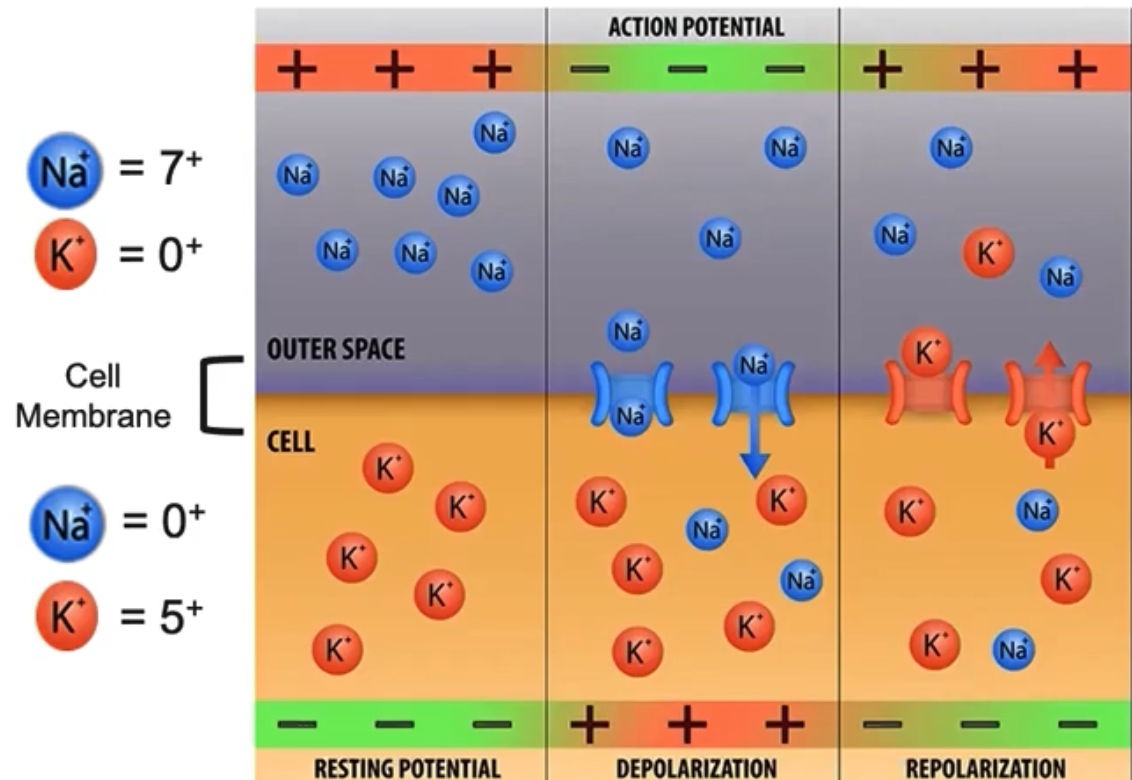
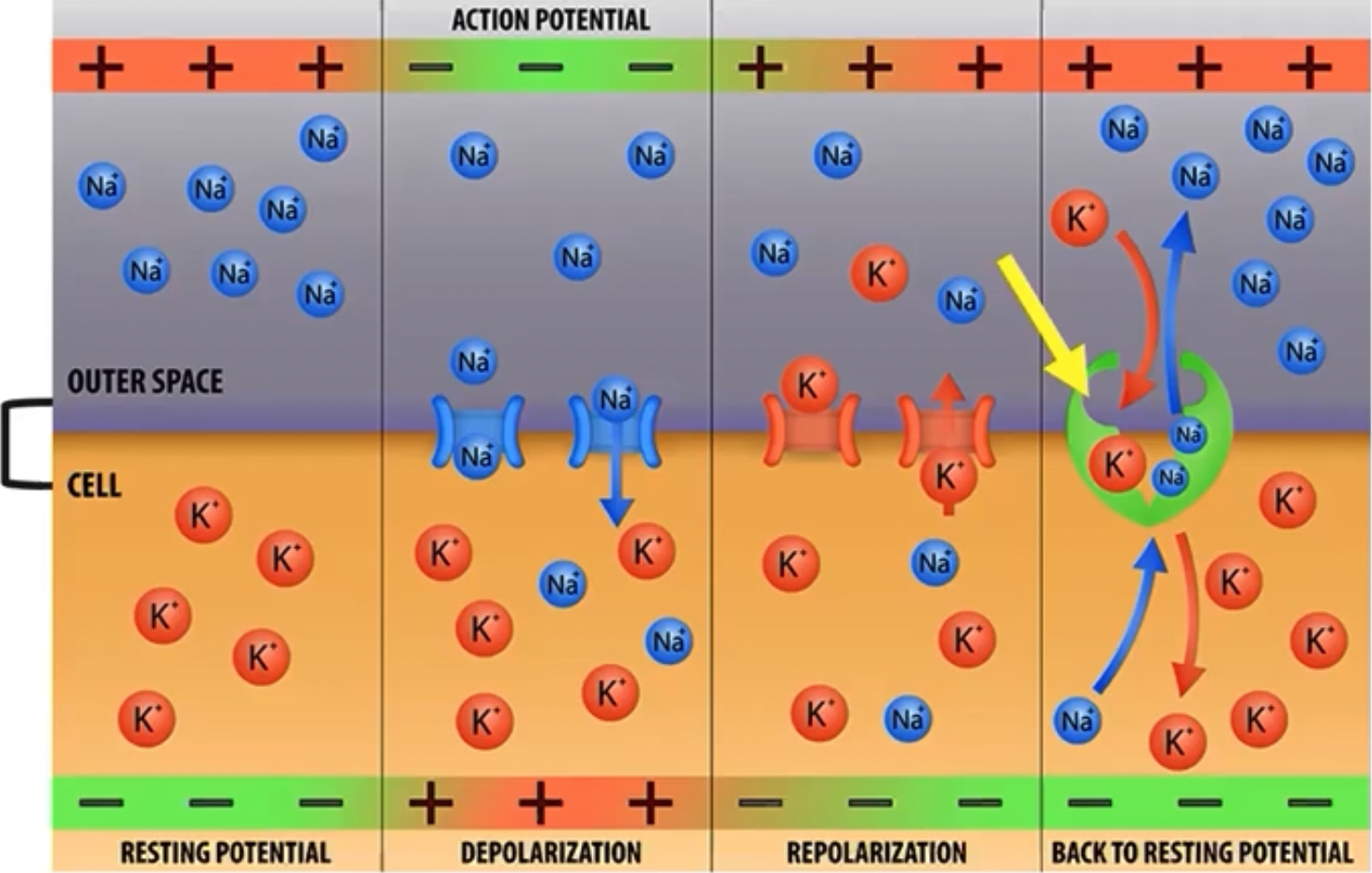
Membranes may become polarized by the movement of ions
The cell membrane allows for the formation of gradients
Electrochemical gradient
Type of concentration gradient
Membrane potential- electrical potential difference (voltage) across a membrane
Membranes may become polarized by the movement of ions across the membrane
How does Na+/K+ ATPase contribute to the membrane potential
Na+/K+ ATPase (Na+/K+ Pump) contributes to the maintenance of the membrane potential
3 Na+ Pumped
2 K+ Pumped
How is water moved by osmosis?
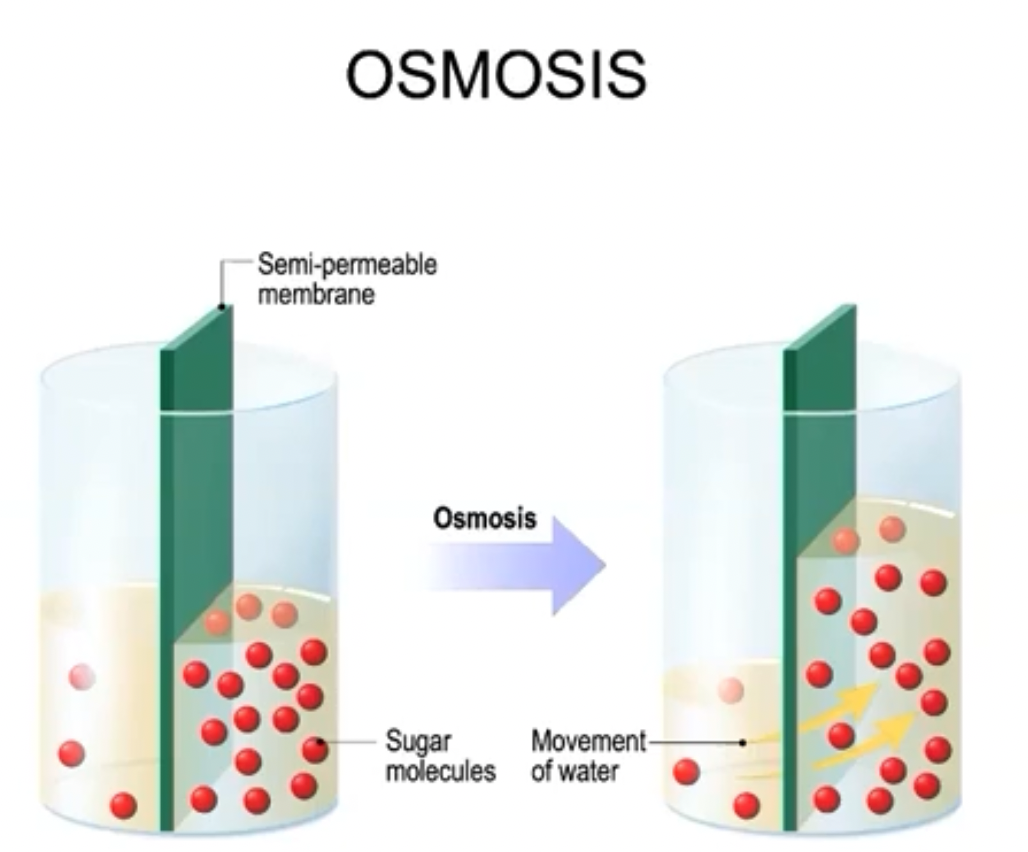
Osmosis is the diffusion of free water across a selectively permeable membrane
Large quantities of water move via aquaporins
Osmolarity is the total solute concentration in a solution
Water has high solvency abilities
Solute is the substance being dissolved
A solvent is a substance that dissolves a solute
Solution is a uniform mixture of one or more solutes dissolved in a solvent
(solvent + solute = solution)
What is tonicity, and what are its effects?
Tonicity is the measurement of the relative concentrations of solute between two solutions (inside and outside of the cell)
Internal cellular environments can be hypotonic, hypertonic, or isotonic to external environments.
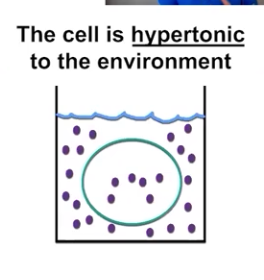
Hypertonic
More Solute and less solvent
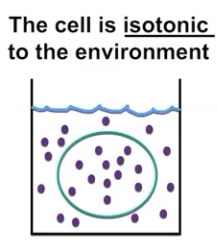
Isotonic
Equal concentration of solute and solvent
Hypotonic
Less Solute and more solvent
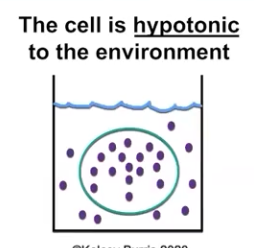
What are tonicity effects on a cell’s physiology
Water moves by osmosis into the area with a higher solute concentration
Water concentration and solute concentration are inversely related
Water would diffuse out of a hypertonic environment
Solutes diffuse along their own concentration gradients, from the hypertonic environment into the hypotonic environment
When a cell is in an isotonic environment, a dynamic equilibrium exists with equal amounts of water moving in and out of the cell at equal rates
No net movement of water takes place
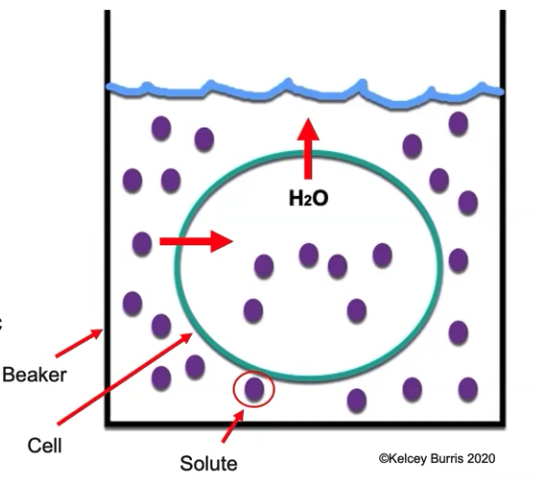
How does osmoregulatory mechanisms contribute to survival?
In plant cells, osmoregulation maintains water balance and allows control of internal solute composition/water potential
Environmental Hypertonicity
Less cellular solute and more cellular war
Plasmolysis
Isotonic Solution
Equal Solute and Water
Flaccid
Environmental Hypotonicity
More cellular solute and less cellular water
Turgid
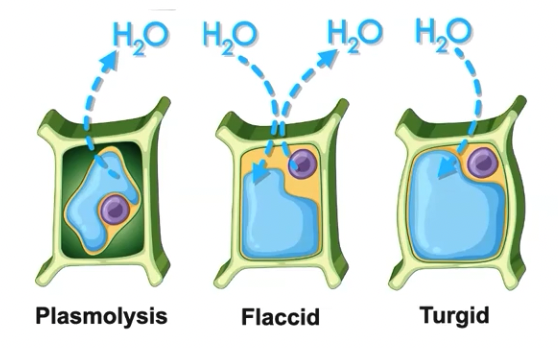
How do osmoregulatory mechanisms contribute to survival (plants)?
The cell wall helps maintain homeostasis for the plant in environmental hypotonicity
Osmotic pressure is high outside of the plant cell due to environmental hypotonicity
Water flows into the plant vacuoles via osmosis, causing the vacuoles to expand and press against the cell wall
The cell wall expands until it begins to exert pressure back on the cell; this pressure is called turgor pressure
Turgidity is the optimum state for plant cells
How do osmoregulatory mechanisms contribute to survival (animals)?
In animal cells, osmoregulation maintains water balance and allows control of internal solute composition/water potential
Environmental Hypertonicity
Less cellular solute and more cellular water
Shriveled
Isotonic Solution
Equal solute and water
Normal
Environmental Hypotonicity
More cellular solute and less cellular water
Lysed
What are the components of an effective graph?
Title
Labeled axes with units
Scaling— uniform intervals
Identifiable lines or bars
Trend lines
What are the different types of graphs?
Line Graph
Trends or progress OVERTIME for multiple groups or treatments
X Y Graph
Scatterplot
Compare/Determine linear relationship between two variables
Histograms
How the data is spread out across equal-sized ranges
Relationship between two OR MORE variables
Bar Graph
Compare multiple groups or treatments to each other
Box and Whisker Plot
Show VARIABILITY in a sample
Compare distributions in relation to mean
Dual Y
Illustrate relationship between TWO DEPENDENT variables
When should graphs be used?
When you are given collected data.
The graph type used is based on the type of data collected.
How does water potential impact the movement of water?
Water moves by osmosis (MORE to LESS water potential)
Water potential shows how likely water is to move.
It depends on two things:
Pressure potential (pushing force)
Solute potential (how much stuff is dissolved in the water)
So, water moves based on pressure and how the solution is.
Values of water potential can be +, -, or 0
More negative the water potential, the more likely water will move into the area.
EXAMPLE: If the water potential inside the cell is –3 bars and outside the cell is –6 bars, water will move out of the cell. This is because water moves from higher water potential (less negative) to lower water potential (more negative), so it moves toward the outside of the cell.
How does solute potential impact the movement of water?
In an open system, the pressure potential is ZERO, so water potential = solute potential
Solute Potential = -iCRT
i = ionization constant
C = molar Concentration
Molarity (M) = moles of solute/volume of solution
R = pressure constant (L*Bars)/(mol*K)
T = temperature in KELVIN (°C + 273 = Kelvin)
Addition of solutes is equal to a more NEGATIVE solute potential
How do organisms maintain water balance?
Water will move from the soil into the roots since the soil has higher water potential than the roots.
What is water potential of pure water?
Has a value of zero (0) in an OPEN CONTAINER because there is no solute and no pressure.
What allows organism to control their internal solute composition and water potential?
OSMOREGULATION
Increasing the amount of solute in water will cause
An increase in solute potential
A decrease in water potential
Increasing water potential will cause
An increase in pressure potential
Decreasing pressure potential will cause
A decrease in water potential
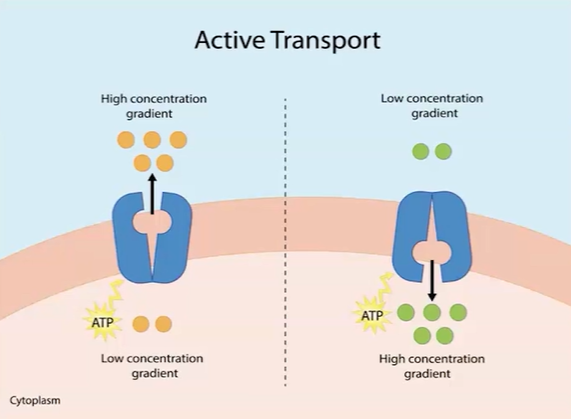
What is active transport?
Movement of molecules or ions against the concentration gradient.
Ions move from LOW to HIGH concentration.
Active transport needs energy (like ATP) to move ions and molecules across the cell membrane.
This energy is used to build and maintain concentration differences (electrochemical gradients) across the membrane.
Why are membrane proteins necessary for active transport?
The membrane blocks most substances, so proteins are needed to physically move molecules across using energy.
Allows Na+ and K+ to pass through at certain binding sites.
Serves as a “gate” or “channel.”
REMEMBER: Phospholipid bilayer:
HYDROPHOBIC tails (water-hating)
HYDROPHILIC heads (water-loving) — INTERACTS with the ions which are HYDROPHOBIC
These TWO clash, so a MEMBRANE PROTEIN is NECESSARY
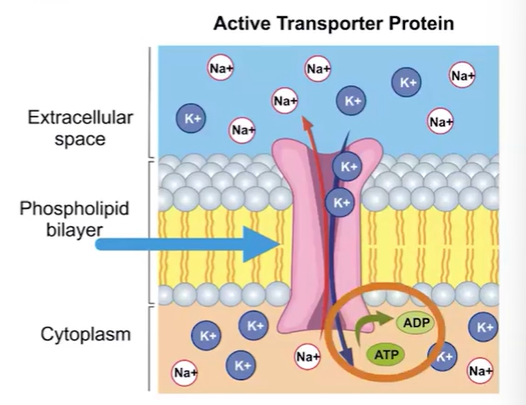
How does the Na+/K+ pump and ATPase maintain membrane potential?
The Na+/K+ pump and ATPase balance sodium and potassium levels on each side of the membrane.