SUTURING
 Call Kai
 Learn
Learn Practice Test
 Spaced Repetition
 Match
Match Flashcards
 Knowt Play
1/32

Earn XP
Description and Tags
ppt only!!
Name | Mastery | Learn | Test | Matching | Spaced | Call with Kai | Chat |
|---|
No analytics yet
Send a link to your students to track their progress
33 Terms
functions of suture
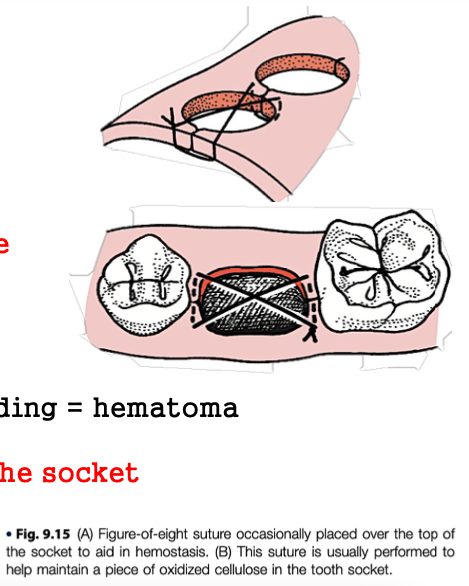
aid in maintaining a blood clot in the socket → ex: figure-of-eight suture
to coagulate wound margins → most obvious and important function
help hold soft tissue flap over bone → if bone not covered = necrosis
aid in hemostasis → act as tamponade in oozing areas
caution: in underlying tissue is bleeding = hematoma
figure-of-eight suture
this suture is usually performed to help maintain a piece of oxidized cellulose in the tooth socket and to aid in hemostasis
armamentarium
needle holder
suture needle
tissue forceps
suture material
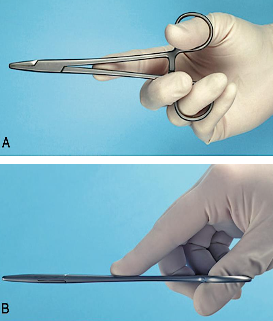
needle holder
15cm (about 6”) in length and has a locking handle
held with the thumb and ring finger through the rings
index finger along the length of needle holder to provide stability and control
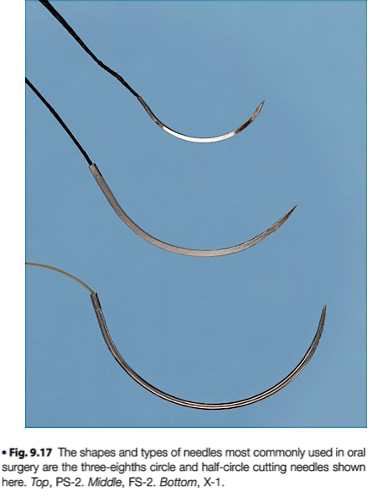
suture needle
made of either stainless steel or carbon steel
2 shapes:
straight & curved
3 basic components:
point, body, eye (swage)
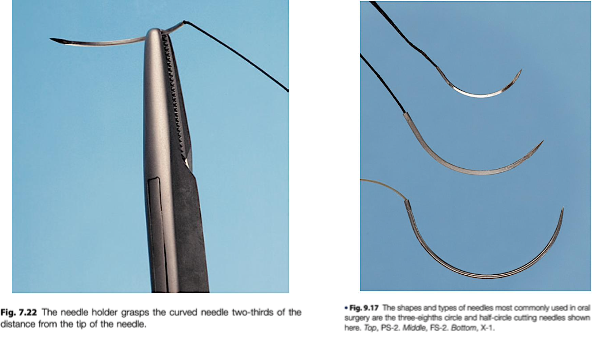
most common needle shapes:
three-eighths
half-circle cutting needles
tissue forceps & suture material
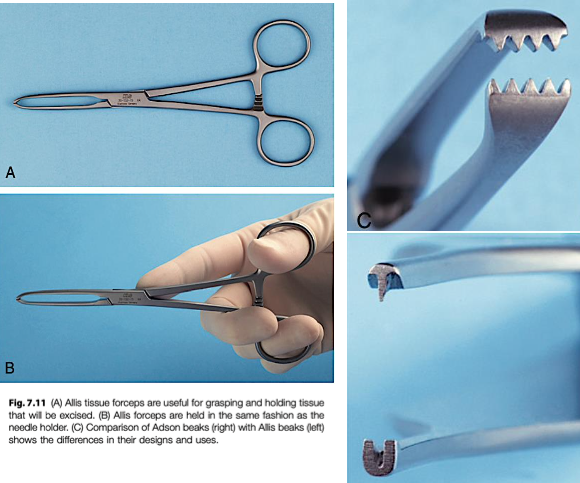
soft tissue forceps
allis tissue
adson forceps
stillies forceps
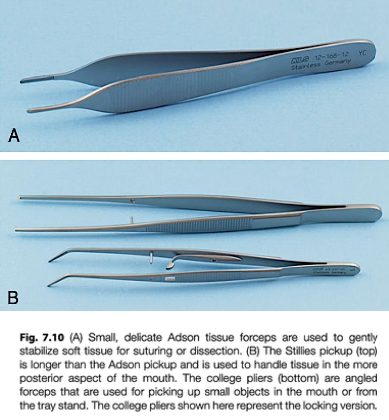
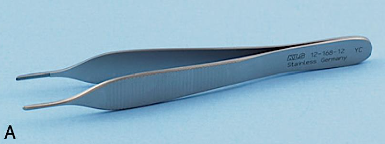
adson forceps
most commonly used (esp anteriors)
fine, small, delicate tips (toothed or smooth)
used to gently stabilize soft tissue for suturing or dissection
if toothed: secure hold with minimal pressure to reduce trauma (use gently)
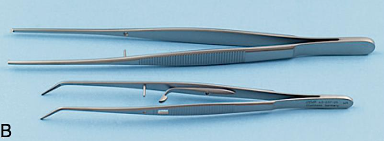
stillies forceps
preferred for posteriors
typically 7–9” long, allowing good reach, grip and control
allis tissue
for large tissue removal (epulis)
has locking handles and teeth
suture material classification
by resorbability
by filament type
by diameter/size (ex: 3-0, 4-0, 5-0)
smaller sizes = more zeros (ex: 5-0, 6-0) → less scarring is desired
larger size = fewer zeros (ex: 2-0 > 3-0)
resorbable sutures
made of gut (sheep intestine)
chromic gut
resorbs in 7–10 days
plain catgut
resorbs in 3–5 days
synthetic types
polyglycolic & polylactic acid → last up to 4 weeks, rarely needed
nonresorbable sutures
ex: silk, nylon, vinyl, stainless steel
silk → most commonly used in oral surgery
suture material by filament type
monofilament
ex: gut, nylon, stainless steel
less wicking, but harder to tie and may irritate tissue
polyfilament
ex: silk, synthetic braided
easier to handle and tie
more comfortable, but can wick fluids
suture removal timing
oral mucosa sutures typically removed in 5–7 days
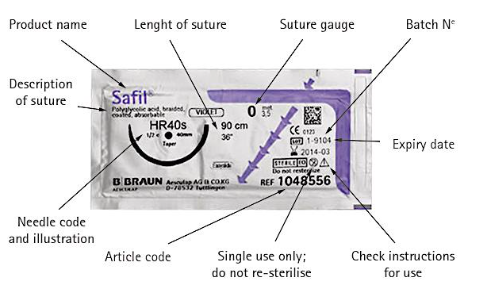
package of suture
principles of suturing
from free to fixed tissue
held 2/3 from the tip
single pass if attainable
perpendicular to the surface
2-3mm from the edge
3-4mm from the next suture
no blanching, no tension
not along incision line
ends of suture no longer than 1cm
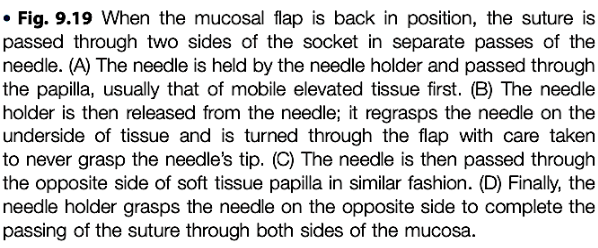
passed from free to fixed tissue
needle is held 2/3 from the tip
facial tissue first needle is regrasped with needle holder passed thru the lingual papilla
when two margins of the wound are close together, needle may insert through both sides of the wound in a single pass
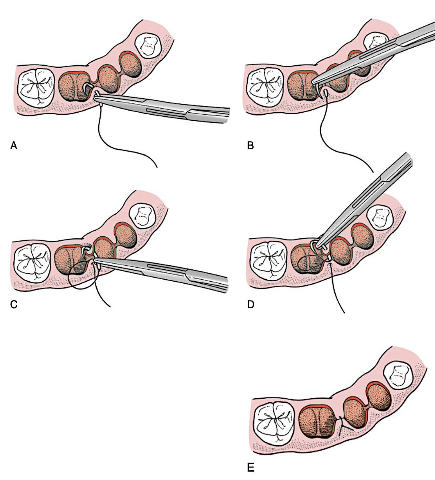
needle penetrates perpendicularly to tissue surface
when passing needle thru tissue, needle enters surface at right angle, to make the smallest possible hole in the mucosal flap
if oblique or acute → flap tearing and wound edges not properly align and needle is pushed thru rather than turned
(to prevent needle or suture from pulling thru soft tissue flap)
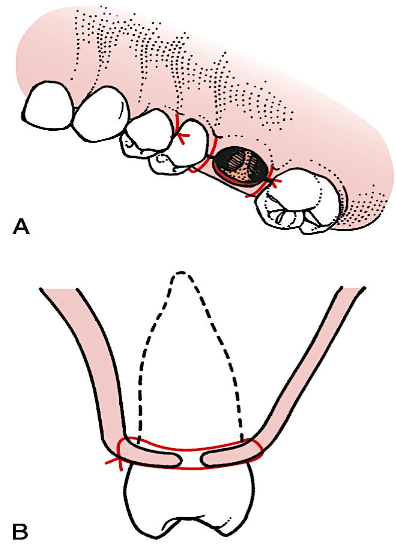
suture for an envelope flap
sutures are placed at the papillae only, not placed at empty tooth socket
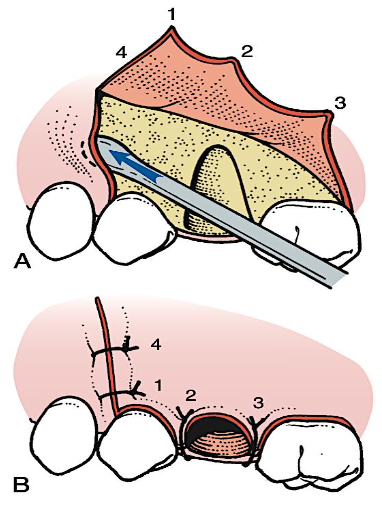
suture for a three-cornered flap
vertical end of the incision must be closed separately with 2 sutures for the vertical end
#9 periosteal elevator → to elevate the non-flap side of the incision, facilitate passage of the needle
when it is repositioned, the first suture is placed at the occlusal end of the vertical-releasing incision (1). the papillae are then sutured sequentially (2, 3), and finally, the superior aspect of the releasing incision is sutured (4)
types of suturing techniques
simple interrupted suture
simple continuous suture
continuous locking suture
horizontal mattress suture
vertical mattress suture
figure-of-eight suture
instrument tie
most intraoral sutures are tied with an instrument tie
the suture is pulied through tissue until the short tail of the suture (approx 1-2cm long) remains
the needle holder is held horizontally by the right hand in preparation for the knot-tying procedure
the left hand then wraps the long end of the suture around the needle holder twice in the clockwise direction to make two loops of suture around the needle hoider
the surgeon then opens the needle holder and grasps the short end of the suture very near its end
the ends of the suture are then pulled to tighten the knot
the needle holder should not pull the suture it is holding at all until the knot is neary tied to avoid lengthening that portion of the suture
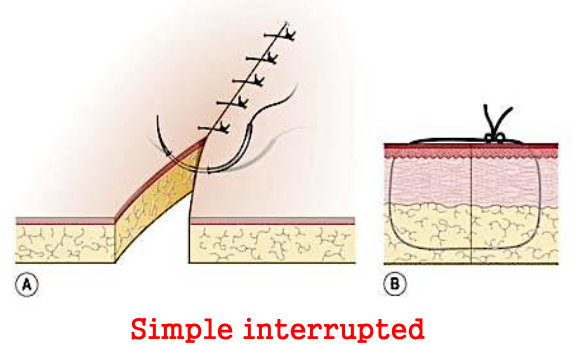
simple interrupted suture
most commonly used
suture goes through one side, comes up through the other side and tied in a knot at the top
advantages:
can be placed quickly
tension adjusted individually
if one suture is lost, remaining sutures stay in position
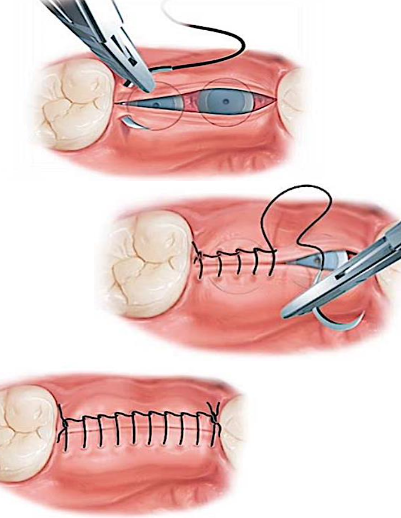
simple continuous suture
done if the incision is long
needle is reinserted in a continuous fashion
advantages:
quick and has fewer knots
disadvantages:
not possible to free a few sutures at a time
even when one breaks, entire closure is affected
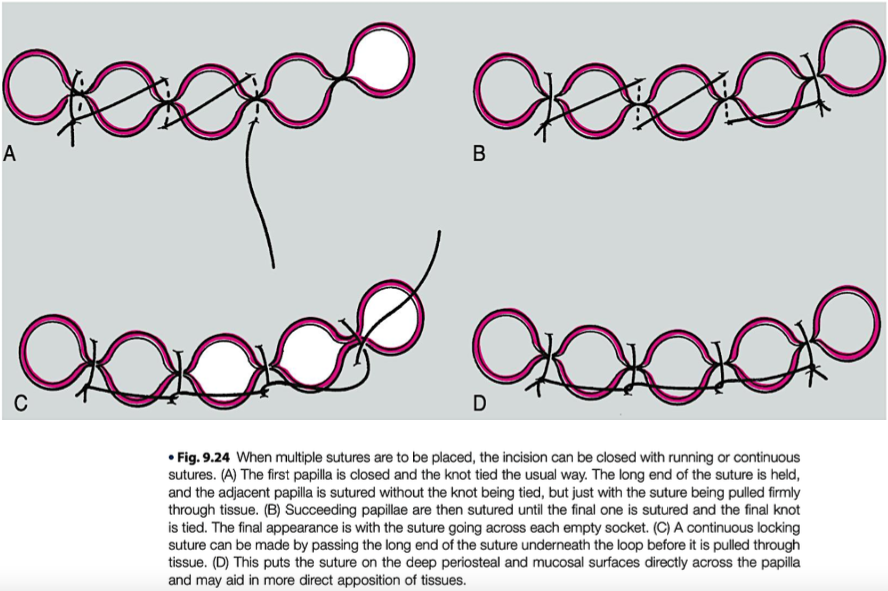
continuous locking suture
similar to the simple continuous type, but the locking is provided by withdrawing the suture through its own loop
advantages:
reduced number of knots
uniform distribution of tension
prevents excessive tightening
disadvantages:
prevents the adjustment of tension over the wound if tissue swelling occurs
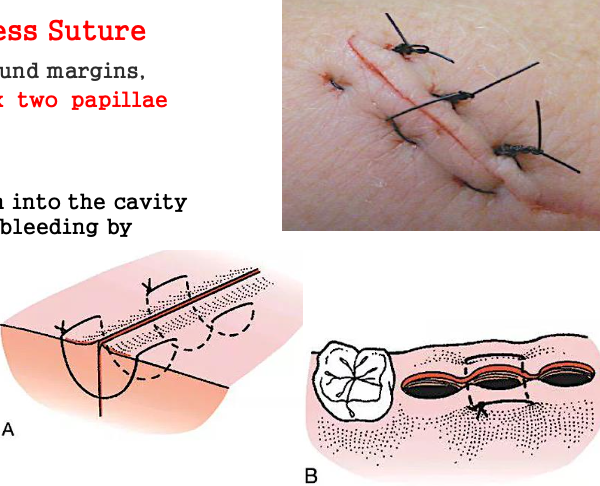
horizontal mattress suture
helps in eversion of wound margins
the easiest way to fix two papillae with a single knot
advantages:
prevents flap inversion into the cavity
helps control post-op bleeding by tensing mucoperiosteum
disadvantages:
may restrict blood supply (necrosis)
technique involves repeated needle passes and knot tying
vertical mattress suture
used in areas prone to inversion
uses 2 stitches:
deep, wide stitch to bring the deeper tissues together
shallow, close stitch to turn the skin edges slightly outward
advantages:
provides increased strength
does not interfere with healing as suture runs parallel to blood supply
disadvantages:
fine wound edge approximation is difficult
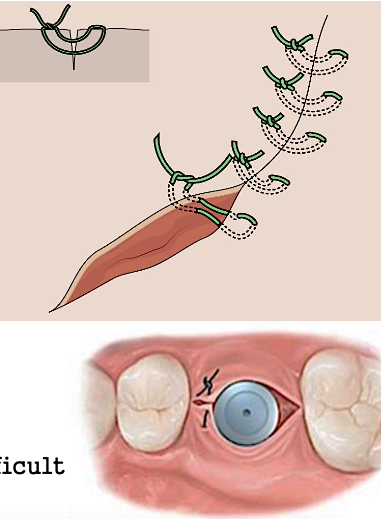
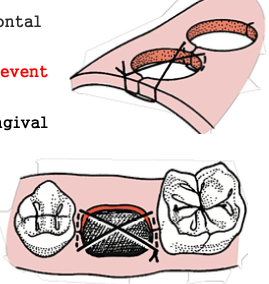
figure-of-eight suture
a modification of the horizontal mattress suture technique
used to close open sockets and prevent clot displacement
provides good adaptation of gingival papilla along the adjacent teeth
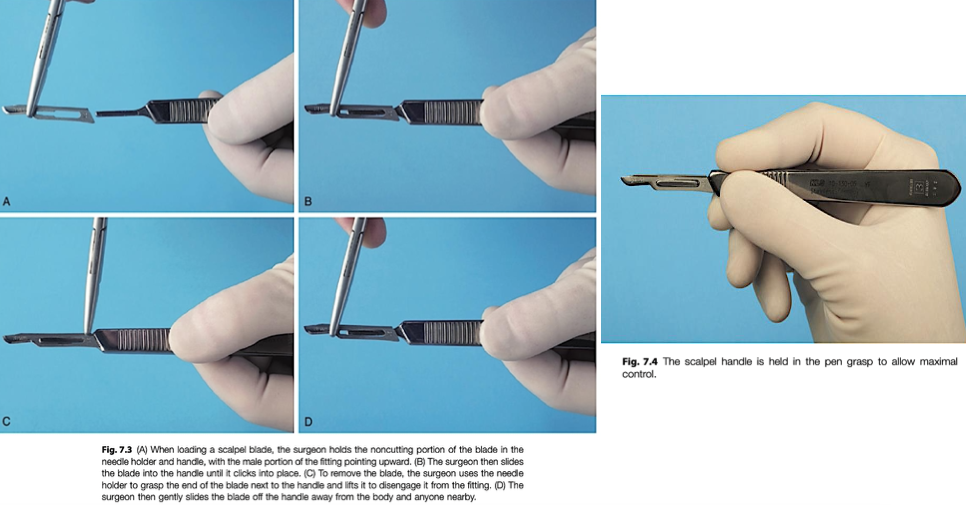
scalpel blade handling
scalpel blade insertion:
holds the noncutting portion of the blade in the needle
grip ribbed edge with needle holder
male portion of the fitting pointing upward
slide onto handle until it clicks
use pen grasp when making incisions
scalpel blade removal:
lift up the back end with needle holder
slide blade off away from body
discard in sharps container
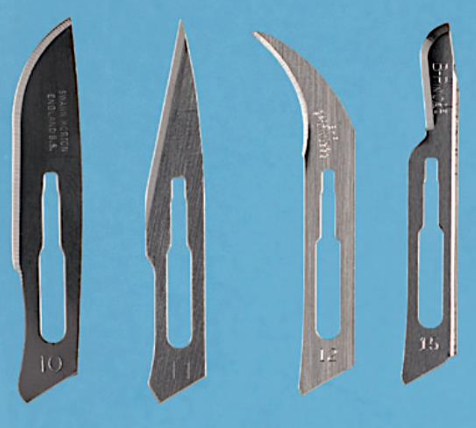
type of scalped blades used in oral surgery
No.10 – extraoral incision
No.11 – stab incision
No.12 – distal to last molars
No.15 – intraoral incision → most commonly used
scalpel holder
