15- CiteScore Explained | How Scopus Calculates Journal Impact
 Call Kai
 Learn
Learn Practice Test
 Spaced Repetition
 Match
Match Flashcards
 Knowt Play
1/10

Earn XP
Description and Tags
Source: https://www.youtube.com/watch?v=ZUCox179ZcM
Name | Mastery | Learn | Test | Matching | Spaced | Call with Kai | Chat |
|---|
No analytics yet
Send a link to your students to track their progress
11 Terms
Which database serves as the source of data for calculating CiteScore?
A. Web of Science
B. Google Scholar
C. PubMed
D. Scopus
Answer: D. Scopus
Explanation: CiteScore is a metric specifically developed and calculated using data from the Elsevier Scopus database.
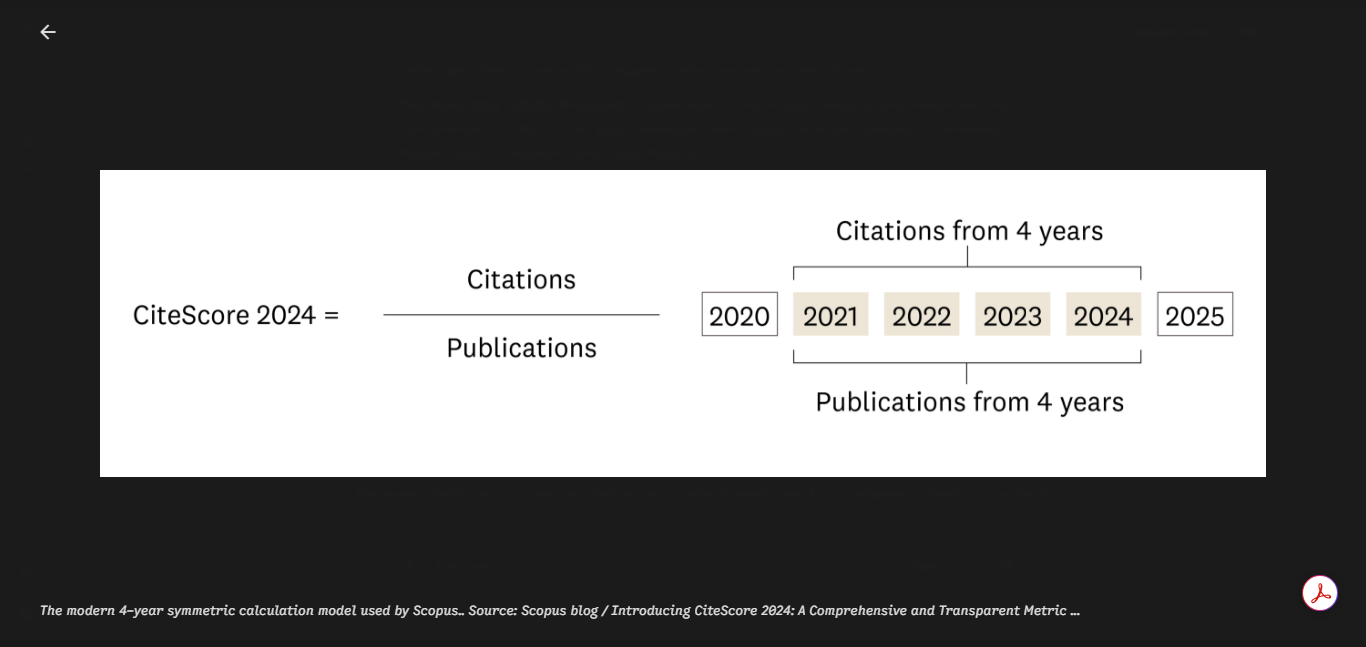
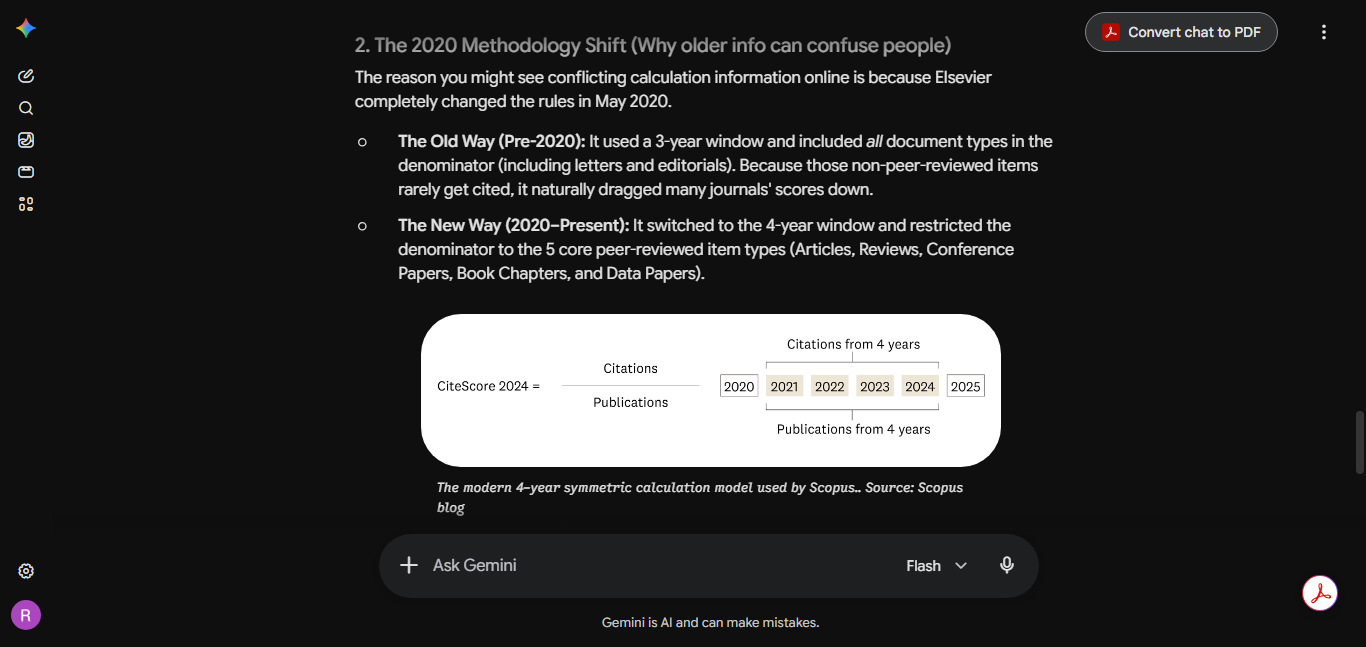
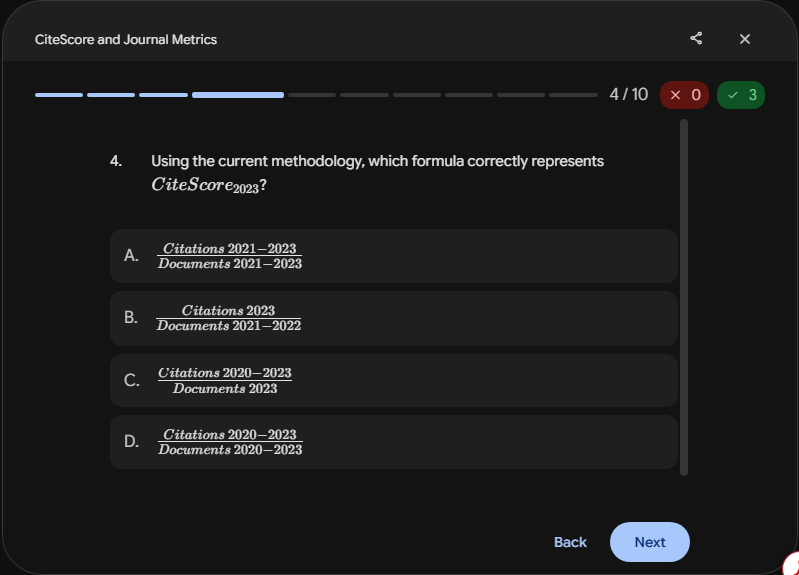
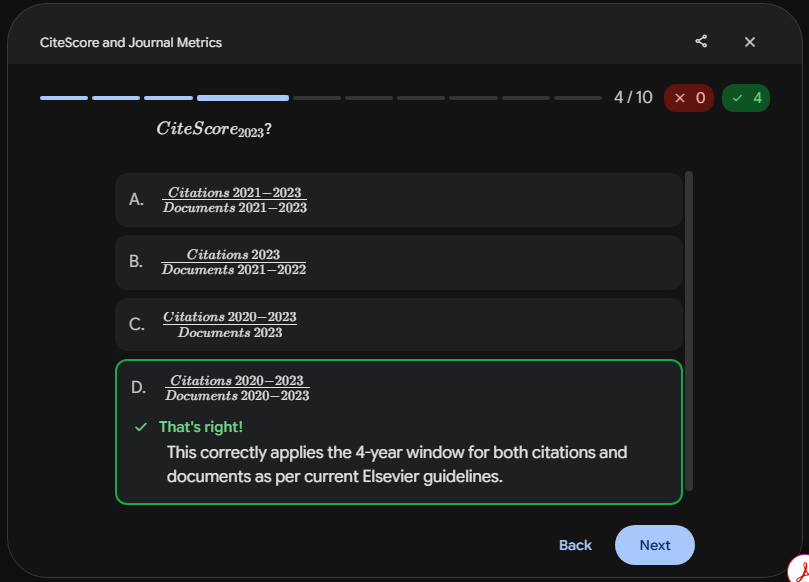
How many years are included in the calculation window for both citations and documents in the CiteScore methodology?
A. Three years
B. Two years
C. Five years
D. Four years
Answer: D. Four years
Explanation: The current CiteScore methodology uses a 4-year window for both the numerator and the denominator.
Which of the following documents would be excluded from the denominator when calculating a journal's CiteScore?
A. Conference papers
B. Book chapters
C. Data papers
D. Editorials
Answer: D. Editorials
Explanation: CiteScore only includes 5 specific peer-reviewed document types; editorials are categorized as 'non-citable' and excluded.
What is a primary difference between CiteScore and the Journal Impact Factor (JIF) regarding document types?
A. JIF is broader
B. CiteScore is broader
C. JIF excludes reviews
D. Both are identical
Answer: B. CiteScore is broader
Explanation: CiteScore includes articles, reviews, conference papers, book chapters, and data papers, whereas JIF focuses on articles and reviews.
Which document type is included in the CiteScore denominator but typically excluded from the standard JIF denominator?
A. Conference papers
B. Review articles
C. Retracted articles
D. Research articles
Answer: A. Conference papers
Explanation: CiteScore includes conference papers in its denominator, while the standard JIF focuses only on articles and reviews.
Why did Elsevier shift CiteScore to a 4-year calculation window from the previous 3-year window?
A. To simplify math
B. To allow more citations
C. To align with JIF
D. To reduce metric values
Answer: B. To allow more citations
Explanation: A 4-year window better represents citation maturity across diverse disciplines, including those with slower citation cycles.
What is the function of the 'CiteScore Tracker' provided by Scopus?
A. To archive scores
B. To provide updates
C. To track authors
D. To predict JIF
Answer: B. To provide updates
Explanation: The Tracker calculates the CiteScore monthly during the year to show how the metric is trending before the final annual release.
If a journal published 200 citable items between 2020 and 2023 and received 800 citations in that same period, what is its CiteScore?
A. 4.0
B. 8.0
C. 2.0
D. 40.0
Answer: A. 4.0
Explanation: The CiteScore is calculated by dividing total citations (800) by total documents (200) over the 4-year period.
Regarding accessibility, what is a key distinction between CiteScore and the Journal Impact Factor?
A. JIF is free
B. Both require paywalls
C. CiteScore is free
D. Neither is public
Answer: C. CiteScore is free
Explanation: CiteScore is available for free on the Scopus website without requiring a paid subscription to the database.