Implementing Device-Specific Gait
 Call Kai
 Learn
Learn Practice Test
 Spaced Repetition
 Match
Match Flashcards
 Knowt Play
1/76

There's no tags or description
Looks like no tags are added yet.
Name | Mastery | Learn | Test | Matching | Spaced | Call with Kai | Chat |
|---|
No analytics yet
Send a link to your students to track their progress
77 Terms
What are the advantages of parallel bars?
-the greatest amount of stability
-transition toward greater ambulatory mobility
-focus can be on practicing isolated components of gait
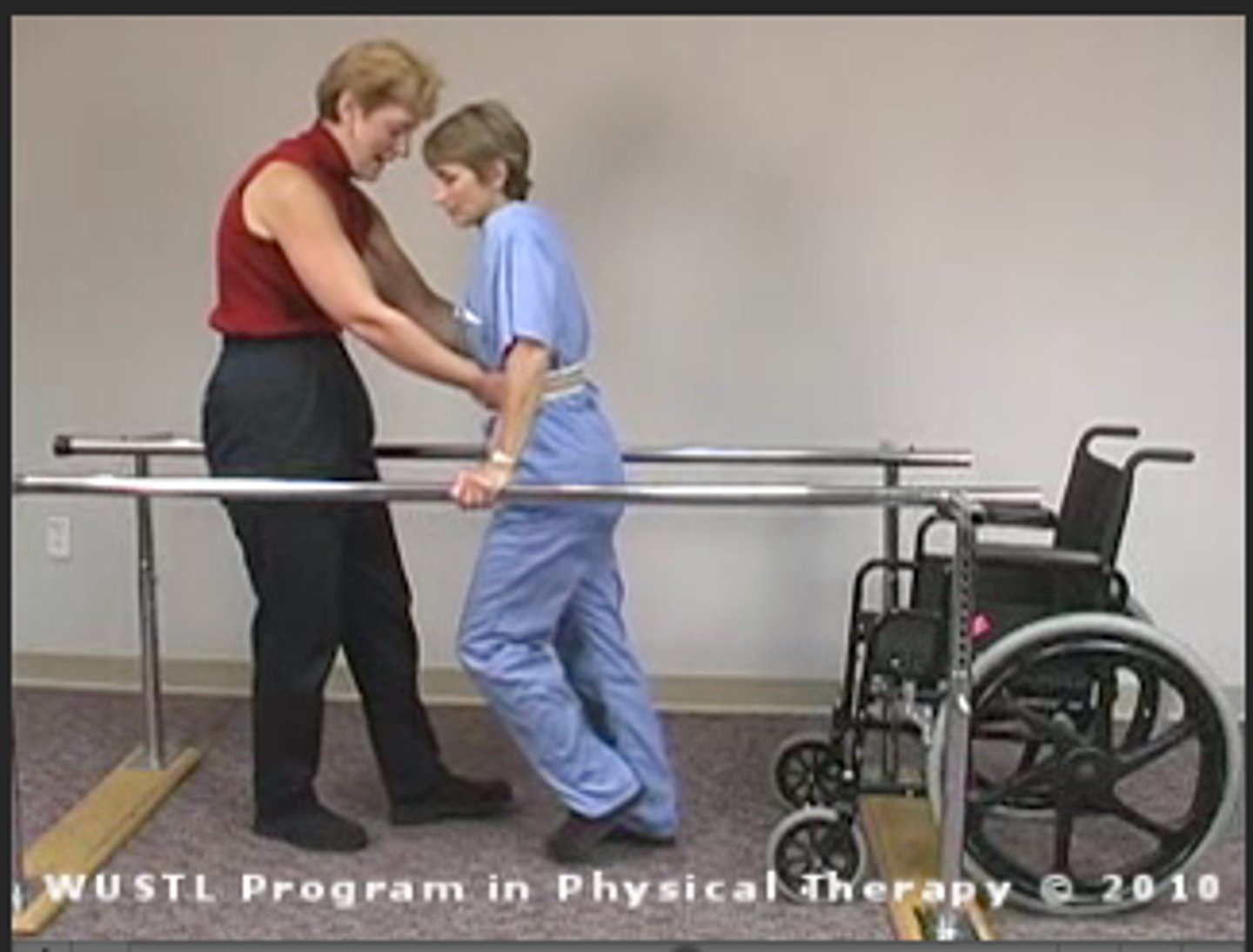
What are the disadvantages of parallel bars?
-not very portable
-not accessible to patients at home or some outpatient settings
Where does the therapist guard for parallel bars
within the bars in front of the patient
When do you consider progressing from parallel bars?
when patient can walk the length of the bars with good form
How do you fit parallel bars to a patient?
-height of bars should be at wrist bend of patient (elbows 20-30 degrees flexed)
-2 in between bars and greater trochanter
When a patient is turning which way do they turn?
towards their stronger side
The walker provides ____ and ____ of one LE.
stability; unloading
Which walker require more energy use from the patient?
"pick up" (standard) walkers
What are the types of walkers?
-standard
-rolling
-rollator
-reciprocal
-stabilizing
-posterior/reverse
-electric
-platform
What program encourages participants to remind each other to walk with an upright posture during daily activities?
postural watch
What are the advantages of a walker?
-4 point of contact with the floor
-lots of stability
-sense of security
-lightweight/easy to use
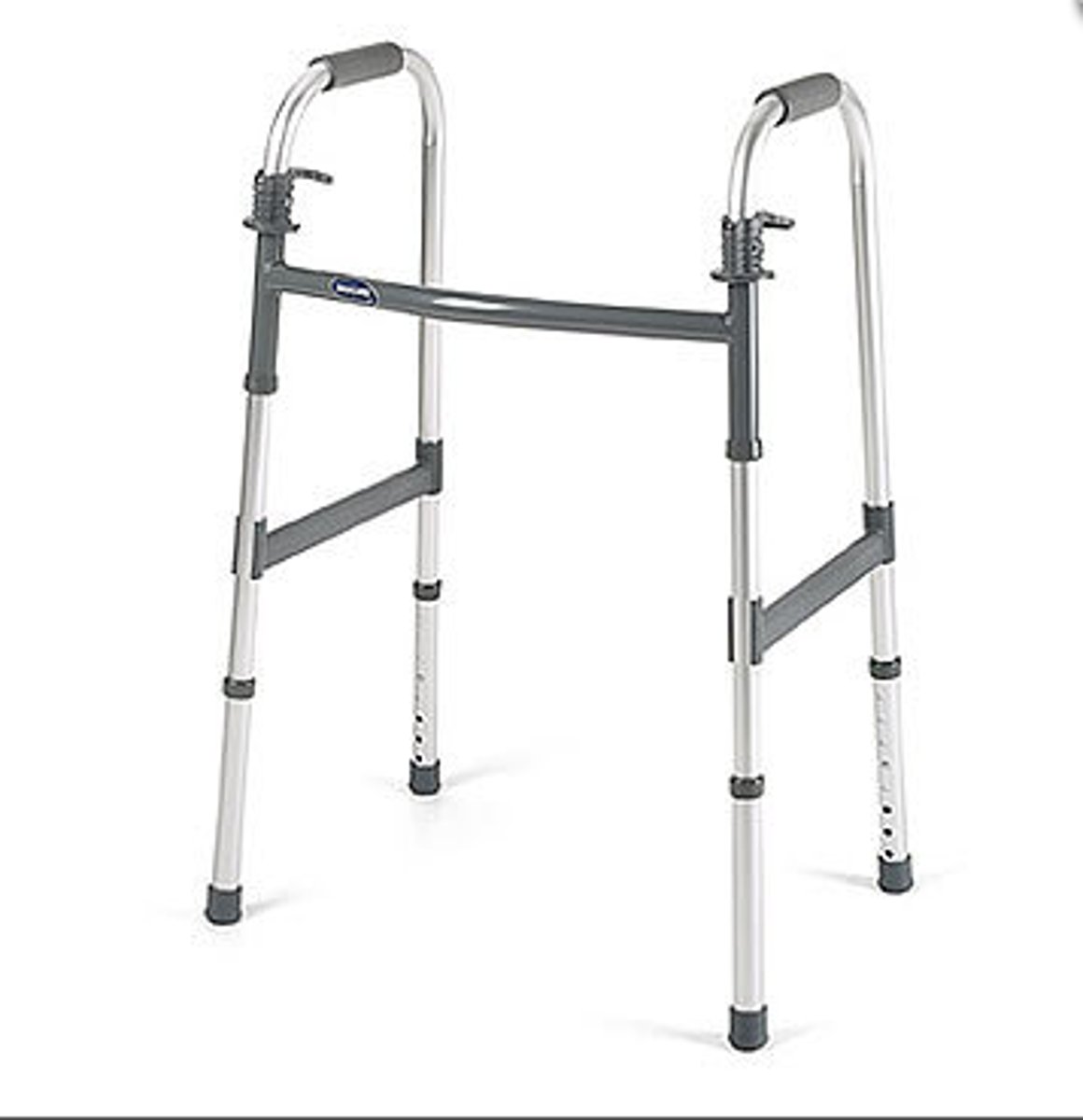
What are the disadvantages of a walker?
-awkward in small/confined spaces
-difficult to maneuver through doorways/over obstacles
-eliminates normal arm swing
-standard walkers create a slower, halting gait
-rollators promote trunk flexion during gait
How do you fit a walker to a patient?
hand grip should be at the bed of the wrist
When a patient is going from sit to stand with an AD that can stand on its own, should them grab onto it?
no
When a patient is going from sit to stand with an AD that cannot stand on its own, should them grab onto it?
yes; with their strong side
What is an alternative way for a patient to go from sit to stand with a walker?
use one hand to push off the armrest and the other to push on the center crossbar of the walker
When using a standard walker, should the patient step-through or step-to during gait?
step to
When using a walker, should the patients hips be flexed or extended?
extended
When ascending a curb or stairs with a walker, what goes first?
walker then stronger LE
When descending a curb or stairs with a walker, what goes first?
walker then weaker LE
When a therapist is helping a patient ascend stairs, where should they stand?
behind the patient
When a therapist is helping a patient descend stairs, where should they stand?
in front of the patient
When can a patient substitute handrails for their walker?
when there are bilateral handrails the patient can comfortable reach at the same time
How do you use one handrail and a folding walker on one side?
rail on one side, folded walker on the other
How do you use one hand rail and a turned walker on one side?
rail on one side, walker turned sideways on the other
When do consider progressing from the walker?
when the patient is able to walk easily with minimal pressure through the hand grips
What should you keep an eye out for when a patient is walking with a walker?
rocking
What is a sign that a patient is ready to move on from a standard walker?
rocking
What are the 2 types of axillary crutches?
wooden and metal
What is type of crutch other than axillary crutches?
ortho (forearm) crutches
What are the advantages of axillary crutches?
-improve balance/lateral stability
-greater functional ambulation with restricted WB
-easily adjustable
-relatively inexpensive
-easy to store
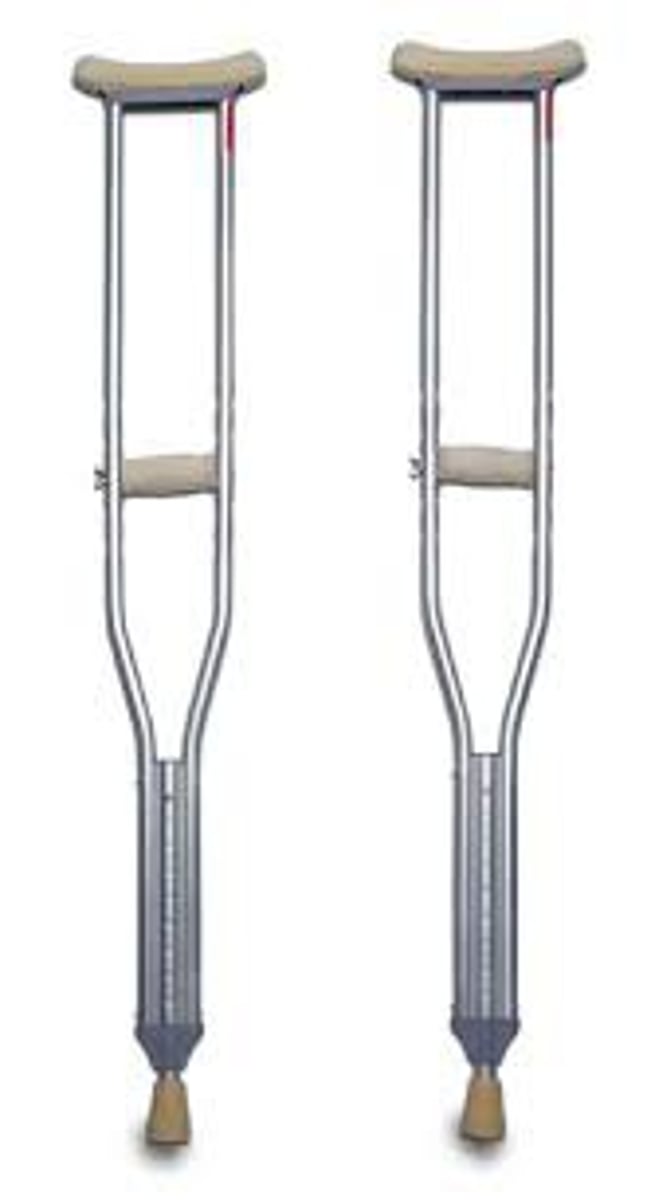
What are the disadvantages of axillary crutches?
-less stable
-require greater upper body strength
-awkward/more hazardous in small or crowded areas
-can damage brachial plexus if used incorrectly
If a patient with axillary crutches wants to rest, what can they do instead of hanging their axilla on the axillary pads?
push the crutches slightly forward, cross the arms, and place the hands over the axillary pads
During ambulation with crutches, if a patient is NWB on one LE where should their affected foot be?
off the ground and in front of their body
Are the height markings found on crutches accurate?
no
How do you fit axillary crutches to a patient?
the hand grip should rest at the bend of the wrist and the axillary pads should be 2-3 fingers from the armpit with the tips of the crutches 6in to the side
How can you estimate the fit of axillary crutches to a patient?
77% of patient's height
When you are checking the fit of axillary crutches what should you pay attention to?
patient's posture; make sure both of the patient's shoulders are relaxed
How do you ascend stairs with axillary crutches?
crutches then stronger LE
How do you descend stairs with axillary crutches?
crutches then weaker LE
How can a patient use stairs with one handrail and crutches?
-two crutches under one arm
-using one crutch with the other one parallel to the handrail in the opposite hand and holding the handrail
-using one crutch with the other one parallel to the handrail in the same hand
When do you consider progressing from the axillary crutches?
when the patient becomes WBAT or FWB
What are the advantages of forearm crutches?
-shorter/more lightweight than axillary crutches
-more functional in confined spaces
-promote more upright posture
-more functional stair climbing method
-eliminates danger of brachial plexus
-cuff allows patient to release handles without crutch falling
-more stability than a cane
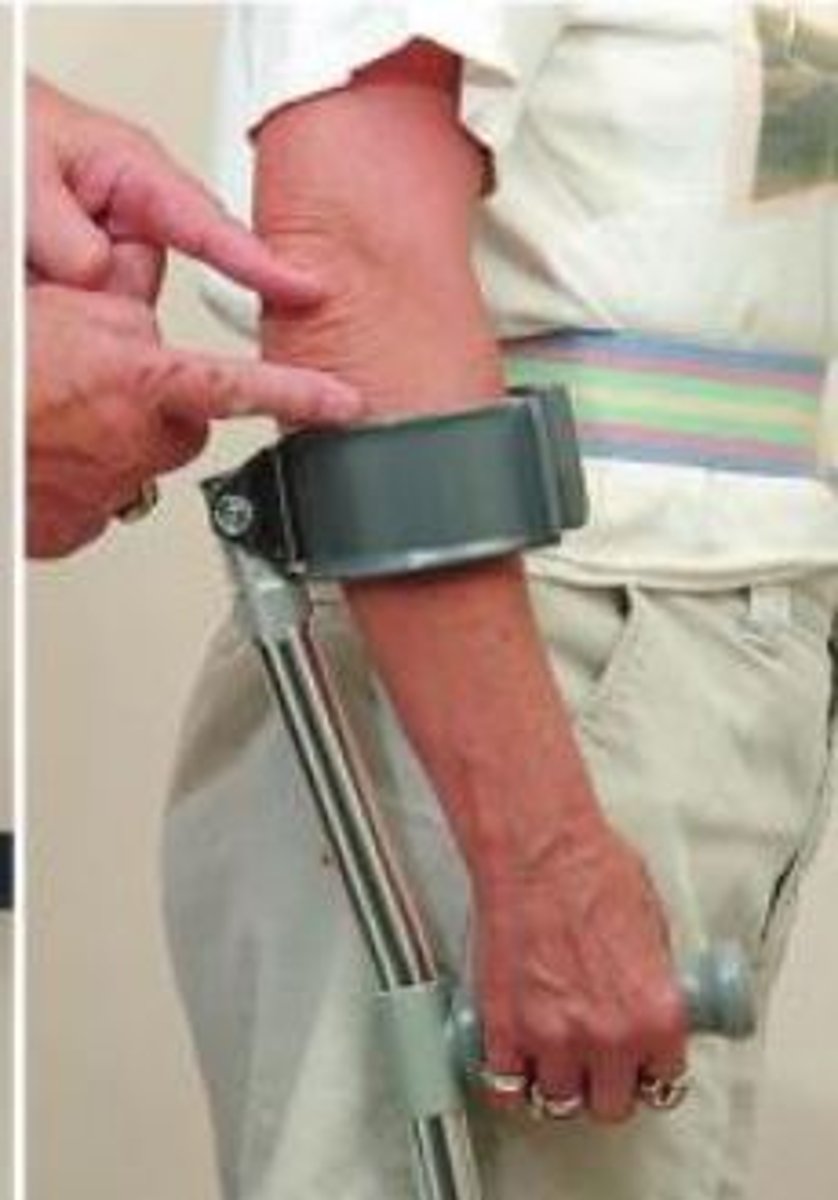
What are the disadvantages of forearm crutches?
-require more standing balance
-require good upper body strength
How do you fit forearm crutches to a patient?
hand grip should rest and the bend of the wrist and the top of the cuff should be 1 in from the olecranon process
Do you ascend and descend stairs with forearm crutches the same as axillary crutches?
yes
What is muscular dystrophy?
group of genetic diseases that cause progressive weakness and loss of muscle mass
Who is most affected by muscular dystrophy?
young children
What is the most common type of muscular dystrophy?
Duchenne muscular dystrophy
When do you consider progressing from forearm crutches?
when the patient becomes WBAT or FWB unless the patient is has permanent impairments and uses forearm crutches long-term
If a patient with crutches falls backward, what should they do to prevent impact at the head?
tuck their chin
If a patient with crutches falls backward, what should they do to minimize the overall impact?
bend the knees and bring the arms out to the side with palms down
If a patient with crutches falls forward, what should they do to protect their face?
turn the head to the side, drop the crutches out of the way, and reach forward with elbows bent
How can you help a patient with crutches learn effective motor skills to recover balance in the event of a near fall?
have them practice responding to balance perturbations in different directions
How does a patient get off the floor with crutches?
-patient moves into tall kneeling with crutches on the weaker side
-patient brings stronger LE forward into half-kneeling position
-pushing down on the distal thigh of the stronger LE, patient rises to a standing position
-once upright and stable, patient repositions crutches and continues
What gait patterns can you do with parallel bars?
-2 point
-3 point
-4 point
What gait patterns can you do with crutches?
-2 point
-3 point
-4 point
What gait patterns can you do with a walker?
-2 point
-3 point
What gait patterns can you do with a cane?
-2 point
-3 point
How do you reduce the risk of a patient falling during independent ambulation?
-improve their balance and gait ability
-minimize environmental hazards
-review medications
What are the advantages of a hemi walker?
-provide support with the use of only one LE
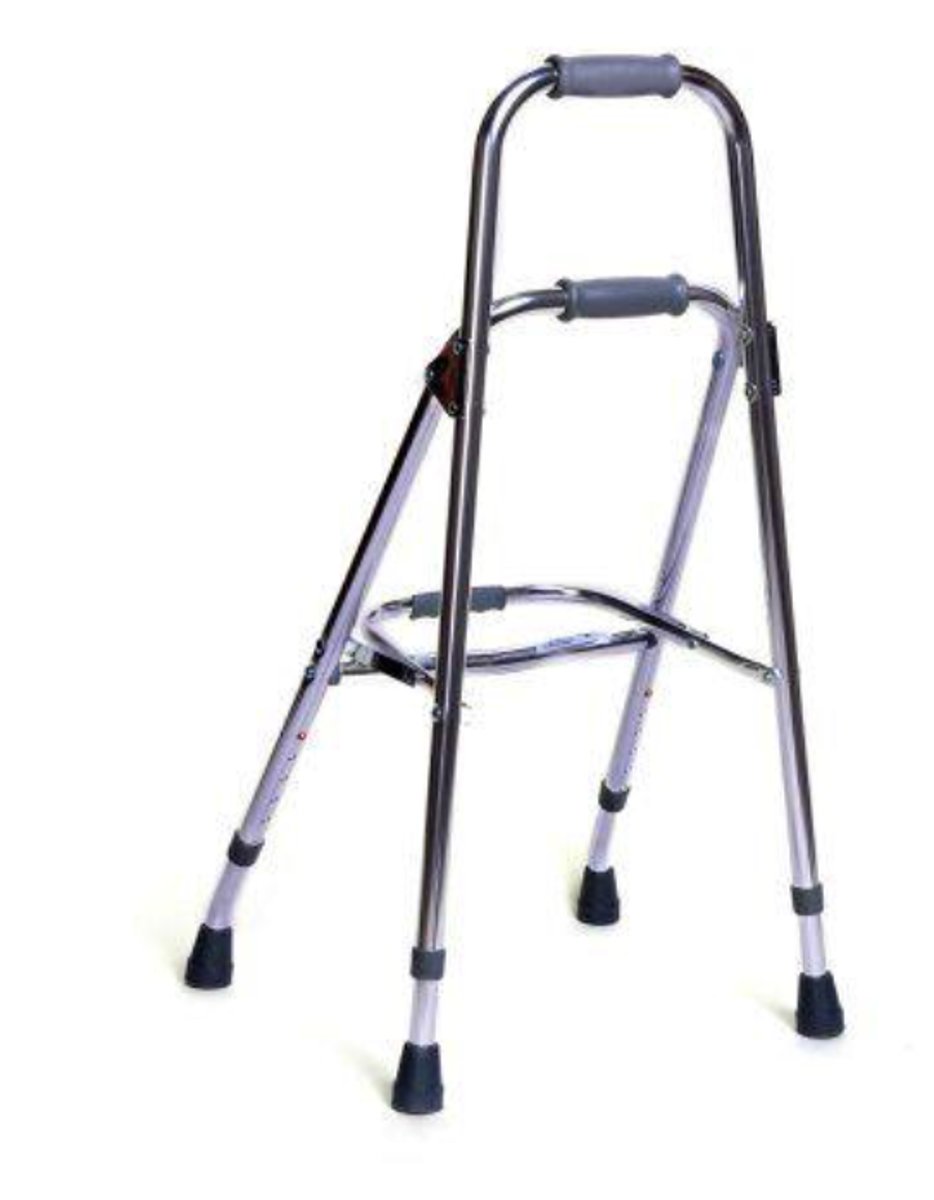
What are the disadvantages of a hemi walker?
-promote increased lateral shift of body weight
What are the advantages of a knee walker?
-more stable than crutches
-require less upper body strength
-require less energy
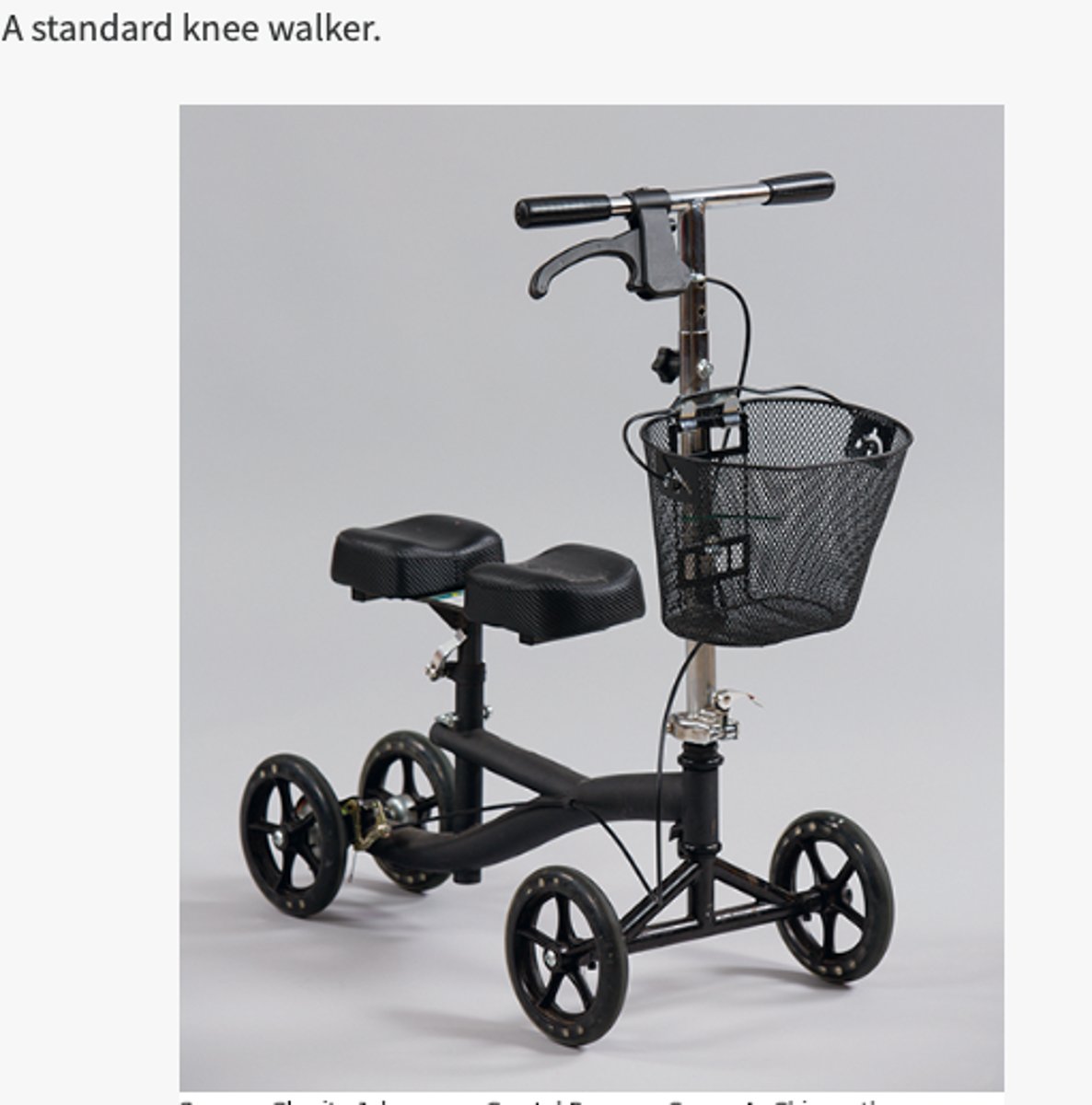
What are the disadvantages of a knee walker?
-not suitable for limited WB at or above the knee
-can't use on stairs
When do you consider progressing from a hemi walker?
when patient's stability increases
What are the advantages of canes?
-relatively inexpensive
-portable
-compact
-fit easily in confined spaces

What are the disadvantages of canes?
-point of support is anterior to the downward force from he hand
-draw attention to impairment
What side of the body should unilateral ADs be?
stronger side
How do you fit a cane to a patient?
hand grip should be at the bend of the wrist
What can be a substitute for support by a cane?
an orthotic garment with an attached elasticized strap that generates supportive tension across the hip abductors and extensors of the involved LE
What AD is gaining popularity as walking aids in some rehab centers?
hiking/trekking poles
What are the types of canes?
-straight cane with offset handle
-candy cane
-small based quad cane
-wide based quad cane
How do go from sit to stand with a can that cant stand up?
lay cane to the side, holding the handle in the same hand with the armrest the push to standing and place cane upright
For a patient with impaired cognition, the demands of learning to use an AD may be enough to have what?
paradoxical effect that adversely affects gait and balance, increasing fall risk
When using a quad cane on the stairs, what might the patient need to do?
turn the cane sideways
How do you move through a door that opens toward you with an AD?
-stand close to the door, turned slightly toward hinges
-pull door open, then push it fully with the same hand
-block door if needed
-walk through doorway
How do you move through a door that opens away from you with an AD?
-stand close to the door, facing door handle
-push door wide open
-block door is needed
-walk through doorway