Feline Repro ICVA Diseases
 Call Kai
 Learn
Learn Practice Test
 Spaced Repetition
 Match
Match Flashcards
 Knowt Play
1/20

Earn XP
Description and Tags
Break this card into multiple cards titled Pathophysiology, Clinical signs, Diagnostics, Treatment,Prevention
Name | Mastery | Learn | Test | Matching | Spaced | Call with Kai | Chat |
|---|
No analytics yet
Send a link to your students to track their progress
21 Terms
Penile Spines
Penile spines are small, hook-like structures found on the penis of certain male mammals, notably domestic cats. These structures are composed of keratin and are typically present on intact male cats. Penile spines are significant in the context of reproductive physiology because they play a role in mating, as they can stimulate the female's vaginal walls during copulation, potentially contributing to reproductive success.
In terms of NAVLE (North American Veterinary Licensing Examination) significance, understanding penile spines is important for veterinary professionals, particularly in fields related to feline reproductive health, behaviors, and management of breeding. Knowledge of penile spines can aid in the assessment of male reproductive conditions or abnormalities, and in making informed recommendations related to spaying or neutering pets.
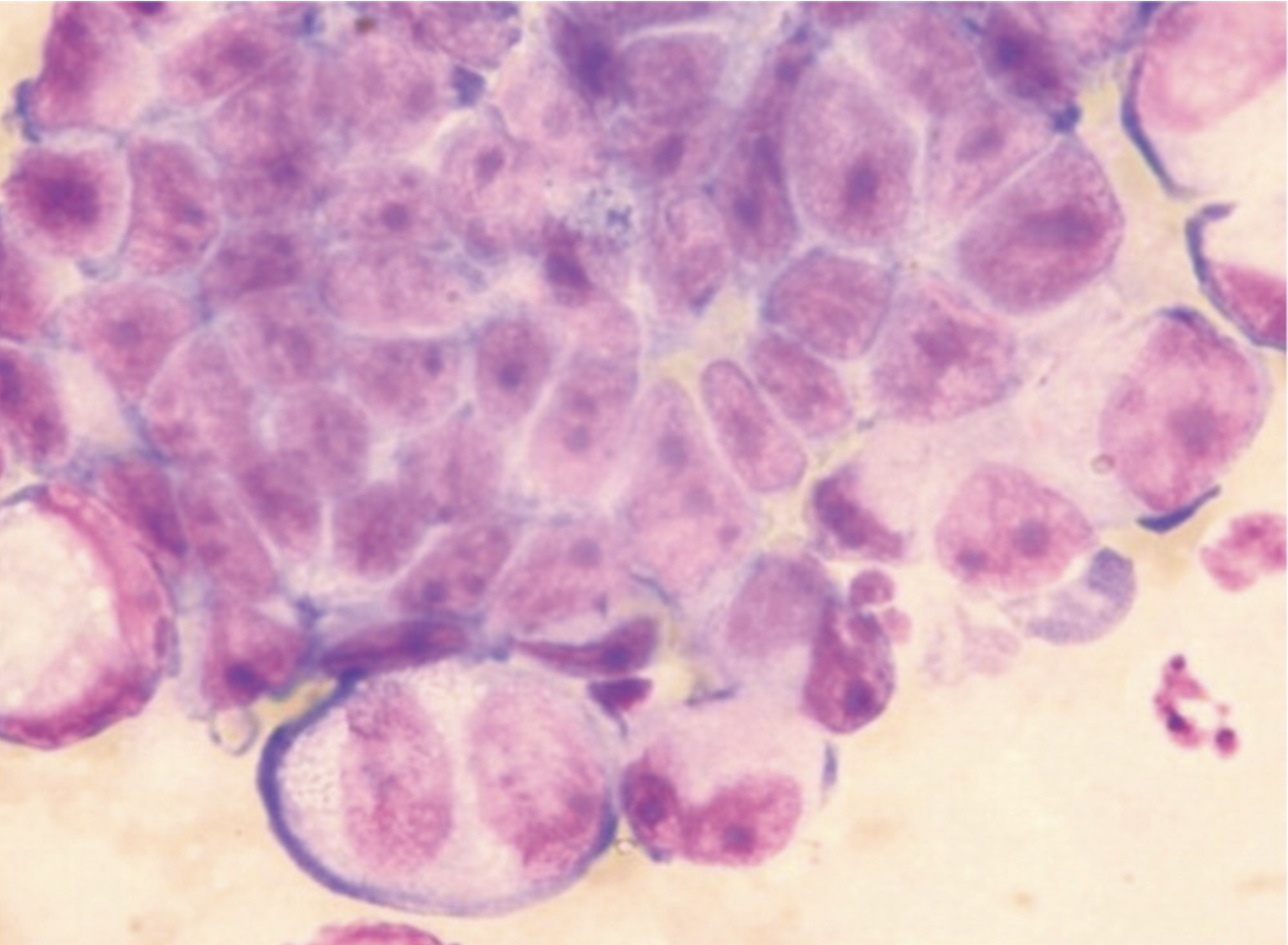
Mammary Adenocarcinoma: Pathophysiology
Mammary adenocarcinoma in cats is a malignant tumor originating from the epithelial cells of the mammary glands. It is caused by genetic mutations that lead to uncontrolled cell proliferation, invasion of surrounding tissues, and potential metastasis to distant organs such as lymph nodes, lungs, and liver.
Mammary Adenocarcinoma: Clinical Signs
Common signs include:
Palpable mass: Firm, nodular masses in the mammary chain.
Ulceration: Skin ulceration leading to open wounds.
Pain or discomfort: Signs of pain upon palpation.
Lymphadenopathy: Enlargement of regional lymph nodes.
Systemic signs: Weight loss, lethargy, and anorexia.
Mammary Adenocarcinoma: Diagnostics
Physical examination: Detect masses and abnormalities.
Fine-needle aspiration cytology (FNAC): Differentiate between benign and malignant.
Histopathology: Surgical biopsy confirms diagnosis.
Thoracic radiographs: Check for lung metastasis.
Abdominal ultrasound: Assess for metastatic spread.
Lymph node aspirates: Confirm metastasis.
Immunohistochemistry: Evaluate estrogen/progesterone receptor status.
Mammary Adenocarcinoma: Treatment
Surgical resection: Radical mastectomy recommended.
Lymph node removal: Excise affected regional nodes.
Chemotherapy: Commonly doxorubicin and carboplatin.
Radiation therapy: Considered in difficult cases.
Palliative care: Focus on pain management and quality of life.
Mammary Hyperplasia: Pathophysiology
This is a benign, hormone-dependent condition characterized by rapid mammary tissue growth, commonly in intact, young queens, triggered by pregnancy or exogenous progestin.
Mammary Hyperplasia: Clinical Signs
Sudden enlargement of mammary glands.
Possible ulceration or infection due to pressure necrosis.
Mammary Hyperplasia: Diagnostics
Clinical examination of mammary enlargement.
Cytology shows benign epithelial cells.
Mammary Hyperplasia: Treatment
Ovariohysterectomy: Curative procedure.
Supportive care: Antibiotics and anti-inflammatories for ulcers.
Mastitis: Pathophysiology
Mastitis develops as a result of bacterial infection entering through the teat canal, leading to localized inflammation that can progress to systemic illness.
Mastitis: Clinical Signs
Local Signs: Swelling, erythema, discharge; Systemic Signs: Fever, anorexia, dehydration.
Mastitis: Diagnostics
Physical Examination: Check for inflammation.
Cytology: Fine-needle aspirate to check for neutrophils and bacteria.
Bacterial Culture: Identify the causative organism.
Mastitis: Treatment
Antibiotic Therapy: Broad-spectrum antibiotics like Clavamox.
Pain Management: NSAIDs or opioids as needed.
Supportive Care: IV fluids and nutritional support.
Ovarian Remnant Syndrome: Pathophysiology
Occurs when ovarian tissue remains post-ovariohysterectomy, continuing to produce hormones and leading to estrus behavior.
Ovarian Remnant Syndrome: Clinical Signs
Signs of estrus: increased vocalization, affection, lordosis, vulvar swelling.
Ovarian Remnant Syndrome: Diagnostics
Vaginal cytology: Detect cornified epithelial cells.
Serum hormone levels: Confirm hormonal activity.
Ultrasound: Identify residual ovarian tissue.
Ovarian Remnant Syndrome: Treatment
Surgical removal of remaining ovarian tissue is the definitive treatment.
Pyometra: Pathophysiology
A life-threatening condition caused by bacterial infection of the uterus, commonly due to prolonged progesterone exposure.
Pyometra: Clinical Signs
Lethargy, depression, anorexia, vomiting; vaginal discharge in open pyometra; abdominal distension in closed pyometra.
Pyometra: Diagnostics
Ultrasound: Shows an enlarged, fluid-filled uterus.
CBC: Reveals leukocytosis with left shift.
Serum chemistry: Azotemia and electrolyte imbalances.
Pyometra: Treatment
Ovariohysterectomy (OHE) is the gold standard; medical management with antibiotics may be considered under certain conditions.