Advanced Functional Porous Materials Exam 1
0.0(0)
Studied by 2 people Call Kai
 Learn
Learn Practice Test
 Spaced Repetition
 Match
Match Flashcards
 Knowt Play
Card Sorting
1/462

Earn XP
Description and Tags
Last updated 6:41 AM on 9/26/22
Name | Mastery | Learn | Test | Matching | Spaced | Call with Kai | Chat |
|---|
No analytics yet
Send a link to your students to track their progress
463 Terms
1
New cards
Relevant research areas for porous materials
-Zeolites and MOFs as membranes
-Molecular Gas Separations
-Natural Gas Storage
-Heterogeneous Catalysis
-CO2 conversion to chemicals
-Synthesis of biofuels
-Molecular Gas Separations
-Natural Gas Storage
-Heterogeneous Catalysis
-CO2 conversion to chemicals
-Synthesis of biofuels
2
New cards
Goal of this course (1)
Develop basic chemical strategies for making nanomaterials which can serve as tailored functional materials
3
New cards
Goal of this course (2)
Integrate fundamentals and functional applications of porous materials from micro to macroporous regime
4
New cards
Nanochemistry Definition
The utilization of synthetic chemistry to make nanoscale building blocks of different:
-size
-shape
-compsition
-surface structure
-charge
-functionality
-size
-shape
-compsition
-surface structure
-charge
-functionality
5
New cards
Heterogeneous catalysis
Tailor properties, concentration of active sites, to impact product and yield
We want A->B, but products C and D also form... how to we optimize the reaction pathway to get the product we want?
We want A->B, but products C and D also form... how to we optimize the reaction pathway to get the product we want?
6
New cards
Microporous size regime
7
New cards
What are microporous materials good for?
Gas separation; pores are similar in size to CO2, CO, etc.
8
New cards
Mesoporous size regime
2-50nm
9
New cards
What are mesoporous materials good for?
Catalysis, gas STORAGE
10
New cards
Macroporous size regime
>50 nm
11
New cards
What are macroporous materials good
Catalysis, gas adsorption
12
New cards
What type of pores do zeolites and MOFs have?
microporous
13
New cards
5 principles of nanochemistry
1. Existence of Building Blocks
2. Attractive and Repulsive Interactions between building blocks
3. Association and dissociation of building blocks
4. Building block interactions with solvents, interfaces, and templates
5. Building block dynamics (ass transport)
2. Attractive and Repulsive Interactions between building blocks
3. Association and dissociation of building blocks
4. Building block interactions with solvents, interfaces, and templates
5. Building block dynamics (ass transport)
14
New cards
1. Existence of Building Blocks
These are the chemical components needed to start developing nanoporous materials
15
New cards
2. Attractive and Repulsive Interactions between building blocks
These are needed to have long range porocity and assemble the material from building blocks.
16
New cards
3. Association and dissociation of building blocks
The most stable material forms from the lowest energy structure
17
New cards
4. Building block interactions with solvents, interfaces, and templates
For synthesis
18
New cards
5. Building block dynamics (ass transport)
Mass transport mechanisms that allow building blocks to assemble
19
New cards
Isotherms classification
Materials are characterized in terms of their pore sizes, derived from gas sorption data
20
New cards
What are on the axis of the isotherms?
x-axis: relative pressure p0/p
y-axis: amount of gas adsorbed
y-axis: amount of gas adsorbed
21
New cards
Which isotherms are microporous?
Type 1
22
New cards
Which isotherms are nonporous or macroporous?
Type 2, 3, 6
23
New cards
Which isotherms are mesoporous?
Type 4,5
24
New cards
Type 1
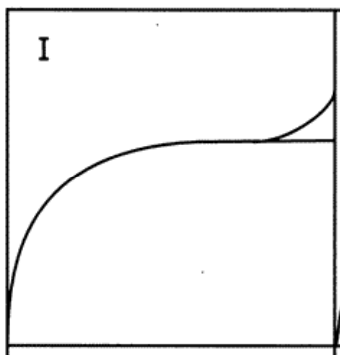
25
New cards
Type 2
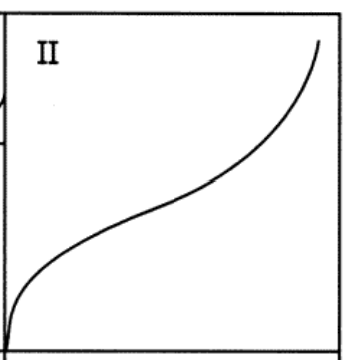
26
New cards
Type 3
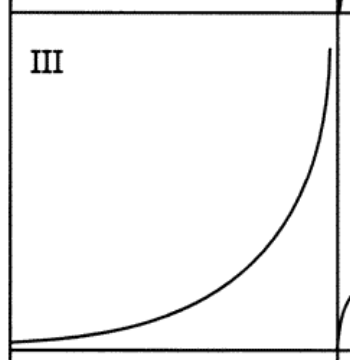
27
New cards
Type 4
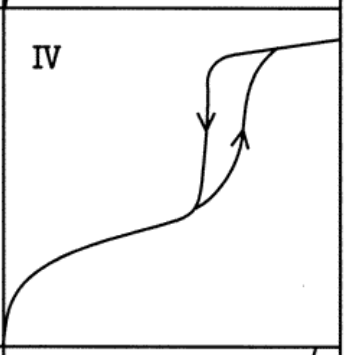
28
New cards
Type 5
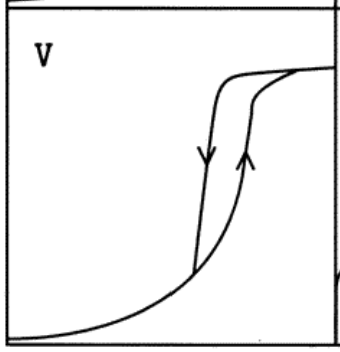
29
New cards
Type 6
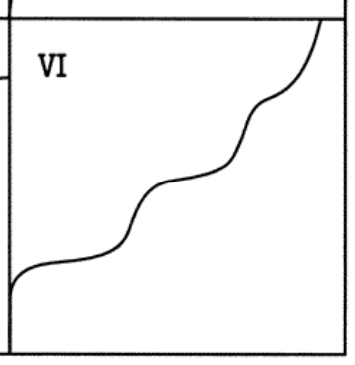
30
New cards
Which isotherms are associated with stronger fluid-solid interactions?
Types 2 and 4
Useful for storing gases
Useful for storing gases
31
New cards
Which isotherms are associated with weaker fluid-solid interactions?
Types 3 and 5
Not great for reacting gases inside the pores
Not great for reacting gases inside the pores
32
New cards
What are the hysteresis loops of types 4 and 5 associated with?
Capillary condensation in the mesopores, openings that are wide from the outside but small from the inside
33
New cards
Two types of microporous materials
Zeolites
MOFs
MOFs
34
New cards
What is a zeolite?
An inorganic crystalline structure with unimodal micropores
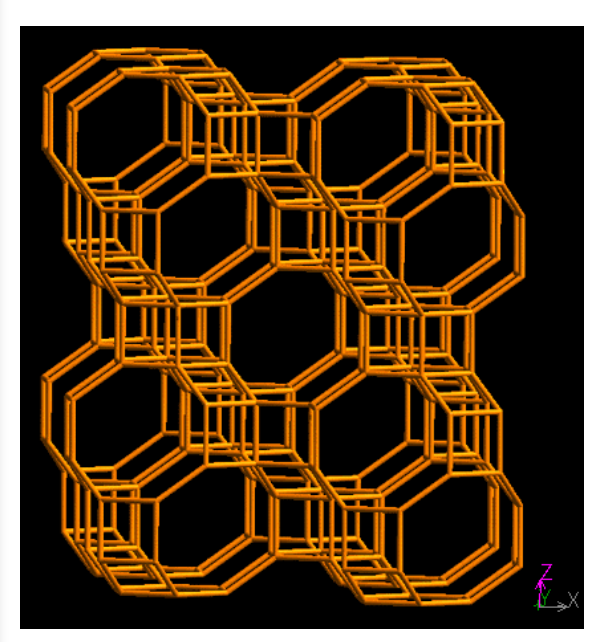
35
New cards
What type of bonds characterize zeolites?
covalent bonds
36
New cards
What applications are zeolites good for?
1. SELECTIVITY IN REACTIONS: only certain things can fit inside
2. CATALYSIS: common in petrochemical industry
3. MOLECULAR SIEVES: separate gases
4. DETERGENTS: Hydrophobic and hydrophilic functionality
2. CATALYSIS: common in petrochemical industry
3. MOLECULAR SIEVES: separate gases
4. DETERGENTS: Hydrophobic and hydrophilic functionality
37
New cards
What makes zeolites appealing?
High thermal, mechanical, and chemical stability
38
New cards
What does high chemical, thermal, and mechanical stability mean for zeolites?
It allows us to play with shape, size, and interactions of the building blocks to get the same material chemically, but with tailored properties that we select. It also helps them survive in the harsh conditions of industry.
39
New cards
What is one parameter we can manipulate to our advantage?
Surface area... increasing surface area makes it more useful for separation
40
New cards
What does MOF stand for?
Metal organic framework
41
New cards
What is a MOF?
An open tetrahedral structure
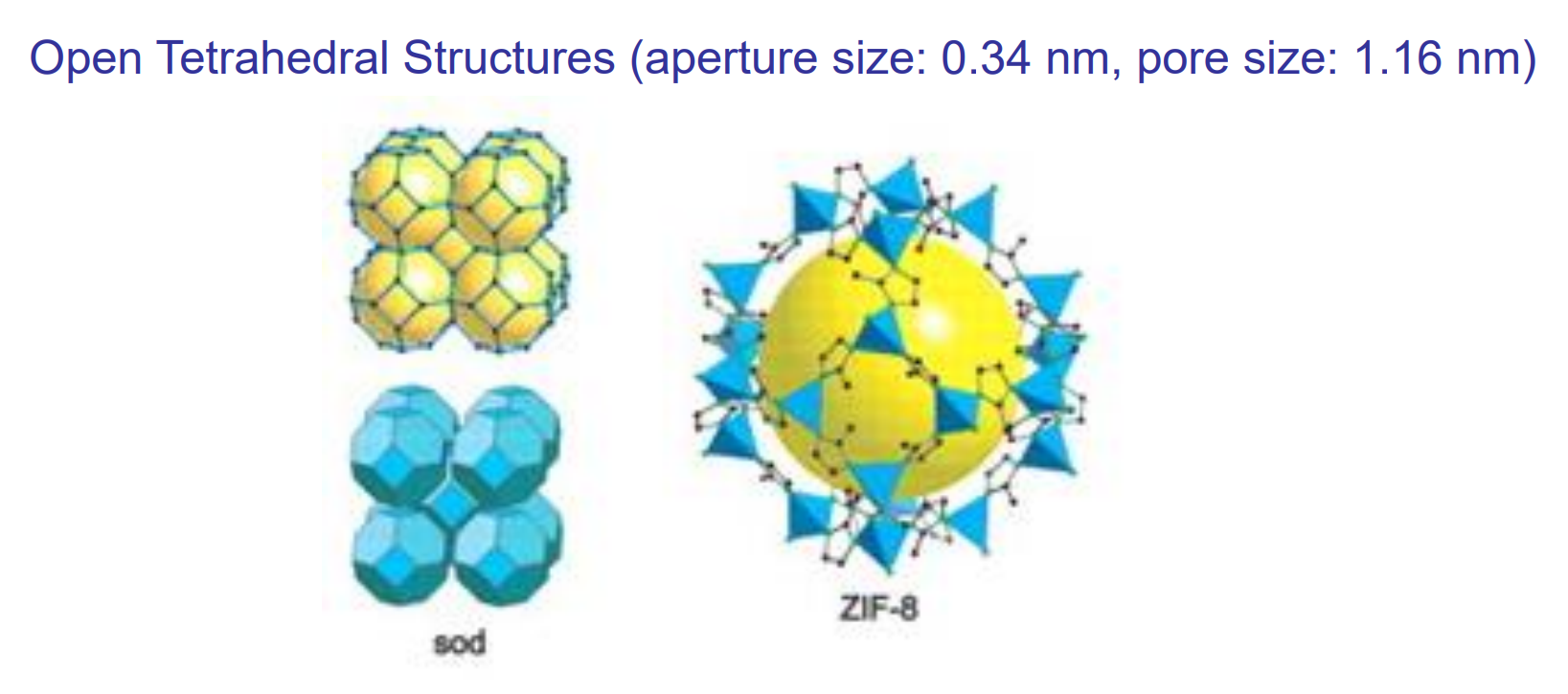
42
New cards
What are five attributes of MOFs?
1. HIGH SURFACE AREA: 1000-2000 m^2/g
2. THERMALLY STABLE
3. CHEMICALLY STABLE
4. MICROPOROUS CRYSTALLINE STRUCTURES: Functionality
5. POLAR WALLS: Uncoordinated nitrogen atoms
2. THERMALLY STABLE
3. CHEMICALLY STABLE
4. MICROPOROUS CRYSTALLINE STRUCTURES: Functionality
5. POLAR WALLS: Uncoordinated nitrogen atoms
43
New cards
Why are MOFs considered hybrid materials?
They have an inorganic part coordinated to an organic molecule
44
New cards
What is a difficulty in MOF synthesis?
Finding the optimal conditions to form these things thermodynamically
45
New cards
Which is more stable... MOFs or zeolites?
Zeolites, MOFs degrade around 400 C
46
New cards
What is so attractive about the polar walls?
They contain a free uncoordinated nitrate that can coordinate with other molecules upon separations
47
New cards
What does ZIF stand for and what are they?
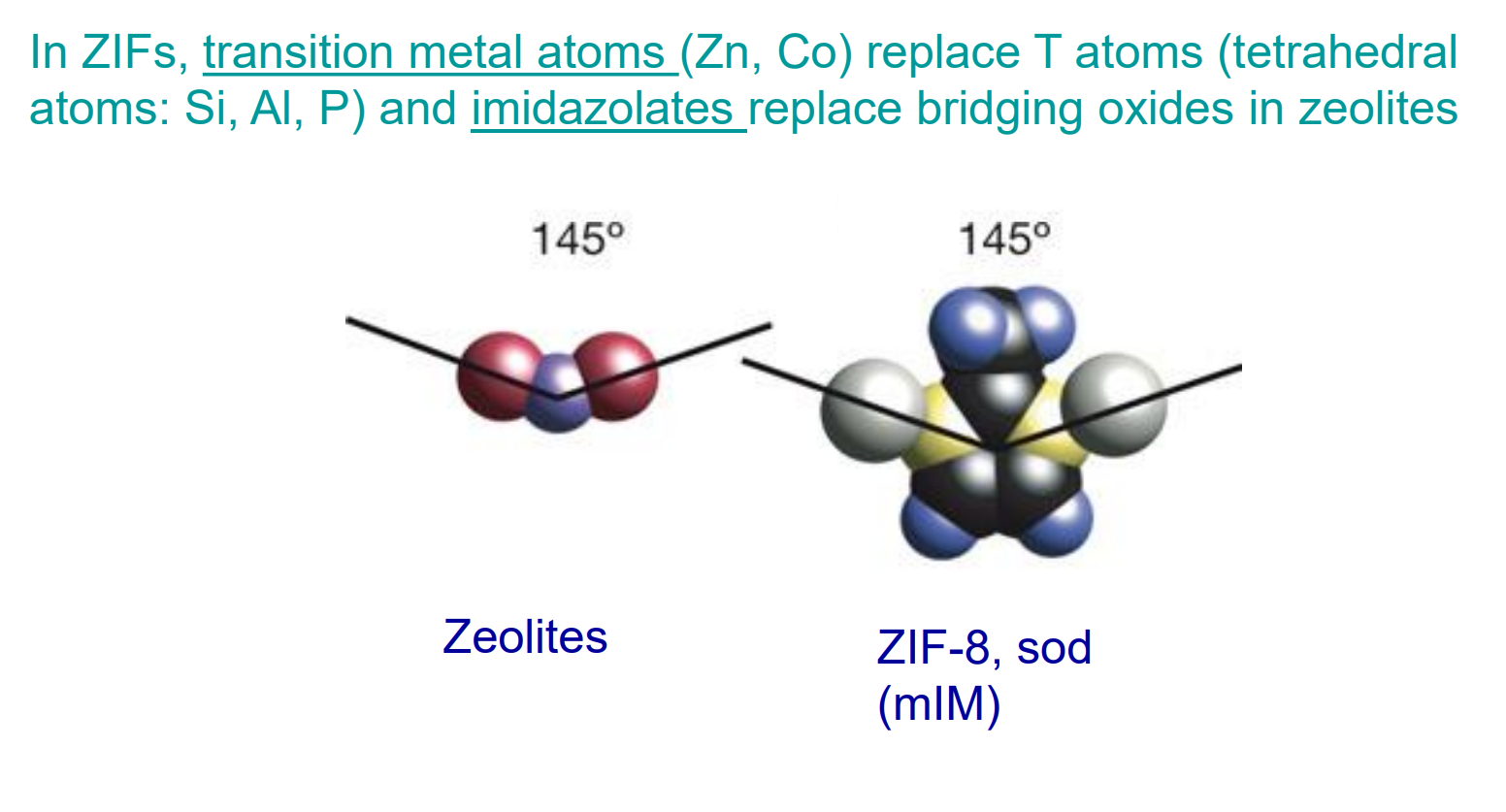
Zeolitic Imidazolate Framework: A mix between a zeolite and a MOF
48
New cards
ZIF composition
Transition metal atoms (Zn, Co) replace T atoms (tetrahedral atoms: Si, Al, P) and imidazolates replace bridging oxides in zeolites
49
New cards
Mesoporous materials (types, attributes, pore size)
High SA materials
Ceramics, Polymers, Composites
Unimodal pores in the 2-50nm range
Ceramics, Polymers, Composites
Unimodal pores in the 2-50nm range
50
New cards
Liquid crystal synthesis
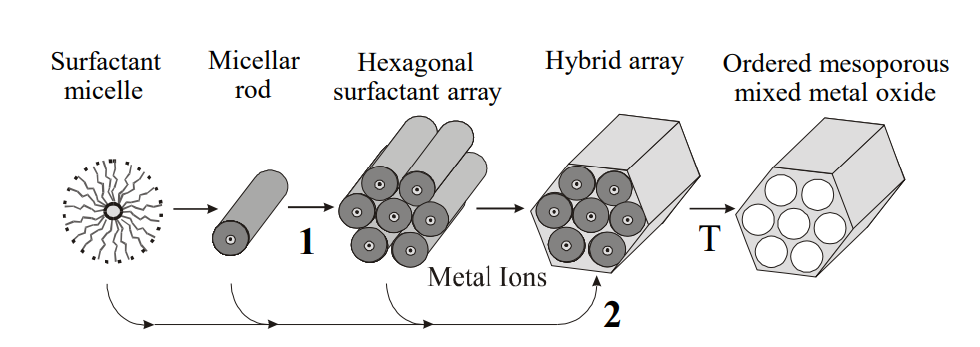
Put surfactant micelles in solution so that they form rods and then hexagonal arrays. Silica will form around these arrays and, when the surfactants are calcined out, the porous material is left over: mixed metal oxide
51
New cards
What do micelles help with in terms of tuning?
We can choose different tails, etc. for them to play with pore sizes. Can also change wall composition
52
New cards
Silica (composition, uses)
SiO2
Was previously amorphous, now can be made mesoporous
Useful for catalysis
Was previously amorphous, now can be made mesoporous
Useful for catalysis
53
New cards
Macroporous materials
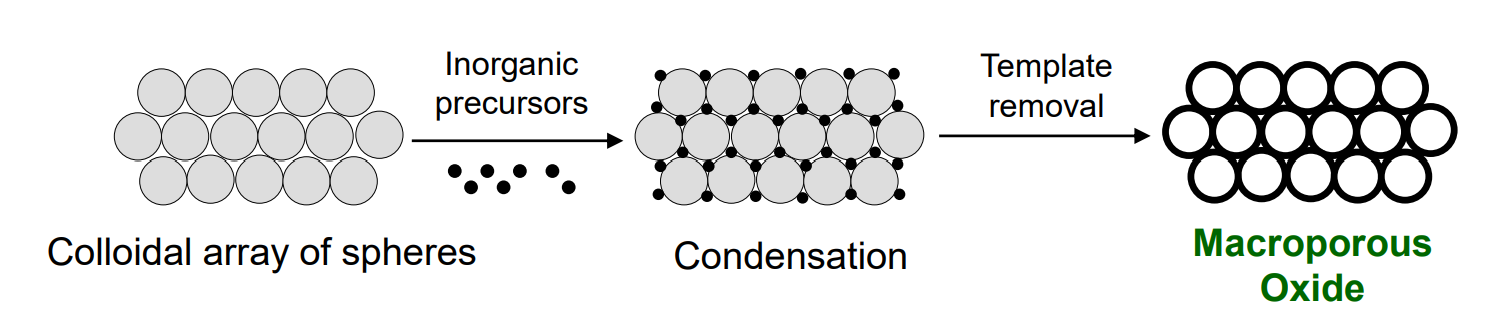
Start with colloidal array of spheres, inorganic precursors fill in spaces between them (condensation), remove the template, yields a macroporous oxide
54
New cards
How to form macroporous materials
High SA materials
Ceramics, polymers, composites
with unimodal pores >50 nm
Ceramics, polymers, composites
with unimodal pores >50 nm
55
New cards
6 properties of ordered porous materials
1. UNIMODAL PORE SIZES
2. High SA
3. THERMAL AND CHEMICAL STABILITY
4. CRYSTALLINE OR AMORPHOUS STRUCTURES (Functionality)
5. SURFACE CHEMISTRY MODIFIED
6. ENHANCED MASS TRANSFER (catalysis, separations, adsorption)
2. High SA
3. THERMAL AND CHEMICAL STABILITY
4. CRYSTALLINE OR AMORPHOUS STRUCTURES (Functionality)
5. SURFACE CHEMISTRY MODIFIED
6. ENHANCED MASS TRANSFER (catalysis, separations, adsorption)
56
New cards
1. UNIMODAL PORE SIZES
molecular sieving properties, improved supports
57
New cards
2. High SA
50-5000 m^2/g
58
New cards
3. THERMAL AND CHEMICAL STABILITY
Wall nature
59
New cards
4. CRYSTALLINE OR AMORPHOUS STRUCTURES
Functionality
60
New cards
5. SURFACE CHEMISTRY MODIFIED
We can tune things to what we want
61
New cards
6. ENHANCED MASS TRANSFER
catalysis, separations, adsorption
62
New cards
Crystalline definition
Having both short AND long range order
63
New cards
Amorphous definition
Having short range order only, maybe more chemically reactive (?)
64
New cards
Which is better for applications, crystalline or amorphous?
Crystalline
65
New cards
What equation governs XRD?
Bragg's law
66
New cards
What is the equation for Bragg's law? What does everything stand for?
n(lambda)=2dsin(theta)
n=integer
lambda=radiation wavelength
d=interplanar spacing/space between atoms
theta=angle of incidence
n=integer
lambda=radiation wavelength
d=interplanar spacing/space between atoms
theta=angle of incidence
67
New cards
How does XRD work?
Xray hits the lattice and scatter at specific angle, peaks of specific intensity are observed and are associated with a particular crystalline structure
68
New cards
Amorphous XRD peak vs crystalline XRD peak
Amorphous: BROAD
Crystalline: Narrow
Crystalline: Narrow
69
New cards
What are the Baravais lattices?
There are 7 total lattice structures that materials form in (ex: cubic, tetragonal, hexagonal)
70
New cards
What is coordination number?
How many other atoms one coordinates to in a lattice structure
71
New cards
Polymorphic forms of TiO2 (3)
Rutile
Anatase
Brookite
Anatase
Brookite
72
New cards
What causes a different polymorph to form?
Different temperature and pressure conditions
73
New cards
Which is the best polymorph for catalysis?
Anatase: most active due to its degree of packing and higher concentration of active sites
74
New cards
What are the axis of XRD?
x-axis: 2theta
y-axis: intensity
y-axis: intensity
75
New cards
How does XRD help us distinguish different facets?
Each material has a specific theta and intensity, different positions of theta can tell us which facet we have
76
New cards
(RED!) What important info can we get from XRD?
1. Determination of Crystal structure
2. Evaluation of crystal size
3. Evaluation of crystal orientation
4. Identification of crystalline phases
5. Evaluation of strain
2. Evaluation of crystal size
3. Evaluation of crystal orientation
4. Identification of crystalline phases
5. Evaluation of strain
77
New cards
2. Evaluation of crystal size
Scherrer eqn, smallest crystalline size precedent in the sample
78
New cards
3. Evaluation of crystal orientation
(101) found in highest peak
79
New cards
4. Crystalline phase identification
tetragonal, orthorhombic, could be many at once... can get fraction of each
80
New cards
5. Evaluation of strain
position of the peaks, what strain of material do we have?
81
New cards
What can we calculate from the scherrer eqn?
Crystal size
82
New cards
Write out debye scherrer eqn and what do each of them mean?
Gamma=[(k)(lambda)]/[(Beta)(costheta)]
Gamma: crystal size
k: Shape factor
Beta: Full width at half max
lambda: x-ray wavelength
theta: Bragg angle
Gamma: crystal size
k: Shape factor
Beta: Full width at half max
lambda: x-ray wavelength
theta: Bragg angle
83
New cards
SAXS
Small angle Xray Scattering
84
New cards
What info can we get from SAXS?
1. Evaluation of periodicity and symmetry at the nanoscale
2. Evaluation of shape, size, and separation of nanoscale objects in an ensemble
2. Evaluation of shape, size, and separation of nanoscale objects in an ensemble
85
New cards
2. Evaluation of shape, size, and separation of nanoscale objects in an ensemble
Size has to do with periodicity, well defined peak at low theta means mesoporous ordered material
86
New cards
Do you need a crystalline sample for SAXS?
No!
87
New cards
What info can we get from Gas Adsorption
1. BET surface area
2. Pore size
3. Pore volume
4. Isotherms (Micro, meso, macroporous nature)
2. Pore size
3. Pore volume
4. Isotherms (Micro, meso, macroporous nature)
88
New cards
What is BET theory?
A rule for the physical adsorption of gas molecules in surfaces. It is the basis for an important analysis technique for the measurement of the specific surface area of a material
89
New cards
Graphs of Mesoporous gallium oxide with narrow vs broad size distribution
Know the difference: Hysteresis loops shifted farther right (I think?) for broader distribution
90
New cards
Xenon vs Krypton Graph
Xe adsorbs 3x more than Kr at a particular pressure
91
New cards
FTIR
Fourier Transform Infrared Spectroscopy
92
New cards
What info does FTIR tell us?
1. Assignment of lattice vibrations
2. Identification of functional groups
3. Identification of whole molecules
2. Identification of functional groups
3. Identification of whole molecules
93
New cards
How does FTIR work?
A beam of IR light is passed thru a sample and examination of the transmitted light reveals how much energy was absorbed at each wavelength
94
New cards
What spectrum can be made?
Transmittance or absorbance, and these show the wavelengths where absorbance happens.
95
New cards
Sapo-34 FTIR
Sapo shows asymmetric TiO4 tetrahedra stretch, T-O bending, O-H bending
96
New cards
Anatase FTIR
Shows O-H only
97
New cards
SEM
scanning electron microscopy
98
New cards
What can we learn from SEM?
1. Surface morphology
2. Resolution of 1nm or larger features
3. Chemical analysis
4. Distribution of elements in the sample
2. Resolution of 1nm or larger features
3. Chemical analysis
4. Distribution of elements in the sample
99
New cards
3. Chemical analysis
Tells us that it is 20% X element, 40% carbon, etc.
100
New cards
How does an SEM microscope work?
Images sample surface by scanning it with a high energy beam of electrons. Electrons interfere with atoms in sample to produce signals that contain info about surface TOPOGRAPHY and COMPOSITION