History & Systems: Unit 1
 Call Kai
 Learn
Learn Practice Test
 Spaced Repetition
 Match
Match Flashcards
 Knowt Play
1/87

Earn XP
Description and Tags
Unit 1 Vocab and main ideas
Name | Mastery | Learn | Test | Matching | Spaced | Call with Kai | Chat |
|---|
No analytics yet
Send a link to your students to track their progress
88 Terms
Metaphysics
explores fundamental nature of reality including concepts such as being, the universe, and existence
Metaphysical question
What is real/exists? What is it made of?
Epistemology
Study of human knowledge and belief.
Epistemological question
What do we know? How do we know? Where does knowledge come from?
Metaphysics vs Epistemology
Metaphysics: concerned w reality; Epistemology: concerned w knowledge
Metaphysical Theories
Monism & Dualism
Monism
The universe is made up of one whole; mind and body are one. Includes materialism & idealism.
Materialism
Only physical/material matter exists. Everything, including the mind is part of the physical world
Idealism
Only ideas/the mind exist. Reality is mental
Dualism
Mind & body exist as two separate entities; body material; mind immaterial
Epistemological Theories
Rationalism & Empiricism
Rationalism
Knowledge is innate (already present in mind); Reason & logic
Empiricism
Knowledge is not innate; learned through experiences/senses; “blank slate”
Theories of knowledge and reality
Realism & Nominalism
Realism
General concepts (universals) are real. Ex: perfect circles are real, we just may have not encountered one.
Nominalism
Concepts (universals) are just ideas & names. We create categories in our mind and give them names.
Parmenides ideas
Reality is constant; change is illusion; senses are misleading; trust logic.
Parmenides stances
Dualism, rationalism, realism
Zeno
Supported Parmenides; change is illusion; motion possible; paradoxes
Zeno’s Millet Seed Paradox
One millet seed falls & doesn’t make sound. When a bushel of seeds fall it does make a sound. If a single grain makes 0 sound, then a bushel should also make 0 sound (0+0+0…); Our senses deceive us
Zeno’s stances
Rationalism, monism
Pythagoras
Believed in perfection (think of math); faith in reason; mind can know things senses cannot show (perfect circle)
Pythagoras stances
Rationalism, realism, dualism
Heraclitus
Change is fundamental; reality constantly changing; interactionism (phys world influences mental world through perception)
Heraclitus stances
Dualist, interactionalist
Interactionism
The physical world influences the mental world through perception; we reason to interpret senses; reasonable people have reliable “translators)
Democritus
Atomism —> constant changes; emanation theory
Democritus stances
Materialist monist, empiricist, determinism
Emanation theory
Objects give off tiny images of selves (eidola) that travel through aether, then received by the mind; Mind recognizes/stores them. Perception = movement of mind atoms
Determinism
Atoms don’t move on their own; everything happens for a reason; cause-effect; no mind atom movement w/o stimulation from eidola.
Protagoras
True nature of world cannot be known; knowledge from senses; truth subjective; no perfect higher reality
Protagoras stances
Empiricism, relativism
Socrates
Conceptual reasoning; problem of universals
Problem of universals
Particulars: individual things; Universals: general concepts/ideas; do universals exist in reality or are they just words we use to group similar things together
Socrates stances
Dualism, rationalism
Plato
Theory of forms, reminiscence theory, perfect vs imperfect
Plato stances
Dualist, realist, rationalist
Plato’s Theory of Forms
2 realms: Physical- senses, imperfect things, flawed manifestations of perfect forms; Ethereal- higher realm, true forms (perfect circle, absolute beauty)
Plato’s Reminiscence theory
Senses provide distorted versions of reality. We have innate knowledge of perfection through psyche/soul & forms. Encountering (perceiving) physical things trigger anamnesis- recollection of innate knowledge. Top-down processing; senses play passive role; prompt rather than generate knowledge.
Plato’s Allegory of the Cave
Prisoners in a cave think shadows are real things, when in reality, the sunlight causes the shadows. Demonstrates fallibility of senses; cannot always trust them; physical world is just shadow of higher reality.
Aristotle
Empiricism; importance of science & observation; Induction
Deduction vs induction
Deduction: general →particular, general rule to specific case (ex: All mammals have lungs →Dolphins are mammals →Dolphins have lungs); Top-down. Induction: particular → general; observe individual event →develop general conclusion; bottom-up.
Neoplatonism
From Plato’s rationalism & ethereal realm. Mind & soul → path to wisdom; senses not; Plotinus; St. Paul
Plotinus: Hierarchy of creation
The one: perfection, god, perfection emanates (overflows) down → Nous/mind: perfect idea/archetypes of everything that exists → The psyche (soul): bridges spiritual world to physical one → Physical world: most distant/imperfect

Scholasticism
Aristotle’s influence. Born blank state w potential for knowledge, Avicenna.sensory info w common sense together. Retentive (STM)& Compositive imagination (association)
Avicenna
Sensory info is combined in the Common Sense. Retentive (STM)& Compositive imagination (association; Law of association). Estimative power: innate ability to judge ideas
Problem of Universals
Do universes (concepts) exist outside out minds? Ex: what makes a Pitbull, Great Dane, and Chihuahua all “dogs”?
Nominalism- Ockham’s razor
The simplest explanation is usually the best; universals do not need to exist to explain existence of ideas
Problem of Universals views
Nominalism, exaggerated realism, moderate realism
Exaggerated realism
Universals real. Their own entities, ind of our ideas or other objects; Do NOT need physical objects to exist. Plato’s theory of realms- forms are universals
Moderate realism
Universals exist. NOT as independent things; no abstract realm; St. Thomas Aquinas
St. Thomas Aquinas
Universals define the essence (qualities) of things. Ex: Universal nature of a horse exists in every horse.
Aquinas- Essential vs particular qualities
Essential (what makes something what it is; ex: being a dog)& particular qualities (what makes something dif from the rest in their universal; ex: Chihuahua small, Great Dane large) depend on each other
Galileo
Scientific reasist/Platonist; primary vs secondary qualities; Dualism regarding physical world and perception (not mind-body); natural philosophy
Qualia: primary
Actual properties: physical; correspond to essence. Ex: shape, motion, reflectance, vibration, chemical composition
Qualia: secondary
Properties we perceive (think of Aquina’s particulars). Ex: perceived shape/motion, color, sound, taste.
Descartes
Rationalist, veil of perception, brain in vat, “I think therefore I am (thinking proves that you exist), interactionism, two-substance theory, mechanistic interaction; mind-body dualism
Brain in a vat
Your brain is in a container and given signals that make you experience everything that you normally do. Stimulated vs actual reality; questions sensory experience; theories based on senses not good bc senses can fool you
Descartes: Veil of perception
Our perceptions may stand between us & reality. We don’t experience reality directly, we experience perception of reality
Solipsism
Only our mind is certain to exist
Interactionism
Mind & body separate but must interact: mind controls body & body informs mind; Two-substance theory
Descartes: Two-substance theory
Mind: non-spatial & immaterial, perfect, realm of truth; Body: exists in 3 dimensions, material, determined by physical laws, imperfect, realm of action; Mind & body still interact
Descartes: Mechanistic interaction
Body works like a machine. Animal spirits flow through brain & allow body to move; mind makes movements in pineal gland (seat of consciousness/ghost in machine) that animal spirits amplified → body movement
Spinoza
Single-substance/ double aspectism, pantheism (god in everything), determinism (cause-effect), no free-will
Spinoza: Double-aspectism/ Single-substance theory
Mind & body two sides of same coin: different aspects of the same substance; Do not interact, just reflect casual force: God → pantheism
Leibniz
Single-substance dualism. Monads= living energy that makes up reality; alive and conscious (simple monads very vaguely- objects); Mind & body made of dif monads; Hierarchy: God (supreme) → mind (human/rational) → Animal-mind (sentient) → physical matter (objects)
Parallelism
Mind & body work in perfect harmony; separate but synchronized
Hobbes
Materialism: mind physical; more mechanistic; Epiphenomenalism: physical brain processes cause mental states, but not other way around
Hobbes: Materialism
Mind as motions in brain; cause & effect (determinism); reductionism (every though is result of mechanical event)
John Locke
Empiricism; “blank slate”; born with no knowledge; knowledge begins w sensation (secondary qualities)
Locke: Theory of ideas
Sensations cause simple ideas (size, color, tail, snout); Combine simple ideas to form complex ones (German Shephard); bottom-up
Associationism
Learning= forming associations between ideas; new associations → new knowledge. Simple ideas do not need associations; Hartley, Mill, Bain
Hartley
Connects associationism to materialism. Sensations/simple ideas = verve vibrations (vibratiuncles); Law of association; law of contiguity
Hartley: Law of Associations vs Contiguity
LOA: associations occur when vibratiuncles resonate together. LOC: ideas that occur together become associated.
James Mill
Mental physics: complex idea = sum of simple ideas; strength rely on vividness & frequency
J.S. Mill
Associationism; Mental chemistry: complex ideas are not just sum of simple ideas. Can form new complex ideas (H and O combine to form something completely new: water; has different properties)
Alexander Bain
Associationism; Law of compound association & law of constructive association
Bain: Law of compound association
Single ideas rarely link in isolation. Instead, lots of compound memories tied to an experience. When you experience some of the elements, it triggers recall of entire cluster (you see a dog and think of many dog breeds)
Bain: Law of constructive association
Mind actively breaks apart & synthesizes memories/experiences to make new complex ideas; imagination, creativity, innovation, problem-solving
Berkeley
Metaphysical idealism/materialism. Physical properties do NOT exist independently of perception. Only secondary qualities exist; god is ultimate perceiver, so reality continues to exist; distance is idea in mind rather than something given directly by perception
Hume
Nominalism; Skepticism: further than empiricism; skeptic about ultimate perceiver, causality, continuity of external reality
Hume: Causality
We observe sequence of events, NOT necessarily the cause of an event; “necessary connection” is mental construct; Ideas through association, repetition, & mental habit
Reid’s Common Sense
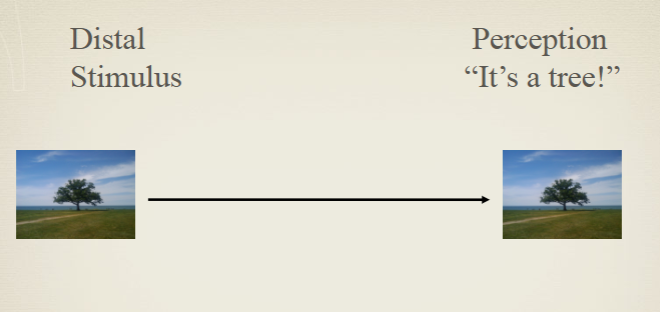
Disagree w skepticism. We are directly aware of real objects in world. Problem is mental representation. Saying there is a tree means there actually is one outside of our minds
Locke: Indirect perception
Knowledge begins with meaningless sensations (simple ideas) → meaning reconstructed in mind (bottom-up; associationism)

Reid: Direct perception
Mind directly aware of real objects
Positivism
Genuine knowledge comes from logical analysis & empirical evidence; objectivity; universal laws; no metaphysics; Comte & Mach
Auguste Comte
Empiricism in science. 3 ways of knowing: theological, metaphysical, positive; AVOID theolog & metaphys; physics as fundamental science
Mach: Positivism
Berkeley & Hume; sensations = objects of observation; if can’t be observed can’t say it’s real; Science as study of ideas & sensations; Psych as fundamental science