physics II in class exam 1 review
 Call Kai
 Learn
Learn Practice Test
 Spaced Repetition
 Match
Match Flashcards
 Knowt Play
1/19

There's no tags or description
Looks like no tags are added yet.
Name | Mastery | Learn | Test | Matching | Spaced | Call with Kai | Chat |
|---|
No analytics yet
Send a link to your students to track their progress
20 Terms
Do two positive charges repel or attract? What about two negative charges?
Two positive charges repel each other.
Two negative charges also repel each other.
Opposite charges attract.
Compare gravitational force and electrostatic force (Coulomb’s Law). How are they the same? Different?
Same:
Both act along the line between two objects.
Both are inverse‑square forces
Different:
Gravity = attractive; electrostatic force = attractive or repulsive.
Electrostatic forces are much stronger than gravitational forces.
Gravity depends on mass; electrostatic force depends on charge.
For this class, which particle has q>0? Which has q<0?
q>0: Proton
q<0: Electron
What is the fundamental unit of charge? SI unit?
The fundamental unit of charge is the elementary charge
The SI unit of charge is the coulomb (C).

List some ways we can distribute charge. Which particle typically moves? Why?
Ways to distribute charge:
Conduction (touching)
Induction
Friction (rubbing)
Particle that moves: Electrons
Why: They are loosely bound and can move through materials; protons are fixed in the nucleus.
Why don’t we experience static electricity with every material?
Because materials differ in how easily electrons move.
Conductors allow charge to move freely; insulators hold charge tightly.
What types of materials did we study in electricity?
Conductors (metals)
Insulators (rubber, plastic, glass)
Semiconductors (silicon)
A proton repels another particle. What is the sign of the second particle? What happens to the force if distance is tripled?
The second particle must be positive (like charges repel).
Tripling the distance reduces the force by a factor of 1/32 = 1/9
What is the electric field? Units? Vector or scalar?
Electric field is the force per unit charge
Units: N/C or V/m
It is a vector.
What is the convention for drawing E⃗?
Electric field lines point away from positive charges and toward negative charges.
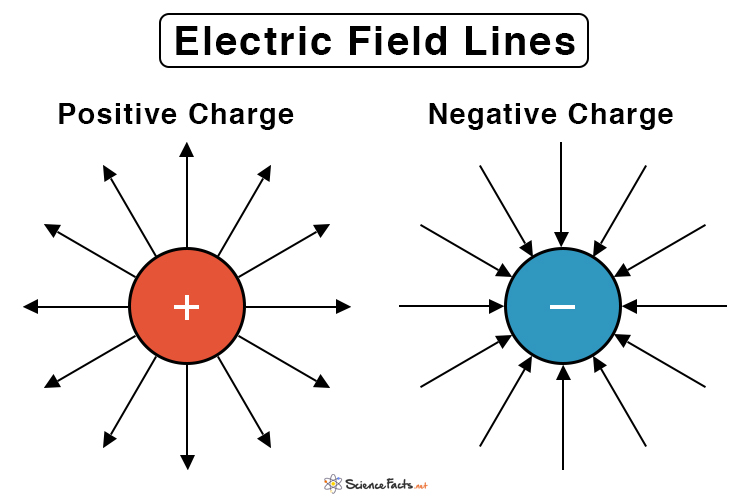
If we push a positive test charge toward a positively charged conductor, does its electric potential energy increase or decrease? What about a negative test charge?
Positive test charge: Energy increases (you push against repulsion).
Negative test charge: Energy decreases (it is attracted).
How do we define electric potential? SI units?
Electric potential (voltage) is electric potential energy per unit charge
SI unit: volt (V)
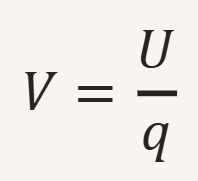
List 3 reference points used to denote 0 V.
Ground
Infinity (for point charges)
The negative terminal of a battery (often chosen as 0 V)
What is a capacitor, and how do you make one?
It is a device that stores electric charge and energy.
It is made of two conductive plates separated by an insulator (dielectric)
What factors determine capacitance? SI units?
Factors:
Plate area
Distance between plates
Dielectric material
SI unit: farad (F)
How do we find total capacitance in parallel? Why?
Each capacitor adds more plate area → more ability to store charge.

How do we find total capacitance in series? Why?
Effective plate separation increases → capacitance decreases
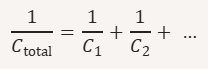
What is the schematic symbol for a capacitor?
Two parallel lines
What happens when a capacitor is connected to a voltage difference?
Charge builds up: one plate becomes positive, the other negative.
Energy is stored in the electric field between plates.
What happens if you apply too high a voltage to a capacitor?
The dielectric breaks down, causing the capacitor to short‑circuit or fail.