Positive Approach to Care
 Studied by 0 people
 Call Kai
 Learn
Learn Practice Test
 Spaced Repetition
 Match
Match Flashcards
 Knowt Play
1/124

There's no tags or description
Looks like no tags are added yet.
Name | Mastery | Learn | Test | Matching | Spaced | Call with Kai |
|---|
No analytics yet
Send a link to your students to track their progress
125 Terms
Normal Effects of Aging
- Can't recall a word without describing it
- Need extra time to process information
- Slower to think and to do
- May hesitate more
- More likely to look before they leap
- Can't remember the name of a person they know
- May pause when trying to think of a word
- Reminisce on old data with new data
Abnormal Effects of Aging
- Unable to think the same
- Unable to do as before
- Unable to get started on a task
- Will get stuck in a moment of time
- Unable to think things out
- Unable to successfully place a person
- Unable to recall words with visual, verbal, or physical cues
- Confused between past and present
- Changes in personality and/or behaviors
What disease can be characterized as brain failure?
Dementia
Dementia
An umbrella term for a collection of symptoms that fit the description of multiple conditions that result in changes to the brain
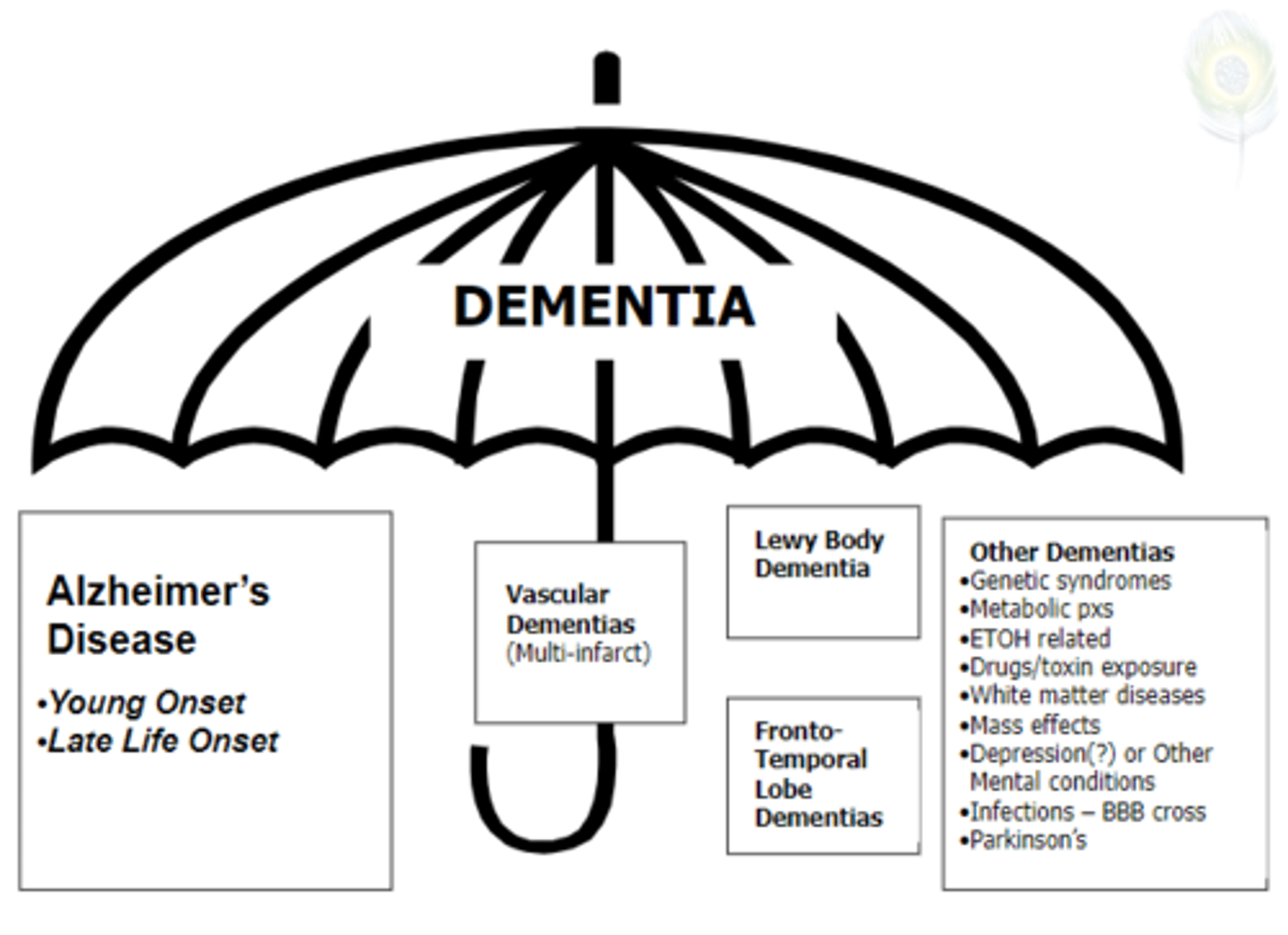
What 2 types of changes in the brain are occurring with dementia?
1. Structural
2. Chemical
What do both the structural and chemical changes in the brain mean?
That a person's symptoms can come and go ("sometimes they can and sometimes they can't")
Are the structural changes in the brain with dementia variable or permanent?
Permanent
What structural changes in the brain are occurring with dementia?
Cells are shrinking and dying
Are the chemical changes in the brain with dementia variable or permanent?
Variable
What chemical changes in the brain are occurring with dementia?
Cells are producing and sending less chemicals
What does a person with dementia who can ‘shine’, when least expected, indicate?
That a chemical rush into the brain is taking place
4 Truths of Dementia
1. At least two parts of the brain are dying
2. Chronic (can not be fixed)
3. Progressive (will get worse)
4. Terminal
Does dementia change everything suddenly or overtime?
Overtime
Can people control dementia; yes or no?
No
Is dementia the same or different for every person?
Different
Is dementia a mental illness; yes or no?
No, it is real
True or False: Dementia is very hard at times.
True
How many types of dementia are there believed to be?
Over 30
What is the etiology of vascular dementia?
One or more cerebrovascular accidents (strokes)/transient ischemic attacks (TIA)
Is vascular dementia acute or chronic?
Acute
The signs and symptoms of what disease are judged to be related to the cognitive deficits experienced in vascular dementia?
Cardiovascular disease
What do the signs and symptoms of vascular dementia depend on?
Brain area affected
Which of the following symptoms causes greater impairment in vascular dementia; judgment and decision making or memory?
Judgement and decision making impairment
What can the impairments caused by vascular dementia sometimes improve with?
Remediation
What is the etiology of lewy body dementia?
Development of abnormal proteins (e.g. lewy bodies) and decreased neurotransmitters
What 2 neurotransmitters are decreased in lewy body dementia?
1. Dopamine
2. Acetylcholine
Signs and Symptoms of Lewy Body Dementia
- Fluctuations in cognitive function (e.g. alertness, attention)
- Recurrent visual hallucinations of animals and people
- Parkinson's-like motor difficulties
- Sleep disturbances (e.g. restlessness)
- Autonomic nervous system malfunction
What 3 cognitive functions are impaired in lewy body dementia?
1. Executive function
2. Perception
3. Memory
What type of dementia does lewy body dementia present similar to?
Alzheimer's Disease
What is the etiology of fronto-temporal dementia (pick's disease)?
Build up of abnormal proteins (e.g. pick's bodies)
Atrophy of cortical regions of frontal and temporal lobes
What 2 conditions is fronto-temporal dementia often misdiagnosed as?
1. Depression
2. Senile dementia Alzheimer's type (SDAT)
When does fronto-temporal dementia develop?
Young age (50's or 60's)
When is the typical onset of fronto-temporal dementia?
Prior to age 65
What are the 2 hallmark features or changes of fronto-temporal dementia?
1. Behavior
2. Language
Signs and Symptoms of Fronto-Temporal Dementia
- Changes in behavior and language
- Disinhibition
- Poor judgment
- Impulse control
Is there a greater language impairment or memory impairment in fronto-temporal dementia?
Language impairment
What movement disorder is characterized by changes to the central nervous system?
Parkinson's Disease
How is an individual with Parkinson's Disease cognition impaired?
Slowed reaction time
Executive functions deficits
What 4 executive function deficits are common in Parkinson's Disease?
1. Attention/concentration
2. Set-shifting
3. Decision making
4. Motor planning
Does dementia develop early or later in people with Parkinson's Disease?
Later
What percent of people with Parkinson's Disease develop dementia?
20-40%
Why do people with Parkinson's Disease commonly develop dementia?
Due to an insufficient amount of dopamine (similar to lewy body dementia)
What chronic memory disorder is caused by alcohol abuse?
Korsakoff syndrome
What is the etiology of korsakoff syndrome?
Thiamine deficiency in the brain
Signs and Symptoms of Korsakoff Syndrome
- Severe memory loss
- Confabulation
What type of cognition is spared in korsakoff syndrome?
Social cognition
What is the etiology of HIV-associated neurocognitive disorder?
Synaptodendritic damage in the frontal cortex
Signs and Symptoms of HIV-Associated Neurocognitive Disorder
- Cognitive, motor, and behavioral impairments
- Impaired cognition, attention, memory, and executive function
- Apathy and social withdrawal
- Unsteadiness and clumsiness
What is the etiology of Huntington's Disease?
Loss of cells in the striatum (cortex and basal ganglia)
When is the onset of Huntington's Disease?
Between 30-50
What is the hallmark symptom of Huntington's Disease?
Involuntary movement
Signs and Symptoms of Huntington's Disease
Changes in personality
Alterations in mood
Decline in cognitive functions
What are 5 potentially reversible conditions of dementia?
1. Normal pressure hydrocephalus
2. Frontal lobe damage
3. Tumor
4. Vitamin B12 and B1 deficiency
5. Hypothyroidism
What is the etiology of frontal lobe damage?
Increase in intra-cranial pressure due to accumulation of cerebrospinal fluid
What deficits occurring as a result of frontal lobe damage can potentially be remediated?
Inattention
Impaired recall
What may occur in the later stages of frontal lobe damage?
Urinary incontinence
What may urinary incontinence in people with frontal lobe damage lead to?
Urinary "indifference"
What must be intact for remediation to occur with frontal lobe damage?
Recognition
No more than what percent of cases of mild to moderate dementia are fully reversible?
1.5%
What are some common challenges for people with dementia?
- Unable to understand or comprehend what is being said
- Difficulty with word finding
- Commonly describing an object rather than naming it
- Loss of train of thought
- Revert back to native language (e.g. spanish)
- Repeating the same thing over and over again
- Use of gestures rather than words
How do humans take in data?
With their five senses
5 Human Senses
1. Visual (see)
2. Auditory (hear)
3. Tactile (touch)
4. Olfactory (smell)
5. Gustatory (taste)
What human sense gives the most powerful sensory input for people with dementia; vision, auditory, tactile, olfactory, or gustatory?
Vision
What do people with dementia pay more attention to; what they see or what they hear?
What they see
What visual functions do people with dementia lose?
- Peripheral field (e.g. edges of vision)
- Depth perception
- Object recognition linked to purpose (e.g. pen, fork)
- Ability to process, scan, and shift focus
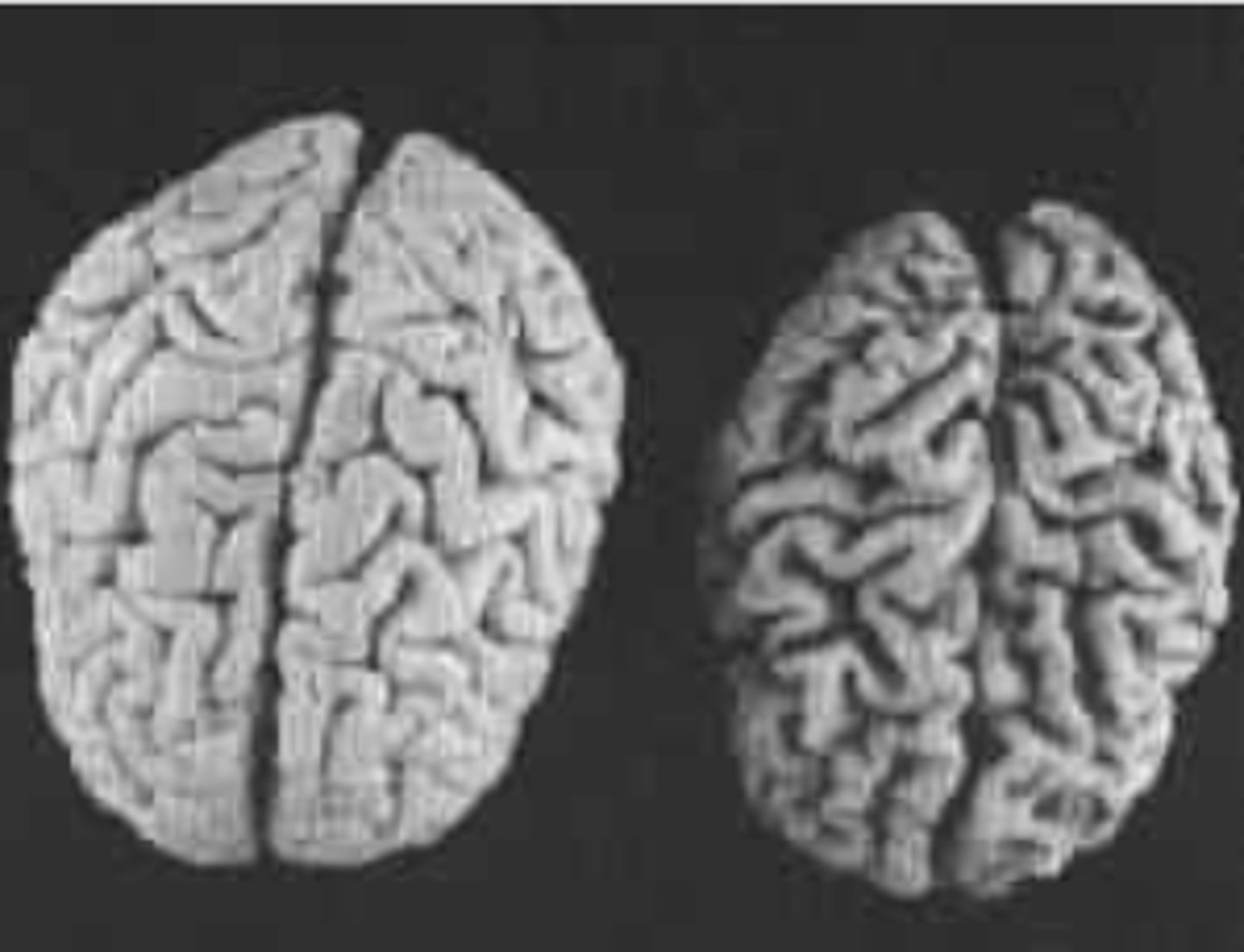
What visual functions are preserved in people with dementia?
- Middle visual field
- Curious about objects within their central vision
What do therapist's often do wrong when working with people who have dementia?
Talk to much
What do people with dementia often focus on?
How people look visually through non-verbal's like nodding (they are not processing the content)
What human sense is not changed by dementia; vision, auditory, tactile, olfactory, or gustatory?
Auditory
What area of the brain is preserved in people with dementia?
Primary auditory cortex
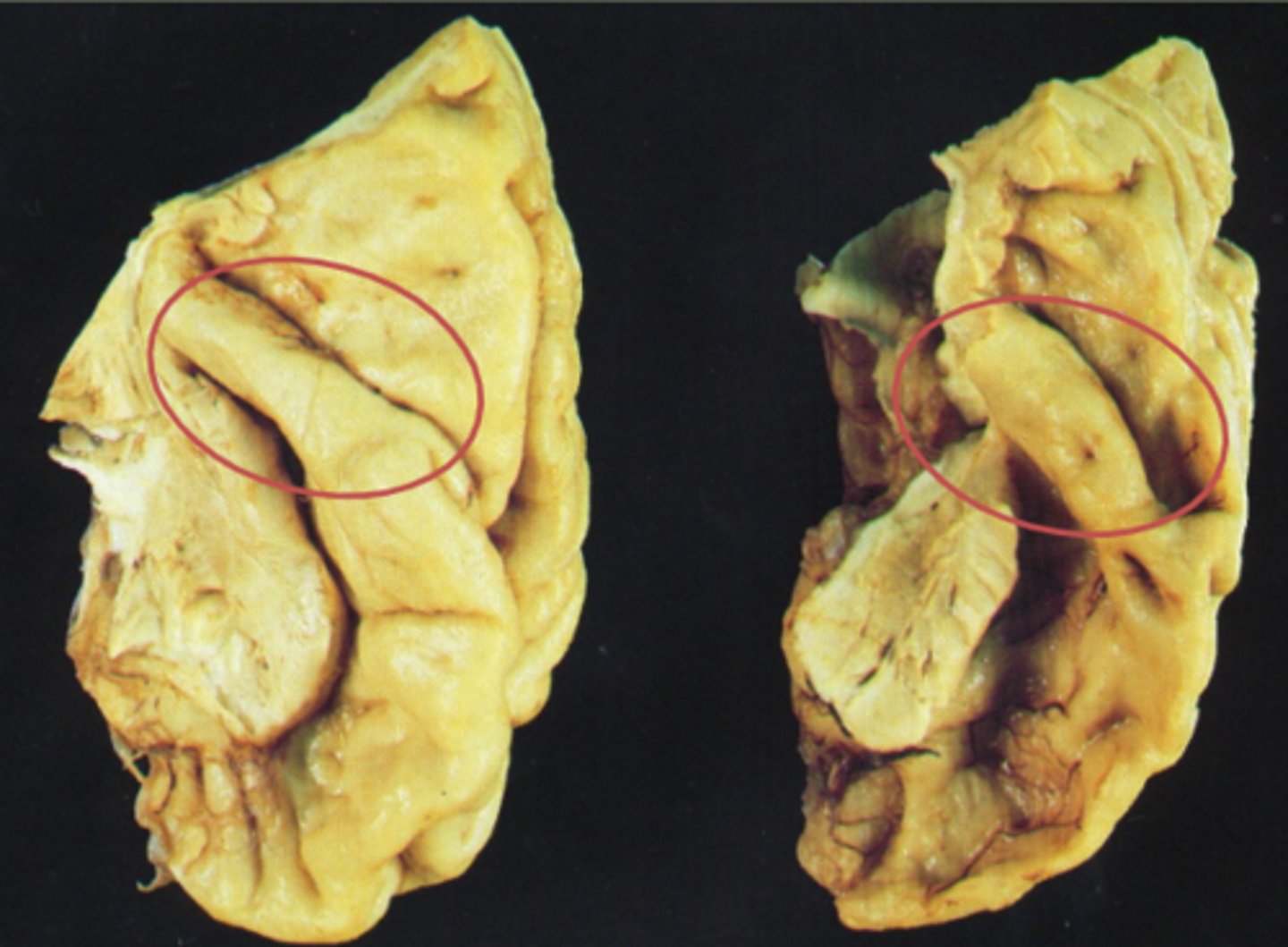
What does the preservation of the primary auditory cortex indicate in people with dementia?
That volume is not the issue but language comprehension is
What cognitive function experiences a big change as a result of dementia?
Language comprehension
Why is language comprehension severely effected in people with dementia?
As a result of changes in the auditory associative cortex
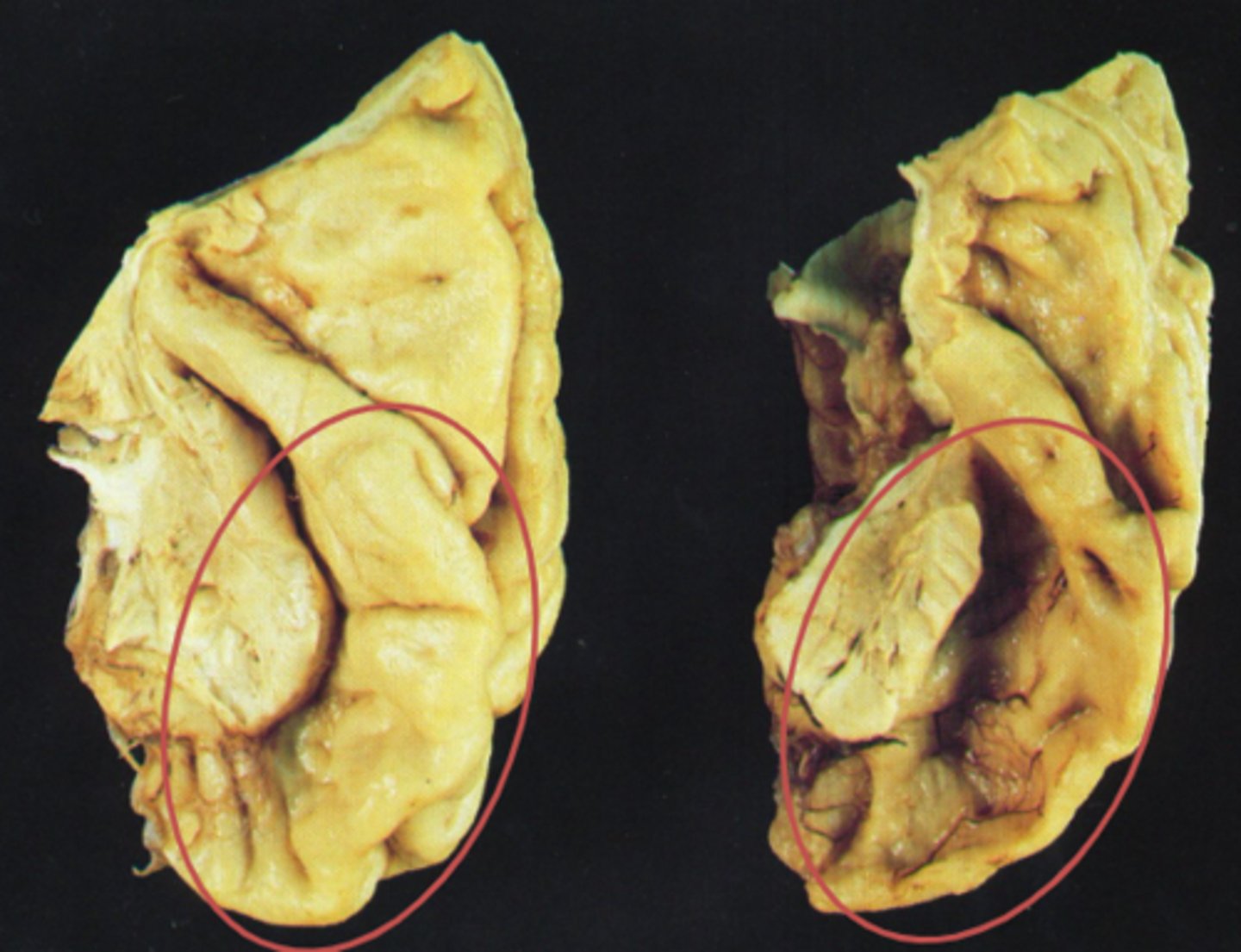
What language functions do people with dementia lose?
- Can't find the right words (e.g. word salad)
- Vague language
- Single phrases
- Use of sounds and vocalizations
- Unable to make needs known
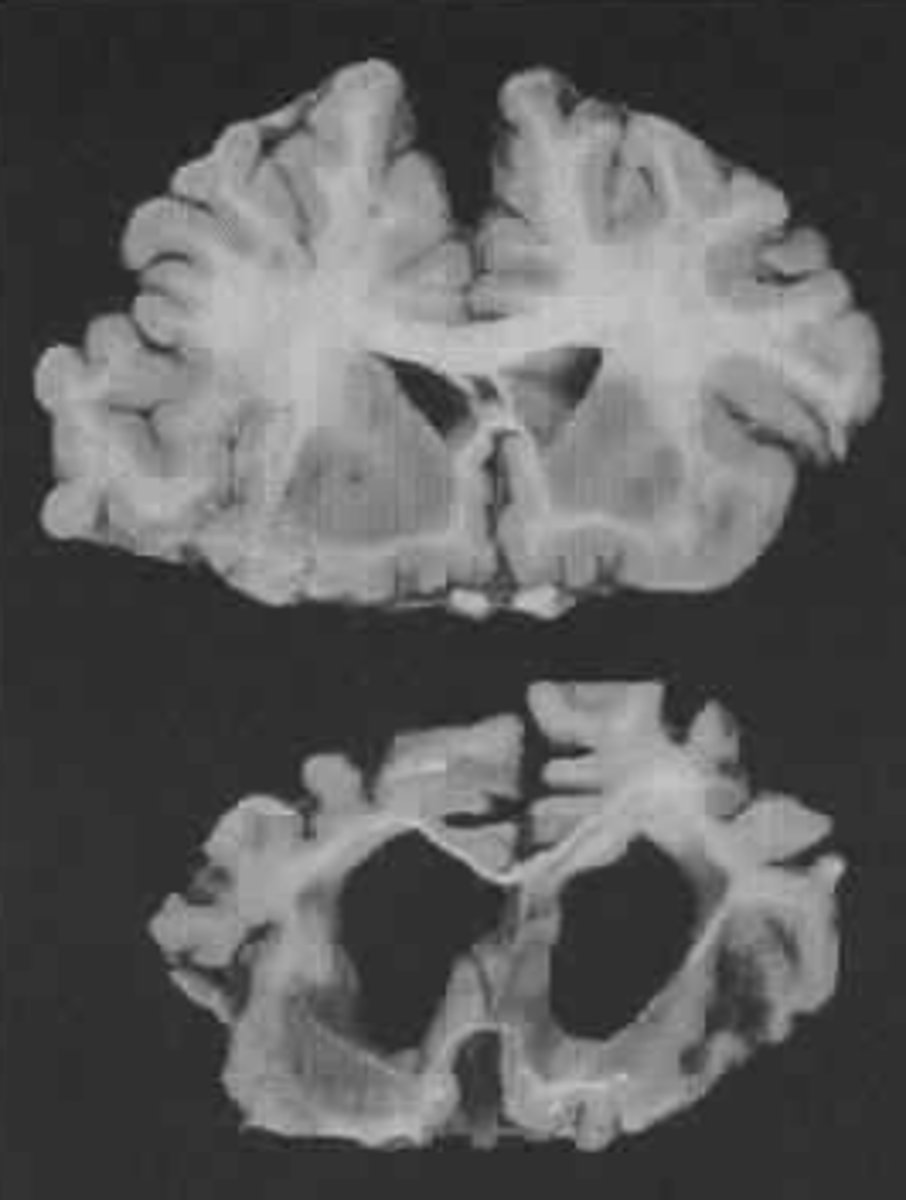
What language functions are preserved in people with dementia?
- Singing
- Automatic speech (e.g. chit chat - "Hi. How are you doing?")
- Swear/forbidden words
- Sex talk
What memory functions do people with dementia lose?
- Immediate recall
- Attention to selected information
- Recent events
- Relationships (view their relatives as strangers)
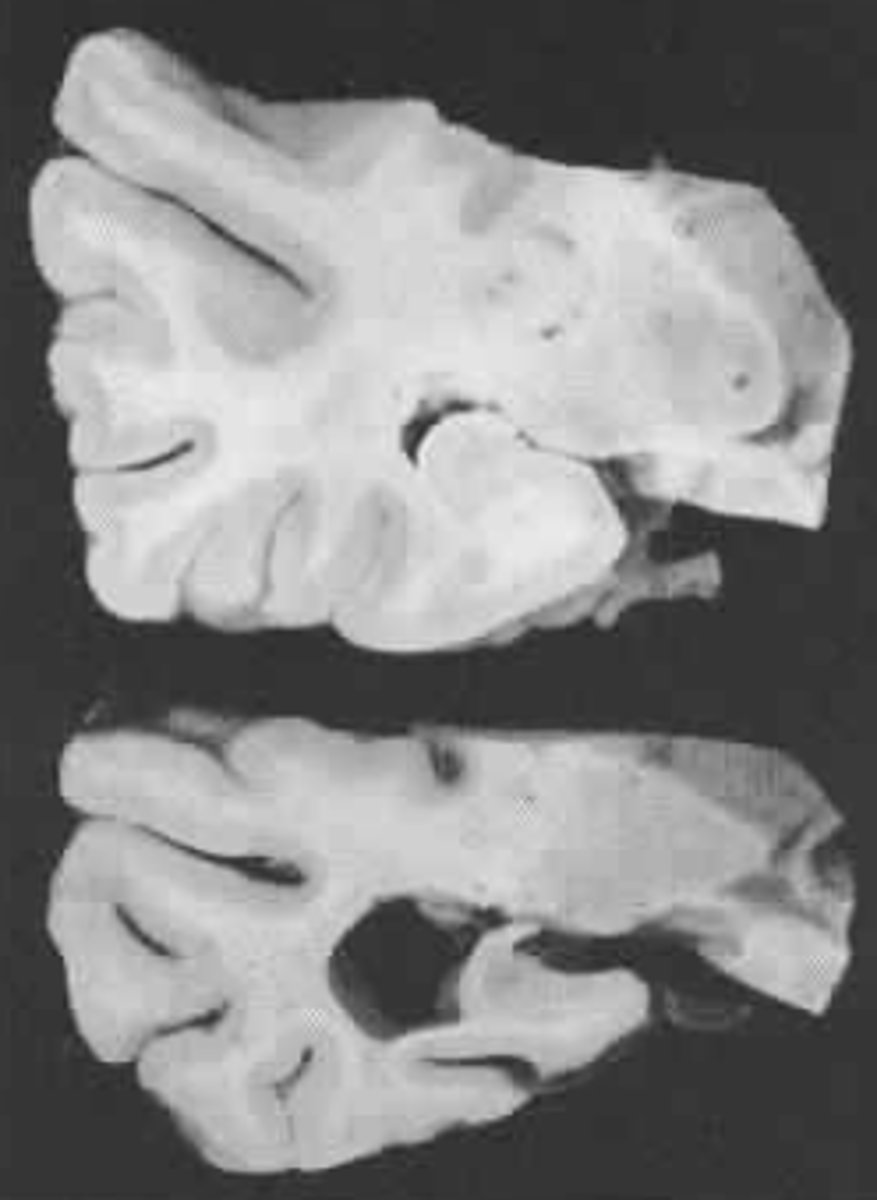
What memory functions are preserved in people with dementia?
- Old memories (e.g. hang young pictures of themselves up)
- Emotional memories (e.g. recognize something is sad)
- Motor memories (e.g. know how to dance)
- Confabulation (e.g. make up stories)
What 4 functions is the executive control center of the brain responsible for?
1. Emotions
2. Behavior
3. Judgment
4. Reasoning
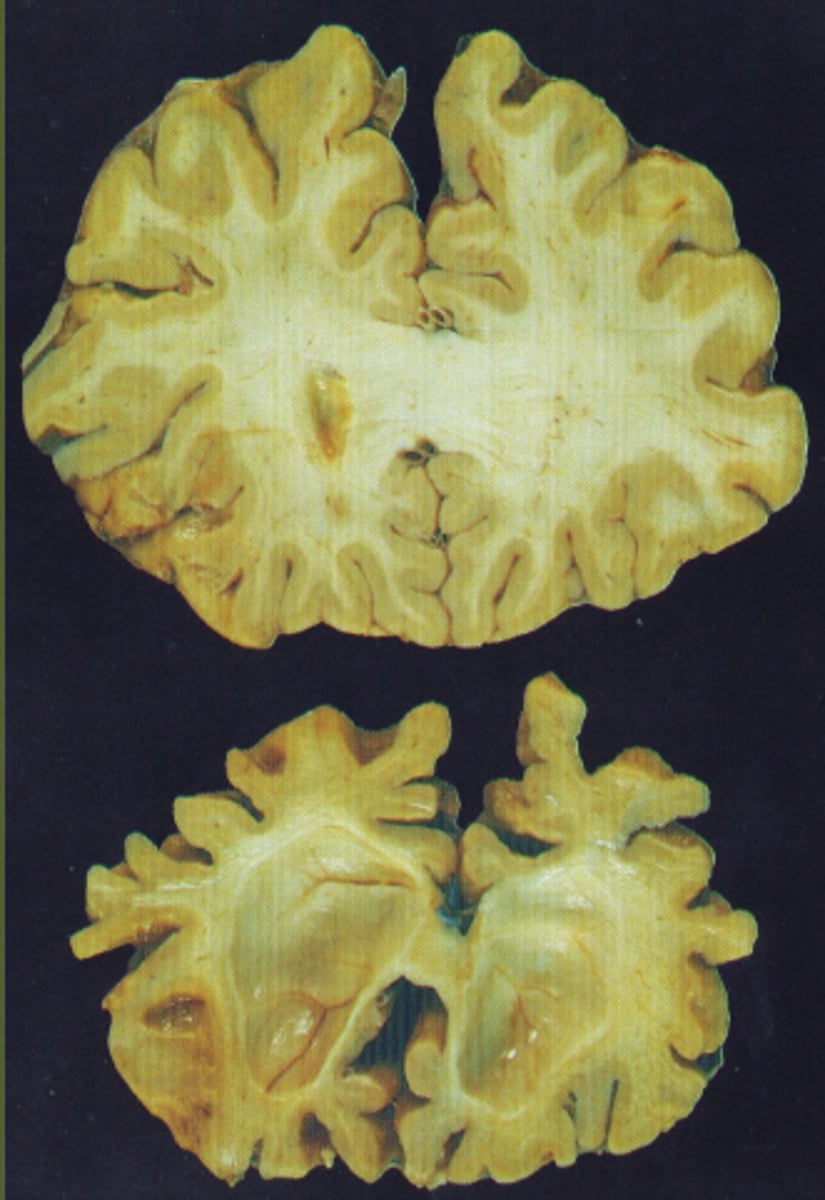
What understanding functions do people with dementia lose?
- Can't interpret words
- Misses some words
- Gets off target or topic
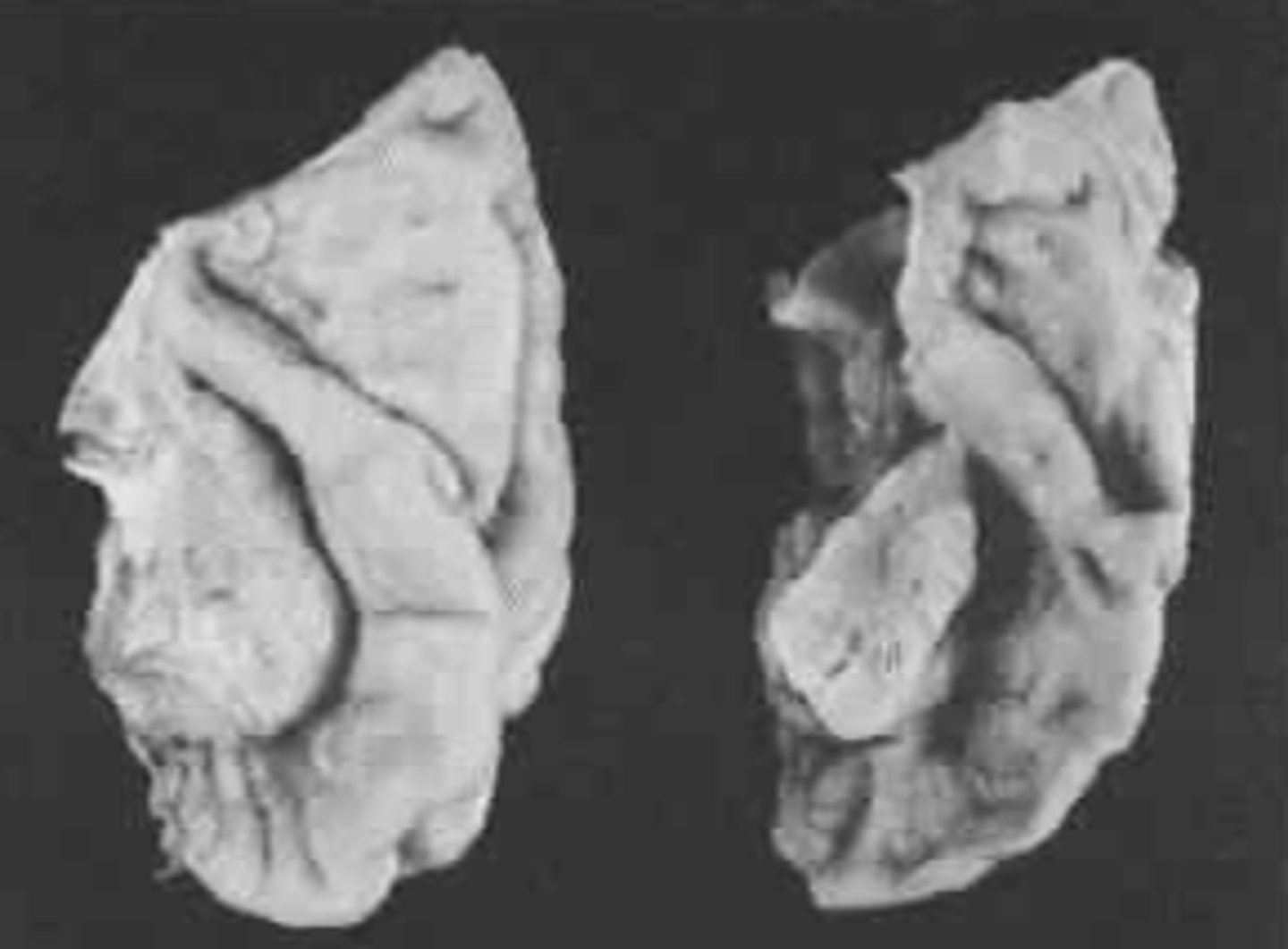
What understanding functions are preserved in people with dementia?
- Can read facial expressions
- Can hear different tones of voice
- Can read some non-verbal's
- Knows how to cover their deficits up with confabulation
What sensory functions do people with dementia lose?
- Position of body in space
- Ability to locate and express pain
- Awareness of feeling in most of the body
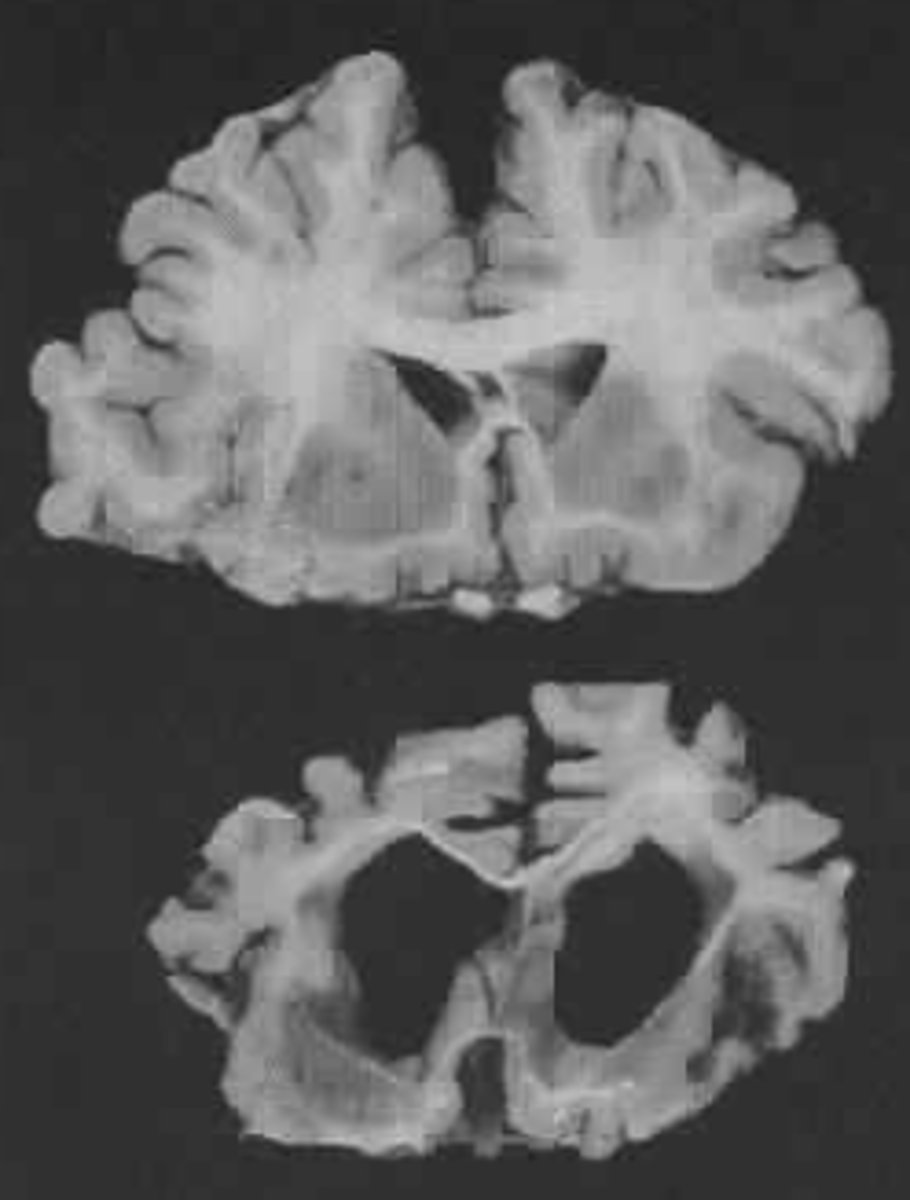
What does a lack of awareness of feeling in most of the body make difficult?
Movement and function
What sensory functions are preserved in people with dementia?
Four areas of the body are preserved
What 4 areas of the body and their sensory functions are preserved in people with dementia?
1. Lips, tongue, and mouth
2. Palms and fingers
3. Soles of feet
4. Genitalia
What may the 4 areas of the body that are preserved be; hyposensitive, sensitive, or hypersensitive?
Hypersensitive (need for sensation can become extreme)
What are one of the later functional areas to be effected by dementia?
Self-care
What self-care functions do people with dementia lose?
- Sequencing
- Initiation and termination
- Tool manipulation
What self-care functions are preserved in people with dementia?
- Motions and actions
- The doing part
- Cued activity
What are the basics for success when working with a person who has dementia?
- Be a detective not a judge
- Look, listen, offer, and think (e.g. observations)
- Use approach as a screening tool (not everyone wants help)
- Sequence cues
- Connect with them visually first before talking or touching
- Match function to remaining abilities
What sequence of cues should always be used when working with people who have dementia?
1. Visual (show)
2. Verbal (tell)
3. Physical (touch)
What should therapist's build skill in so they can effectively work with a person who has dementia?
- Using the positive physical approach
- Providing supportive communication to make a connection
- Giving skill sensitive cues (visual, verbal, and physical)
- Hand under hand for connection and assistance
- Keeping an open and willing heart, head, and hands
Characteristics of a Positive Physical Approach
- Pause at edge of public space (6 feet away)
- Gesture and greet by name
- Offer hand and make eye contact
- Approach slowly within visual range in the front
- Shake hands and maintain hand under hand
- Move to the side of the person to reduce tension
- Get to eye level and respect intimate space
- Wait for acknowledgement
Examples of Supportive Communication
- Offer name - "I'm ___ and you are ___"
- Offer a shared background - "I'm from ___ and you're from ___"
- Offer a positive personal comment - "You look great in ___" or "I love that color on you"
How can a therapist validate a person's emotions in the early stages of dementia?
By labeling the emotion ("I'm sorry this is happening to you")
How can a therapist validate a person's emotions in the middle stages of dementia?
- By repeating and reflecting on their words with emotion
- Listening for added information, ideas, and thoughts
- Exploring the new information by 'watching and listening'
How can a therapist validate a person's emotions in the later stages of dementia?
By observing their 'whole' body to identify the need under the words or actions (e.g. face, posture, movement, gestures, touching, looking)
What should be used when words do not work well?
Hand under hand
Why should hand under hand be used when words do not work?
Because hand under hand uses already established nerve pathways to allow a person to feel in control
What does hand under hand allow the therapist to do?
Allows the therapist to do with not to
What does hand under hand give the therapist advance notice of?
Possible problems
 Note
Note  Flashcards (276)