Chapter 50: Cardiovascular System
 Call Kai
 Learn
Learn Practice Test
 Spaced Repetition
 Match
Match Flashcards
 Knowt Play
1/21

There's no tags or description
Looks like no tags are added yet.
Name | Mastery | Learn | Test | Matching | Spaced | Call with Kai | Chat |
|---|
No analytics yet
Send a link to your students to track their progress
22 Terms
Compnents of the Heart (3)
Pericardium (puter layer)
Mycocardium (muscle of heart)
Endocardium (inner layer)
Components of Blood Vessels
Arteries, capillaries, and veins
- Blood brings oxygen and removes waste
Function of valves
Help blood flow move in one direction in the heart
Red Blood Cells (hemoglobin)
Live 3-4 months
Destroyed by liver & spleen
White Blood Cells
Increases during infections
Live for 9 days
Platelets
Lives for 4 days
Circulation: Systolic (lub)
Working phase of heart
- Blood is being pumped when the heart contracts
Circulation: Diastolic (dub)
Restubg phase
- Allows the heart to be filled with blood
What is the normal heart rate of an adult?
60-100 beats per minute
9 pulse sites
Temporal (temple of head)
Carotid (jawline)
Brachial (inner elbow)
Radial (Thumbside of wrist, commonly used for HR)
Apical (near lungs, assessed via stethoscope)
Femoral (Groin area)
Popliteal (Behind the Knee)
Posterior tibal artery (Big toe side of the ankle)
Dorsalis pedis artery (On top of the foot)
Fucntion of Arteries
Carry Blood away
A: Away
Rich in O2 and bright red
Function of Veins
Returns blood to heart
What is the flow of blood in our body?
superior vena cava—>right artium—> (tricuspid valve) right ventricle—> pulmonary artery—> lungs —>pulomnary vein —>left artium —> (mitral valve) left ventricle —>aorta
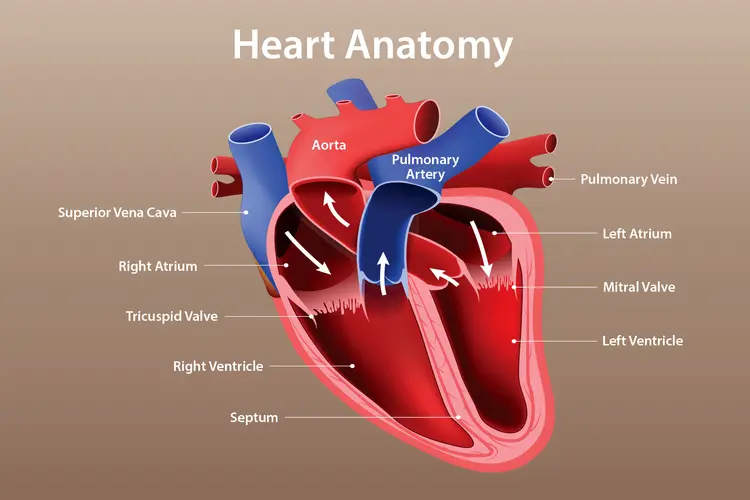
Congestive Heart Failure: Left side
Pumping chambers are weak (most common)
- Lungs are affected
- Symptoms: shortness of breath
Congestive Heart Failure: Right
Struggles of pump blood to the lungs
- Blood is backed up in the veins
- Swelling (legs, ankles, and stomach)
Cardiovascular Disorders: Hypertension (HTN)
Normal HR: 120 (systole/pumping) /80 (diastolic/relaxing)
HTN HR: ex. 140/90
Low HR: Below 90/ Below 60
Cause: narrowed blood vessels=harder to pump blood
Symtoms: Heachache, blurred vision, dizziness, nosebleeds
- It can lead to a stroke, heart attack, organ failure, etc (silent killer)
Measures: Reduce salt intake b/c salt holds water = swelling leading to heart work overtime/
Cardiovascular Disorders: Coronary Artery Disease (CAD)
The heart is getting less blood due to blockages either partial or total.
- Coronary Arteries supply heart muscles with blood.
Risk factors: genetics. smoking, lack of exercise, diabetic
Complications:
- Myocardial Infarction (heart attack): weak pulse, severe chest pain. Relieve with a NTG (nitroglycerin tablet)
- Angina Pectoris: chest pain or pressure caused by muscles not recieveing oxygen. Pain may relieve in 3-15 mins, use NTG
NTG pills 3 max before ER
Heart Failure Treatment
Low sodiu diet, decrase activity, limited fluids, monitor oxygen, fowler’s position, Anti-embolic stockings (compression socks) prevents blood clots, range og motion exercising (promote blood flow)
Dysrhythmia- Arrhythmia (abnormal heart rhythm)
Caused by excessive caffeine, smoking, thyroid problems, and drugs
-Implantable Cardioveter Defibrillator (ICD) under the skin auto shocks the patient if heart stops
Tachycardia
Fast heart rate
Bradycardia
slow heart rate (less than 60 per min)
Ablation
Areas of tissue in the heart that sends abnormal electrical signals are destroyed through melting, surgery, or vaporization