GI System Overview
 Call Kai
 Learn
Learn Practice Test
 Spaced Repetition
 Match
Match Flashcards
 Knowt Play
1/116

There's no tags or description
Looks like no tags are added yet.
Name | Mastery | Learn | Test | Matching | Spaced | Call with Kai | Chat |
|---|
No analytics yet
Send a link to your students to track their progress
117 Terms
digestive system organs are categorized into what 2 groups
alimentary canal/GI tract and accessory organs
alimentary canal (aka GI tract) includes what
mouth, pharynx, esophagus, stomach, small intestine, large intestine, anus
accessory digestive organs include what
teeth, tongue, gallbladder, salivary glands, liver, pancreas
purpose of alimentary canal/GI tract
digest food and breaks digested fragments
purpose of accessory digestive organs
produce secretions to break down food
major functions of the GI system
ingestion
propulsion
mechanical breakdown
digestion
absorption
defecation
alimentary canal is made of what 4 layers (list from outer to inner)
mucosa, submucosa, muscularis externa, serosa
mucosa secretes what 3 things
mucous, digestive enzymes, hormoens
mucosa function
absorb end products of digestion and protect against infectious disease
submucosa contains rich supply of ______ and _______
blood; lymphatic vessels
muscularis externa is responsible for _______ of food and make up the ________ and _______ layer
motility; inner circular; outer longitudinal
serosa is formed out of _________
connective tissue
the _______ nervous system is the nerve supply for the alimentary canal
enteric
enteric nervous system is also sometimes called the “mini brain”, why?
is has as many neurons here as in our spinal cord (sensory, inter, and motor neurons)
most of the digestive system is a ______ reflex in the enteric
short
short reflexes are controlled by what
enteric neurons
long reflexes involved what
CNS and sympathetic/parasympathetic activity
enteric receptors along the GI tract detect what 3 main things
stretch, osmolarity, pH
effectors in the digestive system are smooth muscle and glands, what can these do
peristalsis and segmentation, hormone secretion
mouth is responsible for what 4 things
ingestion, mechanical breakdown, initiating propulsion, starting digestion
functions of saliva
cleans mouth
lubricates food
dissolves food chemicals
compacts food bolus
protects against microorganisms
what are the 2 types of salivary glands
intrinsic (inside oral cavity) and extrinsic (outside oral cavity)
list the 3 extrinsic salivary glands
parotid, submandibular, sublingual
list the 3 intrinsic salivary glands
buccal, labial, palatine
what is saliva made out of
Na, K, water, IgA, amylase
deglutition means what
swallowing
what is the first phase of deglutition
the buccal phase
what happens in the buccal phase of deglutition
the mandible depresses (opens) followed by the tongue elevating to create a downward slope pushing food to the oropharynx
during the buccal phase is the upper esophageal sphincter open or closed
closed
what is the second phase of deglutition, starting at the end of the buccal phase once food has left the mouth
the pharyngeal phase
what is the goal of the pharyngeal phase
prevent the bolus from traveling down the larynx or up the nasal pharynx and opening the upper esophageal sphincter to let bolus into the esophagus
near the beginning of the pharyngeal phase of deglutition, food is pushed towards the esophagus, what is keeping food from traveling to the nasal pharynx or larynx (towards the lungs)
the soft palate and ulva prevents food from entering the nasal pharynx and the epiglottis prevents food from entering the larynx
what comes after the pharyngeal phase in deglutition (step 3)
the esophageal phase
what happens in the esophageal phase once the food bolus is in the esophagus
the upper esophageal sphincter is closed and the bolus is propelled down via peristalsis of the smooth muscle
what happens after the esophageal phase of deglutition (also explain it)
gastroesophageal opening: the lower esophageal sphincter opens allowing bolus to enter the stomach
these last 2 phases together are sometimes called teh pharyngeal-esophageal phase, what are they controlled by
the medulla and lower pons
how long does it take food to pass from the oropharynx to the stomach
8 seconds
step 1 of peristalsis
contraction of the inner circular layer behind the bolus
what happens after the initial contraction of the inner circular muscle layer behind the bolus in peristalsis (what’s step 2)
the outer longitudinal layer contracts widening the section in front of the bolus
define peristalsis
rhythmic contractions/waves of smooth muscle contraction used to move digestive material along the GI tract
in peristalsis, once the area in front of the bolus widens from outer longitudinal contraction, what happens
the contraction in that inner circular layer is still happening and it propels the bolus forward
peristalsis is controlled by _________ cells that surround the lumen of the GI tract. they respond to different ______ and ________ and trigger _______ in smooth muscle
pacesetter; actions; chemicals; action potential
4 functions of the stomach
storage tank
further degrades food, converting to chyme
mixes/churns chyme
delivers chyme to small intestine
T/F: a lot of absorption happens in the stomach
false, very little absorption happens in the stomach
what is digested in the stomach
mostly proteins because HCl breaks down dietary proteins and pepsin digests proteins into smaller peptides
But, also some lipids (via linginal lipase) and some CHOs are digested
only _____ soluble compounds are absorbed in the stomach (then give an example)
lipid (aspirin/alcohol)
T/F: the stomach undergoes peristalsis like the esophagus
true, this is to move form the fundus to the pylorus with the most vigorous peristalsis happening close to the pylorus to mix the chyme
once the cyme is mixed and churned enough in the stomach from peristalsis, what happens
the pyloric sphincter opens slightly allowing about 3mL of chyme into the duodenum of the small intestine, then the pyloric sphincter closes
why does the pyloric sphincter close after only letting in 3mL of chyme to teh small intestine
to cause retropulsion (pushing of chyme in the backwards direction to further mx it and break it into smaller and smaller peices
list the 4 gland cells of the stomach
mucous cells, parietal cells, cheif cells, and G cells
purpose and function of mucous cells in stomach
secrete alkaline mucous, produces mucous and bicarbonate (HCO3), protects epithelium against stress and acid
gastritis
inflammation caused if anything breaches mucosal barrier (gastric ulcers can form with persistent damage)
gastric secretion has 3 main phases in order to produce gastric juices, list them in order with how much gastric juice they produce
cephalic (1/3 of gastric juice)
gastric (2/3 of gastric juice)
intestinal
first step of the cephalic phase of gastric secretion
occurs before food even enters the stomach and is stimulated by sight and smell of food
this stimualates the vagus nerve which starts this phase
once the vagus nerve is stimulated in the cephalic phase of gastric secretion, what happens
activates parietal cells which produce intrinsic factor and HCL
activates chief cells which produce pepsinogen to help with protein breakdown
what does HCl do in the stomach
increases acidity and digests protein and plant foods
what does intrinsic factor do in the stomach
helps absorb vitamin B12
after the cephalic phase we enter the gastric phase of secretion, what is the first step of this
this starts when the food bolus enters the stomach and gets stimulated because of distension (aka stretching) of the stomach to accommodate for said food bolus
the vagus nerve is then activated again
after the vagus nerve is activated in the gastric phase of gastric secretion what happens
this activates G cells which produce gastrin
this gastrin then stimulates parietal cells
the the parietal cells produce more HCl and intrinsic factor which increases acidity and digestion
this higher acidity however has a small inhibitory effect on the G cells to prevent to much acidity, the sympathetic nervous system also inhibts G cells in this phase
after the gastric phase is over, the intestinal phase occurs in gastric secretion,,, what is the first step
this phase is largely an inhibitory phase, however there is one stimulatory part with peptones entering the small intestine from the stomach. peptones stimulate intestinal G cells which release gastrin and stimulates parietal cells
after the peptones stimulate intestinal G cells, what happens in the rest of teh intestinal phase of gastric secretion
fatty acids and glucose stimulate S cells which release secretin, this inhibits stomach G cells which then produce less gastrin and therefore also indirectly inhibits parietal cells
these same fatty acids and glucose also stimulate I cells which produce CCK which more directly inhibits parietal cells and inhibits their production of HCl and intrinsic factors
3 parts of the small intestine
duodenum, jejunum, ileum
___% of absorption happens in the small intestine
90
duodenum receives ___ from stomach and ________ from liver and pancreas
chyme; digestive enzymes
main functions of duodenum
neutralize acid, begin absorption from chyme
most nutrient absorption (sugar, amino acids, fatty acids) happens in the _______ of the small intestine
jejunum
ileum absorbs what in the small intestine
really just what was missed by the jejunum (like B12, bile salts, some sugars)
list the 4 main cells of the small intestine
enterocytes, goblet cells, enteroendocrine cells, paneth cells
enterocytes
largely absorb nutrients and electrolytes in villi and secrete intestinal juice to help absorb nutrients from chyme
goblet cells secrete _______
mucus
enteroendocrine cells secrete _____ and ______
secretin; CCK
paneth cells secrete what and kill what
secrete defensins and lysozyme, kill bacteria
segmentation happens where
the small intestine
what is the purpose of segmentation
to mix chyme with bile and enzymes
main goal tho is to enhance absorption
how does segmentation work
opposite segments of the small intestine contract to push chyme in both directions
migrating motility complex
peristalsis that occurs in the fast state (between meals when not eating) by pulling food residue, dead cells, bacteria, and indigested substances into the large intestine
stimulated by motilin
T/F: very little digestion occurs in the large intestine
true
main 3 functions of the large intestine
form and propel feces to eliminate from body
absorb water and electrolytes
produce and absorb vitamins
what 3 vitamins are produced int eh large intestine by bacteria
vitamin K, biotin, and pantothenic acid (B5)
vitamin K functions
used by liver to synthesize clotting factors such as prothrombin
biotin helps with what
glucose metabolism and fat synthesis
pantothenic acid (B5) helps with what
CoA formation which then helps with fatty acid synthesis and other metabolic processes
function of intestinal bacteria
prevents pathogens from invading
provides protective and metabolic functions: produce and synthesize vitamins (K,B)
ferment indigestible CHOs
_________ processes chyme delivered from the ileum of the small intestine and uses peristalsis to move the chyme
ascending colon
the ascending colon absorbs _____ and solidifies to form stool. some ______ are produced here
water; vitamins
the _______ is responsible for water and electrolyte absorption and storing solid feces
transverse colon
in the transverse colon how does feces move through it
haustration: contracting and receiving segments remain in their state for a longer period, basically is slower peristalsis with about 1 min long contractions
power propulsion also moves the feces over a longer distance which is done when we receive more chyme from the ileum
the descending colon acts as a channel between the _______ and ______ colon. it prepares _____ for ______
transverse and sigmoid; waste; elimination
the sigmoid colon acts as a reservoir for accumulating _____. this is where the final _________ of vitamins, minerals, and water occurs and we push _______ into the _________
feces; reabsorption; solid feces; rectum
movement of fecal matter into the rectum triggers what
the urge to defecate
defecation reflex is similar to micturition, what is the first step?
stretch receptors detect movement of feces into the rectum
in the defecation reflex, what happens after stretch receptors detect movement of feces into the rectum
parasympathetic motor fibers stimulate contraction of the rectum and relaxation of the internal anal sphincter
what happens after the relaxation of the internal anal sphincter in the defecation reflex
voluntary motor neurons open/relax the external anal sphincter allowing feces to pass
5 main functions of the liver
energy metabolism (maintaining blood glucose/lipid levels)
produces proteins
drug metabolism (converting them to a form that kidneys can excrete them)
storage of fat soluble vitamins and minerals
produces bile
_________ occurs in the liver
gluconeogenesis
lipids produce ______ in the liver for energy
ketone bodies
protein synthesis inside the liver creates what proteins
albumin (main proteins needed for blood)
fibrinogen
prothrombin
transferrin
nonessential amino acids → essential amino acids
in the liver, we form _____ to break down fates and manage cholesterol
bile
the liver converts dugs and other toxic substances to be _________ so the kidneys can excrete them
hydrophilic
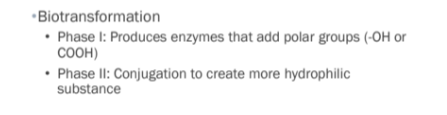
look into biotransformation more
look into biotransformation more