2.5 - Sexual reproduction in plants
 Call Kai
 Learn
Learn Practice Test
 Spaced Repetition
 Match
Match Flashcards
 Knowt Play
1/12

There's no tags or description
Looks like no tags are added yet.
Name | Mastery | Learn | Test | Matching | Spaced | Call with Kai | Chat |
|---|
No analytics yet
Send a link to your students to track their progress
13 Terms
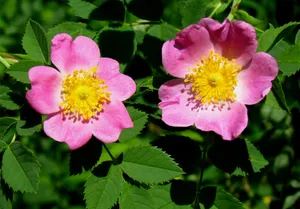
What is the purpose of the petals?
Modified leaves:
brightly coloured/unusually shaped to attract pollinators
protective, reproductive parts of the plant
What is the purpose of the stamen?
Male part of flower (consists of anther & filament):
anthers produce lots of pollen grains by microsporogenesis
filament holds anther in place

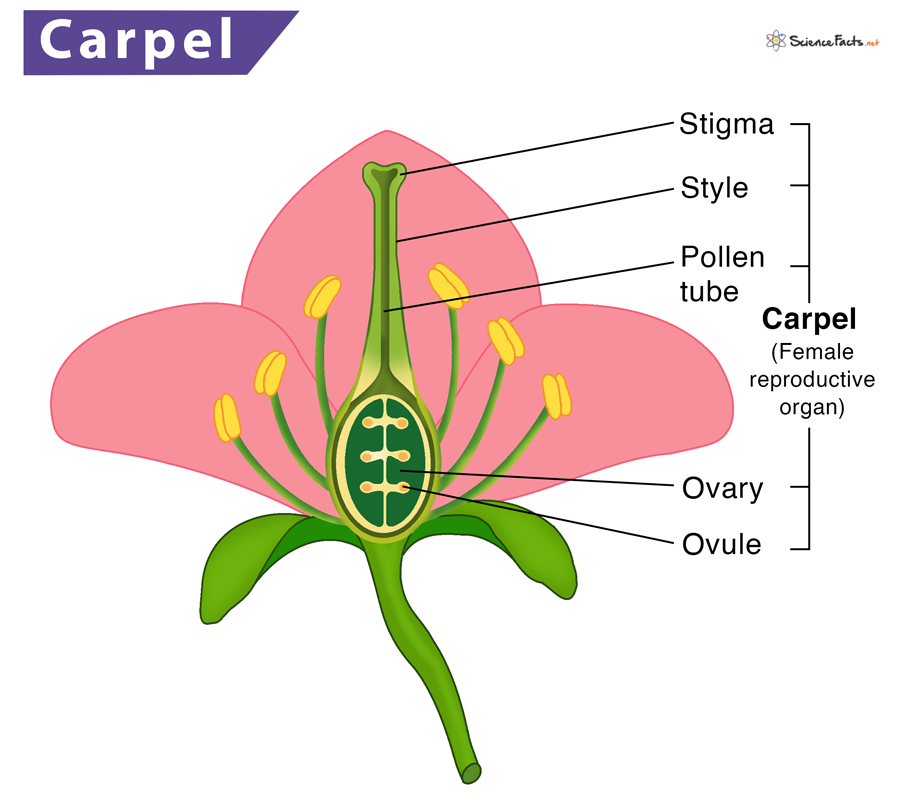
What is the purpose of the carpel?
Female part of flower (consists of stigma, style & ovary):
stigma is sticky, so pollen can adhere
style leads to ovary
ovary contains many ovules
What is the purpose of the stem?
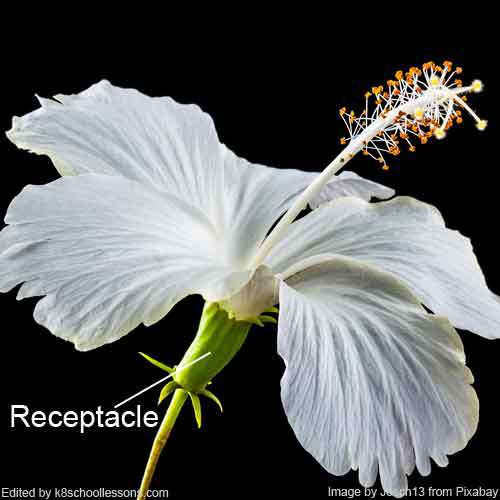
Contains structurally strong xylem vessels for strength to hold the flower upright
The end of the stem is called the receptacle
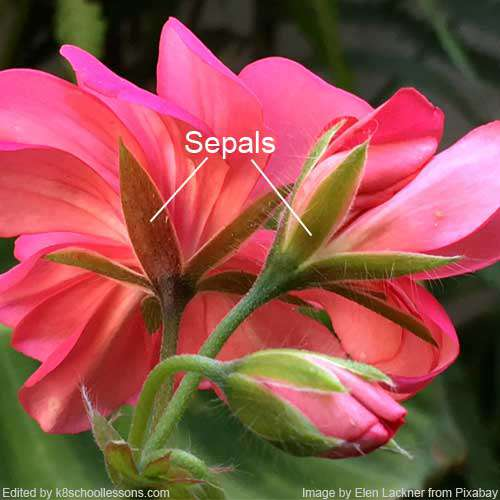
What is the purpose of sepals?
Protective, modified leaves which encase the flower as it develops (can be leaf-like or resemble extra petals)
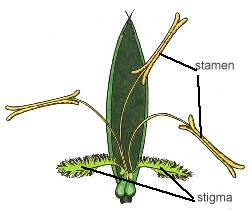
How do the stamen & pollen in a wind-pollinated plant differ from an insect pollinated plant?
Stamen are external to the flower to catch the wind
Pollen is typically smaller to aid wind travel
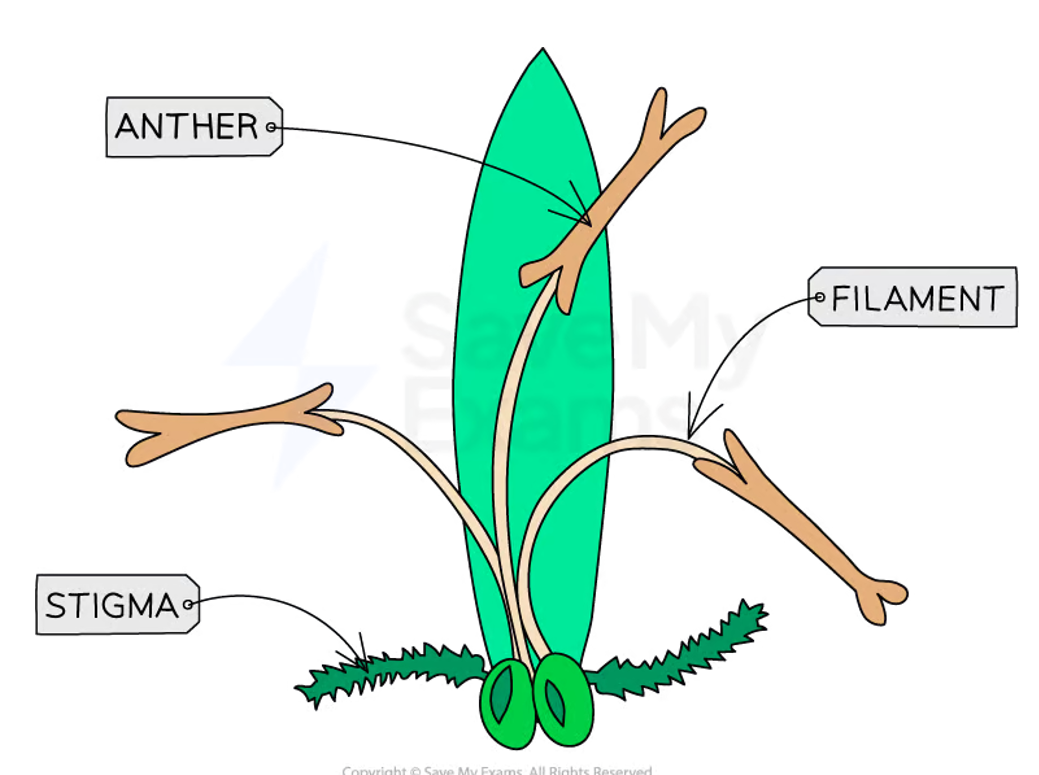
How does the carpel in a wind-pollinated plant differ from an insect-pollinated plant?
The stigma remains sticky, but are also feathery & larger, extending out of the flower
Where are the female (megaspores) & male (microspores) gametes produced in plants?
Megaspores: produced in the ovule (inside the ovary)
Microspores: produced in the anthers
Outline the process of microsporogenesis (making of pollen)
Diploid pollen mother cell divides by meiosis twice to form 4 haploid microspore cells
These divide by mitosis to form the generative nucleus & the pollen tube nucleus
Outline the process of megasporogenesis
Diploid megaspore mother cell divides by meiosis twice to form 4 haploid megaspore cells
Only 1 continues developing & the rest degenerate
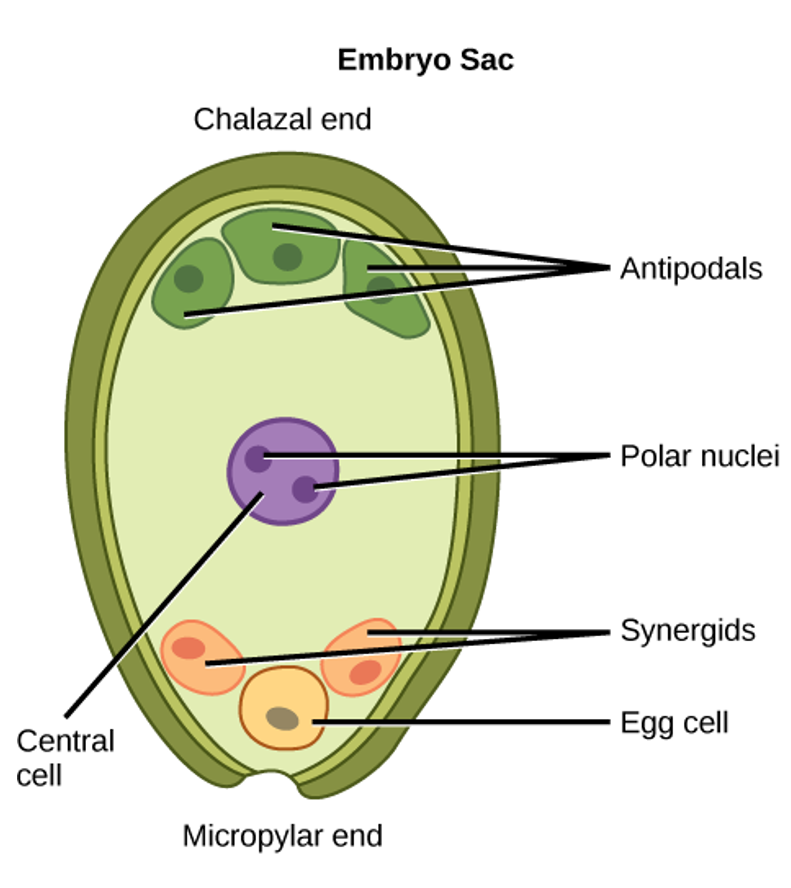
This divides 3 times by mitosis to form:
1 female egg cell
3 antipodal cells
2 synergid cells
2 polar nuclei
Outline the process of pollination
The generative nucleus divides by mitosis to form 2 haploid male gametes
The pollen tube nucleus produces hydrolytic enzymes to digest the tissue of the style, creating a pollen tube
The generative nuclei follow behind the pollen tube nucleus to eventually reach the micropyle
What is the purpose of enzymes on the growth of the pollen tube?
Digests the tissue of the style
Provides nutrients for pollen tube growth
Allows generative nuclei to enter the ovule
Outline the process of double fertilisation
The polar nuclei fuse to form a diploid nucleus, which is then fertilised by one of the male gametes to form a triploid endosperm nucleus (provides nutrients for germination)
The other male gamete fuses with the female gamete to form a diploid zygote