Minor Office Procedures
 Call Kai
 Learn
Learn Practice Test
 Spaced Repetition
 Match
Match Flashcards
 Knowt Play
1/36

There's no tags or description
Looks like no tags are added yet.
Name | Mastery | Learn | Test | Matching | Spaced | Call with Kai | Chat |
|---|
No analytics yet
Send a link to your students to track their progress
37 Terms
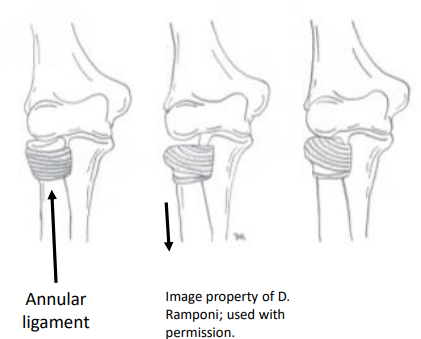
Nursemaid’s elbow
“pulled elbow”
Subluxation of radial head
Almost always <5 yrs old
“Pulling injury”
X-rays normal
Clinical diagnosis
Pseudo-paralysis of entire arm
Pain with manipulation
How to repair nursemaids elbow? Reduction techniques…
TWO methods:
Hyper supinate wrist > flex elbow 90 degrees
Pronation of wrist
Feel “click” beneath thumb confirms dx and reduction
Don’t need to immobilize
Recurrence up to 30%, rare > 5 y/o
Child will use arm after 10-15 minutes of technique
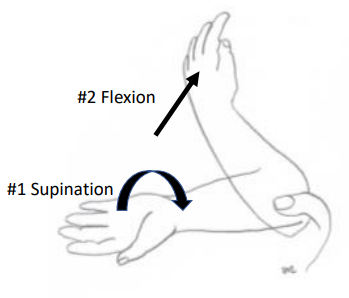
Supination - Flexion Technique
Hypersupinate forearm, press thumb lightly on radial head (aka near elbow)
Flex elbow 90 degrees
“click”
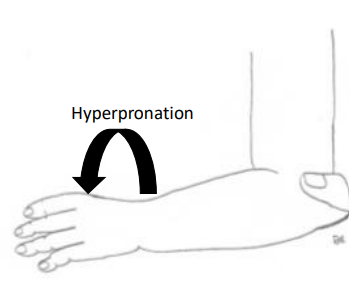
Hyperpronation
Pressure on radial head
Grasp distal forearm with other hand
Hyperpronate the forearm
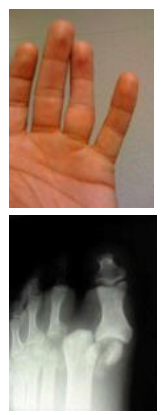
Finger / Toe Dislocation most common causes and joints
Most common PIP joint
Often d/t ball handling
Closed Dislocation
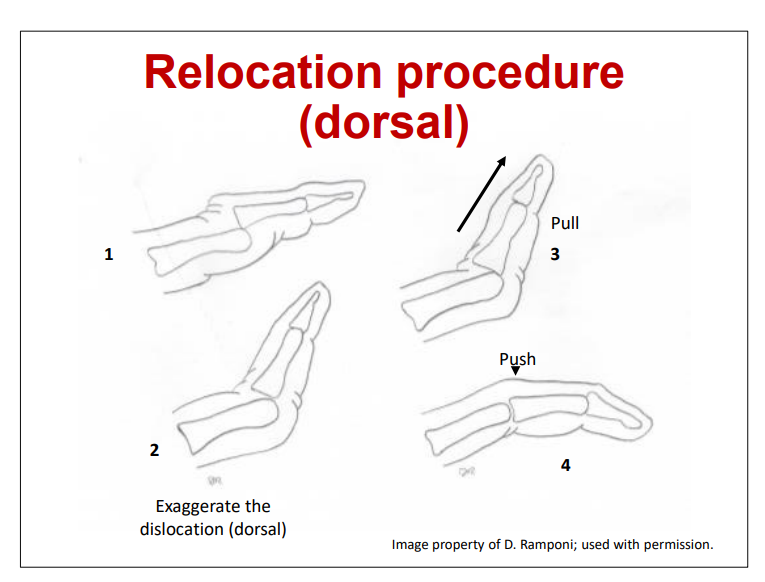
Relocate Procedure
Exaggerate the dislocation
Apply traction distally
Pull it back into proper position
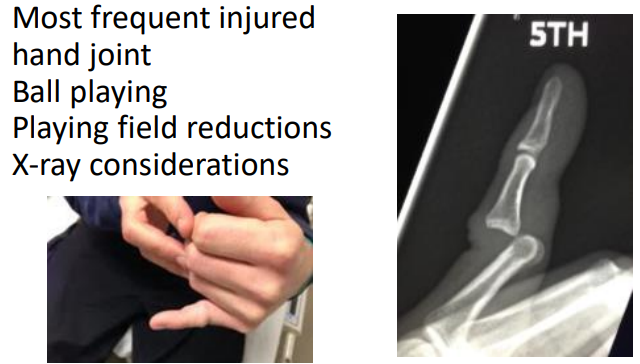
PIP dislocation - dorsal
Most frequent injured hand joint
Ball playing
Playing field reductions
X-ray considerations (xray before and after to r/o fracture with relocation procedure)
Splint finger after reduction
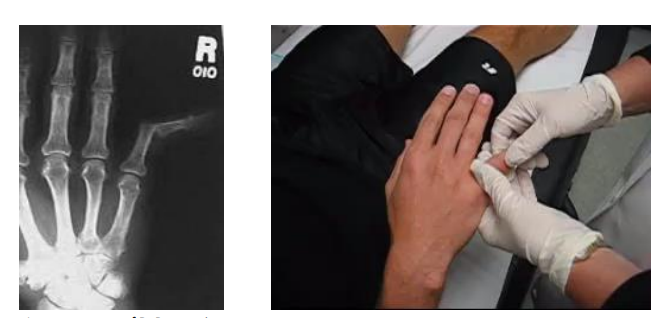
Ulnar PIP dislocation
Subungual hematoma
blood under nail
Most common fracture of the hand
Mechanism – crush injury, direct blow
TX = Nail trephination
What to use for nail trephination in subungual hematoma
NO anesthesia/digital block
Heated paper clip (takes a long time)
Cautery tool (more used in adults)
18 G needle (more used in children)
AVOID nail bed puncture - very sensitive
Procedure steps for nail trephination
cleanse nail area
identify center of subungual hematoma
avoid lunula area (white area at top of nail near skin)
video in part 1 w/ 2 minutes left
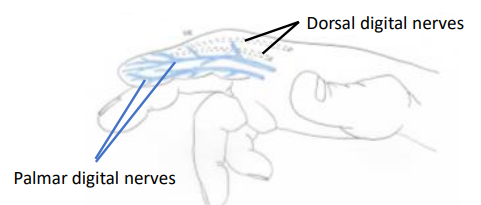
Digital block (anesthesia techniques)
Conventional/Traditional - both sides
Transthecal - palmar/plantar aspect of midline
Consider massage - 5-10 minutes for anesthesia
Medications Digital Blocks
Lidocaine (Xylocaine) 1%
4-10 minutes for onset
30 - 120 min duration
Bupivacaine (Marcaine, Sensorcaine) 0.25-0.5%
8-12 minutes for onset
4-6 hours of duration
— ADULT FINGER MAX 5ml (let tissue talk to you)
you can mix medications works fast and long
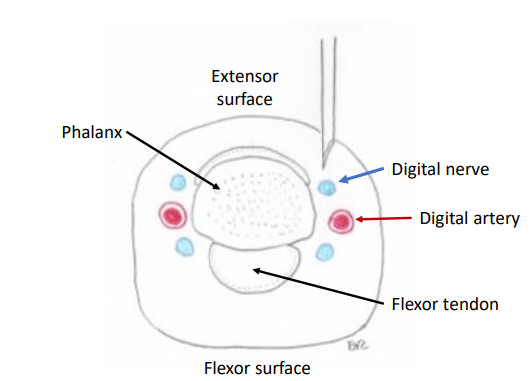
Conventional digital block
2 injections each side of finger (2.5 mL each side)
MUST ASPIRATE before injection to make sure you don’t hit artery
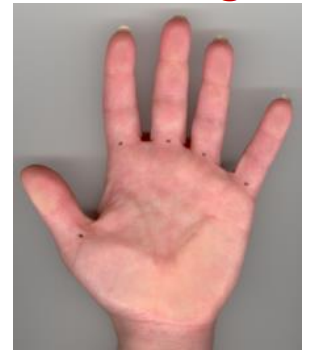
Traditional digital block
1 needle stick - 45 degree angle to each side
do not need to aspirate
Olecranon Bursitis Procedure
fluid along elbow after hitting it on something
18-gauge needle
20- to 30-mL syringe
Cleansing prep (betadine alcohol)
Aspiration of fluid
ACE wrap for compression (for 5-10 days or will reoccur)
video part 2 10:15 left
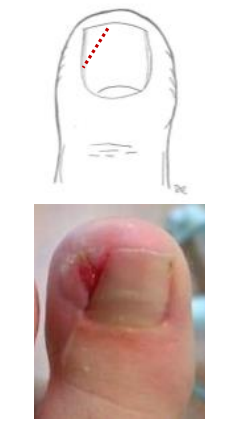
Ingrown toenail
Need to do digital block
Next take wedge out of the nail
Scissors or hemostat
Slowly advance, lift plate
Wedge removal nail
Grasp nail firmly
Remove from nail bed
Use phenol if available to kill ingrown nail root
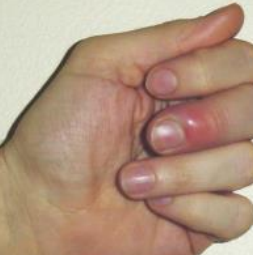
Paronychia
Digital nerve block (may do in large)
Lift skin - #11 or #15 blade or scissors
18-gauge needle
Sweep toward BLUNT end of the blade
Frequent soaks (20 minutes 3 times a day with warm water) if streak abx if not no need for abx
video part 2 5 min left
Furuncle
an abscess or boil = walled off collection of pus that forms a painful, firm or fluctuant mass
*If firm not ready to drain; have patient go home use warm wash clothes and return when fluctuant to drain
Perirectal and Pilonidal Abscess
refer to surgeon
How to make incisions
Along skin tension lines / Langer lines
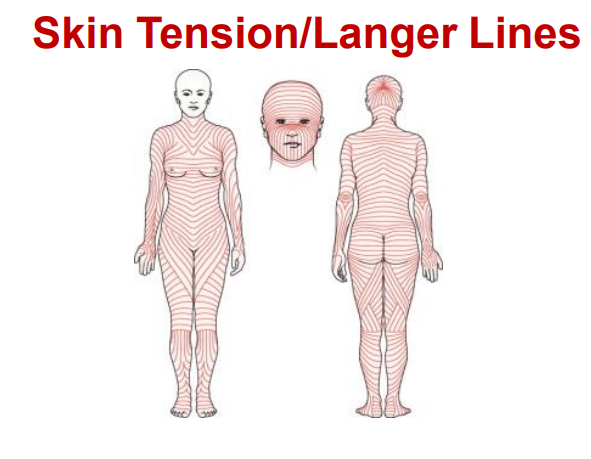
Equipment needed for Abscess Drainage
Local anesthetic (1% or 2% lidocaine)
Syringes with 25-gauge to 27-gauge needle
Topical antiseptic
4 x 4-inch gauze
No. 11 or 15 scalpel
Hemostat (curved or straight)
Scissors
Plain packing ( ¼- to ½-inch width) [not iodoform]
I&D Procedure
Prep skin with antibacterial solution
Field block or local anesthesia with Xylocaine (lidocaine)
inject anesthetic ½ cm around abscess cavity (NOT into it)
Incise over center of abscess
Express purulence and break up any loculations
Consider culture
Suction cavity & pack gently with packing
Post Procedure Care/Management
Incision
Length of incision ½ size of abscess
Break up loculations
Suction or gently irrigation
Abscess Management
Review culture of wound
Consider MRSA
Warm compresses
Repack every other day
Surgical referral
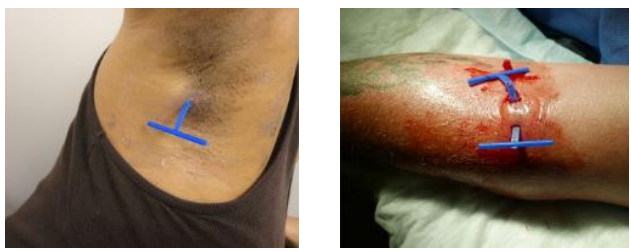
Loop Drain / Dermastent
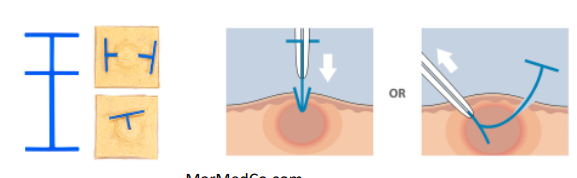
Bartholin Abscess
2% of adult women
Tend to be recurrent on labia
Causes
Blocked duct • Gonococcus • Staphylococcus • Streptococcus • Escherichia coli • Trichomonas
S/S
Edema of labia • Enlarged nodes • Dyspareunia • Fluctuant mass
Treatment
Drain Abscess > word catheter OR I&D with packing
Procedure for Bartholin Abscess
Set Up
3cc 1% lidocaine for anesthesia • Word catheter kit • 3 cc sterile water with syringe in WC kit • Betadine swabs • “Sterile” gloves • Initial needle decompression if high pressure
Express the contents
Push in from vagina • Break up loculations with curved hemostats • If no Word catheter available, placement of gauze with 1-inch tail
Aftercare
Antibiotic treatment is at discretion of clinician • Gauze packing should be removed in 24-48 hours • Sitz baths 1-2 days post procedure • Abstain intercourse • Patients >40 years – refer to gyn for f/u to r/o cancer
Indications for Punch Biopsy
Pigmented lesions
Inflammatory lesions
Chronic skin disorders
Cutaneous neoplasms
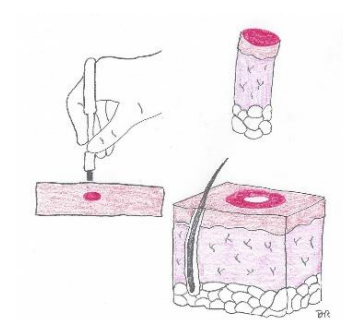
Punch Biopsy procedure steps
Local anesthesia with lidocaine (Xylocaine) with epi
3- to 4-mm punch held perpendicular to surface
Instrument pressed down while rotated clockwise & counterclockwise (epidermis, dermis, and little subq layer)
Remove punch biopsy instrument
Lift biopsy specimen with needle to avoid crush
Use scissors to cut specimen below dermis
If 4- to 5-mm punch, consider closure to reduce healing time & scarring
Place specimen in properly labeled formalin container
Foreign body removal - nail gun
x ray first r/o not in bone
need to make sure no glue remains in skin
irrigate after removal
Embedded earring
Topical Vaso coolant - pain ease spray
grab front and back of earing with hemostats pull apart
Tick removal
pointed curved forcepts
grasp head of tick
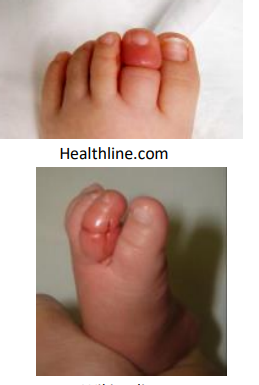
Hair thread tourniquet syndrome
Causes •
Mittens, socks, blanket threads, hair • Fingers, toes, genitalia
Treatment •
Digital block • Dorsal slit • Tease out with 25- gauge needle • Depilatory (do not use hair dissolvent)
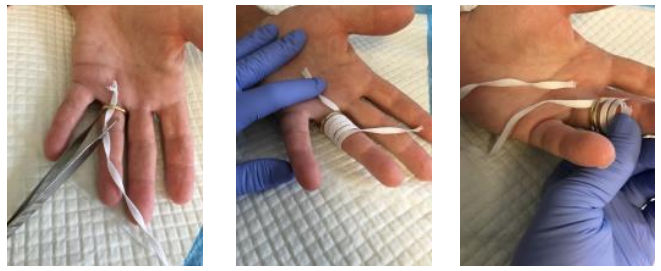
Ring Removal
Exsanguinate finger with tourniquet
Insert tape with hemostat
Wind tape proximal to distal
Pull proximal edge to unwind
Fish hook removal ways
1 - Retrograde removal = pull it back
2 - String technique = tie string around bend of hook, press down on eye, while pulling string
3 - Needle sheath method = 18 g needle put over barb of hook and remove so barb does not catch on tissue
4 - Advance hook and cut
Topical Hemostasis
For Avulsive lacerations
Use:
Silver nitrate (not on face may stain skin)
Absorbable gelatin (leave in place until falls off)
Foreign body removal top lid (aka tarsal plate)
Have patient look down • Grasp patient's upper lid lashes with fingers • Use firm cotton swab to press down • Lift lid with fingers • Examine underside of upper eyelid