4.13 More Fusion Art: The Roman Sarcophagus in Late Antiquity
 Call Kai
 Learn
Learn Practice Test
 Spaced Repetition
 Match
Match Flashcards
 Knowt Play
1/3

Earn XP
Description and Tags
Roman Look, New Themes
Name | Mastery | Learn | Test | Matching | Spaced | Call with Kai | Chat |
|---|
No analytics yet
Send a link to your students to track their progress
4 Terms
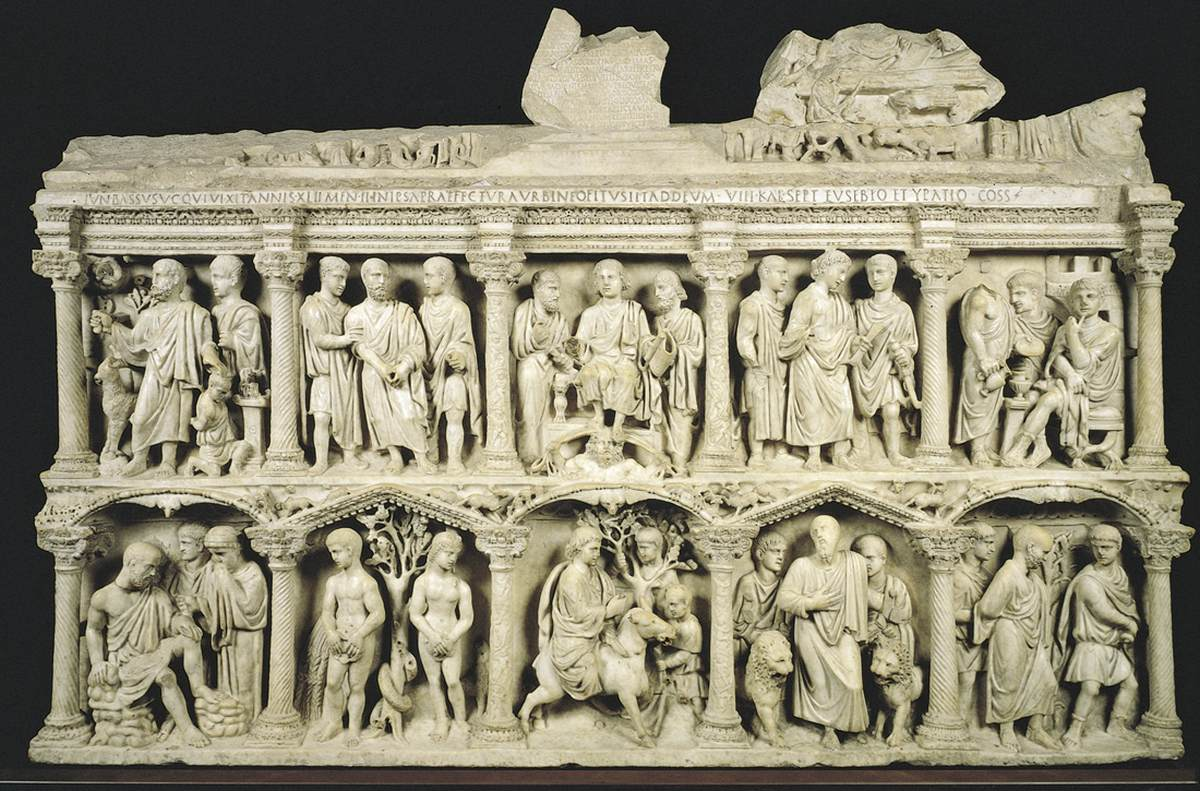
Sarcophagus of Junius Bassus, ca. 359. Marble; approx. 10"x8'
-a marble sculpture with people wearing togas depicted in a double row of vignettes flanked by classical world columns (hai hàng ô cảnh, được bao quanh bởi các hàng cột mang phong cách cổ điển).
-looks pretty Roman, except, nude couple on the bottom row, hands covering their nudity in shame
→ That's Adam and Eve with the famous serpent/ snake and tree from which was plucked the forbidden fruit in defiance of God.
*(Prominent Romans often had such elaborate sarcophagi(chiếc quan tài đá) made. However, instead of depictions of Roman war heroes, emperors, or gods, they have been replaced with Christian themes of Jesus, his life, and even earlier figures like Adam and Eve.)
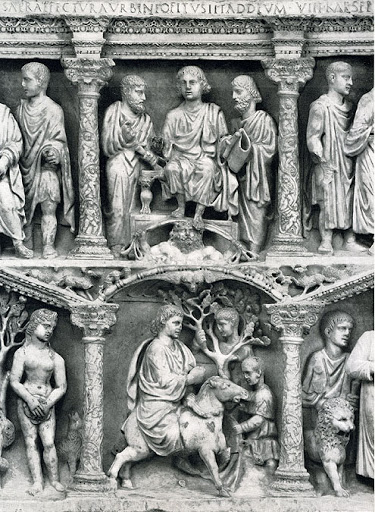
some familiar twist on common Roman themes from the center top and bottom of the Bassus sarcophagus reliefs:
1) looking like an enthroned emperor (center vignette, top) is the boyish face of Jesus between Saints Peter and Paul, with a personification of a sky god below him to communicate that he is the ruler of heaven and earth.
+Jesus is as fresh-faced (and maybe a little too youthful looking) as he appeared in those "Good Shepherd" murals.
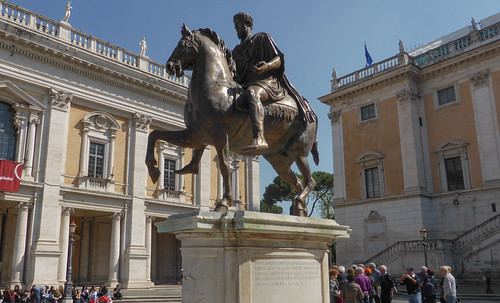
2)below (center vignette, bottom), Jesus is riding on horseback, a common theme borrowed from "conquering hero" statues of Roman emperors or generals.
-the scene represents Jesus's passion when he entered Jerusalem riding on a donkey. Like the "Distribution of the Largesse" relief on the Arch of Constantine, the figures are squat and disproportionate--that donkey looking more like a minature pony.
-More common in medieval art will be scenes of the crucifixion( đóng đinh) itself, but it's never depicted in early Christian art nor his suffering at the hands of the Romans.
.
.
.
.