Lecture 4 Ancient Egypt 1 (Images)
 Call Kai
 Learn
Learn Practice Test
 Spaced Repetition
 Match
Match Flashcards
 Knowt Play
1/46

Earn XP
Name | Mastery | Learn | Test | Matching | Spaced | Call with Kai | Chat |
|---|
No analytics yet
Send a link to your students to track their progress
47 Terms
Thomas Cole, The architects dream, Oil on Canvas 1840

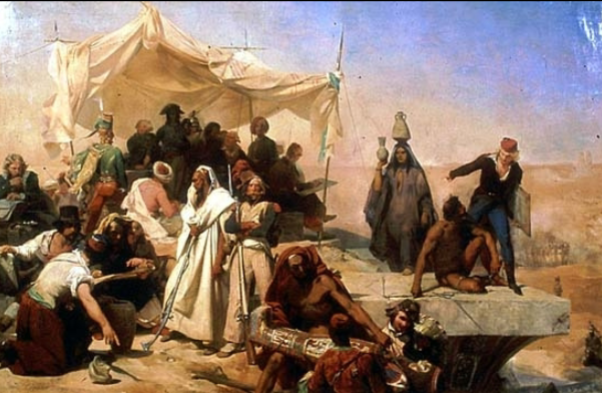
Jean-Leon Gerome, Napoleon and his general staff in Egypt, oil on panel, 1867

Leon Cogniet, Bonaparte, Surrounded by Scholars and Artists, as a mummy is discovered, ceiling paintings, 1835
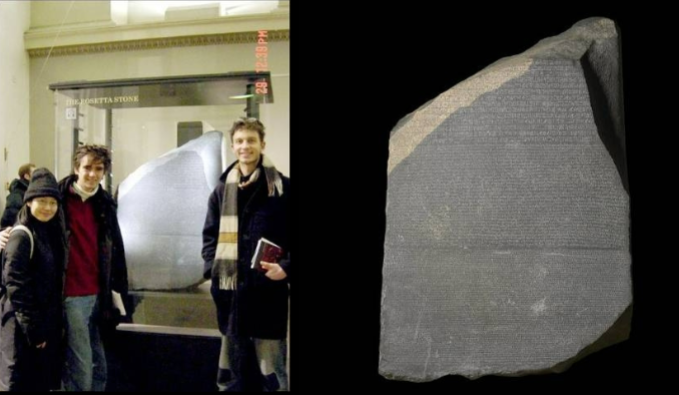
Rosetta Stone, granodiorite, Ptolemaic era, ca 196 BC; discovered by Napoleons troops in 1799 near El-Rashid (Rosetta), Egypt
Surrendered to British as a part of terms of Treaty of Alexandria in 1801
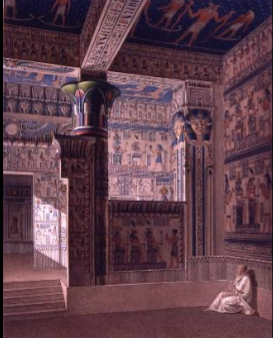
Francois-Charles Cecil, Edfu, Temple interior, engraving from description de l’egypte (Paris 1809-1822)
Guillame Larrue, In front of the great sphinx, at the louvre, oil on canvas ca 1885

I.M Pei Arch, Grand Pyramid, Louvre, Paris France, 1984-89

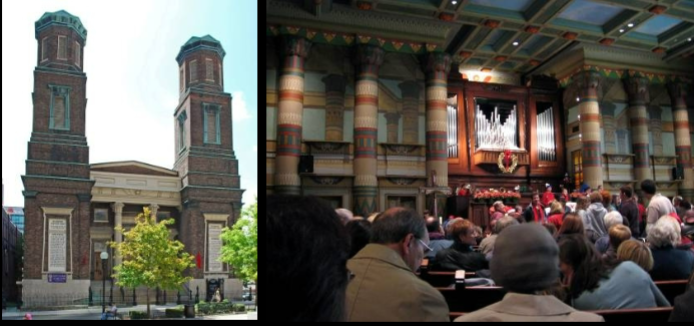
William Strickland, arch, First (Downtown) Presbyterian church, Nashville TN 1848
Aldo Rossi, arch, San Cataldo Cemetery, Modena Italy, 1971-78

The curse of King Tuts Tomb, miniseries 2006
King Tut and the Golden Age of the Pharaohs, traveling exhibition, Dallas Museum of Art 2009

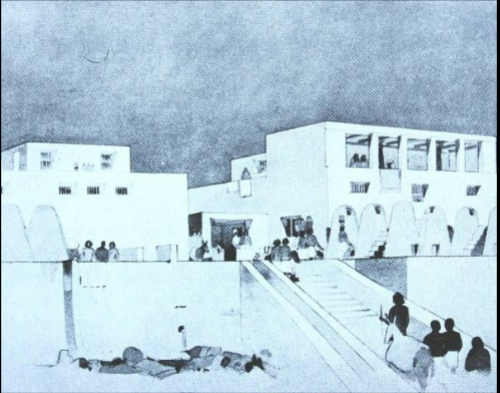
Houses in north suburb, Tel-el-Armana, 1300 BC.
Housing was built with local impermanent materials. This was usually mud brick or bundled reed. Even royal palaces were built off these materials
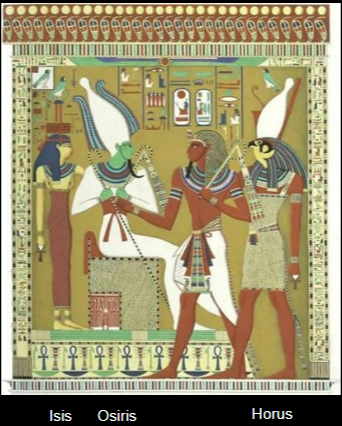
Pharao with Osiris, Isis and Horus
At different times, Pharaoh is considered an incarnation of Horus (in life) and Osiris (in death).
Later, Pharaoh is understood as son of Amon-Ra.
Temple of Seti I, Chapel of Sokar Osiris, Abydos, Dynasty XIX, relief showing Isis as a kite with Osiris after he was brought back to life
Osiris was killed and chopped up by his brother Seth. Anubis and Thoth (and others) reassemble Osiris and bring him back to life. Isis (in form of a kite bird) copulates with Osiris and bears a son, Horus. Osiris then retreats to the underworld.


Anubi as embalmer
Anubis (son of Osiris) introduces embalming rites for the dead to preserve the body for eventual resurrection and eternal life, like he did for Osiris.

Ramasses III crowned by Horus and Seth, granite, Dynasty XX (New Kingdom) (Cairo Museum)
Horus continually fights with Seth, to avenge the death of his father Osiris.
Sometimes Horus is victorious. Other times Seth is victorious.
Horus represents good kingship. Seth represents bad kingship.
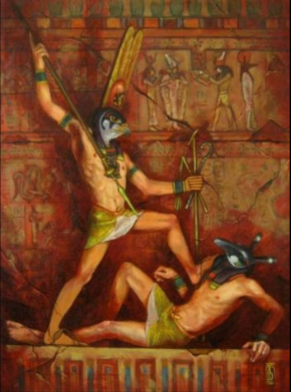
Horus and Seth will eventually have a final showdown. Horus will kill Seth.
Osiris will be avenged and will be fully resurrected.

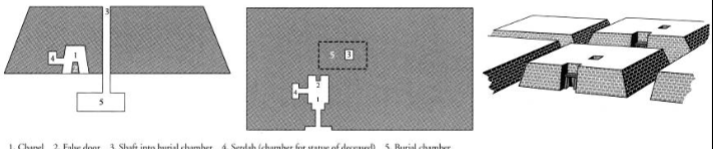
Mastaba Stone Diagrams
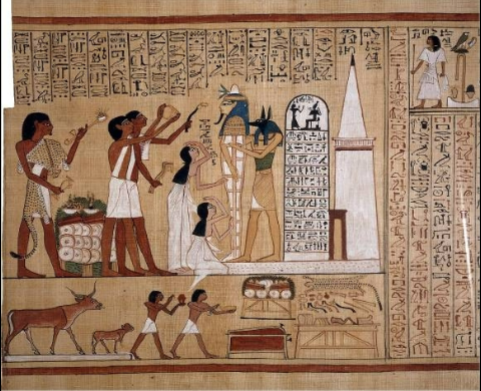
Rites before the tomb (‘opening the mouth’ ceremony) from the Book of the Dead of Hunefer, Thebes, Dynasty XIX, ca. 1300 BC [British Museum]
Before interment, the mummy in its coffin is stood up outside the mastaba tomb and the ‘opening the mouth’ ceremony takes place. This allows the soul to re-enter the mummy and permits the soul to eat and drink.
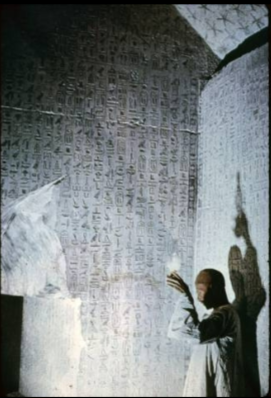
Interior of a Mastaba
Ka-Aper, from his mastaba tomb at Saqqara, Dynasty V, wood, 43” high
serdab statue – where the ka can take refuge (especially if the physical mummified body is disturbed)

Mastaba with appended offering chapel
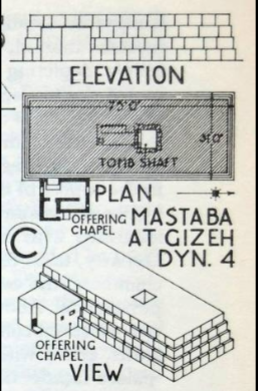
Mastabas near Great Pyramids at Giza
Giza is a necropolis: a city of the dead.

Royal tumulus tomb, Abydos (Upper Egypt), Dynasty I (Old Kingdom), ca. 3100-2890 BC

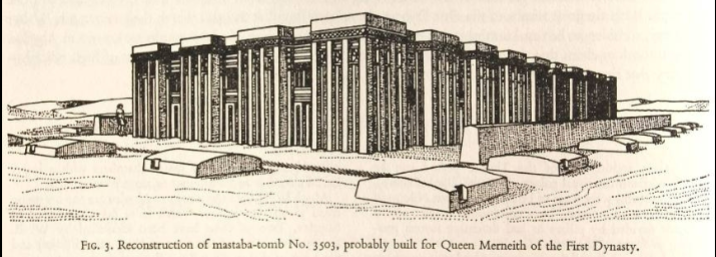
Mortuary complex of Queen Merneith, Saqqara (Lower Egypt), Dynasty I (Old Kingdom)

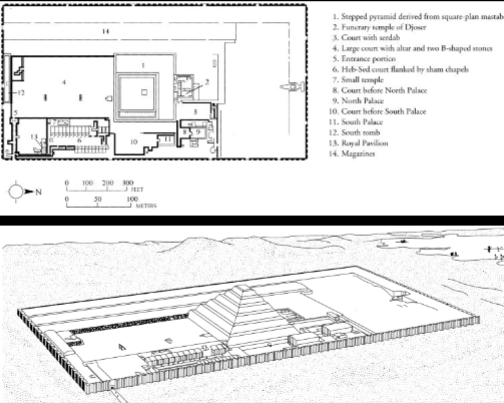
Imhotep, arch., Funerary complex of King Djoser, Saqqara, Egypt,
Dynasty III (Old Kingdom), ca. 2630 BC
First monumental construction in stone masonry

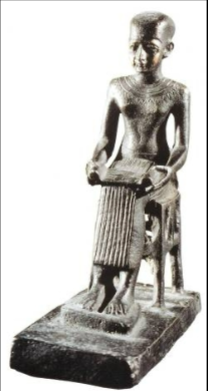
Imhotep Deified, bronze, Ptolemaic Period, ca. 332-30 BC
Imhotep is recognized as the first “architect.”
Imhotep, arch., Funerary complex of King Djoser, Saqqara, Egypt,
Dynasty III (Old Kingdom), ca. 2630 BC
At Saqqara, Imhotep translated traditional building materials (reed) and forms into stone

Imhotep, arch., Funerary complex of King Djoser, Saqqara, Egypt,
Dynasty III (Old Kingdom), ca. 2630 BC
Main Entrance

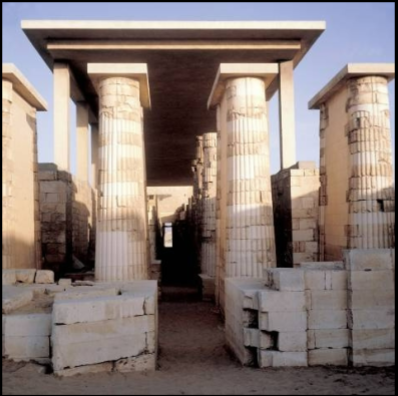
Imhotep, arch., Funerary complex of King Djoser, Saqqara, Egypt,
Dynasty III (Old Kingdom), ca. 2630 BC
Entrance hall and colonnade


Imhotep, arch., Funerary complex of King Djoser, Saqqara, Egypt,
Dynasty III (Old Kingdom), ca. 2630 BC
Entrance hall and colonnade
Imhotep, arch., Funerary complex of King Djoser, Saqqara, Egypt,
Dynasty III (Old Kingdom), ca. 2630 BC
The complex is Djoser’s kingdom in miniature.
Proxy versions of his northern and southern palaces and tombs are united here.
Places where he performed ritual ceremonies in life are also represented.
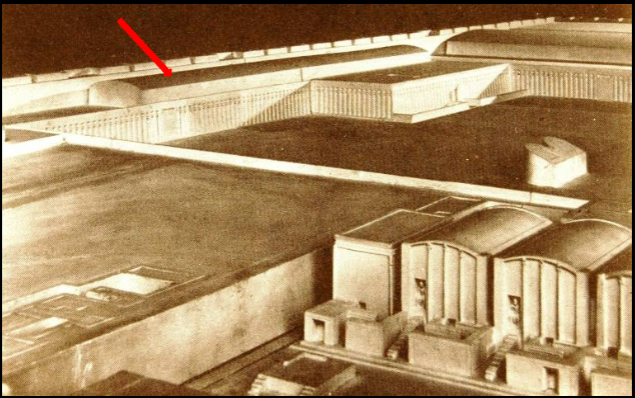
Southern mastaba (at top middle)
Imhotep, arch., Funerary complex of King Djoser, Saqqara, Egypt,
Dynasty III (Old Kingdom), ca. 2630 BC

Jubilee Court; “dummy” buildings
Imhotep, arch., Funerary complex of King Djoser, Saqqara, Egypt,
Dynasty III (Old Kingdom), ca. 2630 BC
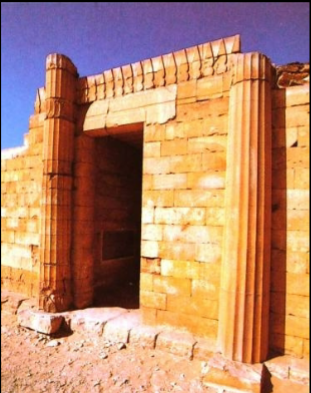
dummy South Palace
Imhotep, arch., Funerary complex of King Djoser, Saqqara, Egypt,
Dynasty III (Old Kingdom), ca. 2630 BC

dummy North Palace
Imhotep, arch., Funerary complex of King Djoser, Saqqara, Egypt,
Dynasty III (Old Kingdom), ca. 2630 BC

Step Pyramid
Imhotep, arch., Funerary complex of King Djoser, Saqqara, Egypt,
Dynasty III (Old Kingdom), ca. 2630 BC

Serdab statue of King Djoser

Building experiments from Djoser’s Step Pyramid to the Giza Pyramids

Step Pyramid of Sneferu, Meidum , Egypt, Dynasty IV (Old Kingdom), ca. 2704-2656 BC


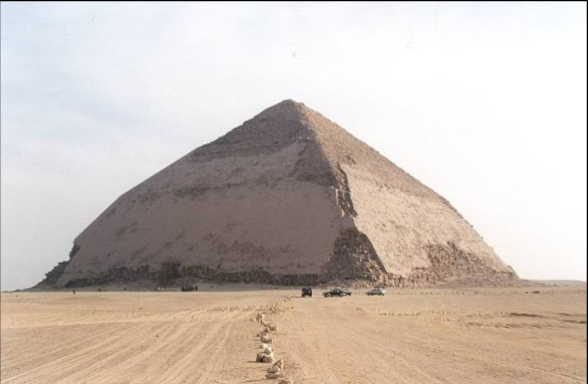
Bent Pyramid of Sneferu, Dahshur, Egypt, Dynasty IV (Old Kingdom)
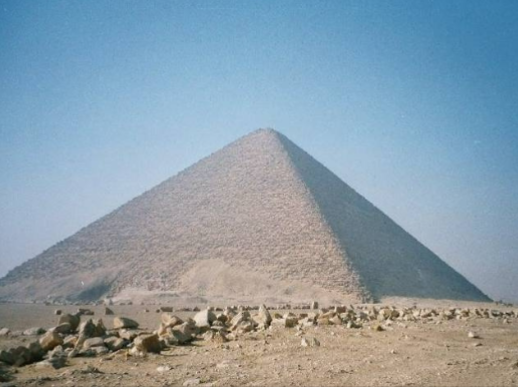
Red Pyramid of Sneferu, Dahshur, Egypt, Dynasty IV (Old Kingdom)
Pyramidion, from private tomb of Amenhotep-Huy, New Kingdom


Giza Complex, near Cairo, Dynasty IV (Old Kingdom), ca. 2550-2460 BC

Pyramid complex of Khafre (Chefren), Giza, Egypt, Dynasty IV (Old Kingdom), ca. 2530 BC

Giza Complex, near Cairo, Dynasty IV (Old Kingdom);
Pyramids of Khafre (Chefren) and Khufu (Cheops)

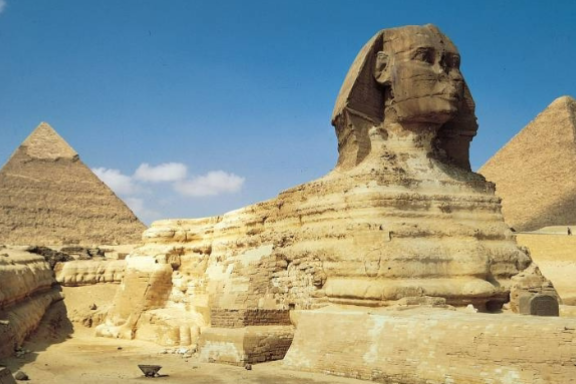
Great Sphinx, before the Pyramid of Khafre (Chefren), Giza, Egypt,
Dynasty IV (Old Kingdom), ca. 2530 BC