Human Anatomy & Physiology I: Cell Structure, Bonds, Water, Organic Compounds, and Body Systems
 Call Kai
 Learn
Learn Practice Test
 Spaced Repetition
 Match
Match Flashcards
 Knowt Play
1/125

There's no tags or description
Looks like no tags are added yet.
Name | Mastery | Learn | Test | Matching | Spaced | Call with Kai | Chat |
|---|
No analytics yet
Send a link to your students to track their progress
126 Terms
Matter
Occupies space
Energy
Kinetic
Action
Potential
Stored
Element
Cannot be broken down by ordinary chemical processes
Atom
3 parts
Neutron
Neutral in nucleus
Proton
Positive in nucleus
Electron
Negative-outside in orbital
Orbital
Molecule
Two or more atoms bonded together - aka compound
Compound
Two or more atoms bonded together
Mixtures
3 types
Solutions
Solvent
Substance dissolving a solute
Solute
Substance being dissolved in a solvent (ie. Salt water- salt= solvent, water=solvent)
Colloids
Emulsions - ie. Jell-O
Heterogeneous
Not same amt of solute in each
Suspensions
Contains large visible solute-settle out easily
Bonds
Hydrogen
Weak bond
Ionic bonds
Opposites attract
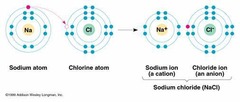
Covalent
Sharing - very strong bond
Polar covalent bonds
Charge separation - dipole moment
Nonpolar covalent
Equal sharing of electrons
Hydrophobic
No interaction with water
Reactions
Bonds broken or rearranged
Chemical equation
Reactant + Reactant = Product
Synthesis
A + B = AB (anabolic)
Decomposition
AB = A + B (catabolic)
Exchange
AB + CD = AC + BD
Coupled Reaction
Redox
Oxidation/ Reduction Reaction
Oxidation
Lose e's, lose H's, gain O's (electron donor)
Reduction
Gain e's, gain H's, lose O's (electron acceptor)
Exergonic reactions
(catabolic) E given off (ie-heat) - spontaneous
Endergonic reactions
(anabolic) E absorbers
Organic
Carbon
Inorganic
Salts, acids and bases, water (Exception: Carbon dioxide and bicarbonate ion)
Water
Special properties
High Specific Heat
Takes a great deal of heat to raise the temperature of water (100 C- boil water, versus alcohol= 70 C)
Cohesion
Water molecules "stick" together via H-bonds
Adhesion
Water "sticking" to object - ie water drops on plate after washing.
Excellent Solvent
Acids
0-6.9 on pH scale, proton donors, sour

Bases
7.1-14 on pH scale, proton acceptors, bitter
pH
-log10 [H+]
H+
Hydrogen ions
OH-
Hydroxyl ions
Strong acids
Completely and irreversibly disassociates in solution - for example HCl
Weak acids
Vinegar - partially disassociates in solution
Strong Bases
Accept H+'s (protons) easily - ionizes completely and easily - hydroxides
Weak Bases
Baking soda
Buffers
Resistant to change - keeps pH in body constant - ie. pH blood 7.4 - / .1 change can be fatal
Organic Compounds
Molecule which contains C (carbon)
Macromolecules
Carbohydrates, Lipids, Proteins, Nucleic Acids
Carbohydrates
Sugars and Starches
Monosaccharides
Simple sugars
Disaccharides
Double sugar
Polysaccharides
Polymers
Sucrose
Glucose + Fructose
Lipids
Fats - Fatty acids and Glycerols
Neutral
Triglycerides - 3 fa: 1g
Unsaturated
Not all H's - liquid
Saturated
All H's - solid

Steroids
ie. Cholesterols, Vitamin D, Sex Hormones, etc. (cell membrane)
Phospholipids
Cell membrane

Hydrophilic
Water loving
Proteins
2 Categories
Fibrous
Structural support - collagen, keratin, elastin
Movement
Actin, myosin
Globular
Catalysis - enzymes
Transport
Hemoglobin
Regulation of pH
Plasma proteins, ie. albumin
Regulation of metabolism
Peptide and protein hormone, ie. insulin, growth hormone
Body defenses
Antibodies, complement
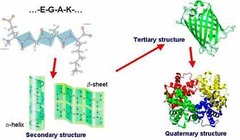
Proteins - Structure
Primary 1º
Chain of amino acids
Peptide bonds
Secondary 2º
Alpha helix and beta pleated sheet
Tertiary 3º
Globular - covalent and H-bonds
Quaternary 4º
Several tertiary - hemoglobin - several types of bonds
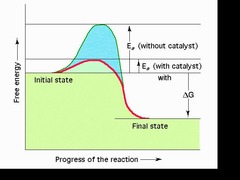
Enzymes
Catalysts, reduce energy consumption
Denature
Inactivate - egg white
Enzyme/substrate complex
Lock and Key Model
Nucleic Acids
Adenine
Guanine
Cytosine
Thymine
Uracil
RNA
DNA
Deoxyribonucleic acid
ATP
Adenosine Triphosphate

Body's energy currency
Anatomy
Study of structure
Physiology
Study of function
Gross anatomy
Structures that you can see with the unaided eye, e.g., large structures such as the brain.

Microscopic anatomy
Structures that cannot be seen with the unaided eye, e.g., a cell.
Cell
Basic unit of life