Protein Synthesis: DNA Transcription
 Call Kai
 Learn
Learn Practice Test
 Spaced Repetition
 Match
Match Flashcards
 Knowt Play
1/16

There's no tags or description
Looks like no tags are added yet.
Name | Mastery | Learn | Test | Matching | Spaced | Call with Kai | Chat |
|---|
No analytics yet
Send a link to your students to track their progress
17 Terms
site of DNA transcription in eukaryotes
the nucleus
site of DNA transcription in prokaryotes
the cytoplasm
RNA polymerase function
synthesises complimentary RNA strand from DNA template by a dehydration reaction
template strand (AKA non-coding strand/ antisense strand/ minus strand)
DNA strand that RNA polymerase reads to synthesise mRNA
coding strand
DNA strand that is not read by RNA polymerase
difference between coding strand and RNA molecule
coding strand has thymine instead of uracil
mRNA
the strand RNA synthesised from the DNA template
promoter
site where RNA polymerase can bind to DNA and begin transcription
what does ‘m’ in mRNA stand for?
messenger
fate of mRNA after transcription
read by the ribosome for protein synthesis
exons
coding sequences
introns
non coding sequences
location of introns
found between exons
fates of exons and introns
exons are spliced, introns are excised
advantage of excising and splicing
allowing different exons to be spliced increases genetic diversity of proteins in an organism
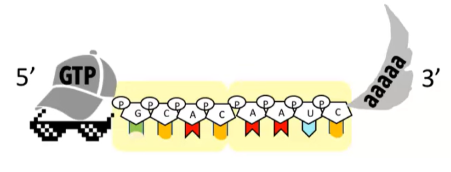
last mRNA modification
addition of a 5’ GTP cap and a 3’ poly A tail
advantage of mRNA modification
protects mRNA from cellular enzymes that break down nucleic acids, help bind mRNA to ribosome for translation