Proteins and Peptides
 Call Kai
 Learn
Learn Practice Test
 Spaced Repetition
 Match
Match Flashcards
 Knowt Play
1/50

There's no tags or description
Looks like no tags are added yet.
Name | Mastery | Learn | Test | Matching | Spaced | Call with Kai | Chat |
|---|
No analytics yet
Send a link to your students to track their progress
51 Terms
peptides
short polymers of amino acids (less than 50 amino acids long)
5 kDa
average molecular weight of a polypeptide
amide bonds
form between carboxylic acids and amines; polar and neutral
peptide bond
type of amide bond that forms link between terminal amine of one amino acid and the carboxylic acid of another
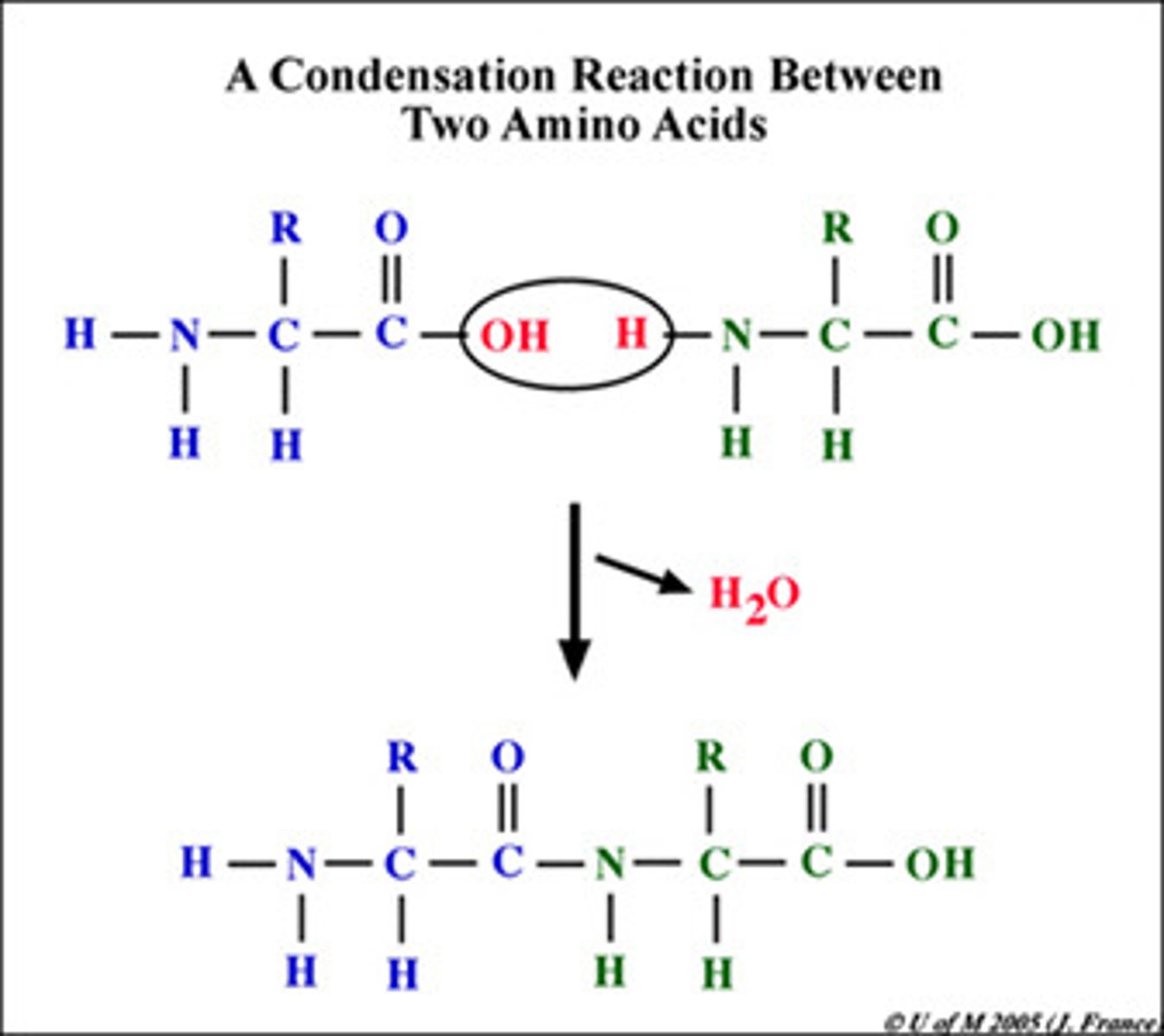
tautomerize
peptide bonds ________________ giving them double bond character that makes them have restricted peptide confirmations
proteins
polymers of amino acids
53 kDa
proteins are about 10x larger than peptides with an average molecular weight of __________ (about 480 amino acids per molecule)
primary structure
sequence of amino acids from N- to C- terminus
secondary structure
folding of short (3-30) amino acids into geometrically ordered units
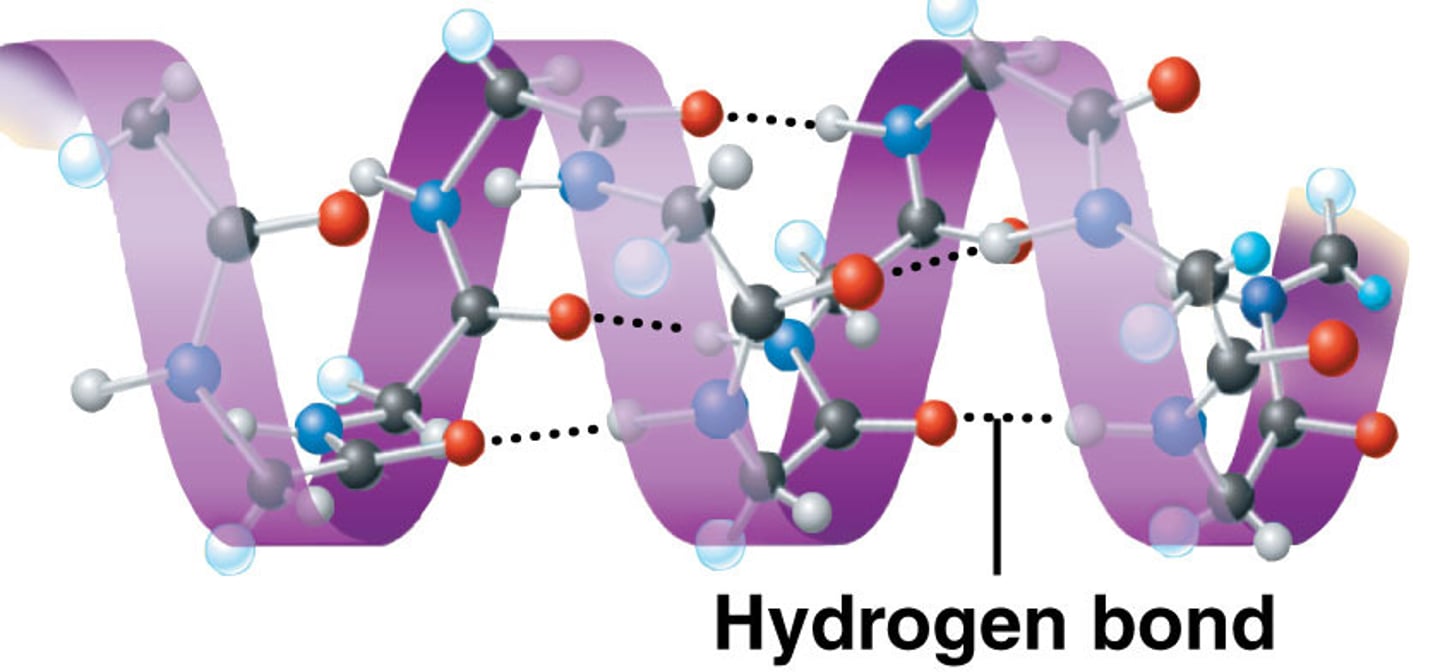
alpha helix
type of secondary structure that occurs when hydrogen bonds form between the hydrogen of an amine and the carbonyl oxygen of another amino acid with the residues pointing outwards
beta sheet
type of secondary structure in which the amino acids are aligned in a zig-zag; peptides are flat

tertiary structure
secondary structures assemble into larger functional units such as the mature polypeptide and component domains; form hydrogen bonds, ionic bonds, disulfide bridges, and hydrophobic interactions
quaternary structure
clustering of two or more individual polypeptides
protein maturation
process of reaching tertiary and quaternary confirmations
post-translational modification
addition of new chemical groups or removal of transiently needed peptide segments and stabilizing interactions in the maturation process
mature proteins
have function and structural roles such as:
-catalyzing metabolic reactions
-signalling/regulatory molecules
-enabling cellular motion
-provide structure and integrity
-receptors
scurvy
ascorbic acid deficiency resulting in insufficient synthesis of collagen
Menkes disease
disorder in which there is a copper ion deficiency
denaturation
the process in which proteins lose structural integrity without breakage of a peptide bond; compromise hydrogen bonding and disulfide bridges due to heat, pH, organic solvents, urea, heavy metal ions, and detergents
can be reversible in some cases but usually isn't
protein crashing
adding organic solvent to precipitate the protein from solution
domains
fundamental and functional 3D structural units of polypeptides
chaperones
guide protein production and folding in proteostasis (aka heat shock proteins)
protein misfolding
can result in denatured proteins leading to conditions like amyloid diseases or prion diseases
amyloid diseases
Alzheimer's and Parkinson's; result from protein misfolding
prion diseases
bovine spongiform encephalopathy (mad cow), Creutzfeldt-Jakob diseases, Scrapie
stabilizing interactions
involved in protein folding
ex: disulfide bridges, hydrophobic interactions, hydrogen bonds, ionic bonds (salt bridge)
soluble proteins
type of protein that can be extracted from cells using aqueous solutions of physiologic pH and ionic strength
integral membrane proteins
type of protein in which extraction requires dissolution of the cell membrane with detergent because it is a component of the cell structure
globular proteins
type of protein that is compact, roughly spherical molecules that have axial ratios of less than 3; most types of enzymes
fibrous proteins
type of protein that is a structural protein that adopts highly extended conformations; has axial ratio of greater than 10
conjugated proteins
proteins with covalently attached molecules
ex: lipoprotein, glycoprotein, metalloprotein
SDS-PAGE (sodium dodecyl sulfate polyacrylamide gel electrophoresis)
method of identification of complex protein mixtures and determination of their molecular weights
SDS
dissolves and puts negative charge on protein so that they can migrate towards positive electrode in gel
isolation
two main _____________ methods: selective precipitation and chromatographic techniques
selective precipitation
isolation method that exploits differences in relative solubility of individual proteins as functions of pH, polarity, or salt concentration
isoelectric precipitation
type of selective precipitation that separates protein by pH
precipitation with ethanol or acetone
type of selective precipitation that separates protein by polarity
salting out with ammonium sulfate
type of selective precipitation that separates protein by their salt concentration
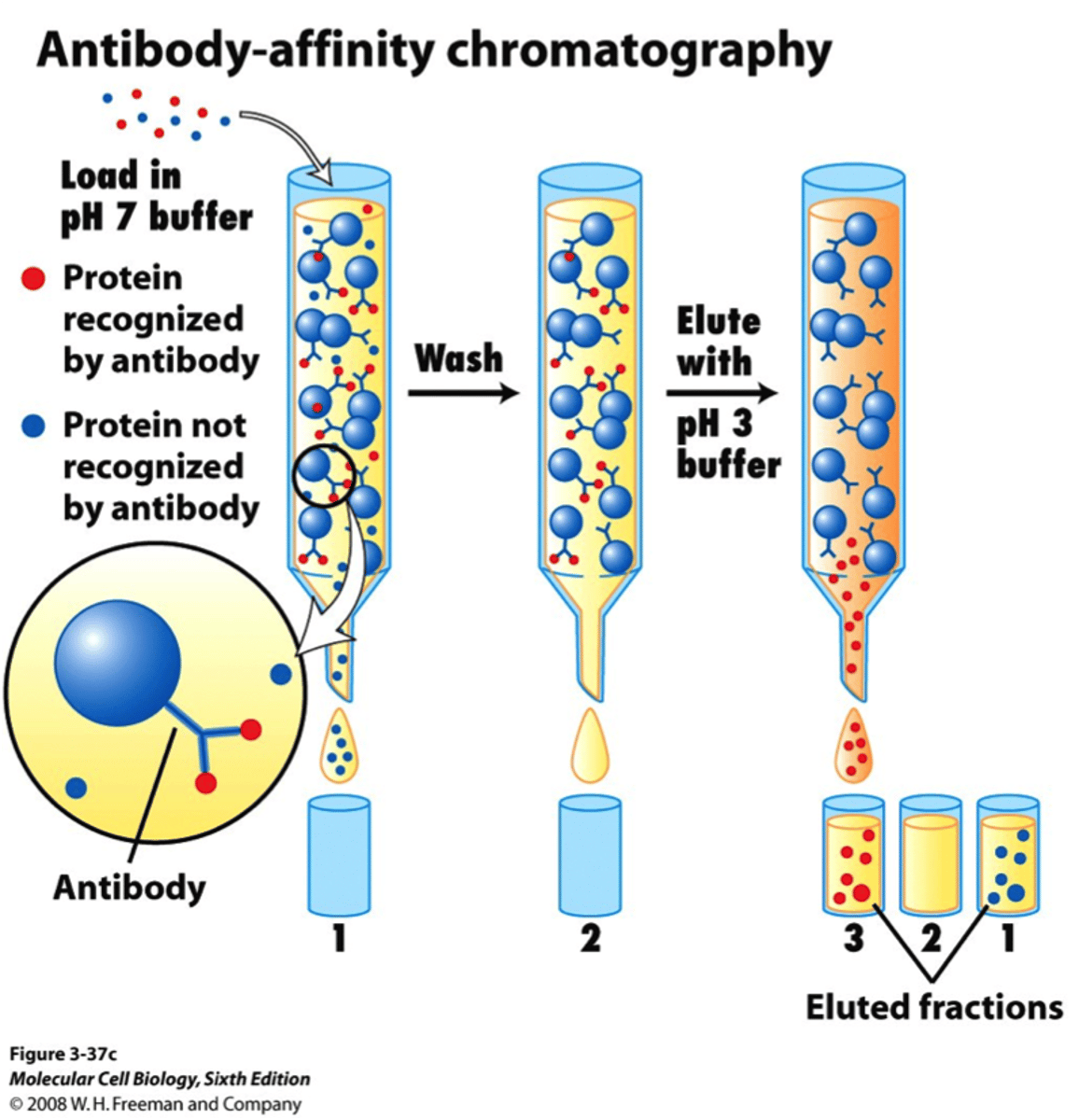
chromatographic techniques
isolation methods that separate one protein from another using specific columns based on difference in size, charge, hydrophobicity, or ability to bind a specific ligand
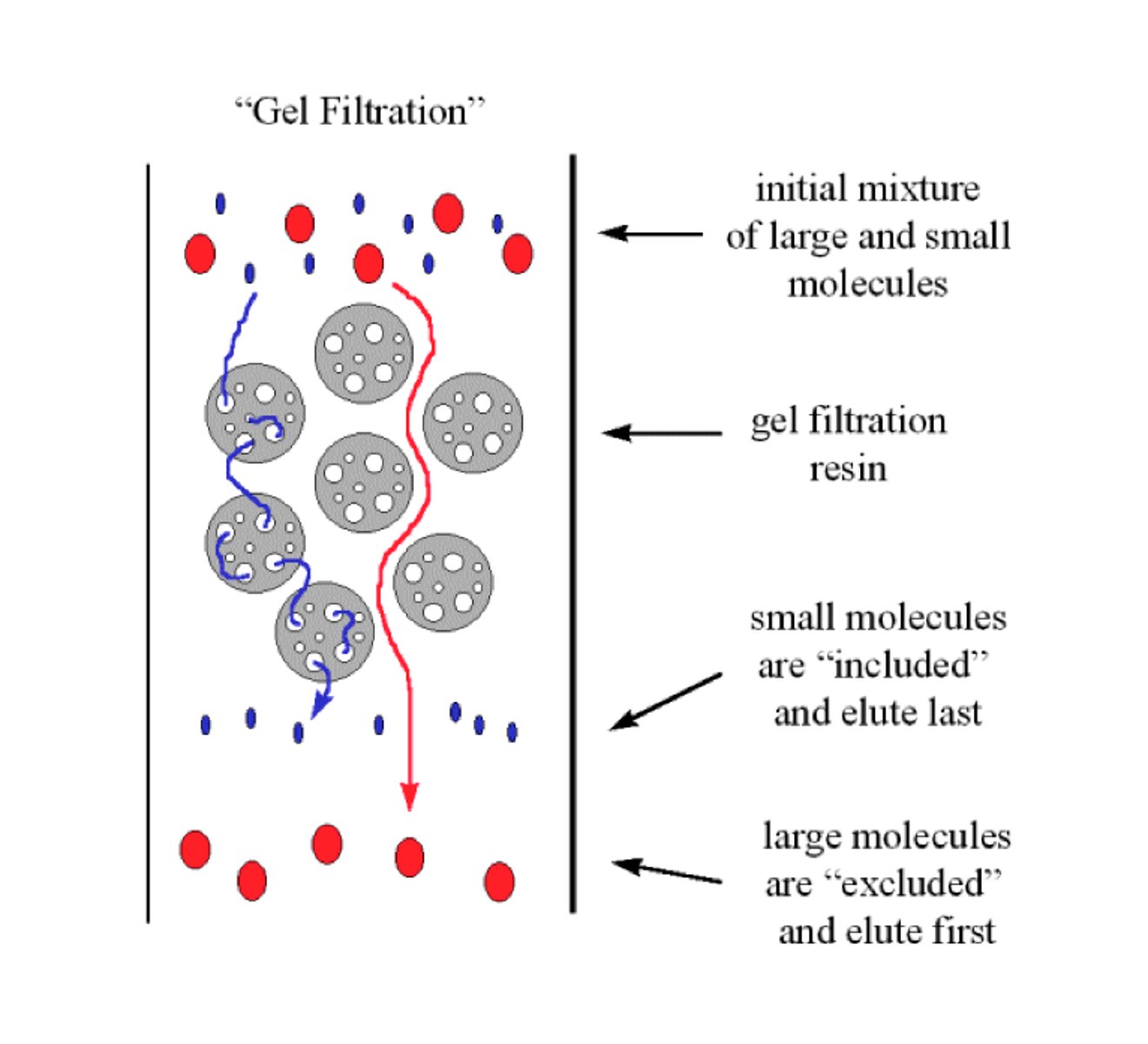
size exclusion
type of chromatographic isolation that separates protein by size
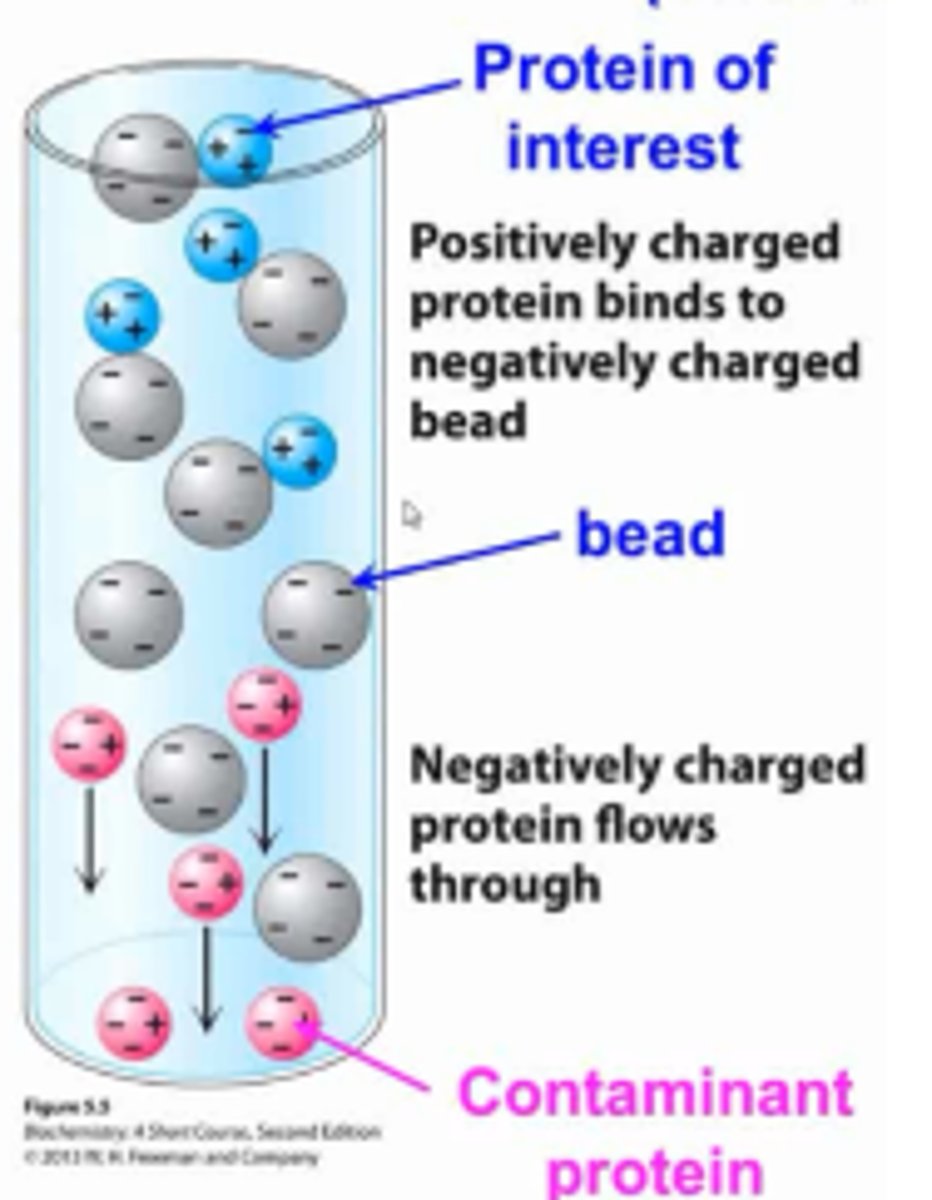
ion exchange
type of chromatographic isolation that separates protein by charge
hydrophobic interaction
type of chromatographic isolation that separates protein by hydrophobicity
affinity
type of chromatographic isolation that separates protein by ability to bind to specific ligand
Edmen degredation
reaction that plucks off one amino acid at a time in a polypeptide so it can be identified and sequenced
phenylisothiocyanate
Reactive reagent used in Edman degradation that interacts with the amino group of the first amino acid on the N terminus, breaking the peptide bond and forming a cyclic phenylthiohydantion-(AA)
HPLC
high performance liquid chromatography; used to identify the phenylthiohydantion-(AA) complex (UV active) to identify the amino acid
sanger sequencing
used to determine the primary structure of insulin
mass-spectrometry
gives accurate molecular weight of a protein
NMR
gives protein structure in solution
X-ray crystallography
gives accurate tertiary and quaternary protein structures
proteomics