Physiology Lab Module 1
 Call Kai
 Learn
Learn Practice Test
 Spaced Repetition
 Match
Match Flashcards
 Knowt Play
1/48

There's no tags or description
Looks like no tags are added yet.
Name | Mastery | Learn | Test | Matching | Spaced | Call with Kai |
|---|
No analytics yet
Send a link to your students to track their progress
49 Terms
cell membrane
-phospholipid bilayer (hydrophilic heads, hydrophobic tails)
-semipermeable
passive transport
does not require energy
active transport
needs energy
diffusion
movement of molecules from high to low concentration, requires no energy
simple diffusion
molecules simply pass through membrane (small, lipid, hydrophobic)
facilitated diffusion
diffusion with the help of a membrane protein
-high to low concentration
-requires no energy
symport
substances move in same direction (ex. sodium and glucose)
antiport
substances move in opposite directions (ex. sodium and hydrogen)
osmosis
movement of water across the membrane, requires no energy
-water moves from low to high solute concentration
isotonic
equal solute level
hypertonic
high solute outside cell (cell shrinks)
hypotonic
low solute outside cell (cell swells)
active transport
requires energy because moving molecules from low to high against concentration gradient
-ATP used to pump molecules
vesicular transport
vesicles made from the cell membrane used to transport a bulk amount of material
endocytosis
bulk import using vesicles
exocytosis
bulk export using vesicles
enzyme
a protein that performs a special function/chemical reaction
-lower activation energy
-substrates bind to active site
activation energy
energy required for a chemical reaction to begin
effect of temperature on enzymes
-high and low temps can denature an enzyme (misfold)
-average human temperature is around 37 C; maximum rate of enzymes in the human body
effect of pH on enzymes
-most human enzymes perform best at pH 7.4
-pepsin (pH 2), salivary amylase (pH ~6.7), trypsin (pH ~9)
epithelial tissue
-covers body surfaces and lines inside of hollow organs
-form sheets of cells that are exposed to an open space (lumen)
-squamous (flat), cuboidal (cube), columnar (tall column), stratified (multiple layers)
simple squamous epithelial
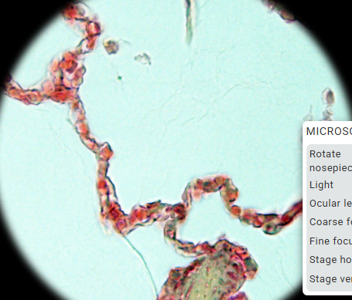
simple cuboidal epithelial
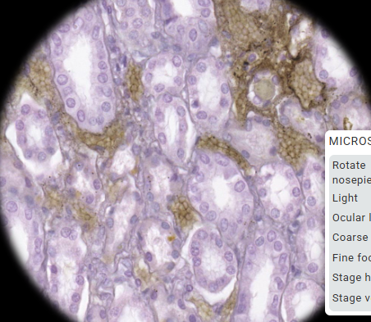
simple columnar epithelial
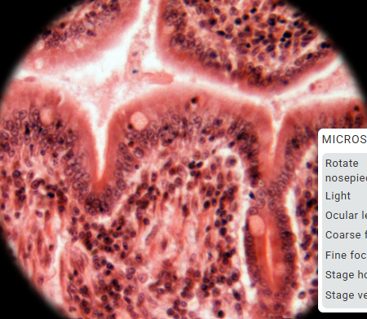
pseudostratified columnar epithelial
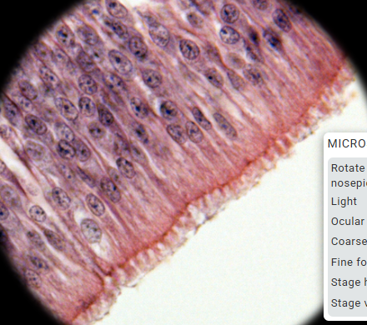
stratified squamous epithelial
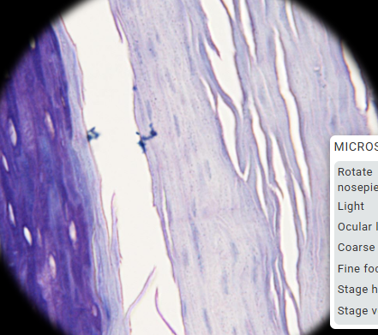
transitional epithelial
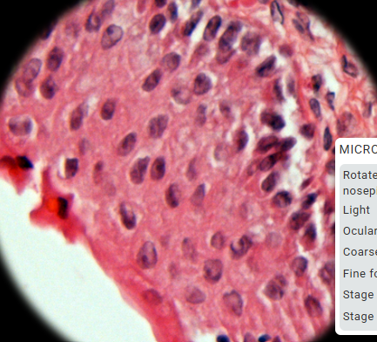
apical side of epithelial tissue
faces the lumen
basal side of epithelial tissue
faces the basement membrane/faces away from lumen
connective tissue
-support, protection, binding, storage
-contains extracellular matrix (ground substance) found outside of cells
-adipose, areolar, bone, blood
reticular connective tissue
branching fibers with lots of extracellular matrix
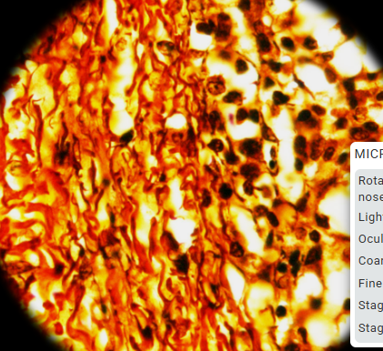
dense connective tissue
tightly packed collagen fibers; fibroblasts between fibers
-function: attachment
dense irregular connective tissue
tightly packed and irregular collagen fibers facing different directions
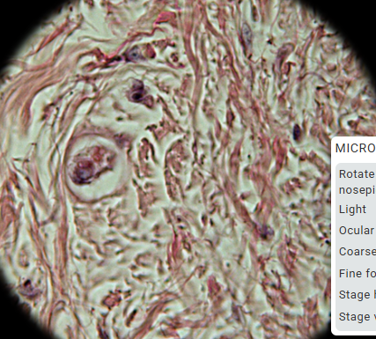
dense regular connective tissue
tightly packed collagen fibers which were parallel
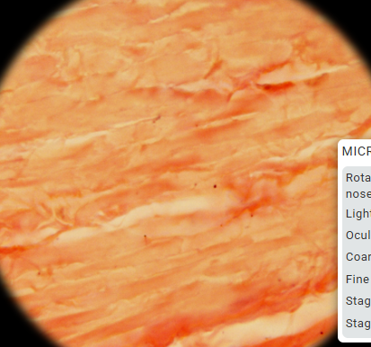
areolar tissue
collagen and elastic fibers are loose; fibroblasts scattered
-function: protection
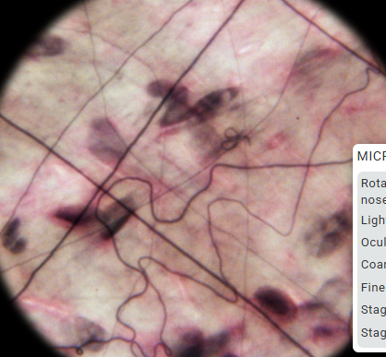
adipose tissue
made of adipose cells (adipocytes) filled with fat; contains many blood vessels
-function: fat storage, insulation
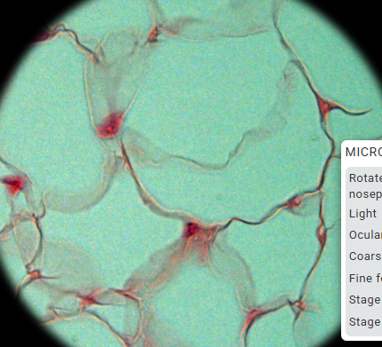
elastic connective tissue
elastic fibers and some fibroblasts between
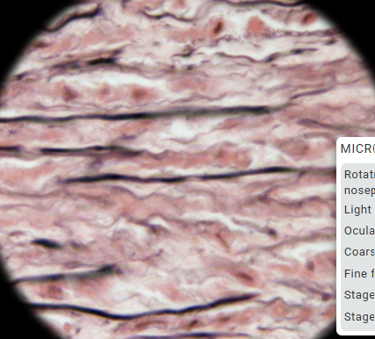
cartilage
made up of chondrocytes; contains a ground substance made of a jelly-like material
-function: support joints and skeletal system
elastic cartilage connective tissue
many elastic fibers that formed a mesh with chondrocytes
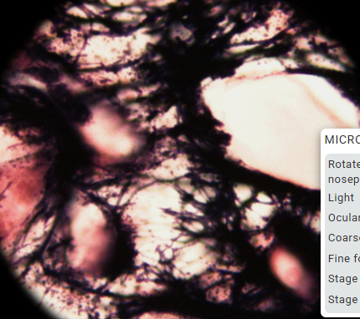
hyaline cartilage connective tissue
chondrocytes in irregular shapes with a glassy look
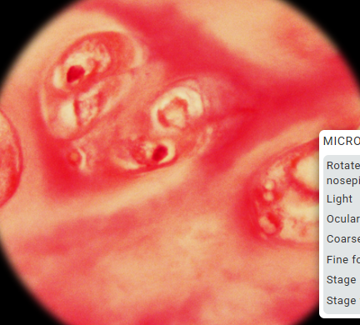
fibrocartilage connective tissue
visible fibers and large chondrocytes
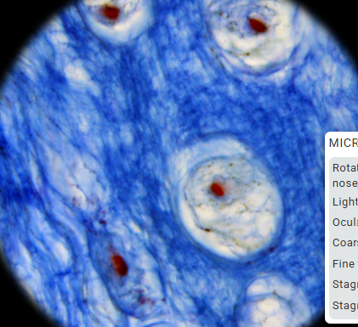
bone
made of osteocytes; ground substance is made of a rigid material containing calcium
-function: supports body, stores calcium
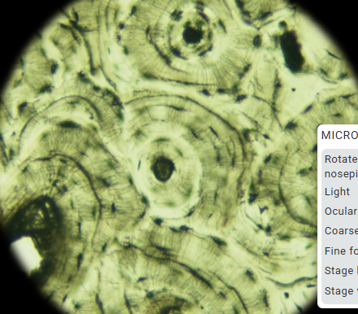
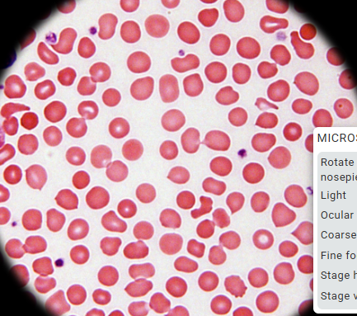
blood
contains red blood cells, white blood cells, and platelets
-ground substance is a watery liquid called plasma
-function: transport oxygen and nutrients
muscle tissue
-tissue made up of cells that can contract
-main function: movement and to generate body heat
-voluntary or involuntary
skeletal muscle
-voluntary muscle tissue attached to bone or skin
-long cells with striations and multiple nuclei
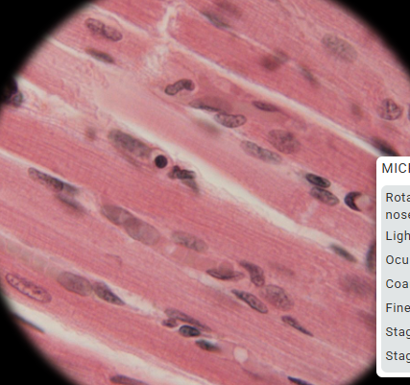
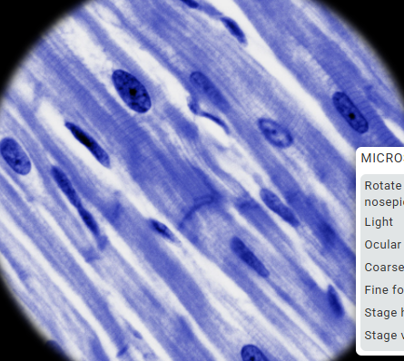
cardiac muscle
-involuntary muscle tissue found in heart
-short and branched cells with striations and 1-2 nuclei per cell
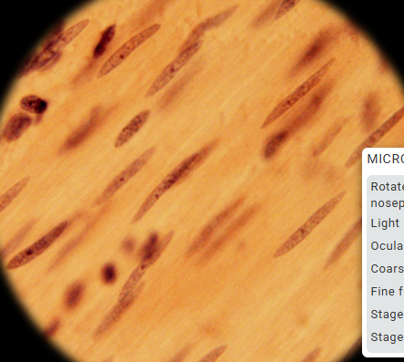
smooth muscle
-involuntary muscle tissue found in cells of inner organs (stomach, intestines, kidneys, bladder)
-cells do not have striations, 1 nucleus
nervous tissue
-special tissue that sends and receives nerve impulses
-contains neurons and glial cells
-found in brain, spinal cord, and nerves
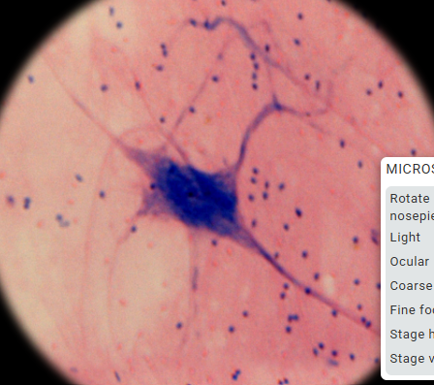
neurons
send and receive nerve impulse
-cell body contains nucleus
-dendrites receive message
-axon sends message