Parasites and Viruses
 Studied by 0 people
 Call Kai
 Learn
Learn Practice Test
 Spaced Repetition
 Match
Match Flashcards
 Knowt Play
1/43

There's no tags or description
Looks like no tags are added yet.
Name | Mastery | Learn | Test | Matching | Spaced |
|---|
No study sessions yet.
44 Terms
Where are ectoparasites located?
What are ectoparasites?
outside the body
large complex multicellular organisms
Where are endoparasites located?
Inside the body
Are ectoparasites and endoparasites uni or multicellular organisms?
What do parasites require humans for?
ecto = multicellular, endo = unicellular or multicellular
rely on humans to get nutrients to survive and reproduce
How is head lice transferred amongst people?
Is it an ecto or endoparasite?
transferred from head to head (doesn’t jump)
ectoparasite
How long does it take for lice eggs to hatch?
What colour are the baby lice?
How long does it take for the lice to fully mature?
9 days
white
another 9-10 days until the females can lay more eggs
What symptoms does head lice cause?
cause inflammation and irritation
Is scabies ecto or endoparasite?
What is scabies?
ectoparasite
when small mites burrow into the skin (near the surface), results in an itchy pimple-like rash
What are treatments for scabies?
ivermectin, permethrin - often given to the entire household (not just person with symptoms)
also decontamination of clothing and bedding
What are common ectoparasites?
headlice, scabies mites, ticks, body lice, pubic lice, fleas
Can parasites act as vectors for other bacteria and viruses?
yes e.g. ticks carry Lyme disease
Why is a mosquito considered a vector?
What measures can help to manage the spread of vectors?
because they carry and transmit diseases (parasites, infections etc.)
insect repellant
What diseases can mosquitos spread?
What diseases can ticks spread?
What diseases can fleas spread?
What disease can sandflies spread?
malaria, dengue, yellow fever, zika, chikungunya or elephantiasis
Lyme disease, typhus and encephalitis
plague
leishmaniasis
Why are parasitic worms hard to treat?
because they grow so much
How do people get infected by roundworms?
either acquired orally or through skin, transmitter via faeces
What is the lifecycle of a tapeworm?
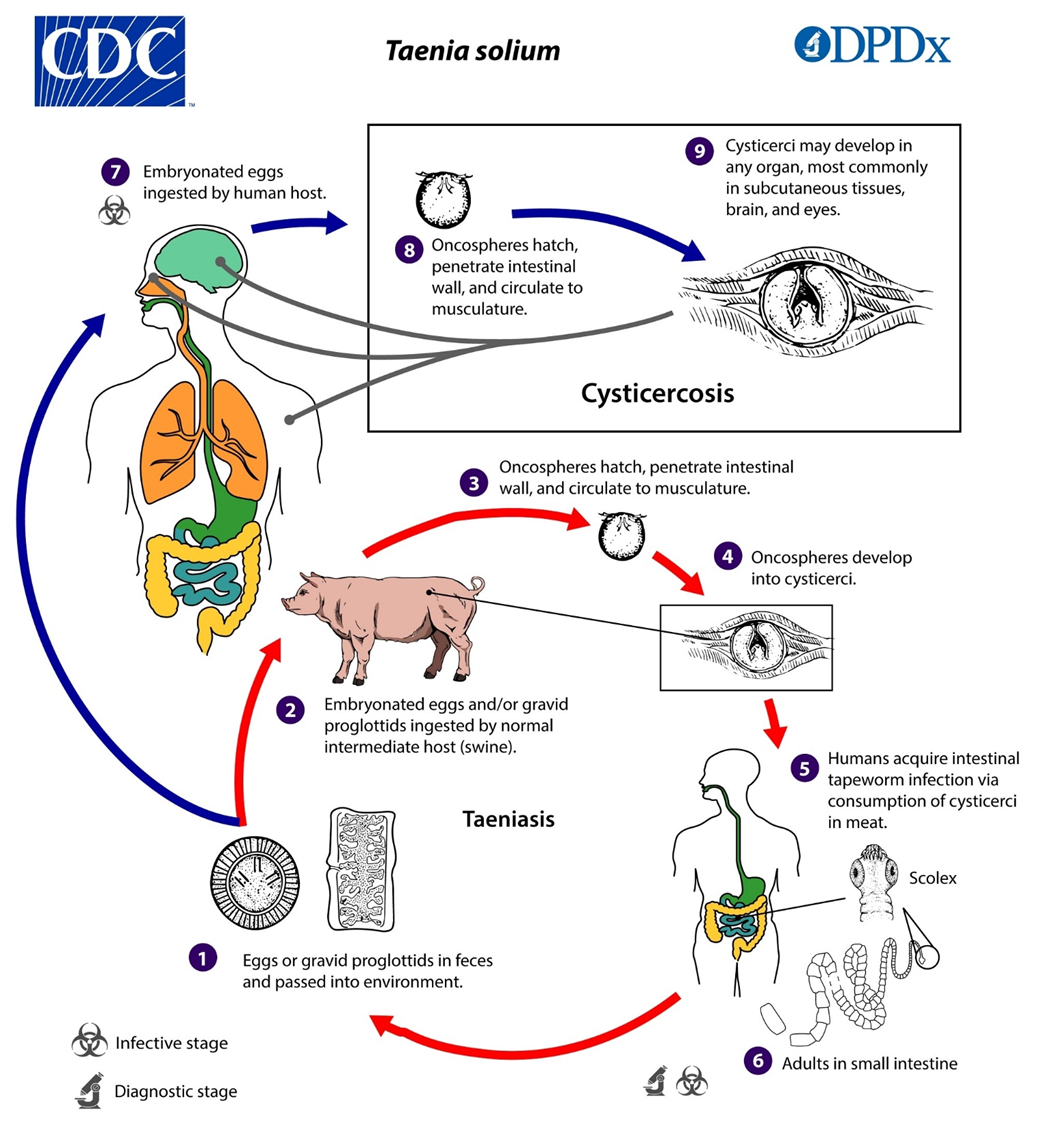
What is a difference between intestinal and extraintestinal nematodes?
Where do extraintestinal larvae mature and sexually reproduce?
How do extraintestinal nematodes get transmitted to humans?
extraintestinal are tiny when adult stage, while intestinal are massive (tapeworm)
mature in specific tissues in the body after vector transmits into human, sexually produce microfilariae
through vectors taking a blood meal
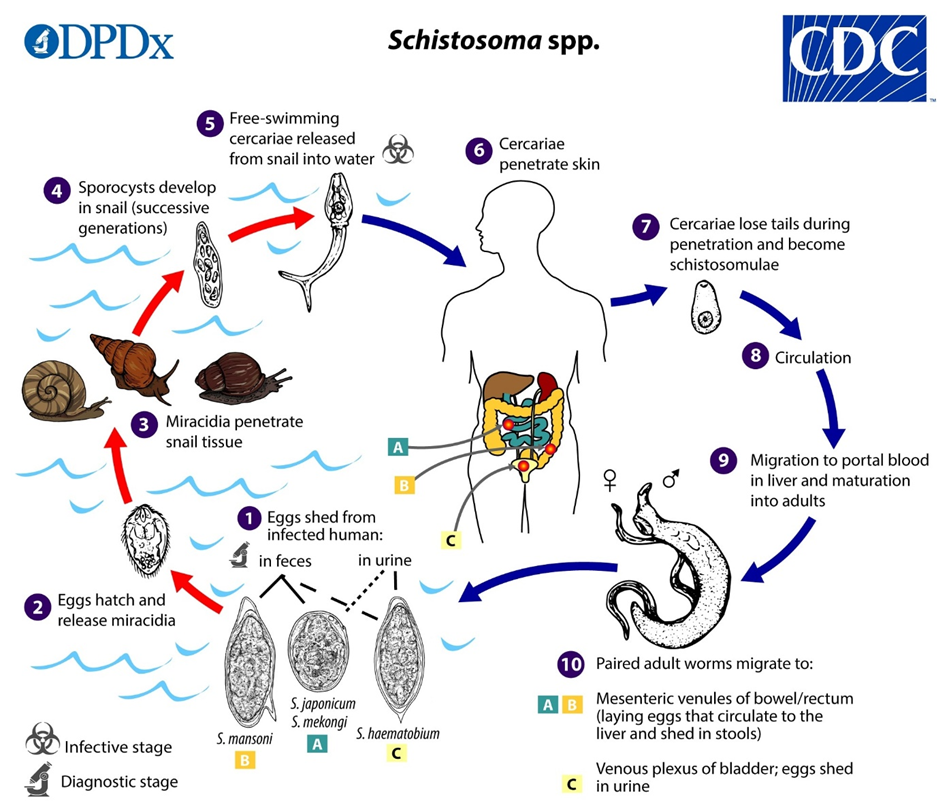
What is the life cycle in schistosomiasis (flukes - flatworms)?
eggs are released via faeces/urine into water
parasite taken up by snails
snail releases larva (called cercaria) which penetrates skin
infects people coming into contact with infected water
What is a protozoan?
Are they extra or intracellular?
single cell eukaryote than can asexually reproduce in large numbers inside human hose
both - can live in blood or in cell tissue
What are examples of insect-borne protozoal infections?
trypanosoma (also called sleeping sickness) - vector is tsetse fly
resides in blood then either CNS or heart
causes brain infection and neuronal damage (hence why sleeping sickness)
leishmania - vector is sand fly
resides intracellularly in macrophages - evades immune system
causes skin sores, lysis of WBC
plasmodium - vector is mosquito
causes malaria
Why is malaria so dangerous?
untreated, results in chills fever and destruction of red blood cells (due to parasite growing in RBCs (intracellular protozoan infection))
What is the life cycle of malaria parasite?
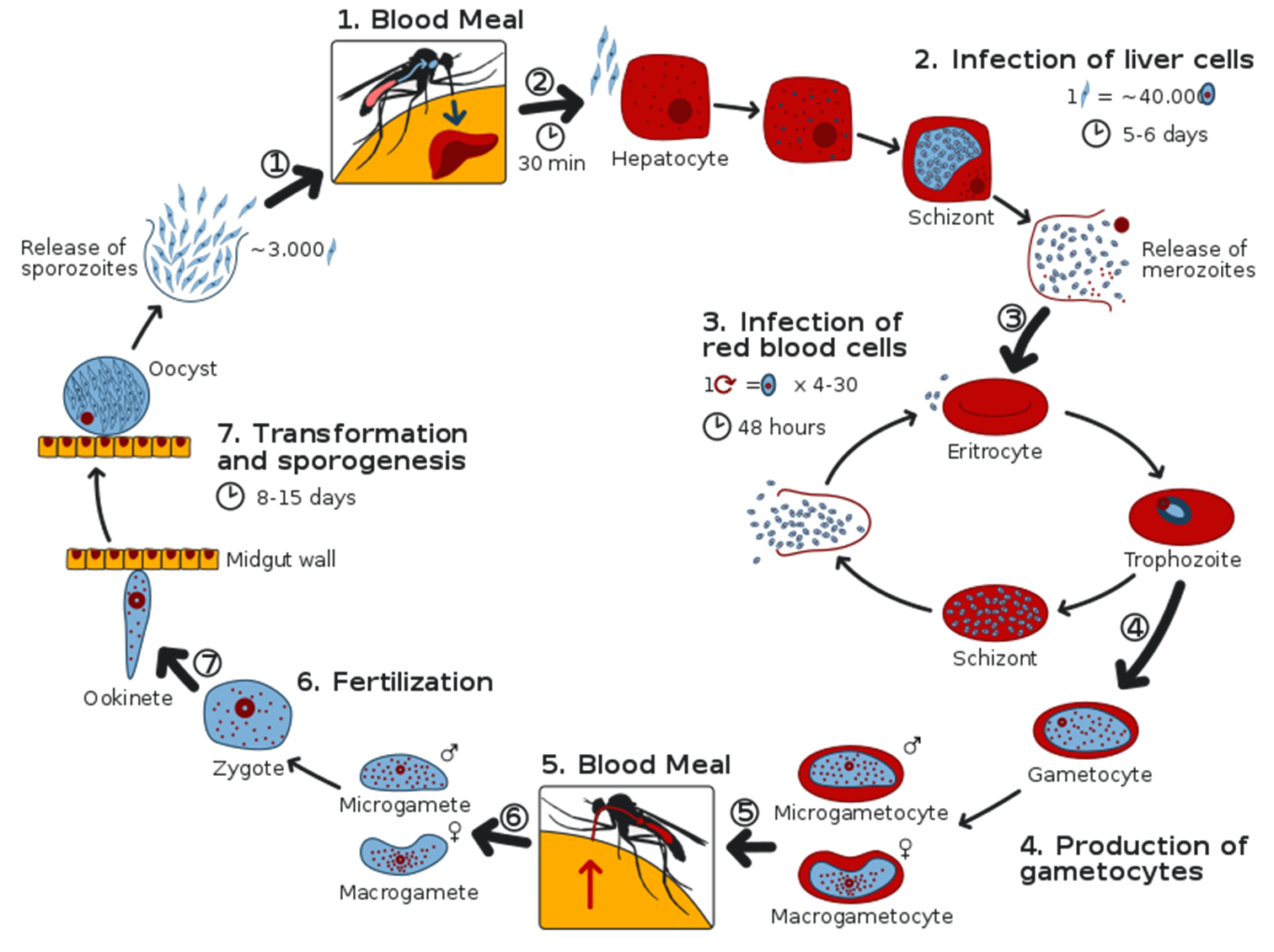
1 human and 2 mosquitos for life cycle.
MOSQUITO 1
Sporozoite- the form that is injected from the mosquito. Thread-like. Reside in mosquito salivary gland
HUMAN
Rapidly move to the liver and form a cyst (dormant to erupt later) others go into liver cells and divide rapidly forming up to 1000 newly formed parasites. Burst open from hepatocytes. Merozoites are now ready to infect RBC. Hoover up nutrients, divide again, burst cell (causes anaemic). Release secretory granules, and processed haemoglobin. These cause fever.
HUMAN/MOSQUITO 2
Merozoites can reinfect RBC (cyclical amplification and outbreak of fever). These are then ingested in mosquito blood meal and the cycle continues
What are viruses?
What do they possess?
What do they need to reproduce?
are organisms with active and dormant phases
possess they’re own genetic info
need ribosomes to reproduce (don’t have their own) - require a host
What is characteristic of virus structure?
have genetic info encased in a capsule - is symmetrical
Can viral genomes have DNA and RNA?
yes and can be double or single stranded, linear or circular.
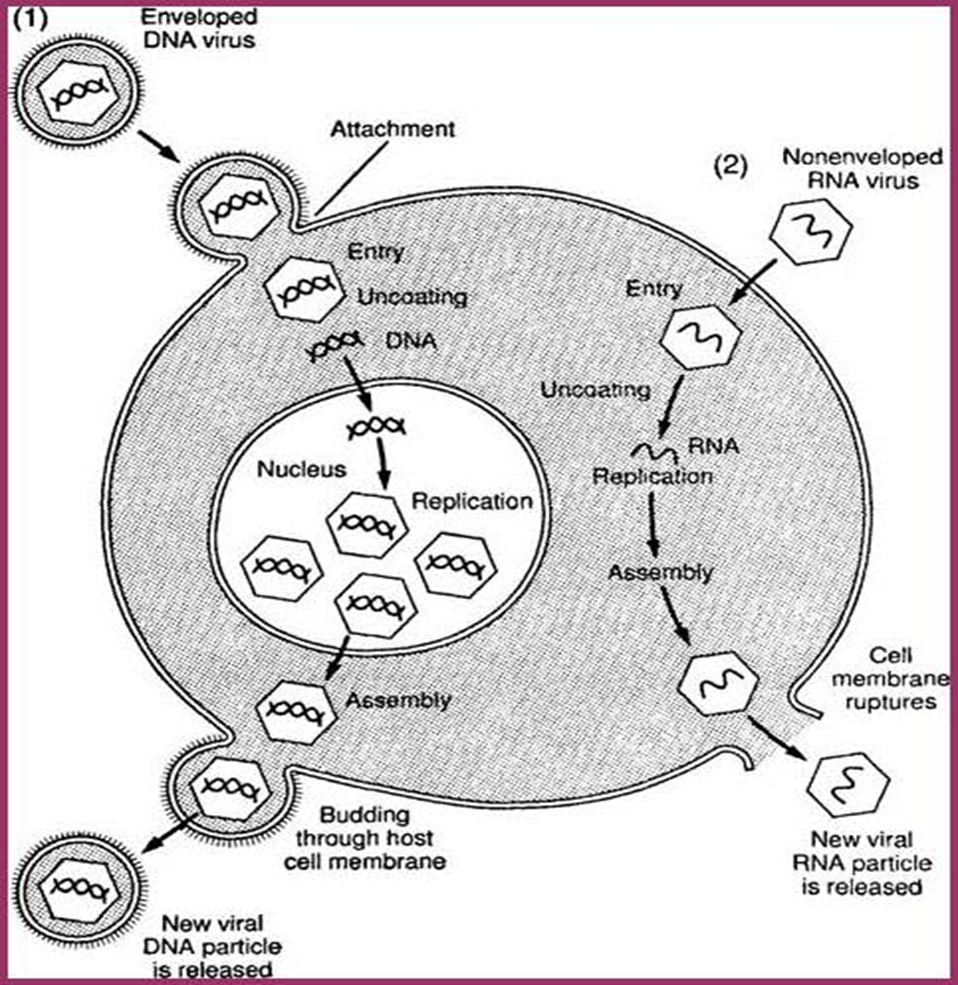
How does viral replication work?
attaches, then penetrates cell, synthesis of nucleic acid and protein
RNA viruses use reverse transcriptase (think HIV and other retroviruses_
Assembly and packaging
Maturation
Release
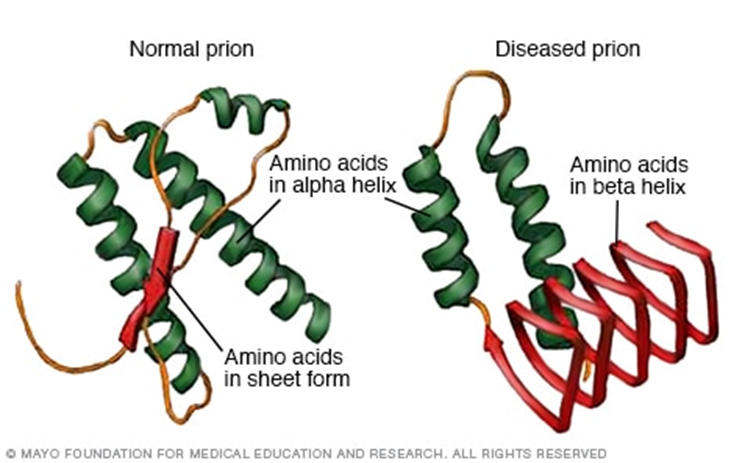
How do normal and diseased prions differ structurally?
protein is faulty/changed, leading to the structure of it being misaligned
normal prion has no beta sheets, while diseased prion has high beta sheet count
Why are prions so fatal?
cause neurodegeneration
Do prions contain nucleic acid?
no, are composed entirely of a modified (faulty) protein
What are examples of prion diseases?
scrapie
bovine spongiform encephalopathy
cretuzfeld-Jakob disease
kuru
PrP cerebral amyloid angiopathy
What are differences in normal and diseased prions (more physiologically)?
normal = monomeric and soluble, protease sensitive and neuroprotective - only made up of 3% beta sheets
diseased = aggregated, insoluble, partially protease resistant, infectious and toxic (kills cells) - high beta sheet count
What is the Latin name for body lice?
Pediculosis corporis
What is the Latin name for pubic lice?
Phthisis Pubis
What is the Latin name for head lice?
Pediculus Humanus Capitis
What is the Latin name for Scabies?
Sarcoptes Scabei
What type of parasite is trichinella?
What is it present in?
extraintestinal nematode (roundworm)
present in infected meat and cysts in the muscle
What type of parasite is guinea worm?
What is the Latin name for it?
What does it affect?
extraintestinal nematode (roundworm)
Dracunculus
affects the skin
What is the Latin name for tape worm?
Taenia Solium
What are examples of waterborne protozoal infections?
Giardia lamblia
Entamoeba histolytica
trichomonas
What does trypanosoma cause?
sleeping sickness and can cause neuronal damage if protozoa infects the brain
can also infect the heart (either infects brain or heart → depends on the species
What does Leishmania cause?
Where does Leishmania reside?
causes skin sores
resides in intracellular macrophages → evades detection
Where does plasmodium protozoal infection reside in the body?
What can this result in?
in the RBCs
eruption of RBC → due to malaria growing in it (can lead to death)
What is the most common and most dangerous species of Plasmodium?
Plasmodium Falciparum
What species of plasmodium is most prevalent in South America?
Plasmodium Malariae
What is the rarest species of Plasmodium?
Plasmodium Vivax