Wake PA Unit 2: (PHARM) Thyroid and Corticosteroid meds
 Call Kai
 Learn
Learn Practice Test
 Spaced Repetition
 Match
Match Flashcards
 Knowt Play
1/36

There's no tags or description
Looks like no tags are added yet.
Name | Mastery | Learn | Test | Matching | Spaced | Call with Kai | Chat |
|---|
No analytics yet
Send a link to your students to track their progress
37 Terms
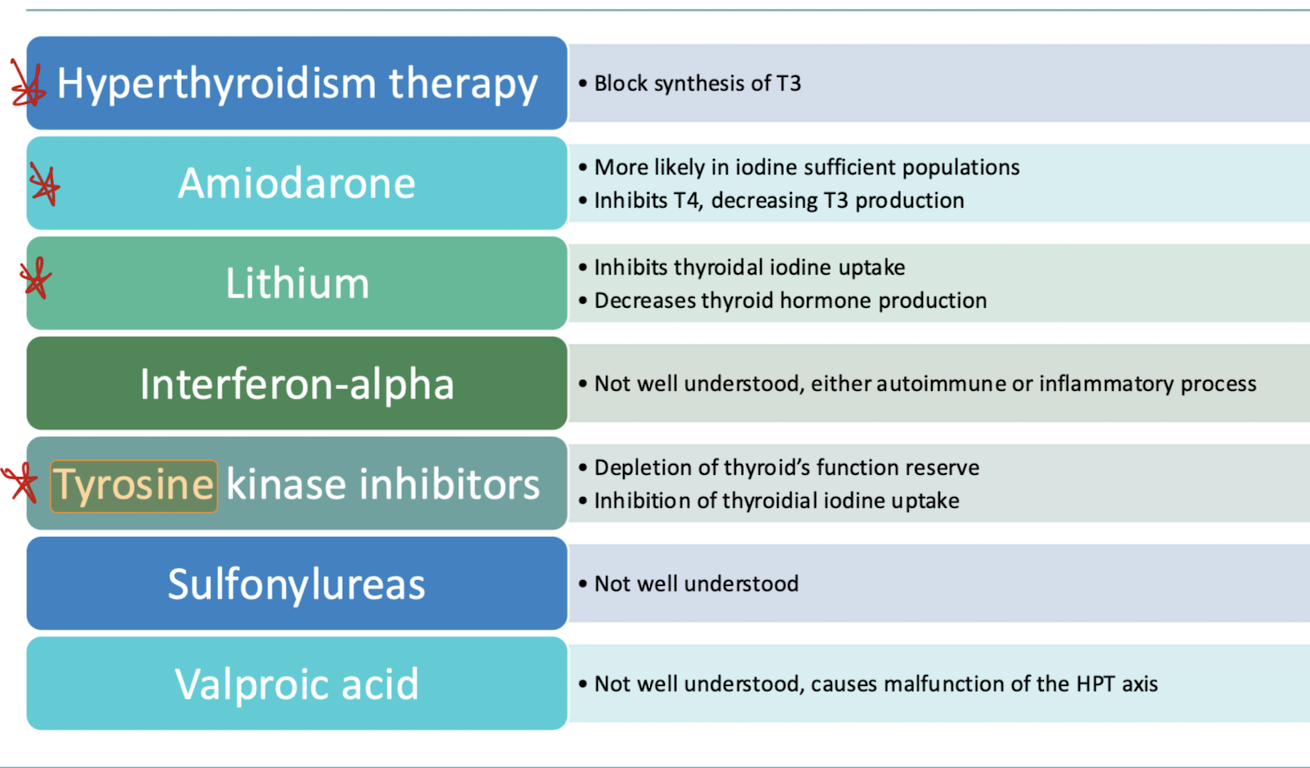
drugs that can cause hypothyroidism
hyperthyroidism therapy, amiodarone, lithium, tyrosine kinase inhibitors, interferon-alpha, sulfonylureas, valproic acid
list the generic hypothyroidism drugs
- dessicated thyroid (Armour Thyroid)
- levothyroxine (Synthroid, Levothroid)
- liothyronine (Cytomel)
- liotrix (Thyrolar)
what is dessicated thyroid/armour thyroid made of?
dried up thyroid glands from hog, beef, or sheep. contains T4 and T3
what is levothyroxine?
(aka Synthroid, Levothroid): Synthetic T4
- first line treatment for hypothyroidism
- synthetic = stable, predictable potency
- available PO or IV (2/3 dose of PO)
what is liothyronine?
(aka Cytomel): Synthetic T3
- 2x/day dosing
- more expensive than levothyroxine
- increased cardiac events
what is liotrix?
(aka Thyrolar): Synthetic T4:T3 in 4:1 ratio
- very expensive compared to levothyroxine
describe the dosing for levothyroxine in children, adults, and elderly
•Children < 4 mg/kg/day
•Adults ~1.6 mg/kg/day (50-75 mcg; considered safe in pregnancy)
•Elderly
list the counseling points for Levothyroxine
•Administer on an empty stomach 30 to 60 minutes prior to breakfast
•Hold tube feeds for 1 hour before and after dose
•Continue same product if possible (not all products are bioequivalent)
•AACE recommends patients remain on the same brand throughout treatment
list the adverse effects of levothyroxine
common with over-replacement:
- cardiac: angina, CHF, atrial fibrillation, MI, coronary srtery spasm
- other: acute mania, allergic reaction, loss of bone mass
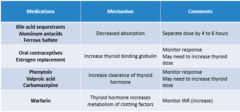
list the drug interactions for levothyroxine
- bile acid sequestrants/aluminum antacids/ferrous sulfate
- oral contraceptives/estrogen replacement
- phenytoin/valproic acid/carbamazepine
- warfarin
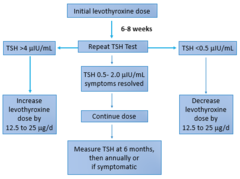
be familiar with this hypothyroidism treatment algorithm
what is myxedema coma? clinical presentation?
severe deficiency of T3 and T4 (hypothyroidism).
clinical presentation: hypothermia, unconsciousness, altered mental status, poor coordination, hypoglycemia, hyponatremia, hypercapnia, hypoxemia. Mortality is 30-60%
what is hypercapnia?
excess carbon dioxide in the blood
what is the treatment for myxedema coma?
- IV levothyroxine
- stress dose steroids: hydrocortisone (until coexisting adrenal insufficiency is ruled out)
- supportive care: blankets (no active rewarming), cautious blood volume expansion with IC fluids/blood, respiratory support, correct electrolytes
list the drugs that can cause hyperthyroidism
- hypothyroid medications (T4 supplementation)
- amiodarone
explain how amiodarone can cause hypothyroidism and hyperthyroidism
- prevents activation of T3 = hypothyroidism
- contains iodine = increase in thyroid production of T3 & T4 = hyperthyroidism
list the treatments for hyperthyroidism
- antithyroid medications
- radioactive iodine
- surgical resection
- adjunct therapies for symptom management
what are thioamides?
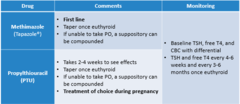
- methimazole (Tapazole): first line treatment for hyperthyroidism.
- propylthiouracil (PTU): treatment of choice during pregnancy.
list the adverse effects of thioamides
leukopenia, fever, arthralgias, pruritic rash (worse with PTU), GI intolerance, agranulocytosis, hepatotoxicity (PTU worse), lupus-like syndrome, potental teratogen (methimazole)
what are potassium iodides? what is the mechanism?
- treatment for hyperthyroidism: less common than thioamides.
- block thyroid hormone release and inhibit thyroid hormone synthesis and decrease size and vasculature of thyroid gland
adverse reactions of potassium iodides?
hypersensitivity, salivary gland swelling, metallic taste
what is the mechanism of radioactive iodine for hyperthyroidism?
- disrupts thyroid hormone synthesis
- over time, follicles that have taken up iodine become necrotic
- used in Graves' disease and toxic multinodular goiter
adverse effects of radioactive iodine?
thyroid tenderness, dysphagia, hypothyroidism
list the types of adjunct treatment for hyperthyroidism
beta blockers: propranolol (inderal): drug of choice; provides symtpm relief until definitive hyperthyroid treatment.
diltiazem (Cardizem): if beta blocker no tolerated.
clonidine (Catapres) may be another option
what is thyroid storm? clinical presentation?
acute, decompensated thyrotoxicosis. life-threatening; mortality rate ~20%
clinical presentation: hyperthermia, tachycardia, nausea/vomiting, tachypnea, altered mental status
list the treatments for thyroid storm
- supportive care: hydration, cooling blankets
- anti-thyroid medication: PTU 300-800mg
- iodides: SSKI 1-2 drops TID, Lugol's 5-10 drops TID
- beta blocker: propranolol 40-80mg
- steroids: hydrocortisone 100mg IV to inhibit T4-->T3 conversion
compare and contrast the function of glucocorticoids vs. mineralocorticoids
glucocorticoids (cortisol):
- regulates metabolism: stimulates gluconeogenesis
- anti-inflammatory effects: limits histamine, prevents pro-inflammatory signal recognition by T cells
- immunosuppressive effects
- limited effects on sodium regulation
mineralocorticoids (aldosterone):
- salt and water homeostasis
- part of the RAAS
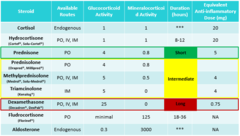
be familiar with the corticosteroid table
main idea: look at glucocorticoid activity vs mineralocorticoid as well as how long-lasting each steroid is
what is prednisolone? how does it differ from prednisone?
A glucocorticoid that is used to treat autoimmune conditions.
The liver convers prednisone to prednisolone. this is particularly good for people with liver disease/dysfunction who cannot convert
list the conditions that glucocorticoids are used to treat
-autoimmune: RA, Crohn's, SLE, UC, GVHD
-transplant: limit immune activity and prevent rejection
-oncology: treatment of cancer, limit side effects of chemo
-asthma, COPD, gout, pericarditis, ARDS
list the short-term adverse effects of steroid use
GI upset, hyperglycemia, weight gain, increased appetite, insomnia, agitation, leukocytosis, hypertension, slowed wound healing
list the long-term adverse effects of steroid use
osteoporosis, opportunistic infections, GI bleeding
what is adrenal crisis? clinical presentation?
Exaggerated form of adrenal insufficiency. Usually occurs in a patient with:
- glucocorticoid withdrawal
- chronic adrenal insufficiency who undergoes stress (trauma, ischemia, surgery)
clinical presentation: low cortisol, hypotension, hypovolemic, vomiting, fever, fatigue
what is the treatment for adrenal crisis?
- IV glucocorticoid replacement (hydrocortisone 100 mg)
- IV fluids for volume replacement
- if hyperkalemia, use fludrocortisone
describe steroid use in septic shock
- guidelines recommend corticosteroid use in septic patients not meeting resuscitative goals on fluid resuscitation + vasopressor therapy
- hydrocortisone 200mg IV/day (hydrocortisone 50mg IV q6h
when should steroids be tapered?
- supraphysiologic doses for >3 weeks
- prevent flair of condition treated or inflammatory process (autoimmune conditions require taper)
- shorter durations of corticosteroid may not require tapering
- if patients show symptoms of disease treated, may need to slow/stop taper
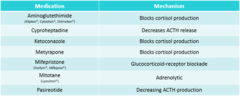
what is the treatment for Cushings Syndrome?
- surgery/radiation (removal of tumor, removal of adrenal glands, etc)
- corticosteroid supplementation after surgery
- medications may be used for symptom control (see image)