Ortho 1 - Intro + Andrew's 6 Keys (Dr. Suri)
 Call Kai
 Learn
Learn Practice Test
 Spaced Repetition
 Match
Match Flashcards
 Knowt Play
1/83

There's no tags or description
Looks like no tags are added yet.
Name | Mastery | Learn | Test | Matching | Spaced | Call with Kai | Chat |
|---|
No analytics yet
Send a link to your students to track their progress
84 Terms

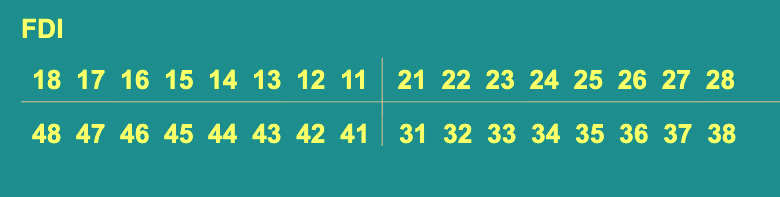
Palmar numbering system
What tooth numbering system is used in orthodontics?
(used in international literature)
what’s the FDI tooth notation system
Primate space
Define the following:
Natural spacing in primary dentition to accommodate larger permanent teeth
E-Space (Leeway space)
Define the following:
Size difference where primary molars (D, E) are wider than their permanent replacements (premolars).
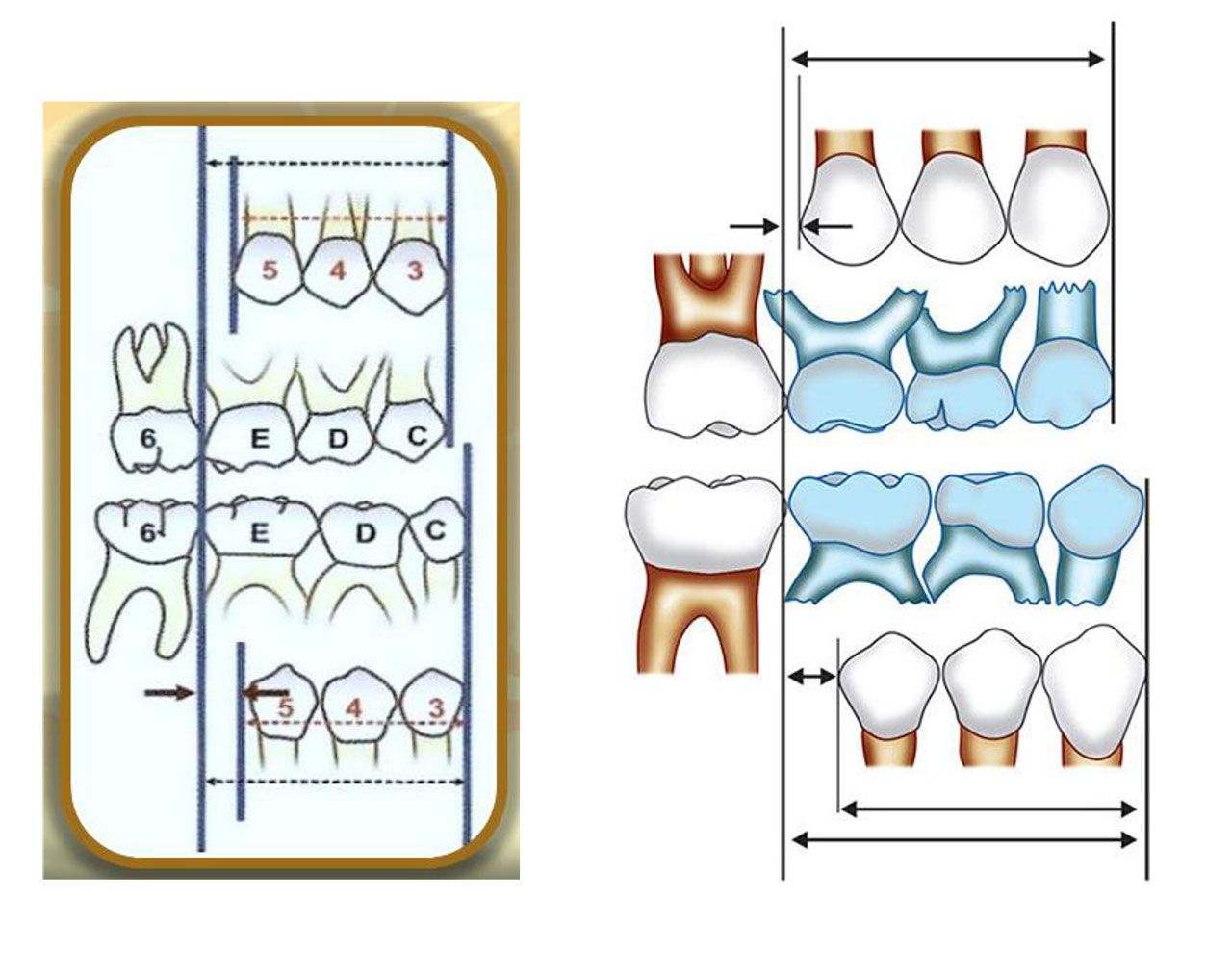
E-Space (Leeway space)
What helps with mesial shift of permanent molars?
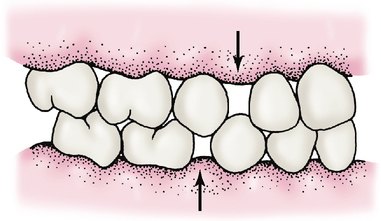
max: mesial to the mand canine (Between lateral incisor & canine)
mand: distal to the mand canine (Between canine & first molar)
Where is the primate space located in the maxillary arch vs. mand?
Distal to the mandibular canine (Between canine & first molar)
Where is the primate space located in the mandibular arch?
max: 0.9mm
mand: 1.7mm
The average leeway space for the maxilla vs. mand was ___ (unilateral)
1.7mm
The average leeway space for the mandible was ___ (unilateral)
Hairline
Define the following:
The outline of hair growth on the head or face
Glabella
Subnasale
Pogonion
G S P
For a class I relationship, what 3 points would you like to be in a straight line (and also divide the face into equal 3rds)?
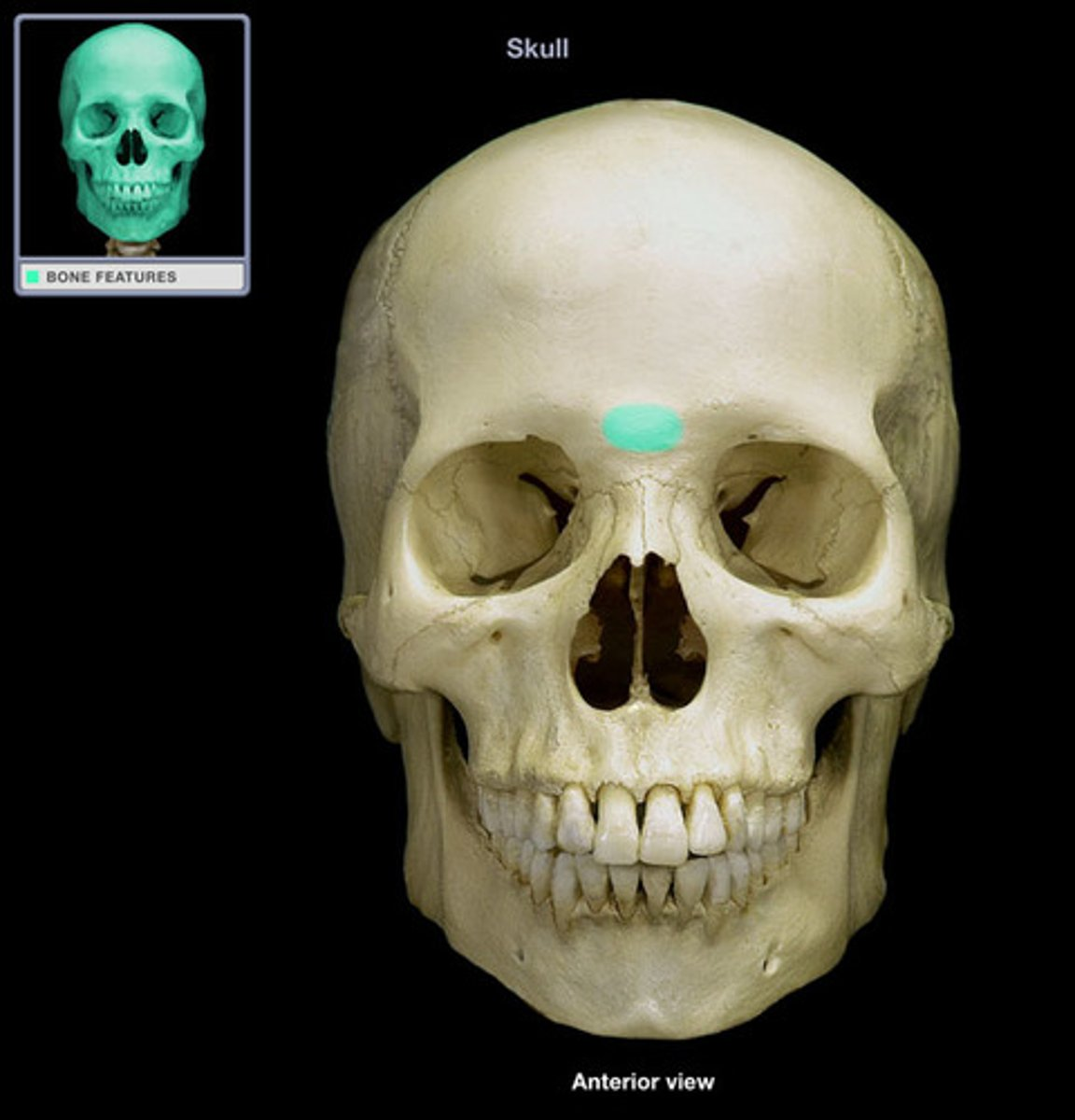
Glabella
Define the following:
- A single bony prominence of the frontal bone located between the superciliary arches
- Smooth area between the eyes
Subnasale
Define the following:
The point at which the nasal septum merges with the upper lip in the midsagittal plane
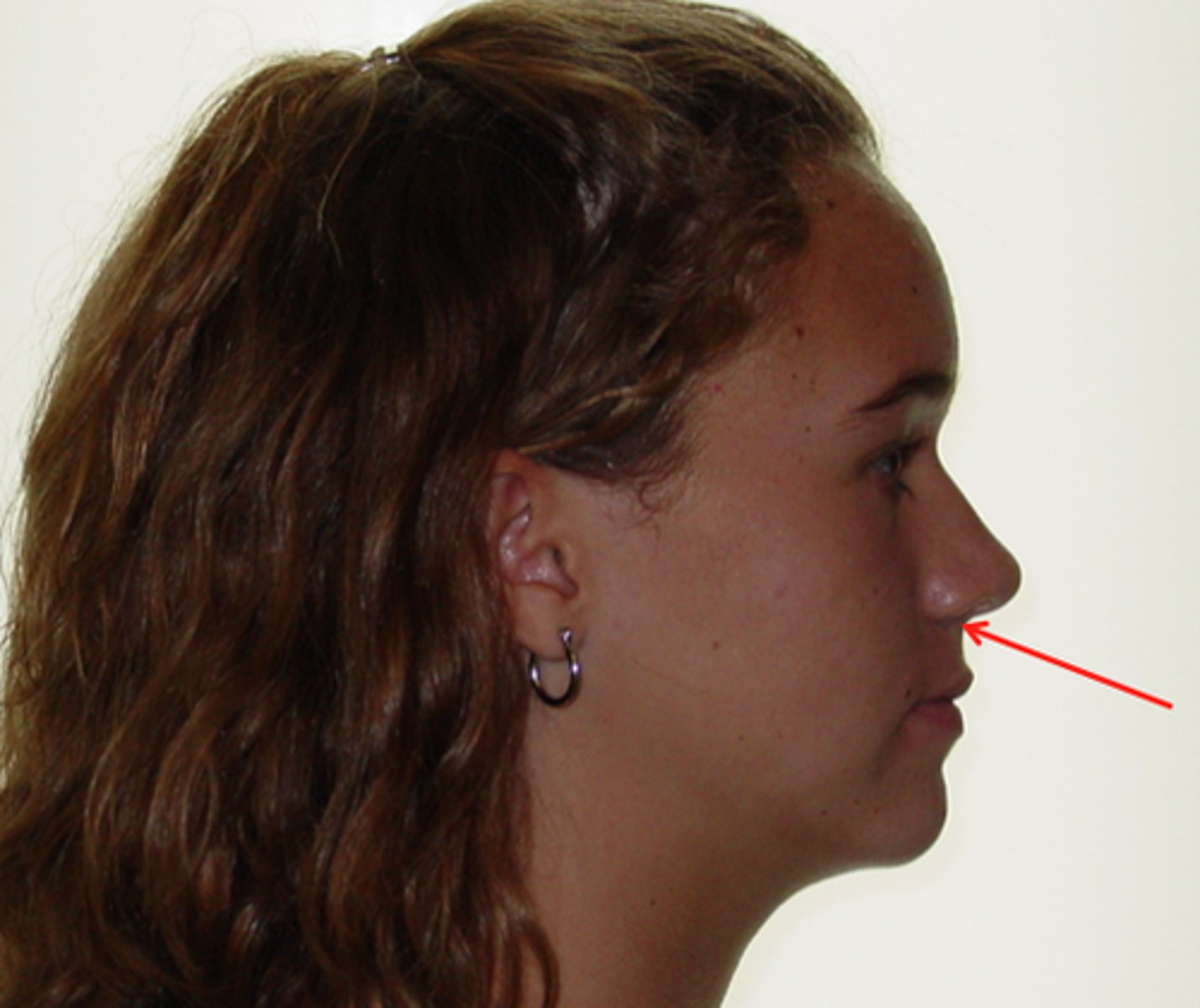
Pogonion
Define the following:
The most anterior point on the contour of the chin
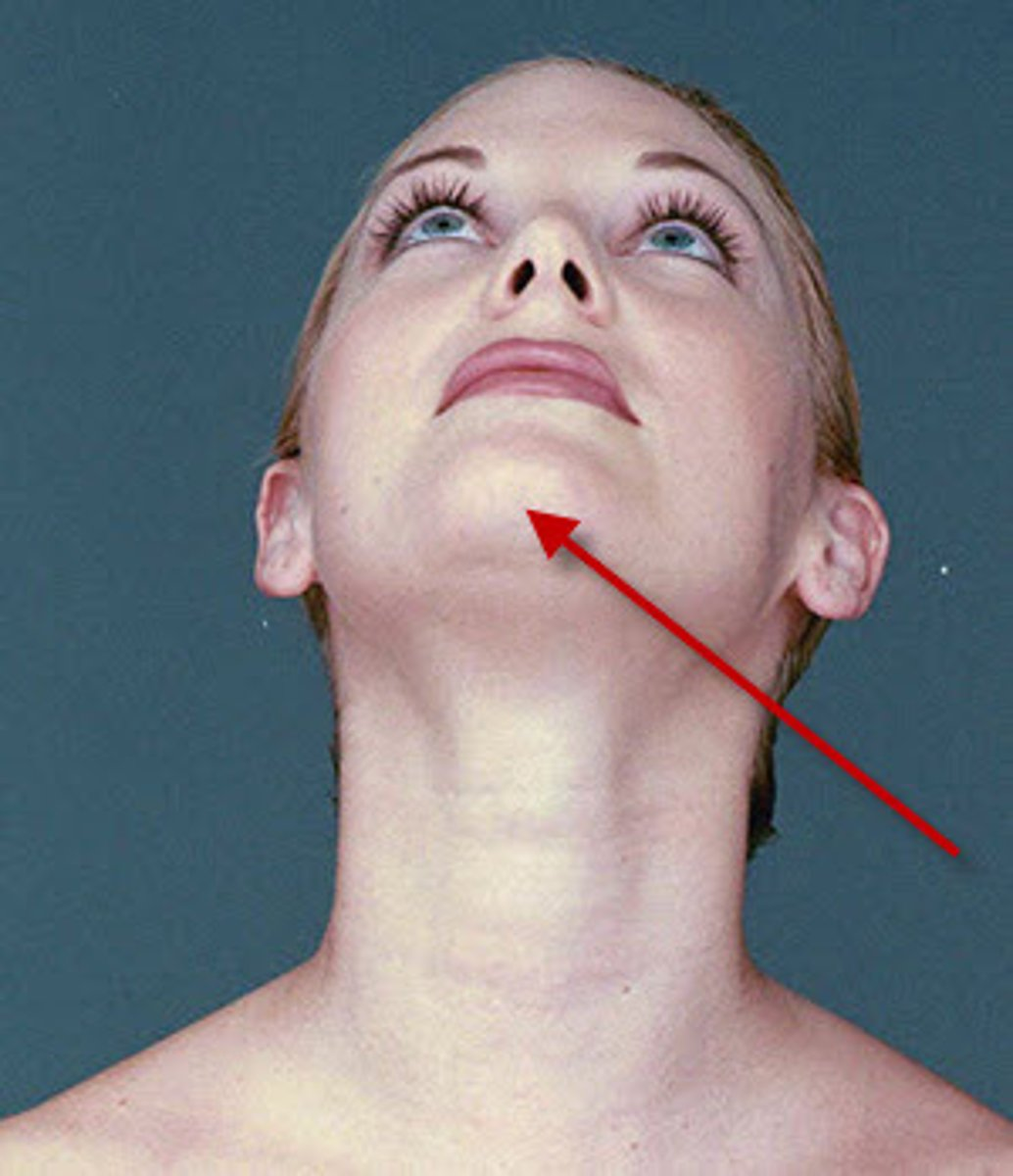
Menton
Define the following:
The most inferior point of contour of the chin
class II: positive
class III: negative
Patients with class II vs. class III occlusal relationships normally will have a ____ angle of convexity
Negative
patients with class III occlusal relationships normally will have a ____ angle of convexity
class I: orthognathic
class II: retrognathic
class III: prognathic
O R P
what are the 3 types of facial profile for each class of occlusion
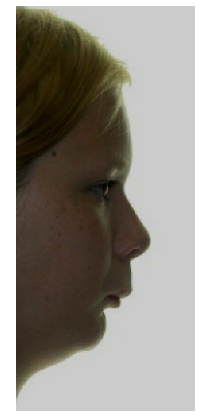
Retrognathic
In terms of facial profile, a Class II occlusion would present with a ______ profile
class II: backwards
class III: forwards
B F
In Class II vs. III occlusions, the mandible is said to have a ______ rotation
Forwards
In Class III occlusions, the mandible is said to have a ______ rotation
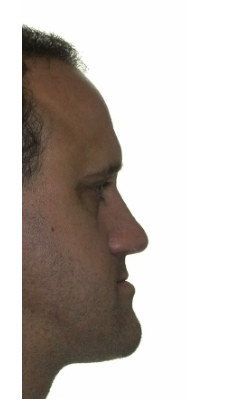
Prognathic
In terms of facial profile, a Class III occlusion would present with a ______ profile
3rds
Vertically, the entire face can be broken down into____
Edward H. Angle (father of modern orthodontics)
Who came up with the following classification:
Refers to how the max + mand 1st molars relate to each other:
Position of the MB cusp of max 1st molar relative to the B groove of mand 1st molar
7 years old
The AAO recommends an orthodontic evaluation by what age to detect early developing problems (even if treatment isn’t started yet)?
Neural growth
Which growth peak according to Scammon?
- Rapid early growth
- ~80–90% complete by age 6–7
- Plateaus early
General (Somatic) growth
Which growth peak according to Scammon?
- Steady childhood growth
- Pubertal growth spurt (peak in adolescence)
- Continues into late teens
sagittal plane
ID the plane of orientation:
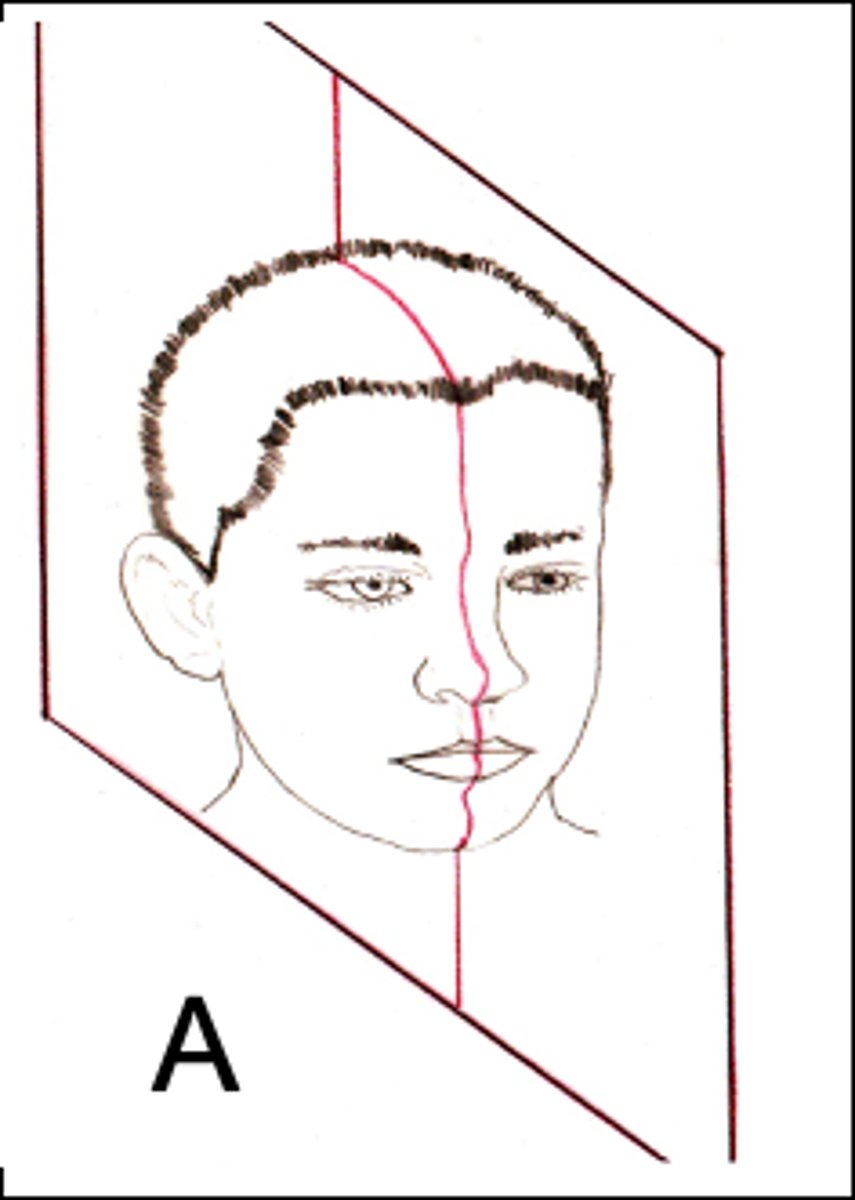
frontal/coronal plane
ID the plane of orientation:
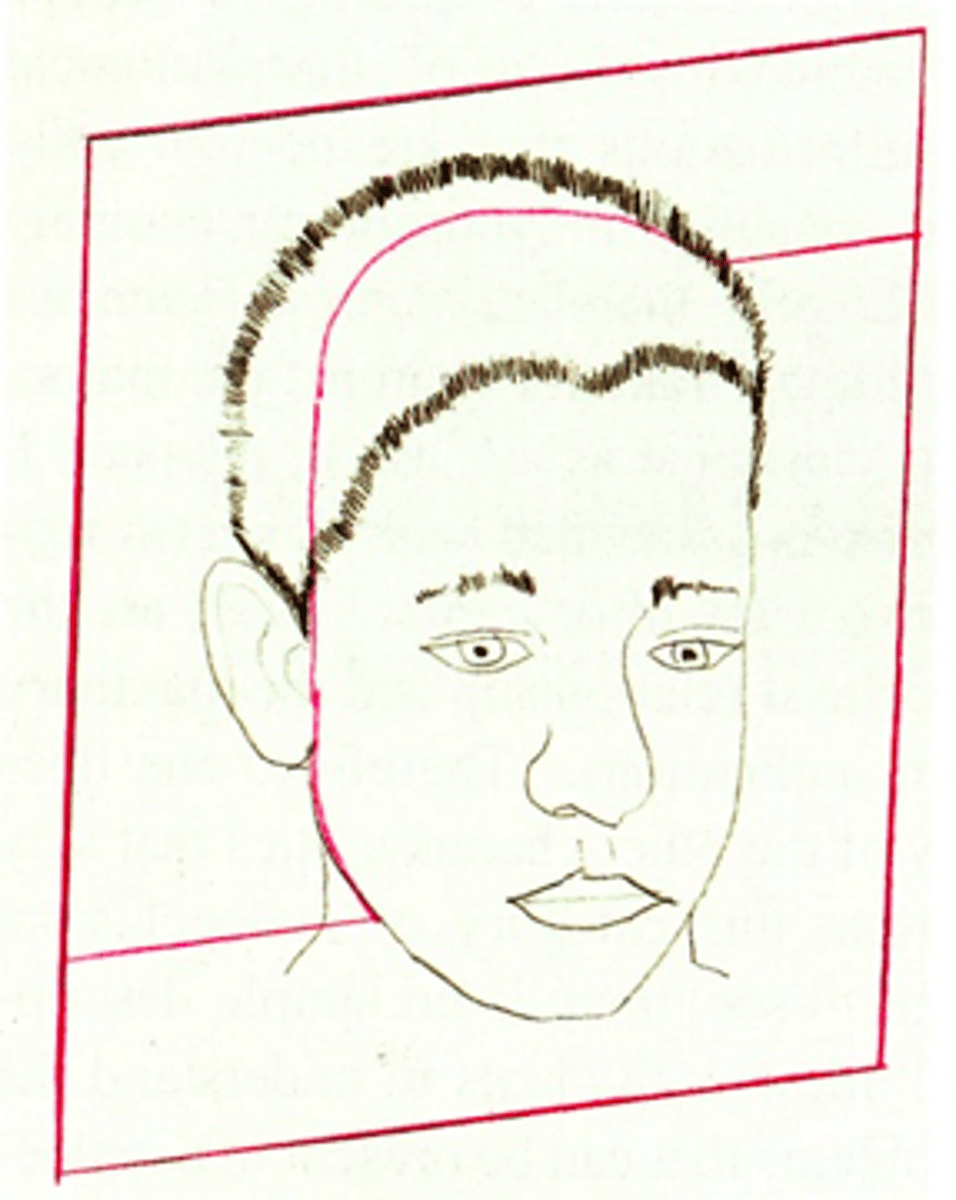
transverse plane
ID the plane of orientation:
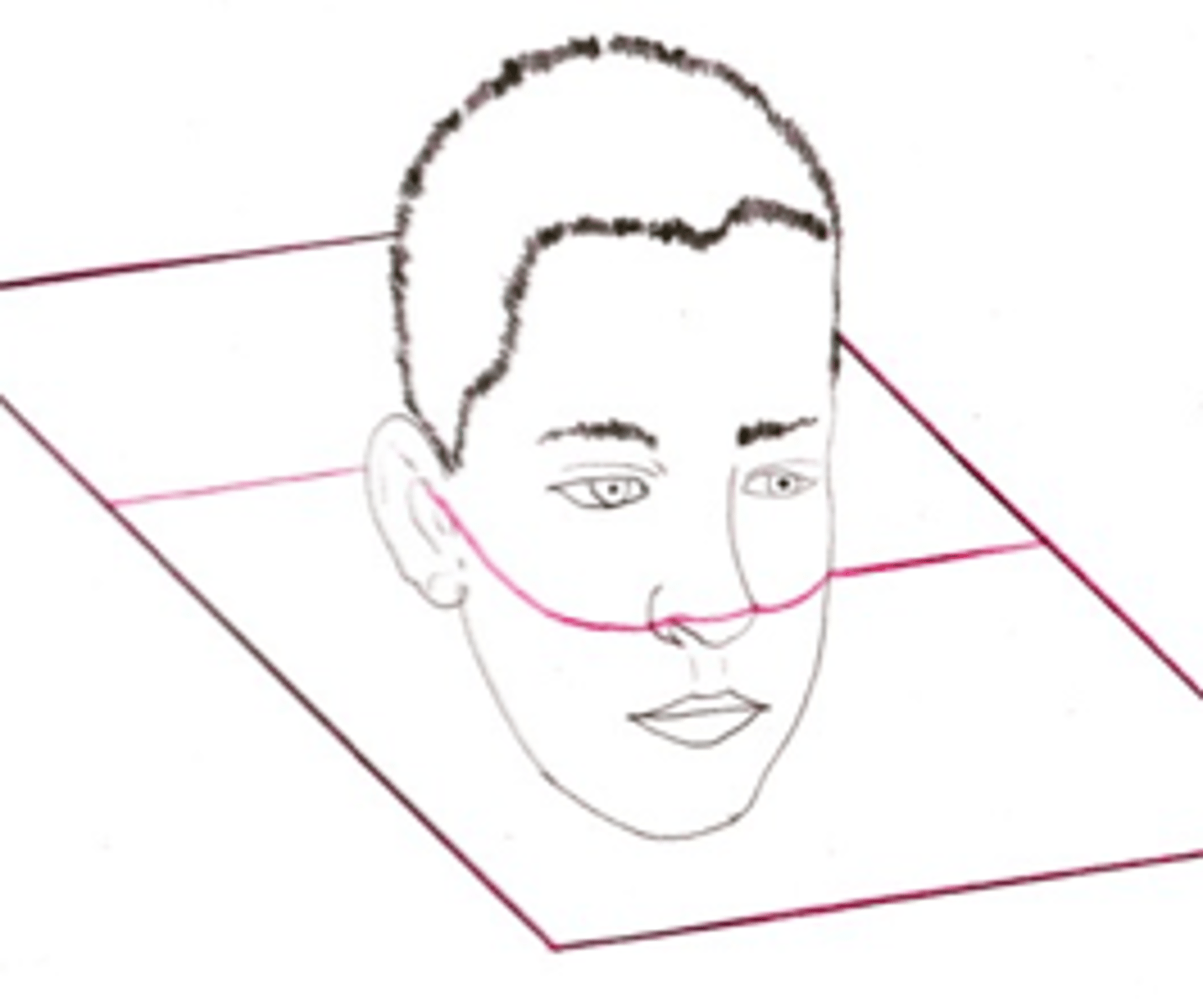
Maximum head width x 100/ Maximum head length
How can you find the facial/cephalic index?
Dolichocephalic/Leptoprosopic: <79 (long/narrow face)
Mesocephalic/Mesoprosopic/Normocephalic: 79-81
Brachycephalic/Euryprosopic: >81 (short/wide face)
D M B
L M E
3 levels of CI (cephalic index)
Mesocephalic / Mesoprosopic / Normocephalic
How would you describe the cephalic index for this patient?

Brachycephalic/Euryprosopic (Short - Wide face)
How would you describe the cephalic index for this patient?
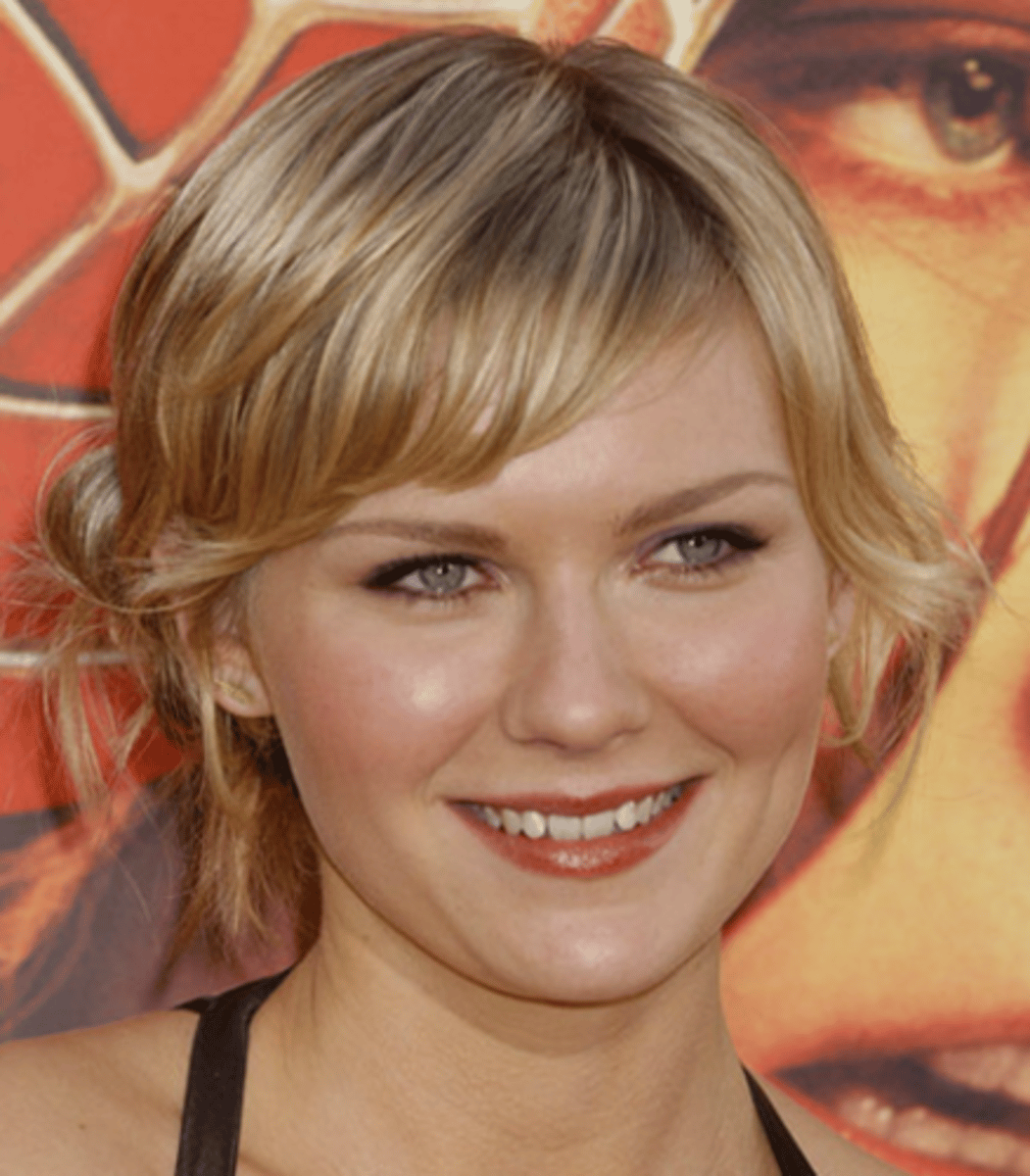
Dolichocephalic/Leptoprosopic (Long - Narrow face)
How would you describe the cephalic index for this patient?
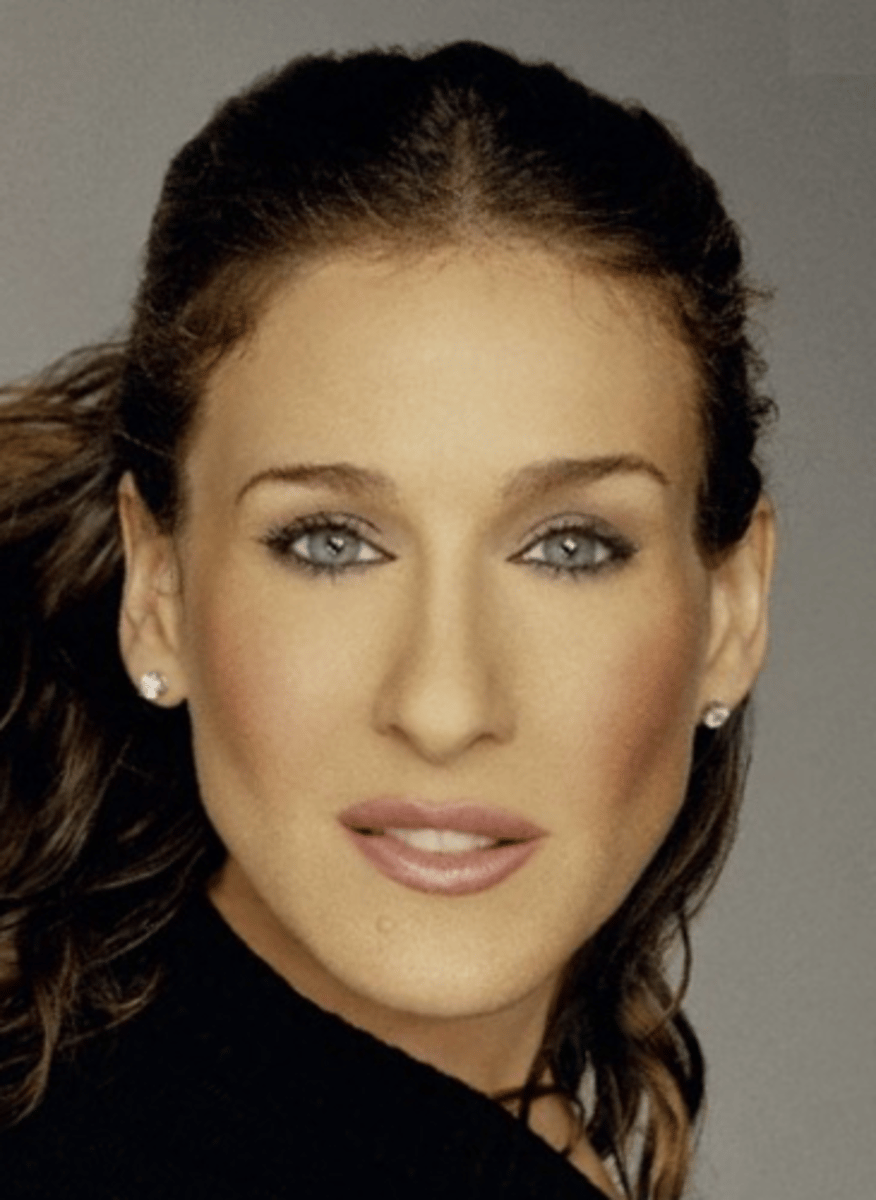
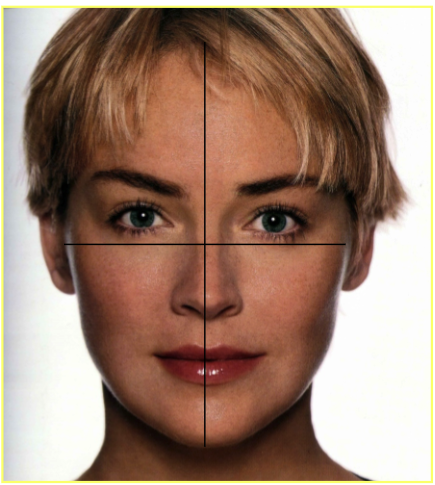
Glabela
Subnasale
When determining symmetry a line from what 2 points on a face determines the reference line?
Pogonion
When determining symmetry, a line from the glabella to the subnasale is the reference line, what do you evaluate the position of?
Dolichocephalic/ Leptoprosopic (Long - Narrow face)
How would you describe the cephalic index for this patient?
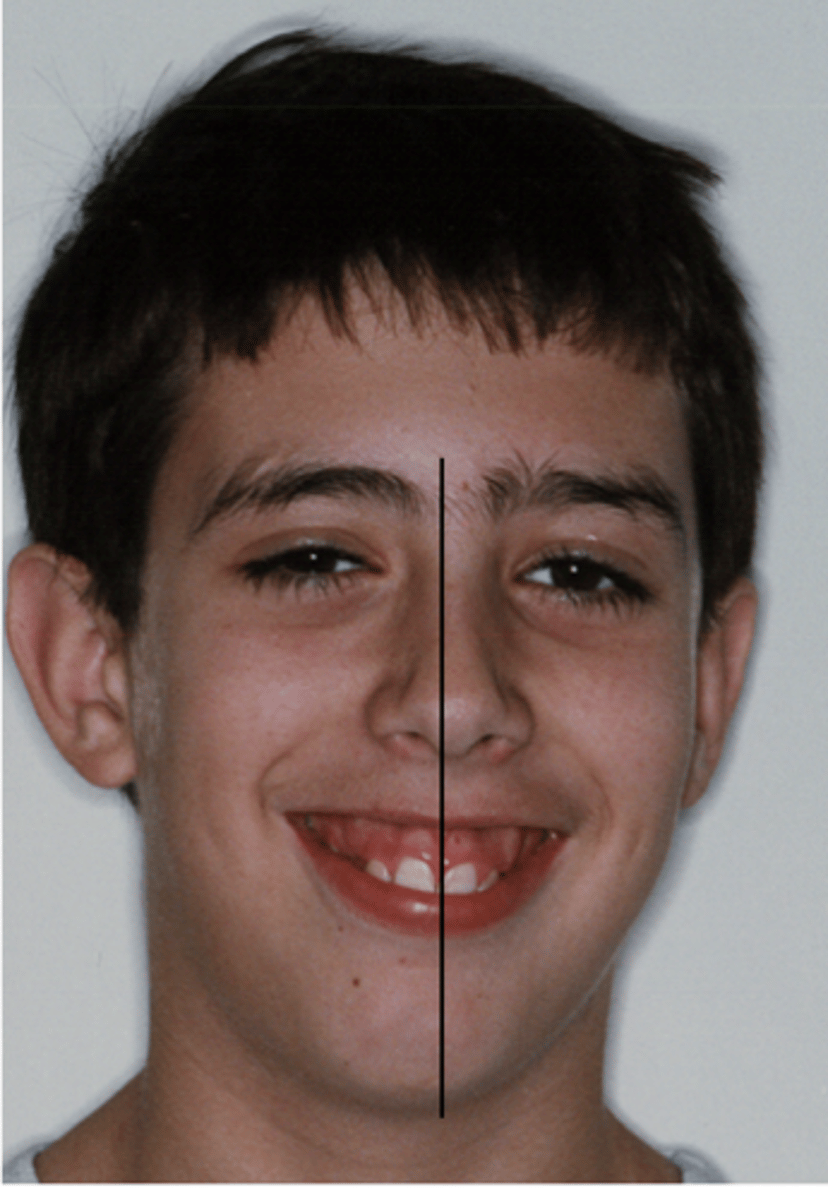
Occlusion
_______ is the static and dynamic relationship of the teeth and is basic to all aspects of dentistry
Obicularis oris
What muscle is indicated in grey, anterior to the maxillary incisor?
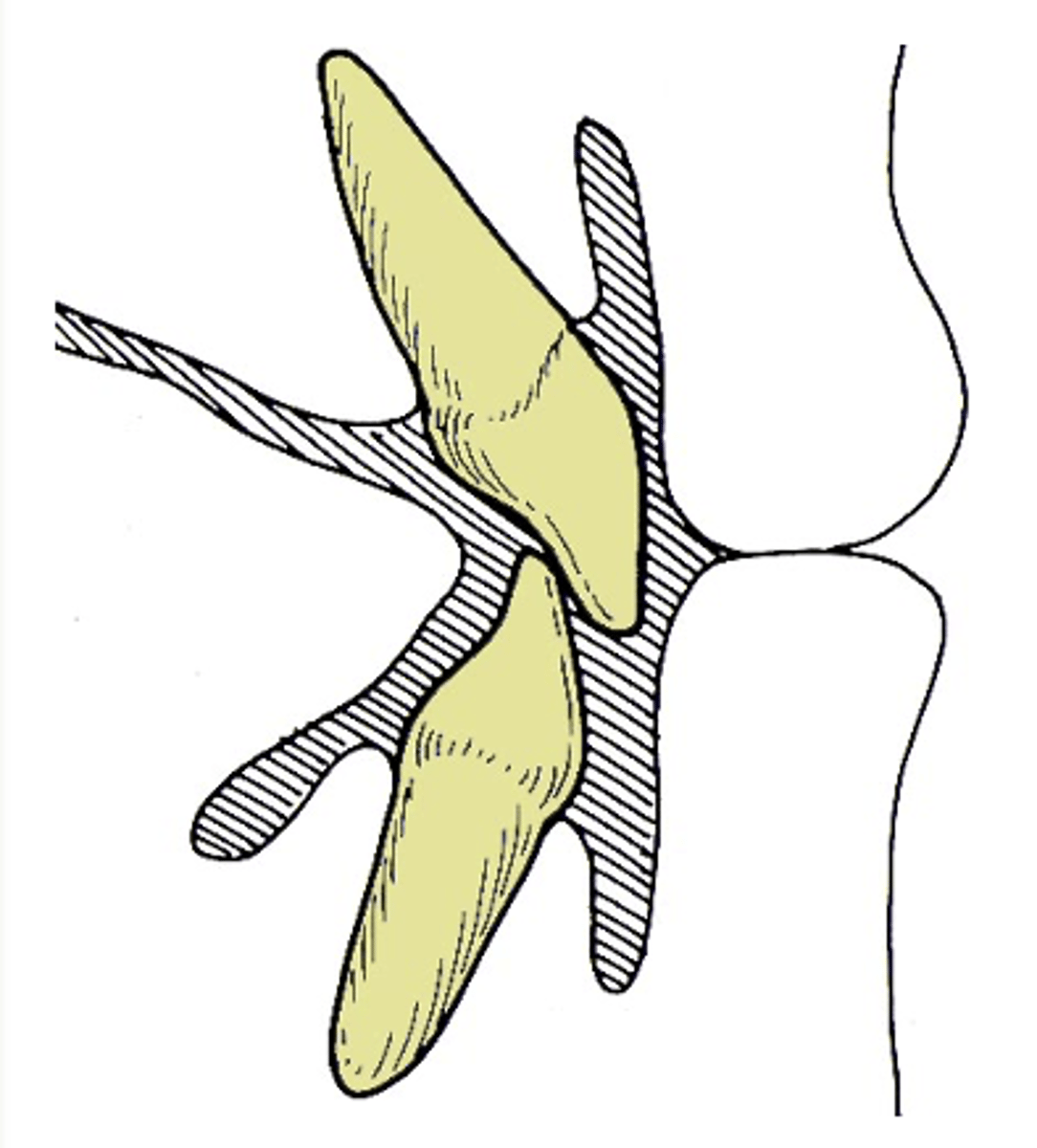
The tongue
What muscle is indicated in grey, posterior to the maxillary incisor?
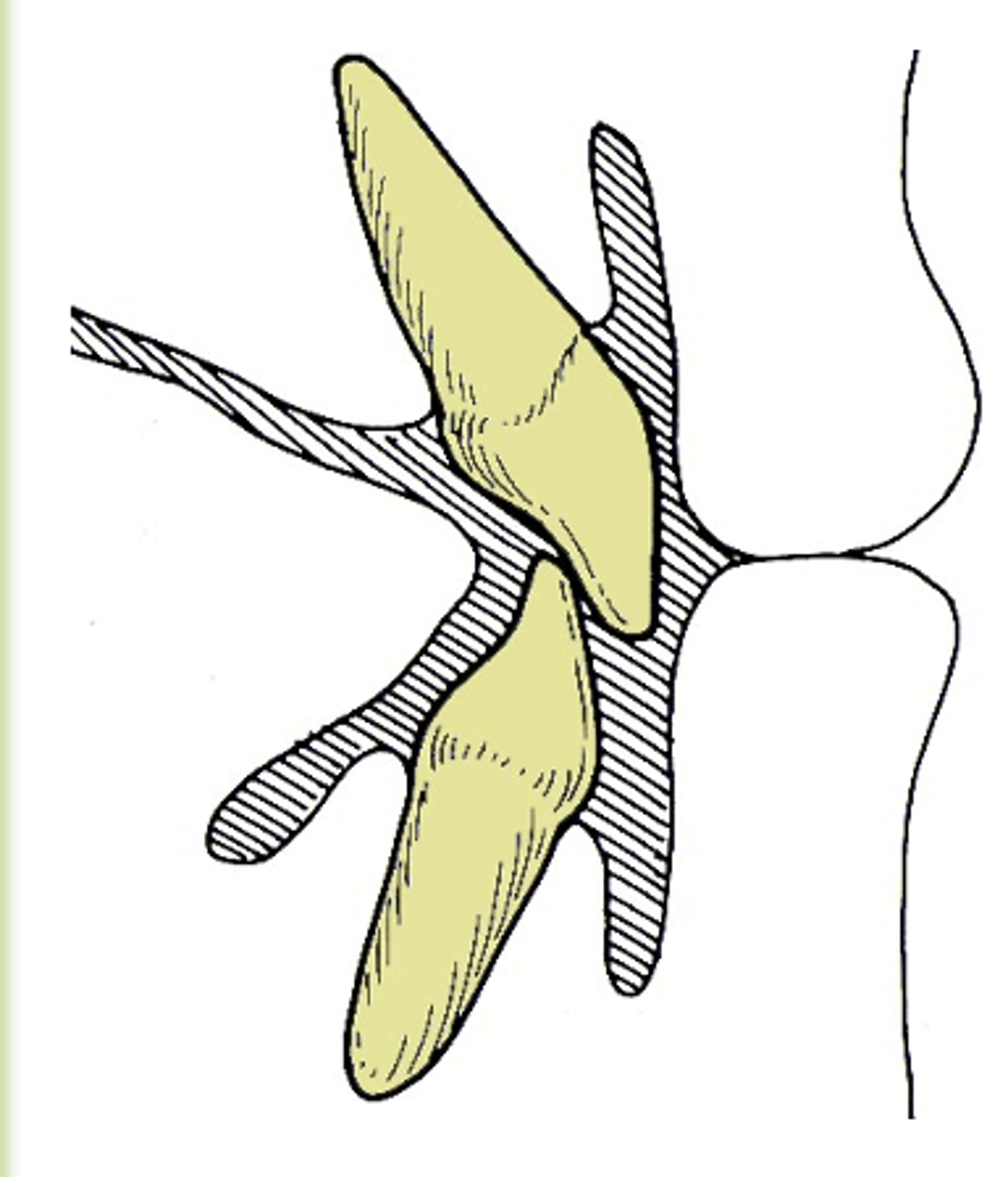
Buccinator
What muscle is indicated in grey, lateral to the posterior teeth?
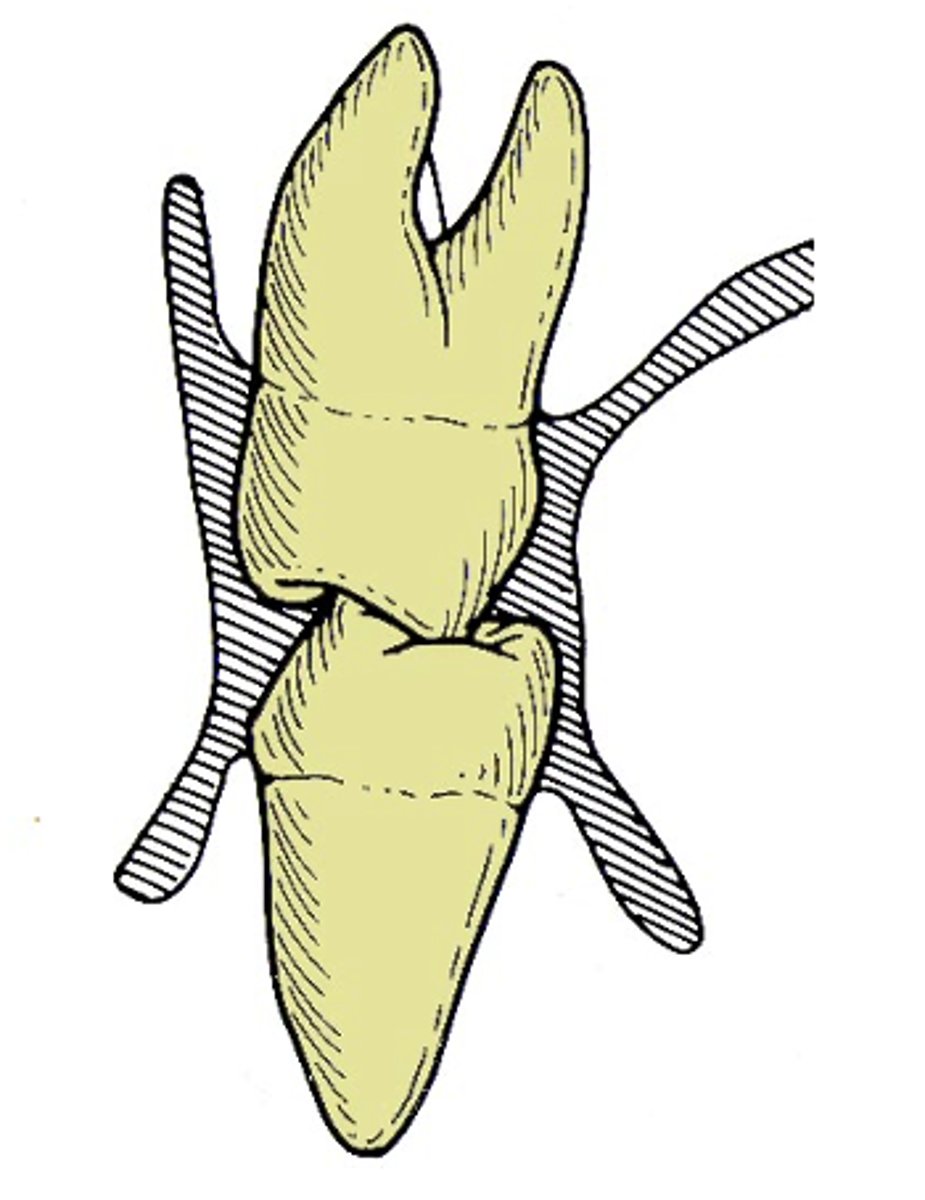
Superior Constrictor
What muscle is indicated in grey, more posterior to the posterior teeth?
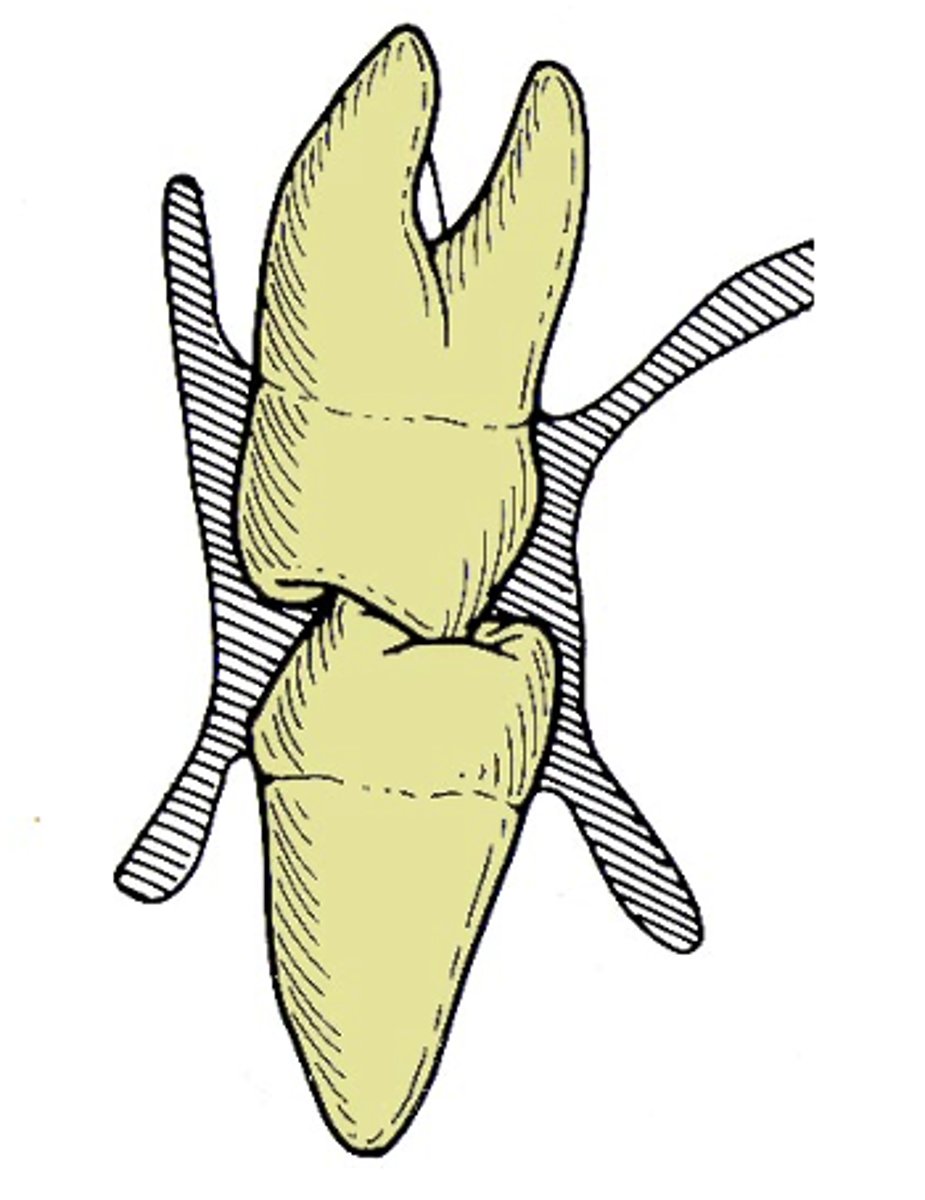
tip: M/D inclination of the tooth
torque: B/L inclination of the crown/root
How do you describe "tip" vs. “torque” in orthodontics?
Labial or lingual inclination of the crown/root
How do you describe "torque" in orthodontics?
Crowns are inclined lingually
What is the normal torque of mandibular posterior teeth?
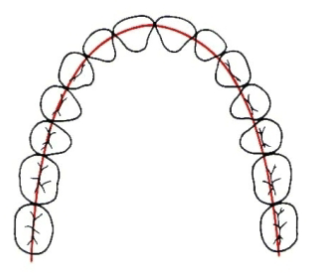
A line the follows the central grooves of the posterior teeth and the incisal edges of the anterior teeth
Describe the ideal line of occlusion for the maxillary teeth:
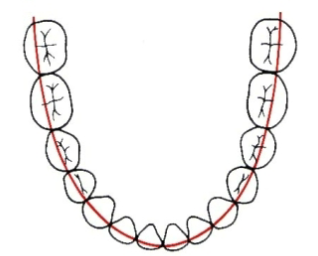
A line that follows the buccal cusps of the posterior teeth + the cuspal inclines of the anterior teeth
Describe the ideal line of occlusion for the mandibular teeth:
Maxillary permanent 1st molar
Which tooth is the most important tooth in determining the occlusal scheme for a patient, according to Edward Angle classification?
Maxillary canines
Which tooth is the most important tooth in determining the occlusal scheme for a patient, according to Simon’s classification?
Edward Angle’s classification
which classification of occlusion is most widely used + easiest to use
Simon’s
what classification do we use if the pt is missing their max 1st molar
Sagittal plane
Occlusal classes I, II and III are evaluated in what plane?
Transverse plane
Crossbites + midline deviations are classified and evaluated in what plane?
Vertical plane
Deep + open bites are classified and evaluated in what plane?
- Its direct(ly below) relationship with the zygomatic buttress of the zygomatic process
- 1st perm tooth to erupt
Why does Edward Angle claim that the Key tooth in the mouth is the maxillary permanent 1st molar?
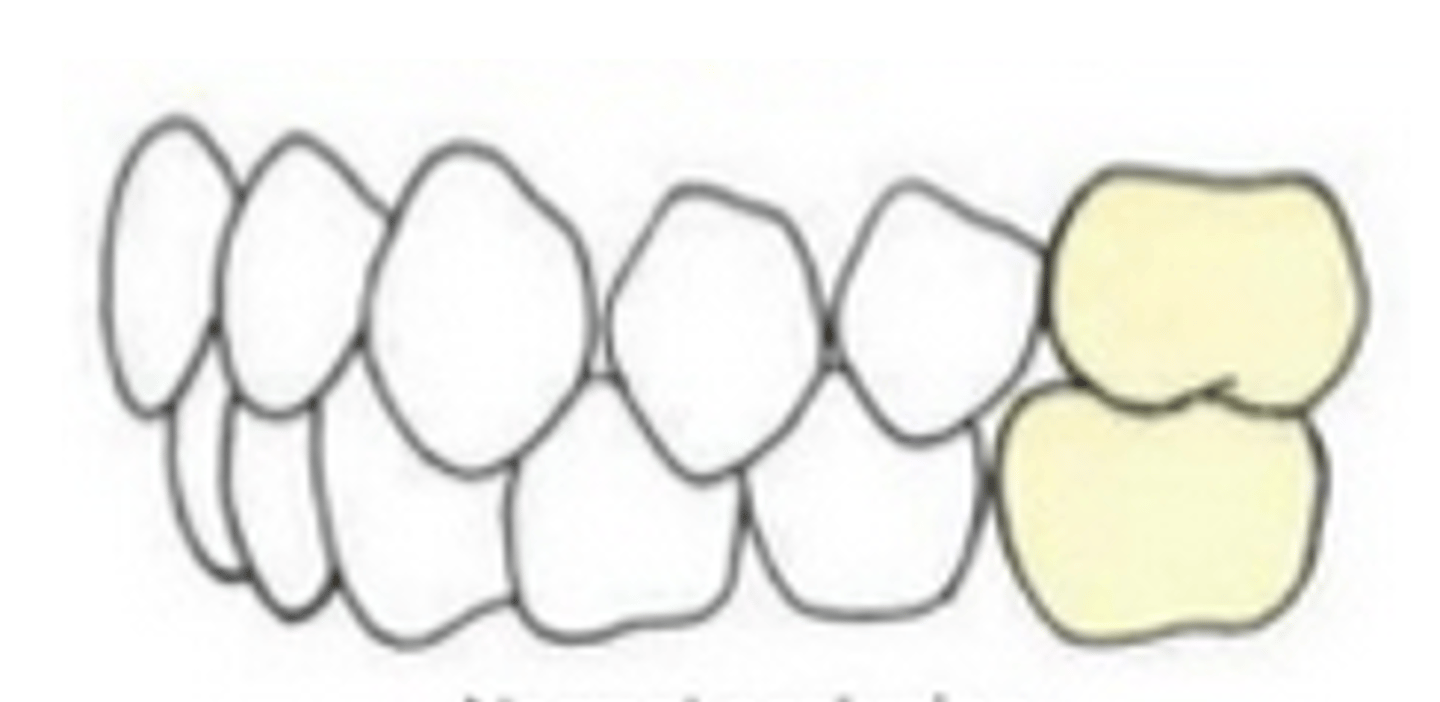
When the MB cusp of the maxillary 1st molar falls into the B developmental groove of the 1st mandibular molar
Describe the ideal intercuspation for a Class I occlusion:
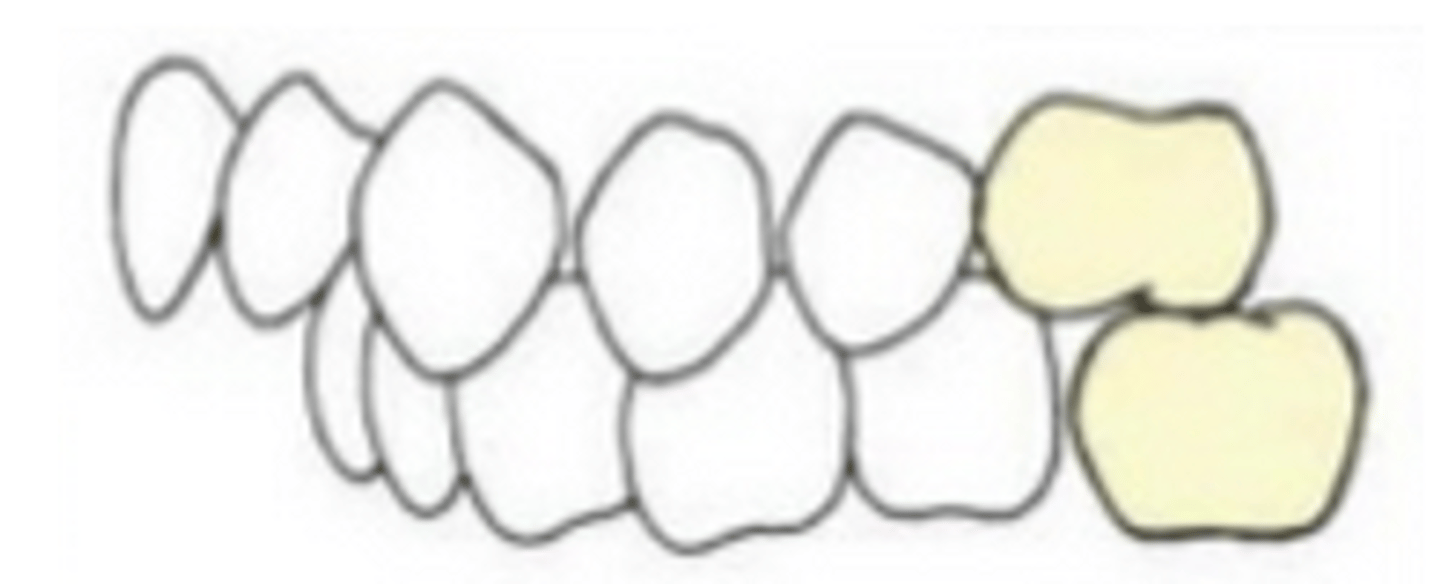
When the mandibular 1st molar is positioned further distal to the maxillary 1st molar
Describe the intercuspation of a Class II occlusion:
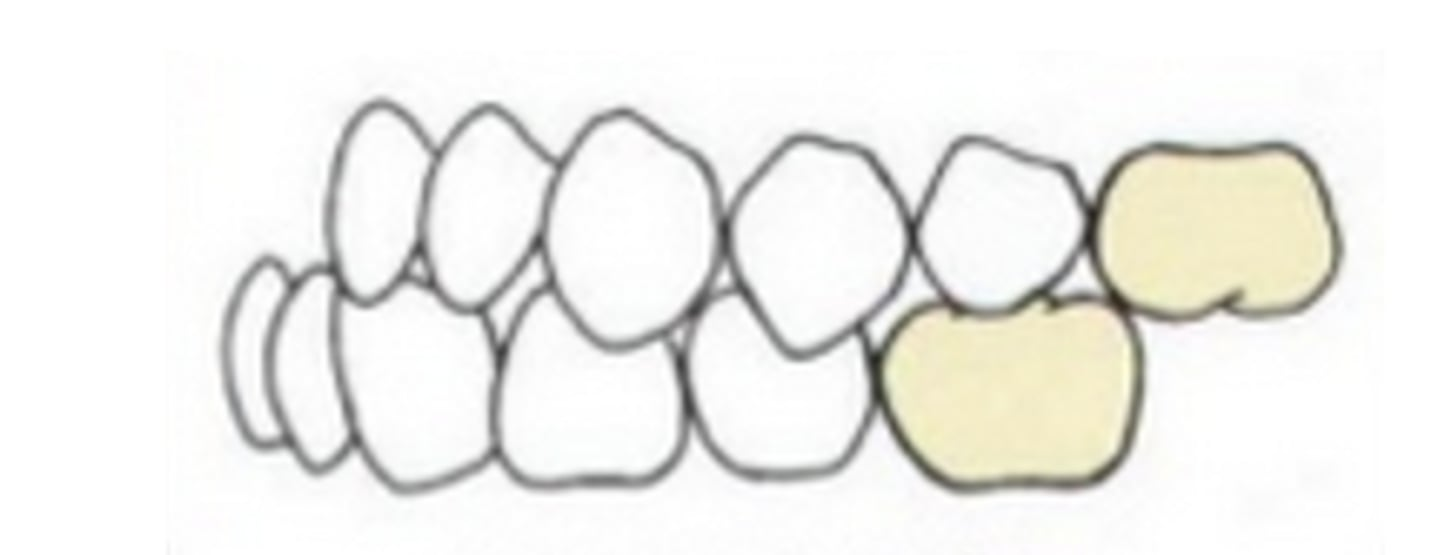
When the mandibular 1st molar is positioned further mesial to the maxillary 1st molar
Describe the intercuspation of a Class III occlusion:
Class I
ID the class of occlusion:
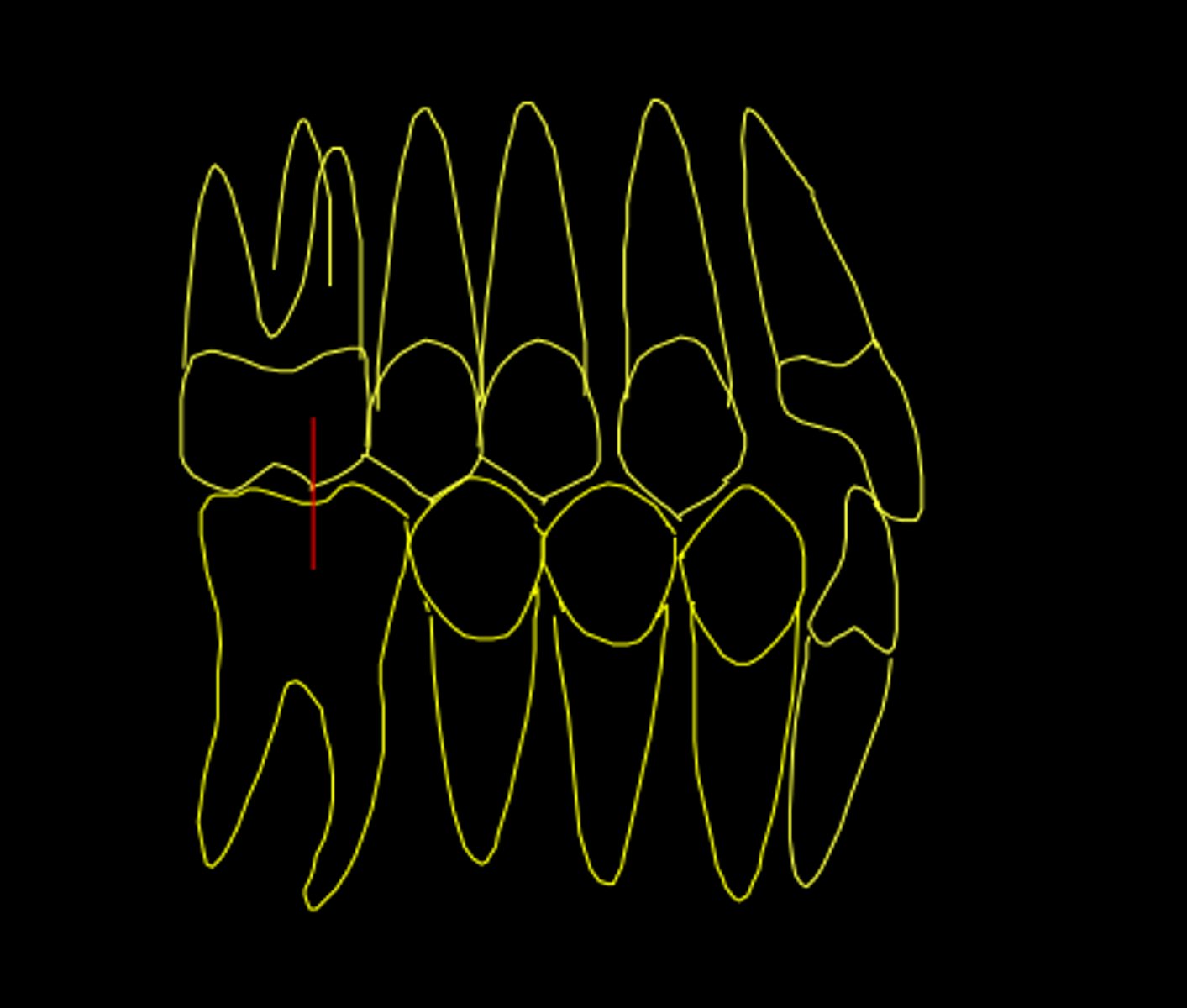
Class I
ID the class of occlusion:
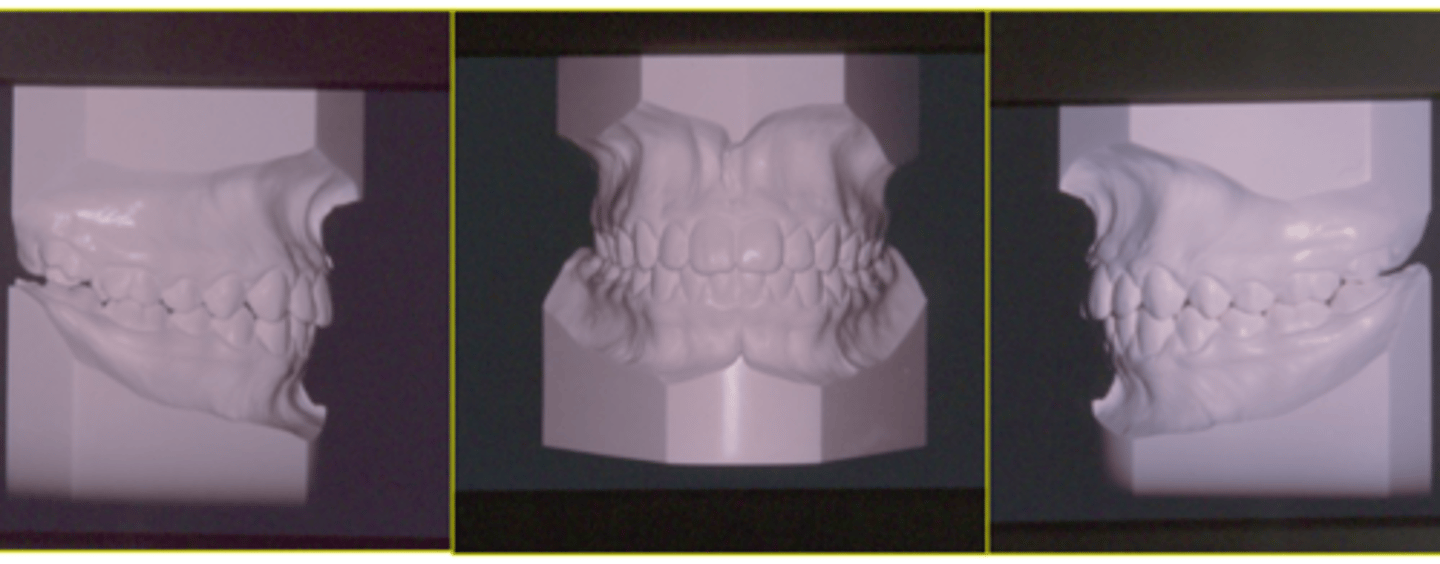
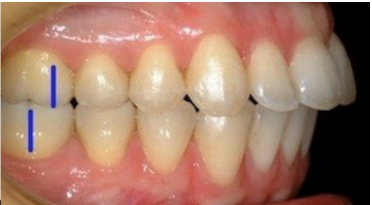
Maxillary incisors are protrusive are procumnent (proclined)
Describe the incisors in a Class II, division 1 relationship:
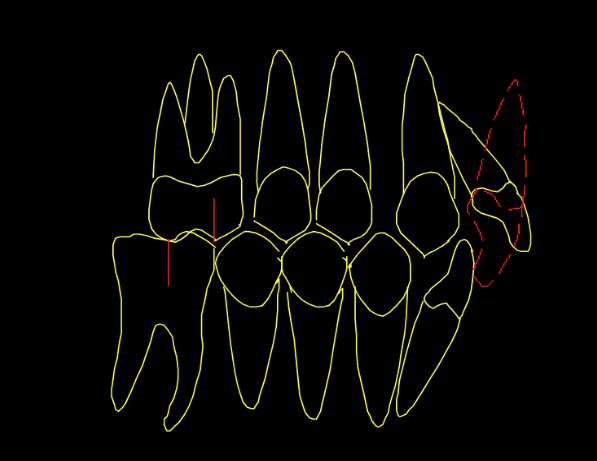
- Maxillary centrals are recumbent (retrusive + retroclined)
- Maxillary laterals are procumbent ( proclined)
Describe the incisors in a Class II, division 2 relationship:
protrusive: linear more forward of its normal position
proclined: angularly more inclined forward
protrusive vs. proclined?
Proclined
Define the following:
Anglularly more inclined forward
Class II, division 1
What occlusal class presents with max incisors that are BOTH protrusive + proclined?
Class II, division 2
What occlusal class presents with Maxillary central incisors that are retrusive and retroclines, lateral incisors are proclined, patients present with deep bite?
Class II, division 2
Which Class II division is considered more esthetically pleasing?
Class II, division 1
ID the class of occlusion:
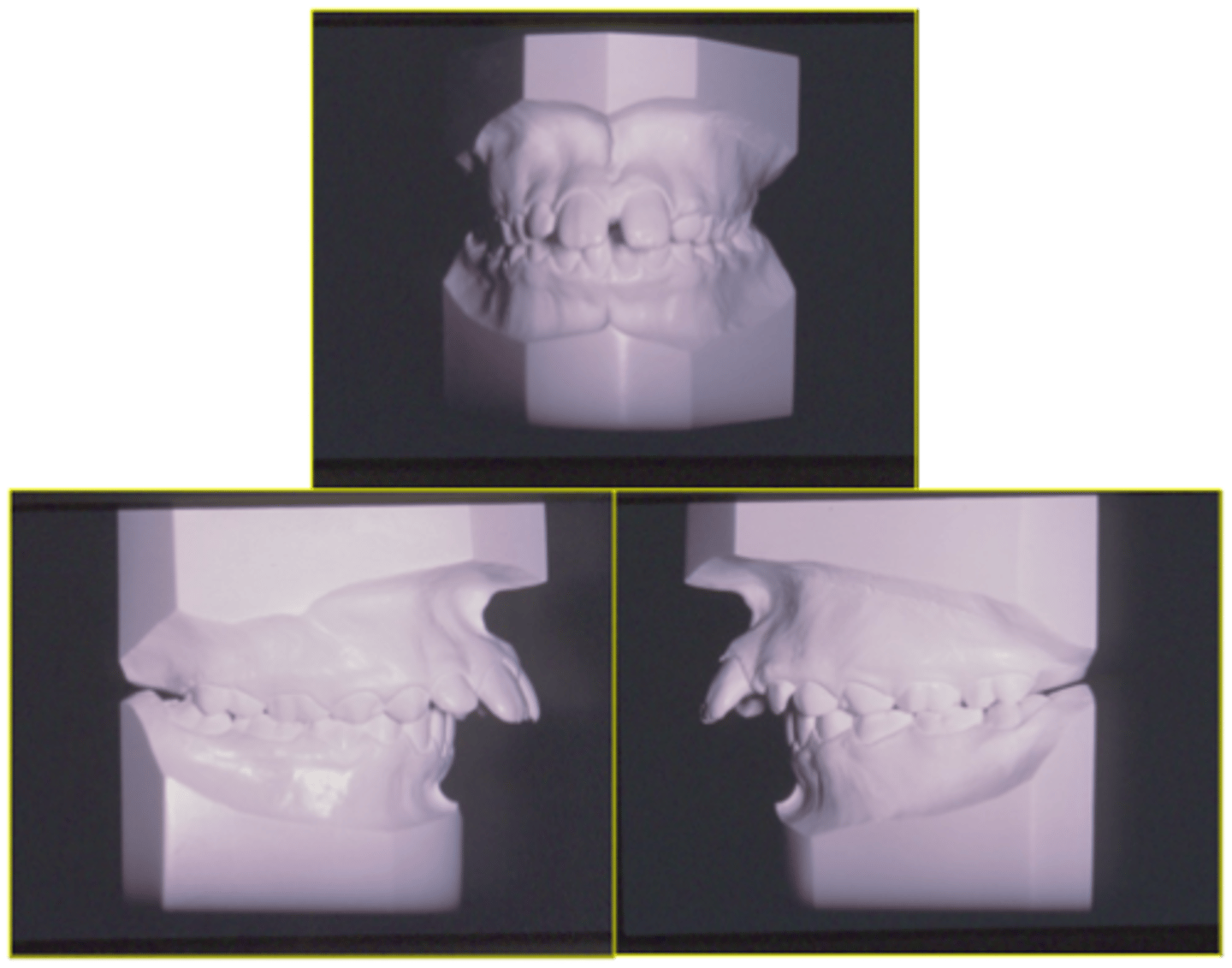
Class II, division 2
ID the class of occlusion:
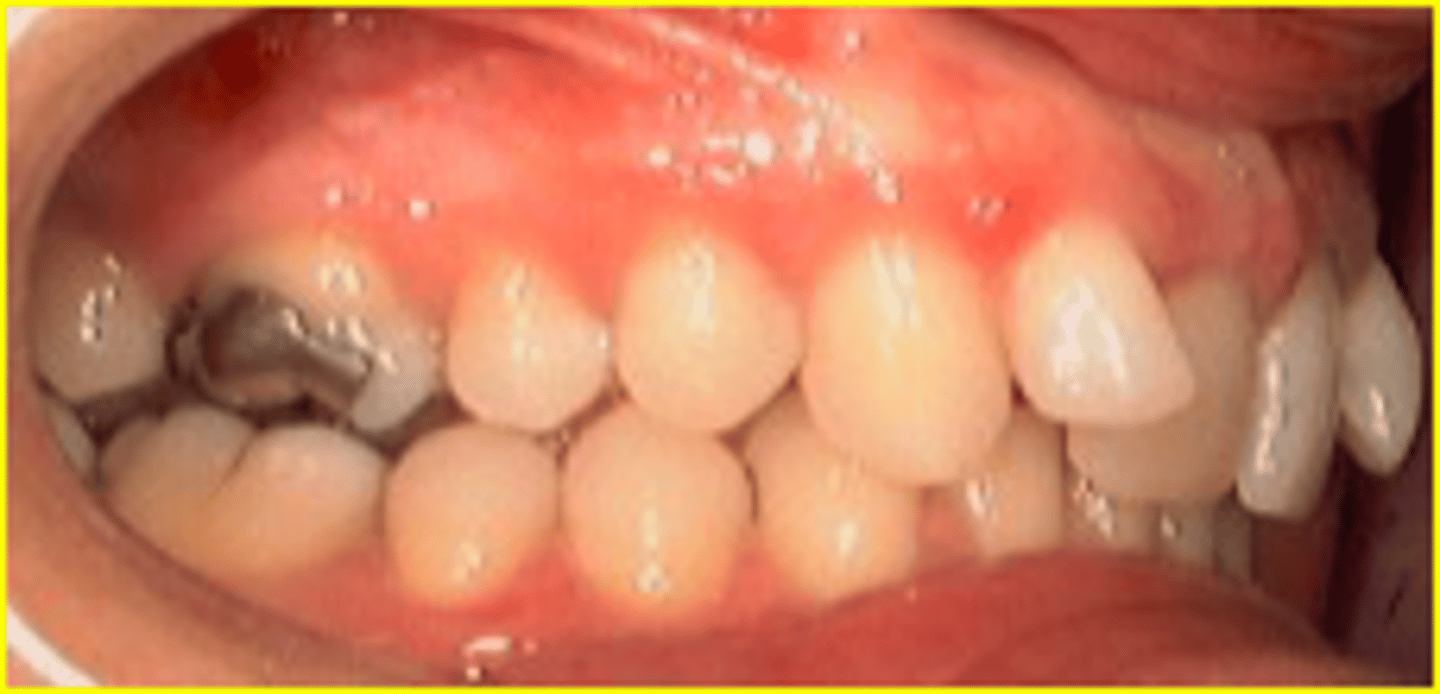
Class II, division 2
ID the class of occlusion:
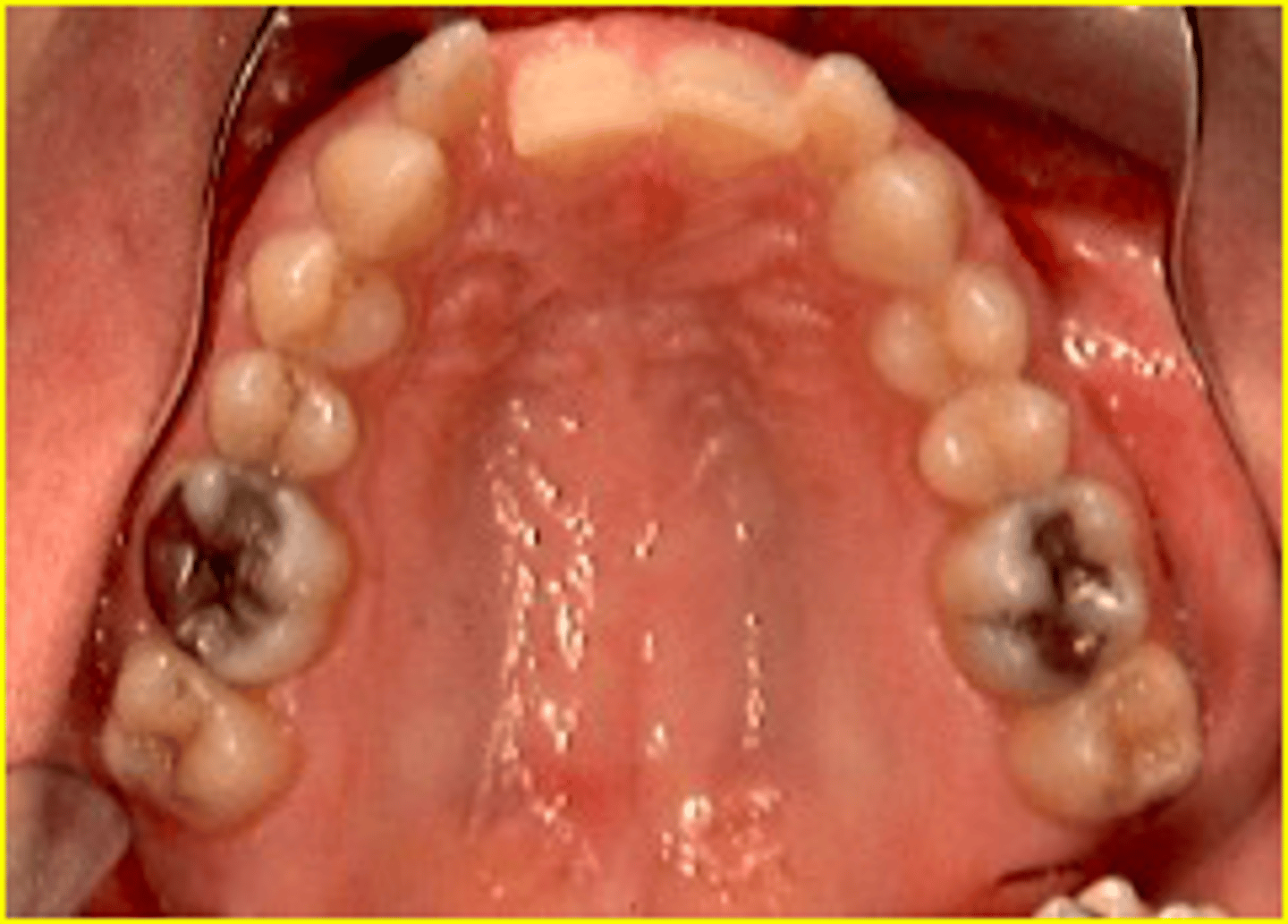
Class III
ID the class of occlusion:
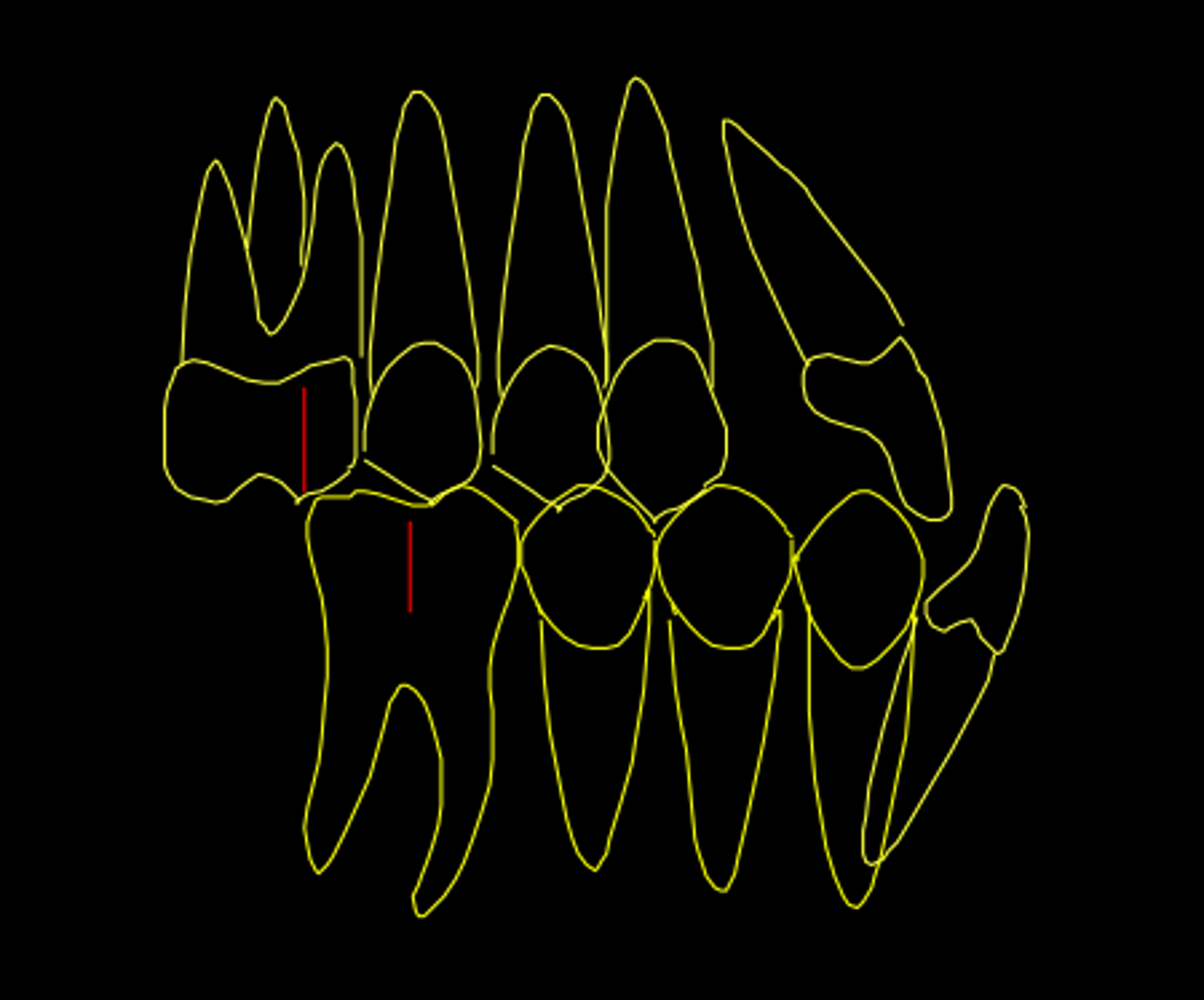
Class III
ID the class of occlusion:
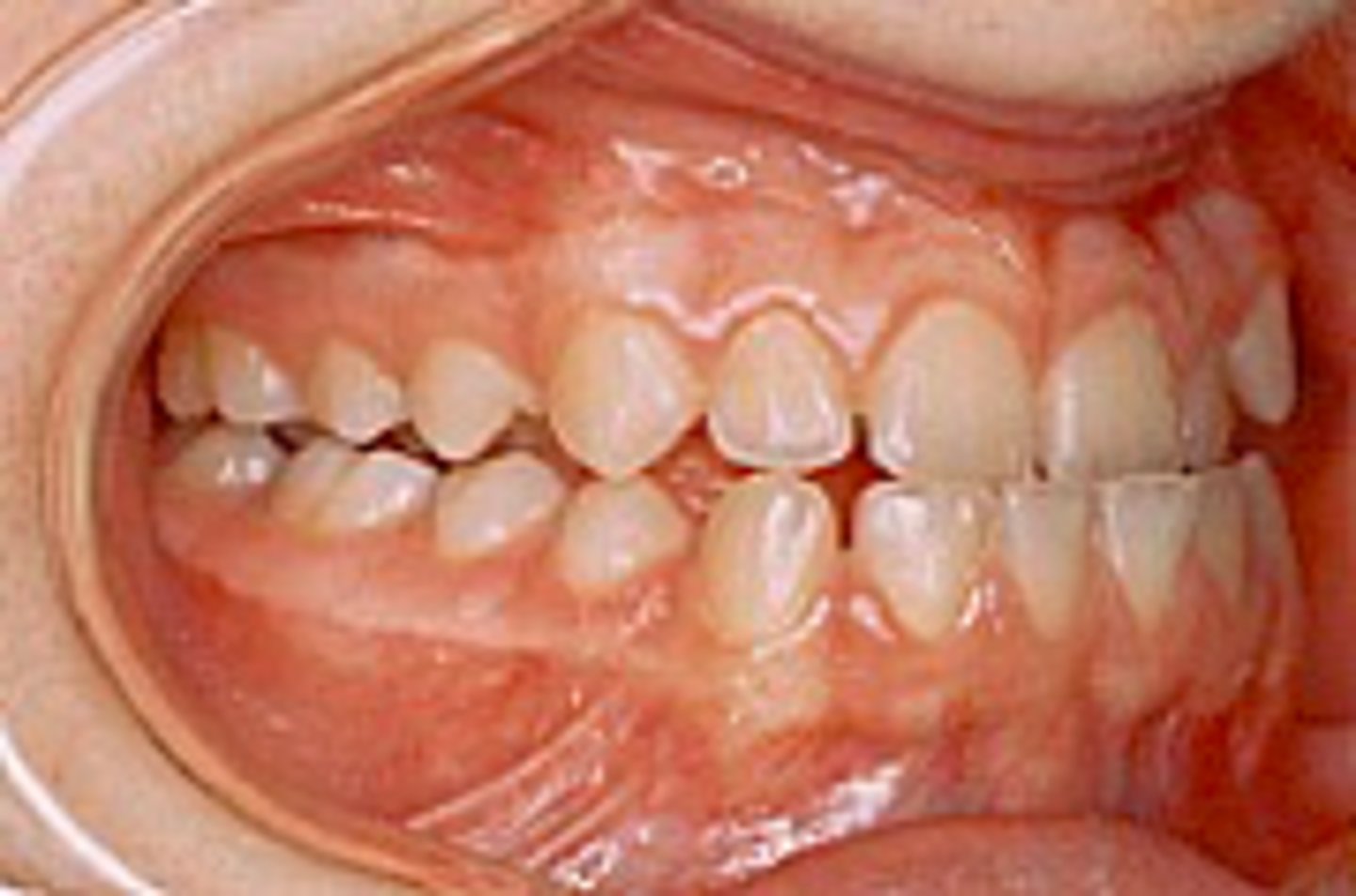
Sub-division
If a patient has a unilateral class I occlusion and a class II on the other side, what is that considered?
Pseudo class III
if a patient CAN occlude in class I occlusion, but because of either habit, incisor guidance or muscular pattern, the patient prefers a class III occlusion
Can do edge-to-edge
Can be guided into Class I
Does not have retroclined lower incisors
What are 3 clinical ways you can tell if a patient is a pseudo class III?
Normal relationship
M/D crown angulation
B/L crown inclination
No rotations
No spaces
Flat occlusal planes
What are Andrew's 6 keys to normal occlusion?
Molar interarch relationship
What relationship does this show?
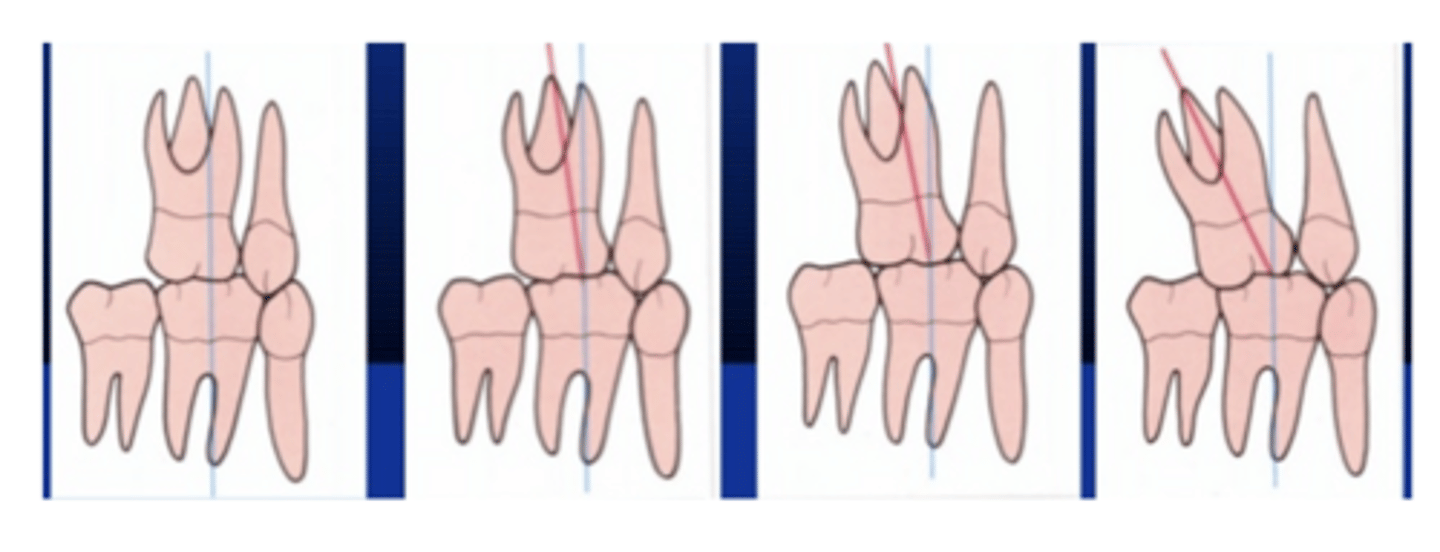
MB cusp of the max 1st molar fits in the buccal groove of the mandibular 1st molar
DB cusp articulates w/ distal cusp of lower molar
According to Andrew's 6 Keys to Normal Occlusion, describe the ideal molar relationship:
Mesiodistal Angulation of teeth - TIP
What does this show?
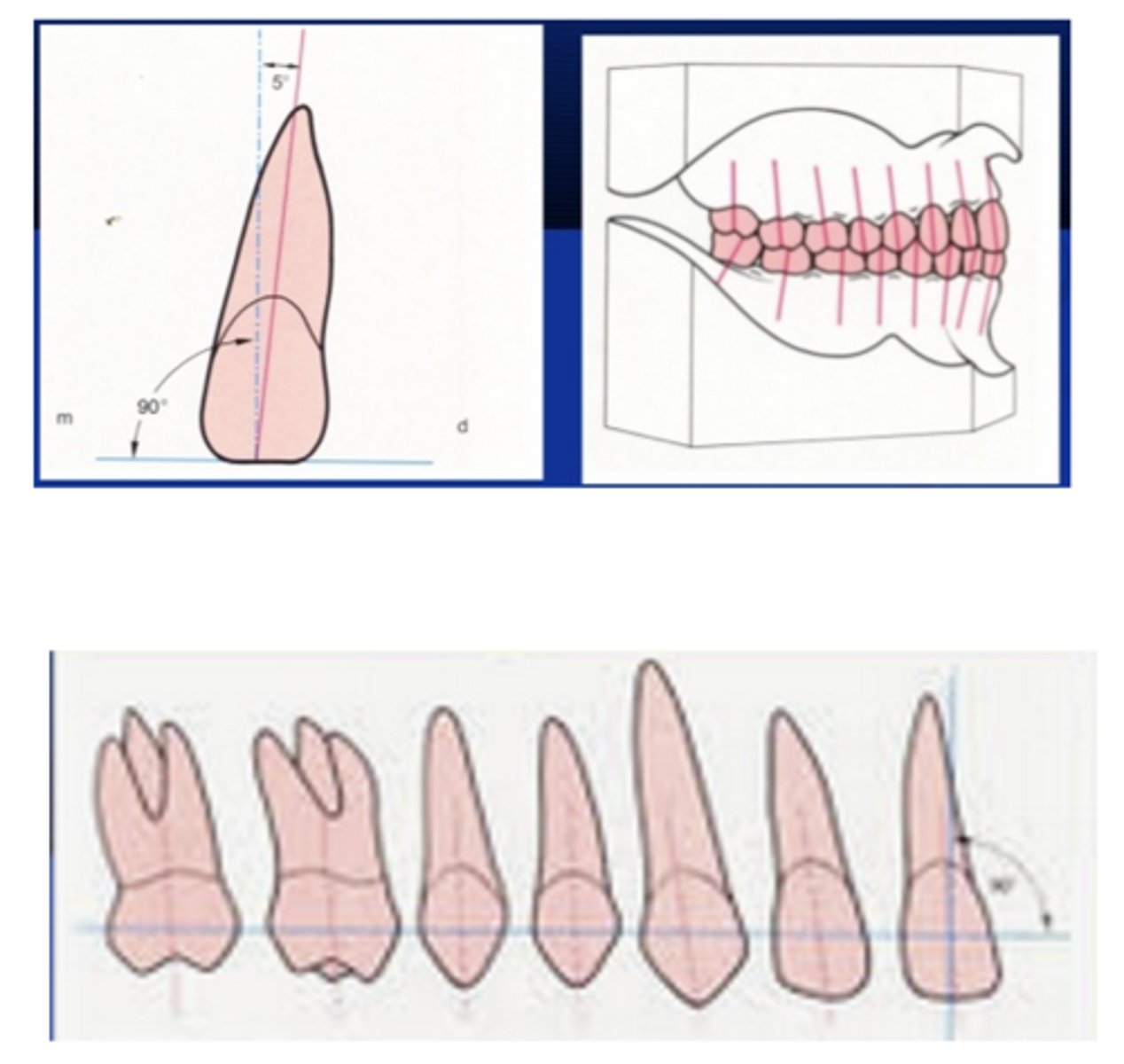
Distal
Andrew's 6 Keys to Normal Occlusion, the teeth should have a slight _____ tip
Buccolingual inclination of the teeth - Torque
What does this show?
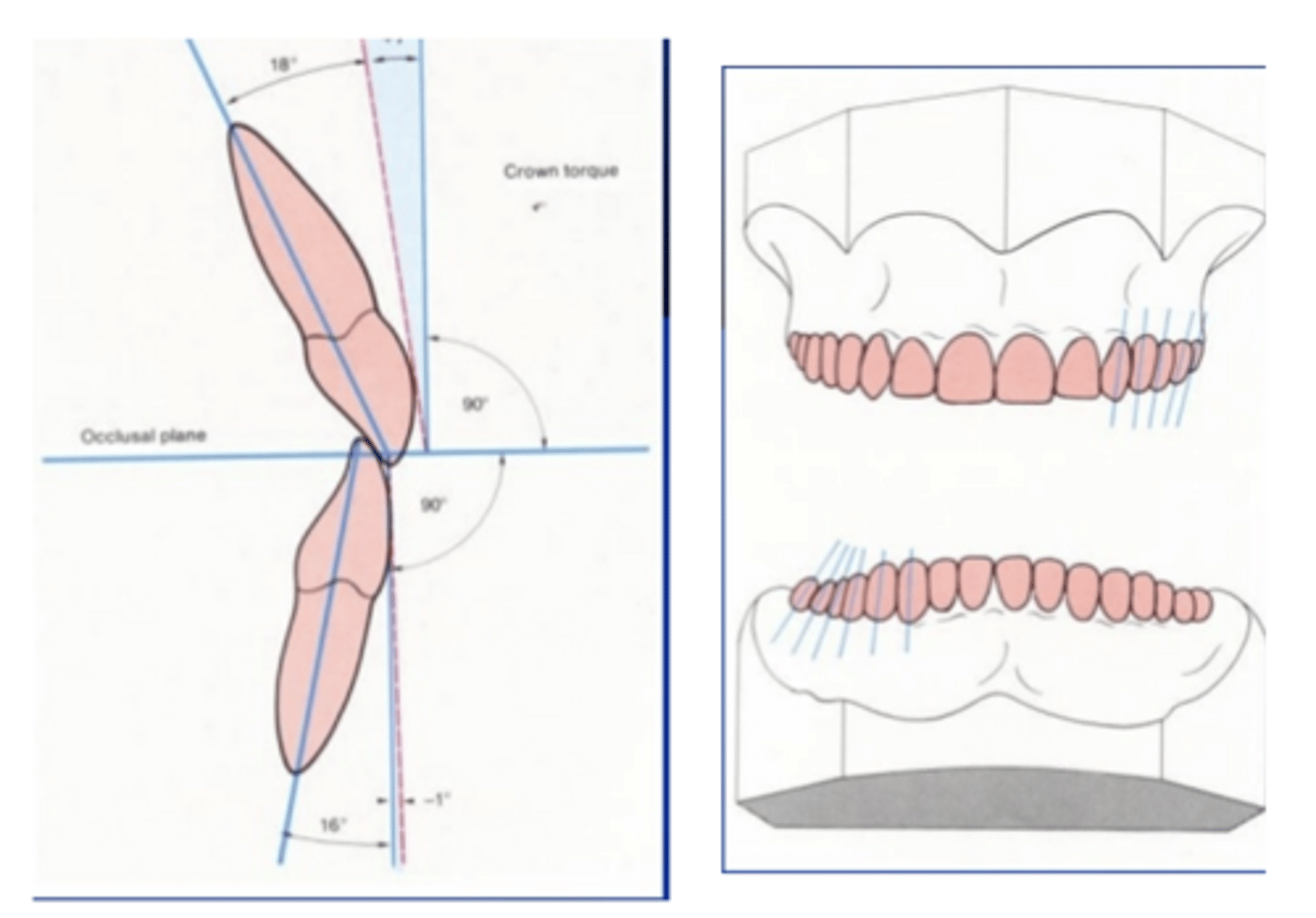
Curve of Spee: anteroposterior curve of teeth
Curve of Wilson: mediolateral curve of posterior teeth
What curves allow for flat curves in Andrew's 6 Keys to Normal Occlusion?
curve of monson
what do you get if you combine the curve of spee + wilson