Spinal Cord Lesion Localization Part 5
 View linked note
 Call Kai
 Learn
Learn Practice Test
 Spaced Repetition
 Match
Match Flashcards
 Knowt Play
1/17

Earn XP
Description and Tags
This set of vocabulary flashcards covers spinal cord lesion localization in canine and feline neurology, including standard anatomical divisions, specific syndromes like Schiff-Sherrington, and the differences between UMN and LMN clinical signs.
Name | Mastery | Learn | Test | Matching | Spaced | Call with Kai | Chat |
|---|
No analytics yet
Send a link to your students to track their progress
18 Terms
Spinal cord regions (Neurological grouping)
The spinal cord is separated into four distinct regions based on the neurologic signs resulting from lesions in those specific areas.
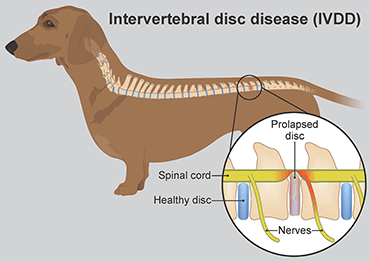
Intervertebral disc disease (IVDD)
A very common cause of spinal cord injury in dogs, particularly in predisposed breeds like the Dachshund.
Lumbosacral intumescence
Located at L4-S3, this region contains the cell bodies of spinal nerves for the pelvic limb and perineal region.
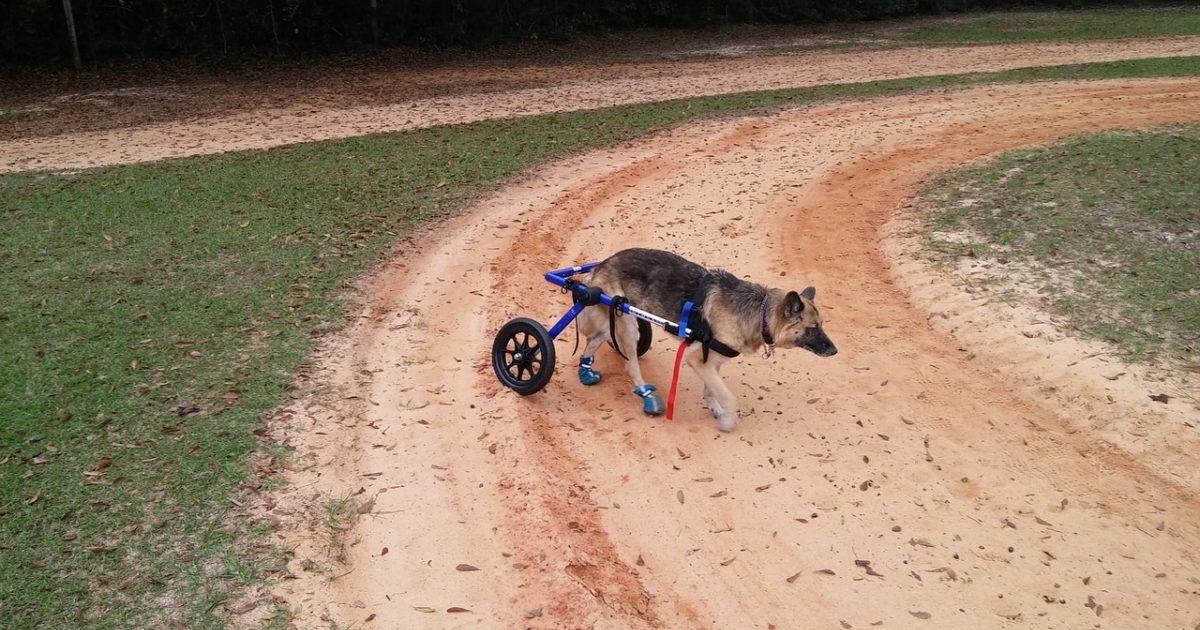
LMN deficits (Caudal to L4 lesion)
Lower Motor Neuron deficits seen in the pelvic limbs, featuring flaccid paresis or paralysis, while thoracic limbs remain normal.
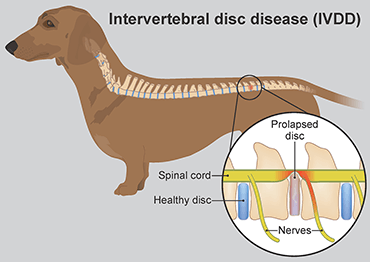
T3-L3
The most common location for intervertebral disc degeneration (IVDD), characterized by thoracic limbs being normal and pelvic limbs showing UMN deficits.
Cutaneous trunci cut-off
A diagnostic indicator where the reflex cut-off is typically 2 vertebral bodies caudal to the actual spinal lesion.
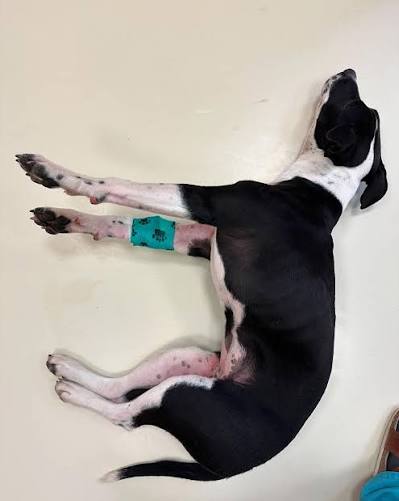
Schiff-Sherrington syndrome
A condition caused by an acute, severe transverse T3-L3 lesion (e.g., spinal fracture) resulting in pelvic limb flaccid paralysis and thoracic limb hyperextension.
Spinal shock
A state resulting from severe acute lesions involving flaccid paralysis that usually spontaneously resolves in 10−14 days; it is not a prognostic indicator but indicates lesion severity.
C6-T2 (cervical intumescence)
A site where incomplete lesions cause LMN deficits in thoracic limbs and UMN deficits in pelvic limbs.
Two-engine gait
A specific gait observed with C6-T2 lesions where the thoracic and pelvic limb movements are distinctly different.
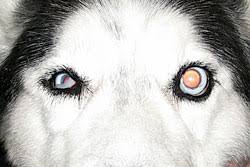
Horner syndrome
A clinical sign that may be present if a spinal cord lesion involves the T1-T3 segments.
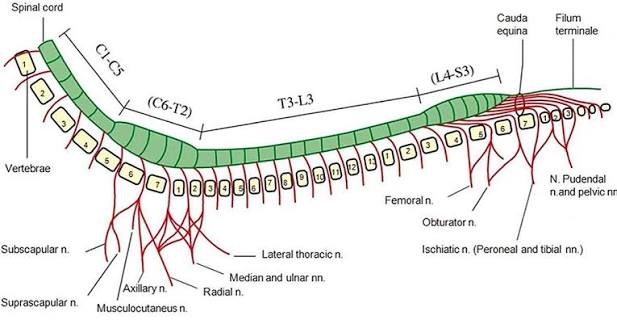
C1-C5 (cranial cervical lesion)
A localization where lesions cause UMN deficits to all limbs (tetraparesis/plegia), often with pelvic limb deficits being more severe.
UMN bladder
A condition resulting from lesions cranial to L4 where the bladder is distended and firm, urethral sphincter tone is increased, and expression is difficult.
LMN bladder
A condition resulting from lesions at the lumbosacral intumescence, LS plexus, or pelvic nerve where the bladder is distended and soft, sphincter tone is decreased, and expression is easy.
Descending inhibition
Motor control input that, when lost in a T3-L3 lesion, results in increased pelvic limb tone and reflexes.
Respiratory failure
The outcome of a complete spinal cord lesion at the C1-C5 or C6-T2 levels.
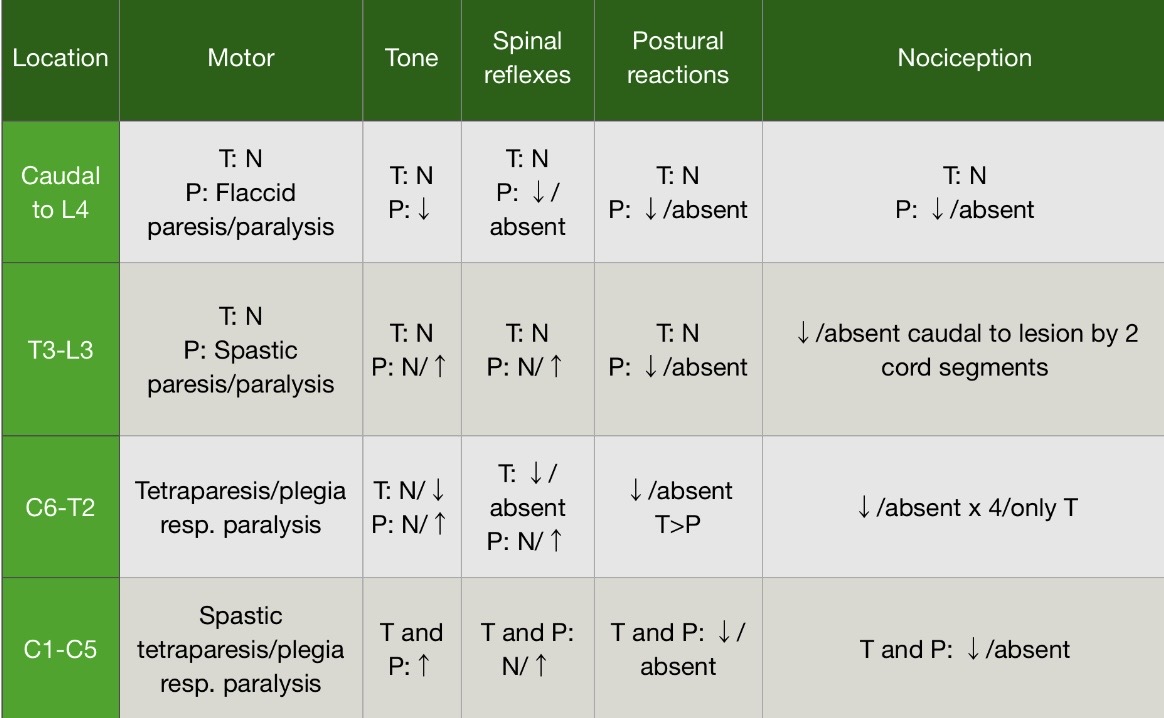
Localisation of Spinal Cord Lesions
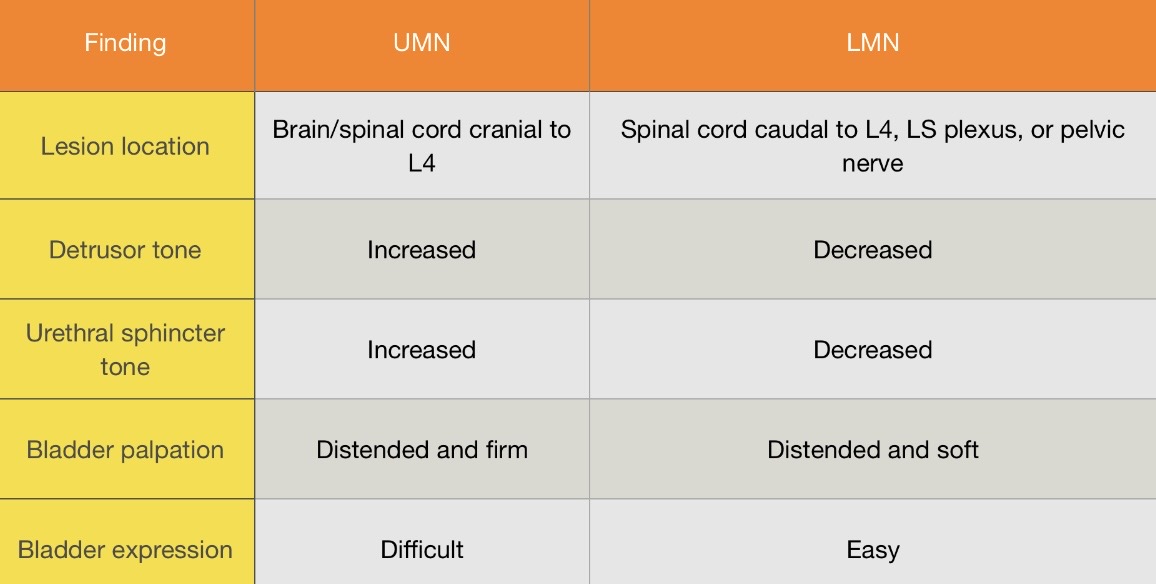
Bladder Function Based on Lesion Location