dysuria and common urinary tract disorders in family medicine
 Call Kai
 Learn
Learn Practice Test
 Spaced Repetition
 Match
Match Flashcards
 Knowt Play
1/58

There's no tags or description
Looks like no tags are added yet.
Name | Mastery | Learn | Test | Matching | Spaced | Call with Kai | Chat |
|---|
No analytics yet
Send a link to your students to track their progress
59 Terms
renin (RAAS), EPO (RBC production), vitamin D activation.
hormonal functions of the kidneys
Internal sphincter (smooth muscle, involuntary, sympathetic control).
External sphincter (skeletal muscle, voluntary control).
define the 2 sphincters of the urethra
cystitis, urethritis (bacterial, STI such as gonorrhea/chlamydia, viral HSV).
infectious causes of dysuria
interstitial cystitis, atrophic vaginitis.
inflammatory causes of dysuria
Stones.
Infection (cystitis, pyelonephritis).
Tumors (renal cell carcinoma, bladder cancer, prostate cancer).
Trauma.
Benign prostatic hyperplasia (BPH).
non-glomerular causes of hematuria
hypovolemia, hypotension, renal artery stenosis.
causes of pre-renal failure
Acute tubular necrosis (ischemia, nephrotoxins).
Glomerulonephritis.
Interstitial nephritis (drugs: NSAIDs, antibiotics).
causes of intrinsic renal failure
obstruction (stones, BPH, tumors).
causes of post-renal failure
diabetes, hypertension, chronic GN, polycystic kidney disease.
chronic causes of renal failure
Leukocyte esterase, nitrites
urine dipstick findings indicating infection
renal tubular disorders, hydration status.
urine dipstick findings with out of range pH and specific gravity indicate
dysmorphic: glomerular hematuria
uniform: non-glomerular hematuria
dysmorphic vs uniform RBCs in urine microscopy indicate
glomerulonephritis
RBC casts in urine indicate
pyelonephritis, interstitial nephritis.
WBC casts in urine indicate
acute tubular necrosis
granular/muddy casts in urine indiate
nonspecific finding or dehydration
hyaline casts in urine indcate
CT without contrast
gold standard imaging for stones
Evaluate masses, hematuria, staging of urologic cancers, trauma.
CT with contrast is indicated in evaluation for these urological conditions
Renal artery stenosis, vascular injury.
CT angio is indicated in evaluation of these urological conditions
Hydronephrosis → obstruction.
Cysts vs solid renal masses.
Renal size/echogenicity → chronic kidney disease.
Bladder volume, post-void residual.
what can you determine with a renal ultrasound?
May detect radiopaque stones (calcium oxalate, struvite).
Cannot detect uric acid or cystine stones.
Sometimes used in follow-up of known stones
limited uses of abdominal XR KUB
voiding cytsourethrography
Fluoroscopic study with contrast instilled into bladder, images taken during voiding.
Suspected vesicoureteral reflux (esp. pediatrics with recurrent UTIs).
Urethral obstruction, posterior urethral valves, bladder outlet obstruction.
indications for VCUG
UA with microscopy
first line work up for most urological complaints
cystitis
Ascending bacterial infection (most commonly E. coli) from urethra → bladder mucosa inflammation.
Bacterial adherence (fimbriae) + immune response → mucosal edema, pain, urgency, frequency.
describe the pathophys of cystitis
Dysuria, frequency, suprapubic pain, hematuria.
primary symptoms of cystitis
interstitial cystitis/bladder pain syndrome
Chronic, non-infectious bladder wall inflammation
-Defective glycosaminoglycan layer → ↑ bladder permeability.
-Mast cell activation → histamine release → pain, urgency.
-Neurogenic inflammation, hypersensitivity of bladder nerves.
pathophys theories of interstitial cystitis
interstitial cystitis
Chronic pelvic/bladder pain, worse with filling, relieved by voiding. Negative cultures.
pain worse with filling, relieved by voiding
very specific finding of interstitial cystitis
STIs: Chlamydia trachomatis, Neisseria gonorrhoeae; HSV, Mycoplasma
most common agents of urethritis
urethritis
symptoms: Dysuria, urethral discharge, sterile pyuria on UA (esp. chlamydia).
pyelonephritis
symptoms: Fever, flank pain, CVA tenderness, dysuria, WBC casts in UA.
Urethral syndrome
irritative urinary symptoms without proven infection
-Hormonal changes (atrophic urethritis in post-menopause).
-Pelvic floor dysfunction.
-Urethral hypersensitivity / local irritation (chemicals, trauma).
pathophys theories of urethral syndrome (non-infectious dysuria)
urethral syndrome
Dysuria, frequency, urgency, but negative cultures.
Low urine volume, dehydration.
Hypercalciuria, hyperoxaluria, hyperuricosuria, hypocitraturia.
Infection (struvite stones with urease-producing bacteria).
pathophys mechanisms of nephrolithiasis
Hypercalciuria, hyperoxaluria, hyperuricosuria, hypocitraturia.
different electroyte imbalances contributing to nephrolithiasis
hunner lesions
Ulcerations found in interstitial cystitis patients on cytoscopy
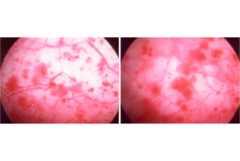
urethritis
dysuria + urethral discharge OR positive NAAT for STI pathogen.
nitrofurantoin (5 days), TMP-SMX (3 days), fosfomycin (single dose).
empiric antibiotics indicated for uncomplicated cystitis
Phenazopyridine
drug of choice for short-term dysuria relief in cystitis

bladder training, diet changes (avoid caffeine, acidic foods).
non-pharm treatment of interstitial cystitis
amitriptyline, pentosan polysulfate, antihistamines.
medication treatment for interstitial cystitis
lidocaine, heparin instillation.
intravesical treatment of interstitial cystitis
Gonorrhea: ceftriaxone IM + doxycycline (7 days) for chlamydia coverage.
Chlamydia: doxycycline (7 days) or azithromycin single dose.
HSV: acyclovir, valacyclovir.
Treat partners, abstain until completion
treatment of STI related urethritis
fluoroquinolone (cipro, levo) if local resistance
outpatient treatment of pyelonephritis
IV ceftriaxone, fluoroquinolone, or aminoglycoside.
inpatient treatment of pyelonephritis
Address irritants, pelvic floor PT.
Vaginal estrogen (post-menopausal women).
Sometimes low-dose antibiotics if chronic, but often supportive.
management of urethral syndrome
Stones
management of kidney stones depending on size
tamsulosin (alpha blocker)
pharm therapy that may aid in kidney stone passsage
stress, poor sleep
Socio-economic factors that can worsen interstitial cystitis symptoms
T10-L2
sympathetic innervation of kidneys/ureters
sympathetics T11-L2, parasympathetics S2-S4.
sympathetics and parasympathetics of the bladder
1" superior, lateral to umbilicus.
chapman point of kidney
periumbilical
chapman point of bladder
pubic ramus
chapman point of urethra
T12-L2 for kidney, L2 transverse process for bladder.
posterior chapman point for kidney and bladder