Vertebral Column bone joints and movements quiz
 Call Kai
 Learn
Learn Practice Test
 Spaced Repetition
 Match
Match Flashcards
 Knowt Play
1/30

There's no tags or description
Looks like no tags are added yet.
Name | Mastery | Learn | Test | Matching | Spaced | Call with Kai | Chat |
|---|
No analytics yet
Send a link to your students to track their progress
31 Terms
The general structures and functions of the vertebral column
Structures include vertebrae, intervertebral discs, and ligaments.
Functions include support/framework, movements, and protections.

Typical features of the vertebrae
Body
Neural arch:
Lamina (2)
pedicle (2)
Transverse process (2)
Spinous process (1)
Inferior articulating process (2), facet (1)
superior articulating process (2), facet (1)
vertebral foramen (1)
Other features:
intervertebral foramen
vertebral canal
Intervertebral discs

What makes up the cervical vertebrae?
7 vertebrae: C1-C7
C1 and C2 include the atlas and axis and they are unique.
C3-C7 are similar
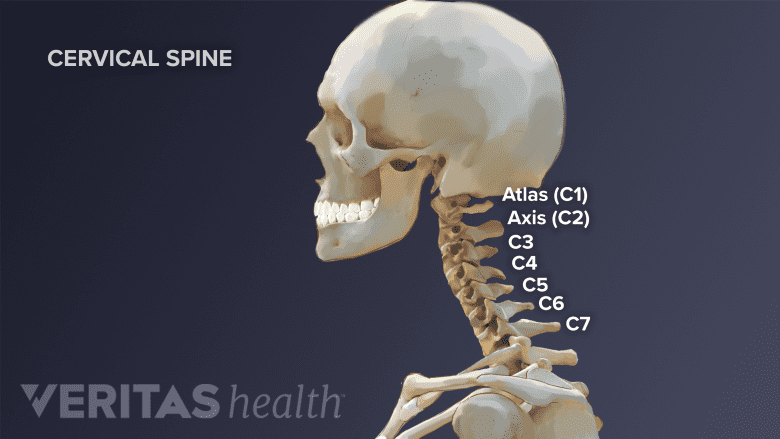
All about the cervical vertebrae
The body is small
Large vertebral foramen
It contains transverse foramen; however it is small or absent in C7
Articulating process are in superior and inferior and are parallel.
Large range of motion occurs in all planes of motion and movement.
Each part of the vertebrae
Spinous process is short and bifurcated (C2-C5)
C6-C7 is a longer spinous process
C7 is the longest and has a vertebral prominence
All about the C1, what is it also called?
It is also called the Atlas
It has no body
no spinous process
and no vertebral disc with C2
All about C2, what is it also called?
It is also called the Axis
A superior projection on the axis is called Dens/odontoid process
It has an axis of rotation such as head rotation.
The different types of cervical movements
Flexion
Extension
Lateral flexion
Rotation

What is involved with thoracic vertebrae? Where is it located?
It includes 12 bones, T1-T12
Posterior part of the thoracic cage, it articulates with the ribs.
The different parts of the thoracic vertebrae
The body includes:
1) demi-facets: head of ribs articulate with two vertebral bodies.
2) It has a whole facet with T10-T12.
3) Costovertebral joint.
The transverse process
1) is long and strong and is angled: posterolateral.
2) it has Facets: tubercle of ribs, T1-T11, and contains costotransverse joint.

On a Thoracic Vertebrae what is included in the articulating processes?
Articulating processes include
1) superior facets=posterior
2) Inferior Facets: Anterior
Allows for rotations

What do the thoracic vertebrae contain and look like?
The thoracic vertebrae contains
1) spinous process that is long
2) it is angled: posterior-inferiorly
The tip extends to the vertebral body below.

The different types of thoracic movements
Rotation.
Right to left rotation would be moving your right side of your trunk towards your left side.
How many bones are in the lumbar vertebrae? What are its characteristics?
5 bones, L1-L5
It is larger and heavier.

What is contained in the lumbar vertebrae? What does it’s body look like and what are the different parts?
1) body is bigger and wider
2) it has no demi-facets because there are no ribs in this region.
3) Transverse process is long and slender and located lateral.
4) There is no facet on the tip because there are no ribs in this region.

All about the lumbar vertebrae’s articulating process, movements, and spinous process.
The articulating process has
1) Superior facets: posteromedial
2) Inferior facets: Anterolateral
Movements
1) fexion and extension
2) lateral flexion
Spinous process
1) posterior
2) thick and broad

What are the different parts of the lumbar movements
Flexion
Extension
and lateral flexion

All about the sacrum and coccyx
1) base
2) ala
3) promontory
4) superior articular process (2)
5) Facet (2)
6) median sacral crest (posterior)
7) Anterior sacral foramen (8)
8) posterior sacral foramen (8)
9) sacral canal
10) auricular surface (articulates with ilium)
11) sacral hiatus

what are the parts of the sacrum?
Sacrum: 5 sacral vertebrae fused
Sacroiliac joint: with pelvic girdle
Median sacral crest: fused spinous processes
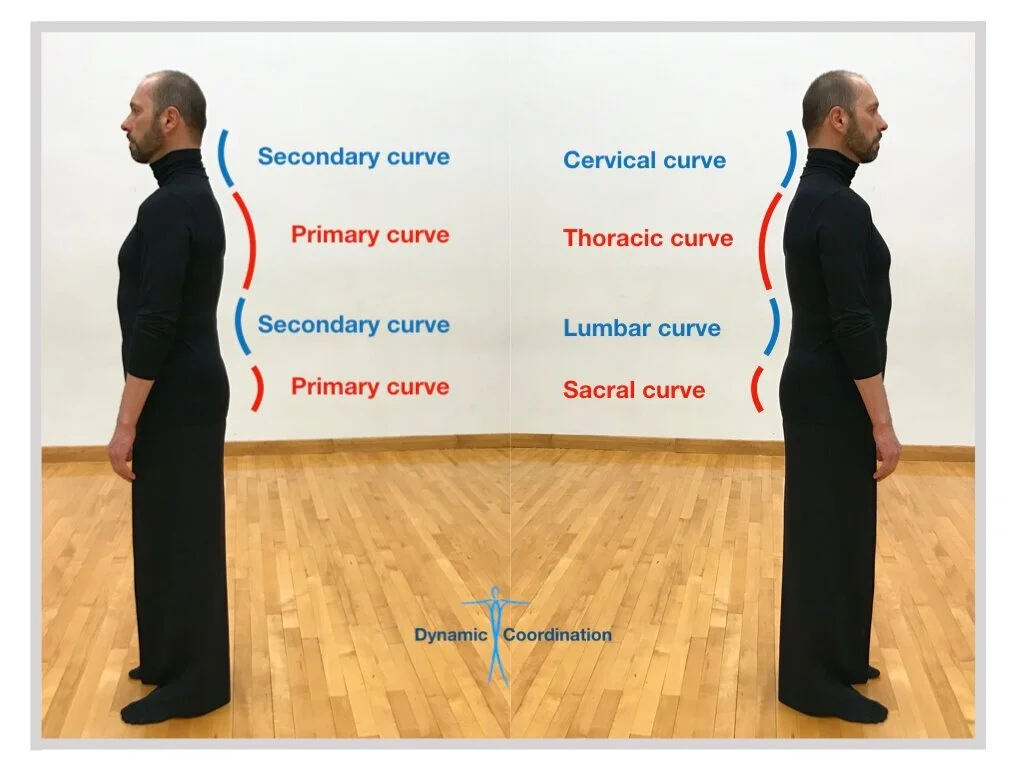
What are the different types of curvatures?
Primary
1) Concave
2) Thoracic and Pelvic
3) formation
Secondary
1) Convex
2) Cervical and Lumbar
3) Formation
What are the pathologies with abnormal curvatures?
Abnormal curvatures occur in both frontal and sagittal plane.
Example of Frontal plane: Scoliosis
Sagittal plane abnormalities: Kyphosis and Lordosis
Lordosis: Excessive Anterior forward curvature of the cervical or lumbar spine.
Kyphosis: Excessive posterior Backward curvature of the thoracic spine

What are the different parts of the craniovertebral joints?
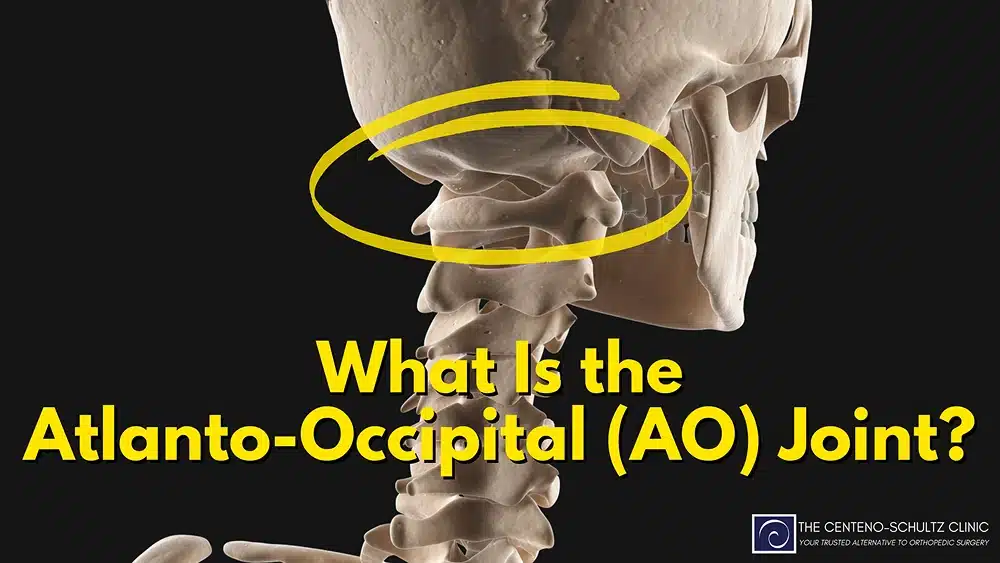
1) Atlantooccipital Joint
2) Atlantoaxial Joint

What is a part of the atlantooccipital joint?
-Occipital condyle and superior articular surface
-Synovial joint has no intervertebral disc.
-Condyloid creates flexion/extension and lateral flexion.
All about the Atlantoaxial joint?
-Dens and fovea dentis
-The synovial joint has a pivot joint and has no intervertebral disc
-helps with the rotation of the head
What are the joints of the vertebral body?
1) cartilaginous joint (symphyses) which has fibro-carilaginous disc
2) weight bearing
3) stability
4) connected by fibro-cartilaginous disc and ligaments.
Joints of vertebral arches (c2-s1)
1) Zygapophyseal joint contains a facet joint.
2) Synovial joint: has a plane joint that has superior/inferior facets, and sliding/gliding motion.
3) the orientation of facets limit types of motion.
what are the two types of ligaments?
Anterior longitudinal ligament: runs along the anterior vertebral bodies; restricts extension.
Posterior longitudinal ligament: runs along the posterior vertebral bodies; restricts flexion.

what are the different types of ligaments.
Supraspinous ligament: runs along spinous process tips; general stabilizer.
Interspinous ligament: between spinous processes; general stabilizer.
Ligamentum flavum: elastic, yellowish ligament between laminae; general stabilizer.
None of these restrict a specific motion — they provide overall spinal stability.
What are the different types of movements?
Movements include: flexion/extension, left/right rotation, left/right lateral flexion/bending.
Compression on intervertebral disc and small amount of movement in each joint.
Sliding of facets.
The regions and the different movements associated with them?
Cervical region: greatest range of motion (ROM), all planes and all directions.
Thoracic region: least range of motion, mostly rotational movements, inspiration and expiration, very little flexion/extension.
Lumbar region: middle in terms of range of motion, flexion/extension and lateral flexions.
Limiting factors of range of motion
1) Thickness and elasticity of intervertebral discs
2) the orientation of the facets
3) resistance from the back muscles and ligaments
4) capsule of facet joints