D3.3 Homeostasis
 Call Kai
 Learn
Learn Practice Test
 Spaced Repetition
 Match
Match Flashcards
 Knowt Play
1/35

There's no tags or description
Looks like no tags are added yet.
Name | Mastery | Learn | Test | Matching | Spaced | Call with Kai | Chat |
|---|
No analytics yet
Send a link to your students to track their progress
36 Terms
mammals excrete ___ waste in the form of ___ + ___ = ___
mammals excrete nitrogenous waste in the form of urea + water = urine
why is osmoregulation needed in the body? what is it performed by?
because the body is constantly gaining and losing water through ingestion, sweat, urination, egestion, reabsorption, etc.
it needs to be regulated in the body so the standard level in maintained
is performed by the kidney
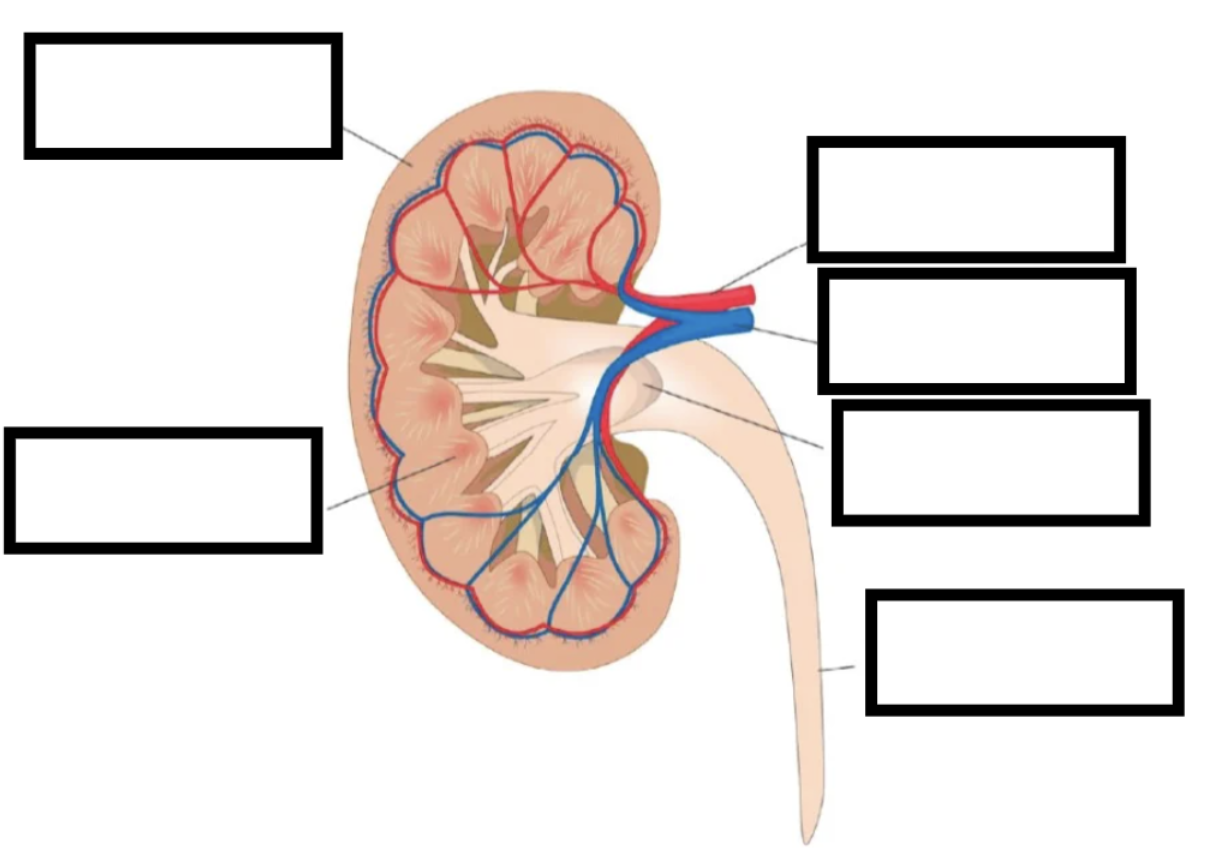
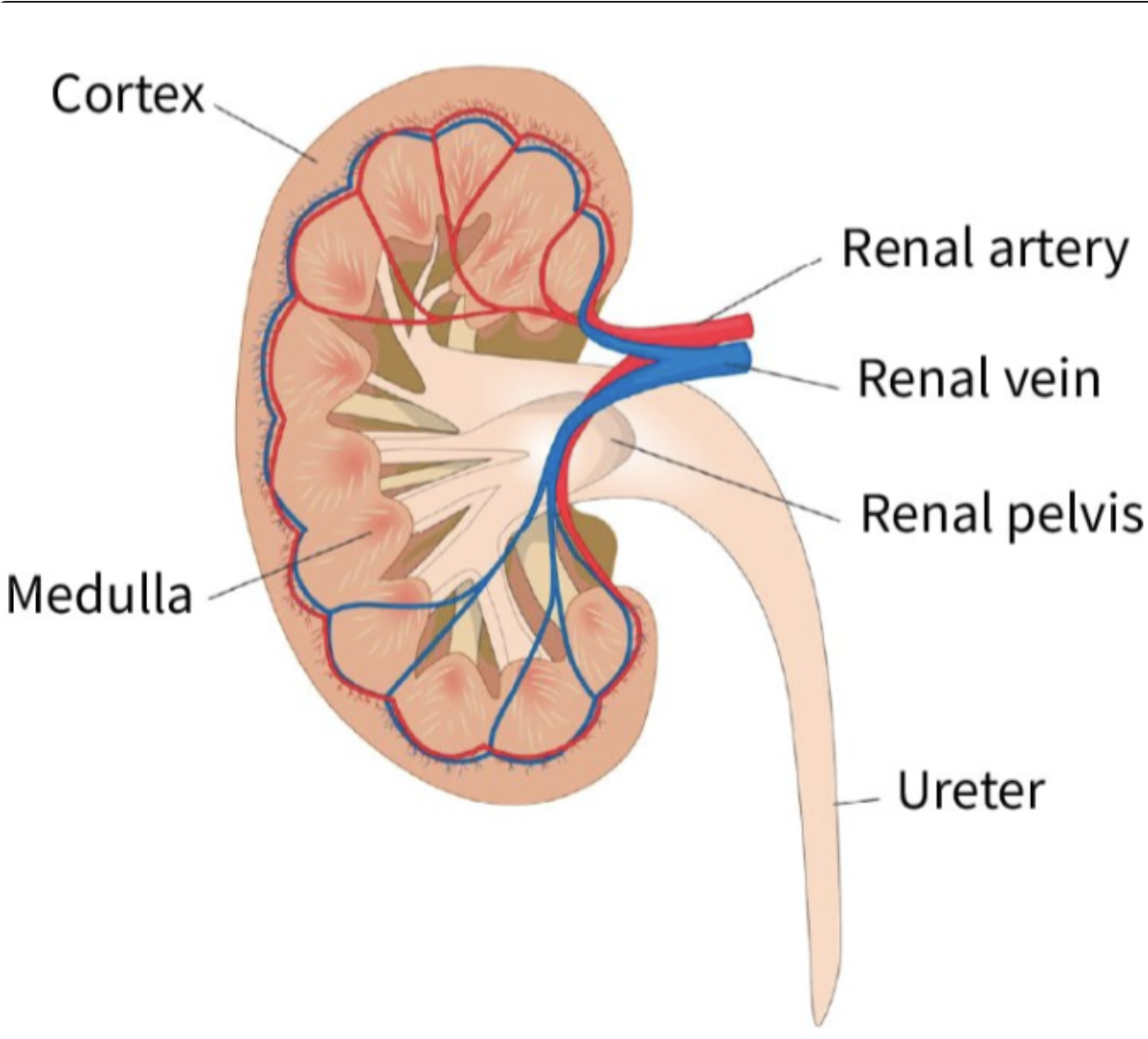
in the kidney, urine exits the ___ ___ via the ___ towards the ___
finish the diagram’s boxes
in the kidney, urine exits the renal pelvis via the ureter towards the bladder
what are the 3 functions that nephrons performs? how many nephrons makes the kidney?
filtration - removal of metabolic waste from blood via ultrafilteration in the glomerulus
excretion - removal of waste
osmoregulation - regulate osmotic concentration in the loop of henle and collecting duct
kidney is composed of approx. 1 million nephrons
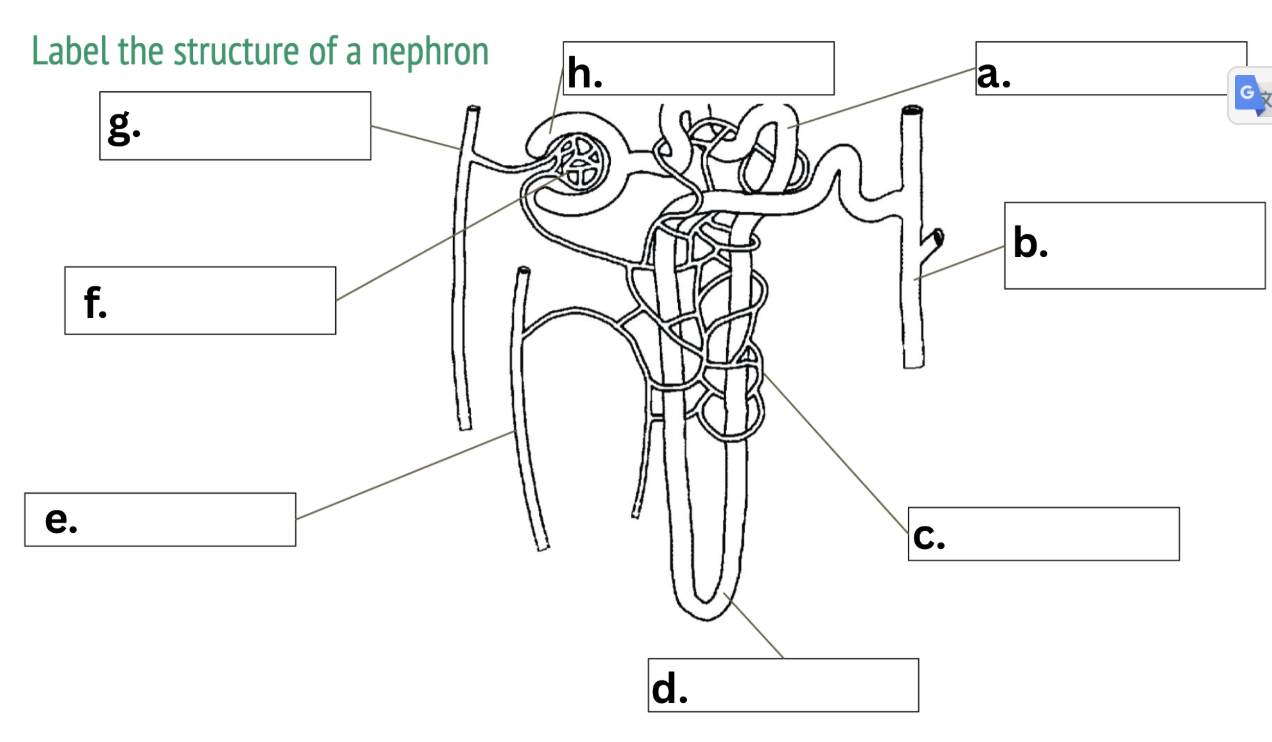
finish the diagram
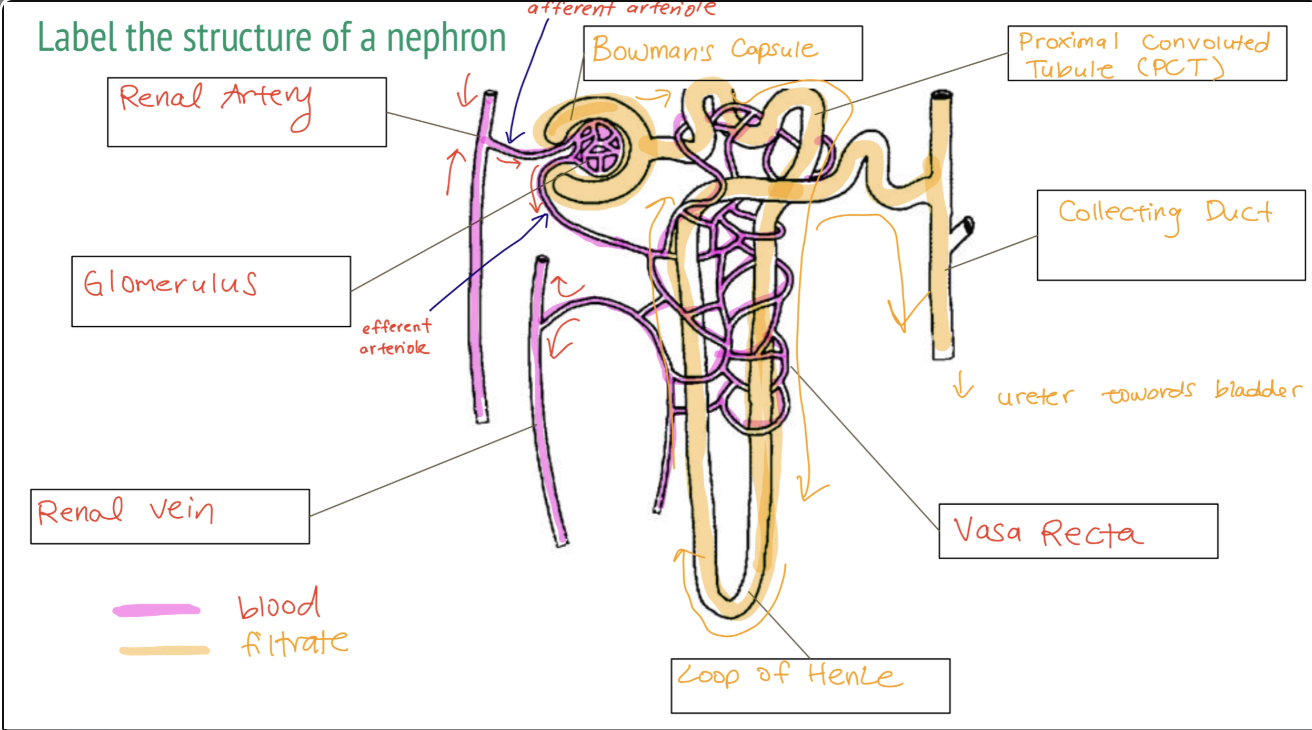
outline where and under what conditons ultrafiltraton is taken place.
filration of blood under high hydrostatic pressure in the glomerulus
blood enter via afferent arteiolres (short, wide —> low resistance)
blood exits via efferent arterioles (narrow —> high resistance)
difference in arteriole diameter creates high perssure within the glomerulus in order to filter as much blood as possible, so solute particles can move
extensive capilarry bed of hte glomerulus —> inc SA —> more opportuntiies for filtration
Explain the 3 structural adaptations of the glomerulues for the purpose of ultrafiltration?
fenestrated capillaries: fenestratio slits in the wall (endothelium) allows blood plasma to pass through
basement memrane: a layer of glycoproteis that allows only small solutes and water to permeate and form the filtrate in bowman’s capsule (size selective)
podocytes: cells that surround/ wrap around capillaries to form filtration slits. provide structural support to avoid bursting of the capaillary under high pressure
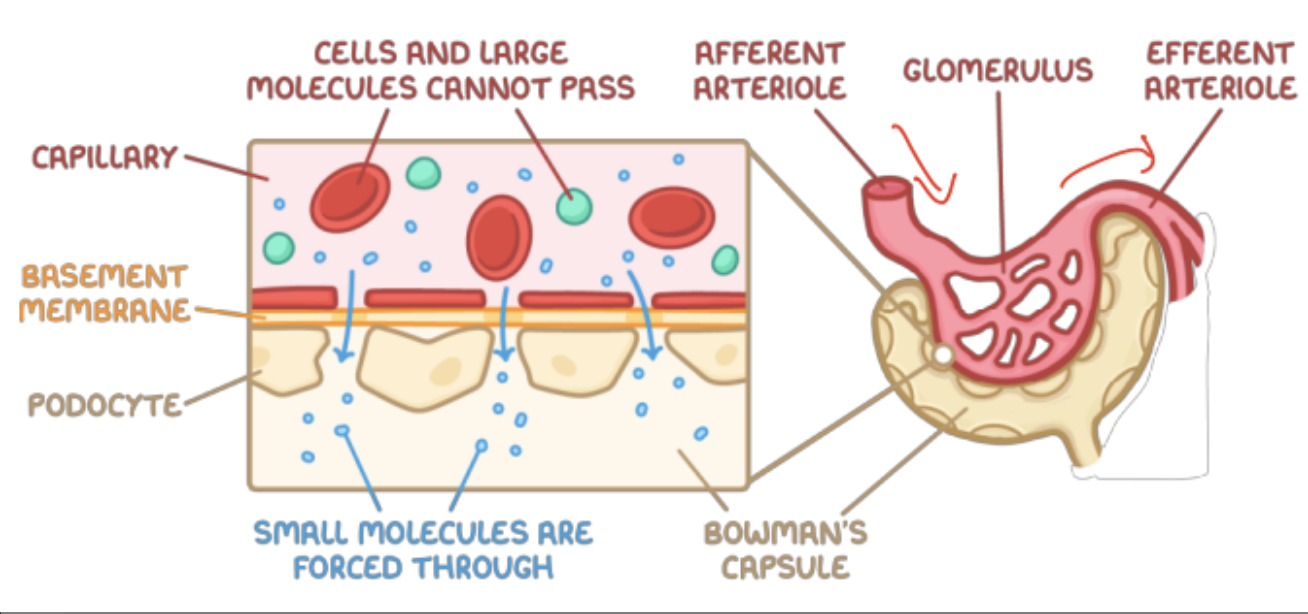
List what remains and what leaves the blood in ultrafiltration
remains (too big)
RBC
WBC
platelets
large proteins
leaves (small) and forms filtrate in bowman’s capsule
urea
glucose
AA
ions (Na+, Cl-)
water
water-soluble vitamins
toxins
medicines
label and annotate the proces of ultrafiltration and its associated structures.
Describe selective reabsorption
filtrate still contains useufl substances such as water , glucose, AA, ions
needs to be reabsorbed into the bloodsream
process occurs in the proximal convoluted tubule (PCT)
urea, waste, toxins remain in the filtrate, and will exit as urine
4 adaptations of the PCT to capillary diffusion in selective reabsroption
cells of PCT contain many mitochondria to power active transport of Na+/K+ pump
microvilli on the cell lining to maximise diffusion surface area for reabsorption. to have more membrane proteins for transport
PCT wall is only one cell thick to reduce diffusion distance form filtrate blood
PCT cells are connected by tight junctions to prevent leakage of layer materials (e.g. urea)
Draw a diagram to show selective reabsorption
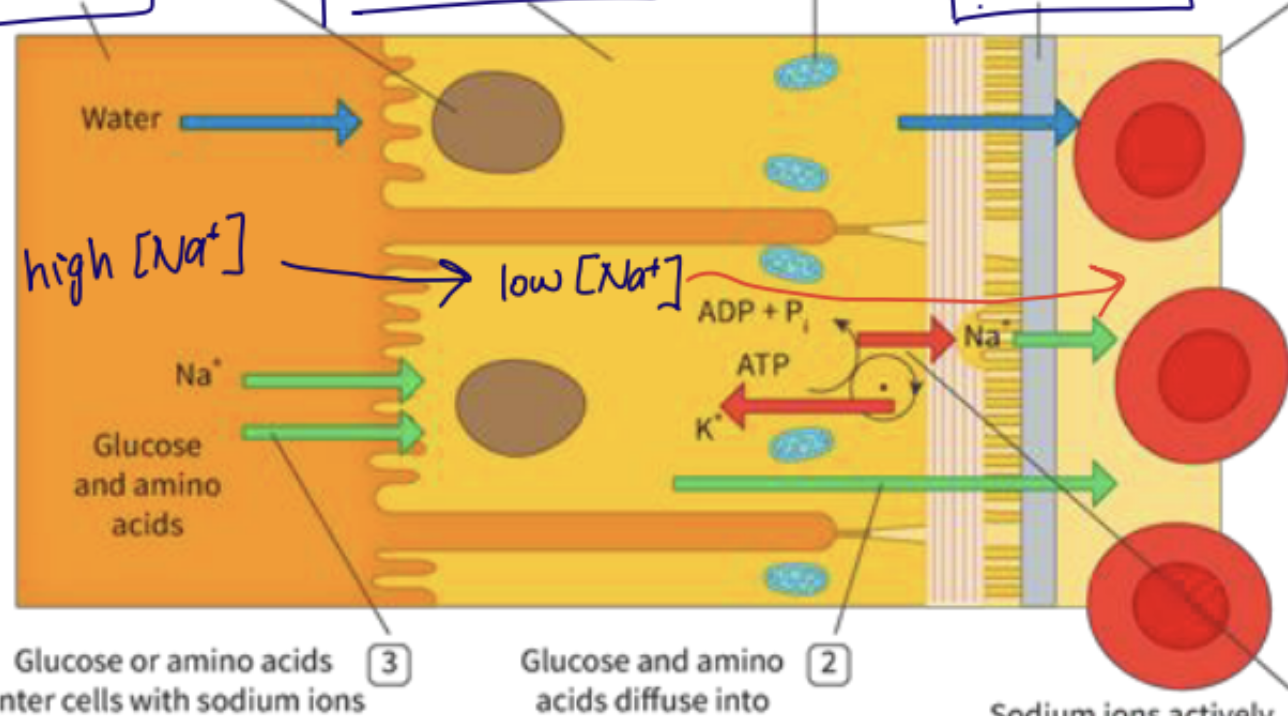
Explain the process of selective reabsorption at the PCT
Na+ diffuse passively form PCT lumen into PCT cell via indirect active tranpsort of cotransporters. This transports glucose and AA at the same direction
them, Na+ diffuse actively from PCT cell into blood via Na+K+ pumps.This maintains low conc of Na+ in PCT cell. ATP produced from the mitochondira in the PCt cells is used for active transport
glucose and AA passively diffuses from PCT cell into blood
water moves passively via osmosis, following the same direction of ions
Explain the process of osmoregualtion at the kidney.
filtrate from PCt goes down the Loop of henle through the descending limb, then back up the ascending limb
in the ascending limb
acive transport of Na+ out of the filtrate in the asecendng limb, into medulla fluid region
creates a hypertonic (High solute conc) medula and hypotonic (lower solute conc) ascending limb
filtrate travels to the collecting duct for reabsorption of water
water exits filtrate via osmosis by aquaporins
from collecting duct (low solute conc) to medulla (high solute conc)
cocn maintained by ascending limb, so that osmosis is possible
water in the medulla is reabsorbed by capilarries
concentrated filtrate (urine) collects in renal pelvis —> down ureter —> bladder —> exit
How is osmoregulation regulated by the endocrine system? outline the negative feedback loop?
osmoreceptors in the hypothalamus detect blood solute conc levels
hypothalamus regulates secretion of antidiuretic hormone ADH from the pituitary gland
high blood solute conc (dehydration) —> concentrated urine (dark)
inc secretion of ADH
inc water absorption in the collecting duct
low blood solute conc (quenched) —> diluted urine (light)
dec secretion of ADH
dec water absorption int he collecting duct
explain the mechanism of ADH
high blood solute conc —> inc ADH
inc aquaporins —> inc reabsorption
vesicles containing aquaporins fuse into collecting duct cell membrane
inc osmosis rate
low blood solute conc —> dec ADH
dec aquaporins —> dec reabsorption
collecting duct cell membrane containing aquaporins removed from cell membranes into intracellular vesicles within the cells
define homeostasis
regulation of a constant internal env desptite change in the external env
allows fluctuations within set acceptable limits
scale differs: in a large cell, or an organism
list 4 homeostatic variables in humans
body temp
blood pH
blood glucose conc
blood osmotic (total solute) conc
Describe the regulation of blood glucose
set normal value: 6-100 mg/ 100mL
blood brings glucose to diff. lcoations, and is used in all cells for cell resp.
brain uses ~25% of energy generated in the body
dangerous for unregulated glucose levels
regulated through negative feedback
by insulin (dec glucose) and glucagon (inc glucose) hormones produced and secreted form the pancreatic endocrine cells
Explain the function of insulin
secreted from β cells in the pancreas
move by blood, towards target cells,
bind at receptor moelcules, which stimulates membrane vesicles containing glucose carrier molecules to fuse to the cell membrane
increase permeabilit of membraes to glucose —> inc glucose uptake
dec blood glucose conc
What are the 3 target organs for insulin
liver: enzymes activiated fro glycogenesis
muscle tissue: stimualte glycogenesis
adipose(fat-storage cells): prevent lipolysis, so that instead of lipids breaking down into triglycerides, glucose is breaking down into triglycerides. glucose replaces lipids.
explain the function of glucagon
secreted from a cells in the pancreas
transported in the blood
activates enzymes in liver cells to speed up glycogenolysis
antagonistic to insulin
inc production of glucose from AA and fatty acids
inc blood glucose conc when dec of blood glucose conc is detected (neg feedback)
distinguish glycogenesis and glycogenolysis
glycogenesis (insulin cuases this to dec glucose conc in blood):
glucose —> glycogen (AA)
glycogenolysis
glycogen (AA) —> glucose
compare and contrast Insulin vs glucagon
Insulin is produced and secreted by beta cells,while glucagon does so by alpha cells
Insulin is secreted when there is high blood glucose cont, glucagon is secreted when there is low blood glucose cont
Insulin lowers blood glucose level, while glucagon raises blood glucose level
Insulin stimulates glucose movement from blood to cells, glucose stimulate glucose movement from cells to blood
Both hormones produced by pancreas
Both regulate blood glucose levels.
What is diabetes
a group of diseases in whcih the body fails to regulate blood glucose levels
type 1 diabetes physiological changes and risk faactors
full name: type 1 insulin dependent diabetes/ early onset diabetes
lack of insulin production, so high blood glucose conc in blood can’t be regulated down
constant thrist
undiminished hunger
excessive urination
can affects any age, but is typically diagnosed in early childhood or adolescence
overall issue is unsure but possibly: genetics, autoimmune issue, beta cell issue
type 1 diabetes prevention and treatment
no idrect cure as beta cells can’t be revived directly
regular measurement of blood glucose test
combo of
inject insulin into the bloodstream daily (usually after meals)
dietery modification: no large glucose intake, low carb
regular exercise: glucose is used more, less insulin needed
type 2 diabetes physiological changes and risk faactors
full name: insulin independent diabetes/ late onset diabetes
beta cells produce sufficient insulin, but insulin receptors on target cells become insulin resistnat
as a result, beta cells inc prodcution of insulin and become exhausted
high blood glucose can’t be regulated back down
family history - genetics
sedentary lifestyle, lack of exercise
body weight: overweight or obese
diet - high processed food, high sugar, unhealthy fats
age: common in 45+, but now increasingly seen in jeunes
type 2 diabetes prevention and treatment
reversible with a combo of
moderate weight loss
regular physical activity
healthy diet
what is thermoregulation
control of body temp through negative feedback loop
coordinated by the nervous system
the hypothelamus inegrates signals from both the periphral and central thermoreceptors to regulate body temp
how do birds and mammals hav thermoregulation?
detect changes in temp with specialised neurons called thermoreceptors
skin: peripheral thermoreceptors
in body: central thermoreceptors
what is the role of the hypothelamus in thermoregulation?
constantly monitoring the temp of blood flowing through
inegrates signals (input) from pericpheral and central thermorecptors to regulate bod tmep
initiates behavioural (e.g. shiver) and physiological responses to regulate temp
what is the role of the pituitary gland in thermoregulation?
works with hypothelamus
to produce and release of hormones into bloodstream
Outline the negative feedback loop of thermoregulation
thermoreceptors detect a dec in body temp
hypothalamus stimulates the pituitary gland
pituitary gland secretes throid stimulating hormone (TSH) to stimulate the thyroid gland
thyroid gland secretes thyroxin hormone into bloodstream
thyroxin increases cells’ metabolic rate, resutling in heat production to inc body temp
vice versa, when inc in body temp, TSH production is lowered to dec metabolic rate, less heat production
4 mechanisms in low temp
skeletal muscles (nervous control)
nerves tell muscles to continually contract and relax (shiver)
involuntary nervous control
to generate heat
no thyroxin invovled
hair erector muscles
muscles atthe base of hair
when contract, hair stands up → insulating effect
blood vessles
peripheral blood vessels undergo vasoconstriction
vessels in the core dilate
blood flows close tot he core and vital organs to conserve heat
fat-storing bwo adipose tissue
uncoupled respiration: mitochondria can release energy as heat without producing ATP, to inc body heat in cold env
3 mechanisms in high temp
blood vessels
periphral blood vessles undergo vasodilation
core blood vessels constrict
blodo flows to the surface, for more heat loss
sweat
secreted by glands in skin in response to high body temp
sweat evaporates off the skin, absorbing energy in the form of heat
dec body temp
hair erector muscles
muscles underneath hair relax, cuasing hair to lay flat
reudce insulating effect, cools the skin
mor eheat is lost due to conduction or direct air movement