3.1.4 Energetics
 Call Kai
 Learn
Learn Practice Test
 Spaced Repetition
 Match
Match Flashcards
 Knowt Play
1/28

There's no tags or description
Looks like no tags are added yet.
Name | Mastery | Learn | Test | Matching | Spaced | Call with Kai | Chat |
|---|
No analytics yet
Send a link to your students to track their progress
29 Terms
What energy change is breaking & making bonds associated with?
Breaking bonds: endothermic reaction (energy is required to break bonds)
Making bonds: exothermic reaction (energy is released to form bonds
What is an endothermic & exothermic reaction?
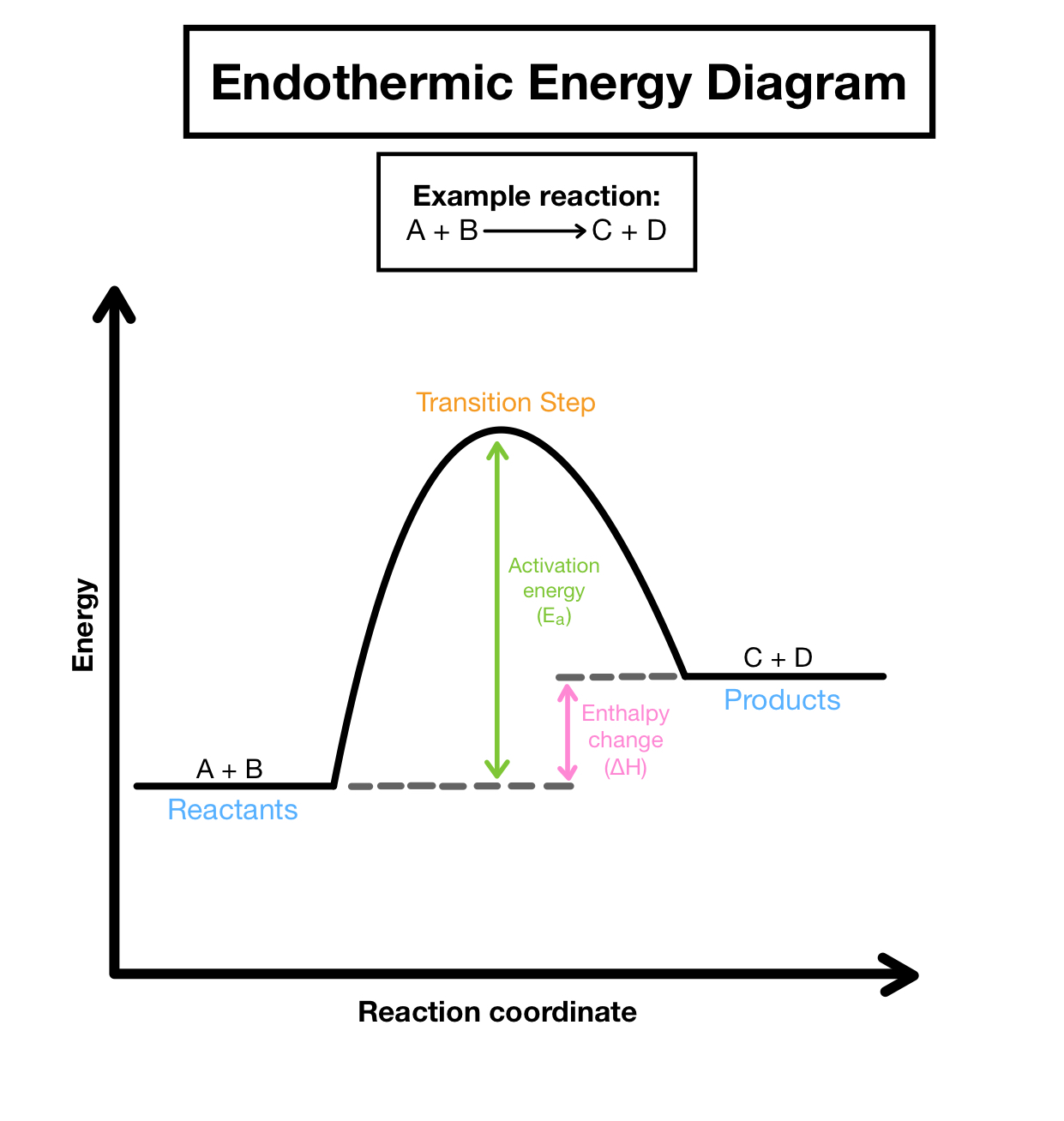
Endothermic reaction: energy in breaking bonds > energy out making bonds (positive enthalpy change)
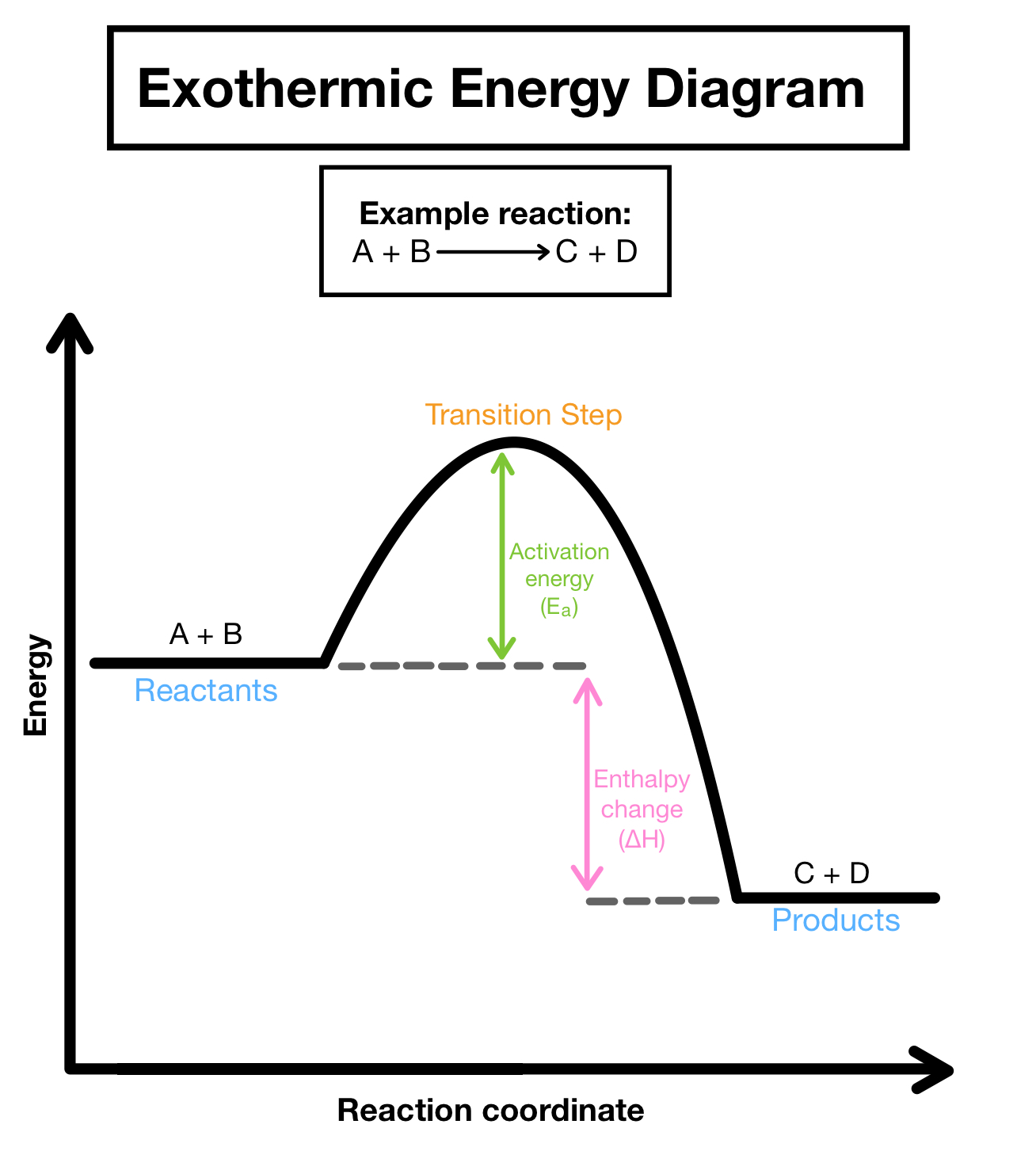
Exothermic reaction: energy in breaking bonds < energy out making bonds (negative enthalpy change)
What are examples of endothermic & exothermic reactions?
Endothermic:
thermal decomposition
Exothermic:
combustion of fuels
neutralisation
Define enthalpy change
Heat energy change at constant pressure
Define standard enthalpy change
The enthalpy change when molar quantities of reactants react in their standard states under standard conditions
What are the standard states & conditions?
Standard states: solid, liquid or gas at room temperature
Standard conditions: 100kPa & 298K (25°C)
What does “in standard state” mean?
The state an element/compound exists at in standard conditions (100kPa, 298K)
Draw an enthalpy change diagram for an endothermic reaction
Draw an enthalpy change diagram for an exothermic reaction
What is the equation to calculate the enthalpy change using mean bond enthalpy?
Enthalpy change = bond breaking - bond making
Define standard enthalpy of reaction
The enthalpy change for a given reaction taking place in molar quantities in standard states under standard conditions
Define standard enthalpy of formation
The enthalpy change when one mole of a compound is formed from its constituent elements in their standard states under standard conditions
Define enthalpy change of combustion
The enthalpy change when one mole of a substance is burned completely in oxygen with all substances in their standard states
What is the equation to calculate enthalpy change (change in energy) & give the units?
∆E = mc∆T
∆E = heat energy lost or gained (kJ)
m = mass of water/solution (kg)
c = specific heat capacity (4.18)
∆T = change in temperature (K)
What is the equation to calculate the molar enthalpy change?
∆H = ∆E / n
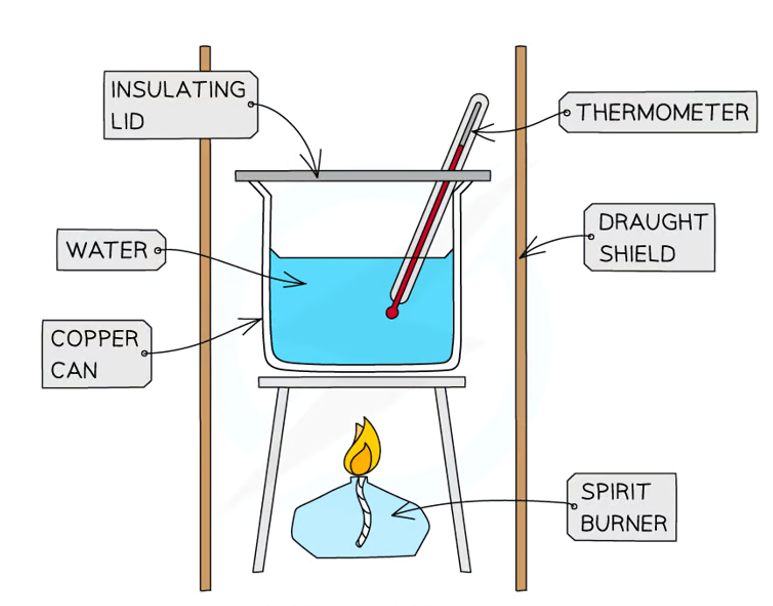
Draw a diagram of a simple calorimeter
How could you improve the results for a simple calorimeter?
Reduce heat loss (e.g. using a lid or wind shields to prevent a draught moving the flame)
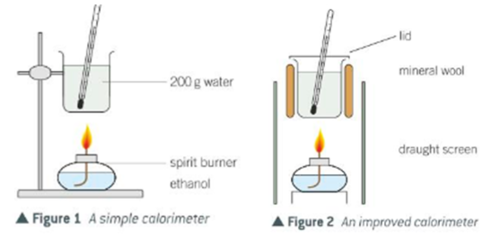
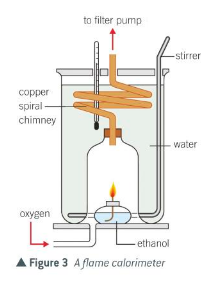
Why is a flame calorimeter better than a simple calorimeter?
To reduce heat loss it has the following features:
spiral chimney made of copper
the flame is enclosed
the fuel burns in pure oxygen, rather than air to ensure complete combustion occurs
How do you measure the enthalpy change for a reaction occurring in (aq) ?
Use an expanded polystyrene cup as a calorimeter (good insulator to reduce heat loss)
Add acid first & measure the temperature change
Then add alkali/solid, stir & measure the temperature change again
What is Hess’s Law?
The total enthalpy change of a reaction is independent of the route taken
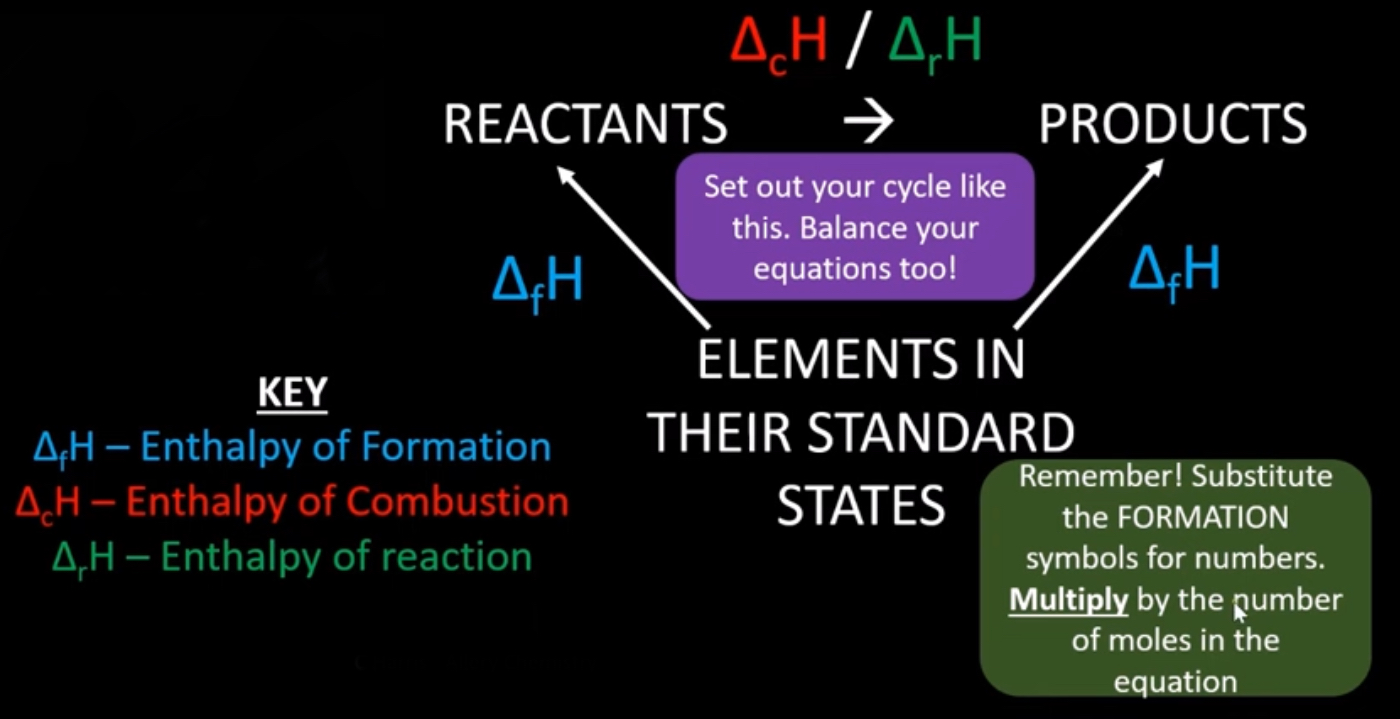
How should your Hess’ cycle be set up using enthalpy of formation?
arrows go up:
How should your Hess’ cycle be set up using enthalpy of combustion?
arrows go down:
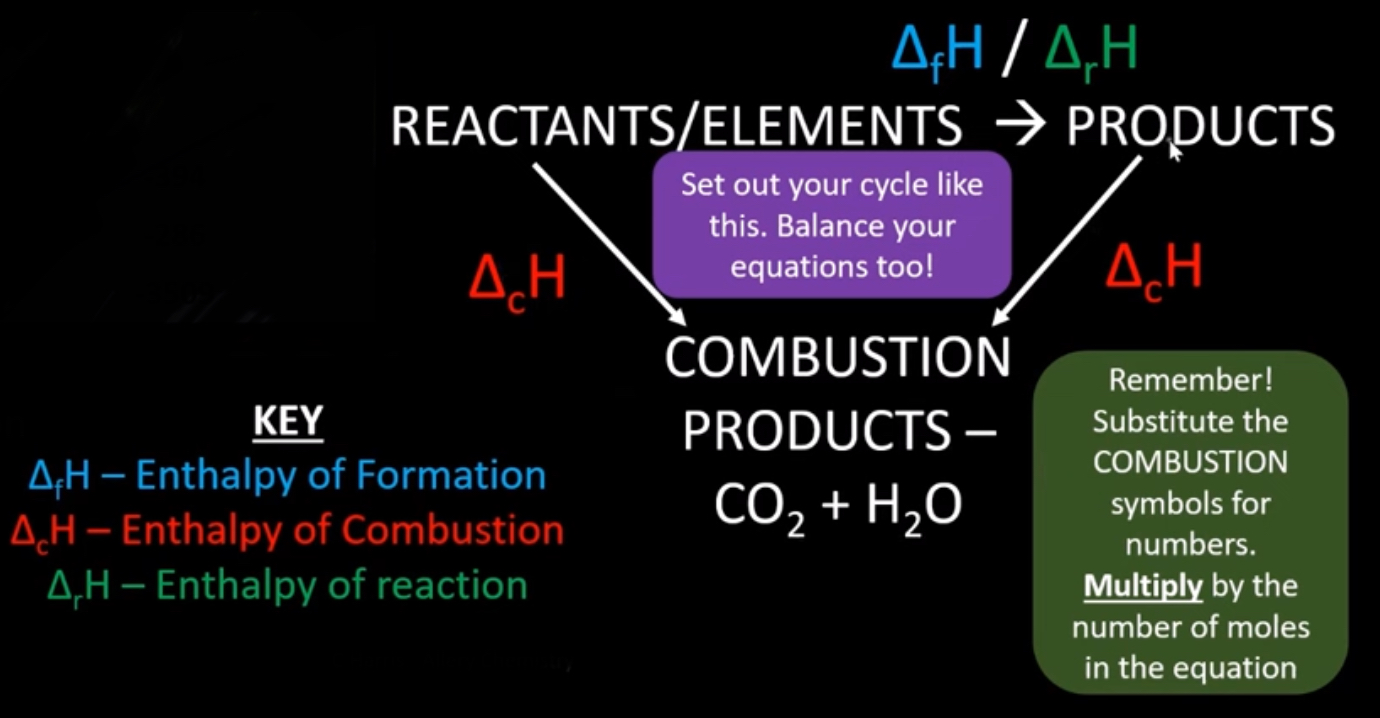
What are the rules for the signs, regarding the arrows?
Go with the arrow: sign stays the same (add)
Go against the arrow: sign changes (minus)
What is the enthalpy of an element?
The enthalpy of all elements in their standard states (the states in which they exist at 100kPa & 298K) is defined as 0
Define bond dissociation enthalpy
The amount of energy required to break one mole of a specific covalent bond in the gaseous state
Define mean bond enthalpy
The average energy required to break one mole of a specific type of bond in the gaseous state, averaged across a range of different compounds
Why may experimental methods for enthalpy determination not be very accurate?
Heat is lost to the surroundings
Not in standard conditions
Reaction may not go to completion
Why will using bond enthalpies not be as accurate as using standard enthalpy of combustion/formation?
Bond enthalpies are a mean for the same bond across different molecules
Standard enthalpy of combustion & formation apply just to that molecule, so they are more accurate
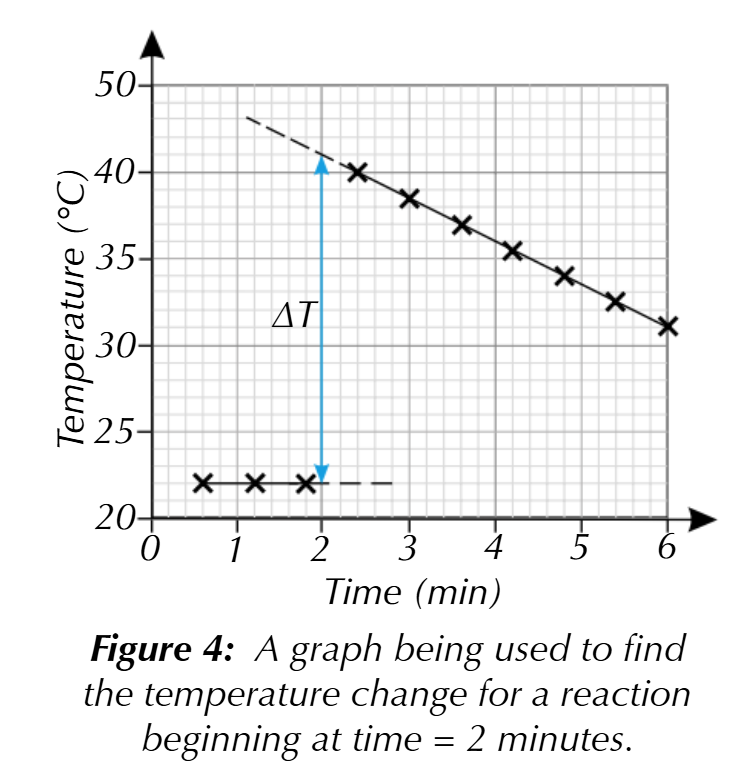
How do you calculate an accurate temperature change in a calorimetry experiment (extrapolation) ?
During the experiment, record the temperature at regular intervals, beginning a couple of minutes before you start the reaction
Plot a graph of your results
Draw two lines of best fit: one going through the points from before the reaction started & one going through the points after it started
Extend both lines so that they both pass the time when the reaction started
The distance between the two lines at the time the reaction started (before any heat was lost) is the accurate temperature change for the reaction