ASU BIO 201 LAB PRACTICAL #1 (Skeletal and joints)
 Call Kai
 Learn
Learn Practice Test
 Spaced Repetition
 Match
Match Flashcards
 Knowt Play
1/172

There's no tags or description
Looks like no tags are added yet.
Name | Mastery | Learn | Test | Matching | Spaced | Call with Kai | Chat |
|---|
No analytics yet
Send a link to your students to track their progress
173 Terms
axial skeleton
Portion of the skeletal system that consists of the skull, rib cage, and vertebral column

appendicular skeleton
Bones of the limbs and limb girdles that are attached to the axial skeleton
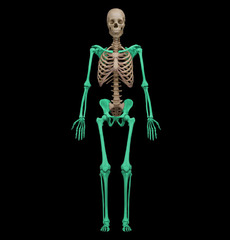
long bones
longer than they are wide
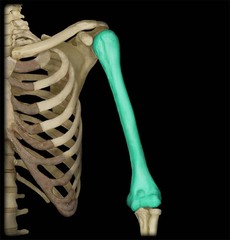
short bone
carpals and tarsals

flat bones
These bones are thin, flat, and curved. They form the ribs, breastbone, and skull.

irregular bones
bones of the vertebrae and face

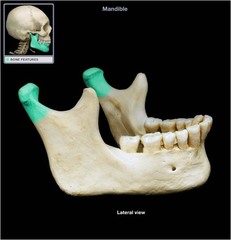
mandibular condyle
Name this part of the mandible.
epicondyle process
projection above a condyle: a raised area of bone that sits on or above a condyle (the smooth knuckle-like surface where bones link together) and serves as a major attachment point for muscles and ligaments

crest process
a narrow ridge projection along the surface of a bone: ie-along the pelvis

facet process
smooth flat articular surface

fissure
an opening; a groove; a split
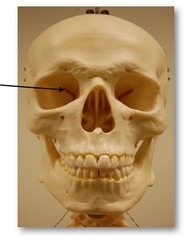
foramen magnum
Round or oval opening through a bone

fossa
shallow depression in a bone

head process
rounded articular projection supported on the neck of a bone

Meatus
canal-like passageway

process
any bony prominence

protuberance
a bony outgrowth or protruding part

Tubercle
small rounded projection

Tuberosity
Large rounded projection; may be roughened

Sutures
Areas where the cranial bones have joined together
Coronal (Sutures of The Skull)
separates frontal bone and parietal bone

lambdoid suture
between parietal bones and occipital bone

sagittal suture
separates the left and right parietal bone

squamous suture
Between parietal and temporal bones

internal acoustic meatus
A passage for CN VIII from the inner ear to the brain.

optic foramen (canal)
opening located just anterior to sella turcica to allow optic nerves to pass from eyes to brain
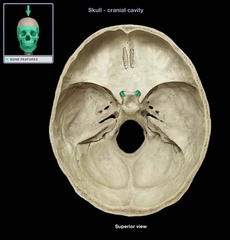
parietal bone of skull
Name this bone.
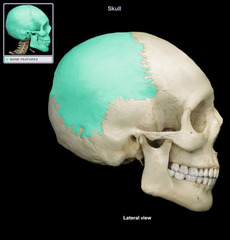
Frontal bone
forehead

occipital bone (skull)
back of skull

temporal bone of skull
bone that forms parts of the side of the skull and floor of the cranial activity. There is a right and left.

zygomatic process
Name this part of the temporal bone.

styloid process
pole-like process extending downward from the temporal bone on each side of the skull

mastoid process
Name this bony landmark.

external auditory meatus
ear canal

Maxilla
upper jaw

Zygomatic bone
cheek bone
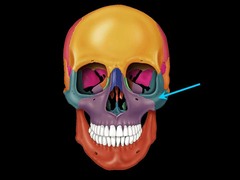
lacrimal bone
Name this bone.

Nasal
nose

inferior nasal concha
located on each side of the nasal septum, attached to the lateral wall of the nasal cavity; increase epithelial surface area and create turbulence in the inspired air

palatine bone
either of two irregularly shaped bones that form the back of the hard palate and helps to form the nasal cavity and the floor of the orbits

Mandible
lower jaw

Vomer
nasal septum

sphenoid
wedge-shaped bone at the base of the skull

ethmoid bone
forms part of the posterior portion of the nose, the orbit, and the floor of the cranium

hyoid bone
a U-shaped bone in the neck that supports the tongue.

cervical vertebrae
C1-C7

thoracic vertebrae
T1-T12

lumbar vertebrae
L1-L5
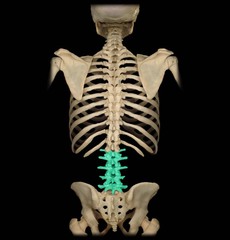
Sacrum Vertebrae
5 fused vertebrae

Coccyx
tailbone

vertebral foramen
canal through which spinal cord passes

spinous process
sharp, slender projection

Pedicle
Name this specific part of the thoracic vertebra.
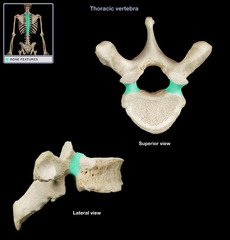
lamina
part of the vertebral arch

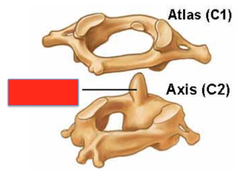
Atlas and Axis Vertebrae
pivot joint

dens of axis
Identify

Sternum
breastbone

Manubrium of sternum
top of sternum

xiphoid process
lower, narrow portion of the sternum

Ribs
The bones in the chest that protect the heart and lungs.

true ribs
first 7 pairs of ribs; attach directly to sternum
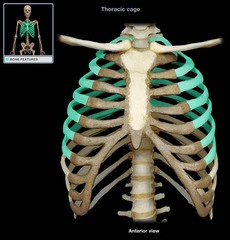
false ribs
last 5 pairs of ribs; attach indirectly to sternum

floating ribs
last two pairs of ribs; do not attach to sternum

atlantoaxial joint
articulation between the atlas and axis
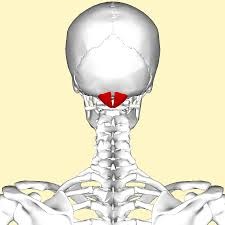
atlanto-occipital joint
articulation between the atlas and the cranium
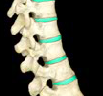
intervertebral joints
between adjacent vertebral bodies of spinal column
vertebrocostal joint
between the vertebrae and ribs

sternoclavicualr joint
-between sternum manubrium and the clavicle
-reason why we have so much ROM in arm

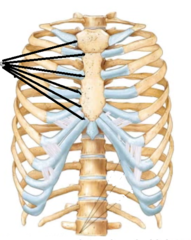
sternocostal joint
between the sternum and ribs
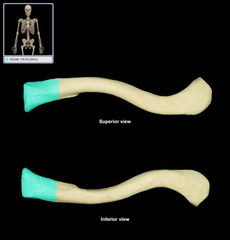
acromial end
Name this specific part of the clavicle.

sternal end
Name this specific part of the clavicle.
conoid tubercle
prominence on inferior surface of the lateral end of clavicle

spine of scapula
Name the structure.

Acromion
Outward extension of the shoulder blade forming the point of the shoulder.

infraspinous fossa
Name this specific area of the scapula.

glenoid cavity (fossa)
lateral aspect of scapula which serves as point of articulation with the humerus

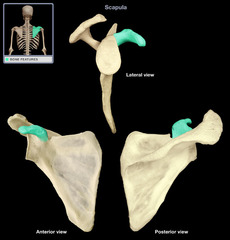
coracoid process
process above the glenoid cavity that permits muscle attachment
supraspinous fossa
Name this specific area of the scapula.

lateral border of scapula
Name the region of the bone.

medial border of scapula
Name the region of the bone.

subscapular fossa
Name this specific part of the scapula.

head of humerus
Name the structure.
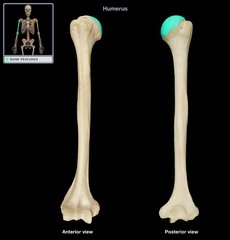
greater tubercle
Name this specific part of the humerus.

lessor tubercle
proximal and anterior

Intertibercular Groove
between the two tubercles attaching tendons

deltoid tuberosity
raised area on lateral surface of humerus to which deltoid muscle attaches

medial epicondyle
Name this specific part of the humerus.

lateral epicondyle
Name this specific part of the humerus.

olecranon fossa
Name this specific part of the humerus.
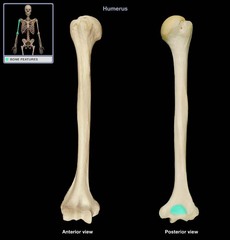
Trochlea
Name this specific part of the humerus.

capitulum
Name this specific part of the humerus.

olecranon process
projection at the upper end of the ulna that forms the bony point of the elbow

trochlear notch
articulates with trochlea of humerus

radial notch
Name this specific part of the ulna.

coronoid process
Name this specific part of the ulna.

head of ulna
distal end of ulna
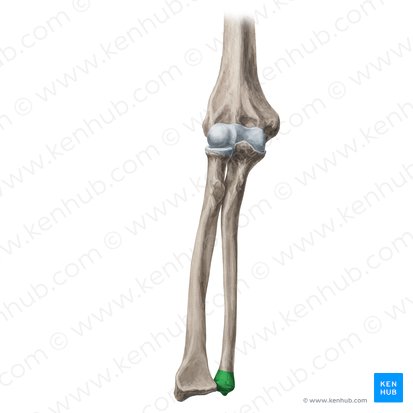
styloid process of ulna
Name the structure.

radial tuberosity of radius
insertion of biceps brachii

styloid process of radius
Name the structure.
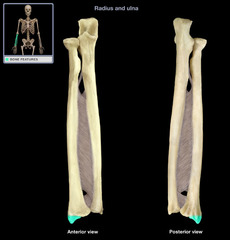
head of radius
articulates with capitulum of humerus
