Integument System
 Call Kai
 Learn
Learn Practice Test
 Spaced Repetition
 Match
Match Flashcards
 Knowt Play
1/29

There's no tags or description
Looks like no tags are added yet.
Name | Mastery | Learn | Test | Matching | Spaced | Call with Kai | Chat |
|---|
No analytics yet
Send a link to your students to track their progress
30 Terms
Is the Integument system the largest organ system in the body?
True

Layers of the Integument
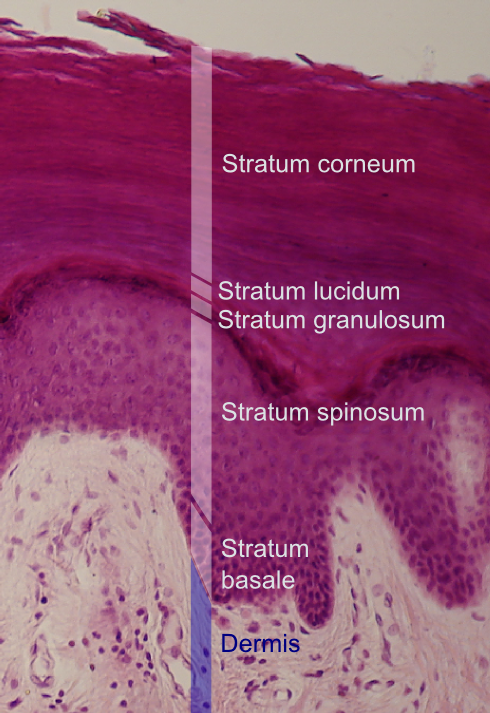
1st Cornuem, Lucidium, Granulosum, Spinosum, Basale 5th
Epidermis
stratified squamous keratinized epithelium divided into five strata
5th
Stratum Basale
single layer of germinal cells resting on the basement membrane which is attached to the dermis
4th
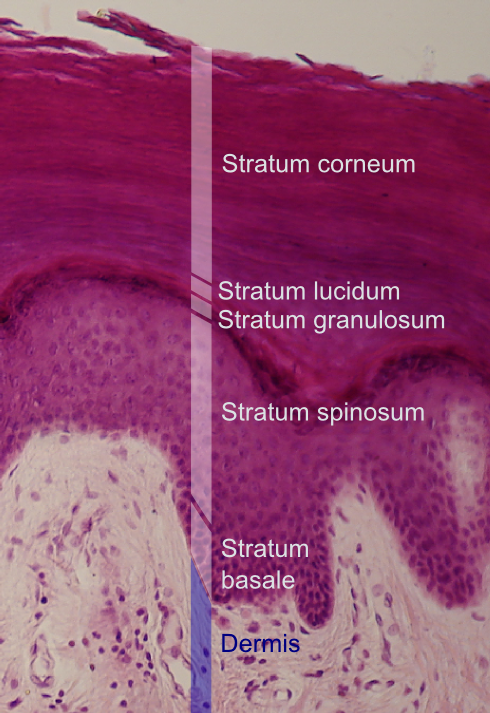
Stratum Spinosum
keratinocytes attached to each other by desmosomes on spiny processes

Melanocytes
specialized cells in the body that a produce melanin

Melanosomes
are specialized parts inside animal cells that make, store, and carry melanin, the pigment responsible for color
dark cells
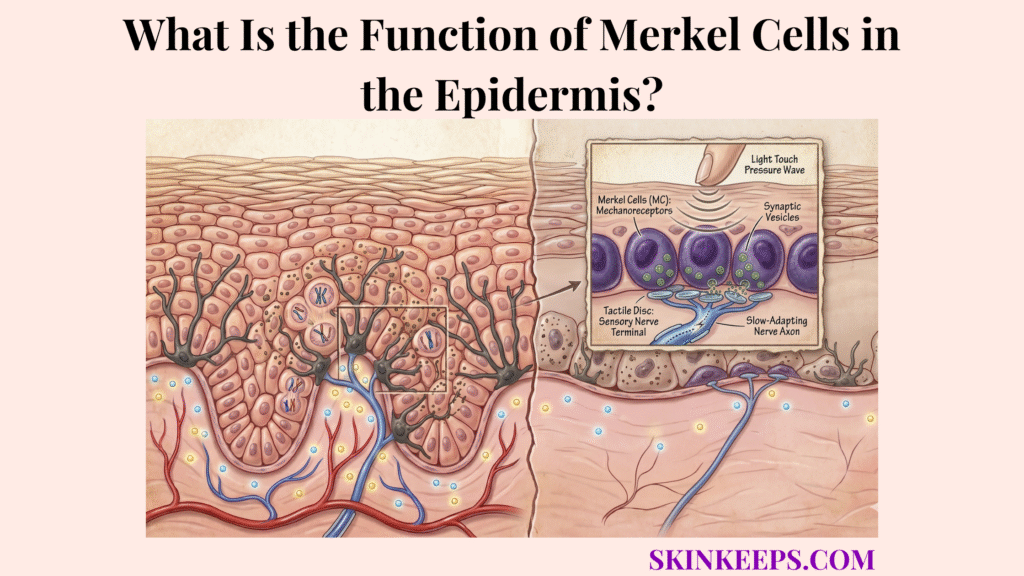
Merkel Cells
specialized oval-shaped cells int eh bottom layer of the skins’s epidermis that help help detect light touch and texture

Meissner Corpuscles
a type of mechanoreceptor (touch sensor) in the skin that detects light touch and low-frequency vibrations
found close to the surface in locations like fingertips, eyelids, and lips

Pacinian Corpuscle
a specialized sensory nerve ending the skin and internal organs detects deep pressure and high-frequency vibrations
found in deep dermis
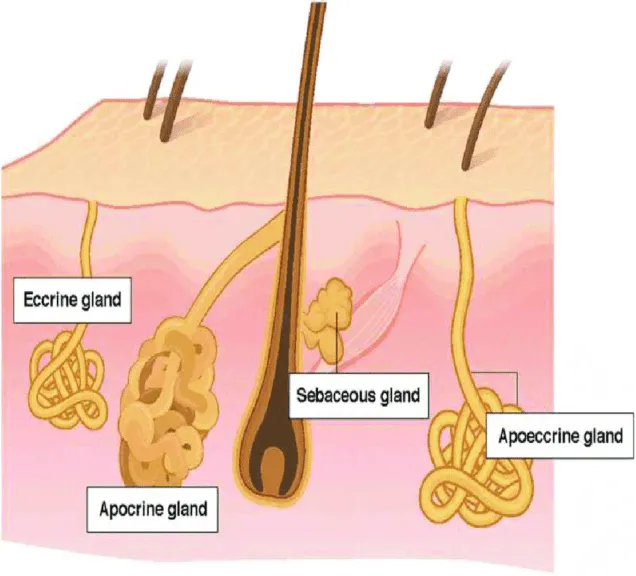
Sweat Glands : Eccrine
most numerous types,
abundant on films soles and foreheads
ducts connect to pores
function in thermoregulation
their secretion is sweat
stratified cuboidal
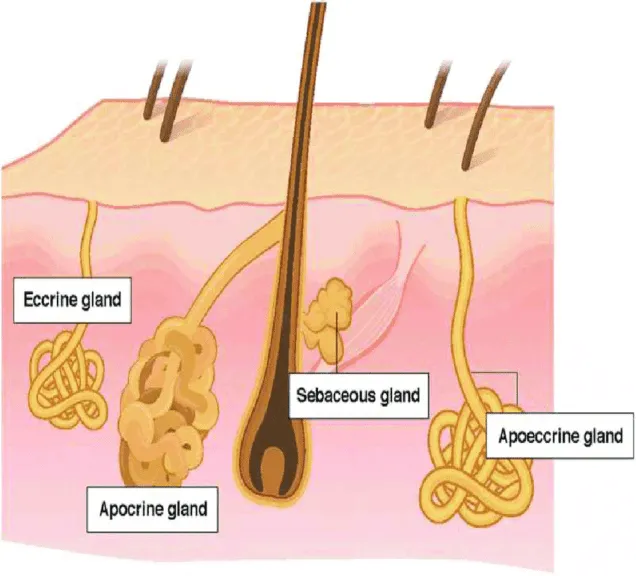
Sweat Glands : Apocrine
activated only during puberty
specialed skins glands that secrete an oily, protein-rich fluid into hair follicles rather than directly onto the skin surface
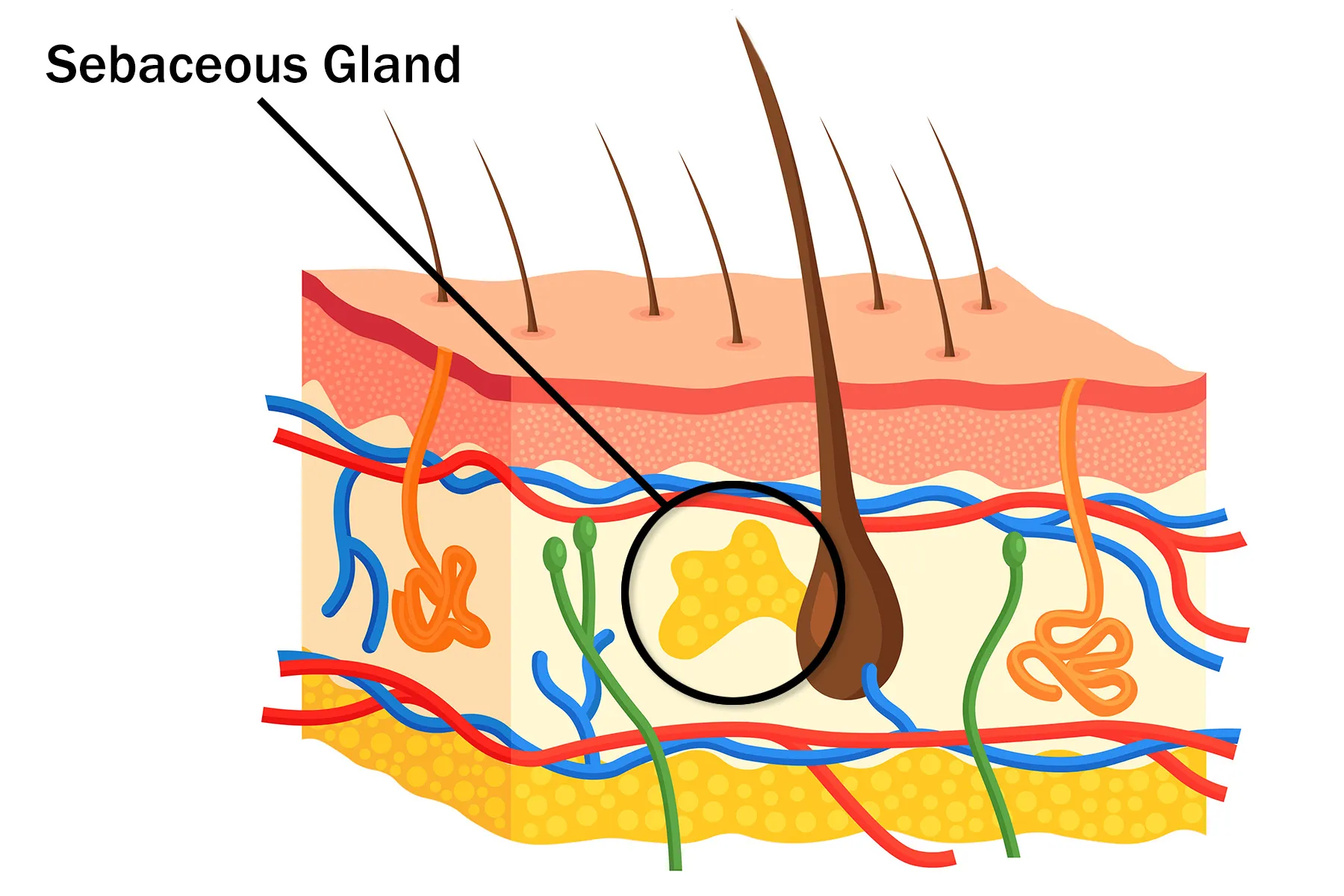
Sebaceous Glands
widely distributed, except for thick skin ofnpalms and soles
most develop from hair follicles and secrete into hair follciles
relatively inactive during puberty
secrete sebum
Sebum
oily, holocrine secretion
bactericidal properties
softest hair and skin

Hair Follicle
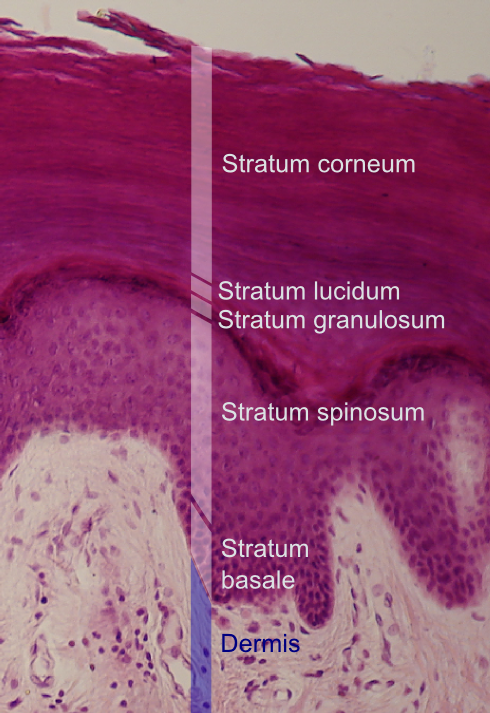
3rd
Stratum Granulosum
3-5 layers flattened keratinocytes (cells w/ nuclei)
keratohyalin granules
membrane-coated lamellar granules

2nd
Stratum Lucidium
only in thick skin
pale/eosinophilic/refractile
disrupted nucleus and organelles
cells filled with keratin
cells connect together
1st
Stratum Corneum
flat and desiccated cellslayer variably thick
top layer
no desmosomes
desquamation

Keratinocytes
produced by stems cells in the basale
release lipids that waterproof the cell
cells near surface die due to lack of
primary cell type in the epidermis, making up 90% of the cells in the outermost layer of the human skin
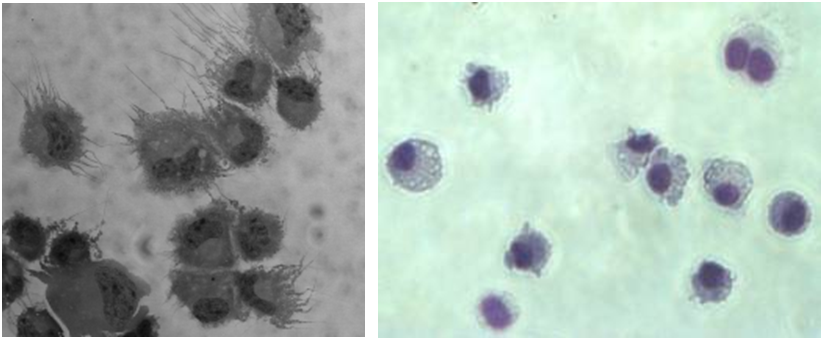
Dendritic (Langerhans) Cells
star shaped marcophages that patrol deep epidermis
are key activators of immune system
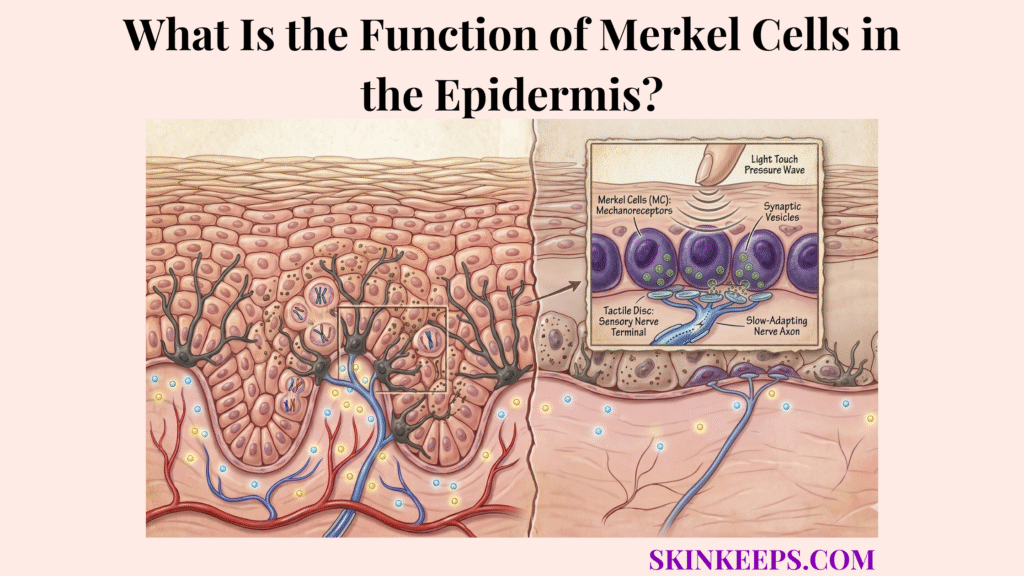
Merkel (tactile) Cells
associated with sensory receptors that sense light touch

Papillary Layer
superficial layer of areolar connective tissue consisting of loose, interlacing collage and elastic fibers and blood vessel (capillary beds)
loose fibers allow phagocytes to patrol for microorganisms
Dermal Papillae
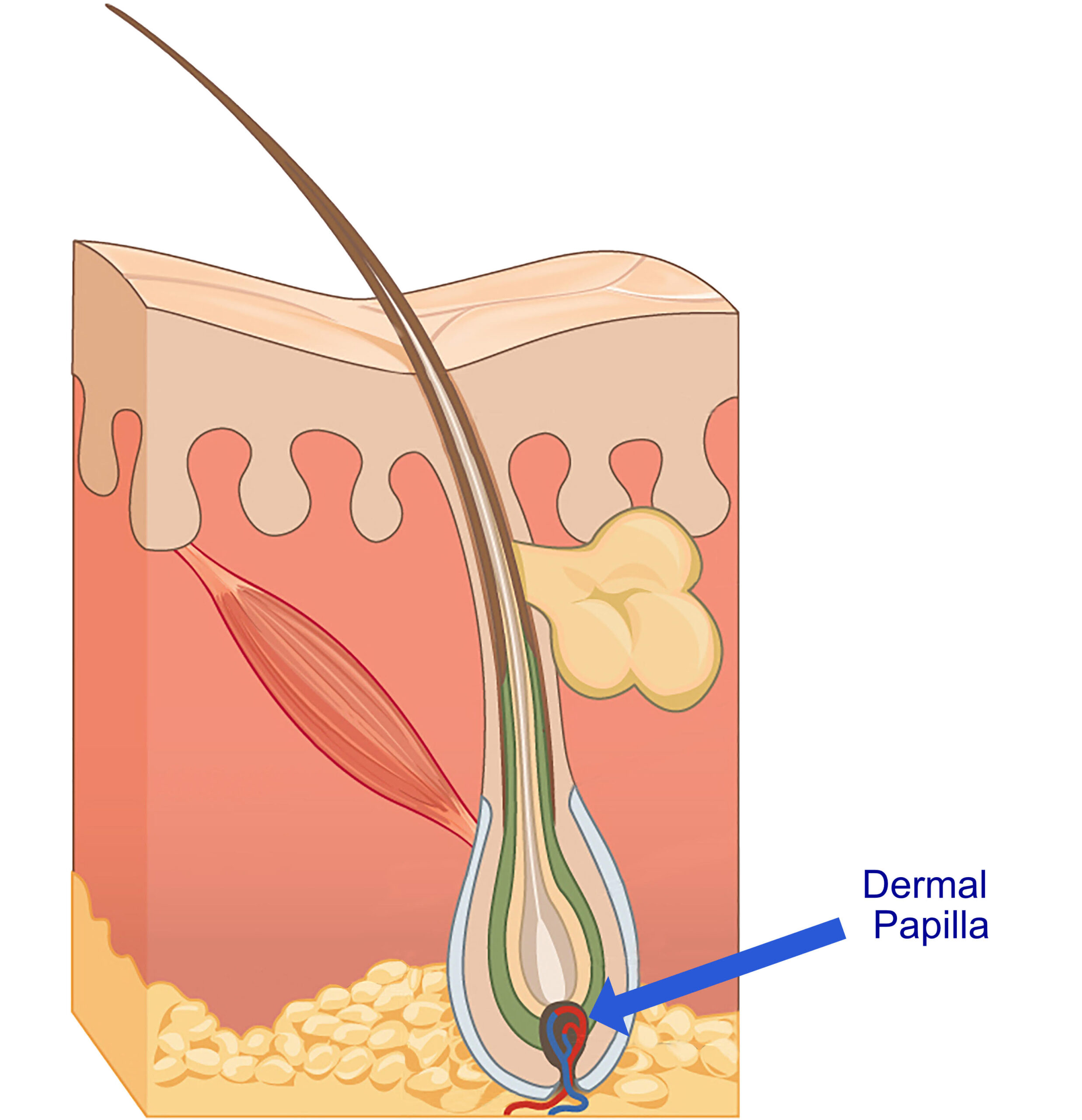
Dermal Papillae
superficial region of dermis that send fingerlike projections up into epidermis
projections contain capillary loops, free nerve endings and touch receptors (Meissner’s corpuscles)
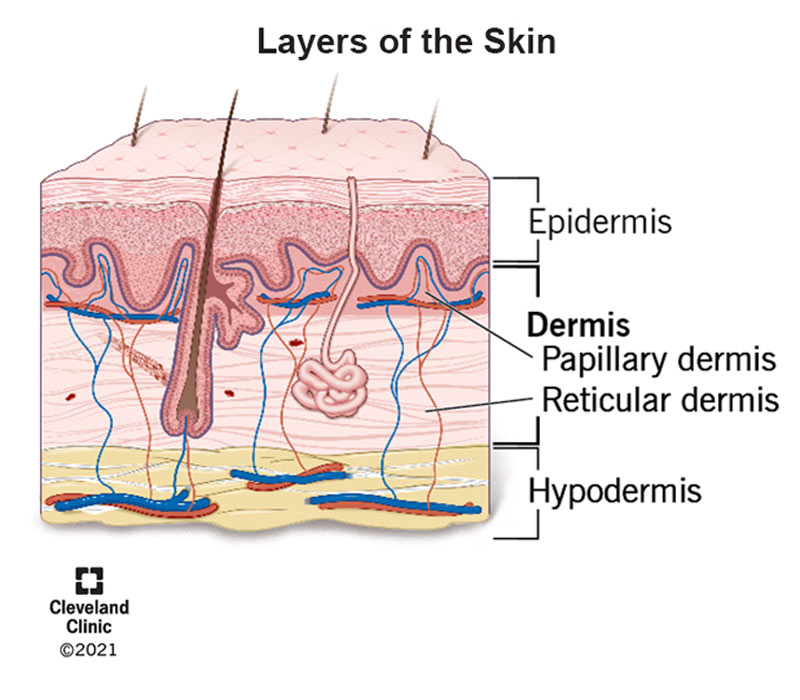
Reticular Layer
makes up 80% of dermal thickness
consists of dense irregular connective tissue
many elastic fibers provide stretch and recoil properties
collagen fibers provide strength and resiliency
Cutaneous Plexus
ECM contains pockets of adipose cells
Cutaneous Plexus
network of blood vessels between reticular layer and hypodermis
sits deep within the skin, marking the transition zone where the dermis meets the fatty tissue of the hypodermis
made up of medium-to-large arteries and vein that branch out to feed deeper into the skin
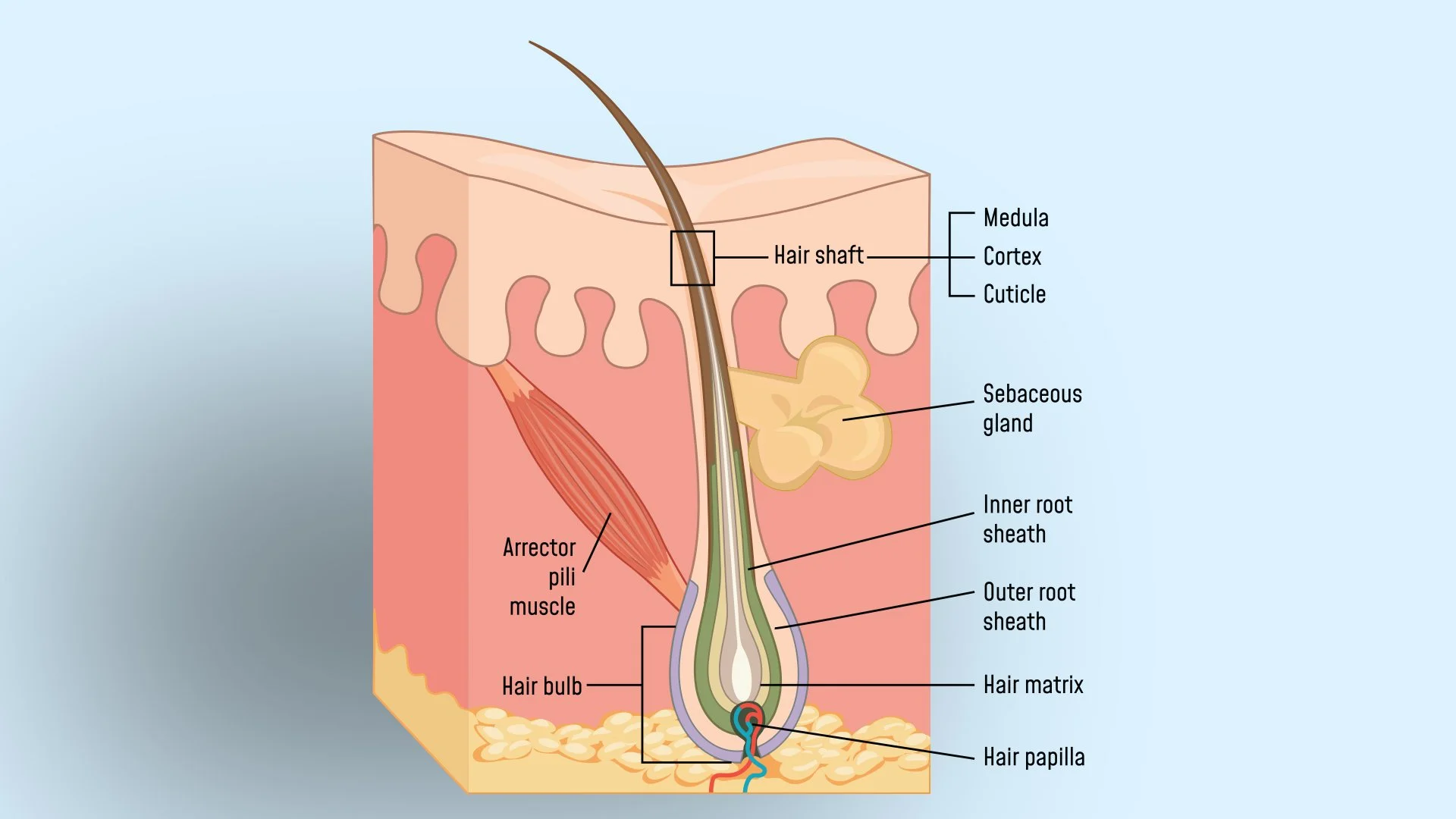
External Root Sheath
the outermost layer of the hair follicles that connects directly to the outer layer of skin

Internal Root Sheath
a cellular layer inside the hair follicle that surrounds, shapes, and protects the growing hair shaft

Glassy Membrane
thickest basal laminae
a thick, clear basement membrane that lines the hair follicle

Hair Papilla
dermal tissue containing a knot of capillaries that supplies nutrients to growing hair
hair is considered a sensory touch receptor
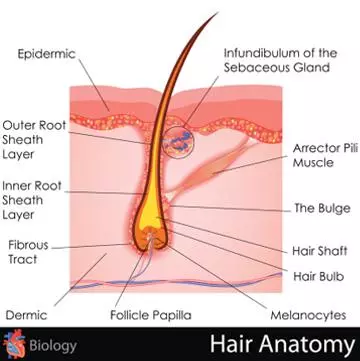
Arrector Pili
small band of smooth muscle attached to follicle