Waves
0.0(0)
Studied by 1 person Call Kai
 Learn
Learn Practice Test
 Spaced Repetition
 Match
Match Flashcards
 Knowt Play
Card Sorting
1/59

Earn XP
Description and Tags
Last updated 7:44 PM on 1/11/23
Name | Mastery | Learn | Test | Matching | Spaced | Call with Kai | Chat |
|---|
No analytics yet
Send a link to your students to track their progress
60 Terms
1
New cards
What are the two types of waves?
1. Transverse
2. Longitudinal
2
New cards
What is a transverse wave?
A wave for which the oscillations are perpendicular to the direction of energy transfer.
3
New cards
What is a longitudinal wave?
A wave for which the oscillations are parallel to the direction of energy transfer.
4
New cards
Give two examples of transverse waves.
1. Electromagnetic waves
2. Seismic s-waves
5
New cards
Give two examples of longitudinal waves.
1. Sound waves
2. Seismic p-waves
6
New cards
What are the two parts of a longitudinal wave called?
Compressions and rarefactions.
7
New cards
What is a wave’s amplitude?
The maximum displacement of a point on a wave from its undisturbed position.
8
New cards
What is wavelength?
● The distance from a point on a wave to the same position on the adjacent wave
● Most commonly peak to peak or trough to trough
● Most commonly peak to peak or trough to trough
9
New cards
What is the frequency of a wave?
The number of waves that pass a given point each second.
10
New cards
What is the unit used for frequency?
Hertz, Hz
11
New cards
What is wave speed?
The speed at which the wave moves or at which energy is transferred through a medium.
12
New cards
What does a wave transfer?
Energy
13
New cards
State the equation used to calculate wave speed. Give appropriate units
Wave Speed = Frequency x Wavelength Speed (m/s), Frequency (Hz), Wavelength (m)
14
New cards
What word is used to describe when a wave bounces off a surface?
Reflection
15
New cards
How do sound waves travel through a solid?
The particles in the solid vibrate and transfer kinetic energy through the material.
16
New cards
What is the frequency range of human hearing?
20 Hz - 20kHz (1kHz = 1000 Hz)
17
New cards
What are ultrasound waves?
Waves which have a frequency higher than the upper limit of human hearing (20kHz).
18
New cards
Give an example use for ultrasound waves?
Medical or industrial imaging
19
New cards
What natural event causes seismic waves to be produced? What types are
produced?
produced?
● Earthquakes
● They produce both P-waves and S-waves
● They produce both P-waves and S-waves
20
New cards
State a difference between the mediums that P-waves and S-waves can travel
through.
through.
● P-waves travel through both solids and liquids
● S-waves only travel through solids (not liquids)
● S-waves only travel through solids (not liquids)
21
New cards
What technique is used to detect objects in deep water and measure water depth?
● Echo sounding
● High frequency sound waves are emitted, reflected and detected
● Time difference between emission and detection, alongside wave speed, are used to calculate distances
● High frequency sound waves are emitted, reflected and detected
● Time difference between emission and detection, alongside wave speed, are used to calculate distances
22
New cards
What type of spectrum do electromagnetic waves form?
A continuous spectrum.
23
New cards
Order the types of electromagnetic radiation from lowest to highest
frequency.
frequency.
● Radio waves
● Microwaves
● Infrared
● Visible Light
● Ultraviolet
● X-rays
● Gamma Rays
● Microwaves
● Infrared
● Visible Light
● Ultraviolet
● X-rays
● Gamma Rays
24
New cards
How do the speeds of EM radiation differ in a vacuum and in air?
Electromagnetic waves all travel at the same speed in a vacuum and in air.
25
New cards
What property of waves in different mediums causes refraction?
● Velocity
● Wave speed is slower in denser materials, causing refraction
● Wave speed is slower in denser materials, causing refraction
26
New cards
In which direction (relative to the normal) do waves refract when entering a denser
medium?
medium?
● They bend towards the normal
● The angle of refraction is less than the angle of incidence
● The angle of refraction is less than the angle of incidence
27
New cards
What type of waves can be produced by oscillations in an electrical circuit?
radio waves
28
New cards
How can radio waves create an alternating current in a circuit?
When radio waves are absorbed, they can induce oscillations in a circuit with the same frequency as the waves themselves
29
New cards
Where do gamma rays originate from?
They originate from changes in the nuclei of atoms
30
New cards
What health effects can ultraviolet waves cause?
● They can cause the skin to age prematurely
● The can increase the risk of developing skin cancer
● The can increase the risk of developing skin cancer
31
New cards
What health effects can X-rays and Gamma rays
cause?
cause?
● They are ionising radiation so can cause mutations in genes
● They can lead to increased risk of developing various cancers
● They can lead to increased risk of developing various cancers
32
New cards
Give three practical uses for infrared radiation.
1. Electrical heaters
2. Cooking food
3. Infrared cameras
33
New cards
Give two practical uses for microwave radiation.
1. Satellite communications
2. Cooking food
34
New cards
Give two practical uses for radio wave
. Television transmission
2. Radio transmission
2. Radio transmission
35
New cards
What wave phenomenon is used by lenses to form an image?
refraction
36
New cards
How does a convex lens form an image
Parallel rays of light are refracted and brought together at a point known as the principal focus.
37
New cards
What is meant by the focal length of a lens?
The distance from the lens to the principal focus.
38
New cards
What is the difference between the
image produced by a convex and a concave lens?
image produced by a convex and a concave lens?
● Convex lenses can produce real or virtual images
● Concave lenses can only produce virtual images
● Concave lenses can only produce virtual images
39
New cards
Why does magnification not have a unit?
● It is the ratio between image height and object height
● Ratios do not require units
● Ratios do not require units
40
New cards
What symbol is used to represent a convex lens in a ray diagram?
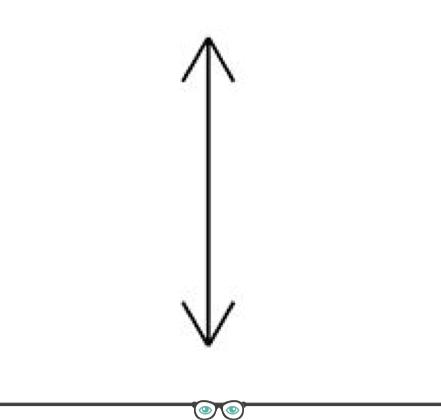
41
New cards
What symbol is used to represent a concave lens in a ray diagram?
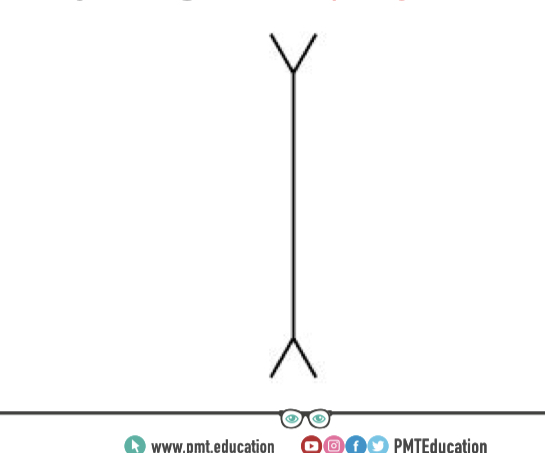
42
New cards
What determines the colour of visible light waves?
The wavelength and frequency of the light waves.
43
New cards
What colour of visible light has the highest frequency?
Blue
44
New cards
What colour of visible light has the largest wavelength?
Red
45
New cards
What is meant by the term ‘specular reflection’?
Reflection from a smooth surface in a single direction.
46
New cards
What is meant by the term ‘diffuse reflection’?
Reflection from a rough surface which causes scattering.
47
New cards
How does a red colour filter work?
● A red filter absorbs all wavelengths of light other than those in the red range of the spectrum
● This means only red light passes through the filter
● This means only red light passes through the filter
48
New cards
What determines the colour of an opaque object?
● Different objects reflect different wavelengths of light by different amounts
● The wavelengths that are most
strongly reflected determine the colour
● The wavelengths that are most
strongly reflected determine the colour
49
New cards
What happens to the wavelengths of
light that aren’t reflected by an opaque object?
light that aren’t reflected by an opaque object?
Any wavelengths that aren’t reflected are absorbed by the object.
50
New cards
What colour does an object appear if all
wavelengths are reflected by equal amounts?
wavelengths are reflected by equal amounts?
White
51
New cards
What colour does an object appear if all wavelengths are absorbed?
black
52
New cards
What do all bodies (objects) emit and absorb?
infrared radiation
53
New cards
What happens to the quantity of infrared radiation emitted by an object as
temperature increases?
temperature increases?
The hotter the object, the more infrared radiation it will emit.
54
New cards
What is a perfect black body?
An object that absorbs all of the radiation that is incident upon it.
55
New cards
How much radiation does a perfect black body reflect or transmit?
none
56
New cards
Why is a perfect black body the best possible emitter of radiation?
● It is a perfect absorber since it absorbs all radiation incident on it
● A perfect absorber is also a perfect emitter
● A perfect absorber is also a perfect emitter
57
New cards
Other than the intensity of radiation
emitted, how does increasing the temperature of an object affect its emissions?
emitted, how does increasing the temperature of an object affect its emissions?
The wavelength distribution of any emission is dependent on the object’s temperature.
58
New cards
What can be said about the rates of emission and absorption for a body at
constant temperature?
constant temperature?
The body is absorbing and emitting radiation at the same rate.
59
New cards
What can be said about the rates of emission and absorption for a body
increasing in temperature?
increasing in temperature?
The body is absorbing radiation faster than it is emitting it
60
New cards
Give two factors that affect the temperature of the Earth
1. The Earth’s rate of absorption and emission of radiation
2. The amount of reflection of radiation into space