Chapter 8
 Call Kai
 Learn
Learn Practice Test
 Spaced Repetition
 Match
Match Flashcards
 Knowt Play
1/12

There's no tags or description
Looks like no tags are added yet.
Name | Mastery | Learn | Test | Matching | Spaced | Call with Kai |
|---|
No analytics yet
Send a link to your students to track their progress
13 Terms
antiaddition
adds from both sides (top and bottom)
synaddition
adds from same side (top or bottom)
markarmikov rule
add H to C with most H’s
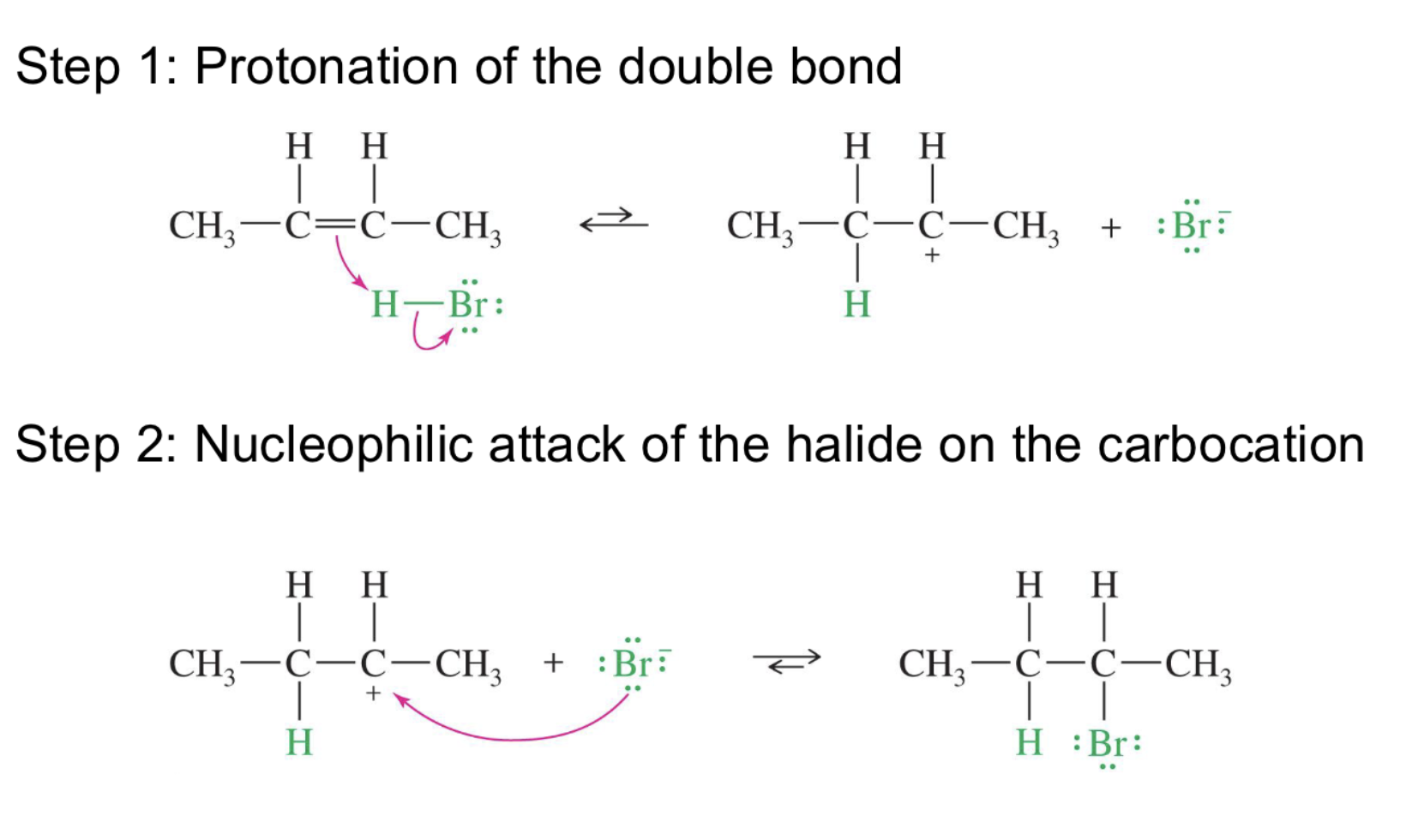
addition of HX to alkenes
Markovnikov, double bond is broken, forming a cation on one of the C, the other gets the H. Then, the X attaches to where the + was.
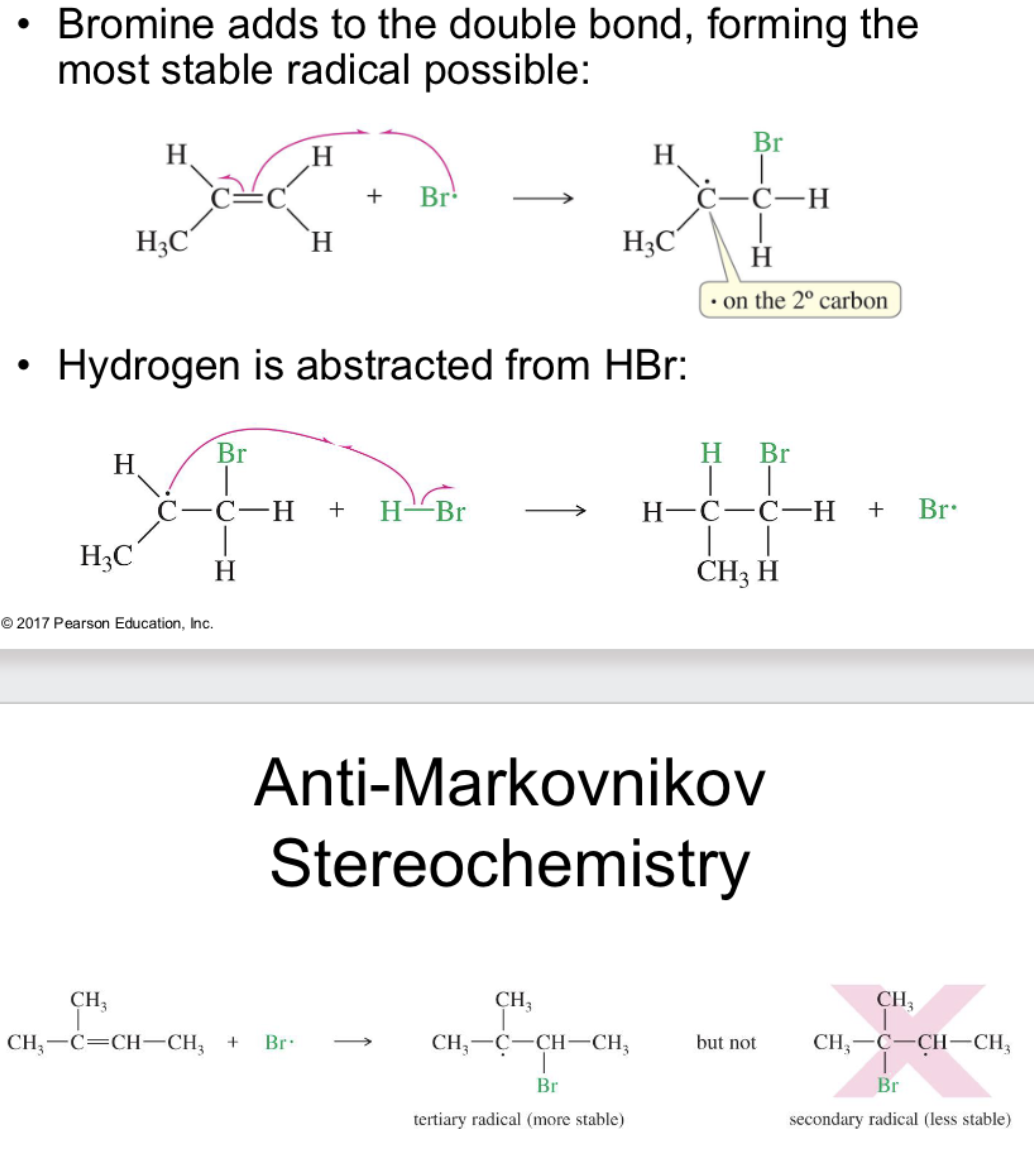
free radical addition of HBR
presence of peroxides (ROOR), anti-markarmikov
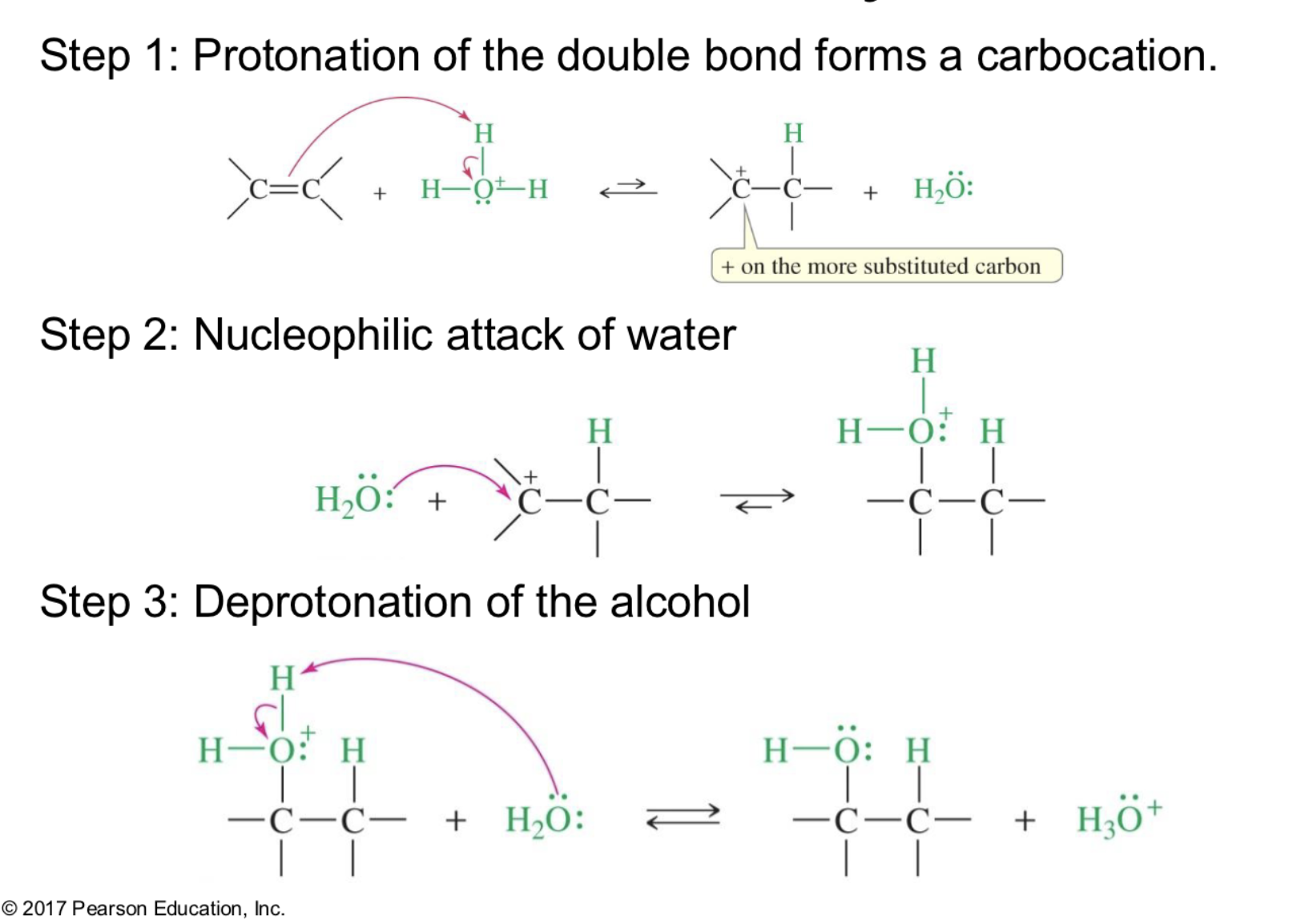
hydration of alkenes
markarmikov, addition of water to the double bond forms an alcohol, uses dilute solutions of H2SO4 or H3PO4 to drive equilibrium toward hydration
oxymercuration demercuration reaction
markarmikov, has mercury, intermediate is a three-membered ring (mercurinium ion) not a carbocation. If the nucleophile is an alcohol (ROH), instead of water, an ether is produced

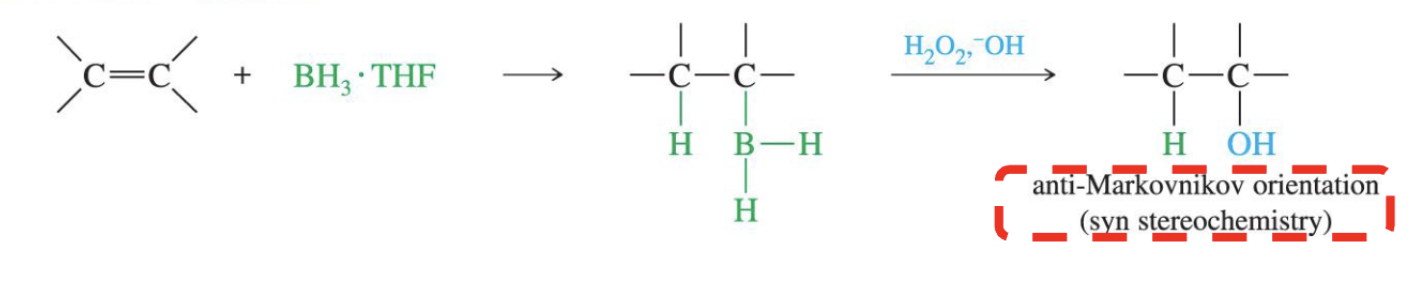
hydroboration of alkenes
anti-Markovnikov, synaddition, has boron
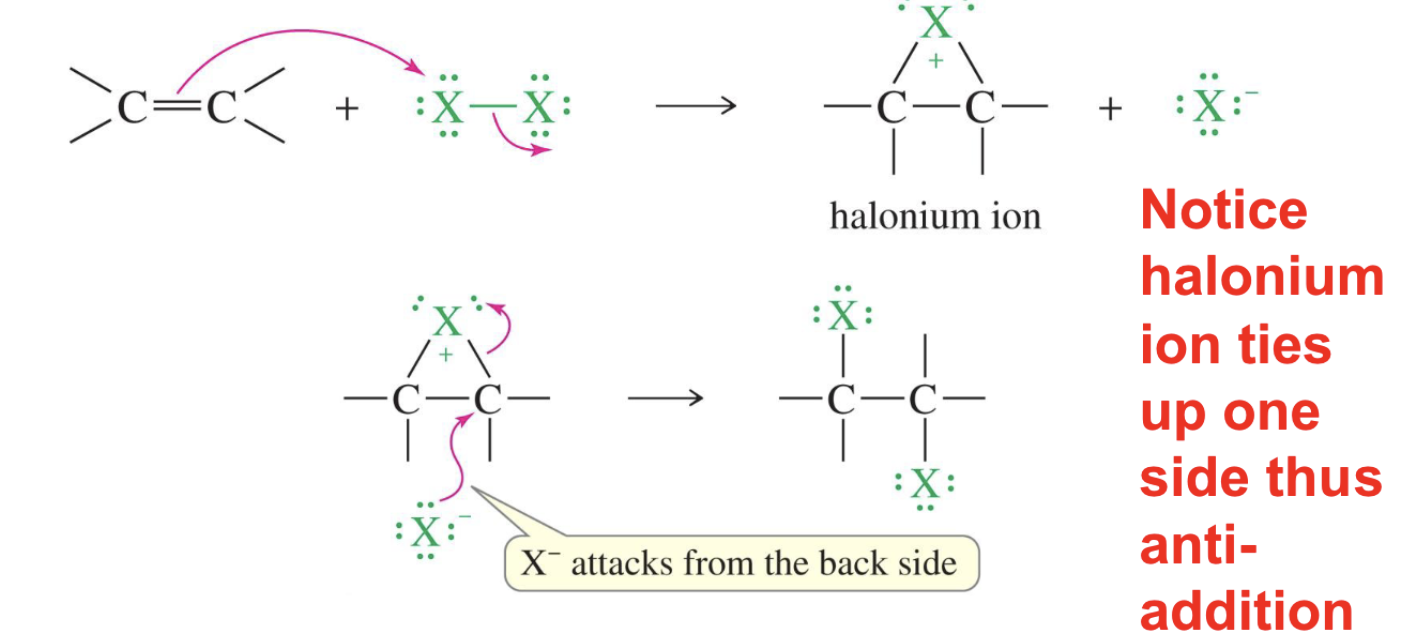
addition of halogens
antiaddition, intermediate is a three-membered ring (halonium ion).
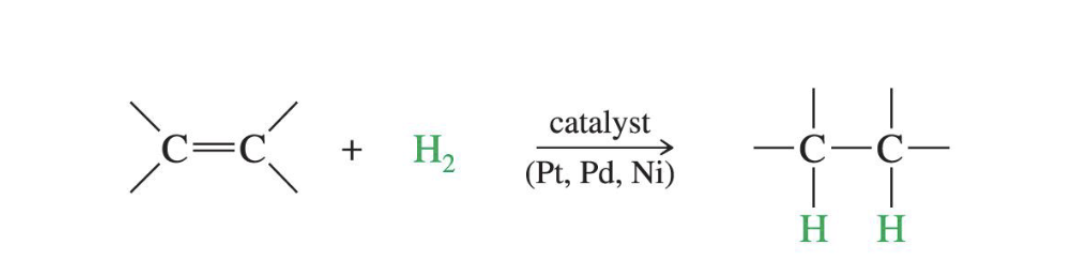
catalytic hydrogenation
only takes place if a catalyst is used (catalyst + Pt, Pd, or Ni), synaddition
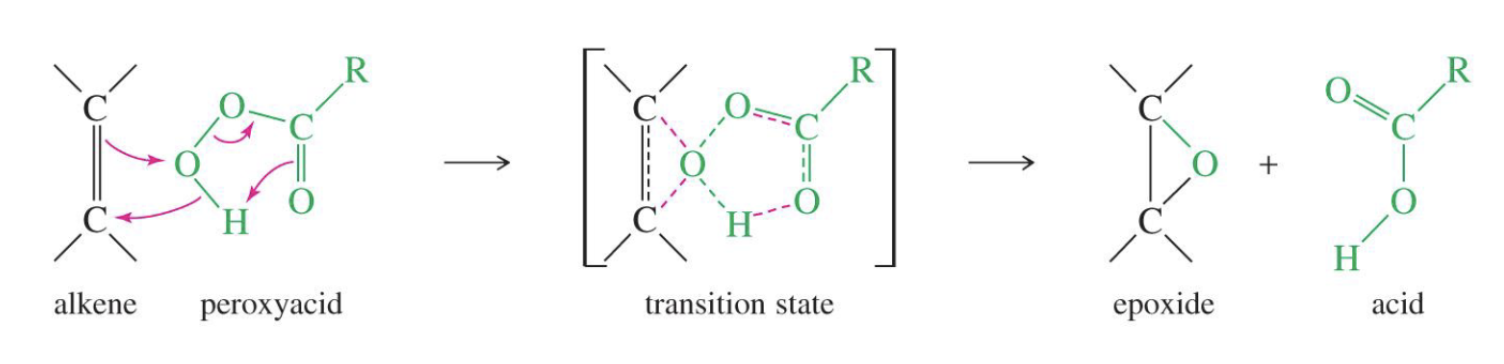
epoxidation
An alkene reacts with a peroxyacid (contains an -OOH group) to form an epoxide
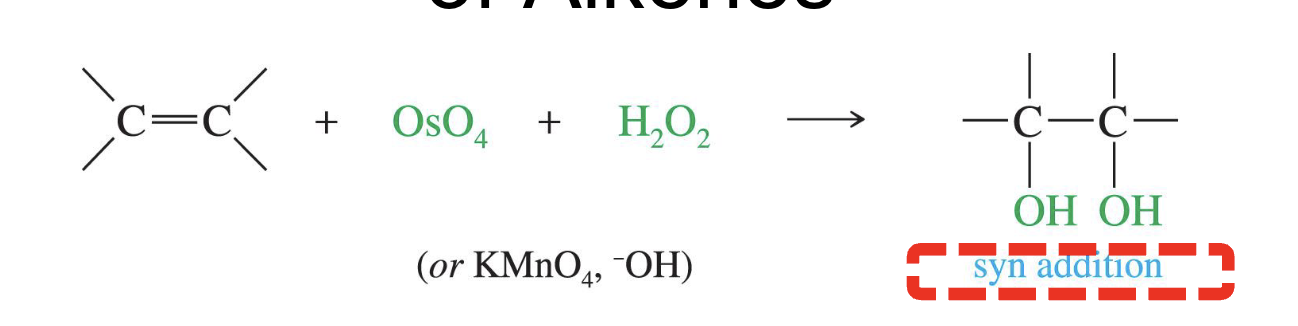
hydroxilation of alkenes
uses OsO4 or KMnO4 and H2O2 or cold dilute, synaddition
oxidative cleavage
Uses KMnO4 and warm acidic, disubstituted carbons become ketones and Monosubstituted carbons become carboxylic acids
