all the bones
 Call Kai
 Learn
Learn Practice Test
 Spaced Repetition
 Match
Match Flashcards
 Knowt Play
1/124

There's no tags or description
Looks like no tags are added yet.
Name | Mastery | Learn | Test | Matching | Spaced | Call with Kai | Chat |
|---|
No analytics yet
Send a link to your students to track their progress
125 Terms

Frontal Bone
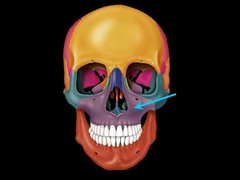
Maxilla Bone
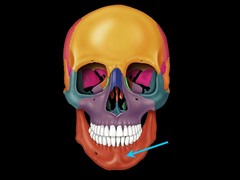
Mandible Bone

Sphenoid Bone

Zygomatic Bone

Frontal Bone

Temporal Bone
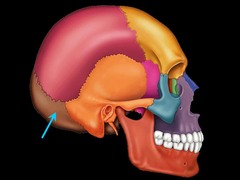
Occipital Bone

Sphenoid Bone

Parietal Bone

Nasal Bone

Maxilla Bone

Lacrimal Bone

Coronal suture

Squamous suture

Lambdoid suture

Sagittal suture

Lambdoid suture

Mastoid Process

Styloid Process

External Acoustic Meatus

Mandibular condyle
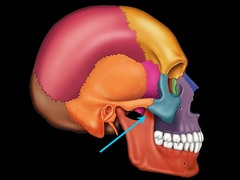
Coronoid Process

Mental Foramen
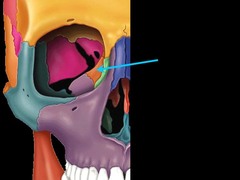
Ethmoid Bone

Sphenoid Bone

Lacrimal Bone

Perpendicular Plate
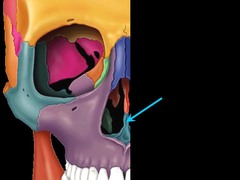
Vomer

Middle Nasal Conchae

Inferior Nasal Conchae

Crista galli

Cribiform plate

Sella turcica

Internal Acoustic Meatus

Jugular foramen

Foramen magnum

Optic canal

Lesser Wing

Greater Wing

Ethmoid Bone

Vomer Bone

Palatine Bone

Sphenoid Bone

Styloid process

Carotid Canal

Jugular Foramen

Occipital Condyle

Mandibular Fossa

Zygomatic process

Temporal process

External acoustic Meatus
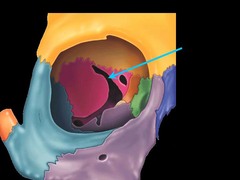
Superior Orbital Fissure
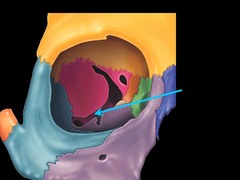
Infreior Orbital Fissure

Infraorbital foramen
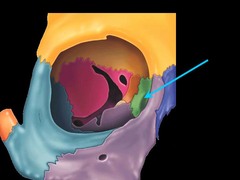
Lacrimal Fossa
hip

femur

tibia

fibula

tarsals

talus

calcaneus

navicular
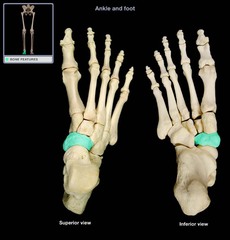
medical cuneiform

intermediate cuneiform

lateral cuneiform

cuboid

meta tarsals

patella

cervical region of vertebral column
consists of 7 vertebrae

thoracic region of vertebral column
consists of 12 vertebrae

lumbar region of vertebral column
5 bones of the lower back

sacrum
bone formed from five vertebrae fused together near the base of the spinal column

Cocyxx
tailbone

List the number of vertebrae found in each vertebral region
Cervical 7
thoracic 12
lumbar 5
sacral 1
what's a common feature for all vertebral regions except the coccyx?
every region except the coccyx has its own natural curvature
which curvatures of the vertebral column and secondary and which are primary?
Sacral/thoracic: primary
Cervial/lumbar: secondary
hyoid bone
a free floating, U-shaped bone in the neck that supports the tongue. serves as attachment point, does not articulate with any other bone.

What does the thoracic cage consist of?
sternum, ribs, thoracic vertebrae, and costal cartilage
narrow/flat bone that's composed of three fused bones (inferior, middle and superior)
sternum
Mandubrium
the superior bone of the sternum

body of sternum
middle bone of the sternum

xipohid process
inferior bone of the sternum

facets
divets into the bone where costal caritilage can attach to the sternum

costal cartilage
the cartilages that connect the sternum and the ends of the ribs. Peachy and translucent.

describe true ribs
ribs 1-7
directly articulate with sternum AND thoracic vertebrae through costal cartilage .
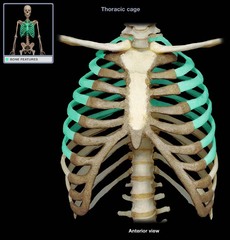
false ribs/vertebrochondral ribs
ribs 8-12
articulate with thoracic vertebrae through costal cartilage but do not attach directly to the sternum anteriorly, and instead, attach to the costal cartilage of the preceding (superior) rib, except for false ribs 11-12, which are the floating ribs.

floating ribs
Ribs 11-12
attach posteriorly to the thoracic vertebrae and "float" without attaching to the costal cartilage anteriorly. (Attached to vertebrae but not sternum)

vertebral body
main portion of the vertebra, where other vertebrae stack on top of each other with a vertebral disc in between
vertebral foramen
canal through which spinal cord passes, full of nerves

Name the structure.
vertebral foramen
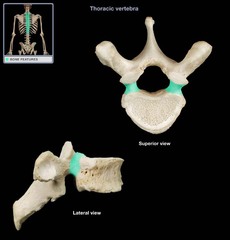
Name this specific part of the thoracic vertebra.
pedicle

Name this bony landmark of the vertebra.
lamina

Name this specific part of the thoracic vertebra.
transverse process
if human vertebrae lacked the lamina and pedicle, what might be a consequence?
The spinal cord would no longer be surrounded by bones and would lack protection

Name this specific part of the thoracic vertebra.
superior articular process

What is the highlighted structure?
inferior articular facet

What is the highlighted structure?
spinus process
lumbar vertebrae
large sized body
hatchet-shaped spinous process and extends horizontally
