Bio 1101 Chapter 10 Cell Division, Cancer Development, and Treatment Strategies in Biology
 Studied by 0 people
 Call Kai
 Learn
Learn Practice Test
 Spaced Repetition
 Match
Match Flashcards
 Knowt Play
1/69

There's no tags or description
Looks like no tags are added yet.
Name | Mastery | Learn | Test | Matching | Spaced |
|---|
No study sessions yet.
70 Terms
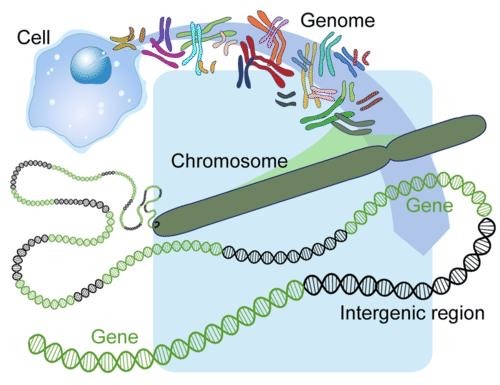
Genome
A Complete Set of Genetic Material/DNA in an Organism.
46
Total number of chromosomes humans have, consisting of 23 sets.
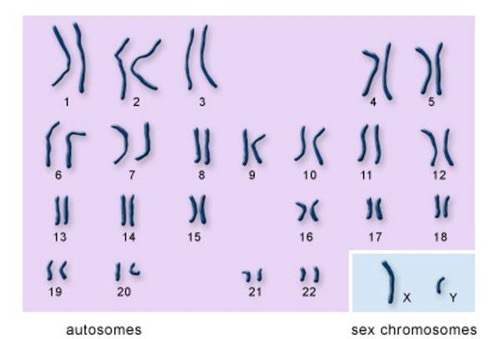
The exact same set of DNA
Every somatic cell in the body has this.
Different Proteins
Cells in the body express these, resulting in different structures and functions.
Replicate
Every time a cell divides to create a new cell, it needs to do this to its DNA.
Carcinogen
A substance that can cause cancer.
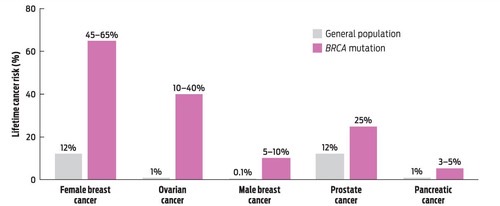
BRCA Genes
Genes that encode proteins important for repairing damaged DNA; inheriting a mutation in BRCA1 or BRCA2 significantly increases the chance of developing cancer.
Tissue
A group of cells working together to carry out a specific function.
Cell Division
Process by which a cell reproduces itself.
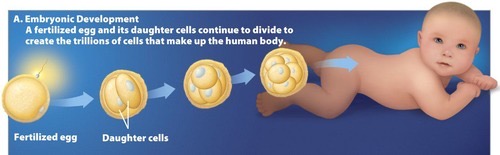
Embryonic Development
A phase where one fertilized egg cell and its daughter cells continuously divide to create trillions of cells.
Cell Replacement
Replaces dying cells and maintains healthy tissues; most cells have a finite lifespan.
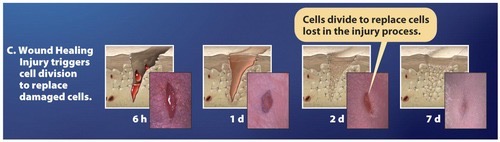
Wound Healing
The process of replacing damaged cells; injury triggers cell division.
Cell Cycle
An ordered sequence of events that a cell goes through to divide.
Two identical daughter cells
The result of one parent cell undergoing cell division.
How do cells divide?
A cell doesn't simply split in half to form two new cells; each new cell would be smaller than the original cell.
Interphase
Preparatory phase where the cell makes a copy of its contents.
Mitotic Phase
Division phase where one parent cell divides into two new daughter cells.
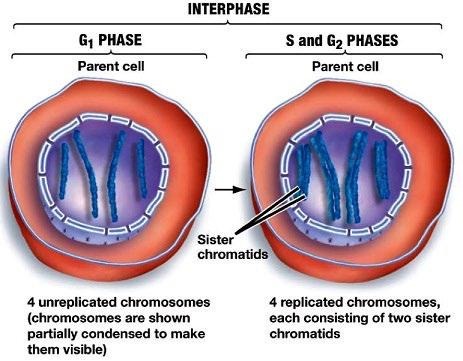
Interphase - G1 phase
The cell enlarges, produces additional cytoplasm, and begins to produce new organelles.
Interphase - S phase
DNA replication occurs, each chromosome is replicated to produce two sister chromatids.
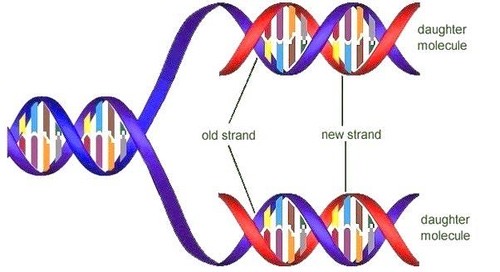
DNA Replication
Results in two DNA molecules with one original strand and one new strand, known as semi-conservative replication.
Sister Chromatids
The two identical DNA molecules that make up a replicated chromosome following DNA replication.
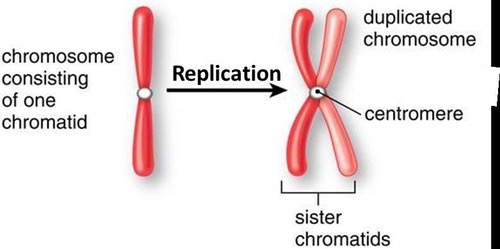
Centromere
The specialized region of a chromosome where the sister chromatids are joined, critical for proper alignment during mitosis.
Interphase - G2 phase
Cell continues to grow and prepares and produces molecules needed for cell division.
Stages of the Cell Cycle
Includes the mitotic phase, which consists of mitosis and cytokinesis.
Mitosis
Nuclear division involving the separation of sister chromatids.
The Phases of Mitosis (PMAT)
Mitosis occurs in a series of phases: Prophase, Metaphase, Anaphase, and Telophase.
Prophase
Replicated chromosomes begin to coil and become visible under a microscope; the nuclear envelope begins to disassemble.
Mitotic Spindle
A structure that separates sister chromatids during mitosis, made of microtubules (spindle fibers).
Metaphase
Spindle fibers attach to the sister chromatids via kinetochore, aligning replicated chromosomes along the middle of the cell.
Anaphase
Spindle fibers shorten and pull sister chromatids to opposite ends of the cell, making them individual chromosomes.
Telophase
Identical set of chromosomes reaches each pole, spindle fibers disassemble, and the nuclear membrane begins to form around each set of chromosomes.
Cytokinesis
The division of the cytoplasm that divides the cell into two daughter cells, each containing a full complement of organelles and DNA in the nucleus.
Cell Walls
A question regarding whether animal cells or plant cells have a cell wall.
Animal cell cytokinesis
Cleavage furrow (cell membrane pinches).
Plant cell cytokinesis
Cell plate (new cell wall).
Completion of Cell Cycle
Cell cycle starts over; Interphase then on to Mitotic phase unless cell cycle arrest.
G0 phase
Resting phase where cell no longer divides and usually has specialized function.
Cell Division Regulation
Cell cycle checkpoints ensure stages of cell cycle are completed correctly.
Cell cycle checkpoints
Prevent cell from progressing to next stage until accurately finished with current stage.
Growth factors
Molecules that signal a cell to divide when appropriate.
Apoptosis
Programmed cell death that occurs if irreparable damage is detected at a checkpoint.
Proteins in Cell Cycle Regulation
Cell cycle checkpoints involve proteins that promote or inhibit cell division.
Proto-oncogene
Genes that produce proteins providing signals that lead to cell division and accelerate growth.
Tumor suppressor genes
Genes that produce proteins that slow down cell division, repair DNA mistakes, and trigger apoptosis.
Cancer
A disease of unregulated cell division leading to mistakes in DNA replication and during mitosis.
Gene mutation effects
May result in protein with altered function or nonfunctional protein; mutations can also affect regulatory regions.
Mutations causing cancer
Mutations that affect proto-oncogenes and tumor suppressor genes result in non-functional cell cycle proteins.
Oncogene
A mutated proto-oncogene that is permanently turned on, stimulating cells to divide all the time.
Tumor Suppressor gene mutation
When these genes mutate, tumor suppressor proteins lose normal function, leading to no control over checkpoints.
Cancerous cells
For cells to become cancerous, multiple mutations in several genes that regulate the cell cycle are required.
Multi-hit model
Multiple mutations arising over time, including inherited mutations and errors in DNA replication.
Environmental insults
Can cause errors in DNA replication
Mutations
Once you have several mutations in cell cycle regulatory proteins, an abnormal cell begins to divide uncontrollably, producing a tumor.
Tumor
Mass of tissue formed by accumulation of abnormal cells.
Benign tumor
Noncancerous tumor that does not spread throughout the body.
Malignant tumor
Cancerous tumor that spreads and invades other tissues (metastasize).
Malignancy
Occurs when cells lose contact inhibition, meaning healthy cells stop dividing once they come into contact with neighboring cells.
Anchorage dependence
Healthy cells normally need physical contact with other cells in tissue to divide.
Angiogenesis
Cancer cells promote the growth of new blood vessels.
How does Cancer Kill?
Cancer can crowd out normal cells, invade other organs, and secrete poisonous chemicals.
Conventional Treatment
Includes surgery, radiation, chemotherapy, targeted therapies, and immunotherapy.
Surgery
Removing cancerous tumor is effective for certain solid tumors but not effective for blood cancers or metastatic tumors.
Chemotherapy
Drugs that interfere with cell division to treat cancer, killing all dividing cells, not just cancerous cells.
Chemotherapy side effects
Includes nausea, vomiting, hair loss, and immune deficiency.
Radiation Therapy
High-energy radiation beams are used to kill dividing cells by severely damaging molecules and DNA to trigger apoptosis.
Targeted Therapies
Drugs designed specifically for cancer cells and not harmful to normal cells dividing.
Immunotherapy
Drugs or treatments used to stimulate our own immune cells to recognize and destroy cancer cells.
High-risk mutations
People who have inherited high-risk mutations start life with at least one cancer-predisposing mutation and need fewer additional mutations to get cancer.
Germ cell mutation
Mutation that was in germ cell leading to higher cancer risk.
Sporadic cancer
Caused by non-inherited (acquired) mutations and occurs in mutations of somatic cells.