ANAT 5010 - unit 10
 Call Kai
 Learn
Learn Practice Test
 Spaced Repetition
 Match
Match Flashcards
 Knowt Play
1/62

There's no tags or description
Looks like no tags are added yet.
Name | Mastery | Learn | Test | Matching | Spaced | Call with Kai | Chat |
|---|
No analytics yet
Send a link to your students to track their progress
63 Terms
- superior: inferior border of mandible
- posterior: anterior border of SCM
- anterior: median line of neck
what makes up the borders of the anterior triangle?
- muscular triangle
- carotid triangle
- submental triangle
- submandibular triangle
what are the subdivisions of the anterior triangle?
hyoid bone
only bone that does not articulate with any other bone; suspended by muscles and ligaments at the level of CV3-4
- tasting (tongue)
- opening jaw (floor of mouth)
- swallowing (floor of mouth)
- vocalization (larynx)
what does the hyoid act as an anchor for?
infrahyoid muscles
inferior to hyoid bone; straplike; act on hyoid and larynx; names refer to attachment points
origin: upper border of scapula (medial to scapular notch)
insertion: hyoid bone
what is the origin and insertion of the omohyoid?
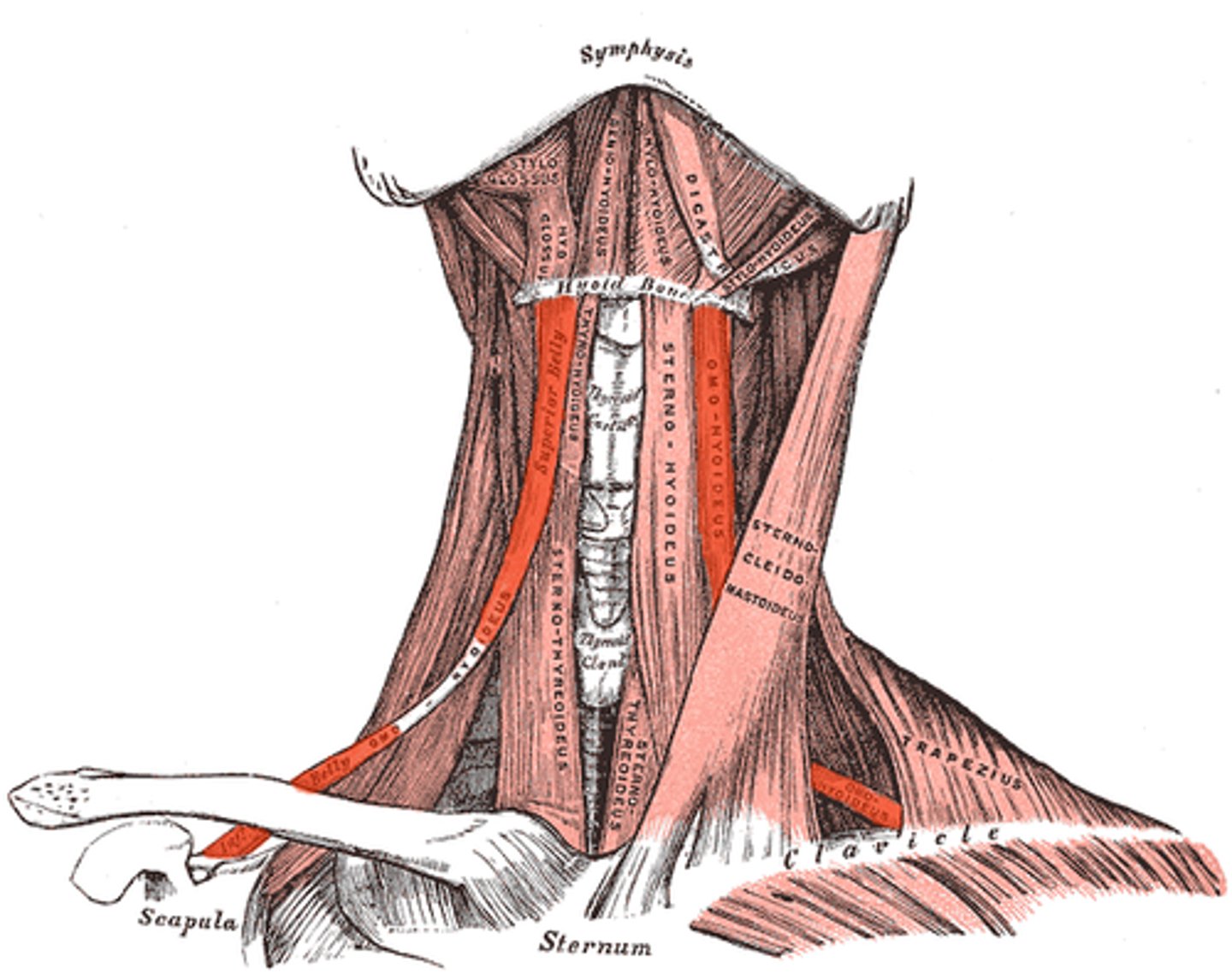
action: depress and retract hyoid
innervation: ansa cervicalis
what is the action and innervation of the omohyoid?
origin: manubrium of sternum, sternoclavicular joint
insertion: hyoid bone
what is the origin and insertion of the sternohyoid?
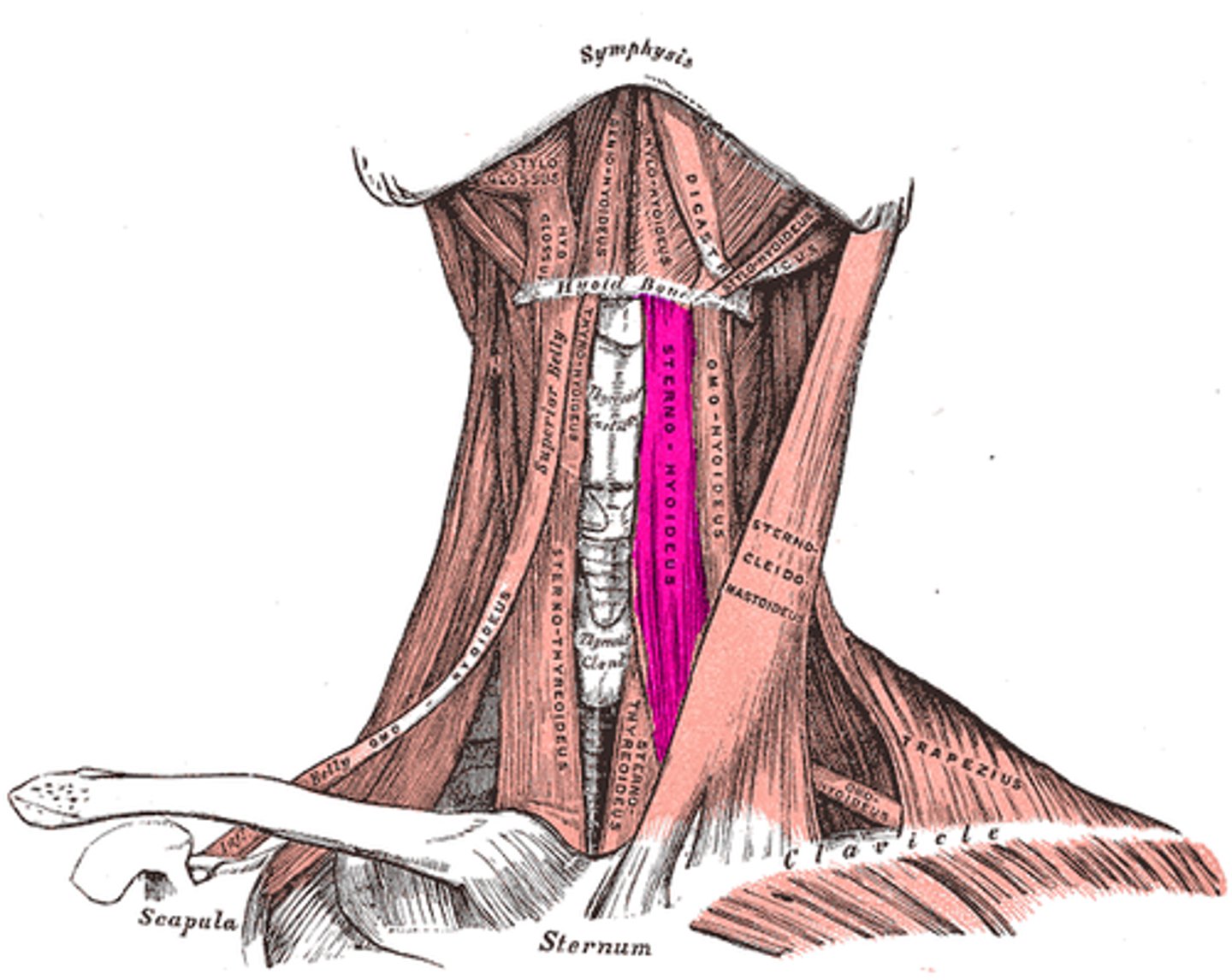
action: depress hyoid
innervation: ansa cervicalis
what is the action and innervation of the sternohyoid?
origin: posterior manubrium
insertion: thyroid cartilage
what is the origin and insertion of the sternothyroid?
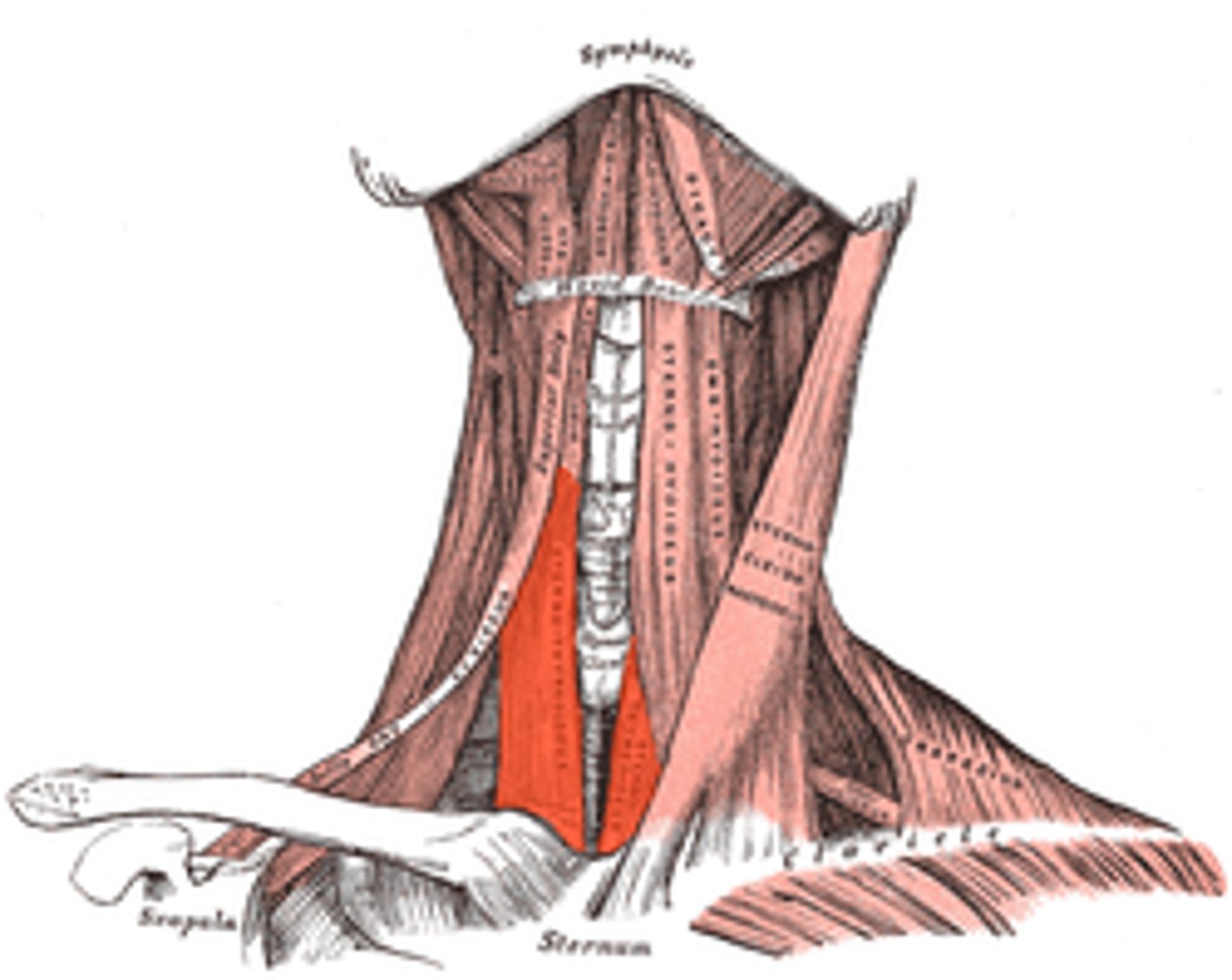
action: depress larynx
innervation: ansa cervicalis
what is the action and innervation of the sternothyroid?
origin: thyroid cartilage (opposite side of the sternothyroid insertion)
insertion: hyoid
what is the origin and insertion of the thyrohyoid?
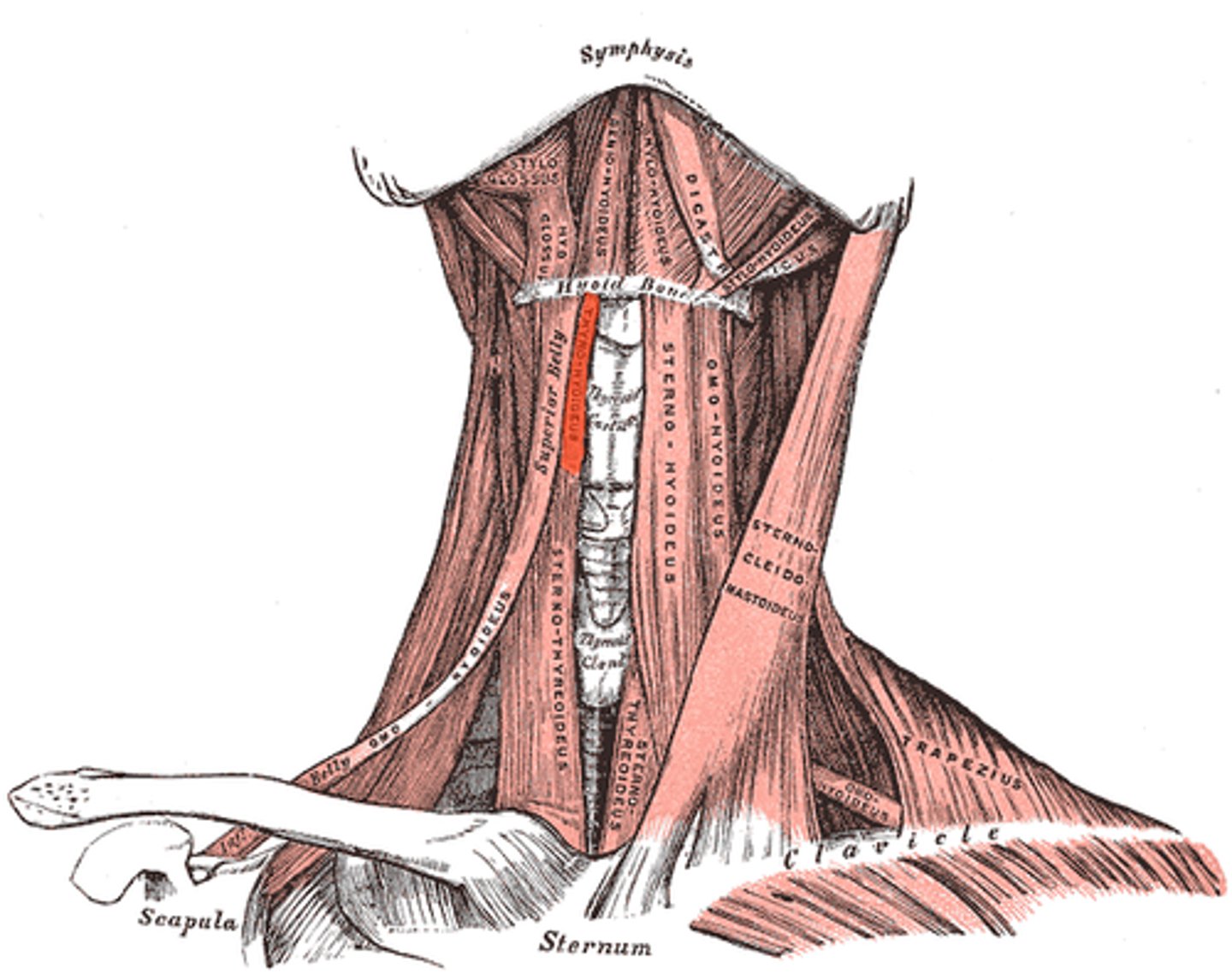
action: depress hyoid and elevate larynx
innervation: C1 VPR fibers that are bound together with the hypoglossal nerve (CN X||)
what is the action and innervation of the thyrohyoid?
borders: anterior border of SCM, superior belly of omohyoid, median line
contents: infrahyoid muscles
what are the borders and contents of the muscular triangle?
suprahyoid muscles
superior to hyoid; act on hyoid, mandible, and mouth
origin: digastric fossa of mandible (anterior belly), mastoid process of temporal bone (posterior belly)
insertion: hyoid bone (via intermediate tendon)
what is the origin and insertion of the digastric muscle?
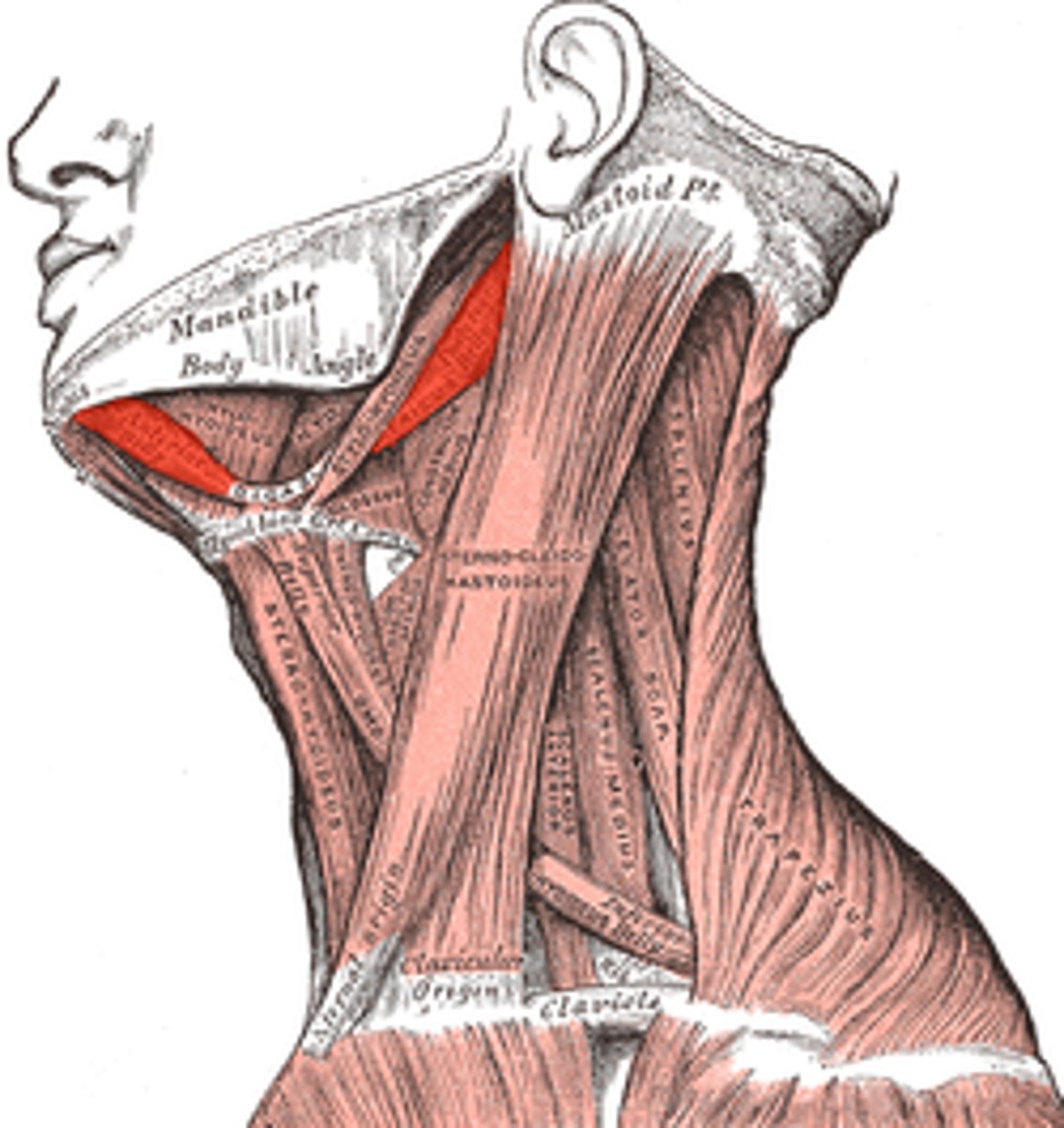
action: elevate hyoid, depress mandible
innervation: nerve to mylohyoid (branch of CN V3)(anterior belly), facial nerve (CN V||)(posterior belly)
what is the action and innervation of the digastric muscle?
origin: styloid process of temporal bone
insertion: hyoid bone
what is the origin and insertion of the stylohyoid muscle?
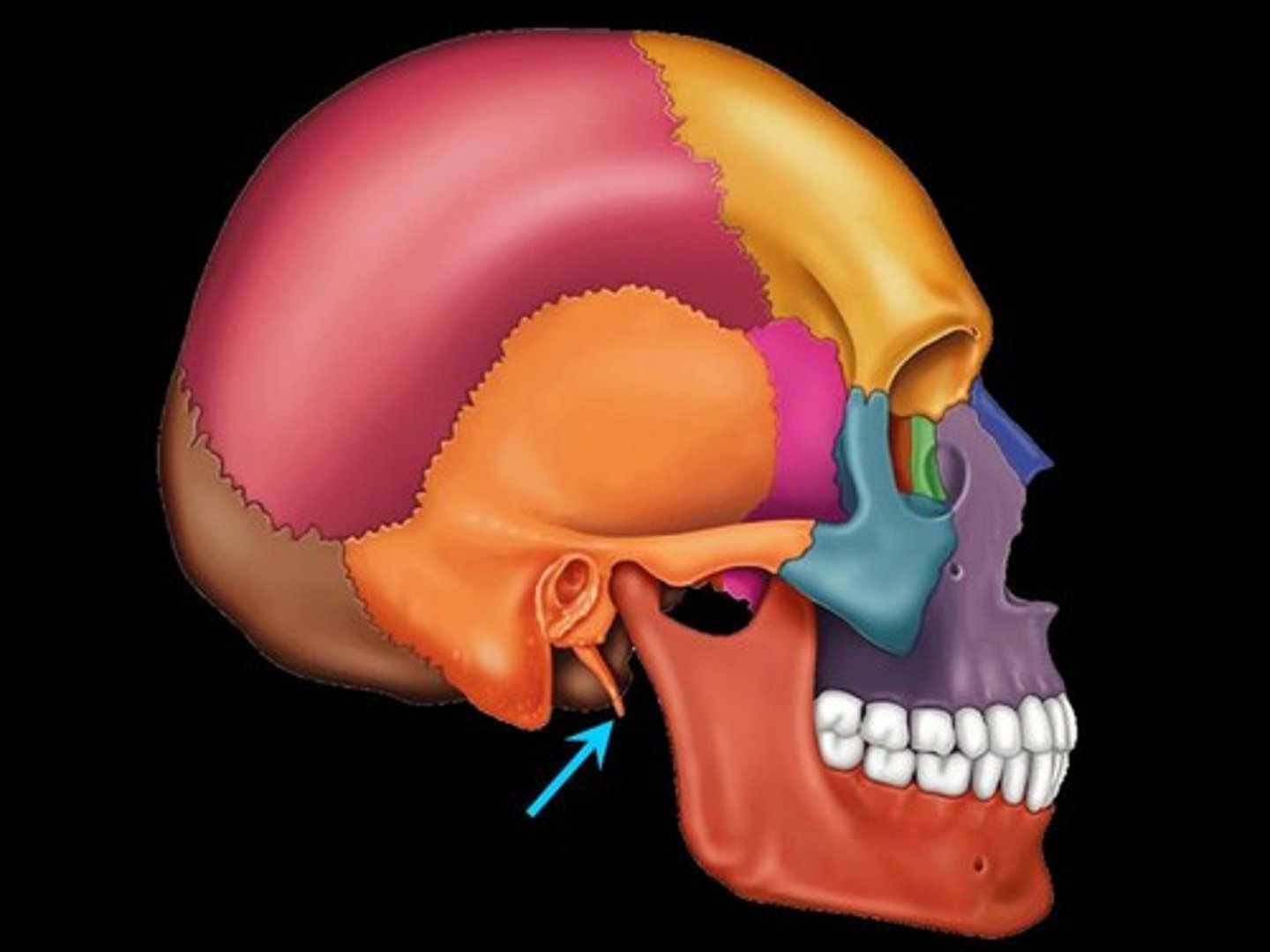
action: elevate hyoid
innervation: facial nerve (CN V||)
what is the action and innervation of the stylohyoid muscle?
origin: mylohyoid line of mandible
insertion: hyoid bone, median raphe between left and right mylohyoid
what is the origin and insertion of the mylohyoid?
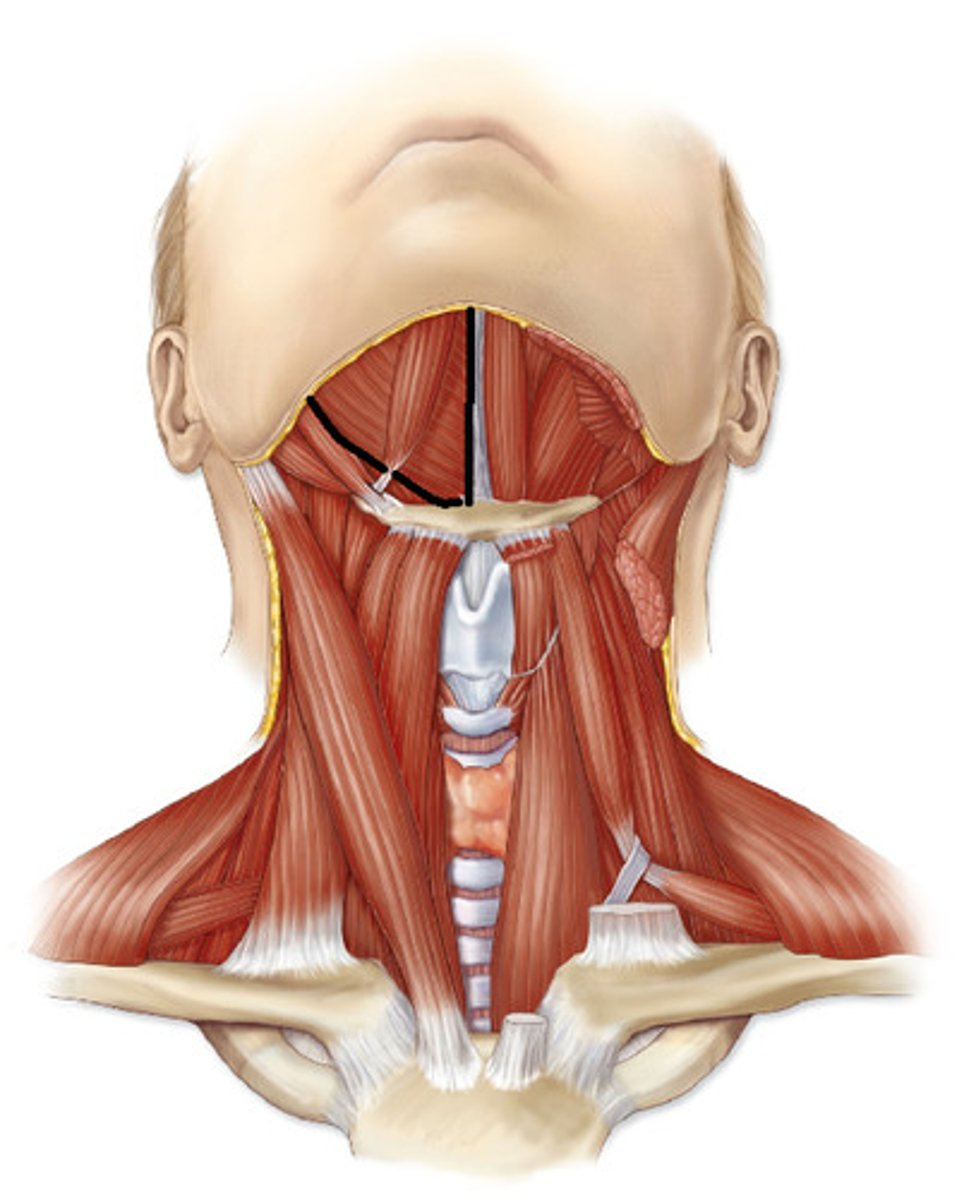
action: elevate hyoid, elevate floor of mouth
innervation: nerve to mylohyoid (branch of CN V3)
what is the action and innervation of the mylohyoid?
raphe
seam where two halves fused
origin: inferior genial tubercle of mandible
insertion: hyoid bone
what is the origin and insertion of the geniohyoid?
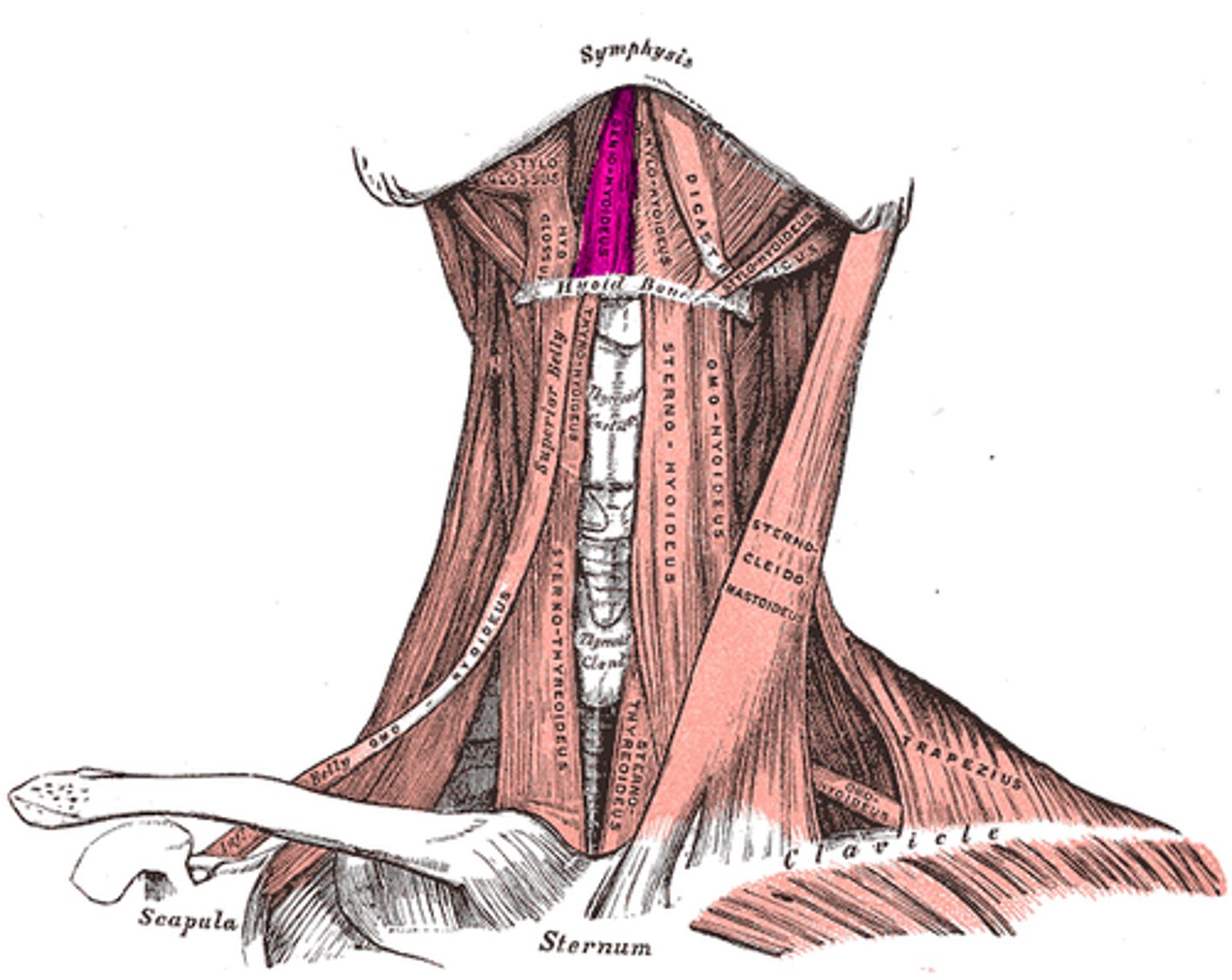
action: elevate and protract hyoid (when mandible is fixed), depress and retract mandible (when hyoid fixed)
innervation: C1 VPR fibers (that are bound together with hypoglossal n)
what is the action and innervation of the geniohyoid?
borders: anterior belly of digastric, posterior belly of digastric, inferior margin of mandible
contents: submandibular gland, facial artery and vein
what are the borders and contents of the submandibular triangle?
borders: left anterior belly of digastric, right anterior belly of digastric, hyoid bone
contents: mylohyoid and geniohyoid
what are the borders and contents of the submental triangle?
borders: posterior belly of digastric, superior belly of omohyoid, anterior border of SCM
contents: common carotid artery, internal jugular vein, vagus nerve, hypoglossal nerve, ansa cervicalis
what are the borders and contents of the carotid triangle?
parents:
- right: brachiocephalic trunk
- left: aortic arch
terminal branches:
- internal carotid: no branches in neck
- external carotid: many branches in neck
what are the parent branches and terminal branches of the common carotid artery?
superior thyroid artery
most inferior branch of external carotid artery; serves thyroid gland; travels with external laryngeal nerve
superior laryngeal artery
branch of superior thyroid artery; travels with the internal laryngeal nerve through the thyrohyoid membrane
lingual artery
branches anteriorly off external carotid artery; passes deep to hyoglossus muscle to enter mouth to supply tongue
facial artery
branches anteriorly off external carotid artery; passes deep to submandibular gland, then curls superficially over mandible to supply face
ascending pharyngeal artery
branches medially/posteriorly off external carotid artery; serves walls of pharynx
occipital artery
branches posteriorly off external carotid artery; hooks over hypoglossal nerve superficially; travels with greater occipital nerve on posterior scalp
posterior auricular artery
branches posteriorly off external carotid artery; small; travels between external auditory meatus and mastoid process
superficial temporal artery
travels with auriculotemporal nerve anterior to external auditory meatus; terminal branch of external carotid artery
maxillary artery
passes deep to mandible to enter deep face region; terminal branch of external carotid artery
external jugular vein
superficial; descends superficial to SCM; drains directly into subclavian vein; formed from union of posterior branch of retromandibular vein and posterior auricular vein
internal jugular vein
deep; descends with carotid sheath; merges with subclavian vein to form brachiocephalic vein
retromandibular vein
formed from union of superficial temporal vein and maxillary vein; deep vein; posterior to ramus of mandible; has two terminal branches (anterior branch and posterior branch)
facial vein
continuous with angular vein
common facial vein
formed from union of anterior branch of retromandibular vein and facial vein; drains into internal jugular vein
ansa cervicalis
somatic motor innervation to infrahyoid muscles; formed from C1-C3 VPRs; loop shape; superficial to internal jugular vein; has a descendens hypoglossi and a descendens cervicalis
descendens hypoglossi
superior root of ansa cervicalis; formed from C1 VPR fibers running with hypoglossal nerve; supplies superior belly of omohyoid, upper parts of sternohyoid and sternothyroid
descendens cervicalis
inferior root of ansa cervicalis; formed from C2 and C3 VPR fibers; supplies inferior belly of omohyoid, lower parts of sternohyoid and sternothyroid
trigeminal, facial, glossopharyngeal, vagus, accessory, hypoglossal
what cranial nerves are in the anterior triangle?
trigeminal nerve (CN V)
branches into V1, V2, and V3; CN V3 gives off inferior alveolar nerve branch; inferior alveolar nerve gives off nerve to mylohyoid; N. to mylohyoid innervates mylohyoid and anterior belly of digastric muscle
facial nerve (CN V||)
trunk innervates stylohyoid and posterior belly of digastric muscle
glossopharyngeal nerve (CN IX)
conveys visceral sensory innervation from carotid sinus and carotid body, which are both located at bifurcation of common carotid artery
vagus nerve (CN X)
travels within carotid sheath; gives off superior laryngeal nerve branch; gives off recurrent laryngeal nerve branch that ascends between trachea and esophagus
internal laryngeal nerve
branch of superior laryngeal nerve that travels with superior laryngeal artery
external laryngeal nerve
branch of superior laryngeal nerve that travels with superior thyroid artery
accessory nerve (CN XI)
innervates SCM and trapezius
hypoglossal nerve
crosses superficial to carotid arteries; helps deliver C1 VPR fibers to ansa cervicalis, thyrohyoid, and geniohyoid muscles; passes deep to mylohyoid to innervate tongue muscles
superior cervical ganglion
source of internal and external carotid nerves
inferior cervical ganglion
may fuse with first thoracic ganglion to form stellate ganglion
sympathetic trunk of ANS
receives preganglionic sympathetic axons that originate at T1-L2 spinal cord levels, enter trunk via white rami in thorax, ascend to cervical region
source of postganglionic sympathetic axons that exit via gray rami (VPRs) into cervical spinal nerves, supply thoracic viscera via cardiac nerves, travel to head and neck via periarterial plexuses
glands
tissues that produce and release substances that perform bodily functions
endocrine glands
secrete products into bloodstream
exocrine glands
secrete products via ducts
submandibular gland
major salivary gland; fills submandibular triangle; facial artery passes deep and through; facial vein travels superficially
thyroid gland
anterior to trachea; endocrine gland producing thyroid hormone; butterfly shaped (lateral lobes and median isthmus connecting lobes); supplied by the superior thyroid artery (branch of external carotid) and inferior thyroid artery (branch of thyrocervical trunk)
parathyroid glands
four nodules on posterior surface of thyroid gland; endocrine glands producing parathyroid hormone