AnP Lecture - Chapter 2 - Ex1
 Call Kai
 Learn
Learn Practice Test
 Spaced Repetition
 Match
Match Flashcards
 Knowt Play
1/31

There's no tags or description
Looks like no tags are added yet.
Name | Mastery | Learn | Test | Matching | Spaced | Call with Kai | Chat |
|---|
No analytics yet
Send a link to your students to track their progress
32 Terms
4 main elements in the body:
C, H, O, N
96% of body weight
Atom: 3 components
Proton (+), neutron, electron (-)
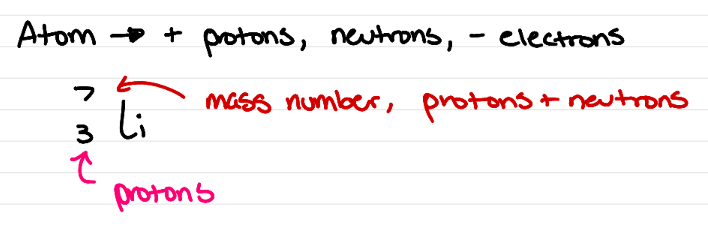
Isotopes
structural variations of elements, same # of protons but different # of neutrons
the atomic # is the same but the mass is different
Atomic weight
the average mass # of all isotope forms of an atom, most abundant isotope
Radioisotopes
heavier, unstable isotopes that decompose into more stable forms; used in research and medicine
*Video: Medical tracers
show the movement of substances in the body, usually use gamma rays to detect them
*Video: Radiotherapy
used to detect and destroy cancer
Molecules
2+ atoms w/ chemical bond: H2
Compound
2+ different atoms bonded together (H2O)
Mixtures
2+ physically mixed components, no chemical bond (wine)
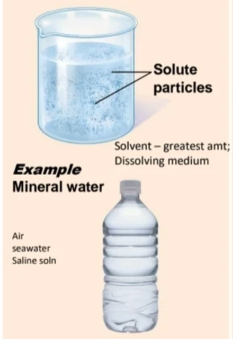
Solution
Type of mixture: solute particles are very tiny, do not settle out or scatter light;
homogenous
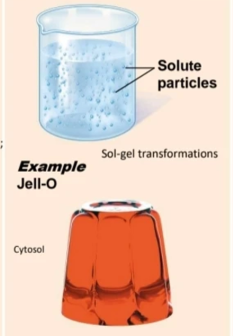
Colloid
Type of mixture: solute particles do not settle out, are larger than in a solution, and scatter light;
heterogenous
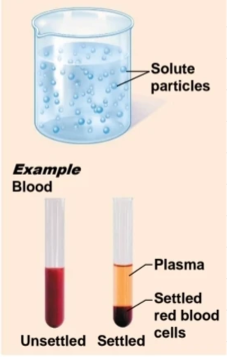
Suspension
Type of mixture: solute particles are very large, settle out, and may scatter light;
heterogenous
Chemically inert
atoms have full valence shells
Chemically reactive
partially empty shells that want to react with other atoms to fill their shells
Ionic bonds
transfer of a valence electron;
cation (+) loses an electron while the anion (-) gains an electron
ex: Na+ + Cl- = NaCl
Covalent bonds:
sharing of 2n valence electrons
ex: CH4
Hydrogen bonds:
attractive forces between hydrogen and F, O, or N
weak magnetic forces
creates surface tension
a form of intermolecular bond
Anabolic vs Catabolic vs Displacement
Anabolic: synthesis, building
Catabolic: decomposition, breaking down (cats break things)
Displacement: both synth and decomp, usually swapping one or more components with another
Oxidative-reduction reactions (Redox)
OIL - oxidized, it loses electrons = reducing agent
RIG - reduced, it gains electrons = oxidizing agent
Exergonic vs Endergonic Rxns
Exergonic: release energy (EX-crete energy) products have less energy than reactants
Endergonic: absorb energy (ENDER = enter) products have more energy than reactants
Speed of rxns affected by 4 things:
temperature: increased temp = increased collisions and force of collisions
concentration: increased concentrations = increased collisions
particle size: smaller particles = increase of collisions
catalysts (enzymes): lower activation energy
Inorganic vs Organic compounds
Inorganic: NO CARBON, water, salts, many acids and bases
Organic: CONTAIN CARBON, macromolecules
5 Important properties of water:
high heat capacity: absorb and release heat
high heat of vaporization: sweat cools us off because the water absorbs a lot of heat from us to evaporate
polar solvent properties: universal solvent
reactivity: food + water = hydrolysis rxn
cushioning: shock absorption
Salts
ionic compounds that dissociate into anions and cations (electrolytes); vital for homeostasis and electronegative gradients used in many body functions (neuron synapse or muscle contraction)
Acids vs Bases
Acids: proton donors, lower pH
Bases: proton acceptors; higher pH
pH =
-log [H+]
it is logarithmic, each pH unit is a 10-fold difference
ex: the difference between pH 7 and pH 4 is 1000x
Carbohydrates
Monomer: monosaccharides
Dimer: disaccharides
Polymer: polysaccharides
Lipids
insoluble in water
triglycerides, phospholipids, steroids, and eicosanoids
Saturated: solid at room temp, single bonds
Unsaturated: liquid at room temp, contains double bonds
Nucleic Acids
Phosphodiester bonds
DNA : C = G, A = T ; double stranded helix; deoxyribose sugar, phosphate group, and the base
RNA: C, G, A, U ; single stranded (sometimes double stranded); ribose sugar, phosphate group, and the base
Proteins
Amino acids w/ different R-groups linked together with peptide bonds
Structures: can be fibrous or globular
Primary: peptide bonds link amino acids
Secondary: hydrogen bonds form alpha helixes or beta pleated sheets
Tertiary: R-groups interact and force folding patterns
Quaternary: 2+ polypeptides interact (ex: haemoglobin has 4 polypeptides interacting)
Enzymes
Globular proteins that are catalysts, lower activation energy to speed up the rate of reactions
Substrate specific via active sites
Usually end in -ase