chemistry - TEAS prep
 Call Kai
 Learn
Learn Practice Test
 Spaced Repetition
 Match
Match Flashcards
 Knowt Play
1/57

There's no tags or description
Looks like no tags are added yet.
Name | Mastery | Learn | Test | Matching | Spaced | Call with Kai | Chat |
|---|
No analytics yet
Send a link to your students to track their progress
58 Terms
Atomic radius
Average distance between nucleus and outermost electron
An atomic number represents
The number of protons in an atom
in a neutrally charged atom, what is the atomic number equal to?
The number of electrons
Atomic mass is equal to
The number of protons plus the number of neutrons
A = Z + N
An atom has an equal number of ___ to the number of protons in its nucleus
Electrons
Isotopes are
Atoms of the same element varying in the number of neutrons they have
isotopes have the ___ number of protons
Same
(Isotopes)
Stable isotopes are
Isotopes not seen to decay
Radioactive isotopes are
Isotopes with unstable nuclei
Electrons tend to occupy the ___ energy level
Lowest
Stable electrons have…
All electrons at the lowest available positions
Valence electrons are
Electrons in the outermost shell of an atom in an uncombined state
The further away an electron is from the nucleus…
the more energy it has
A polar bond is
A covalent bond with a separation of charge
A negative ion is created when
When an atom gains electrons
A positive ion is formed when…
When an atom gains electrons
Ionization is…
The process where neutral particles are ionized into charged particles
Ionic bonding is…
A relationship between two oppositely charged ions
Covalent bonding is when…
Atoms share electrons
Hydrogen bonding is when
Atom of a molecule interacts with a hydrogen molecule
are more likely to form covalent bonds
Nonmetals
Electronegative is the measure of…
How capable an atom is of attracting a pair of bonding electrons
Compounds are
Combinations of 2 or more elements
Diatomic elements are…
Naturally occurring pairs of elements
Hydrocarbons are
Organic compounds of just hydrogen and carbon
Alkanes are
Single bonds between carbons
saturated hydrocarbons
Alkenes are…
Double bonds with 2 carbon atoms
unsaturated hydrocarbons
Alkynes are
One triple bond between two carbon atoms
unsaturated hydrocarbons
Prefixes of hydrocarbons are…
Meth-
Eth-
Prop-
but-
Penta-
Hexa-
Hepta-
Octa-
Nona-
Deca-
Alcohols are
Saturated hydrocarbons with a hydroxyl group bound with a saturated carbon
ends in “-ol”
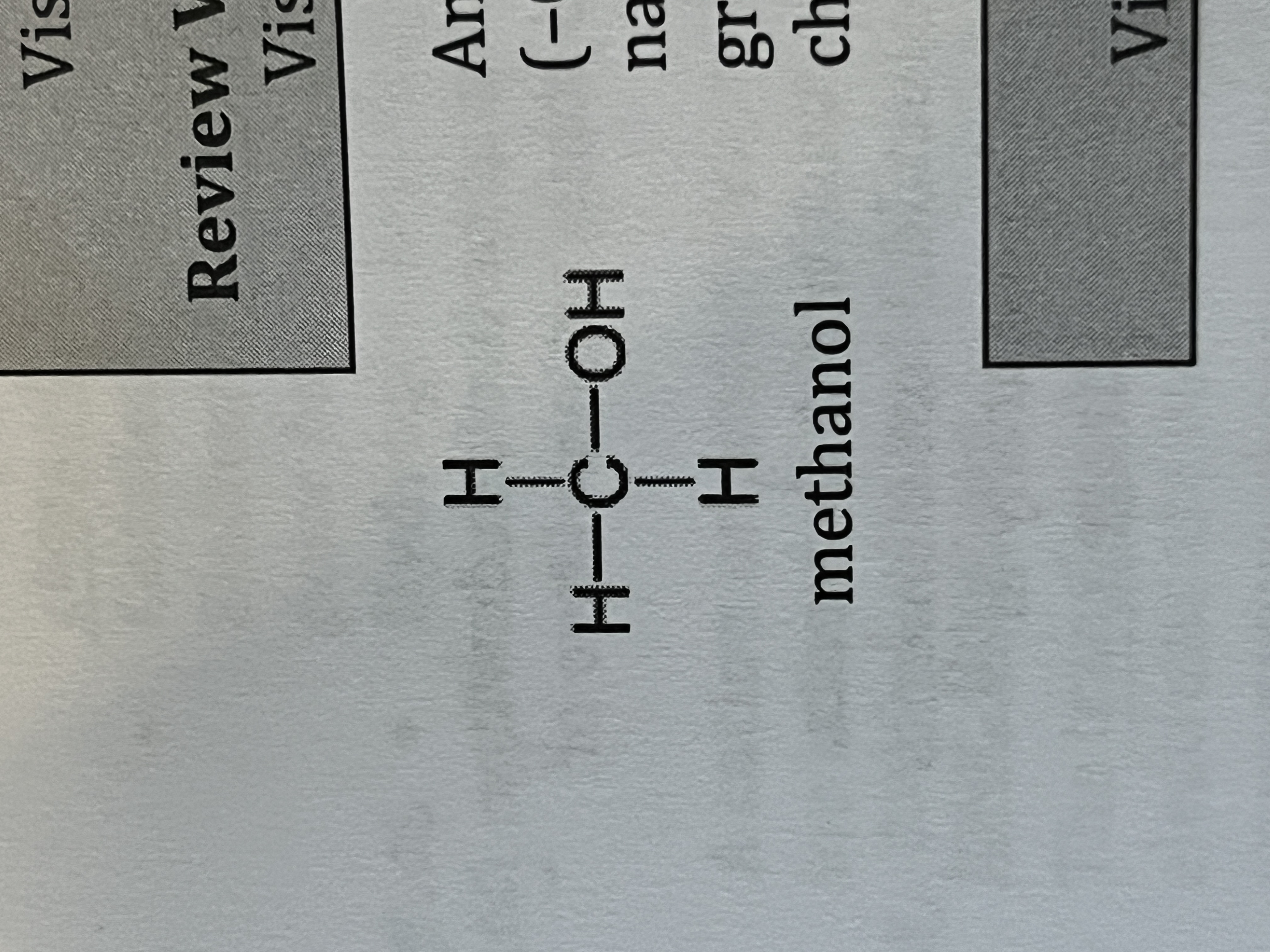
What are ethers?
A substituted hydrocarbon compound containing an oxygen molecule linking two hydrocarbon groups
-oxy-
Hydrocarbon - O - Hydrocarbon
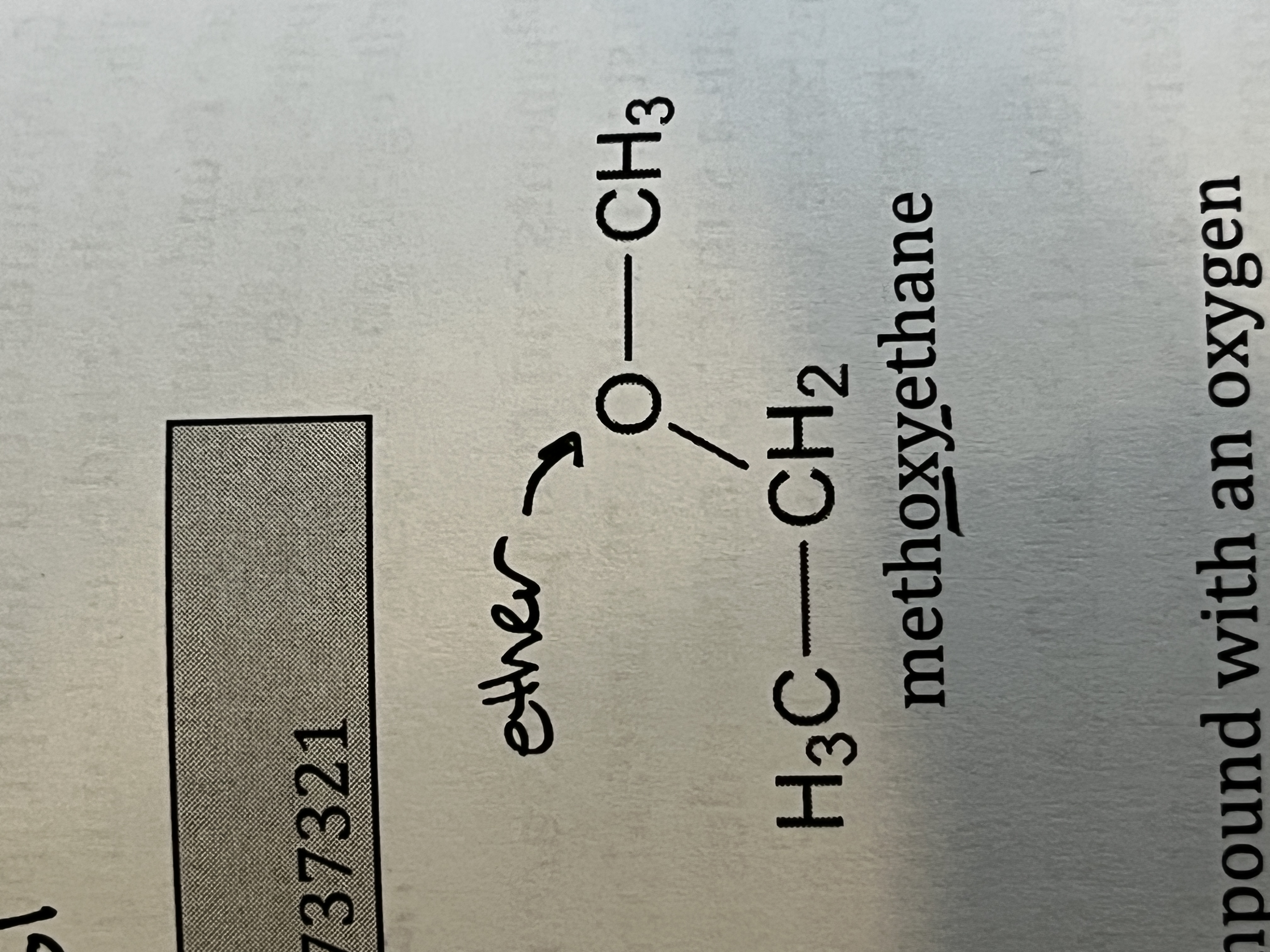
What is an aldehyde
A substituted hydrocarbon with an oxygen double bonded to a CH group at the end of a hydrocarbon
ends in “-al”
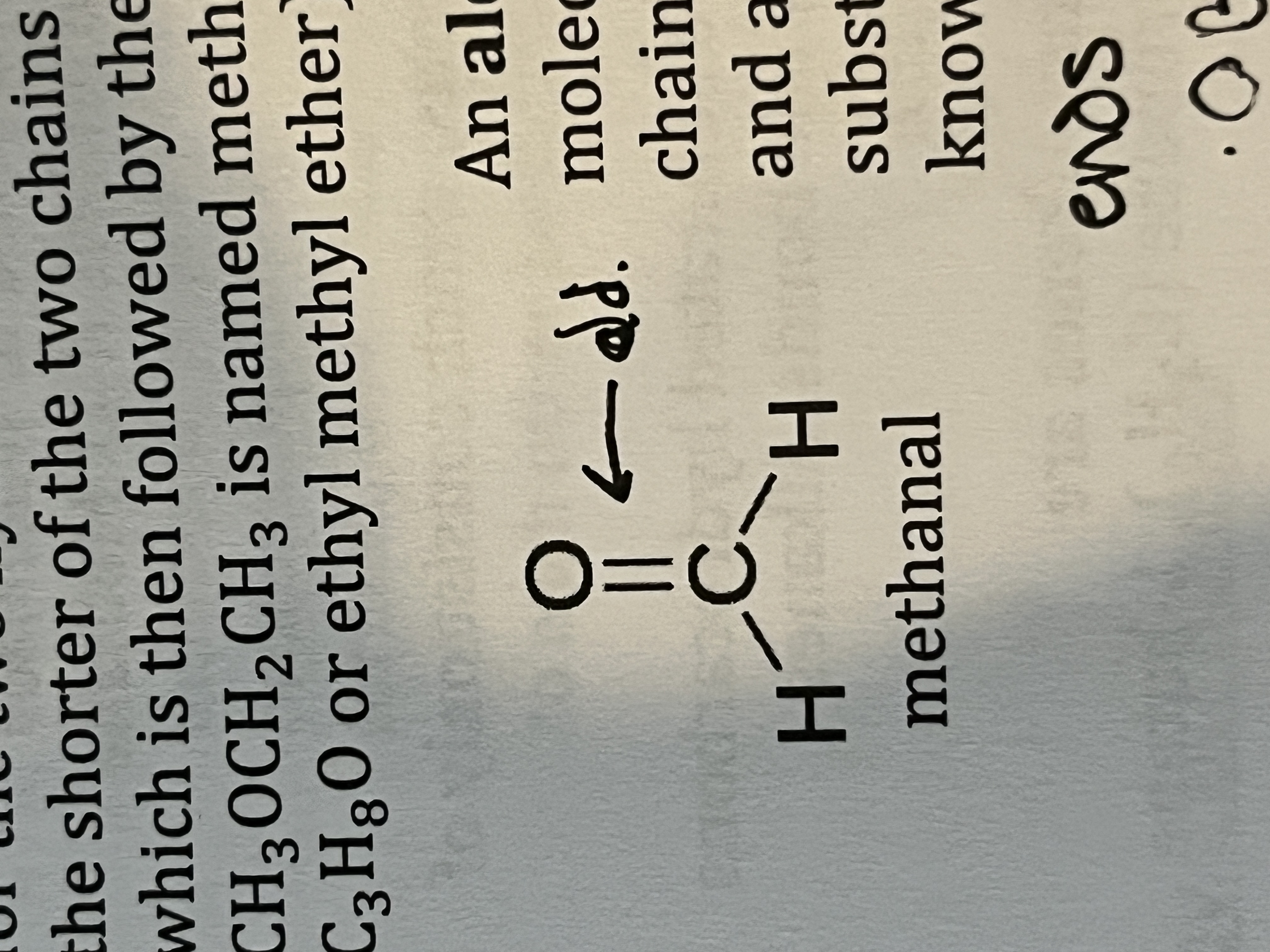
What is a ketone?
A substituted hydrocarbon with an oxygen double bonded to a carbon somewhere in a hydrocarbon chain
“-one”
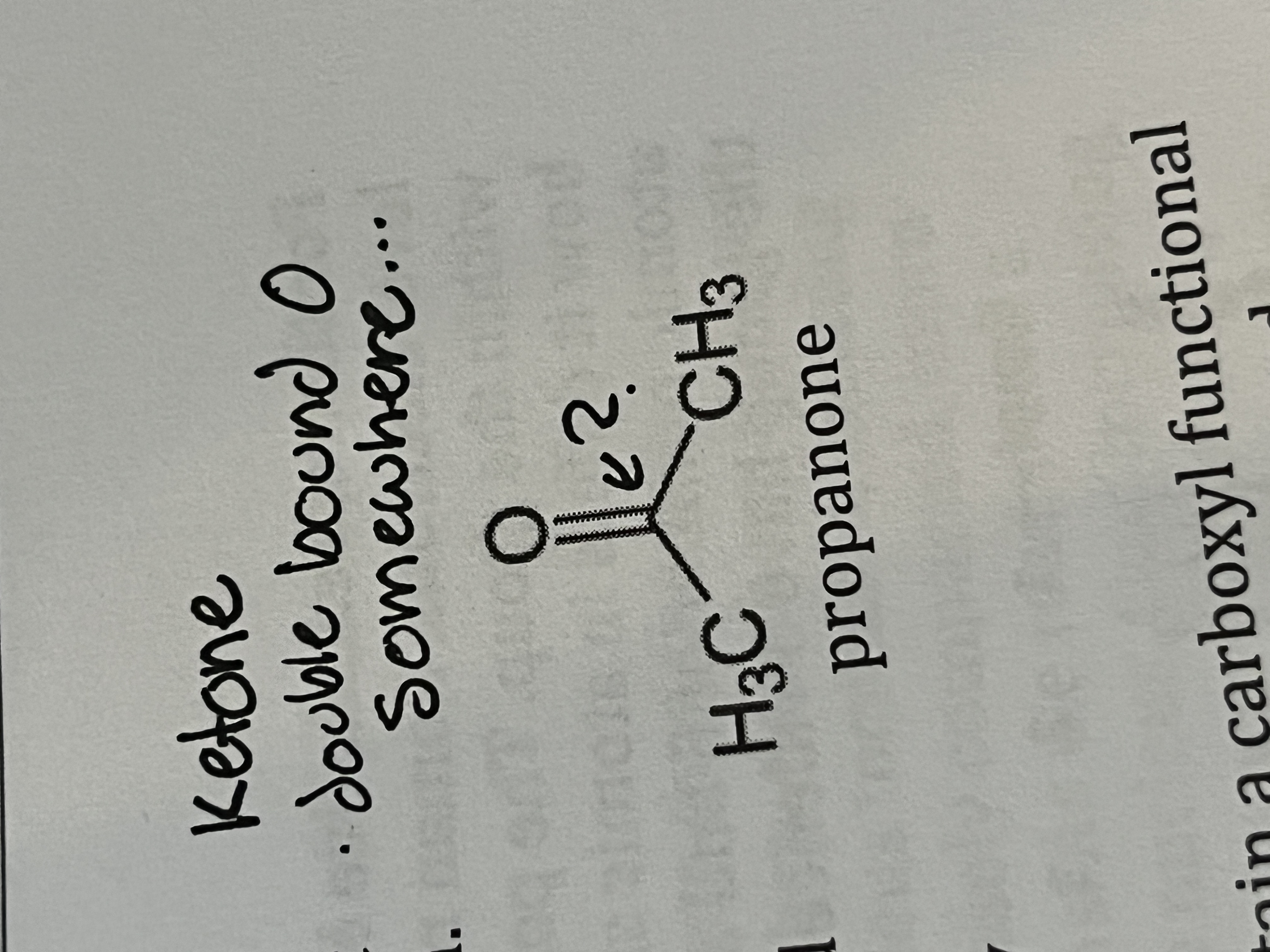
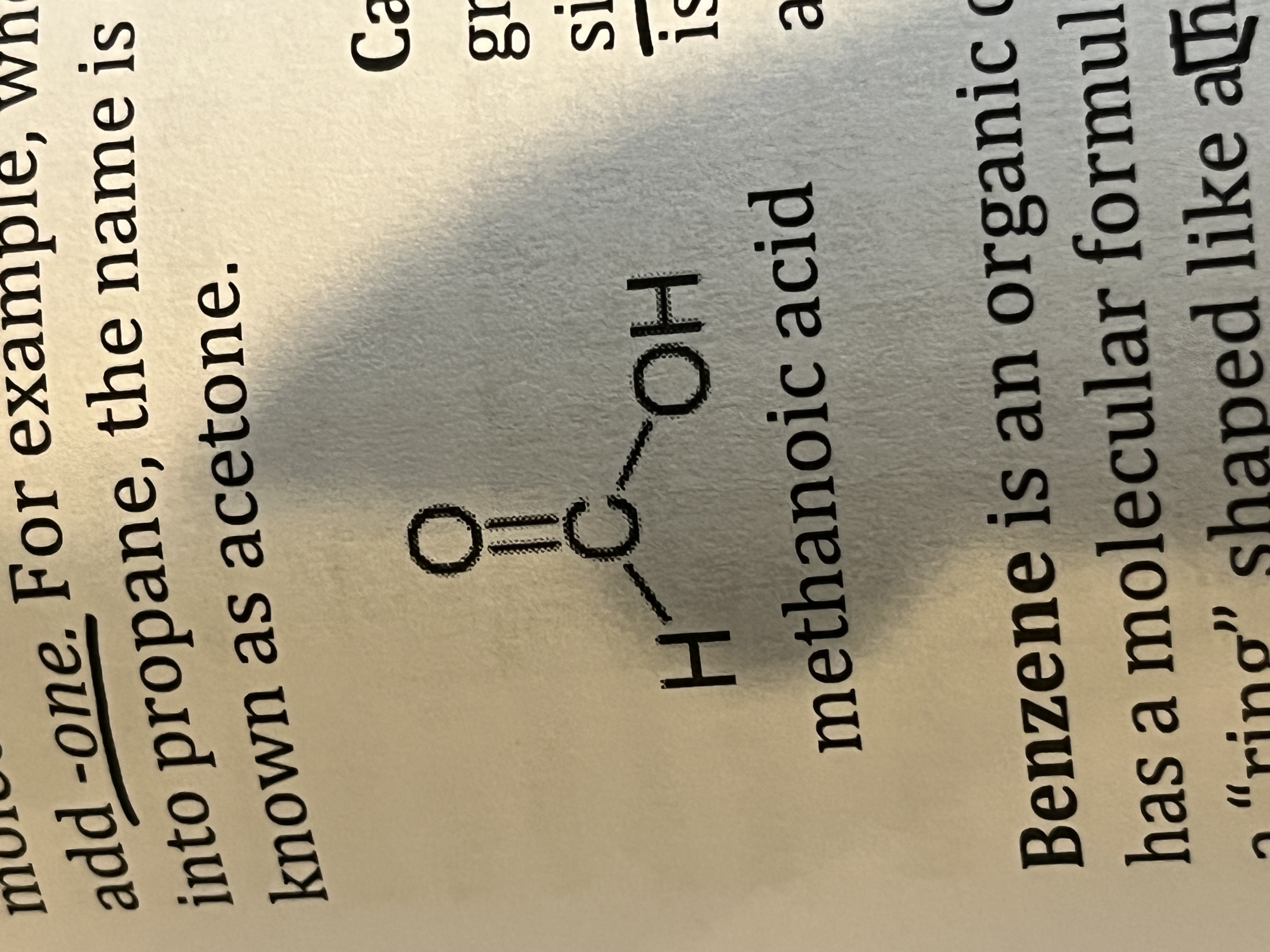
What is a carboxylic acid
An organic compound with a carbon atom double bonded to an oxygen and single bonded to a hydroxyl (-OH)
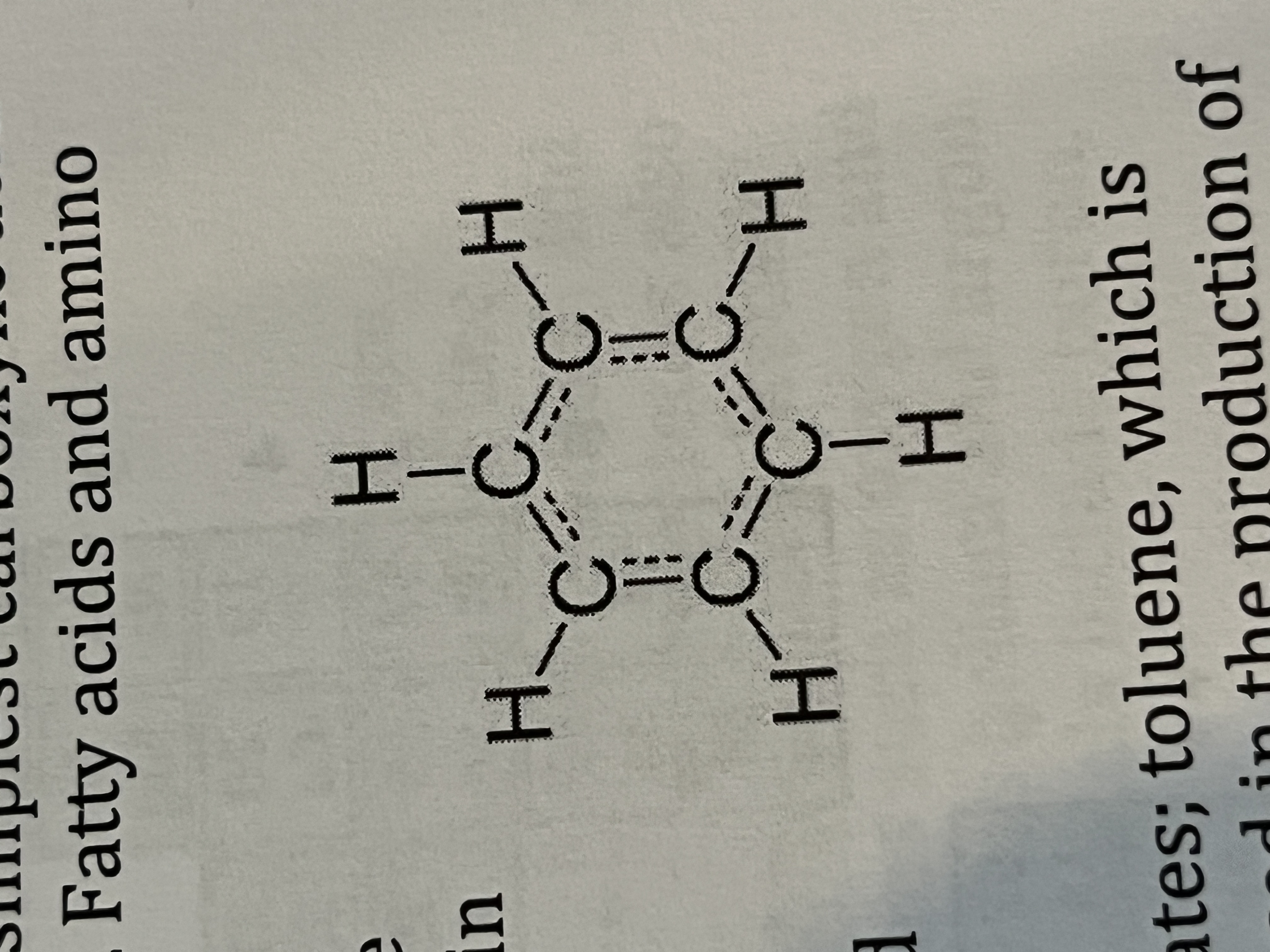
What is a benzene?
Organic compound that is an aromantic hydrocarbon.
6 carbons arranged in a ring forming a hexagon with alternating double bonds, single bonded to one hydrogen each
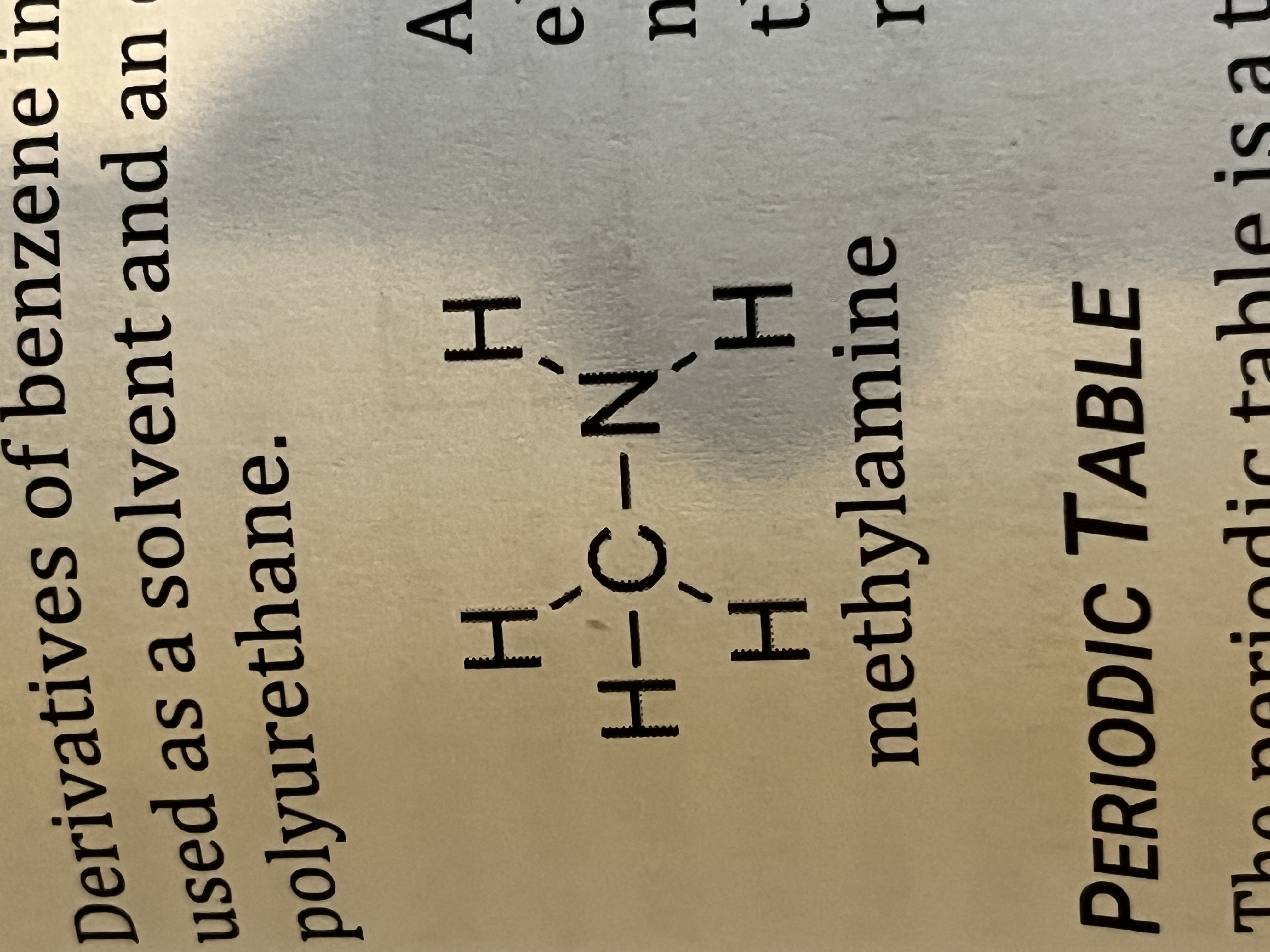
What is an amine
A compound with a nitrogen bound to one or more hydrocarbon groups
“amino-“ or “-amine”
Reactivity refers to…
The transact got a substance to engage in chemical reactions
What makes a substance have high reactivity?
If it engages in chemical reactions easily
complete shell of valence = low reactivity bc it doesn’t want to bond to anything
What does periodicity tell us about reactivity?
By grouping elements from left to right, we can predict reactivity. Larger groups on the right have more complete valence electron shells and are less reactive
What are intensive properties of substances?
Properties that do not depend on the amount of matter or quantity of the sample
will not change if size is increased/decreased
What are extensive properties of substance?
Properties that do depend on the amount of matter or quantity of the sample
change of size is increased or decreased
What is specific heat?
Heat capacity per unit mass.
heart required to raise the temperature of a substance
Conduction is…
A form of heat transfer requiring contact
A chemical property is only observed when
A chemical change occurs
Catalysts…
Accelerate chemical reactions
Inhibitors…
Decrease chemical reaction rates
What is an unbalanced equation?
One that does not follow the law of conservation of mass
Octet rule:
Atoms gain or lose electrons until pure shells contain 8
Single replacement is when
One reactant is displaced by another to form a final Product
a + B + c => b + ac
can be cationic or anionic
Double replacement is when…
Ions or bonds are exchanged by two compounds to form new compounds
AC + BD => AD + BC
What is an acid?
A compound that can donate a proton
What is a base?
A compound that can receive a proton
What happens when a proton is donated?
The base becomes a water and the remaining ions form a salt.
What does endothermic mean?
It consumes energy
What does exothermic mean?
It releases energy
What is activation energy?
Minimum energy required by reactant atoms or molecules in order to react
Catalysts are __
Chemicals that accelerate a chemical reaction without being consumed or used as part of the reaction.
What do catalysis do to activation energy?
They lower it.
because activation energy is the minimum amount of energy required for molecules to react, lowering it makes it possible for more reactions to take place