OAT Organic Chem: Reactions
 Call Kai
 Learn
Learn Practice Test
 Spaced Repetition
 Match
Match Flashcards
 Knowt Play
1/76

There's no tags or description
Looks like no tags are added yet.
Name | Mastery | Learn | Test | Matching | Spaced | Call with Kai | Chat |
|---|
No analytics yet
Send a link to your students to track their progress
77 Terms
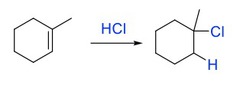
HBr (or HCl, HI)
to alkyne, alkene
add Br and H
Markovnikov, rearrangements possible
Alkyne + 1 eq HBr = Alkene with Br at most substituted
+ 2nd eq HBr = Alkane with 2 Br at most substituted
hydrohalogenation
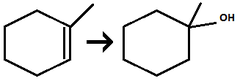
H3O+
to alkene
add -OH and H
markovnikov, rearrangements possible
hydration
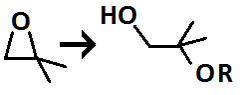
H+, ROH
to epoxide
add -OR and H
markovnikov, rearrangements possible
addition of alcohol
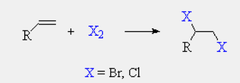
Br2 or Cl2/
CCl4
to alkyne, alkene
anti-addition of 2 Br
Alkyne + 1 eq Br2 = Alkene with Br at each side,
+ 2nd eq Br2 = Alkane with 2 Br at each side
bromination
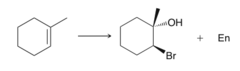
Br2 or Cl2/
H2O
to alkene
add Br and OH- (Halogen on least substituted)
markovnikov, anti-addition
bromination in H2O
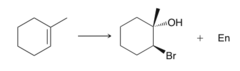
Br2 or Cl2/
ROH
to alkene
add Br and -OR (Halogen on least substituted)
markovnikov, anti addition
bromination in alcohol
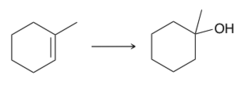
1) Hg(OAc)2, H2O
2) NaBH4
to alkene
Add H and -OH
markov, anti-addition
Oxymercuration/demurcuration
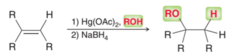
1) Hg(OAc)2, ROH
2) NaBH4
to alkene
add H and -OR
markov, anti-addition
alkoxymercuration-demurcuration
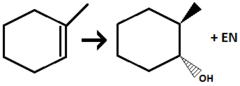
1) BH3 • THF
2) H2O2, -OH, H2O
to alkene
add H and -OH
anti-markov, syn-addition
hydroboration-oxidation
H2,
Pd/C or Pt/C or Ni
to alkyne, alkene
adds 2 H, syn addition
Alkene → Alkane
Alkyne → Alkane
Catalytic Hydrogenation/reduction

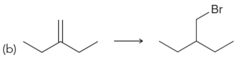
HBr/
ROOR (peroxide)
to alkene
adds H• and Br•
anti-markov
hydrobromination with peroxide
MCPBA or RCO3H
to alkene
adds epoxide ring between double bond
epoxidation

1. RCO3H (MCPBA)
2. H3O+
to alkene
adds 2 -OH
anti-addition
anti-hydroxylation
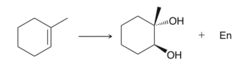
1) OsO4
2) H2O2
to alkene
alkane to double alcohol
syn-addition
syn-hydroxylation

KMnO4 (cold, dilute)/
-OH
to alkyne, alkene
alkene -> double alcohol
(syn-addition)
alkyne -> double ketone
syn-hydroxylation

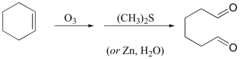
1. O3
2. (CH3)2S
or
2. Zn/H2O
to alkene
cleaves alkene =
1º -> aldehyde
2º -> ketone
ozonolysis under reducing conditions
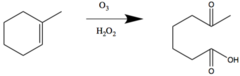
1) O3
2) H2O2, NaOH, H2O
to alkyne, alkene
cleaves double bond into ketone (2º substituted) and carboxylic acid (1º)
alkyne -> 2 carboxylic acids
terminal alkyne -> 1 carboxylic acid and 1 CO2
ozonolysis under oxidizing conditions
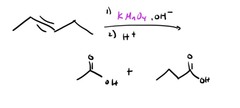
KMnO4 (hot, concentrated)/
H3O+
to alkyne, alkene
cleaves alkene into ketone (2º substituted) and carboxylic acid (1º substituted)
cleaves alkyne into 2 carboxylic acids
(ozonolysis under oxidizing conditions)
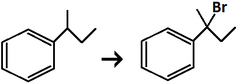
Br2, light or heat
to alkene
adds Br anywhere there's an available H
favors 3º cation, high selectivity
free radical bromination
Cl2, light or heat
to alkene
adds Cl where there's an available H
selective for what is most available
free radical chlorination

NBS
light or heat or ROOR (peroxide)
to alkene
adds Br to allylic/benzylic carbon, keeps alkene
allylic/benzylic bromination
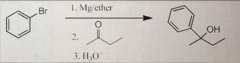
1) Mg/ether
2) ethyl methyl ketone
3) H3O+
to phenyl bromine
Br replaced with ketone at most substituted (ketone is reduced to alcohol)
nucleophilic addition of a grignard reagent to a ketone
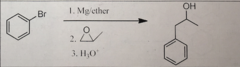
1) Mg/ether
2) epoxide
3) H3O+
to phenyl bromide
Br replaced with epoxide at least substituted (epoxide ring opens to most substituted and alcohol forms)
nucleophilic addition of a grignard reagent to an epoxide
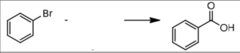
1) Mg/ether
2) CO2
3) H3O+
to phenyl bromide
Br replaced with carboxylic acid
nucleophilic addition of a grignard reagent to CO2
1) Mg/ether
2) H2O
grignards are protonated in protic solutions
protonation of a grignard reagent
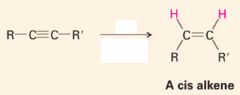
H2,
Lindlar's catalyst
to alkyne
alkyne --> cis (Z) alkene
reduction to cis-alkene
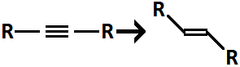
Na or Li,
NH3 (l)
to alkyne
alkyne --> trans (E) alkene
reduction to trans-alkene
H2SO4
or
1) Sia2BH THF
2) H2O2, OH-, H2O
to alkyne
reduces internal alkyne to ketone
ketone forms on either side of the bond
enol intermediate tautomerizes to ketone

HgSO4/
H2SO4
to alkyne
reduces terminal alkyne to ketone
markov
enol intermediate tautomerizes to ketone
hydration
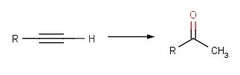
1) Sia2BH THF
2) H2O2, OH-, H2O
to alkyne
reduces terminal alkyne to aldehyde
anti-markov
enol intermediate tautomerizes to ketone
hydration

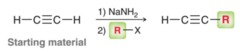
1. NaNH2,
2. R-X
to alkyne
deprotonates terminal alkynes, -R attaches where halide was
keeps alkene structure
(addition of an acetylide ion)
1. NaNH2,
2. ketone, H2O
to alkyne
deprotonates terminal alkynes,
ketone attached at most substituted and reduced to alcohol
keeps alkene structure

1. NaNH2,
2. epoxide, H2O
to alkyne
deprotonates terminal alkynes,
epoxide attaches at least substituted side and ring opens to most substituted side, epoxide reduces to alcohol
keeps alkene structure

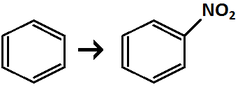
HNO3/
H2SO4
to benzene ring
attaches -NO2 to benzene ring
nitration (EAS)
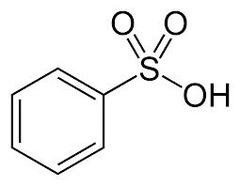
SO3/
H2SO4
to benzene ring
adds -SO3H to benzene
sulfonation (EAS)
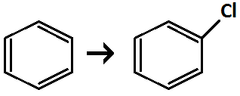
Cl2
AlCl3
to benzene ring
add Cl to aromatic ring
chlorination (EAS)
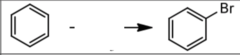
Br2/
FeBr3
to benzene ring
adds Br to aromatic ring
bromination (EAS)
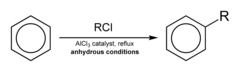
X-R
AlCl3
to benzene ring
adds -R to aromatic ring
*can rearrange
Friedel-Crafts Alkylation
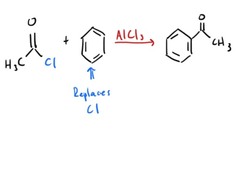
X-ketone
AlCl3
to benzene ring
adds -ketone to aromatic ring where X was
Friedel-Crafts Acylation
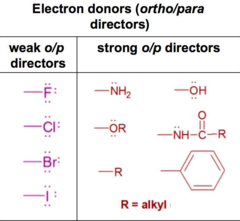
ortho/para directors
activating, electron donators
-NH2, -OH, -OR, NHCOCH3, -R, -aryl
meta directors
deactivating, electron pulling
carbonyls, -NO2, -SO3H, -CF3, -CN, -+NR3 (*halogens are ortho/para)
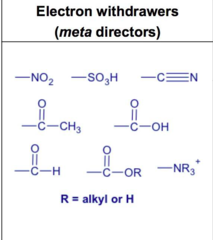
ortho/meta/para reagents
Br2/Cl2
AlCl3/FeBr3
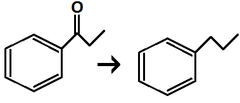
Zn(Hg)/
HCl
to ketone
reduces carbonyl to an alkane using acid
Clemmenson Reduction
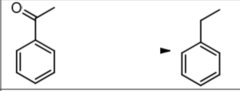
H2NNH2,
KOH, heat
to ketone
reduces carbonyl to alkane using acid
Wolff-Kishner Reduction
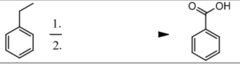
1) KMnO4, OH-, boil
2) H3O+
to phenylpropene
adds carboxylic acid at benzylic position, cuts off the rest
side-chain oxidation, benzylic oxidation
H-X or
HCl/ZnCl2
to alcohol
alcohol to alkyl chloride
SN1 for 2º and 3º alcohols,
SN2 for methanol 1º alcohols
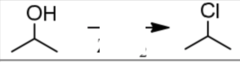
SOCl2
to alcohol, carboxylic acid
replaces -OH with -Cl
only for 1º and 2º
works for alcohols and carboxylic acids
(conversion to an alkyl chloride with thionyl chloride)
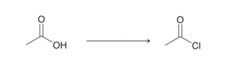
PBr3
to alcohol, carboxylic acid
replaces -OH with -Br
only for 1º and 2º, via SN2 (inversion of stereochemistry)
works for alcohols and carboxylic acids
(conversion to an alkyl bromide)
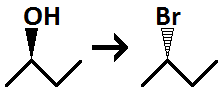
TsCl
to alcohol
Replaces -OH with -OTs
Retain stereochemistry
Conversion to a tosylate ester

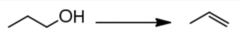
H2SO4 or H3PO4
to alcohol
replaces -OH with double bond
acid-catalyzed dehydration
Na2Cr2O7 or H2CrO4 or CrO3 (Jone's reagent)
H2SO4
to alcohol, aldehyde
makes carboxylic acids when it can or ketones
1º alcohol -> carboxylic acid
aldehyde -> carboxylic acid
2º alcohol -> ketone

PCC
to alcohol
turns -OH to -O double bond
1º alcohol -> aldehyde
2º alcohol -> ketone
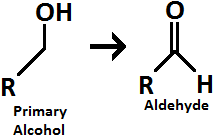
NaH (or Na or K)
to alcohol
deprotonates alcohol allowing addition to make an ether
2nd step is SN2
Williamson Ether Synthesis

Excess HBr (or HI or HCl)
to ether
splits an ether with -Br at each end
acid-catalyzed cleavage of ethers

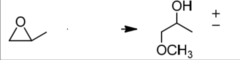
NaOCH3
CH3OH
to epoxide
attaches at less-substituted side and opens epoxide ring (SN2)
base-catalyzed ring opening of an epoxide
H+
CH3OH
to epoxide
attaches at more substituted side and opens epoxide ring (SN2)
acid-catalyzed opening of an epoxide

NaBH4,
EtOH/MeOH/H2O
to ketone, aldehyde, acid halide
reduces ketone/aldehyde/acid halides to alcohols
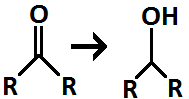
1) LiAlH4
2) H3O+
to ketone, aldehyde, acid halides, esters, carboxylic acids, amides
reduces ketones, aldehydes, acid chlorides, esters, carboxylic acids, and amides
ketone/aldehyde/acid chloride -> alcohol
carboxylic acid -> remove ketone to make alcohol
ester -> split and add -OH, makes 2 alcohols
amide -> amine (remove double O bond) (no loss of C)

1. DIBALH, -78º
2. H2O
to ester
cleaves ester to make an aldehyde and alcohol

LiAl[OC(CH3)3]3H
-78C
to acid halide
reduces acid chloride to aldehyde
-Cl leaves

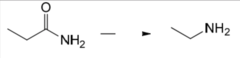
Br2
OH-
to amide
amide -> amine (with loss of a C)
Hoffman Rearrangement
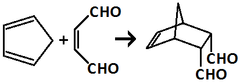
Diels-Alder Reaction, ∆
cycloaddition reaction
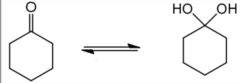
H2O
H+ or OH-
to ketone, aldehyde
ketone -> geminal diol
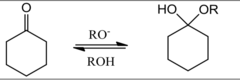
RO-
ROH
to ketone, aldehyde
ketone/aldehyde -> hemi-ketal
basic conditions
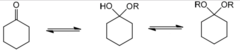
ROH
H+
to ketone, aldehyde
addition of 1 eq of an alcohol in acid to form a hemi-ketal and then a 2nd eq to form a ketal
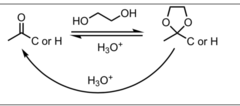
ethylene glycol
to ketone, aldehyde
ketone/aldehyde -> cyclic ketal
functions as a protecting group for ketones and aldehydes
H3O is used to reverse
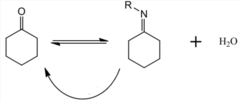
RNH2
H+
to ketone, aldehyde
ketone/aldehyde -> imine
addition of a 1º amine to form an imine (Schiff base)
(can be reversed with H3O+)
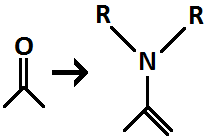
R2NH
H+
to ketone, aldehyde
ketone/aldehyde -> enamine
forms double bond on less substituted side if there's a difference
addition of a 2º amine to form an enamine
can be reversed with H3O+
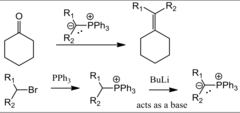
+PPh3 (phosphylide)
to ketone, aldehyde
C=O bond --> C=C-R bond
addition of a phosphylide to form an alkene
Wittig Reaction
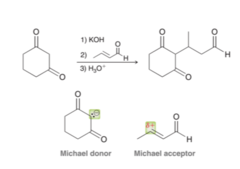
Michael Addition
an enolate attacks an α,β-conjugated carbonyl, attaching at ß position
(ß-addition or conjugate addition)
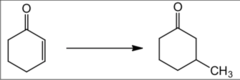
(CH3)2CuLi
H2O
to α,β-conjugated carbonyl
methyl attaches at ß position of an α,β-conjugated carbonyl
Michael Addition with a lithium dialkylcuprate
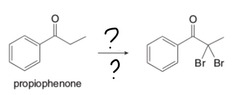
Br2
-OH (base)
to ketone, aldehyde
Br attaches to alpha position of ketone/aldehyde
XS can yield 2 Br additions to each alpha carbon
(alpha halogenation)
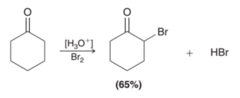
Br2
H+ (Acid)
to ketone, aldehyde
Br attaches to alpha position of ketone/aldehyde
cannot attach more
(alpha halogenation)
1. LDA
2. R-X
to ketone, aldehyde
addition of -R at alpha position of ketone/aldehyde
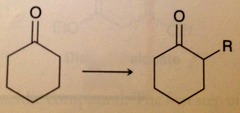
1) LDA
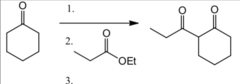
2) ester
3) H2O
to ketone, aldehyde
LDA deprotonates alpha carbon of ketone/aldehyde and ester attaches (OEt leaves) and makes ßdicarbonyl compoud
Claisen addtion to an ester
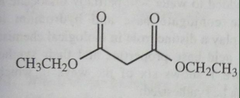
Malonic Ester
1. NaOEt
2. R-X
3. NaOEt
4. R-X
5. H3O+, ∆
carboxylic acid with 2 & 4 attached at alpha carbon
+CO2
(ß-decarboyxylation)
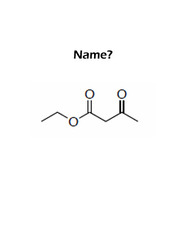
Acetoacetic Ester
1. NaOEt
2. R-X
3. NaOEt
4. R-X
5. H3O+, ∆
methyl ketone with 2 & 4 attached at alpha carbon
+CO2