C. Distribution
 Call Kai
 Learn
Learn Practice Test
 Spaced Repetition
 Match
Match Flashcards
 Knowt Play
1/54

There's no tags or description
Looks like no tags are added yet.
Name | Mastery | Learn | Test | Matching | Spaced | Call with Kai | Chat |
|---|
No analytics yet
Send a link to your students to track their progress
55 Terms
b. Distribution
Refers to the process by which the systemic circulation delivers a drug to its site of action, storage sites, and metabolizing organs.
a. Absorption
b. Distribution
c. Metabolism
d. Excretion
b. Cardiac output
Refers to the volume of blood pumped by the heart per minute.
a. Stroke volume
b. Cardiac output
c. Peripheral resistance
d. Blood pressure
a. Heart rate and stroke volume
Cardiac output is primarily determined by:
a. Heart rate and stroke volume
b. Blood pressure and pulse pressure
c. Heart rate and ejection fraction
d. Stroke volume and peripheral resistance
b. CO = HR × SV
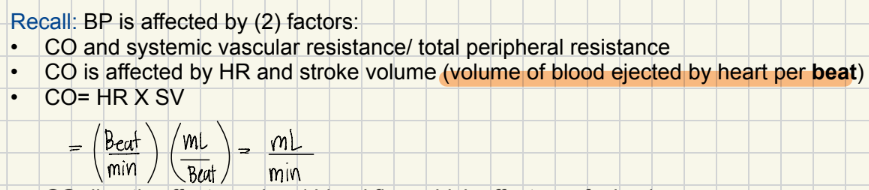
Which equation correctly represents cardiac output?
a. CO = HR ÷ SV
b. CO = HR × SV
c. CO = BP × HR
d. CO = SV ÷ HR
b. Volume of blood ejected by the heart per beat
Stroke volume refers to the:
a. Number of heart beats per minute
b. Volume of blood ejected by the heart per beat
c. Total blood volume in circulation
d. Blood flow through the coronary arteries
c. Organ perfusion
Cardiac output directly affects:
a. Drug metabolism
b. Drug excretion
c. Organ perfusion
d. Protein binding
c. Lungs
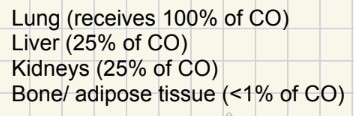
Which organ normally receives approximately 100% of the cardiac output?
a. Kidneys
b. Liver
c. Lungs
d. Brain
b. 25%
Approximately what percentage of cardiac output is received by the liver?
a. 10%
b. 25%
c. 50%
d. 75%
b. 25%
Approximately what percentage of cardiac output is received by the kidneys?
a. 10%
b. 25%
c. 40%
d. 60%
c. Less than 1% of cardiac output
Bone and adipose tissue normally receive:
a. About 25% of cardiac output
b. About 10% of cardiac output
c. Less than 1% of cardiac output
d. More than 50% of cardiac output
b. Pneumonia
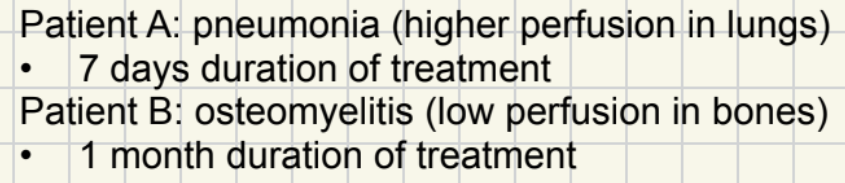
Which infection generally requires a shorter duration of treatment because of higher organ perfusion?
a. Osteomyelitis
b. Pneumonia
c. Cellulitis
d. Meningitis
a. Bone has low perfusion
Osteomyelitis commonly requires prolonged therapy because:
a. Bone has low perfusion
b. Bone has excessive metabolism
c. Bone has high protein binding
d. Bone rapidly eliminates drugs
b. Albumin

Which plasma protein primarily binds acidic drugs?
a. Alpha-1 acid glycoprotein
b. Albumin
c. Hormone-binding globulin
d. Hemoglobin
a. Alpha-1 acid glycoprotein
Which plasma protein primarily binds basic drugs?
a. Alpha-1 acid glycoprotein
b. Albumin
c. Hormone-binding globulin
d. Hemoglobin
c. Hormones
Hormone-binding globulin primarily binds:
a. Acidic drugs
b. Basic drugs
c. Hormones
d. Lipoproteins
b. Albumin
Protein synthesized in liver
a. Alpha-1 acid glycoprotein
b. Albumin
c. Hormone-binding globulin
d. Hemoglobin
a. Alpha-1 acid glycoprotein
A protein aka orosomucoid
a. Alpha-1 acid glycoprotein
b. Albumin
c. Hormone-binding globulin
d. Hemoglobin
b. Inactive

Drug bound to plasma protein is considered:
a. Active
b. Inactive
c. Metabolized
d. Excreted
a. Active
Drug ubbound to plasma protein is considered:
a. Active
b. Inactive
c. Metabolized
d. Excreted
c. Increased unbound drug concentration and toxicity
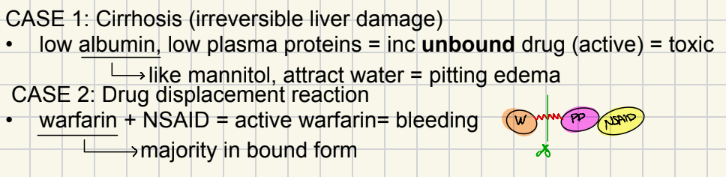
A patient with cirrhosis develops hypoalbuminemia. What is the expected effect on highly albumin-bound drugs?
a. Decreased unbound drug concentration
b. Increased protein binding
c. Increased unbound drug concentration and toxicity
d. Decreased drug activity
b. Pitting edema
Which adverse effect may result from hypoalbuminemia in cirrhosis?
a. Pulmonary edema
b. Pitting edema
c. Hypertension
d. Bradycardia
b. Bleeding
Concomitant administration of NSAIDs with warfarin may increase the risk of:
a. Hypertension
b. Bleeding
c. Bradycardia
d. Hyperglycemia
b. Albumin
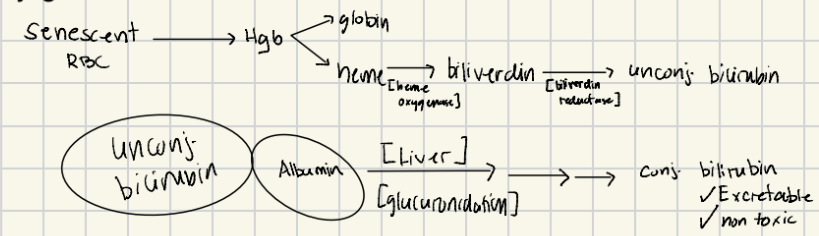
Unconjugated bilirubin is primarily transported in plasma bound to:
a. Hemoglobin
b. Albumin
c. Globulin
d. Transferrin
c. Less toxic during transport
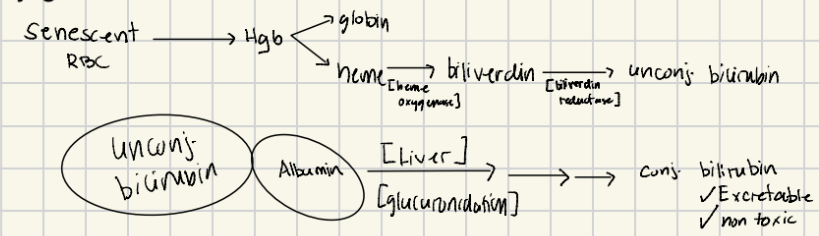
Binding of unconjugated bilirubin to albumin makes it:
a. Toxic
b. Water-soluble
c. Less toxic during transport
d. Conjugated
b. Sulfonamide
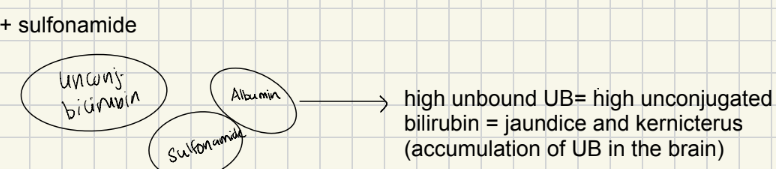
Which drug may displace unconjugated bilirubin from albumin?
a. Digoxin
b. Sulfonamide
c. Metformin
d. Atenolol
b. Kernicterus
and jaundice
Administration of sulfonamides to neonates may increase the risk of:
a. Hemolytic anemia
b. Kernicterus
c. Nephrotic syndrome
d. Hepatitis
c. Volume of distribution
Hypothetical volume required to dissolve a drug to equal its plasma concentration
a. Total body water
b. Plasma volume
c. Volume of distribution
d. Cardiac Output
No, max is 42 L
can body hold 300L of water?
b. Vd = Dose ÷ Plasma concentration
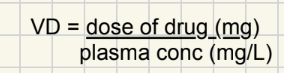
Which formula correctly represents the volume of distribution?
a. Vd = Plasma concentration ÷ Dose
b. Vd = Dose ÷ Plasma concentration
c. Vd = Clearance × Half-life
d. Vd = Half-life ÷ Clearance
d. Loading dose
or initial dose
Volume of distribution is commonly used to calculate the:
a. Maintenance dose
b. Bioavailability
c. Elimination rate constant
d. Loading dose

Solve for the loading dose:
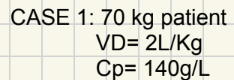
c. 60%

The approximate percentage of total body weight composed of water is:
a. 40%
b. 50%
c. 60%
d. 80%
c. 40%
Approximately what percentage of total body water is intracellular fluid?
a. 20%
b. 30%
c. 40%
d. 60%
b. 20%
Approximately what percentage of total body water is extracellular fluid?
a. 10%
b. 20%
c. 30%
d. 40%
c. 15%
Interstitial fluid comprises approximately what percentage of total body water?
a. 3%
b. 5%
c. 15%
d. 25%
a. 5%
Plasma comprises approximately what percentage of total body water?
a. 5%
b. 10%
c. 15%
d. 20%
high
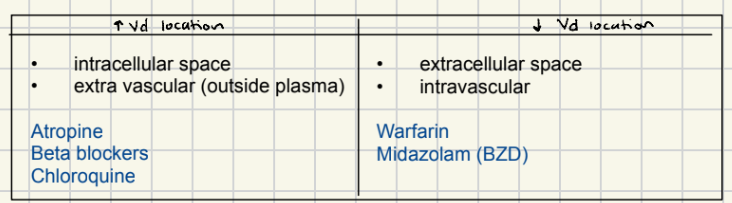
intracellular space has [high/low] volume of distribution
high
extra vascular (outside plasma) has [high/low] volume of distribution
c. Atropine
Which drug is primarily distributed into the intracellular space?
a. Warfarin
b. Midazolam
c. Atropine
d. Heparin
a. Beta blockers
Which drug is primarily distributed into the intracellular space?
a. Beta blockers
b. CCB
c. ACEIs
d. ARBs
d. Chloroquine
Which drug is primarily distributed into the intracellular space?
a. Clonazepam
b. Clozapine
c. Quetiapine
d. Chloroquine
low
extracellular space has [high/low] volume of distribution
low
Intravascular space has [high/low] volume of distribution
c. Warfarin
Which drug is primarily confined to the intravascular space?
a. Atropine
b. Amlidipine
c. Warfarin
d. Digoxin
b. Chloroquine
Which drug is primarily confined to the intravascular space?
a. Atropine
b. Chloroquine
c. Clopidogrel
d. Digoxin
b. Blood-brain barrier
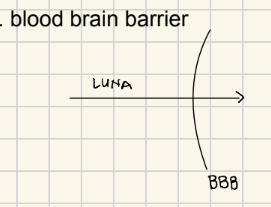
Which barrier most restricts drug entry into the central nervous system?
a. Placental barrier
b. BBB
c. Glomerular barrier
d. Intestinal barrier
b. Low-molecular-weight heparin
Which anticoagulant is preferred during pregnancy because it does not cross the placenta?
a. Warfarin
b. Low-molecular-weight heparin
c. High-molecular-weight heparin
d. Unfractionated heparin
c. High-molecular-weight heparin
Unfractionated heparin aka
a. Warfarin
b. Low-molecular-weight heparin
c. High-molecular-weight heparin
d. Dabigatran
c. Warfarin
Which anticoagulant readily crosses the placental barrier?
a. Unfractionated heparin
b. Low-molecular-weight heparin
c. Warfarin
d. Fondaparinux
b. Heparin
APAS is abortion 3x
Use in anti phospholipid antibody syndrome (APAS)
a. Warfarin
b. Heparin
c. Rivaroxaban
d. Dabigatran
b. Fetal warfarin syndrome
Which congenital disorder is associated with maternal warfarin use during pregnancy?
a. Fetal alcohol syndrome
b. Fetal warfarin syndrome
c. Turner syndrome
d. Down syndrome
b. Nasal hypoplasia
Which congenital abnormality is characteristic of fetal warfarin syndrome?
a. Cleft palate
b. Nasal hypoplasia
c. Spina bifida
d. Microcephaly
c. Stippled epiphyses
Which additional skeletal abnormality is associated with fetal warfarin syndrome?
a. Polydactyly
b. Syndactyly
c. Stippled epiphyses
d. Clubfoot
c. Brachydactyly
small fingers
Which hand abnormality may occur in fetal warfarin syndrome?
a. Macrodactyly
b. Arachnodactyly
c. Brachydactyly
d. Camptodactyly
b. Antiphospholipid antibody syndrome
Heparin is commonly used in pregnant patients with:
a. Atrial fibrillation only
b. Antiphospholipid antibody syndrome
c. Hemophilia A
d. Disseminated intravascular coagulation