W4~ chapter 25: Trauma
 Call Kai
 Learn
Learn Practice Test
 Spaced Repetition
 Match
Match Flashcards
 Knowt Play
1/28

There's no tags or description
Looks like no tags are added yet.
Name | Mastery | Learn | Test | Matching | Spaced | Call with Kai | Chat |
|---|
No analytics yet
Send a link to your students to track their progress
29 Terms
What is the leading cause of death for people aged 1-44
Unintentional Traumatic Injuries
Traumatic Injuries vs Medical Emergencies
Traumatic Injuries: Physical Force applied to the body
Medical Emergencies: illness or conditions not caused by force
What is Index of suspicion?
the awareness/concern for possible underlying injuries
Is the speed of the fall more important or is height?
height
Is the speed of a car more important or its weight
speed
Work vs Kinetic Energy vs Potential Energy
Potential Energy: the product of mass; force of gravity as you move up; height
Kinetic Energy: Energy of a moving object
Work: Force acting over distance; abrupt stop
(MOI) Non Significant vs Significant Trauma
Non significant: 1 body part, fall with no unconsciousness
Significant: Multisystem trauma; common in falls, crash, wounds and stabbings
What is Blunt Trauma
Forces upon the body that do not penetrate the skin
What risks does bunt trauma pose for conditions?
You have to look very carefully for notable changes to have a high index of suspicion for internal bleeding/damage
How are Vehicular crashes categorized
based on the direction of force Frontal, Rear-End, T bone, Rollover, and Spins/ Rotational
In Frontal Crashes what are key evidence of trauma?
the supplemental restraint system, airbag deployment, front windshield +
In Rear-End Crashes what are key effects of trauma?
The whiplash which as car comes to a drastic stop, the passenger moves forward, then aggressively back
What is a key point of T-Bone Crashes? vs Lateral Whiplash
an awkward crash so its a common cause of death; medical condition where they hit against the side of a window
Rollover vs Rotational Crashes
Rollover: car is on its side; prepare life threatening injuries (2nd/3rd collisions)
Rotational: car spins in donuts out of control until its strikes something
How should you evaluate a pedestrian and car crash?
Assess the car speed and the patient severity; be aware of underlying injuries
How should you evaluate a bicycle and car crash?
evaluate bike position, patient condition (with leather); Helmet are important fir evaluating the impact of a head/ spinal cord injury
What are the 4 types of Motorcycle Crash impacts
Head-On Crash, Angular Crash, Ejection and Controlled Crash
When evaluating a scene consider:
The height of the fall, The type of Surface Shock, and The part of initial impact and where the path of energy is after
What is Penetrating Trauma
Trauma where physical entrance is visible
When evaluating Penetrating Trauma what should you evaluate?
Count the number of wounds (lets dr evaluate entrance and exit wounds)
Path vs Drag vs Cavitation
Path: Trajectory
Cavitation: rapid internal change via projectile
Drag: air resistance that disturbs the outer
Mass Double vs Velocity Double
Mass Double: energy doubles
Velocity Double: Energy Quadruples
What are the 4 blast injury types?
Primary blast Injuries, Secondary Blast Injuries, Tertiary Blast Injuries and Quaternary Blast Injuries
Primary blast Injuries vs Secondary Blast Injuries vs Tertiary Blast Injuries vs Quaternary Blast Injuries
Primary Blast Injuries: Injuries due to the blast waves itself
Secondary Blast Injuries: Injuries due to missiles being propelled by blast force
Tertiary Blast Injuries: Injuries due to impact with another object
Quaternary Blast Injuries: Collateral Injuries such as burns, crush injury, and toxic inhalation
Solid vs Hollow tissues in blast injuries
Hollow: Susceptible to air changes; most common in the air
Solid: Relative protected
Solid and Hollow Organs of the abdomen
Solid: Liver, spleen, pancreas, and kidneys
Hollow: Stomach, Large/ Small Intestine, and Bladder
The phrase is Platinum __
10
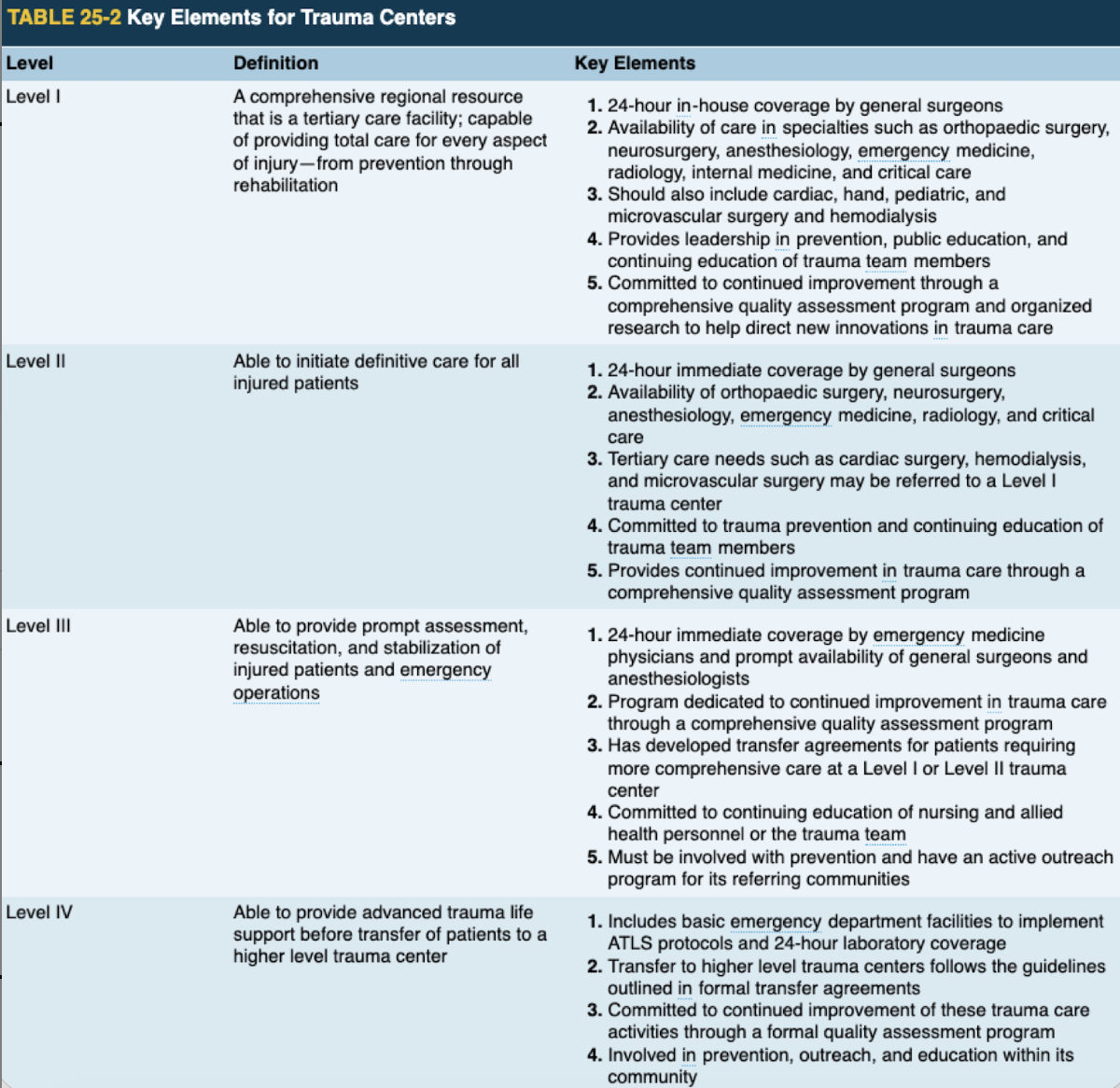
Explain the Trauma Center Categories
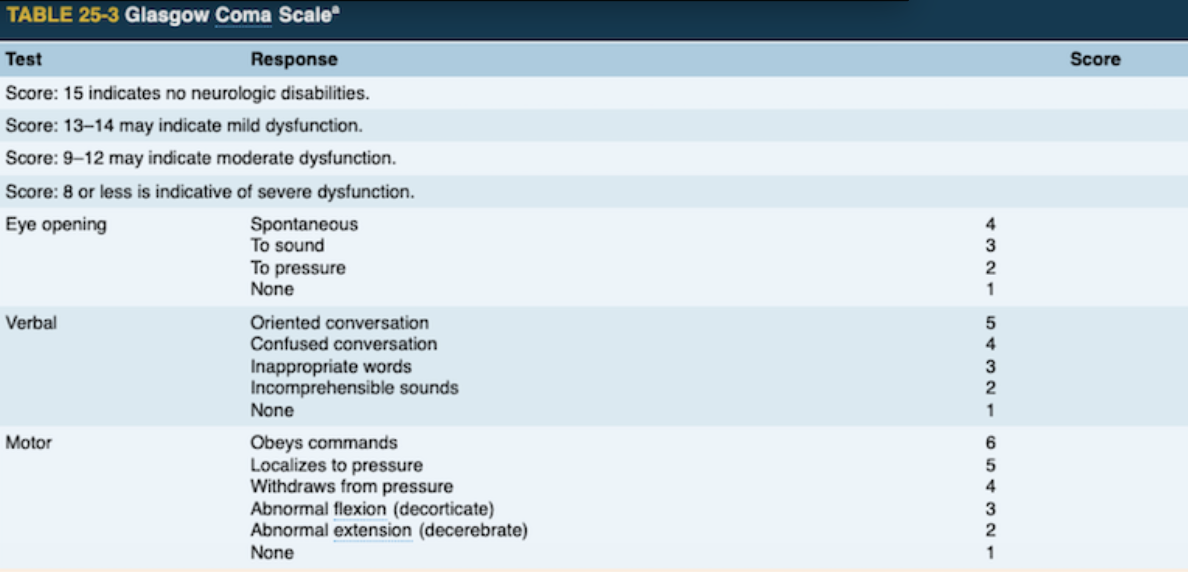
Explain the Glasgow Coma Scale