Computer Architecture Test 1 (Ch. 1 & Ch. 2)
 Call Kai
 Learn
Learn Practice Test
 Spaced Repetition
 Match
Match Flashcards
 Knowt Play
1/41

There's no tags or description
Looks like no tags are added yet.
Name | Mastery | Learn | Test | Matching | Spaced | Call with Kai | Chat |
|---|
No analytics yet
Send a link to your students to track their progress
42 Terms
List the main structural components of a computer
CPU, Main Memory, I/O, and System Interconnection
List the main structural components of a processor
Control Unit, Arithmetic and Logic unit, Registers, and CPU interconnection
what is a CPU?
controls the operation of the computer and performs its data processing functions
what is the main memory?
stores data
What is I/O?
moves data between the computer and its external environment
what is system interconnection?
some mechanism that provides for communication among CPU, main memory, and I/O
what is a control unit?
Controls the operation of the CPU and hence the computer
what is the arithmetic and logic unit?
Performs the computer’s data processing function
what is a register?
Provide storage internal to the CPU
what is CPU interconnection?
Some mechanism that provides for communication among the control unit, ALU, and registers
what are some techniques used to speed up a processor?
Pipelining, Branch Prediction, Superscalar Execution, Data Flow Analysis, Speculative Execution
What is Pipelining?
enables a processor to work simultaneously on multiple instructions by performing a different phase for each of the multiple instructions at the same time.
What is Branch Prediction?
The processor looks ahead in the instruction code fetched from memory
predicts which branches, or groups of instructions, are likely to be processed next
What is Superscalar Execution?
the ability to issue more than one instruction in every processor clock cycle. In effect, multiple parallel pipelines are used
What is Data Flow Analysis?
The processor analyzes which instructions are dependent on each other’s results, or data, to create an optimized schedule of instructions.
In fact, instructions are scheduled to be executed when ready, independent of the original program order. This prevents unnecessary delay
What is Speculative Execution?
Using branch prediction and data flow analysis,
some processors speculatively execute instructions ahead of their actual appearance in the program execution, holding the results in temporary locations.
This enables the processor to keep its execution engines as busy as possible by executing instructions that are likely to be needed.
What is Amdahls Law?
states that overall system speedup remains constrained by the fraction of execution time belonging to the strictly sequential code that cannot be run in parallel.
What is computer architecture?
refers to those attributes of a system visible to a programmer
What is Computer Organization?
describes how the physical hardware components of a computer system are arranged, to execute instructions and implement a given architecture
What is computer structure?
The way in which the components are interrelated.
What is computer function?
The operation of each individual component as part of the structure
What is a Core?
An individual processing unit on a processor chip
What is a stored program computer?
a computer that reads the program instructions it is executing directly from fast electronic storage
List and explain the key characteristics of a computer family
Similar or identical instruction set
Increasing speed
Increasing memory size
Similar or identical operating system
Increasing number of I/O ports
Increasing cost
What is the key distinguishing feature of a microprocessor
the integration of multiple functions on a single chip
Explain Moore’s law
the observation that the number of transistors on a microchip doubles about every two years while the cost of computers drops
Explain the concept of performance balance
designing a system so that all major components—such as the CPU, memory, storage, and I/O interfaces—have matching capabilities and speeds
Briefly characterize Little’s law
Lambda = avg arrival rate
W = avg unit of time
L = avg of unit
L = lambda(W)
Explain multicore systems
Feature a small number of powerful, complex, general-purpose cores (typically 2 to 32) optimized for sequential instruction speed and low latency.
Feature thousands of tiny, specialized cores built for massive data throughput rather than complex logic
Explain GPGPUs
Feature thousands of tiny, specialized cores built for massive data throughput rather than complex logic
Originally designed for rendering images, now widely repurposed for machine learning, deep neural networks, and massive mathematical simulations
What is a MIC (many integrated core)
Contain a large number (50+) of simpler, lower-power, CPU-like cores on a single chip.
Built for heavy parallel data processing and high-performance scientific or enterprise computing without needing graphics hardware
Define MIPS
millions of instructions per second
f / CPI * 10^6
Define FLOPS
millions of floating-point operations per second
Number of executed floating - point operations in a program / Execution time * 106
what is Arithmetic mean
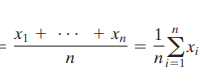
What is Geometric Mean?

What is Harmonic Mean?
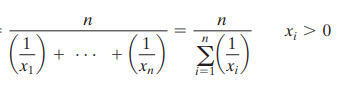
List the desirable characteristics of a benchmark program
1. It is written in a high-level language, making it portable across different machines.
2. It is representative of a particular kind of programming domain or paradigm, such as systems programming, numerical programming, or commercial programming.
3. It can be measured easily.
4. It has wide distribution.
What are the SPEC benchmarks?
What are the differences among base metric, peak metric, speed metric, and rate metric
What is a Peak Metric?
This enables users to attempt to optimize system performance by optimizing the compiler output. For example, different compiler options may be used on each benchmark, and feedback-directed optimization is allowed.
What is a speed metric
This is simply a measurement of the time it takes to execute a compiled benchmark.
What is a Rate metric
This is a measurement of how many tasks a computer can accomplish in a certain amount of time