BIOL 1020 - CHAPTER 4 + 5
 Call Kai
 Learn
Learn Practice Test
 Spaced Repetition
 Match
Match Flashcards
 Knowt Play
1/156

There's no tags or description
Looks like no tags are added yet.
Name | Mastery | Learn | Test | Matching | Spaced | Call with Kai | Chat |
|---|
No analytics yet
Send a link to your students to track their progress
157 Terms
What is vitalism?
The belief that living organisms possess a special “vital force” that makes them fundamentally different from nonliving matter.
What is mechanism?
The idea that biological processes can be explained by physical and chemical laws, without requiring a special “life force.”
What is the main difference between vitalism and mechanism?
Vitalism → life requires a special force
Mechanism → life can be explained through chemistry and physics
What experiment helped disprove vitalism?
Friedrich Wöhler's synthesis of urea from inorganic starting materials.
Why was Wöhler's urea experiment important?
It showed that an organic molecule could be produced from nonliving/inorganic materials, providing evidence against vitalism.
Why was vitalism accepted before modern chemical experimentation?
Scientists did not yet understand the chemistry of living organisms, and they lacked the experimental evidence showing that organic molecules could be produced through ordinary chemical processes.
What is organic chemistry?
The study of carbon-containing compounds.
Why is carbon especially important in biology?
Carbon can form four covalent bonds, allowing it to create many different and complex molecules.
How many covalent bonds can carbon form?
4
Why can carbon form such a huge variety of molecules?
Carbon can bond to four atoms, including other carbon atoms, allowing it to form chains, branches, rings, and double bonds.
What is a carbon skeleton?
The carbon backbone of an organic molecule.
What are the major ways carbon skeletons can differ?
Length
Branching
Position of double bonds
Rings
Why does carbon skeleton structure matter?
Different structures can produce molecules with different shapes, properties, and functions.
What is the basic shape of carbon when it has four single covalent bonds?
Tetrahedral.
What is a hydrocarbon?
A molecule containing only carbon and hydrogen.
How can hydrocarbons be diverse if they only contain carbon and hydrogen?
Their carbon skeletons can differ in:
Length
Branching
Double bonds
Rings
What does branching mean in a hydrocarbon?
Carbon atoms form a main chain with additional carbon chains branching off.
How can double bonds create diversity?
A double bond changes the structure and shape of the molecule and can occur at different positions.
How can rings create diversity?
Carbon atoms can bond to each other to form closed loops/rings instead of only chains.
Are hydrocarbons generally hydrophilic or hydrophobic?
Hydrophobic, because C–H bonds are relatively nonpolar
In a line drawing of an organic molecule, what does an unlabeled line end represent?
A carbon atom.
What does a vertex/corner in a line drawing represent?
A carbon atom.
Are carbon atoms always written explicitly in line drawings?
No. Carbon is usually implied at line ends and vertices.
Are hydrogen atoms attached to carbon usually shown?
No. They are usually implied.
How do you determine how many hydrogens are attached to a carbon in a line drawing?
Carbon wants 4 total bonds. Count the bonds already shown, then add enough H atoms to give carbon four bonds.
What is the molecular formula of octane?
C₈H₁₈
If a carbon has two bonds already shown, how many implied H atoms does it have?
Usually 2 H, assuming no other bonds are present.
What are isomers?
Molecules with the same molecular formula but different structures/arrangements.
What are the THREE types of isomers you need to know?
Structural isomers
Cis-trans isomers
Enantiomers
What are structural isomers?
Molecules with the same molecular formula but different covalent arrangements of atoms.
How do you recognize structural isomers?
Same molecular formula, but the atoms are connected differently.
What is an example of structural isomerism?
Two molecules can both have C₅H₁₂ but have different carbon skeletons because one is branched and the other is not.
What are cis-trans isomers?
Molecules with the same covalent connections but different spatial arrangements around a double bond.
What does CIS mean?
The relevant groups are on the same side of the double bond.
What does TRANS mean?
The relevant groups are on opposite sides of the double bond.
Why can cis/trans isomers form around a double bond?
Double bonds restrict rotation, so the groups cannot freely rotate around the bond.
What are enantiomers?
Molecules that are mirror images of each other but cannot be superimposed.
What is another term for enantiomers?
Optical isomers.
What is a chiral/asymmetric carbon?
A carbon attached to four different groups.
How do you recognize a chiral carbon on a quiz?
Find a carbon with FOUR DIFFERENT groups attached.
What is the relationship between a chiral carbon and enantiomers?
A molecule containing a chiral carbon can have non-superimposable mirror-image forms called enantiomers.
Why are enantiomers important in biology?
Biological molecules interact based on three-dimensional shape, so two mirror-image molecules can have different biological effects.
What are the seven major functional groups?
Hydroxyl
Carbonyl
Carboxyl
Amine
Sulfhydryl
Phosphate
Methyl
What does a hydroxyl group look like?
–OH

What are properties of hydroxyl?
Polar and able to participate in hydrogen bonding.
What type of molecule contains hydroxyl groups?
Alcohols.
What does a carbonyl group look like?
C=O
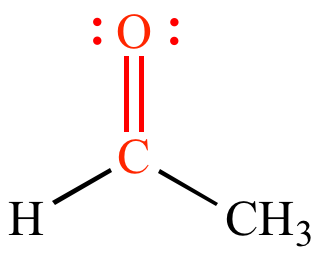
What are the two major types of carbonyl-containing compounds?
Ketones and aldehydes.
How do you distinguish a ketone from an aldehyde?
Ketone → C=O is in the MIDDLE of the carbon skeleton
Aldehyde → C=O is at the END of the carbon skeleton
What is a ketose?
A sugar containing a ketone group.
What is an aldose?
A sugar containing an aldehyde group.
What does a carboxyl group look like?
–COOH

What does a carboxyl group do?
It can donate H⁺, so it acts as an acid.
What charge can a carboxyl group have after losing H⁺?
−1
**SEE COOH → CARBOXYL → ACID
What does an amine/amino group look like?
–NH₂
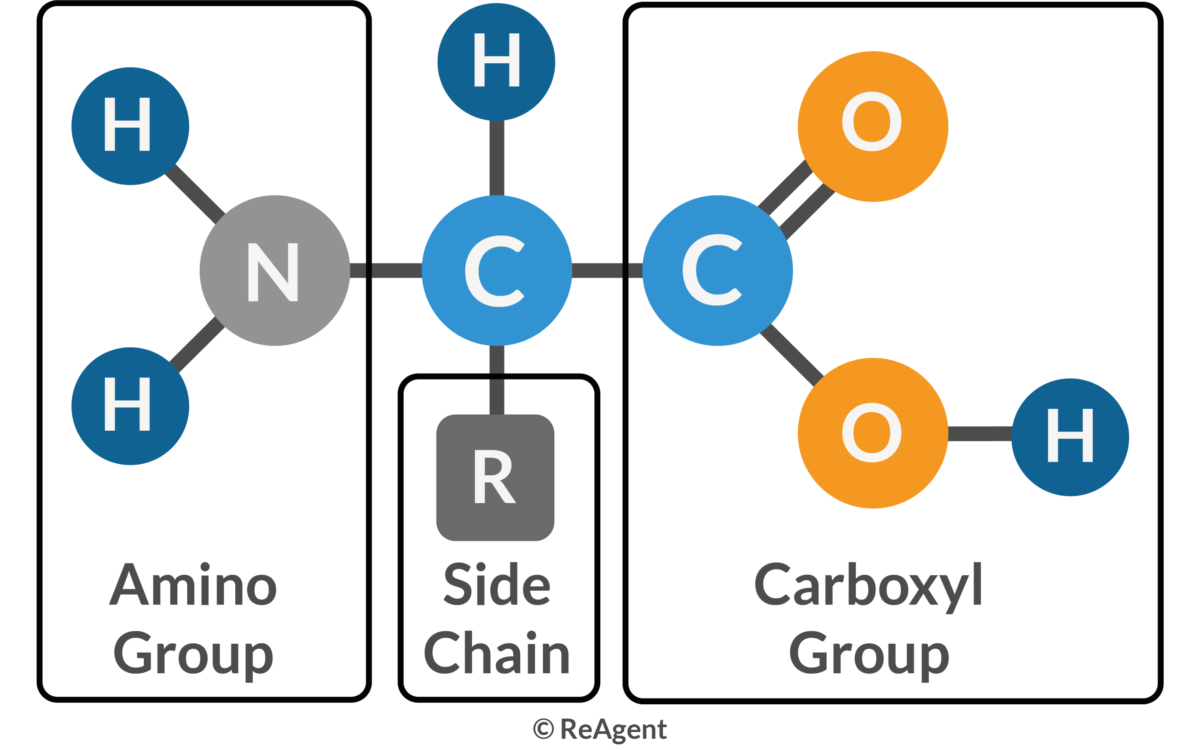
What does an amine group do?
It acts as a base because it can accept H⁺.
What charge can an amino group have after accepting H⁺?
+1
**SEE NH₂ → AMINE
What does a sulfhydryl group look like?
–SH
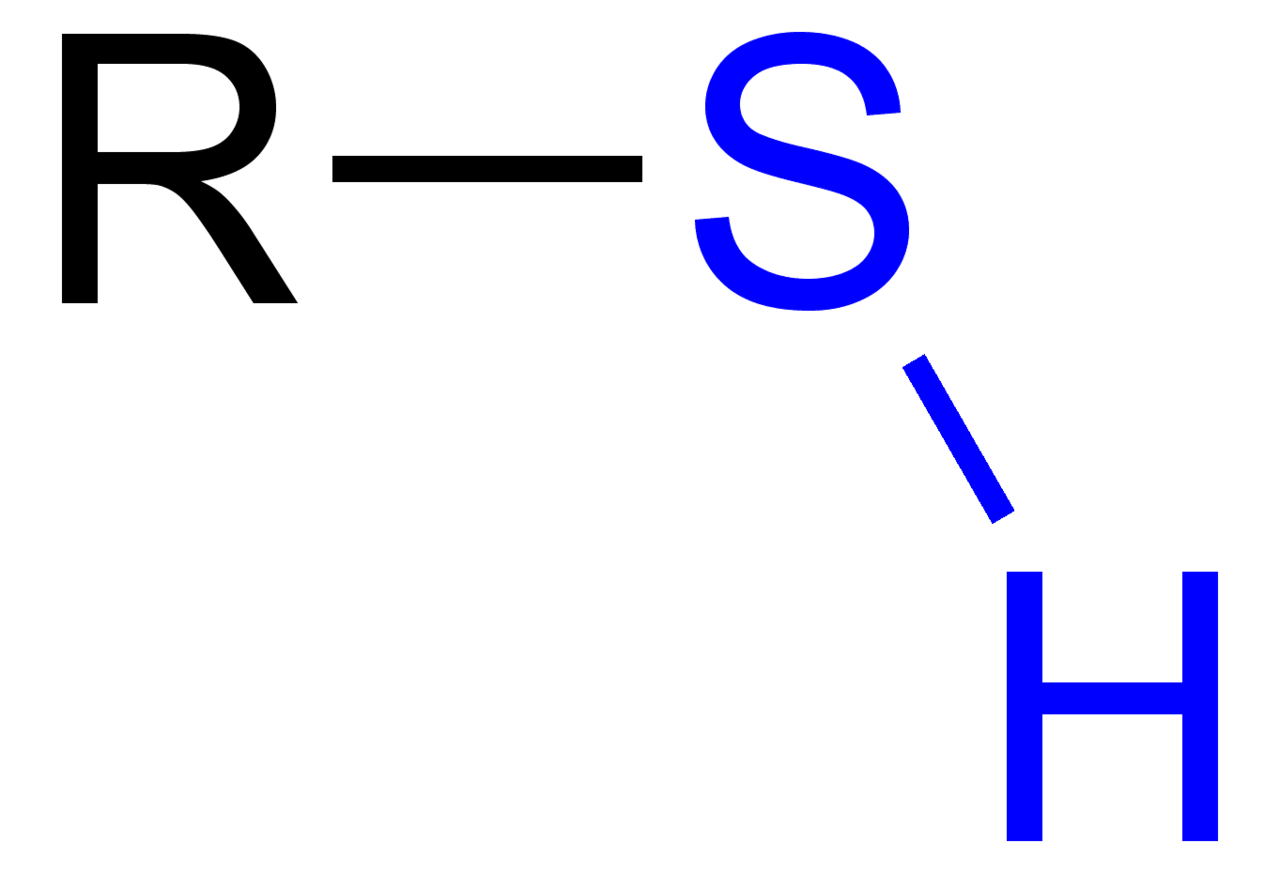
What is another name for a sulfhydryl group?
Thiol.
Why are sulfhydryl groups important in proteins?
Two sulfhydryl groups can form a covalent disulfide bond, helping stabilize protein structure.
What are major properties of a phosphate group?
It is polar/negatively charged and can participate in energy-transfer reactions.
What important cellular molecule contains phosphate groups?
ATP
What does ATP stand for?
Adenosine triphosphate.
Why is ATP important?
It is an important molecule for storing and transferring energy in cells.
**SEE PHOSPHATE → THINK ATP/ENERGY
What does a methyl group look like?
–CH₃

What is an important biological effect of methyl groups?
Methyl groups can influence gene expression when added to DNA or DNA-associated molecules.
OH → ?
Hydroxyl
C=O → ?
Carbonyl
COOH → ?
Carboxyl
NH₂ → ?
Amine
SH → ?
Sulfhydryl
Phosphate group → ?
Phosphate
CH₃ → ?
Methyl
A molecule has the same molecular formula as another molecule, but the atoms are connected differently. What type of isomer?
Structural isomer
Two molecules have the same connections but groups are on opposite sides of a double bond.
Trans isomers
Two molecules are mirror images that cannot be superimposed.
Enantiomers
A carbon is attached to four different groups. What is it?
Chiral/asymmetric carbon
You see OH. What functional group?
Hydroxyl
You see COOH. What functional group?
Carboxyl
You see NH₂. What functional group?
Amine
You see SH. What functional group?
Sulfhydryl
You see CH₃. What functional group?
Methyl
You see C=O in the middle of the carbon skeleton. Ketone or aldehyde?
Ketone
You see C=O at the end of the carbon skeleton. Ketone or aldehyde?
Aldehyde
Which functional group acts as an acid?
Carboxyl
Which functional group acts as a base?
Amine
Which functional group is associated with ATP and energy transfer?
Phosphate
Which functional group can form disulfide bonds in proteins?
Sulfhydryl
START OF CHAPTER 5
What are the four major classes of organic molecules found in living organisms?
Carbohydrates, lipids, proteins, nucleic acids
What is a polymer?
Long chain of repeating monomers
What is a monomer?
Small building block of a polymer
What are macromolecules?
Very large polymers
Which three major classes of biomolecules are polymers?
Carbohydrates, proteins, nucleic acids
Which major biomolecule class is NOT a true polymer?
Lipids
What are the monomers of proteins?
Amino acids
What are the monomers of nucleic acids?
Nucleotides
What do enzymes do?
Speed up chemical reactions
What are enzymes made of?
Proteins
What reaction builds polymers from monomers?
Dehydration/condensation reaction