CNS infections
 Call Kai
 Learn
Learn Practice Test
 Spaced Repetition
 Match
Match Flashcards
 Knowt Play
1/28

There's no tags or description
Looks like no tags are added yet.
Name | Mastery | Learn | Test | Matching | Spaced | Call with Kai | Chat |
|---|
No analytics yet
Send a link to your students to track their progress
29 Terms
List the DIFFERENTIAL DIAGNOSIS: PYOGENIC/BACTERIAL MENINGITIS
DIFFERENTIAL DIAGNOSIS: PYOGENIC/BACTERIAL MENINGITIS
Bacterial Meningitis
Fungal meningitis
Tuberculosis Meningitis
Parameningeal infections
Describe Aseptic Meningitis
What is it?
DDX
Aseptic Meningitis
What is it?
Meningitis accompanied by mononuclear pleocytosis without evidence of bacterial infection
DDX
Viral Meningitis
Chemical meningitis
Subarachnoid hemorrhage
Describe MENINGITIS
Predisposing Factors
Infections
Surgery/Diseases
Clinical Presentation
MENINGITIS:
PREDISPOSING FACTORS
Infections:
Otitis Media
Mastoiditis
Pneumonia
Sinusitis
Endocarditis
Surgery or Diseases:
Head injury
Cochlear implants
Shunts
Sickle cell anemia
Alcoholism
HIV
CLINICAL PRESENTATION
Acute onset
Fever
Stiff neck
Generalized headache
Nausea/Vomiting
Fontanele bulges: infants
Rash
Altered mental status
Confused or obtunded
Myalgias
Backache
Generalized weakness
Drowsiness
Decreased mentation
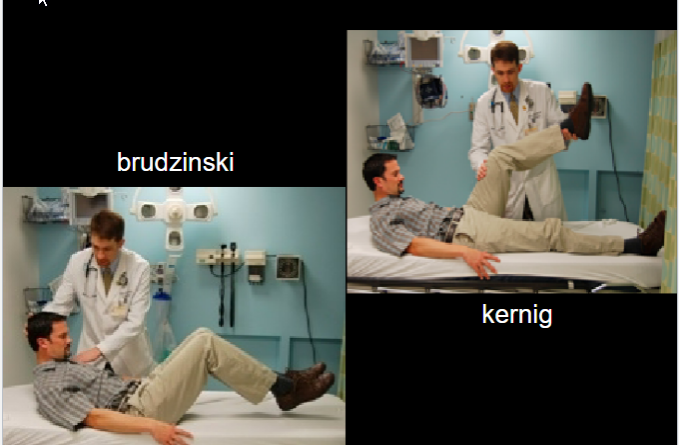
kernigs or brudzinskis signs
What does the Brudzinski/Kernig Sign look like?
What does Optic N Edema look like?

List the Signs Brain Herniation -> CT Scan:
Signs Brain Herniation -> CT Scan:
aphasia
prior hx CNS disease
mass lesion suspected
decreased LOC
>60 yrs
seizure
LIst the DIagnostic Tests you order
DIAGNOSTIC TESTS: LABS AND IMAGING
LP with CSF exam
Blood Cultures
Nasopharyngeal swabs
CBC
CMP
PT INR, PTT
UA
List the age groups/Common Pathogens → Meningitis:
Neonates
Children/Adolescent
18-59 y/o
>60 y/o
Nocosomial
AGE GROUPS AND COMMON PATHOGENS
Neonates
Group B Streptococcus: Streptococcus agalactiae
E. coli
Listeria monocytogenes
Children & adolescents
Streptococcus pneumoniae
Neisseria meningitidis
Haemophilus influenzae
18 - 59 years
Streptococcus pneumoniae
Neisseria meningitidis
> 60 years
Streptococcus pneumoniae
Listeria monocytogenes
Nosocomial
Staphylococcus aureus
Gram negative rods
E. coli, Klebsiella, Pseudomonas, Acinetobacter, Enterobacter
Describe MENINGOCOCCEMIA
What is it
Cause
Epidemiology
Vaccine
MENINGOCOCCEMIA
What is it?
Infection of the blood stream with or without meningitis
Cause:
Neisseria menigitis
Epidemiology:
Peak in February & March
Dorms & Military barracks common
Vaccine:
common strains Neisseria menigitis
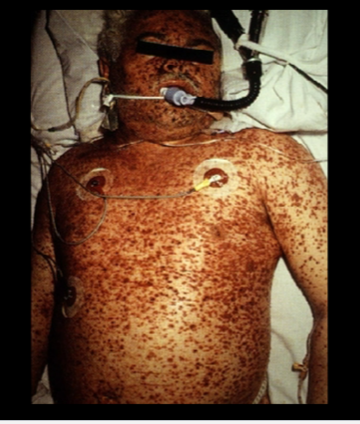
PHYSICAL EXAM FINDINGS: PETECHIAL OR ECCHYMOTIC LESIONS
How do we treat BACTERIAL MENINGITIS
Propholaxis
Treatment:
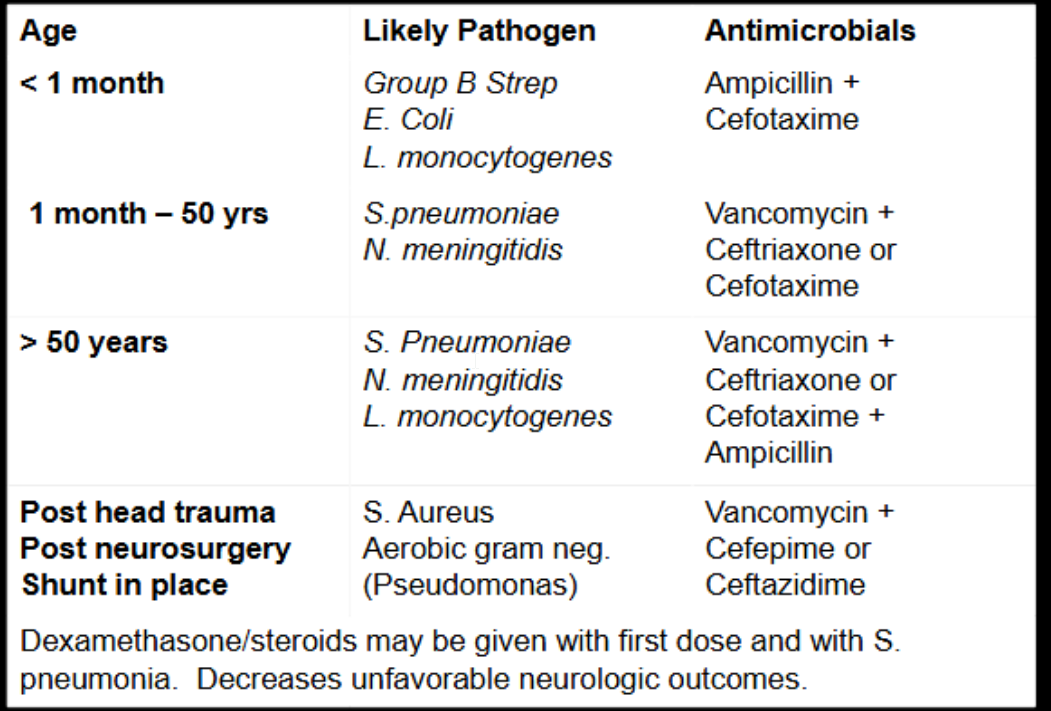
Begin antimicrobial treatment STAT
based on age and risk factors
Fluid support
Seizure precautions
Hospital admission
Repeat CSF exam if no improvement after 24 hrs
Usually afebrile within 2 – 5 days
Chemoprophylaxis for Meningococcal Meningitis
Adult
Rifampin 600 mg bid for 2 days
Pediatric
Rifampin 10mg/kg bid for 2 days
NOTE:
Illness develops 2-5 days after initial case

Describe the Species Responsible: for ASEPTIC MENINGITIS
types w/in
Transmission
Species Responsible:
Enterovirus 60%
Cocksackie virus, Echo virus
fecal-oral route + hematogenous
Peak summer, fall
Herpes simplex virus 1-3%
Sexually active adult and adolescent (HSV 2)
Neuronal spread
Temporal lobe signs: Seizures common
What are the clinical presentation for Aseptic meningitis:
Entero
HSV
Enteroviral
Prodromal Phase
Low grade fever
Malaise
Sore throat
Headache
Fever
Stiff Neck
Nausea/Vomiting
Myalgia
Photophobia
HSV – 2
Headache
Stiff neck
Photophobia
Neuro complications
Paresthesias
Urinary retention
Weakness LE
Hyporeflexia
Describe Arbo Virus
Transmission
3 Genera
Diseases Caused
Arbo Virus:
Transmission:
by arthropods
3 Genera:
flavivirus, togavirus, bunyavirus
Diseases caused:
Dengue Fever
Yellow Fever
LaCrosse
Zika
Jamestown Canyon
Eastern Equine
Western Equine
Ross River
List the Diagnosis Tools for Aseptic Meningitis
Treatment
ASEPTIC MENINGITIS - DIAGNOSIS
CSF Analysis
WBC increased with Lymphocytic shift
Normal glucose
Mildly elevated protein
PCR
Diagnosis in hours
High Sensitivity: 85 -100%
Viral Culture
Diagnosis in days
Moderate Sensitivity: 65-75%
TREATMENT
Supportive care
HSV
Acyclovir IV
HIV
Antiretrovirals
Subacute or Chronic Meningitis Causes
Subacute or Chronic Meningitis Causes
Cryptococcus neoformans
Coccidioides immites
Histoplasma capsulatum
Mycobacterium tuberculosis
Treponema pallidum
Lyme disease
HIV

Describe HSV Encephalitis:
Presentation
LAB
Imaging
Tx
HSV Encephalitis: Presentation
Presentation
Prodrome: URI like symptoms for 1-7 days
Symptoms:
fever, headache, behavioral abnormalities, memory loss, seizure
LAB:
CSF: Increased WBC (lymphocytes)
PCR for HSV DNA
Imaging:
Focal EEG changes
MRI - changes in Temporal and Frontal lobes
Tx: Acyclovir IV
Describe the presentation of Encephalitis
ENCEPHALITIS - PRESENTATION
Neurologic symptoms
Altered LOC
Motor abnormality
Weakness with myoclonus or tremor & incoordination
Seizures
Temperature control
Fever
Malaise
Myalgia
Respiratory symptoms
GI upset
Meningeal irritation
Heachache
Photophobia
Stiff neck
Diagnosis Tools for encephalitis
Tx
ENCEPHALITIS - DIAGNOSIS
CT scan
Exclude mass lesion
MRI
Herpes Simplex Encephalitis
Hyperintensity temporal and frontal lobes +/-- edema
Other Viral Encephalitis
Early disease – normal
Late disease – edema with multifocal areas of parenchymal injury
Viral specific antibodies in blood or CSF
Lumbar Puncture for CSF examination
Opening pressure +/-- elevation
Glucose normal
Protein elevated (50-100 mg/dL)
10-1000 mononuclear cells / mm3
ENCEPHALITIS - TREATMENT
HSV, CMV, Varicella
Acyclovir IV
Management
Headache: Analgesia!
Hyperthermia: cooling blanket
Supportive care
Treatment or prophylaxis of seizures as appropriate
Isolation
Handwashing
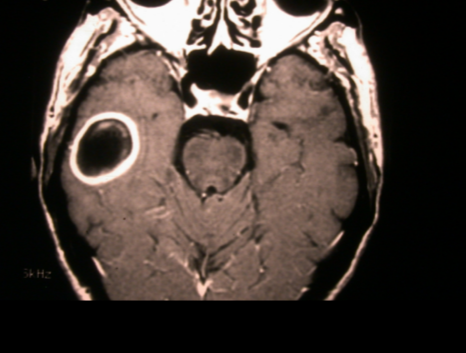
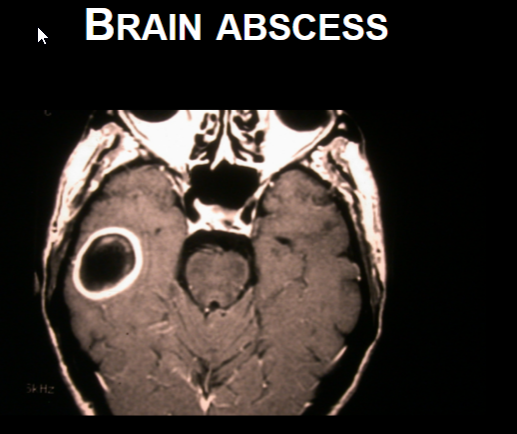
Describe BRAIN ABSCESS
What is it?
Common Pathogens
What is it?
Affects brain parenchyma
Collection of purulent material and organisms
Common Pathogens
Dental Abscess: Streptococci, Bacteroides
Chronic Otitis: Bacteroides, Pseudomonas, Proteus
Sinusitis: Streptococci, Haemophilus
Penetrating Trauma, Post Surgical: Staphylococcus,Pseudomonas
Bacterial Endocarditis: Mixed flora
Congenital Heart Disease: Streptococci
Pulmonary Infection: Nocardia, Bacteroides
HIV infection: Toxoplasma gondii
Describe the Clinical Manifestation of Brain Abscessse:
MOA
Manifestations
Presentation
CLINICAL MANIFESTATIONS
MOA:
Increasing intracranial mass effect -> focal brain involvement
Manifestations:
Temporal lobe
contralateral homonymous superior quadrantic visual field defect
aphasia
Supratentorial
motor deficit
Cerebellar
ipsilateral limb ataxia
nystagmus
PRESENTATION
Fever
Headache
Disturbed consciousness
Hemiparesis
Nausea, vomiting
Nuchal rigidity
Dysarthria
Seizures
Sepsis or septic shock
Visual disturbance
Diagnostic Tools for Brain Abscess
Tx
DIAGNOSTIC Brain Abscess
MRI or CT
Blood or sputum culture
LP
contraindicated if brain herniated due to mass effect
Surgical Aspiration
gram Stain culture
TREATMENT
Decompression of abscess
needle drainage
surgical removal
Dexamethasone to control edema
Non surgical intervention
small lesion
already know the pathogen
no signs of increased intracranial pressure
deep or multiple lesions
Antibiotic therapy
based on culture sensitivity
Describe these parasitic infections on CNS
Cystericosis
Larvae:
Transmission:
Dx:
Tx:
Toxoplasmosis
Cause:
Dx:
Tx:
Cystericosis
Larvae:
Taenia solium
Transmission:
Ingesting food or water with eggs
Dx:
CT/MRI brain: single or multiple cysts, ELISA
Tx:
Praziquantel
Toxoplasmosis
Cause:
Toxoplasma gondii
Often with immunosuppression
Dx:
CT/MRI multiple ring enhancing lesions, ELISA
Tx: Pyrimethamine and Sulfadiazine
Describe SPINAL EPIDURAL ABSCESS
What is it?
Predisposing factors
MC organism
SPINAL EPIDURAL ABSCESS
What is it?
Infection within the epidural space around spinal cord
Predisposing factors
Diabetes
Malignancy
IV drug use
Hematogenous spread of infection
Organ transplantation
Chronic steroid use
Acupuncture or epidural anesthesia
Osteomyelitis
MOST COMMON ORGANISM: Staph. aureus
Describe SPINAL EPIDURAL ABSCESS: HISTORY AND PRESENTATION
Presentation
Stages
Diagnostic
Tx
Presentation:
radicular pain or neurologic deficit
Stages:
Stage 1
Back pain and fever
Stage 2
Radicular pain
Stage 3
Muscle weakness, incontinence, sensory deficit
Stage 4
Paralysis or quadriplegia
DIAGNOSTIC STUDIES
No LP: risk of spreading meningitis
MRI
Gram stain and culture
TREATMENT
Surgical Drainage
CT guided aspiration
Antibiotics
Describe SUBDURAL EMPYEMA
What is it?
Predisposing Factor
Symptoms
Diagnostic
Tx
SUBDURAL EMPYEMA
What is it?
Infection in space btw dura and the arachnoid
Predisposing factor :
Paranasal sinus infection,
usually unilateral
Symptoms
headache, fever, neurologic deficit, stiff neck
Can have later features due to increased ICP
Diagnostic:
MRI
Tx
surgical drainage, antibiotics
NOTE:
Mortality 25%