ANATOMY LECTURE CH 4 TISSUES
 Call Kai
 Learn
Learn Practice Test
 Spaced Repetition
 Match
Match Flashcards
 Knowt Play
1/62

Earn XP
Description and Tags
things not on here: 6 special characteristics of epithelia,
Name | Mastery | Learn | Test | Matching | Spaced | Call with Kai | Chat |
|---|
No analytics yet
Send a link to your students to track their progress
63 Terms
epithelial tissue
covers body’s organs or cavity
occurs at the boundary between two different environments
6 functions; “Please Always Study During Finals Season”
covering and lining epithelium
covers outer and inner surfaces of body organs
glandular epithelium
forms most of the body’s glands
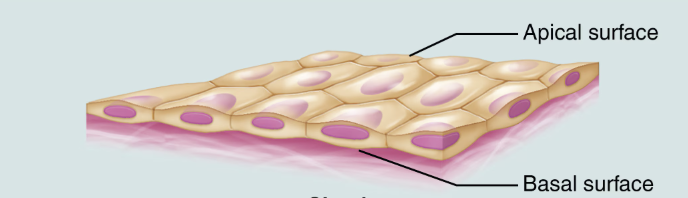
apical surface
lines the open space of a cavity, tubule, gland, or hollow organs
microvilli (extensions of plasma membrane to maximize surface area for small molecules to enter/leave)
abundant in kidney tubules and small intestine
cilia (extension of apical surface membrane, moves on own)
basal lamina
boundary between epithelium and connective tissue (bottom of cell layers)
noncellular supporting sheet between epithelial and connective tissue (proteins secreted by epithelial cells)
selective filter for molecules from capillaries —> epithelium
scaffolding for regenerating epithelial tissue
makes basement membrane with reticular layers (connective tissue)
avascular
no blood vessels, epithelial cells instead gets nutrients from capillaries in underlying connective tissues
only nerve endings, innervated
simple epithelia
single layer of ________ cells
each cell attached to basement membrane
stratified epithelia
multiple layers of _________ cells
cells on basal surface attached to basement membrane; apical surface border open space
regenerates from basal layer (below)
major role is protection
named by apical layer shape

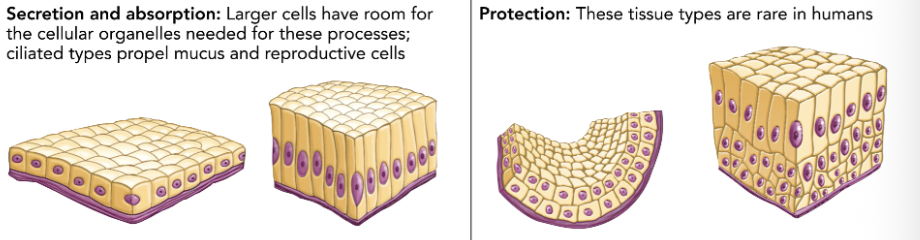
squamous cell

cuboidal cell
left side of images
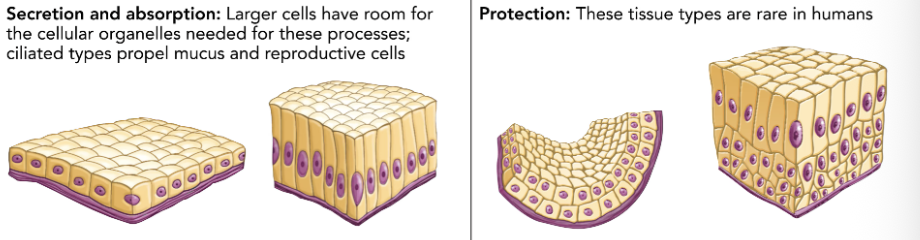
columnar cell
right side of images
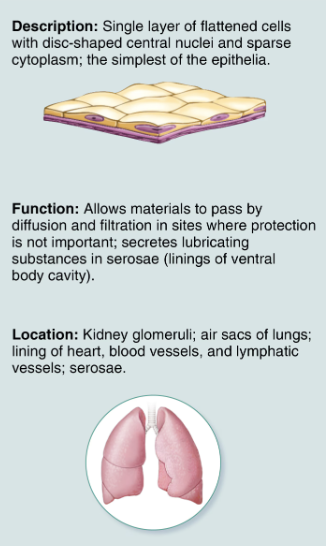
simple squamous epithelium
simple cuboidal epithelium

simple columnar epithelium
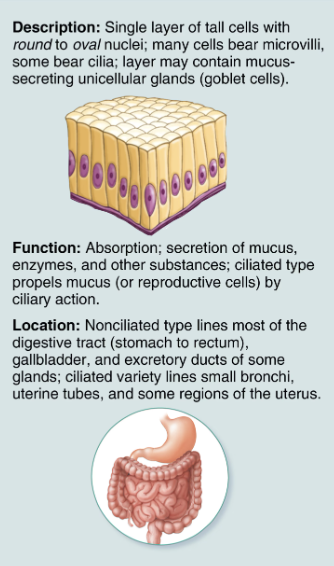
pseudostratified columnar epithelium

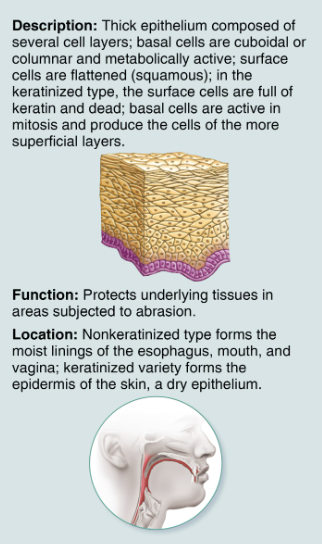
stratified squamous epithelium
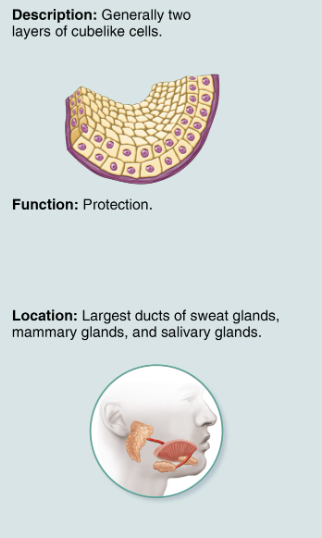
stratified cuboidal epithelium
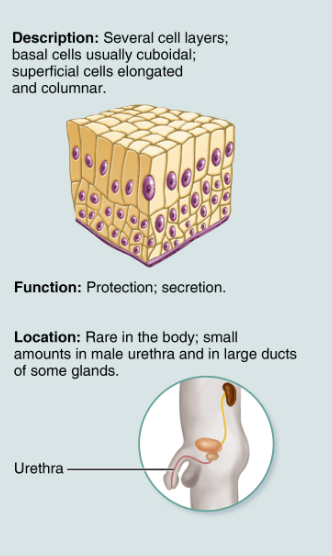
stratified columnar epithelium
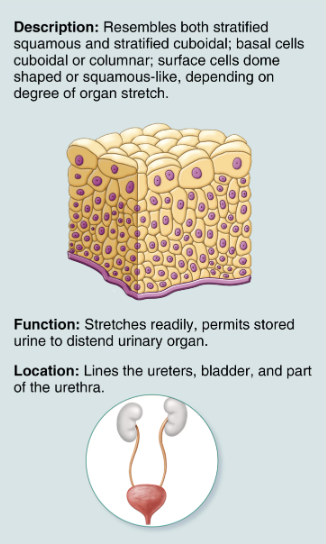
transitional epithelium
endocrine gland
internal secretion, travels through bloodstream to organs
ductless
use hormones released into extracellular space
exocrine gland
secrete products onto body surfaces or cavities
have ducts to carry products onto surfaces
local, secretion near where released
ex. mucus, sweat, oil, salivary, liver, pancreas, mammary
goblet cell
unicellular exocrine gland
shaped line wine glass
scattered within epithelial lining of intestines and respiratory tubes (between columnal cells)
produce mucin (glycoprotein), when dissolved in water it makes mucus to lubricate internal body surfaces
multicellular exocrine glands
two parts: epithelium-walled duct and secretory unit
3 types based on secretory unit
tubular - intestinal/stomach glands
alveolar - sebaceous glands, mammary glands
tubuloalveolar - salivary glands
cell junctions
3 types
bind epithelial cells to one another
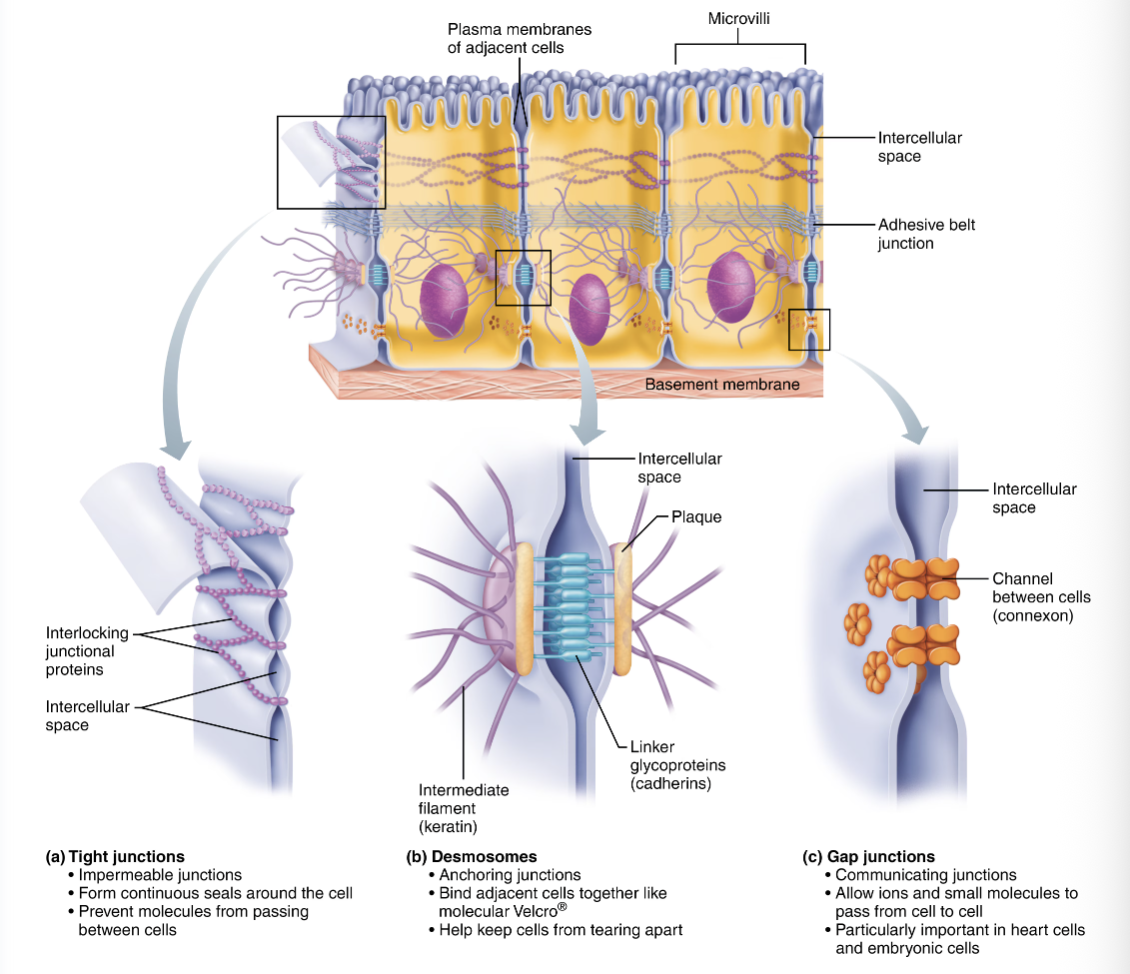
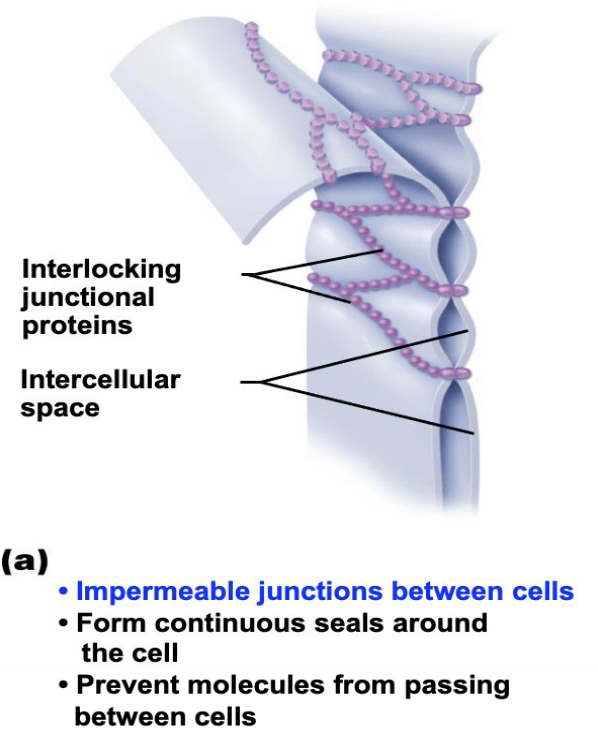
tight junction
close off intercellular space
at apical regions
so close some proteins in plasma membrane of adjacent cells are fused
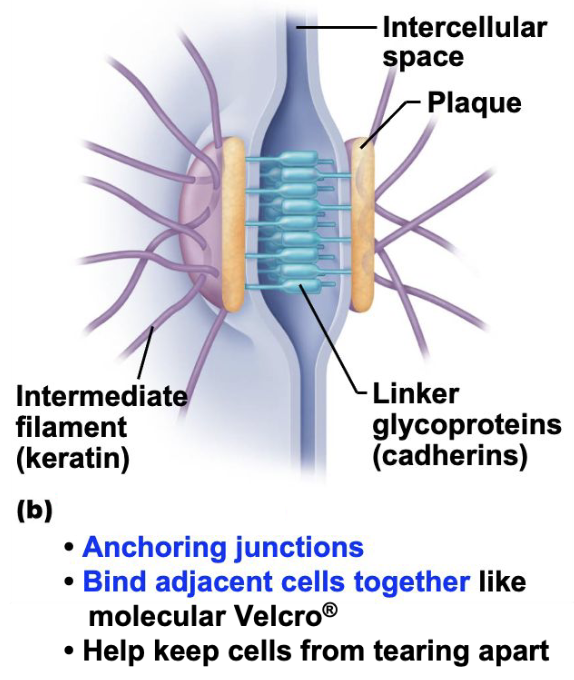
desmosomes
cardiac muscle and epithelial tissue
scattered along touching sides of adjacent cells
intermediate filaments anchor from opposite side of cell across cytoplasm
plaque is inside cytoplasm
linker glycoproteins joins cells
gap junctions

connective tissue
tissue for support
most diverse and abundant tissue
made of 3 cell types: fibroblasts, chondroblasts, osteoblasts
also adipose cells, white blood cells, macrophages, and mast cells
does not produce plasma matrix of blood (plasma by blood cells)
extracellular matrix
produced by cells of the connective tissue
cushions and protects body structures
composed of:
ground substance (gel like substance, attract water and hold tissue fluid, large molecules) consisting of proteoglycans and glycosaminoglycans
protein fibers (collagen fibers, reticular fibers, elastic fibers)
fibroblasts
cell of connective tissue
in connective tissue proper
secretes all 3 main types of protein fibers (collagen fibers, reticular fibers, elastic fibers)
chondroblasts
cell of connective tissue
secrete matrix in cartilage
osteoblasts
cell of connective tissue
secrete matrix in bone
adipose cells
collagen fibers
strongest protein fibers, resist tension
reticular fibers
protein fibers, bundles of special type of cartilage
elastic fibers
protein fibers, contain elastin, can recoil after stretching
connective tissue proper
loose
areolar, adipose, and reticular
dense
dense irregular, dense regular, elastic
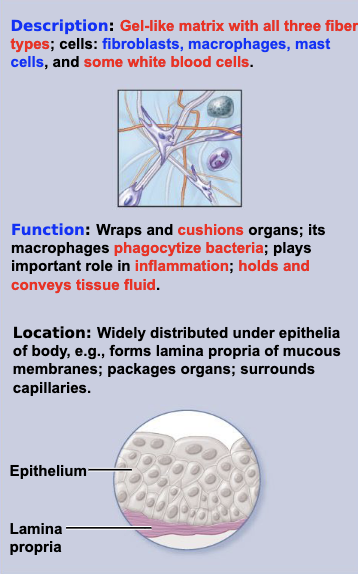
areolar connective tissue
connective —> proper —> loose
aka connective loose tissue proper
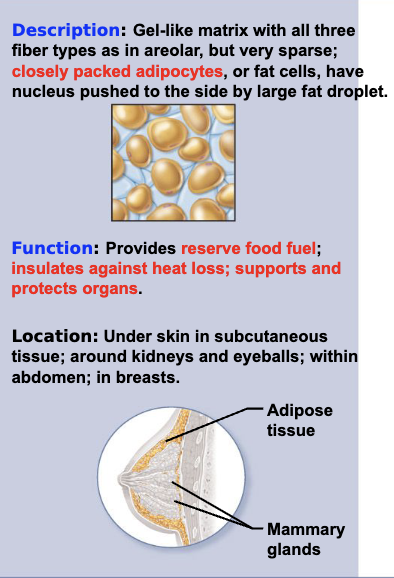
adipose connective tissue
connective —> proper —> loose
reticular connective tissue
connective —> proper —> loose
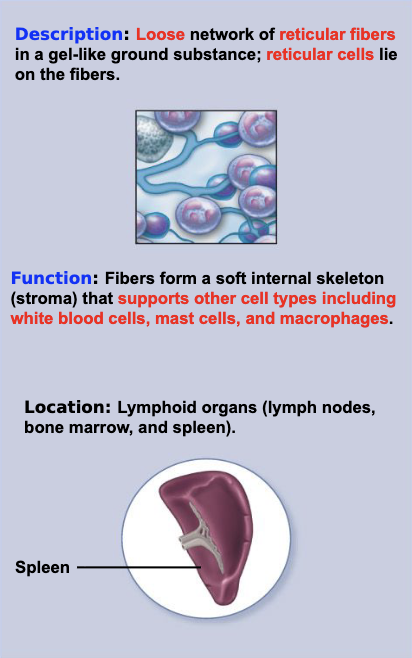
connective