Organic Chemistry 1 Reactions, Organic Chemistry (Reactions)
 Call Kai
 Learn
Learn Practice Test
 Spaced Repetition
 Match
Match Flashcards
 Knowt Play
1/71

There's no tags or description
Looks like no tags are added yet.
Name | Mastery | Learn | Test | Matching | Spaced | Call with Kai | Chat |
|---|
No analytics yet
Send a link to your students to track their progress
72 Terms
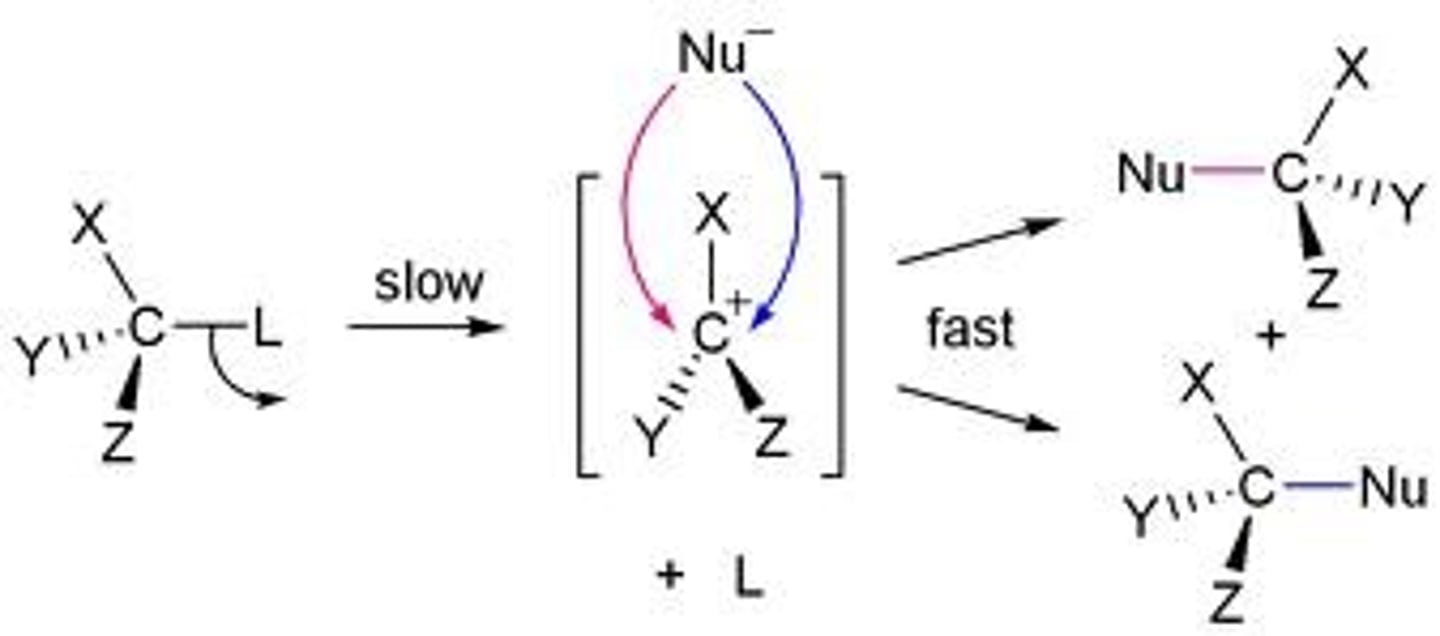
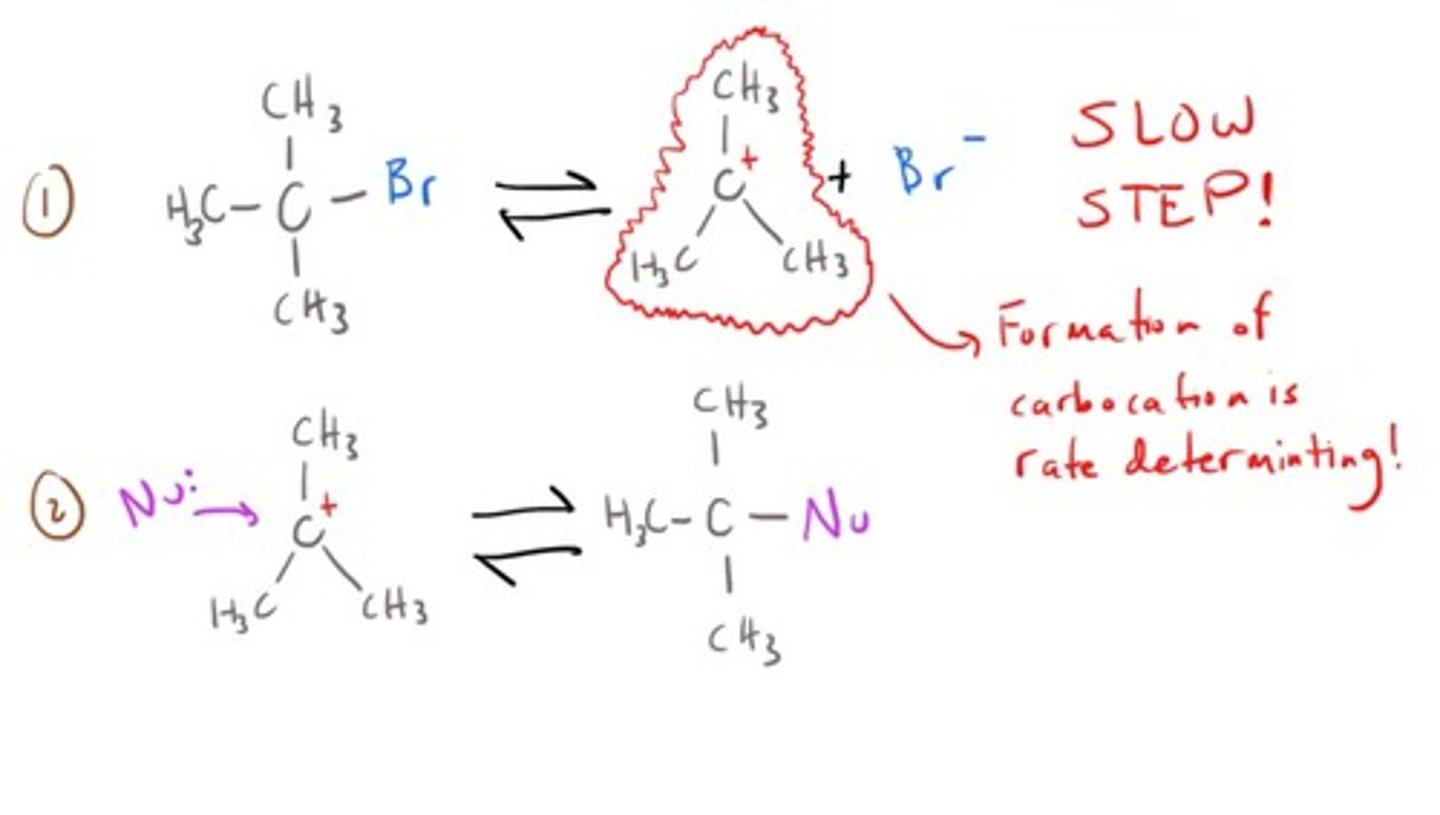
SN1
-2 steps
-Rate limiting step, so reaction rate is dependent on concentration of R-X
-Weak nuc/weak base (typically solvolysis) for secondary and tertiary carbons; also competes with E1 reactions
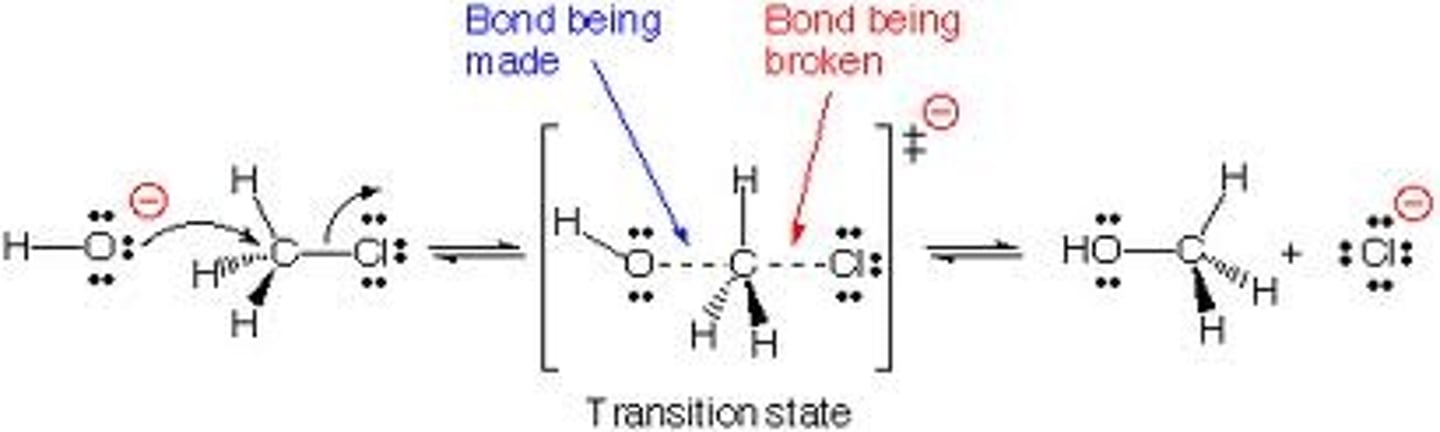
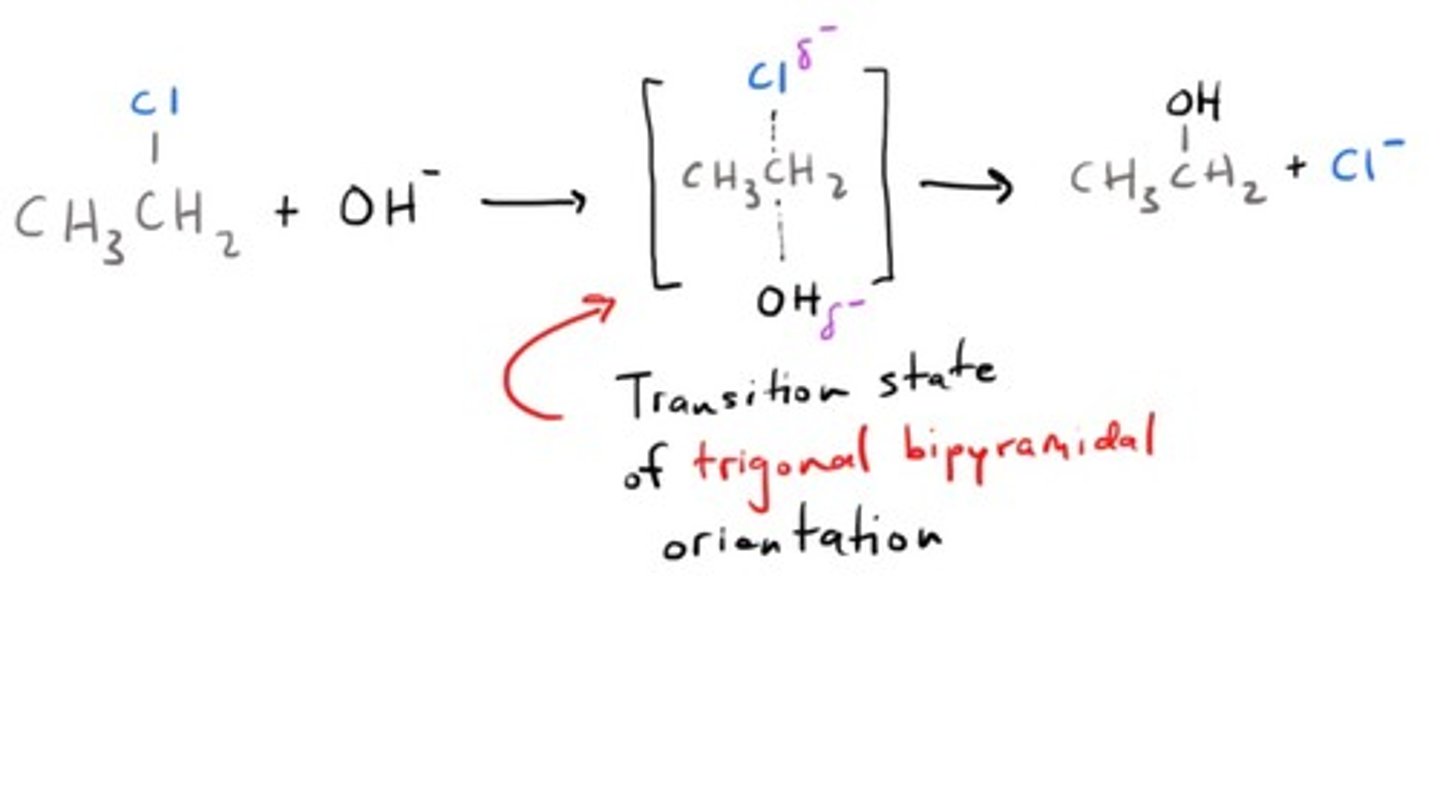
SN2
-1 step (concerted)
-Reaction rate is dependent on concentration of R-X and Nuc
-Prefers methyl, primary, or secondary carbons
-Strong nuc/strong base (OH-) or strong nuc/weak base (I-, CH3CO2-) required for methyl, primary, and secondary
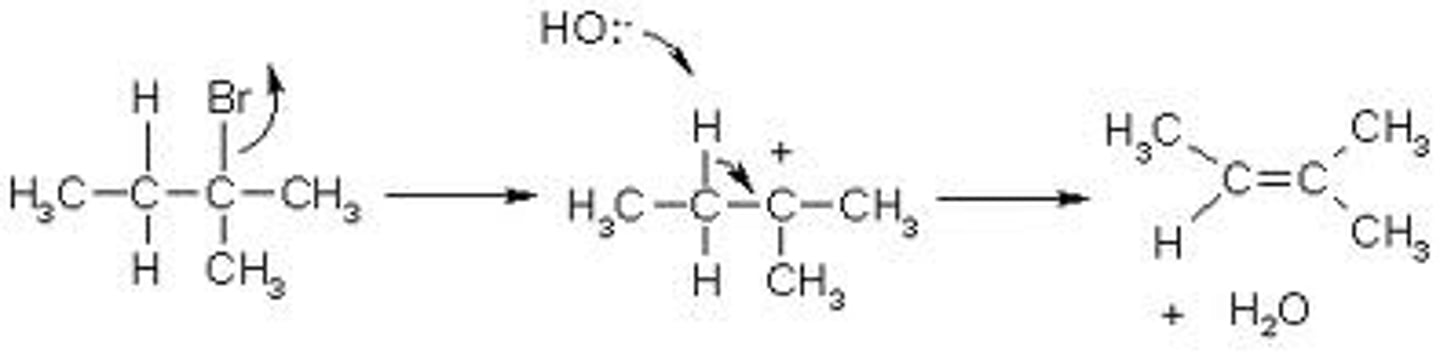
E1
-2 steps
-Rate limiting step, so reaction rate is dependent on concentration of R-X
-Weak nuc/weak base (typically solvolysis) for secondary and tertiary carbons; competes with SN1 (without heat)
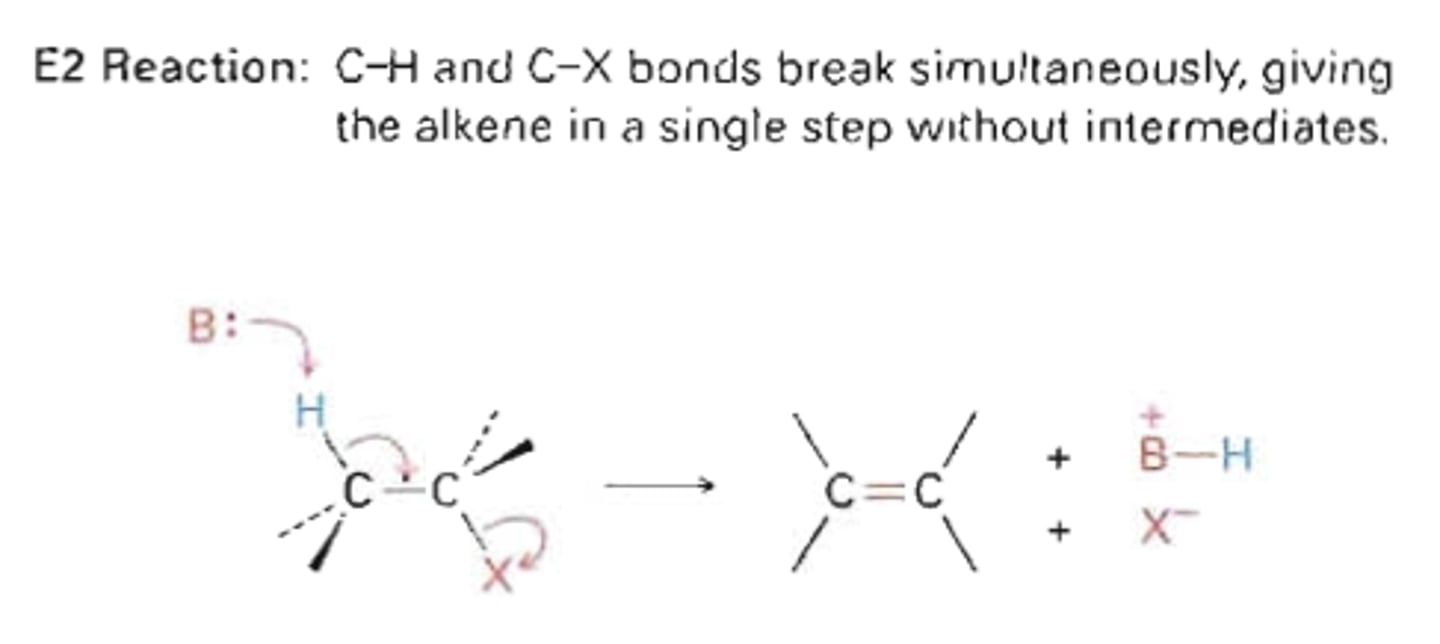
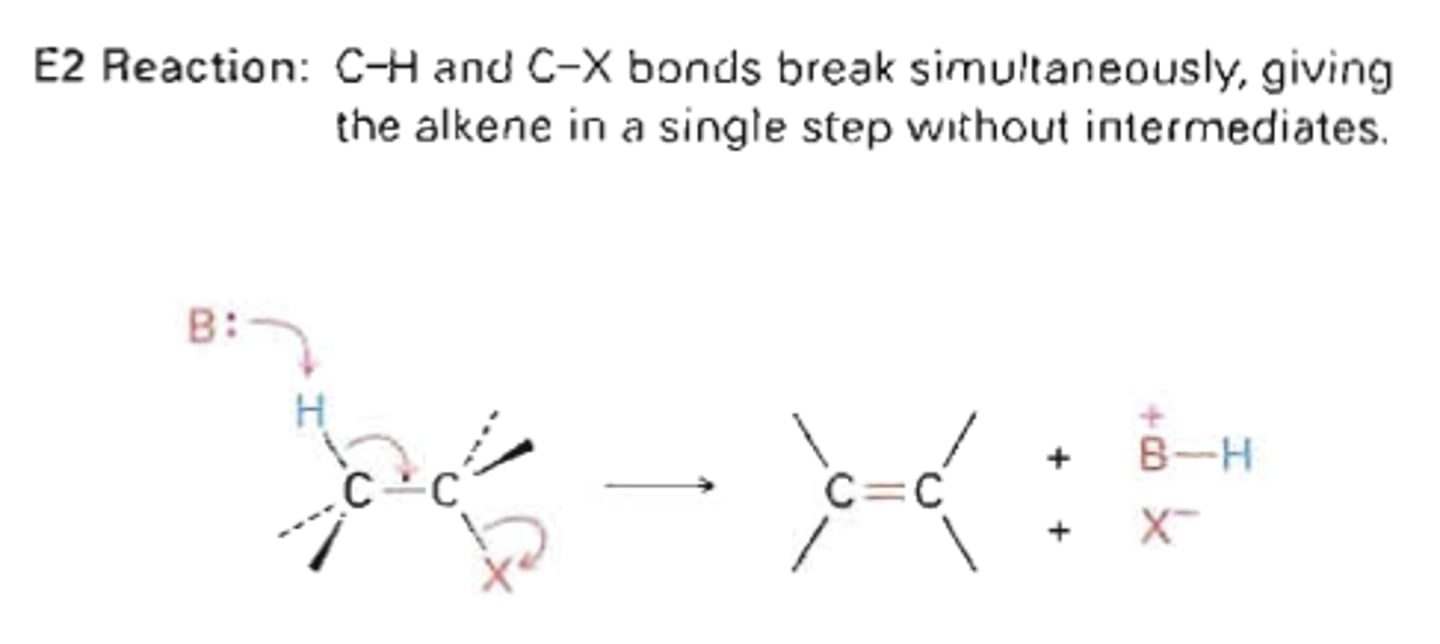
E2
-1 step
-Reaction rate is dependent on concentration of R-X and Nuc
-Weak nuc/strong base (potassium tert butoxide or LDA) for primary carbon
-Strong nuc/strong base or weak nuc/strong base for secondary and tertiary carbon
-Beta hydrogen must be anti to leaving halide
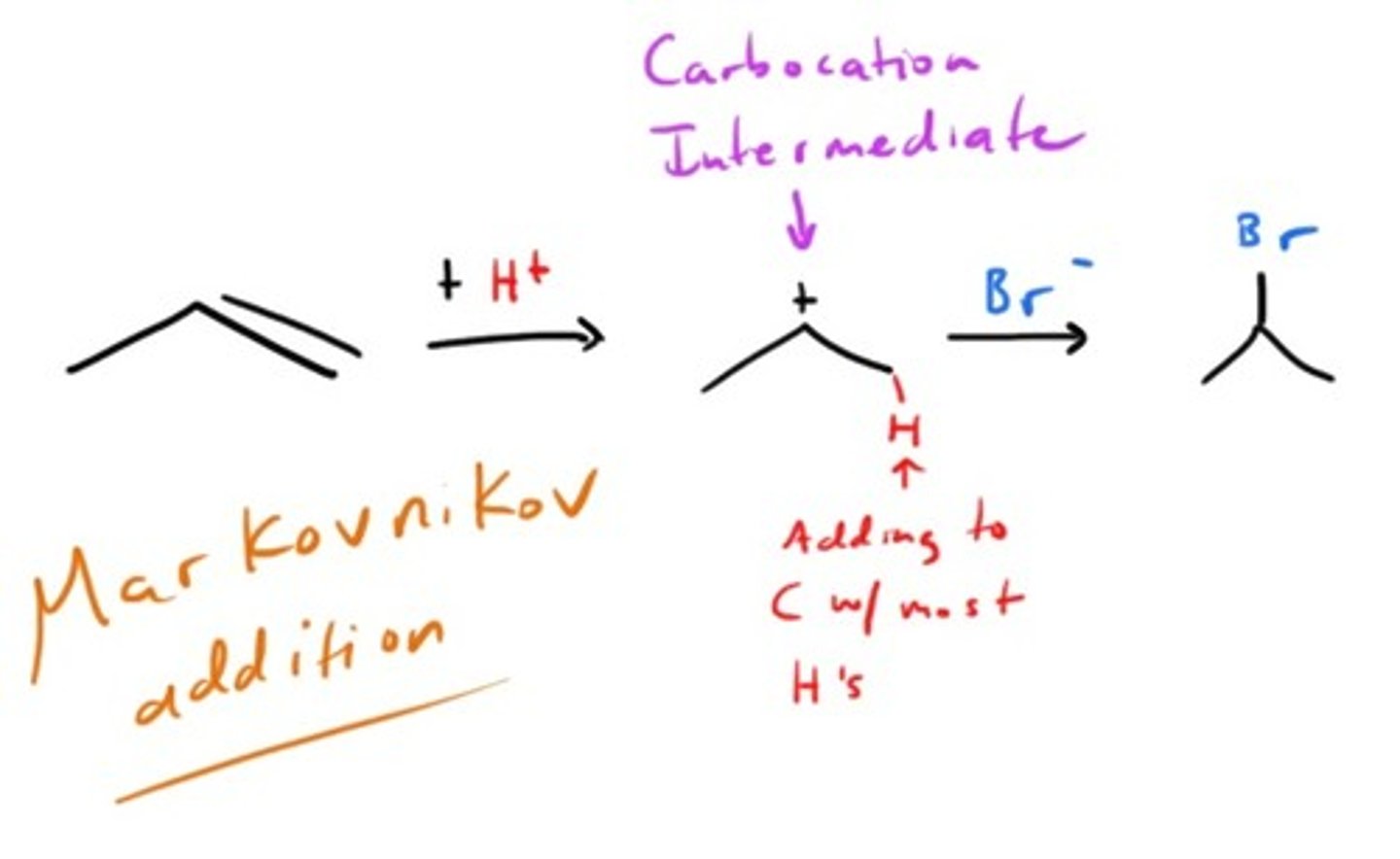
Hydrohalogenation of alkenes
-Reagents: HCl, HBr, or KI + H3PO4
-Addition
-Carbocation intermediates, rearrangements possible
-Markovnikov addition
-No stereochemical preference

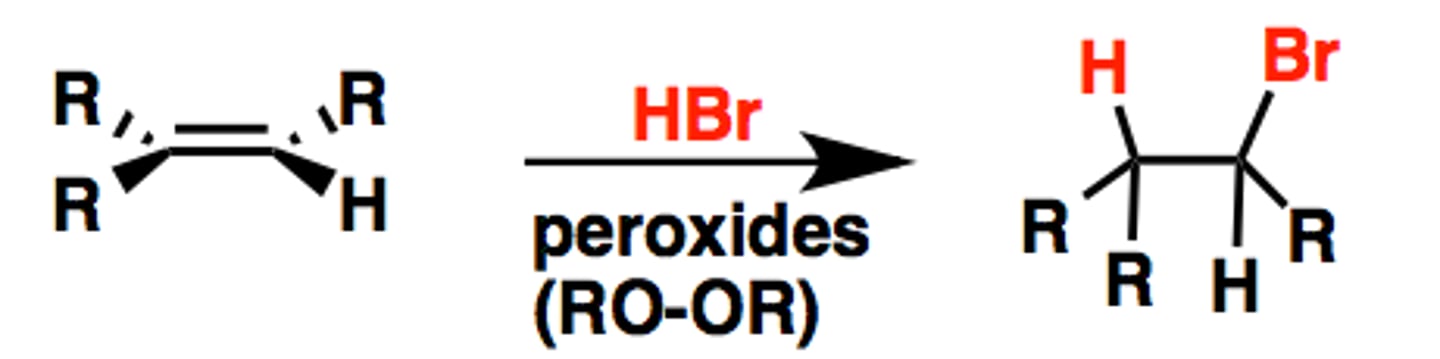
Radical hydrohalogenation of alkenes
-Reagents: Peroxides, heat/light
-Chain reaction
-Radical intermediates
-Anti-Markovnikov addition
-No stereochemical preference
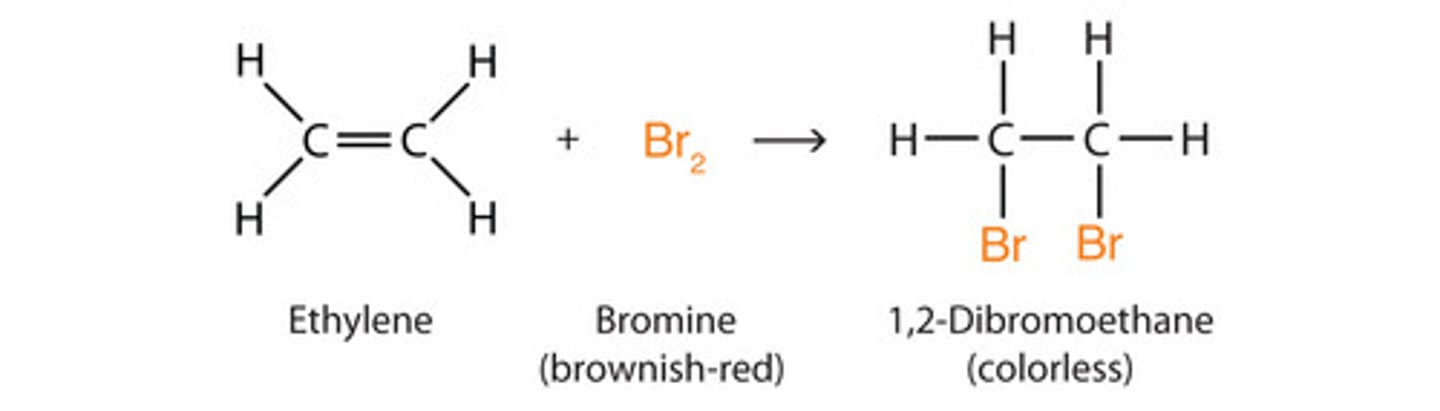
Halogenation of alkenes (anti addition)
-Reagents: Br2, Cl2, or I2 in CH2CL2 or CCl4
-Addition
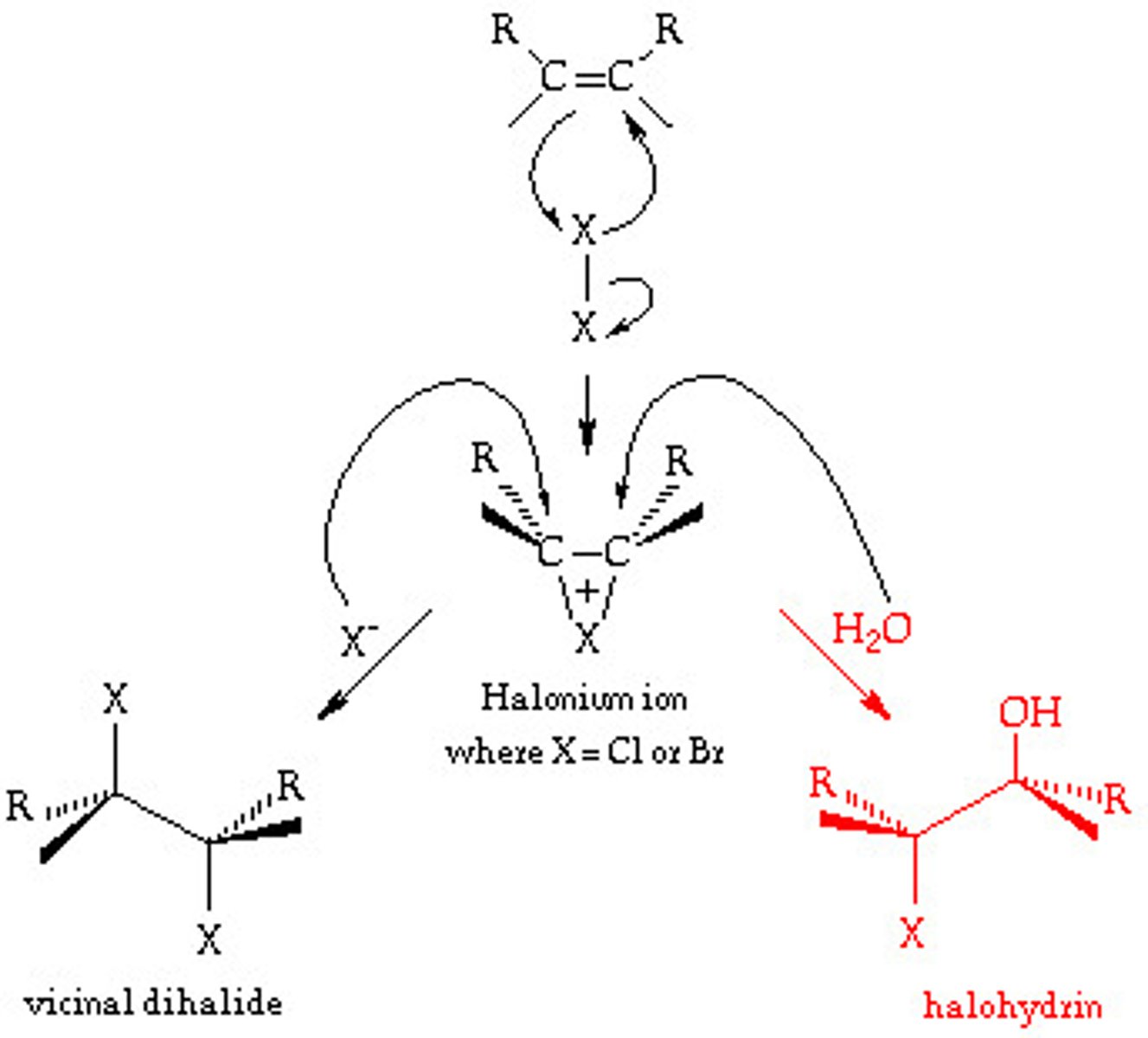
-Bromonium or chloronium intermediates
-Anti addition stereochemical preference
Halohydrin
-Addition of X2
-Reagents: Br2 or Cl2 in H2O
-Bromonium or chloronium ion intercepted by H2O
-Markovnikov addition of H2O
-Anti addition stereochemical preference
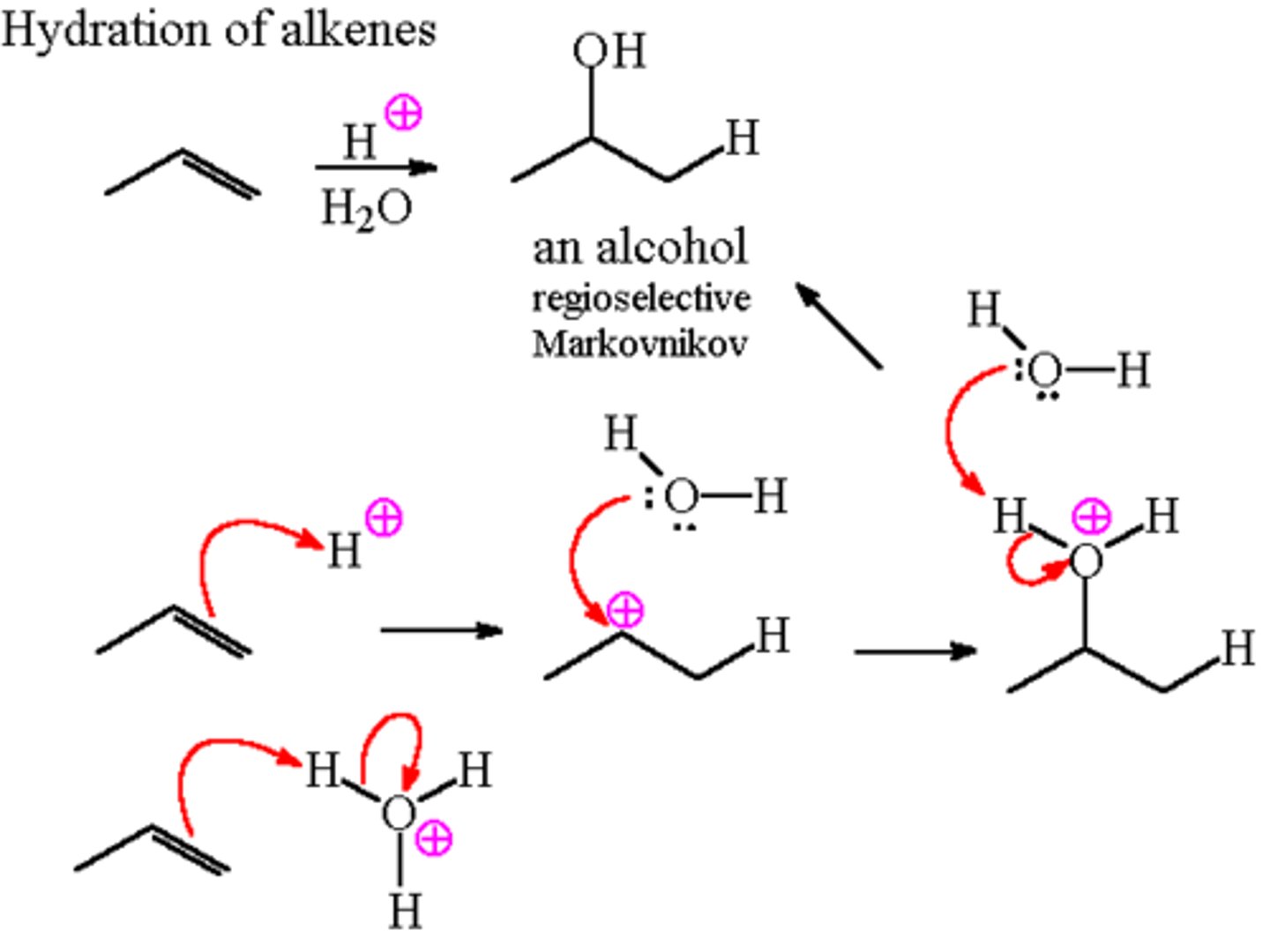
Acid-catalyzed hydration of alkenes
-Reagents: H2SO4, HClO4, H3PO4; high temperature
-Can be reveresed to form alkenes from alcohols
-Addition
-Carbocation intermediates
-Markovnikov addition
-No stereochemical preference
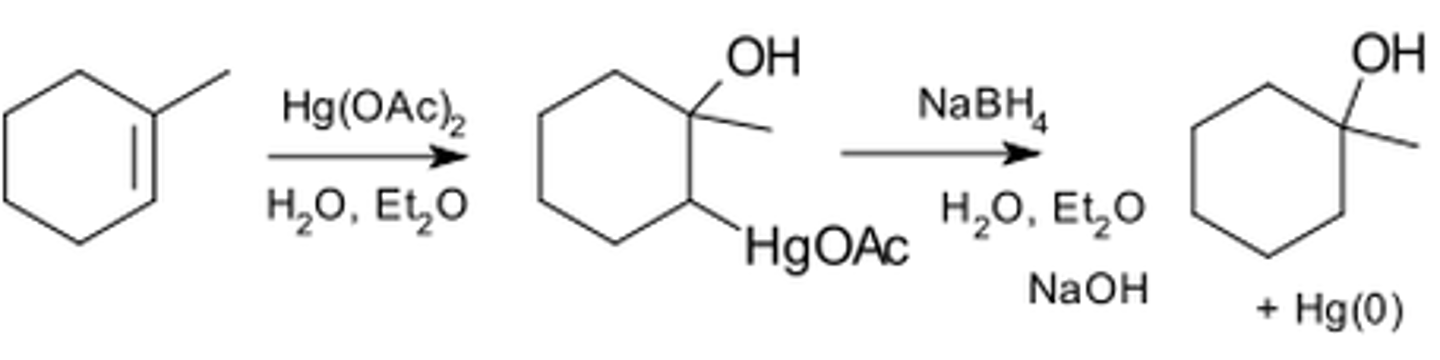
Oxymercuration-demercuration of alkenes
-Reagents: 1) Hg(OAc)2 in H2O or THF/H2O, 2) NaBH4
-Addition of mercury compound
-Mercurinium ion intermediate intercepted by H2O
-Markovnikov addition of H2O
-Addition of H2O is anti, but reduction (NaBH4) scrambles stereochemistry, no preference
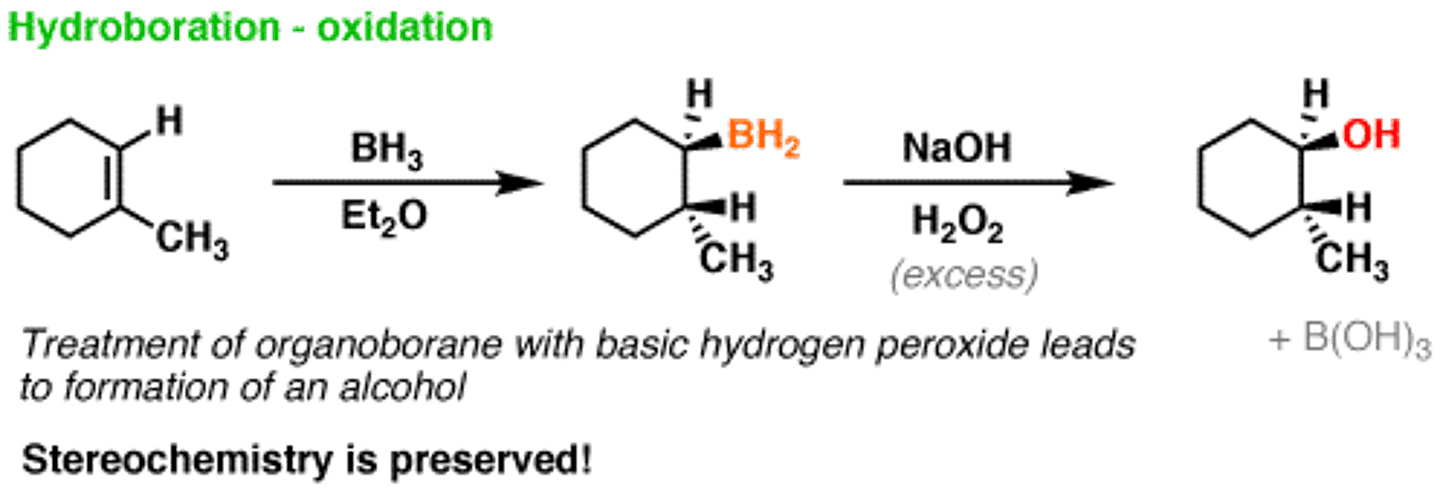
Hydroboration of alkenes
-Reagents: 1) BH3-THF (Forms trialkylboranes/R3B), 2) H2O2/-OH; room temperature or heat
-Addition of BH3
-Cyclic transition state puts boron on least substituted carbon of the double bond
-Syn addition stereochemical preference
-Anti-Markovnikov addition of -OH
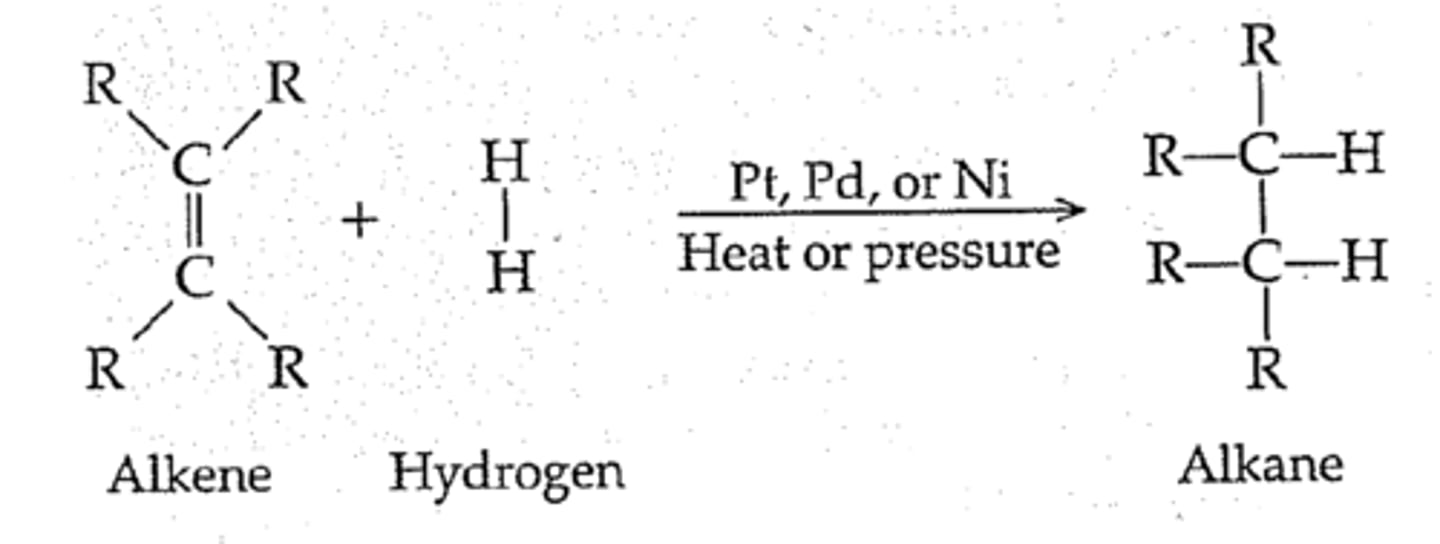
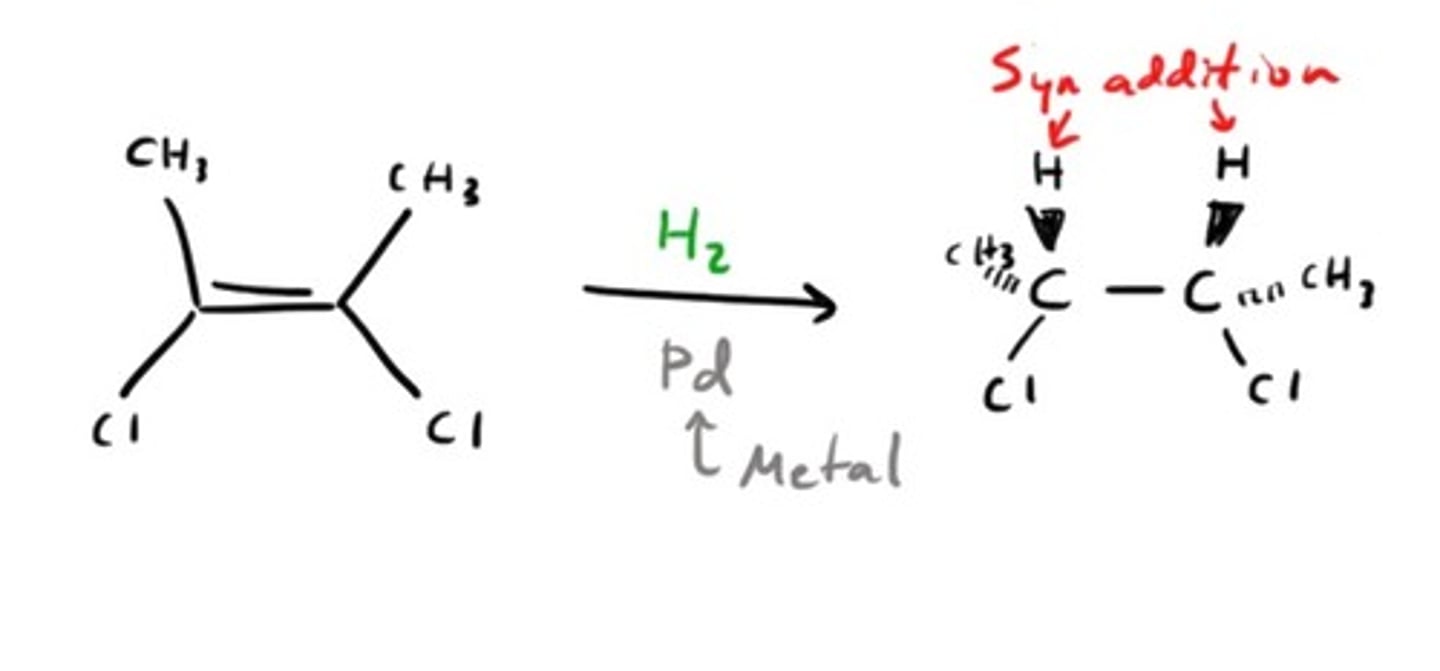
Hydrogenation of alkenes
-Reagents: H2 over metal catalyst (Pd/C, Pt, PtO2)
-Surface reaction
-Syn addition from the less crowded/sterically hindered face
Hydroxylation of alkenes (syn addition)
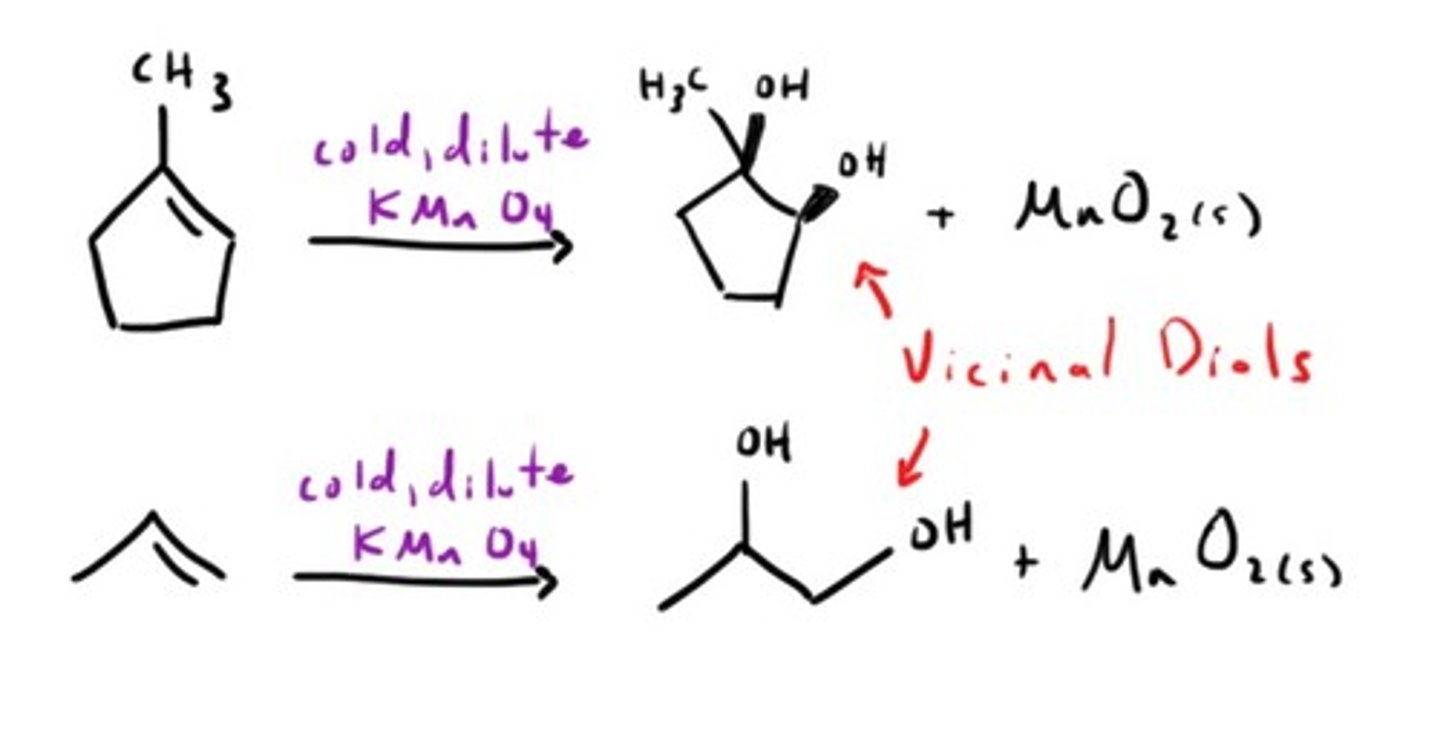
-Reagents: KMnO4/-OH (lower yield) or OsO4/pyridine (higher yield, but dangerous and expensive) or catalytic OsO4 with NaHSO3
-Cyclic transition state and intermediate
-Syn addition of -OH groups
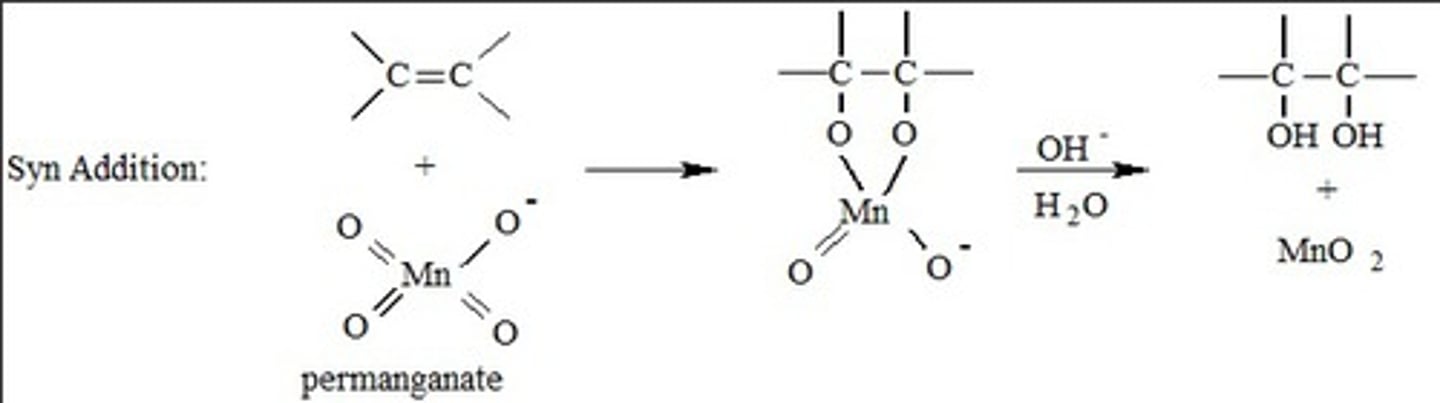
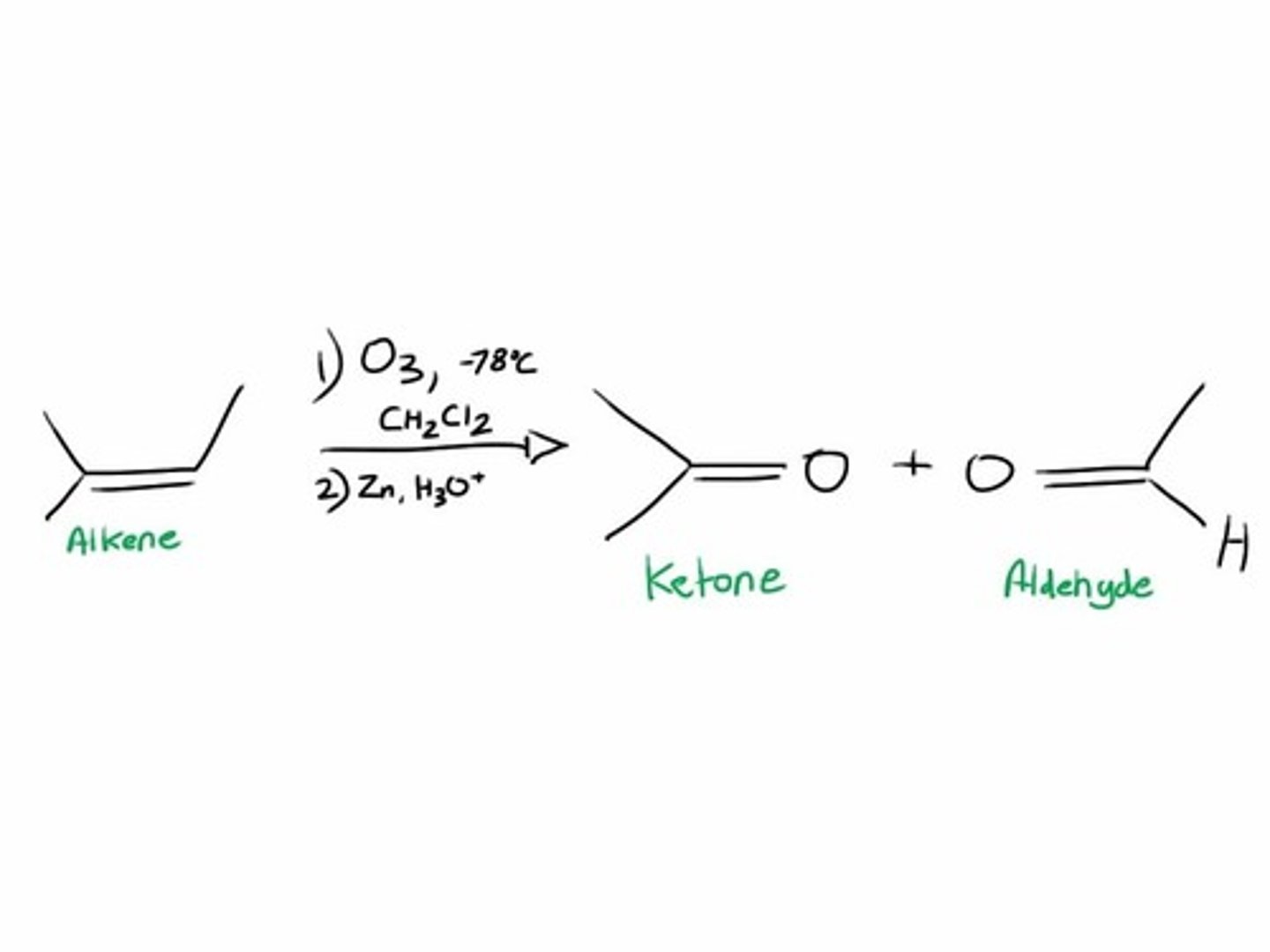
Ozonolysis of alkenes
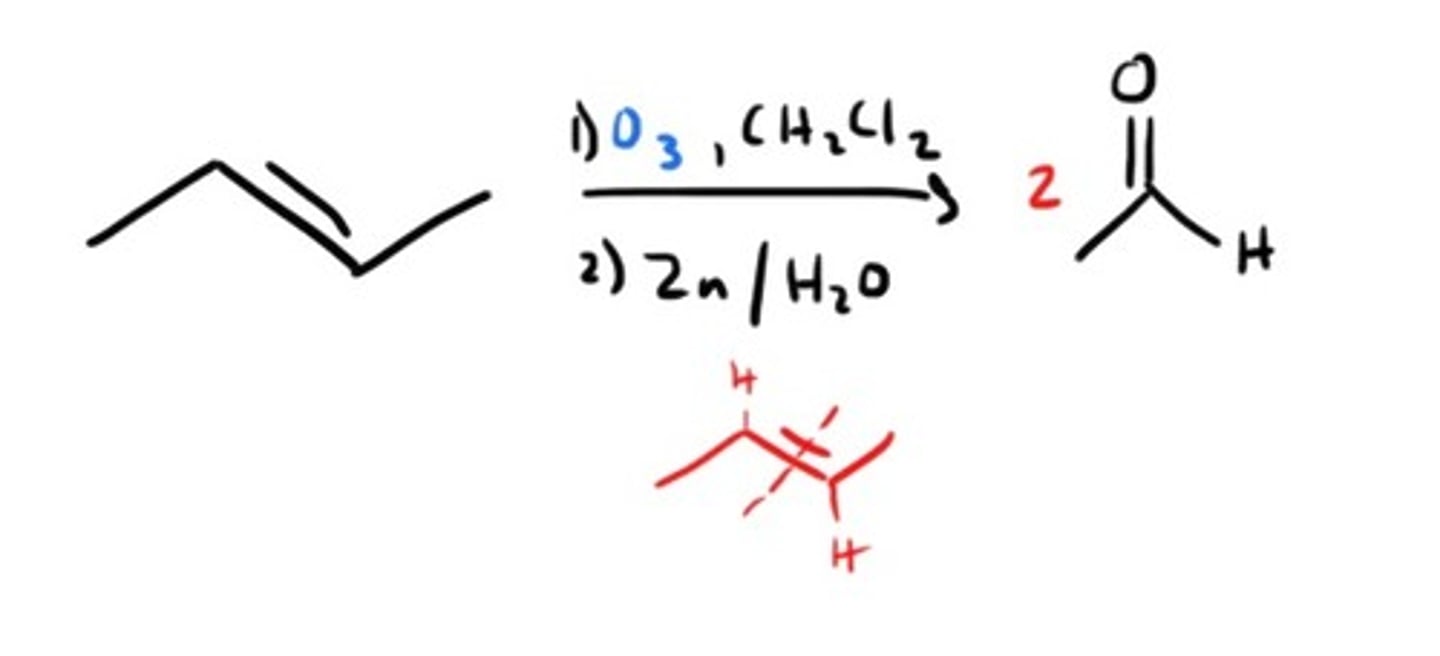
-Reagents: 1) Ozone (O3) at low temperature, 2) Zn/AcOH
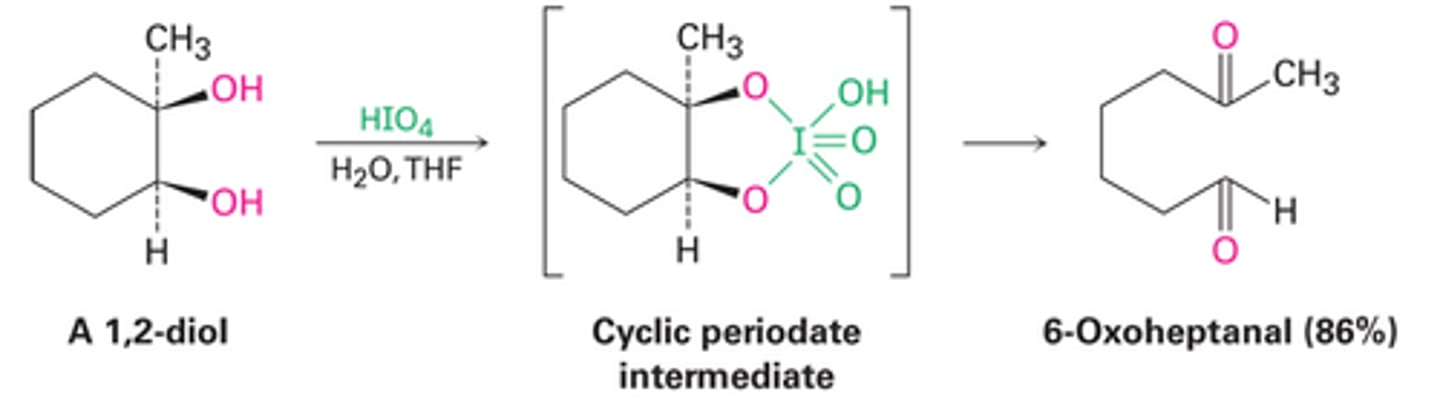
Oxidation of diols
-Reagents: 1,2-dioltreated by HIO4 in H2O/THF
-Cyclic intermediate with HIO4
Oxidation of alkenes with permanganate
-Reagents: potassium permanganate (KMnO4) under acidic/neutral condition (H+)
-Oxygen inserts into all former vinylic C-H bonds

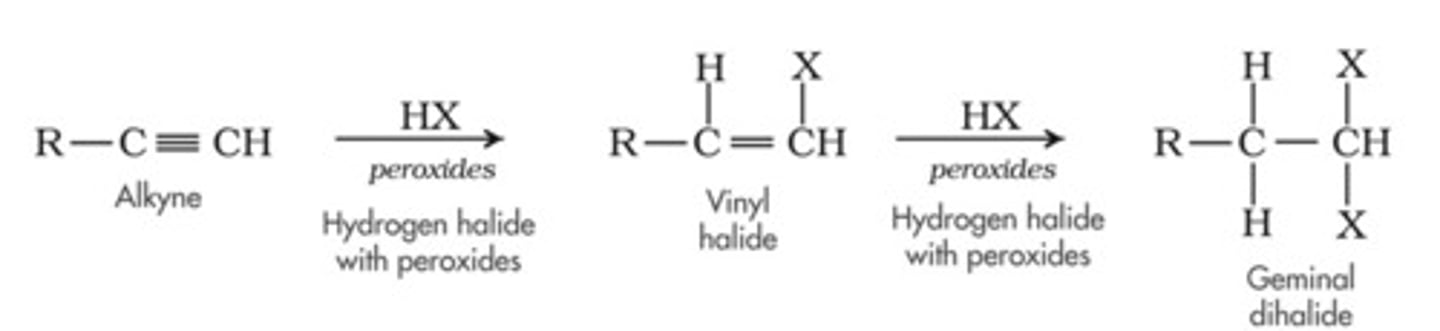
Hydrohalogenation of alkynes
-Reagents: HCl, HBr in acetic acid
-Addition
-Vinyl halide as intermediate
-Markovnikov addition
-Mixed stereochemistry, but first addition is usually trans, often followed by second addition (less reactive than alkenes)
-Excess HX --> geminal dihalides and excess X2 ---> tetrahalides
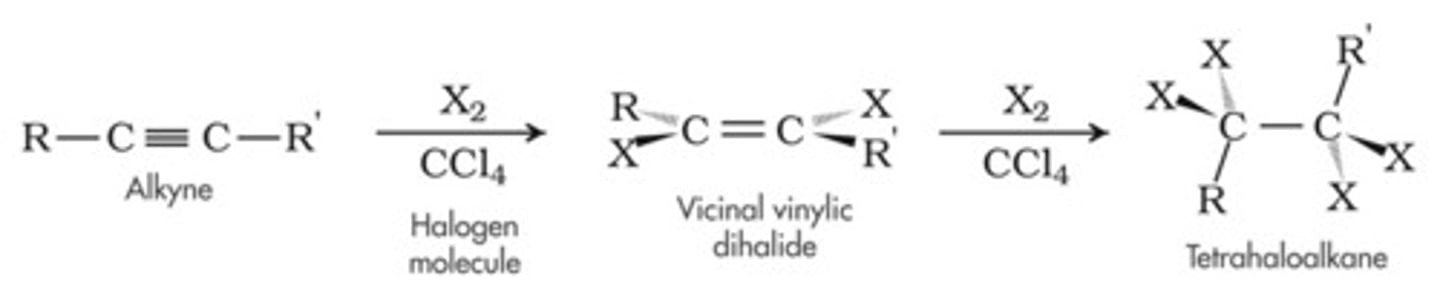
Halogenation of alkynes
-Reagents: Br2 or Cl2 in CCl4
-Addition
-First addition is usually trans
-Markovnikov addition
-Excess X2 ---> tetrahalides
Hydration of alkynes (HgSO4)
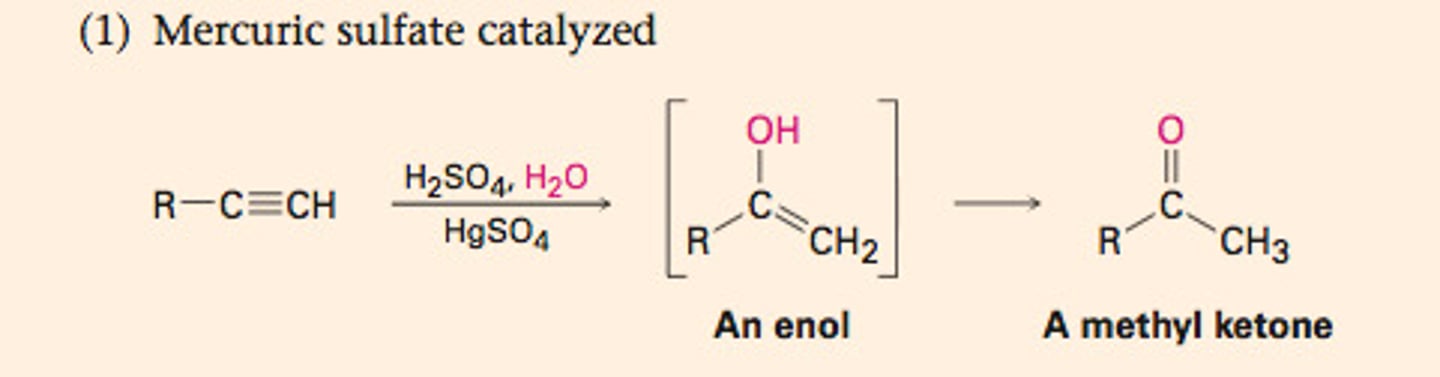
-Reagents: HgSO4/H2O/H2SO4
-Addition catalyzed by Hg2+, no mercurinium ion invovled
-Primary product is an enol (less stable tautomer of a ketone)
-Markovnikov addition
Hydroboration of alkynes
-Reagents: 1) BH3/THF, 2) H2O2/OH-
-Two-step addition of borane followed by oxidation with basic hydrogen peroxide (H2O2)
-Syn addition only (keto-enol tautomerization) for disubstituted alkynes
-Anti-Markovnikov addition with terminal alkynes; forms aldehydes

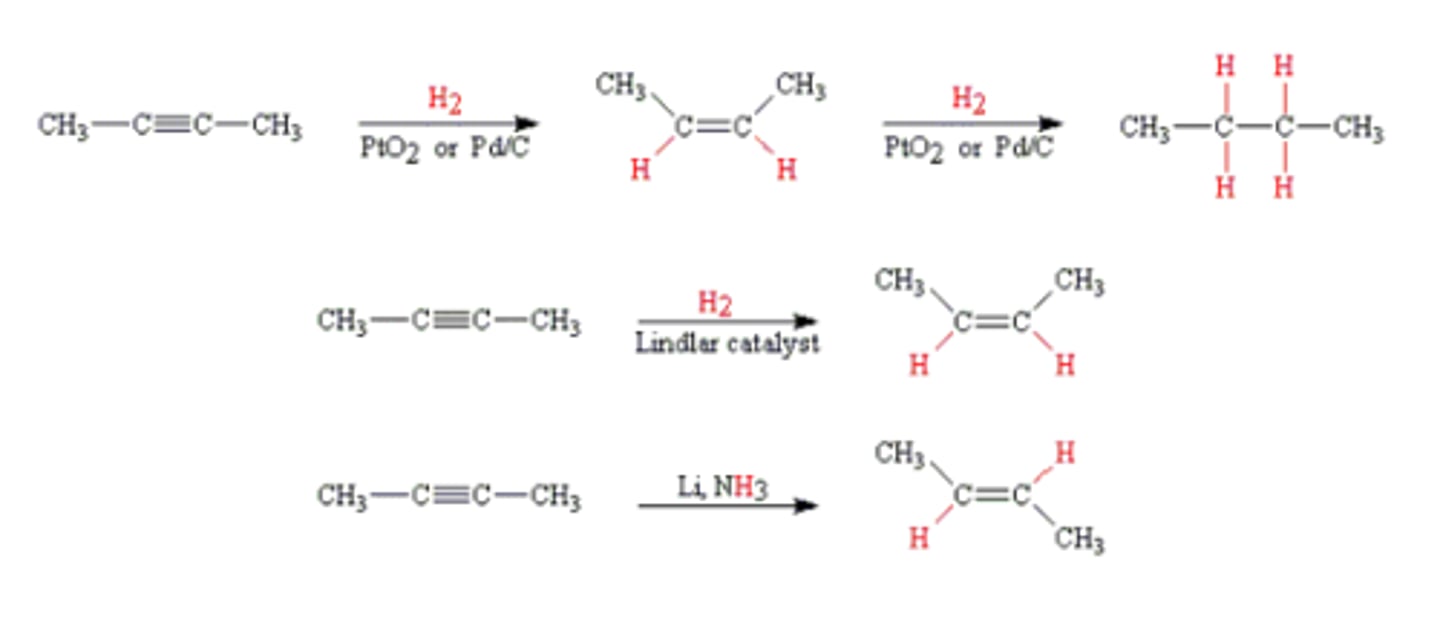
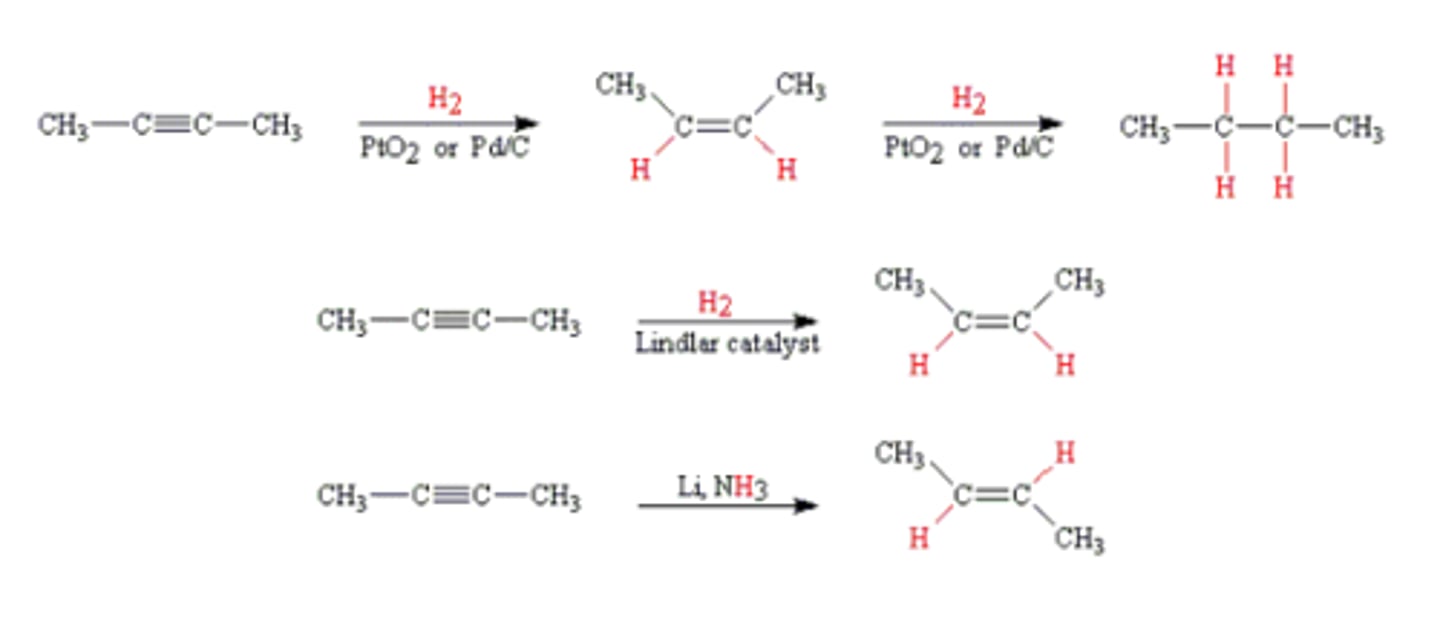
Hydrogenation of alkyne to alkene
-Reagents: H2 and Lindlar's catalyst (cis product) or Na, NH3 (trans product)
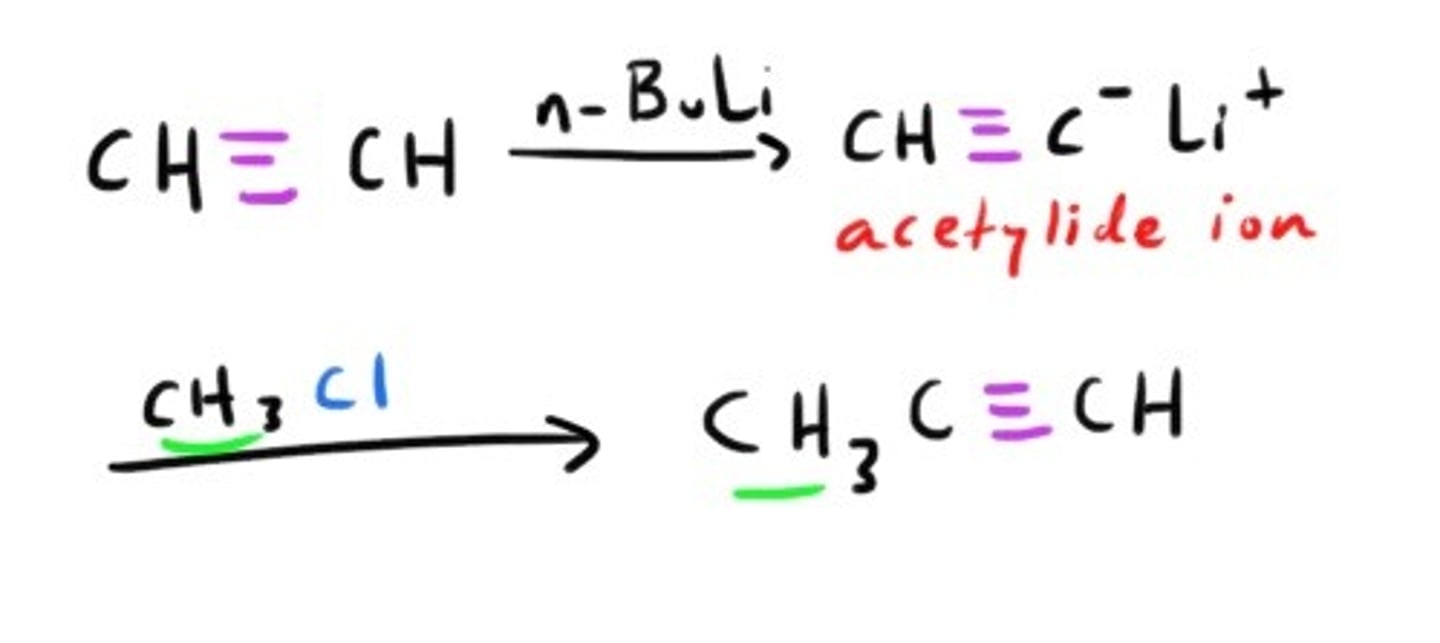
Alkylation of acetylide anion (Organic synthesis)
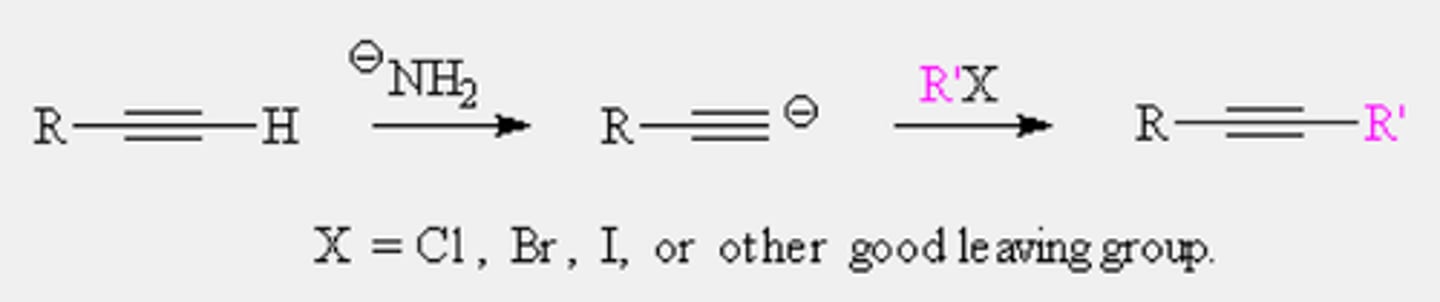
-Reagents: 1) NaNH2, 2) R1X
-Only occurs with terminal alkynes and occurs best with primary alkyl halides
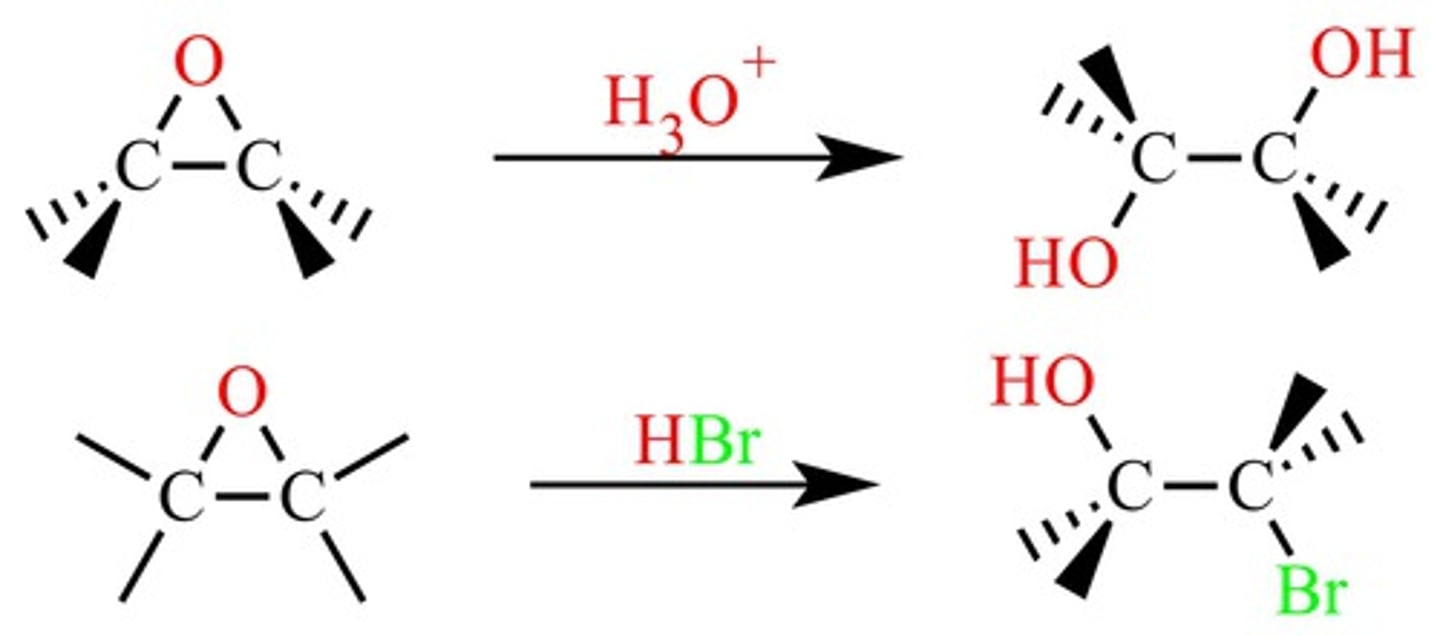
Opening of epoxides/Anti dihydroxlation
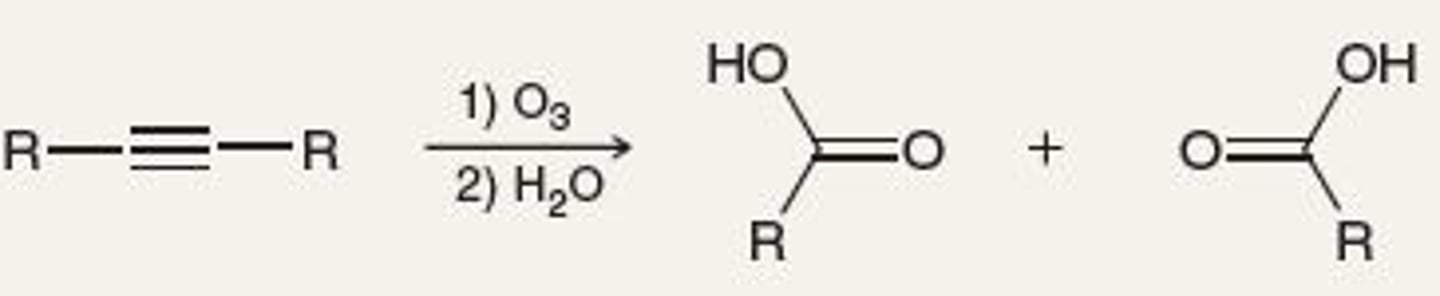
Oxidative cleavage of alkynes
-Reagents: 1) O3, 2) H2O
-Terminal yields carboxlyic acid and CO2
-Disubstituted yields two carboxlic acids
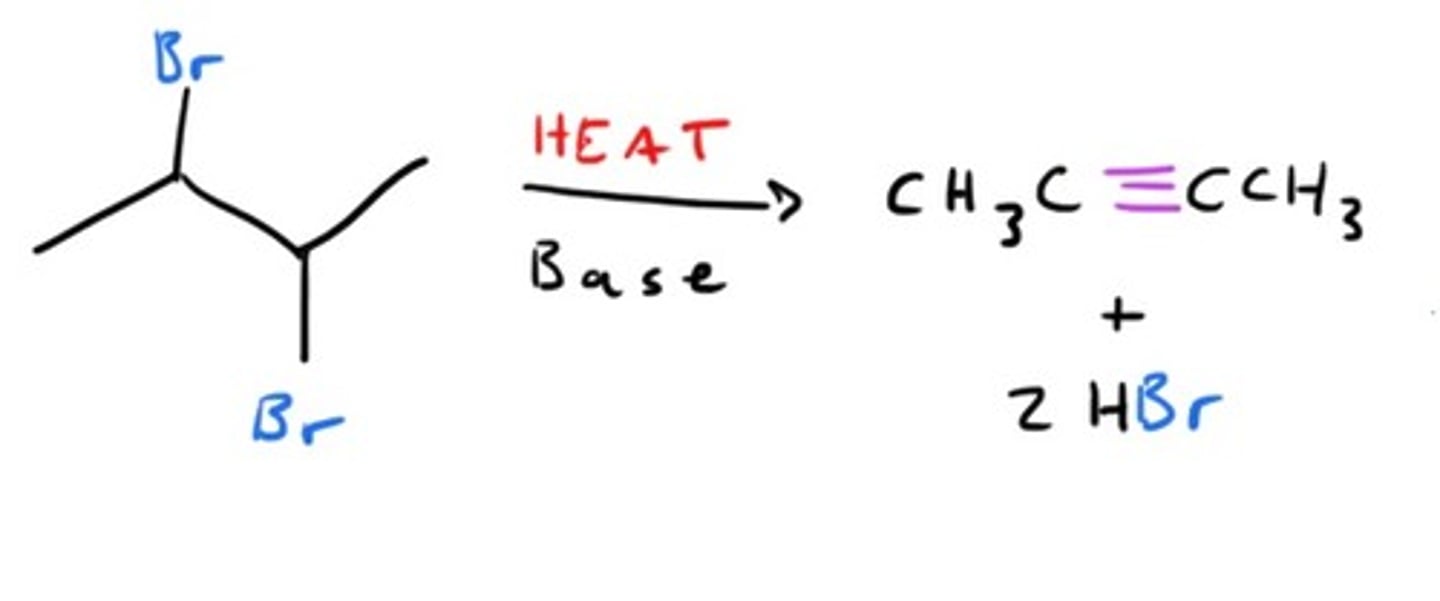
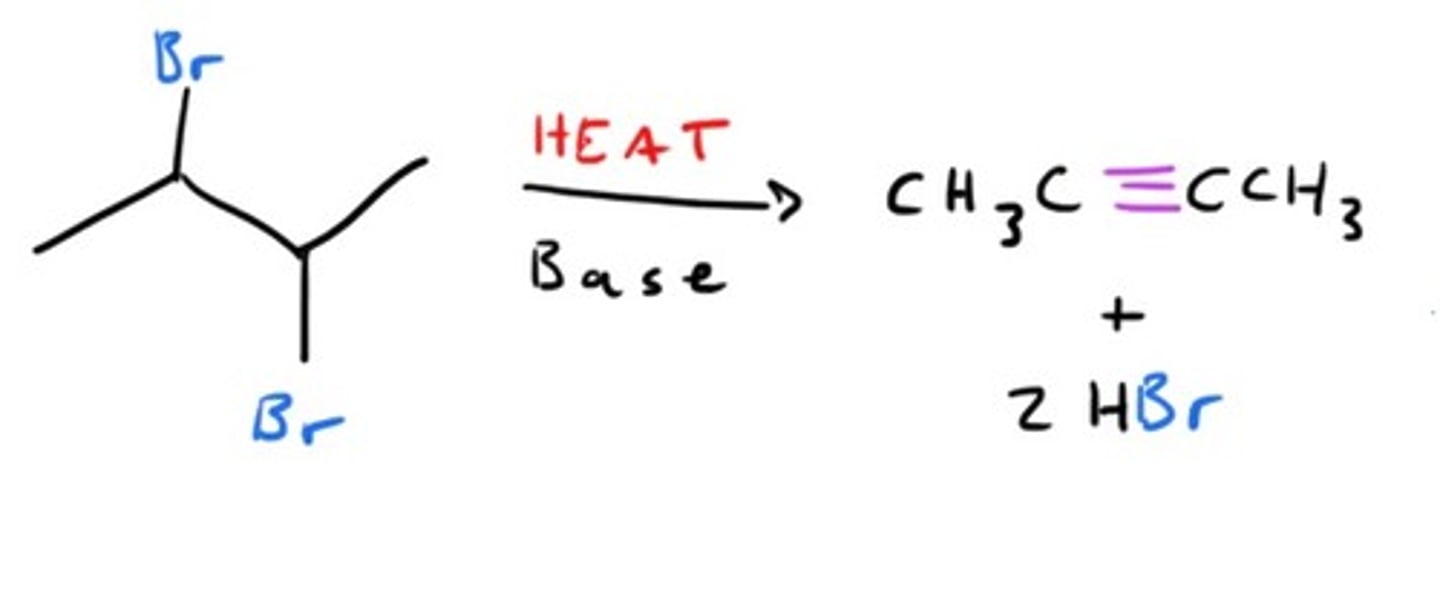
Synthesis of alkynes
-Elimination of halides (E2)
-Vicinal dihalide (alkane) ---(2 eq. KOH, ethanol or 2 NaNH2, NH3)--> alkyne
-Vinylic halide (alkene) ---(NaNH2/NH3)--> alkyne
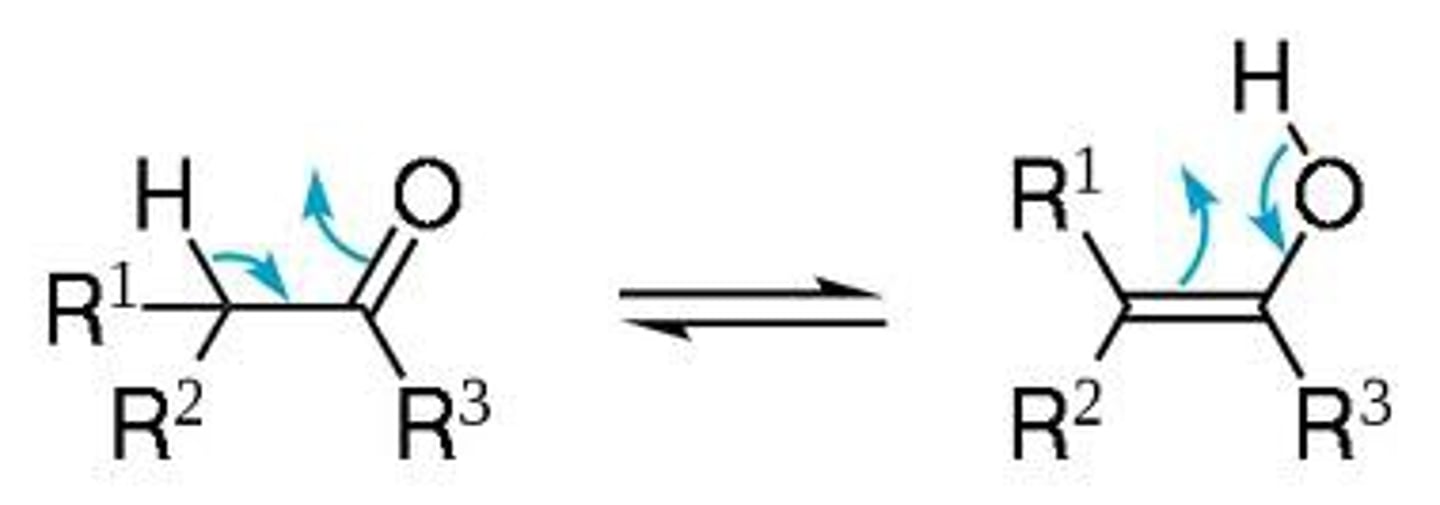
Keto-enol tautomerism
-Conversion of enols to ketones
-Occurs in hydroboration of alkynes and
hydration of alkynes with HgSO4
regioselective
preference of one direction of chemical bond making or breaking over all other directions
stereospecific
single reactant forms an unequal mixture of stereoisomers
regiospecific
one structural isomer is produced exclusively when others are theoretically possible
radicals
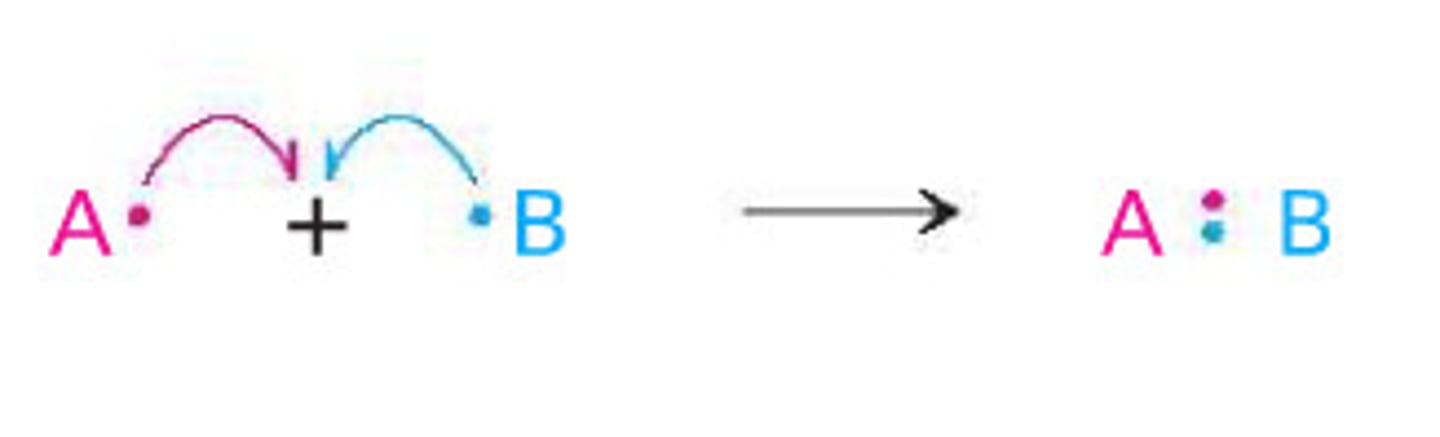
form when bonds break homolytically via heat, using fishhook arrows to indicate single electron movement
very unstable, but can be stabilized by resonance/hyperconjugation; radical reactivity follows radical stability trend (tertiary > secondary > primary); geometry of free radical carbon allows for halogen abstraction to occur on either side of the plane with equal probability
Homolytic cleavage
initiated by light or heat; produces two free radical halogens

Addition to pi bond
free radical halide forms bond with alkene; produces free radical haloalkane
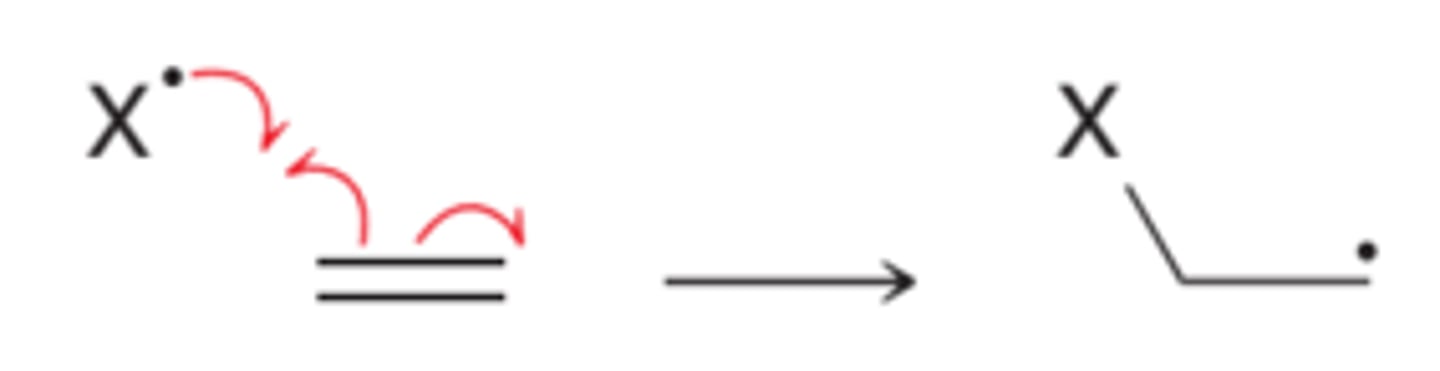
Hydrogen abstraction
halogen abstracts hydogen + electron from H-R; yields X-H and free radical R

Halogen abstraction
free radical R abstracts halogen + electron; yields R-X and free radical halogen

Elimination
Radical from alpha carbon is pushed toward the beta carbon to eliminate a group on the beta carbon (reverse of addition to a pi bond); yields free radical halogen and alkene
Coupling
reverse homolytic cleavage
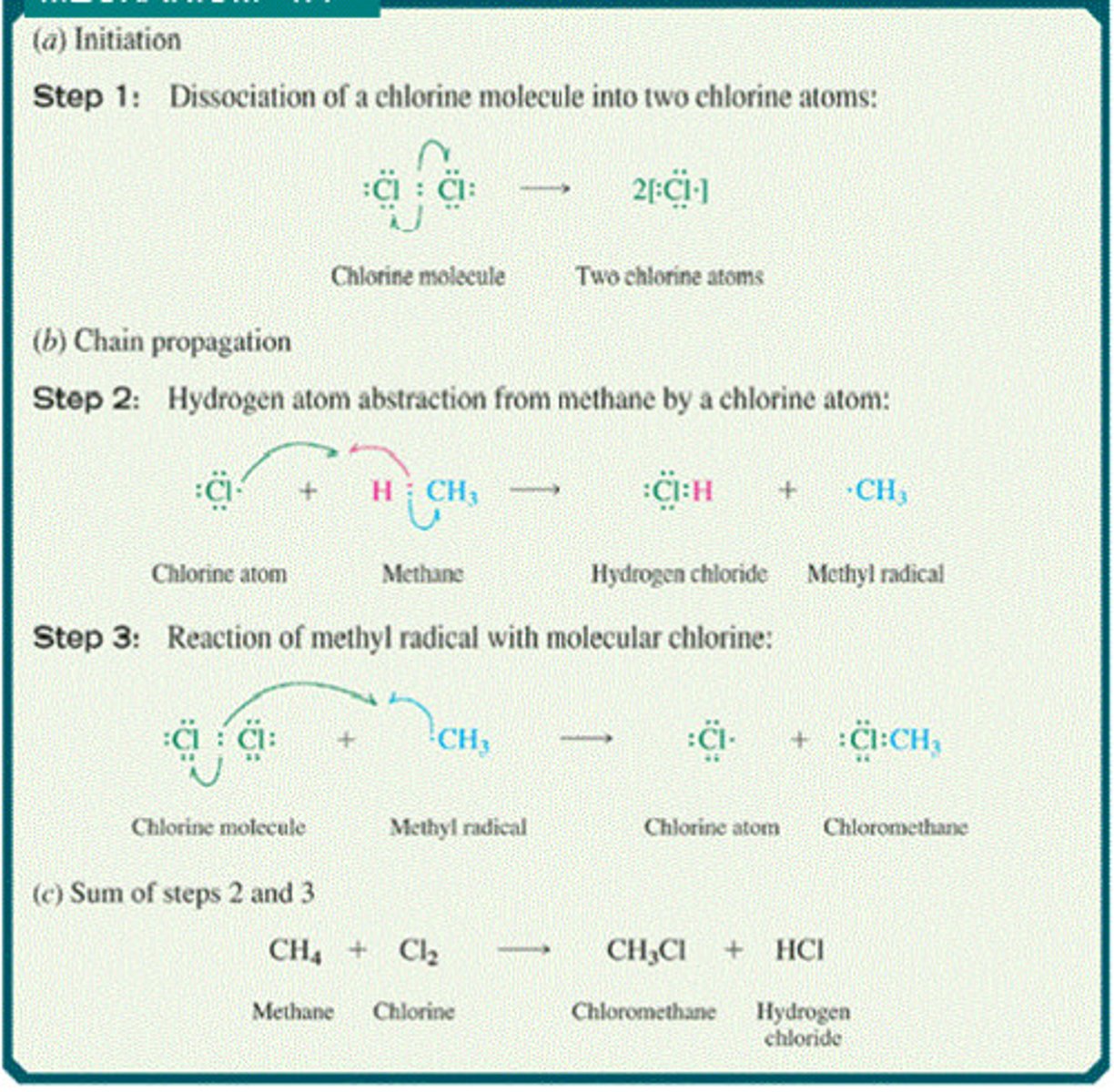
Halogenation of alkanes with free radicals
1. Initiation (homolytic cleavage)
2. Propagation (formation of H-Cl and free radical alkane, then formation of free radical halogen and haloalkane)
3. termination steps (produces multiple different products from free radicals produced in propagation; ethane, haloalkane, or X2)
4. overall reaction (indicates the addition of halogen to alkane and production of haloalkane and HX acid)
-hard to control; gives a mixture of products (difficult to stop substitution of halogens) CH4 + Cl2 --heat/light--> CCl4 + HCl
Radical reactions with alkenes (polymerization)
produces polymeric species of varying lengths
addition of alkene to free radical ether produces long chains
1. initiation: generates a radical species from nonradical molecule
2. propogation: radical initiation adds to alkene to generate an alkene-derived radical, which continues to react
3. termination: combination of two radical chains to end chain propagation
-not controllable but are affected by alkene reactivity and concentration
Sn1 Reaction
Sn2 Reaction
E1 Reaction
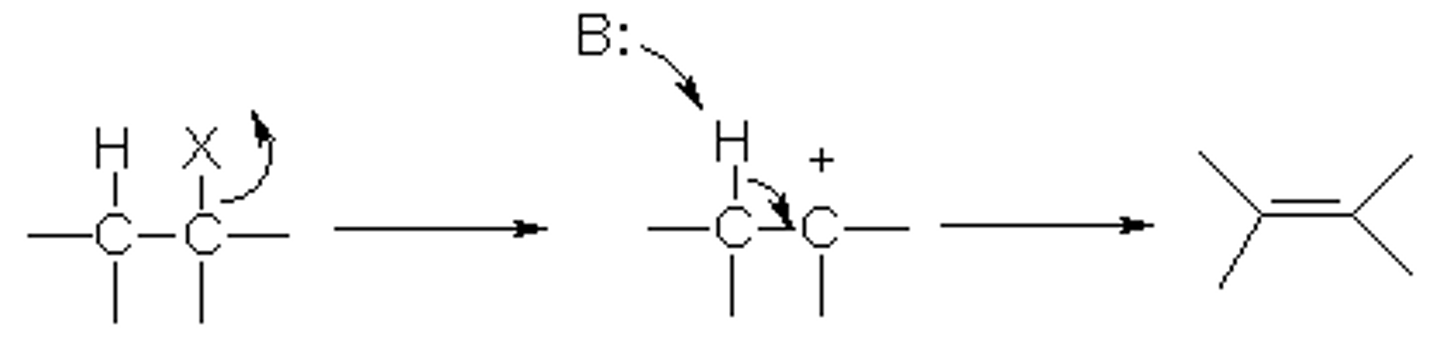
E2 Reaction
Catalytic Hydrogenation (H2, metal)
Addition of HX to an alkene
Markovnikov, possible carbocation rearrangement
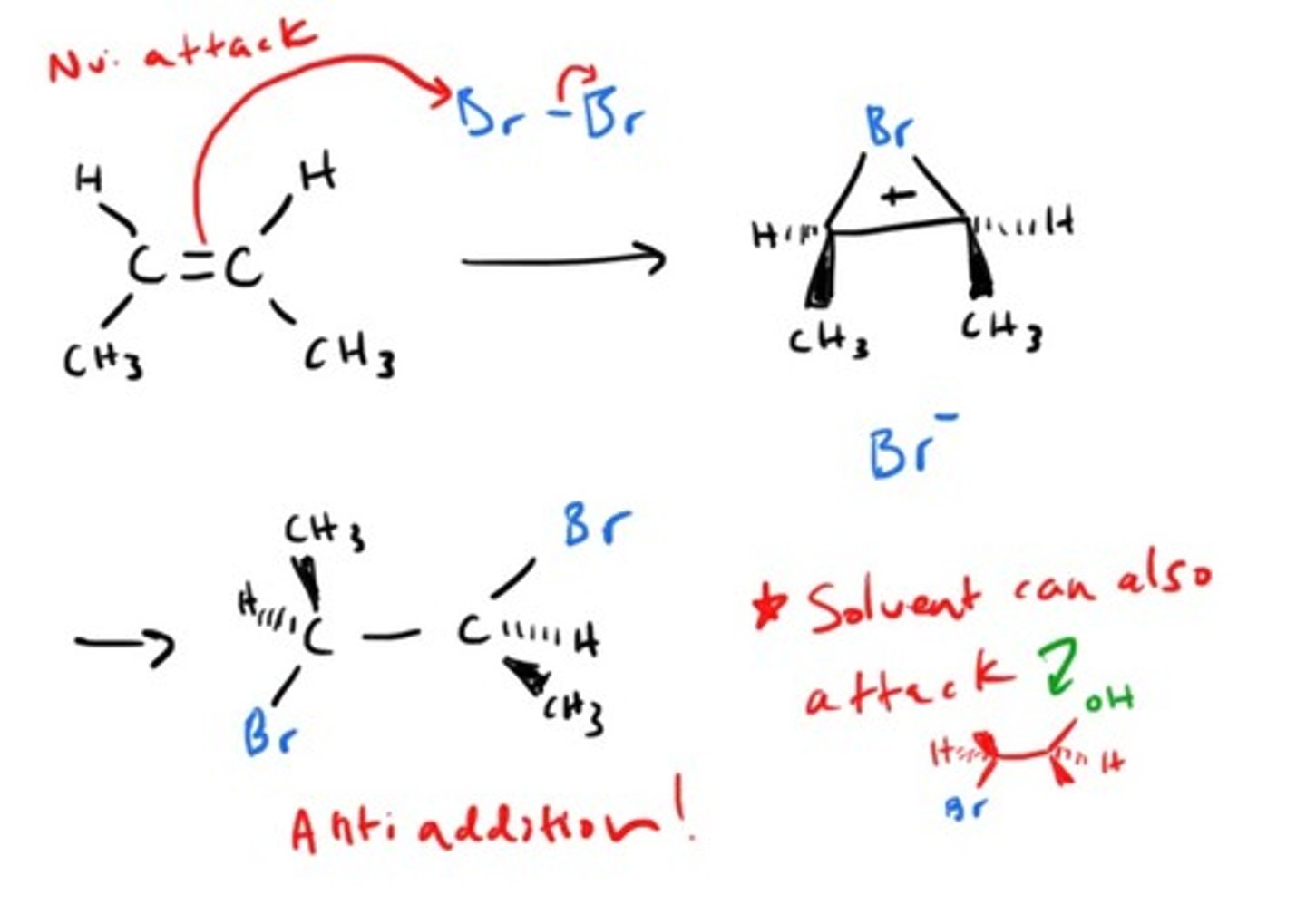
Halogenation of an alkene (X2)
anti addition, nucl attacks most subst carbon
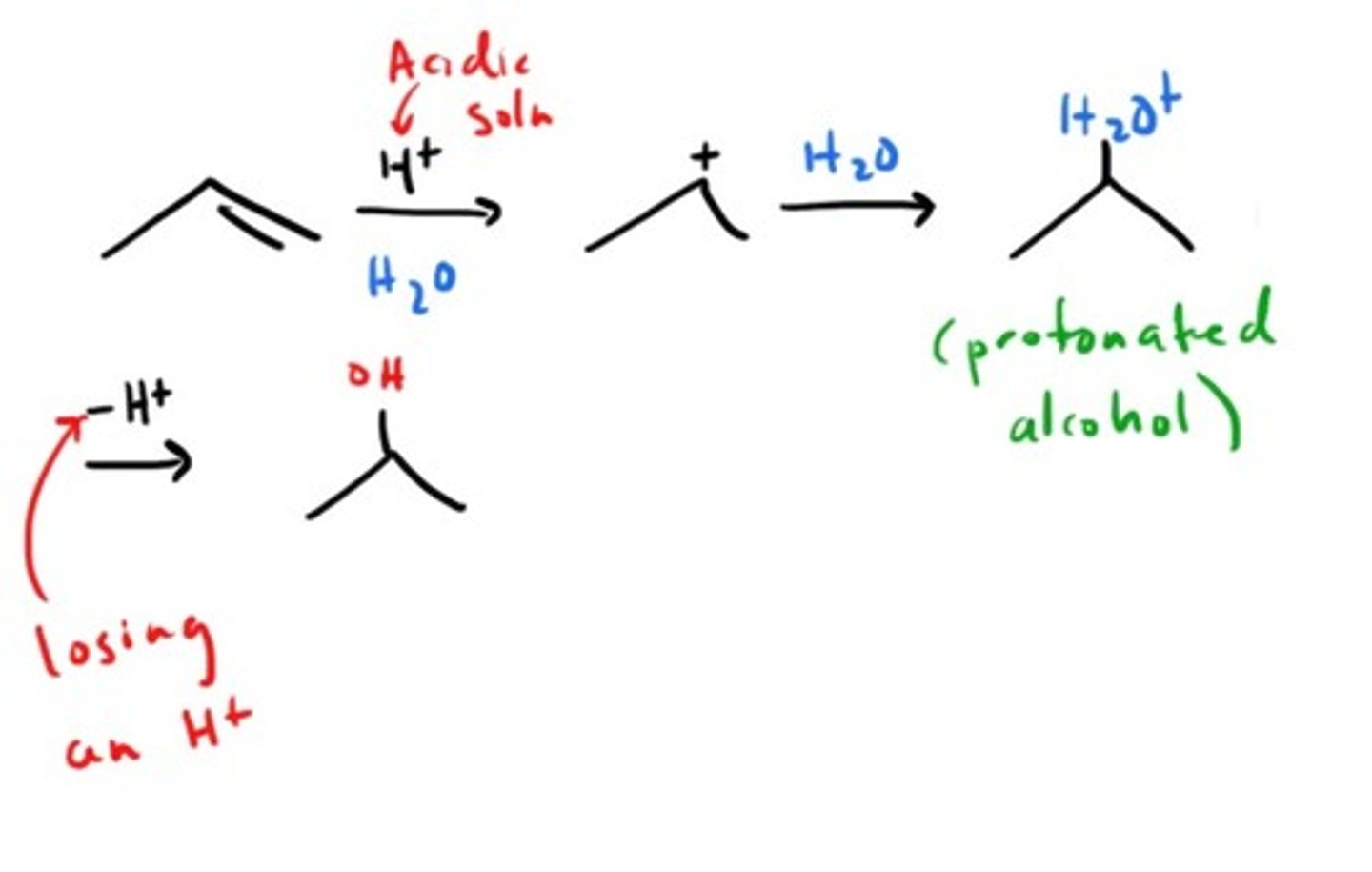
Acid Catalyzed hyrdation of an alkene (acid and water or H3O+)
markovnikov with possible carbocation rearrangement
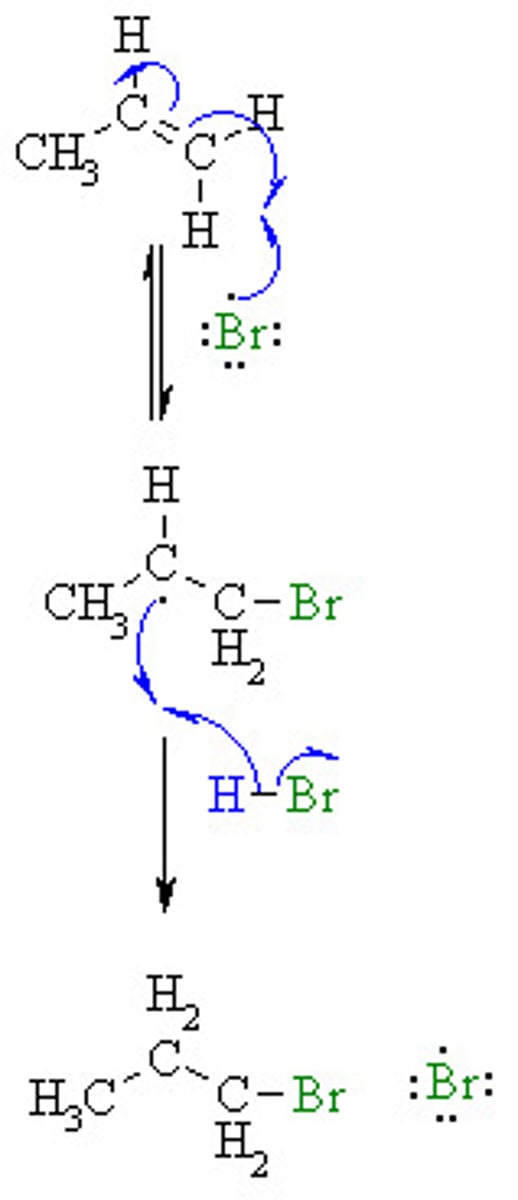
Free Radical Addtion to alkene (HBr, ROOR) Propagation
radical on the most stable carbon
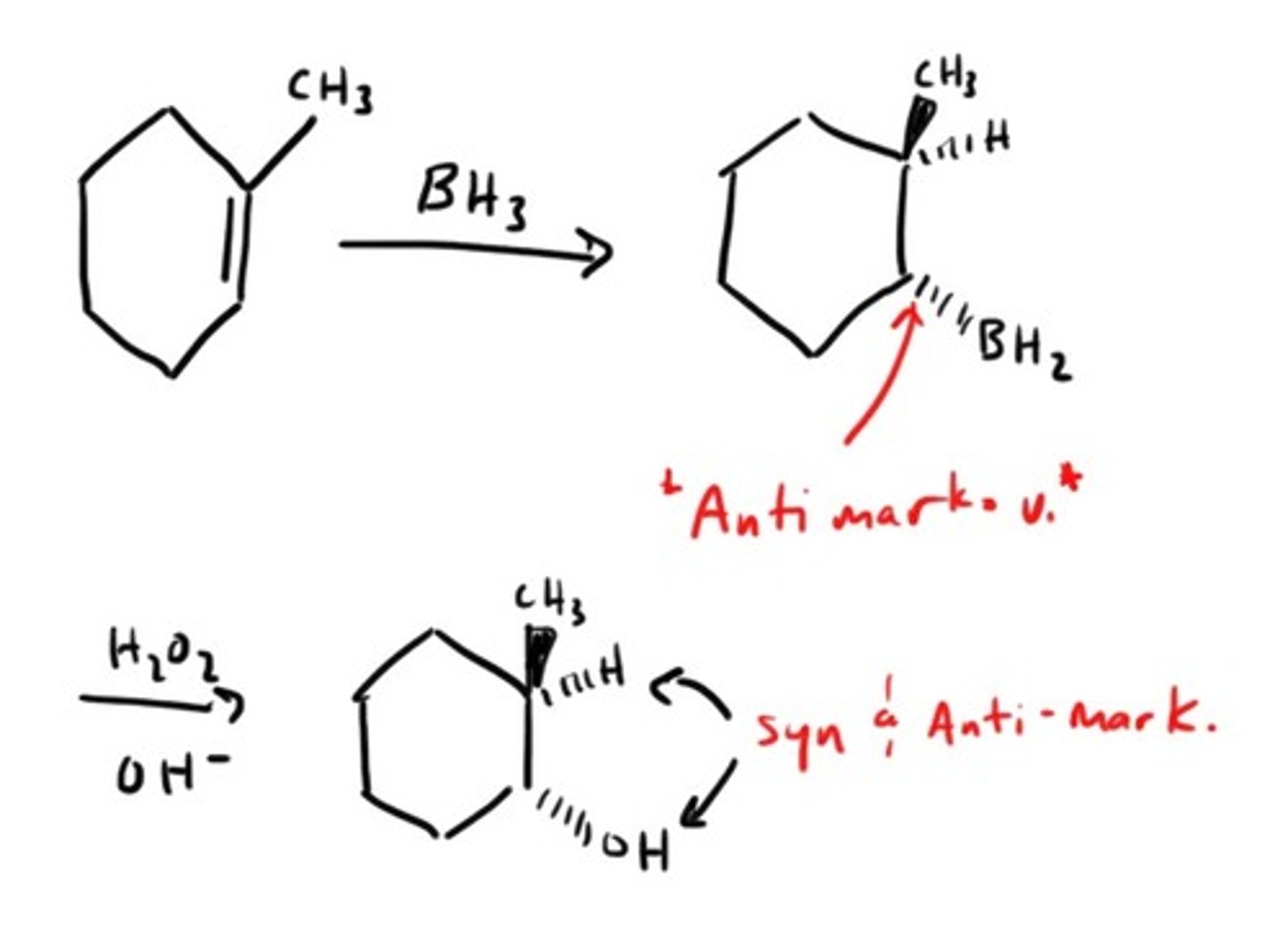
Hydroboration 1)BH, THF 2) H2O2, OH-
Antimarkovnikov hydration, syn addition
Alkene with KMnO4 (Cold), dilute OH- or 1)OsO4 2)Me2S
Dihydroxylation, syn addition
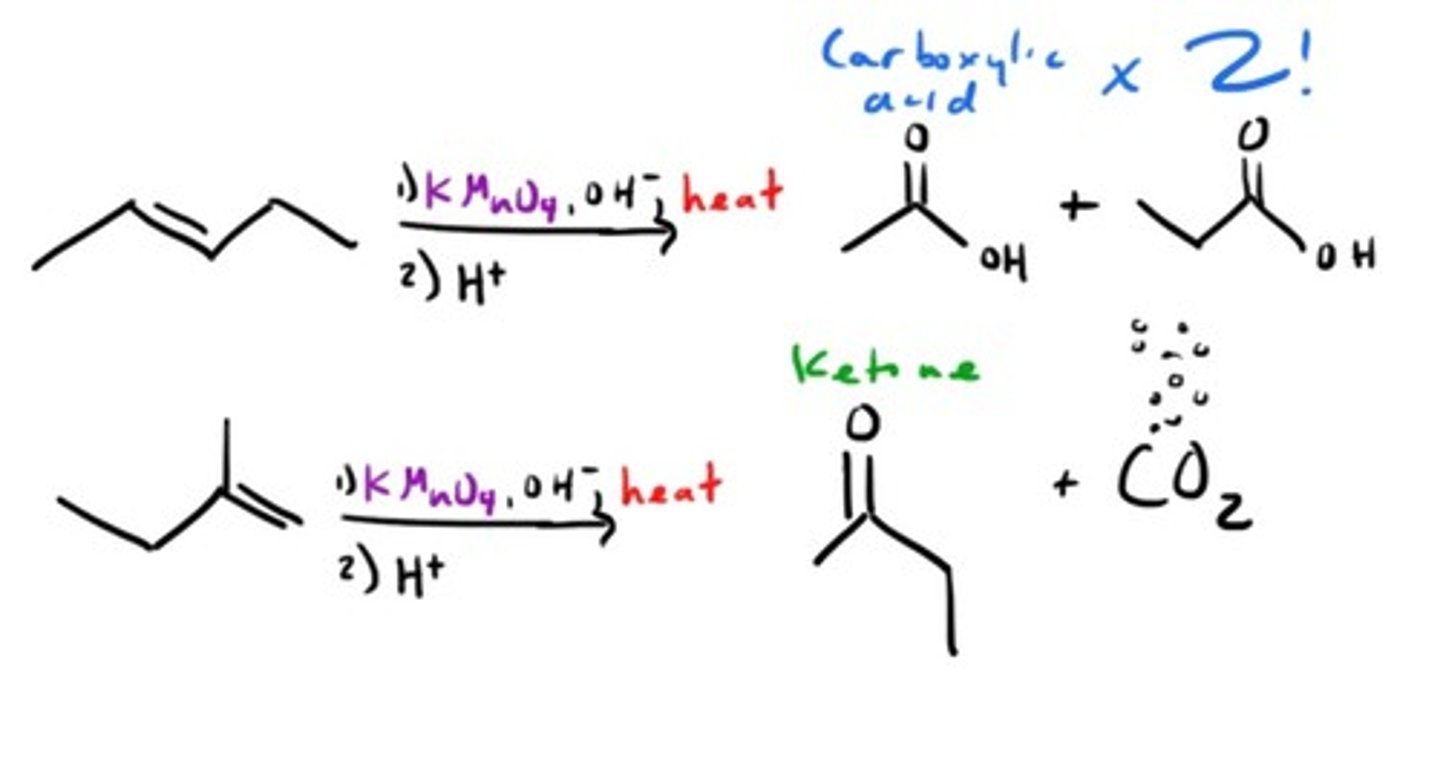
Alkene with KMnO4 (Hot), OH-
cuts like ozone but aldehydes become carboxylic acids, one carbon becomes CO2
Ozonolysis 1) O3 2) Me2S or Zn
cuts the double bond and puts O on carbons
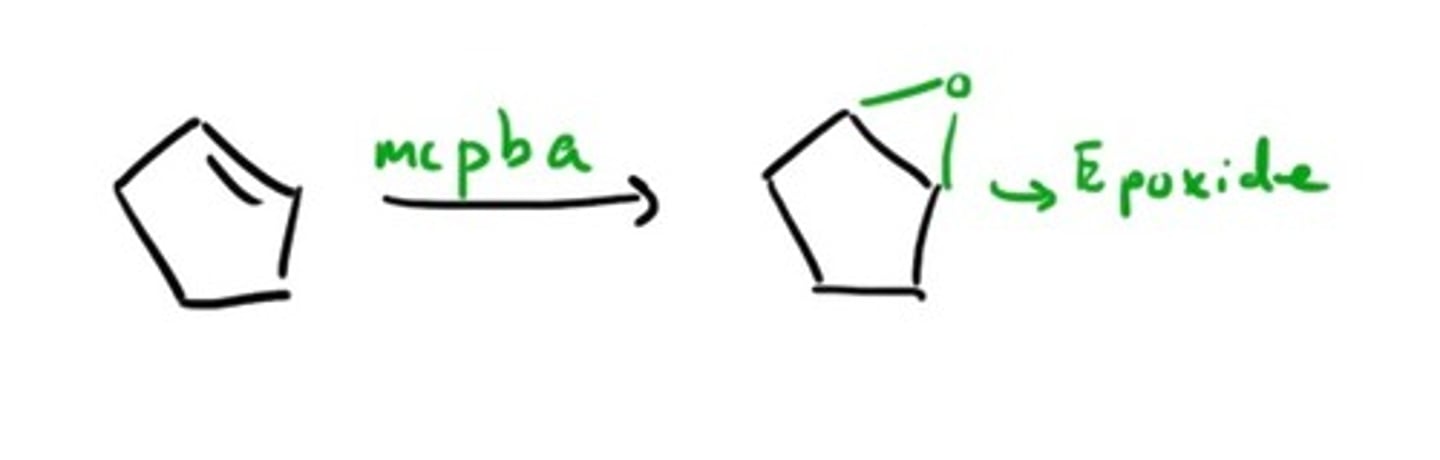
Peroxycarboxylic acids (McPBA) or COOOH
Synthesis of Alkyne starting from dihalide
Use 2 equivalents of strong base like NaNH2
Synthesis of Alkyne using acytelide ion
Alkyne Hydrogenation (3 types)
Ni2B (P-2) means Lindlar
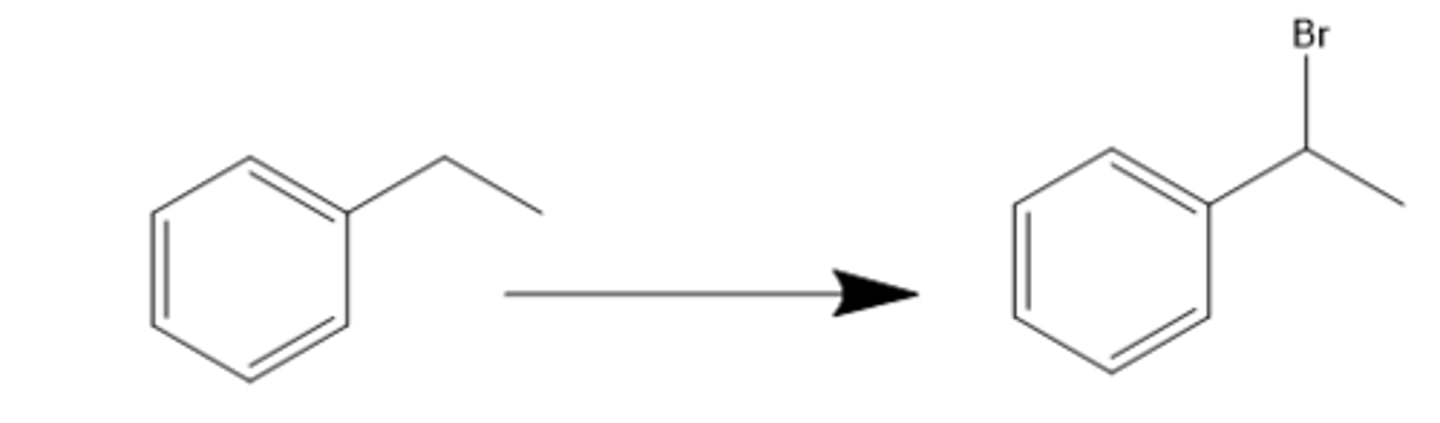
Free Radical Halogenation (Cl2 or Br2 with heat or light)
Cl2 is not selective = switches a Cl with any alkane H. Br2 is selective = switches Br with H on carbon on most stable radical.
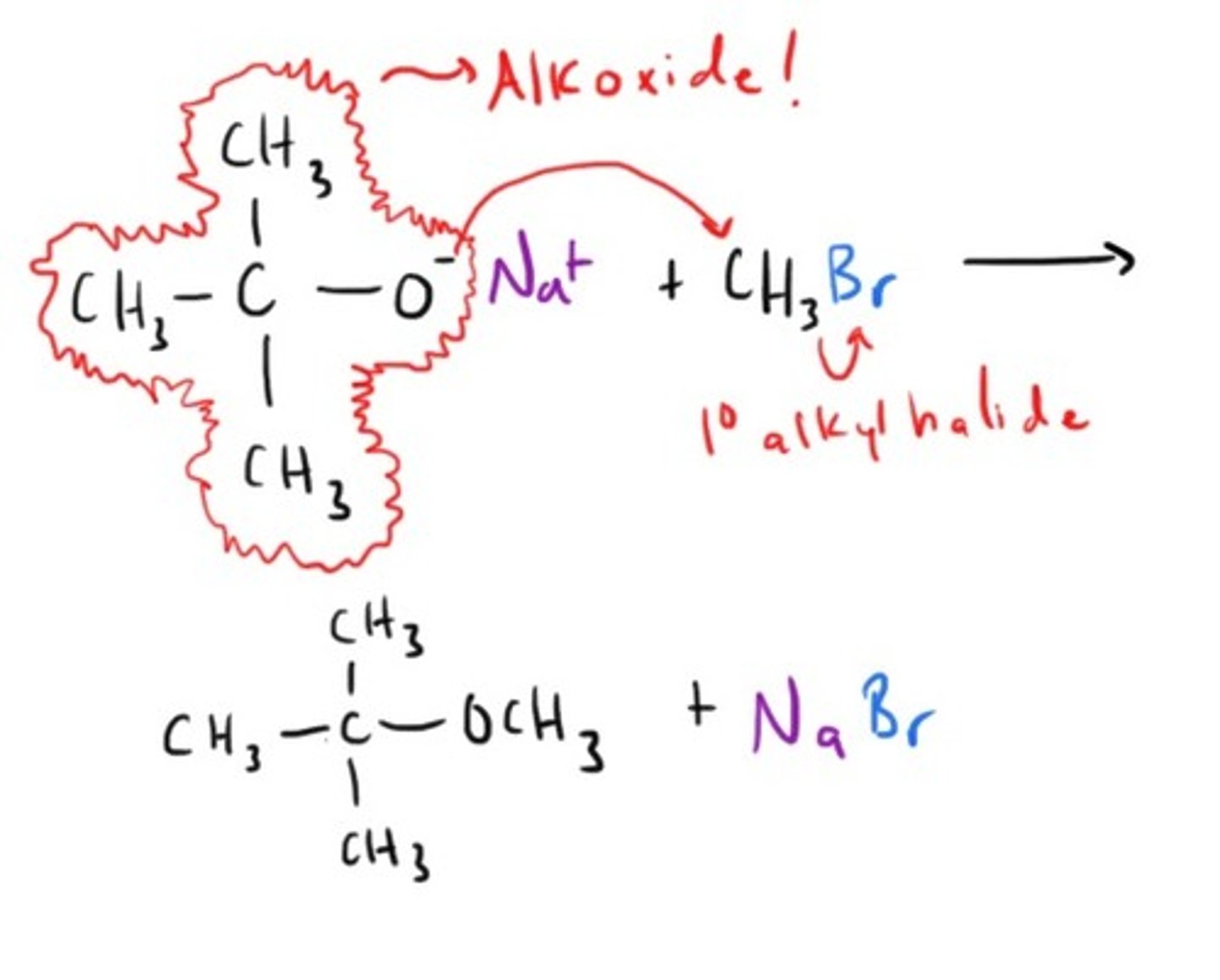
William Ether Synthesis RO- with R-LG
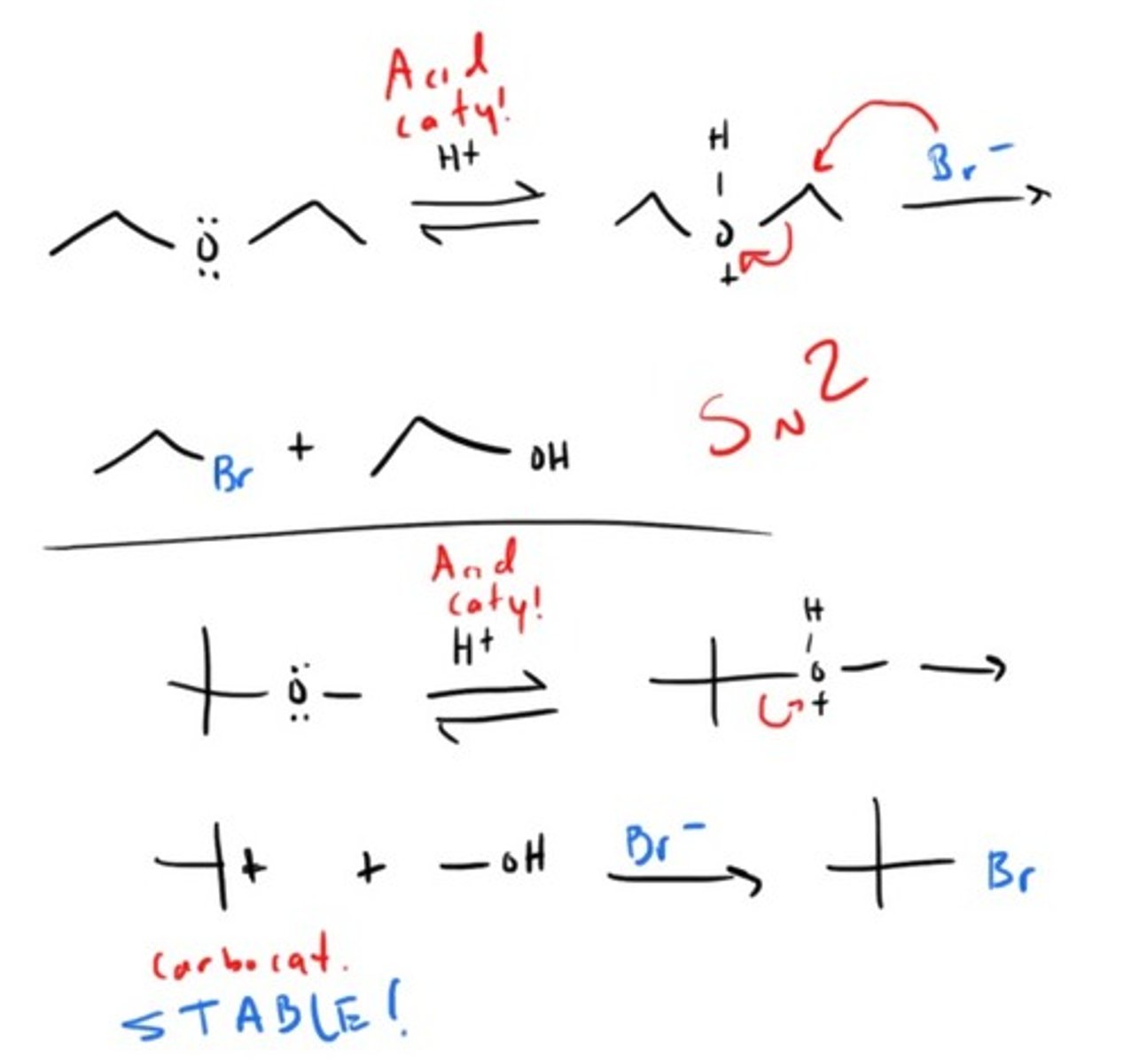
How to Cleave an Ether!
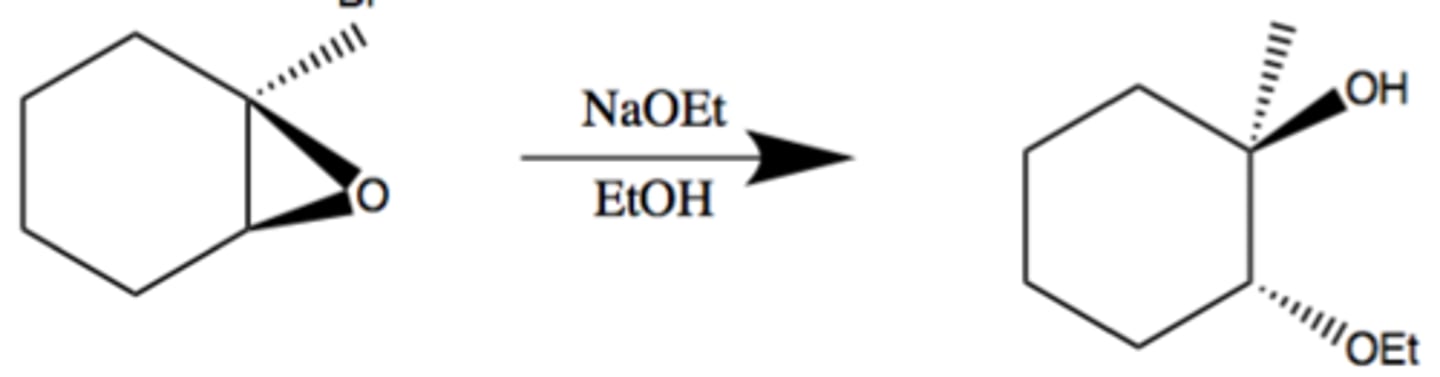
Epoxide reacting with base (good nucleophile)
OH will be anti to nucleophile. nucleophile goes to least substituted carbon
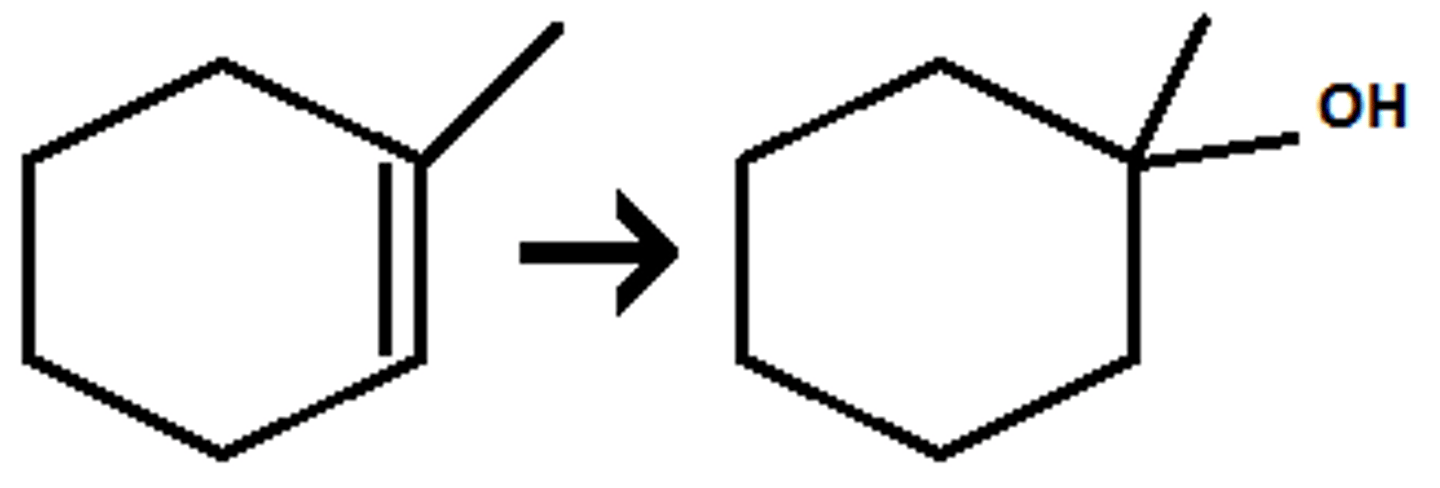
Oxymercuration/Demercuration 1) Hg(OAc)2, H2O 2)NaBH4, OH-
Markov hydration, no C+ rearrangement, Could use ROH instead of H2O
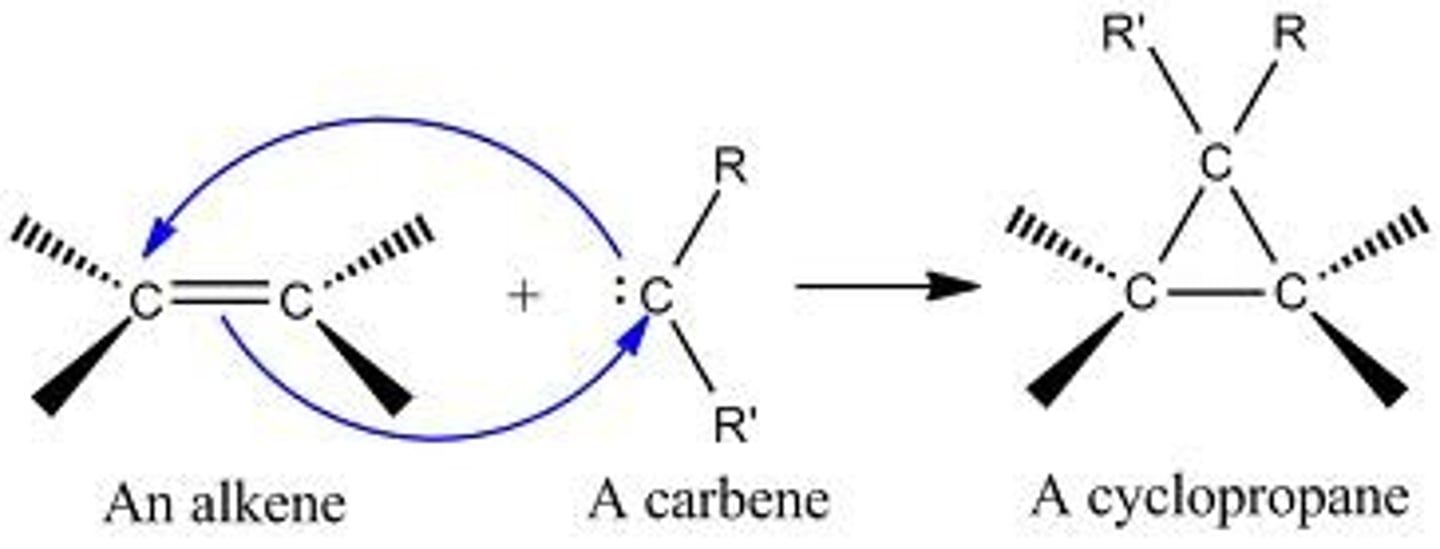
Alkene with CH2I2 and Zn(Cu)
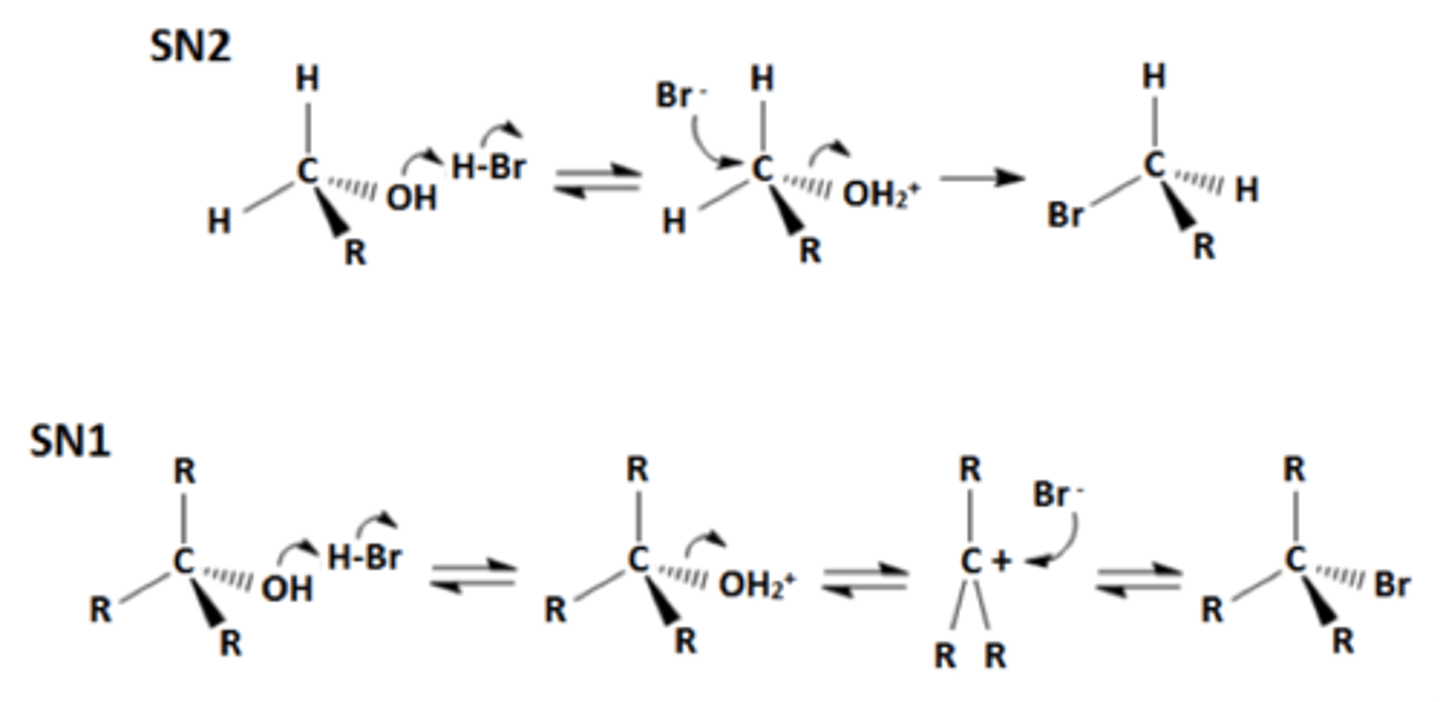
Alcohols to alkyl halides (ROH with HX)
SN2 if primary or methyl, SN1 if secondary or tertiary
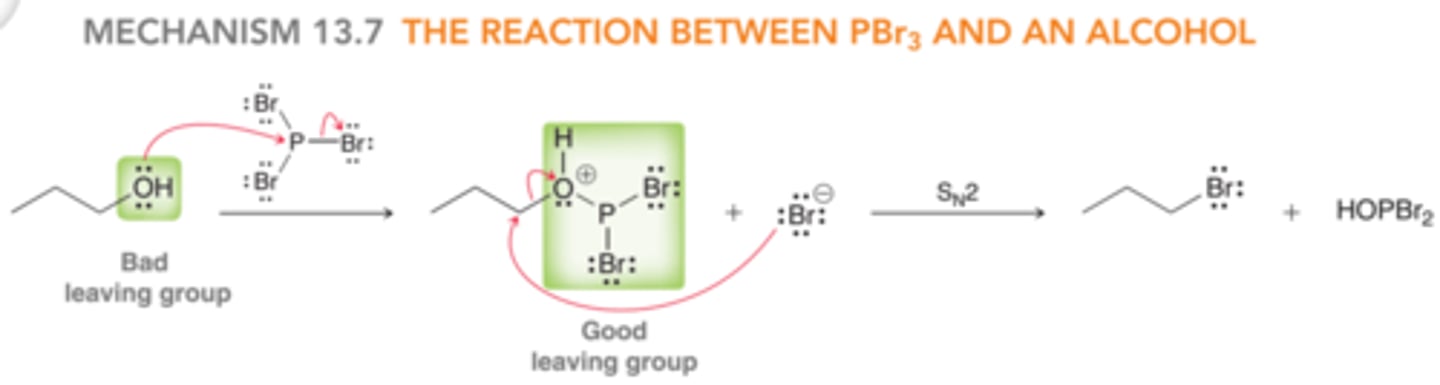
Alcohols with PBr3
Inversion of stereochemistry if the carbon with OH was chiral because Br- does an SN2
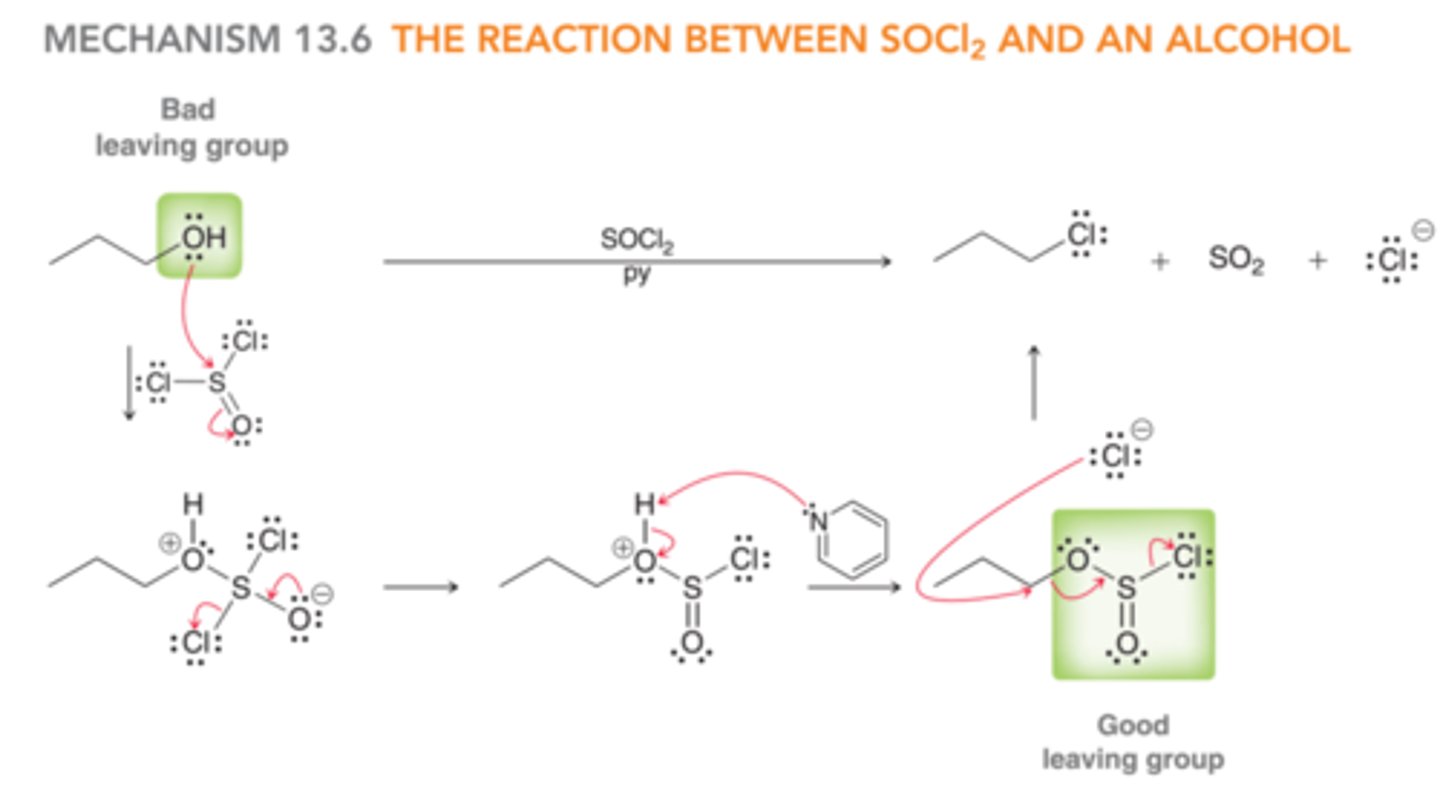
Alcohols with SOCl2
Inversion of stereochemistry if the carbon with OH was chiral because Cl- does an SN2
OTs, OTf, OMs
Good leaving groups
Intermolecular Dehydration of Alcohols (ROH with H2SO4)

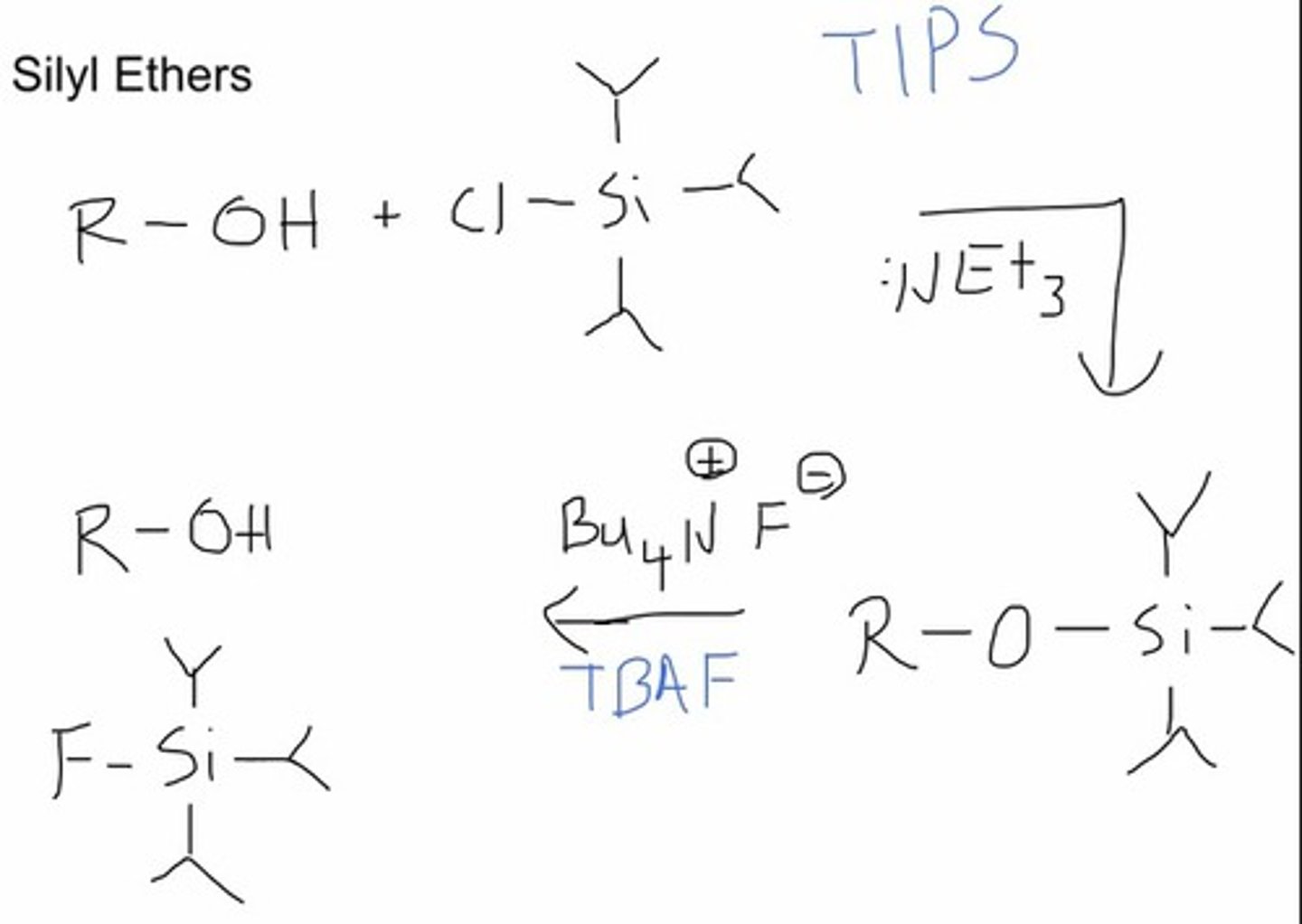
Protecting Groups (ROH with TBSCl)
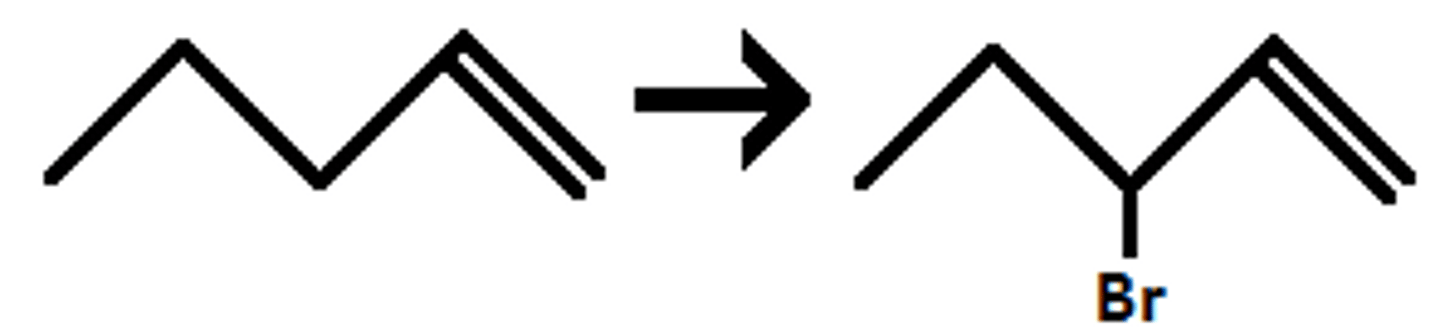
NBS with heat or ROOR
switches Br for H on an allylic or benzyllic carbon
Strong Bases
N-, O-, C-, H- except: CN-, COO-, N3-
Alkene with CH2N2
Alkene with CHCl3 and Strong Base

Epoxide Reacting with Acid
H+ to O first then Nucl to most subst carbon