Body Organization
 Call Kai
 Learn
Learn Practice Test
 Spaced Repetition
 Match
Match Flashcards
 Knowt Play
1/50

There's no tags or description
Looks like no tags are added yet.
Name | Mastery | Learn | Test | Matching | Spaced | Call with Kai | Chat |
|---|
No analytics yet
Send a link to your students to track their progress
51 Terms
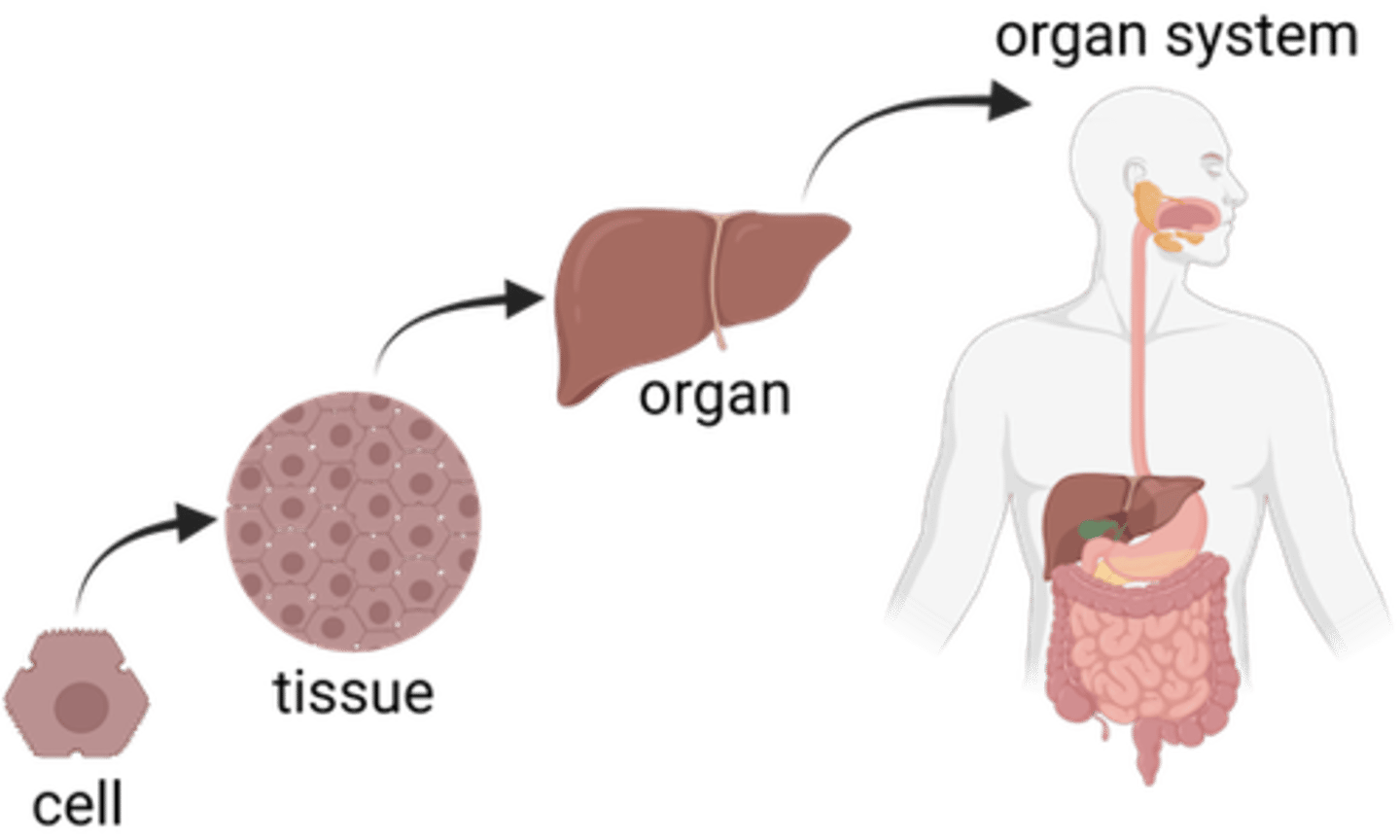
Body organization and how they build up on eachother
Cells (Cannot work alone and are what the body is made up of)
Tissues (similar cells built up and organized together
Organs (2 or more tissues that cannot work alone)
Organ system (2 or more organs working together)
Study of body structure
Anatomy
Study of the function
physiology
When the body's systems (organ systems) are balanced.
If one is affected, then they are all affected
Homeostasis
What are the three main parts of the cell
CELL MEMBRANE
-outer layer, permeable, lets substances pass
CYTOPLASM
-liquid containing cell structures
-Mitochondria- powerhouse of the cell ATP/energy
NUCLEUS
-holds DNA
The molecule that carries genetic instructions in all living things.
a long strand of genes
DNA
A portion of DNA that determines body traits and is hereditary
recessive/dominant traits passed down
Genes
The transfer of genetic traits from parent to child
Hereditary
How many chromosomes do we have
46 chromosomes, 22 pairs, 44 total
One pair of sex chromosomes: X and Y
Male vs Female Chromosomes
Male: XY
Female: XX
4 tissue types
epithelial, connective, muscle, nervous
Which tissue type is:
Most abundant tissue that COVERS and protects the body/ most organs
protects against invading pathogens and toxins
secretes enzymes
absorbs nutrients
Epithelial Tissue
Which tissue type is:
Responsible for what we feel
Located in the brain, spinal cord, and peripheral nerves
-Sends impulses or electrical messages to the nerve endings, muscles, and glands in the body
Nervous Tissue
Which tissue type is:
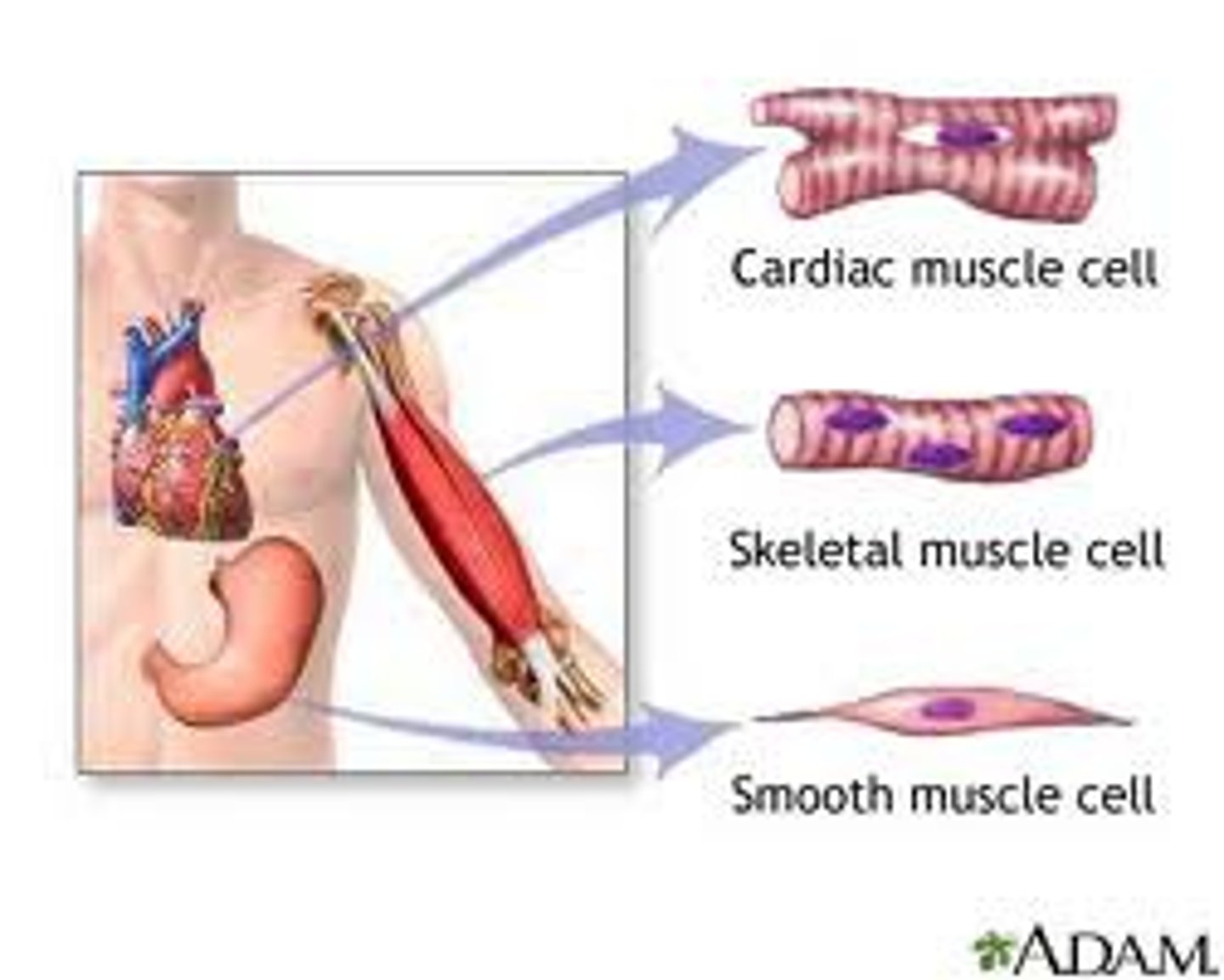
Contracts and relaxes and includes the
Skeletal muscle
Smooth muscle
Cardiac muscle
Muscle tissue
Which tissue type is:
Supports, protects, and gives structure to other tissues and organs in the body.
- Stores Fats
- Helps move nutrients and substances between tissues and organs
- Helps repair damaged tissue
-Most abundant
Connective Tissue
Cartilage: Joints, muscles
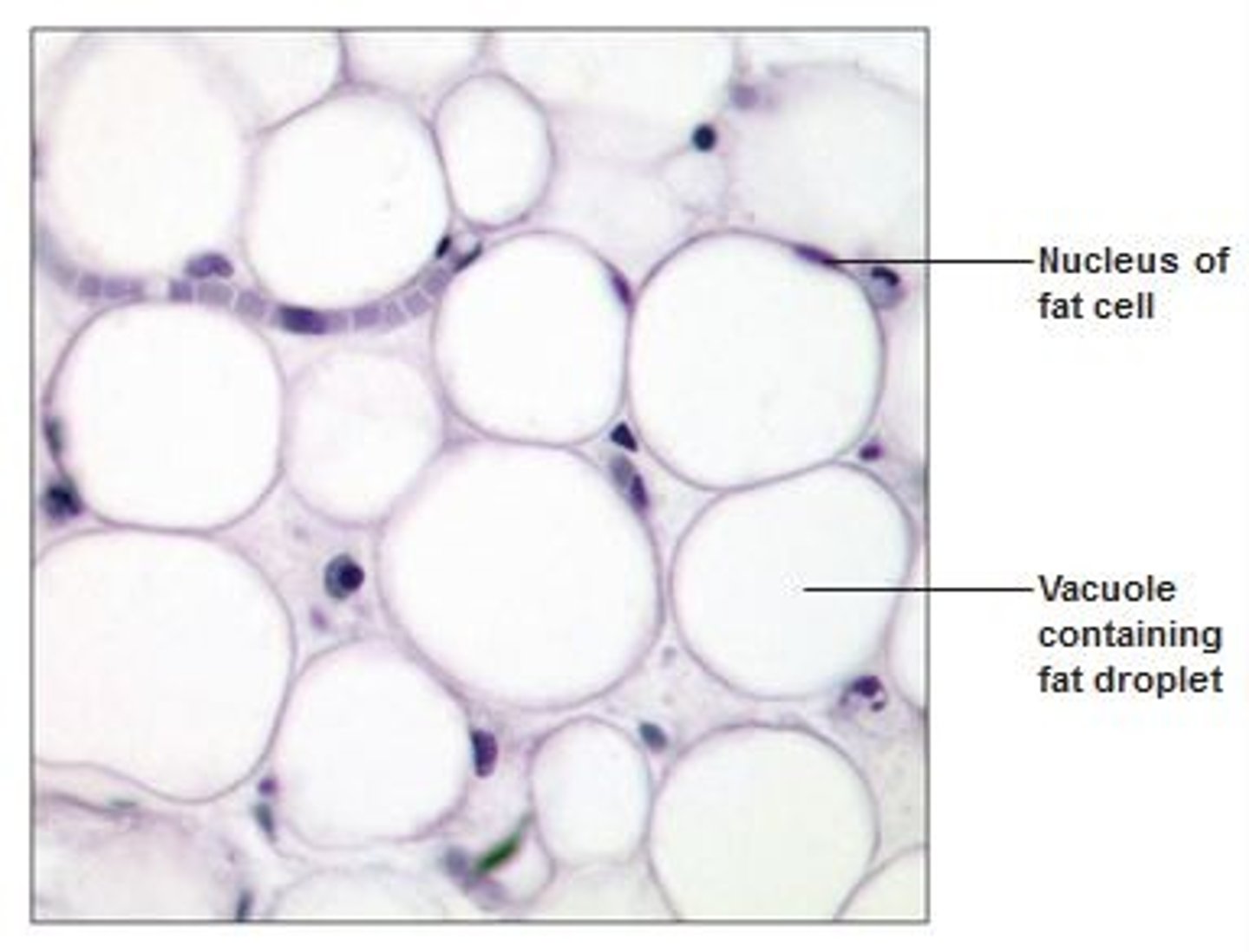
Adipose: Fat
Blood: Composed of red and white blood cells, platelets, and plasma
usseous (bone) Tissue
Connective tissue
Muscle that is:
-Attached to the skeleton
-Striated
-Voluntary
Skeletal muscle
Which tissue type is:
- located in walls of hollow organs, walls og blood vessels, and the dermis of skin.
- located in hollow organs like the stomach and esophagus
- Involuntary
Smooth Muscle
Which tissue type is:
- Located in the wall of the heart
- Striated
- involuntary
Cardiac Muscle
Adipose Tissue
Which organ system:
- The bodies 1ST DEFENSE against illness and injury
- Regulates temperature
- Excretion- cools (perspiration)
- Sensation
Integumentary System - Skin and Accessory Organs
Which organ system:
- Gives the body structure and stability
- Protects organs from injury
- works hand in hand with the muscular system
Skeletal System- bones and joints
Which organ system:
- Responsible for movement
- Works hand in hand with the skeletal system
Muscular system- muscles and connecting structures
Which organ system:
- prevents infections w/ the help of white blood cells
Lymphatic system- lymph nodes, spleen
Which organ system:
- Moves air, breathing
- Delivers oxygen and eliminates carbon dioxide
Respiratory system- lungs and airways
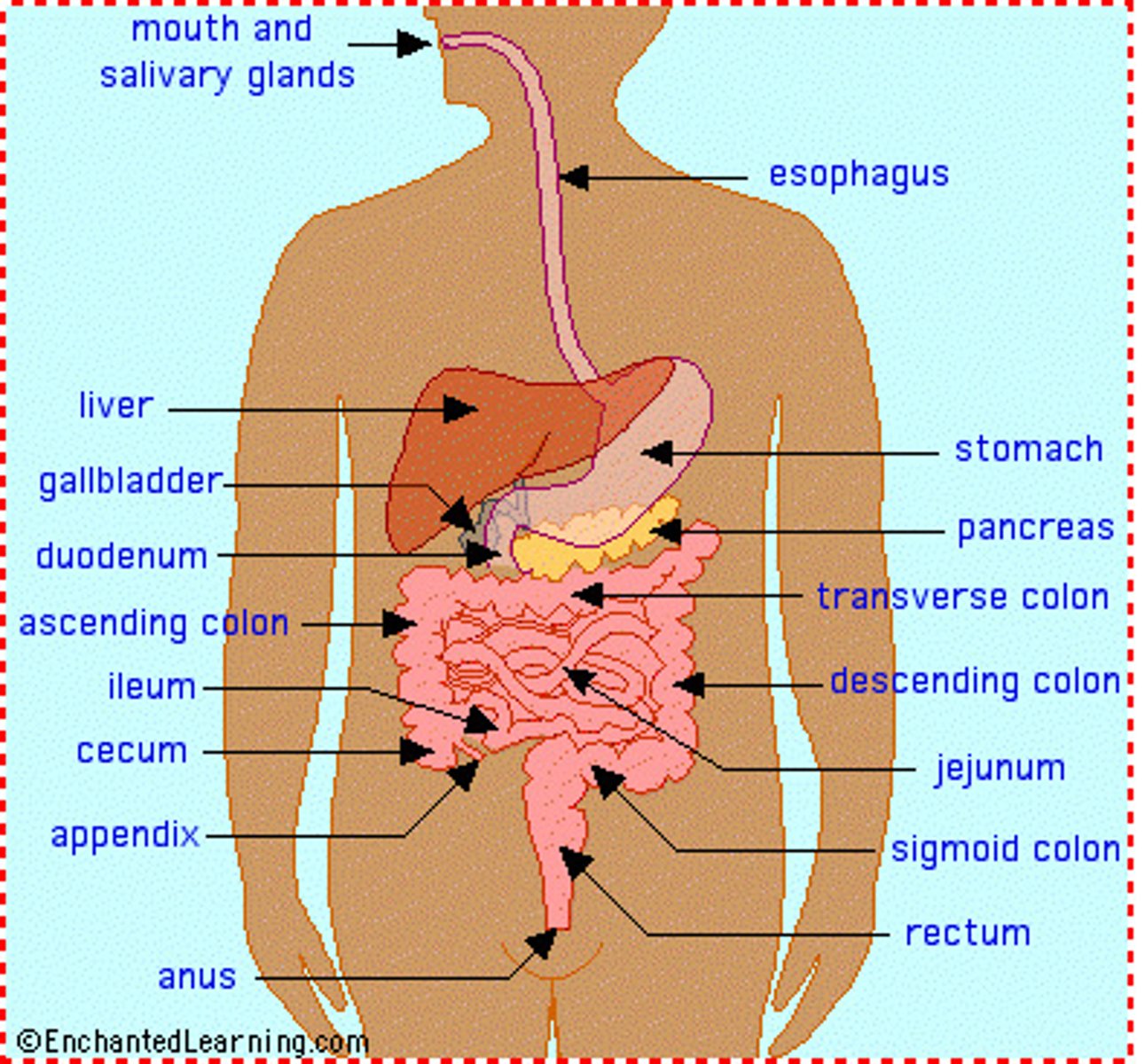
Which organ system:
- liver and pancreas contribute
- Provides and delivers nutrients
Digestive System: Mouth, esophagus, stomach, and intestines
Which organ system:
- Controls all other body systems
Nervous System- Brain, spinal cord, nerves
Which organ system:
- Pancreas, pituitary, adrenal, thyroid glands
-Exocrine glands: release hormones into the ducts
-Endocrine glands: release hormones into the bloodstream
Endocrine System- Glands that secrete Hormones
Which organ system:
- pumps blood, provides necessary nutrients, and eliminates waste
Cardiovascular system- heart and blood vessels
Which organ system:
- filters blood, removes waste
Urinary system- kidneys, bladder
Which organ system:
- Achieves fertilization, produces offspring
Female and male reproductive system- ovaries, uterus, vagina, testes, penis
Describes the location of body parts and various body regions
Anatomical terminology
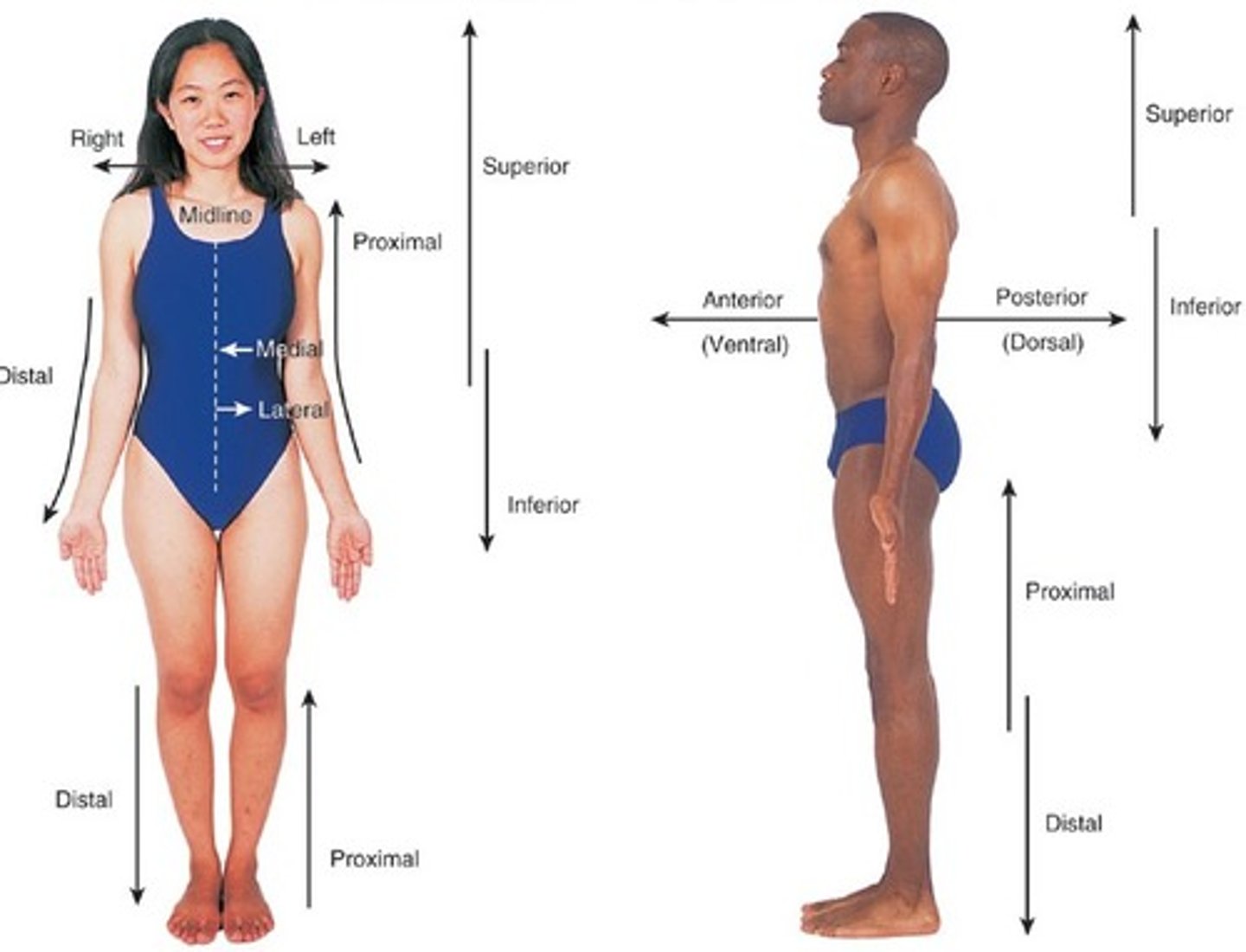
Anatomical position
Facing forward, body straight, palms forward
Directional Anatomical terms:
Superior
above
Directional Anatomical terms:
inferior
below
Directional Anatomical terms:
proximal
closer to the attachment
Directional Anatomical terms:
Distal
farther from attachment
Directional Anatomical terms:
Medial
middle of the body
Directional Anatomical terms:
Lateral
Side of the body- farther from the midline
Directional Anatomical terms:
Ventral
Toward the front of the body (Anterior, coronal, or frontal)
Directional Anatomical terms:
Dorsal
Toward the back of the body (Posterior)
Directional Anatomical terms:
Sagittal/ midsagittal
- divides the body into right and left sides
-midline through center of the body
Directional Anatomical terms:
Transverse
- Divides the body into a top and bottom
(superior and inferior)
Directional Anatomical terms:
Body Cavities:
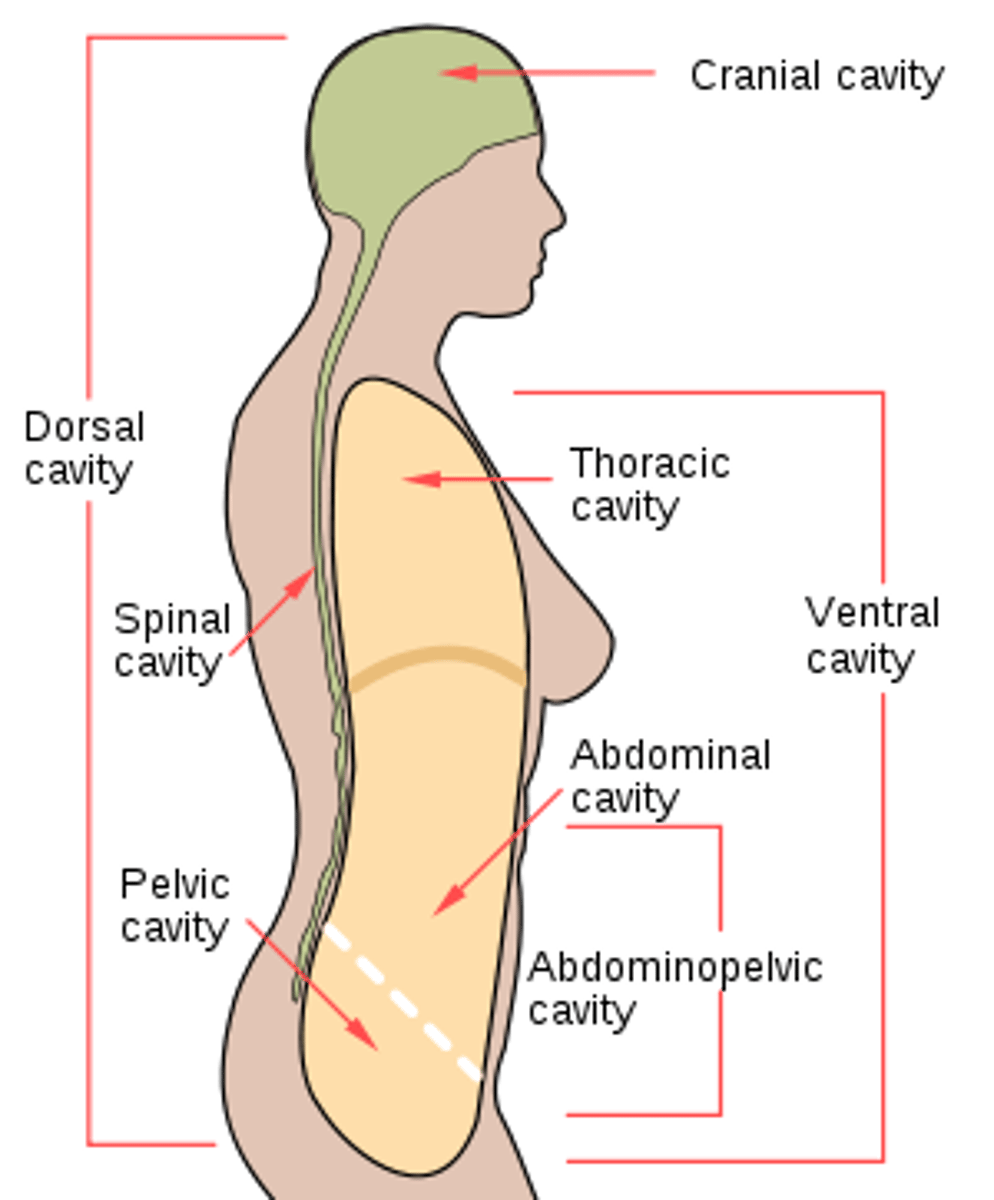
Cranial
brain
Body Cavities:
Spinal
Continuation of cranial, spine
Body Cavities: Thoracic
chest
-lungs, heart, major vessels
Body Cavities: Abdominal
abdomen
-liver, intestines, colon
Body Cavities: Pelvic
bladder
Body Cavities
Abdominopelvic Regions
RUQ- Right upper quadrant (pain- gallbladder)
RLQ- Right lower quadrant (Pain- appendix)
LUQ- Left Upper quadrant (Pain- spleen)
LLQ- Left Lower quadrant (Pain - constipation)